Does Dust Hurt Houseplants? Causes and Fixes
Dust on houseplant leaves blocks light and gas exchange through stomata. Learn when buildup hurts plants, how to clean leaves safely, and how to tell dust from mildew.
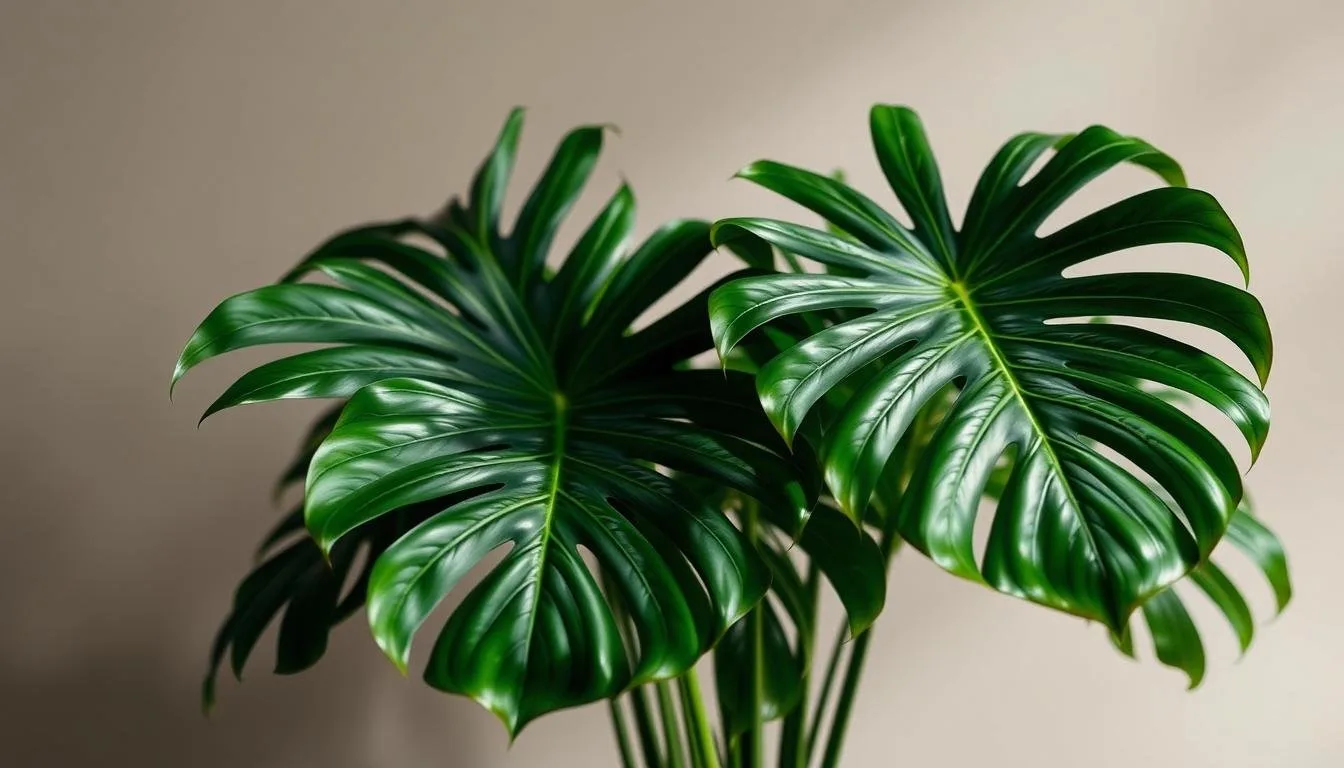
That matte film on your Monstera or rubber plant is not just a housekeeping eyesore. A thin layer of household dust sits on the same leaf surfaces your plant uses to breathe, drink light, and regulate water loss. Outdoors, rain and wind reset the canopy. Indoors, dust accumulates until you intervene—and in winter, when windows stay shut and furnaces run, the buildup can outpace what most growers expect.
The good news: a light dusting rarely kills a healthy plant overnight. The risk is cumulative. Heavy, neglected buildup blocks photosynthesis, interferes with gas exchange through stomata, and turns leaf cleaning into the best five-minute pest-and-health check you are not doing yet. This guide explains when dust actually hurts houseplants, which species need attention first, how to clean leaves without damaging fuzzy or succulent foliage, and how to tell ordinary dust from powdery mildew or mineral crust before you treat the wrong problem.
Why Dusty Leaves Are More Than a Cosmetic Problem
Leaves are living tissue, not decorative plastic. The waxy cuticle on top protects the leaf, but the plant still depends on microscopic pores—stomata—to move carbon dioxide in for photosynthesis and oxygen in for respiration, while releasing water vapor through transpiration. The Royal Horticultural Society describes stomata as the leaf’s breathing pores, noting that in most plants they sit on the underside where they are somewhat hidden from strong sun and protected from dust (RHS: how plants breathe). That protection only goes so far when the entire leaf—top and bottom—collects a visible gray film.
How Stomata and Photosynthesis Depend on Clean Leaf Surfaces
Photosynthesis needs light hitting chloroplasts inside leaf cells and carbon dioxide reaching those cells through open stomata. Dust does two things at once: it scatters and absorbs light before it reaches the chlorophyll, and it can physically coat stomatal openings on both leaf surfaces. Iowa State University Extension notes that heavy dust buildup on houseplant foliage can interfere with the absorption of light and moisture to leaves, which in turn affects overall plant health (Iowa State Extension).
Think of dust like a dirty window on a greenhouse panel. A faint smudge might not matter on a bright south window in June. The same smudge on a plant already struggling with low winter light can be the difference between maintaining growth and slowly fading to a dull, leggy silhouette. Dust also makes it harder to spot early trouble—spider mites, scale, chlorosis, and fungal patches all hide under the same gray film until the infestation is advanced.
The RHS also notes that when stomata close—whether from drought stress or physical blockage—gas exchange drops and photosynthesis suffers (RHS: how plants breathe). Dust does not close stomata the way dry soil signals do, but a thick film can have a similar practical effect: less carbon dioxide in, less transpiration out, and slower overall metabolism on a plant that is already photosynthesizing at a winter-reduced rate.
Cleaning is not vanity. It restores the leaf’s optical and physiological function and forces you to handle each plant long enough to notice what changed since last month.
When a Light Dusting Actually Becomes Plant Stress
Not every speck demands an emergency wipe. A barely visible haze on a snake plant in bright indirect light is mostly cosmetic. Stress becomes real when dust is thick enough that you can write in it with a fingertip, when leaves look uniformly dull despite adequate watering and fertilizer, or when new growth emerges smaller and paler than older leaves on the same plant.
Watch for these practical thresholds:
- Cosmetic only: Dust visible only at an angle; leaf color and sheen still look normal; plant pushing healthy new leaves.
- Action warranted: Obvious gray film across most of the blade; water beads oddly on the surface; leaf feels gritty; plant sits near HVAC vents, candles, or a kitchen.
- Likely contributing to decline: Heavy buildup plus low light, overwatering, or root stress; cleaning reveals yellowing, stippling, or sticky residue underneath.
If you clean thoroughly and the plant still looks washed-out, dust was not the whole story. Move on to light levels, watering rhythm, and roots—not another round of wiping.
Why Dust Builds Up Faster on Indoor Plants in Winter
Houseplants do not create dust. They collect what your home sheds: skin cells, textile fibers, cooking aerosols, fireplace particulates, and fine debris from forced-air systems. Winter concentrates all of it.
Forced-Air Heat, Closed Windows, and Low Humidity
When heating systems run, warm air rises, circulates through vents, and deposits particulates on every horizontal surface—including broad leaves facing the airflow. Closed windows cut natural ventilation, so particles that would exit in spring instead settle indoors. Dry winter air also means less frequent rain-equivalent rinsing; the shower-or-sink reset that outdoor plants get for free simply does not happen unless you provide it.
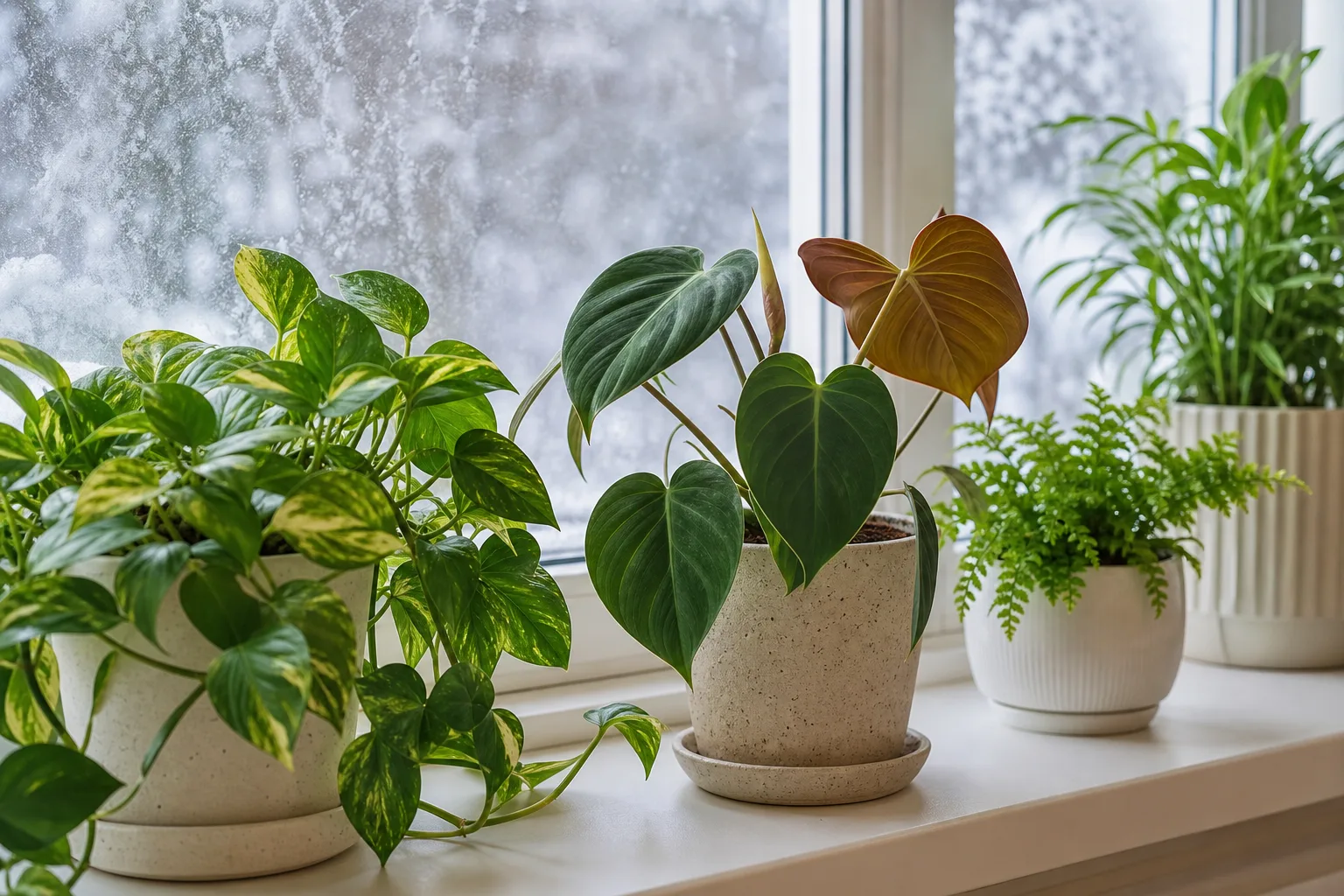
Plants near return vents, in line with a space heater, or on mantels above fireplaces accumulate dust fastest. If your collection looks dull every February, seasonal buildup—not a mysterious pest—is the usual suspect. Pair leaf cleaning with the broader winter habits in our winter houseplant care guide: stable temperatures, corrected watering, and realistic light expectations matter as much as the wipe-down.
Renovation Dust and Household Debris That Plants Catch
Drywall sanding, plaster repair, and even aggressive vacuuming can coat an entire room in fine dust within hours. Large-leaved plants act like static panels: ficus, bird of paradise, and peace lily leaves present huge surface area perpendicular to air movement. Glossy cuticles make dust especially visible, which is useful—it tells you where to start cleaning even when smaller plants look fine.
Pet hair, candle soot, and cooking grease add a sticky layer ordinary dry dusting cannot remove. In those cases, a damp cloth works better than a feather duster, which often pushes debris around without lifting it. Address the source when you can (ventilation during projects, air purifier in the plant room) so you are not fighting the same coating every week.
Do Dust Mites on Leaves Hurt the Plant Itself?
Dust on leaves can harbor dust mites, the microscopic arthropods that feed on shed skin cells in household dust. Pest-control professionals sometimes note that dusty environments support mite populations, which in turn can attract predators like spiders—or nuisance insects like silverfish that damage fabrics and paper, not living leaves. Dust mites do not eat plant tissue; they are a home hygiene issue more than a direct botanical one.
That does not make leaf cleaning pointless. Reducing dust on plants still improves photosynthesis and makes pest scouting easier. If mites are a persistent indoor problem, vacuum upholstery, wash bedding, and lower indoor humidity below 50% where practical—the same environmental fixes recommended for allergic households. Do not spray pesticides on leaves to control dust mites; you will cause more foliar damage than the mites ever would.
Which Houseplants Show Dust First — and Which Tolerate It Longer
Dust visibility and dust harm are not the same thing. A plant can look filthy quickly yet tolerate neglect, or stay subtly dusty on fuzzy leaves where grime is hard to see but still blocks light.
Glossy Large-Leaved Plants That Need Regular Wipes
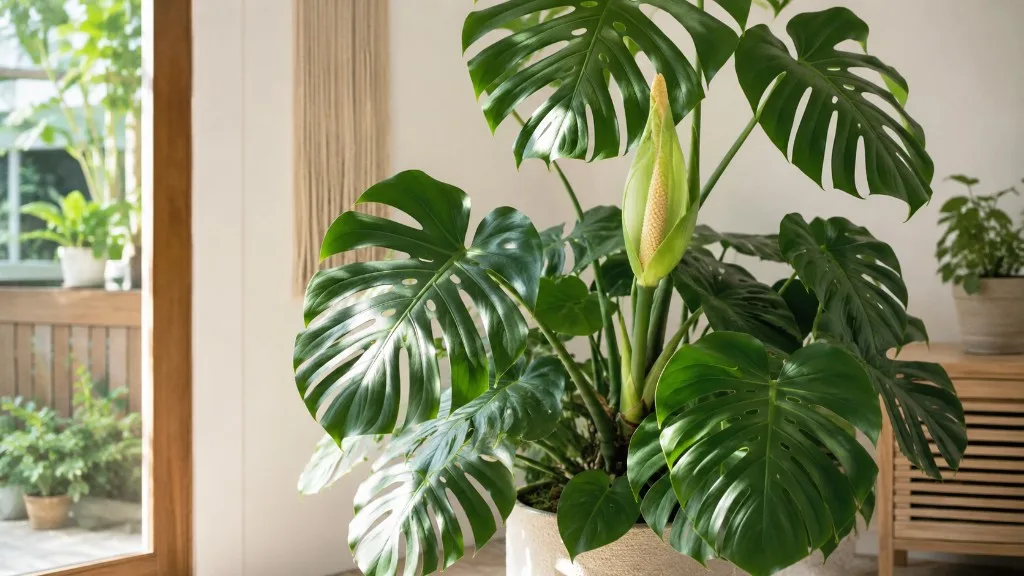
Thick, glossy leaves—Monstera deliciosa, Ficus elastica (rubber plant), ficus lyrata, schefflera, and many philodendrons—show dust within days because smooth surfaces reflect light like furniture. They are also the plants that benefit most from cleaning: broad blades, high photosynthetic demand, and stomata operating on both surfaces.
These are your monthly-wipe candidates, or sooner if you see a film. For species-specific technique on fenestrated leaves, see how to clean Monstera leaves—the support-hand method and underside wipe there apply to most large tropicals.
Fuzzy, Velvety, and Succulent Leaves That Need Different Care
Velvety or hairy leaves—African violet, calathea, begonia rex, purple passion plant (Gynura)—trap dust in trichomes where a rough wipe tears tissue. Use a soft brush, gentle blower, or light rinse rather than aggressive rubbing. Never use leaf shine on these surfaces; oils mat the hairs and are difficult to remove.
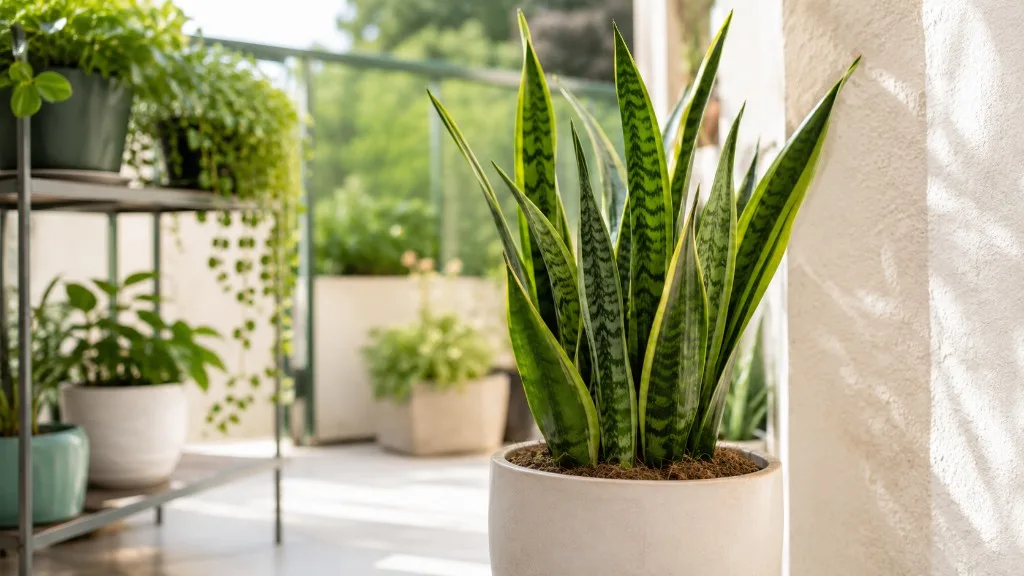
Succulents and semi-succulents—jade plant, ZZ plant, snake plant, many haworthia—have waxy or thick leaves that shed dust more slowly and tolerate light buildup longer. They still need occasional cleaning, especially if water spots or hard-water minerals combine with dust into a cement-like film. Rinse or wipe gently; avoid leaving water pooled in rosettes overnight.
Feathery or finely divided foliage—asparagus fern, maidenhair fern, Norfolk Island pine—are often easier to shower as a whole plant than to wipe leaf by leaf. Low-maintenance reputation does not mean zero maintenance; it means you can stretch cleaning to every six to eight weeks unless dust is obvious.
Dust vs Powdery Mildew vs Salt Crust: A 60-Second ID Check
White or gray on a leaf is not always dust. Misdiagnosis wastes time and can make real disease worse if you keep wiping spores around the canopy or spray fungicide at mineral deposits.
Signs You Are Looking at Ordinary Dust
Household dust sits loosely on the cuticle. It wipes away with a damp cloth and does not return in identical circular patches within 48 hours. It does not distort new leaves, does not smell musty, and feels gritty or powdery—not soft and flour-like. Dust is usually evenly distributed from room air, often heavier on the side facing a vent or window street-side.
If a cloth comes away gray but the leaf looks healthy underneath, you are done—no fungicide needed.
Use this quick comparison when you are unsure what you are wiping:
| What you see | Texture / behavior | Wipes clean? | Next step |
|---|---|---|---|
| Household dust | Loose gray film, even distribution | Yes, cloth turns gray | Wipe or rinse; no fungicide |
| Powdery mildew | Soft white flour on living tissue | Smears; returns in same spots | See powdery mildew guide |
| Salt / hard-water crust | Chalky crystals on rims or margins | Scrapes as flakes | Leach pot; ease fertilizer |
| Spider mite webbing | Fine silk on undersides + stippling | Partial; webbing remains | Treat mites, not dust |
| Mealybugs | Cottony white clumps in leaf axils | No; bugs stay attached | Isolate and treat pest |
When White Residue Is a Disease or Mineral Problem
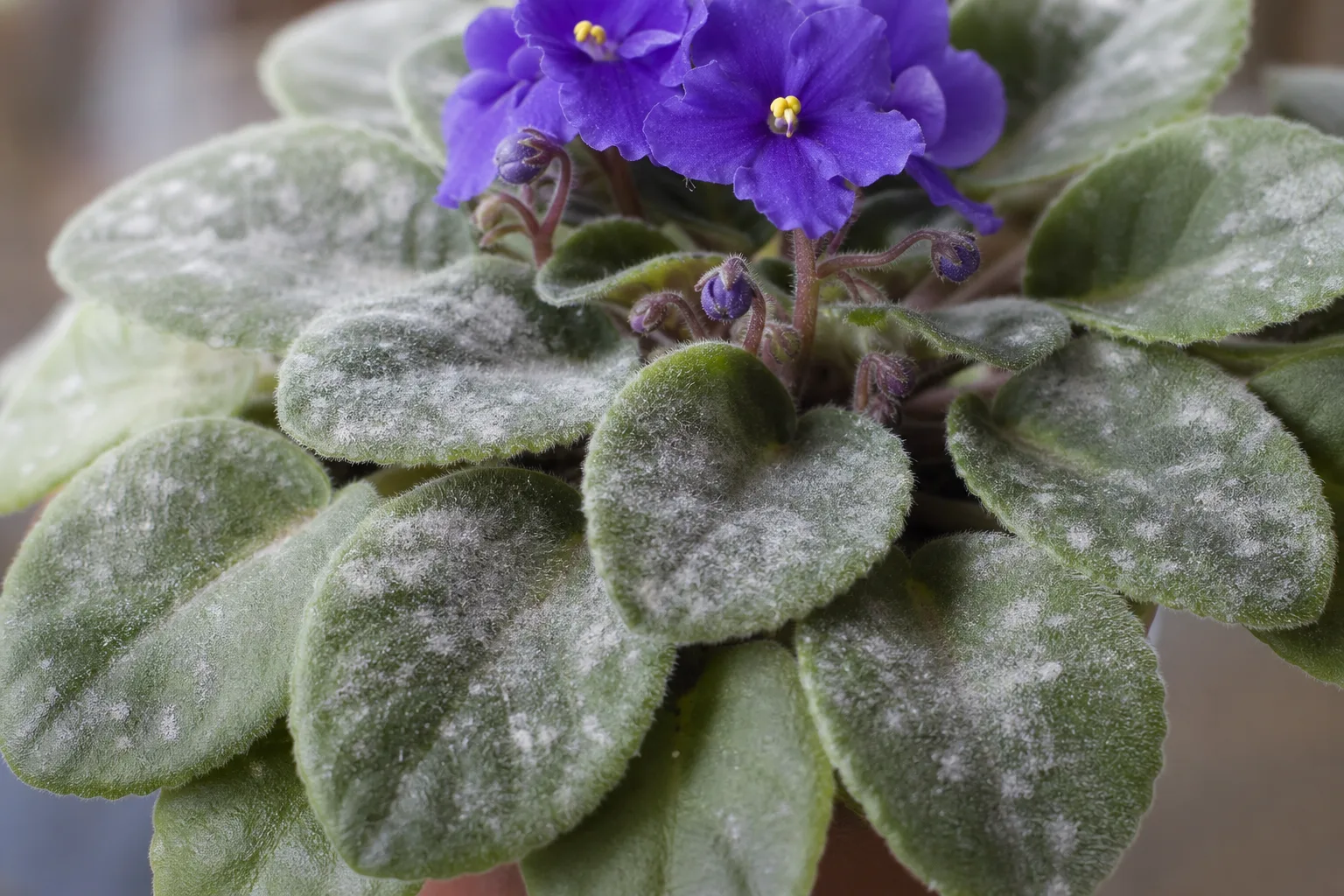
Powdery mildew is a fungal infection that produces a soft white to gray coating bonded to living tissue. Penn State Extension describes powdery white growth on leaves and notes that infections can spread rapidly under favorable conditions (Penn State Extension). On houseplants, mildew often starts as discrete spots that expand and merge; wiping smears the film and may scar the epidermis. New growth may twist, curl, or look dusty as it unfurls. If white patches reappear in the same shapes after cleaning, treat it as disease—not dust. Full diagnosis and treatment live in our powdery mildew on houseplants guide.
Fertilizer salt and hard-water crust look chalky or crystalline, often concentrated on pot rims, soil surfaces, or leaf margins after droplets dry. Clemson HGIC separates white-to-gray crusty deposits on soil or pot rims from mold-like growth and lists salt buildup as a cultural problem distinct from fungal leaf disease (Clemson HGIC). Crust scrapes as brittle flakes; mildew does not. Fix salts by leaching the pot and easing fertilizer—not by polishing leaves with oil.
Spider mite webbing is finest on leaf undersides and stippled yellowing accompanies it. Mealybugs leave white cottony clumps in axils. Dust is diffuse; pests are localized. Cleaning day is scouting day—flip leaves and check veins before you assume the problem is airborne grime.
The Best Ways to Clean Houseplant Leaves Without Damaging Them
Method beats muscle. Match the technique to leaf texture, pot size, and how dirty the plant actually is.
Shower, Sink Rinse, and Outdoor Hose Methods
Whole-plant rinsing is the fastest option for plants with many small leaves or cascading growth—pothos, ferns, spider plants, and trailing hoya. Use lukewarm water, support the pot so soil does not wash out, and let water run through the canopy for a minute. The pot must have a drainage hole; soggy soil after a shower causes more damage than dust ever did.
Best practices:
- Rinse in the morning so foliage dries before cool night temperatures.
- Use gentle pressure—a sink sprayer or shower head on low, not a jet nozzle.
- Tilt rosette plants so water does not sit in the crown overnight.
- On warm, overcast days, a patio rinse mimics natural rain; bring plants back before direct sun hits wet leaves.
This method doubles as dust control and occasional pest knockdown, but it is not a substitute for treating active infestations. Avoid shower-rinsing African violets and other hairy-leaved plants unless you can dry them quickly with airflow.
For medium-sized plants that are awkward to carry, the kitchen sink works well: set the pot in the basin, cup the soil surface with your hand or plastic wrap so media does not float out, and use the pull-down sprayer on a gentle setting. Let the plant drain fully on a rack before returning it to a saucer. Never leave a freshly rinsed pot sitting in a full saucer—the roots need oxygen as much as the leaves need clean stomata.
Microfiber Wipe Technique for Large Leaves
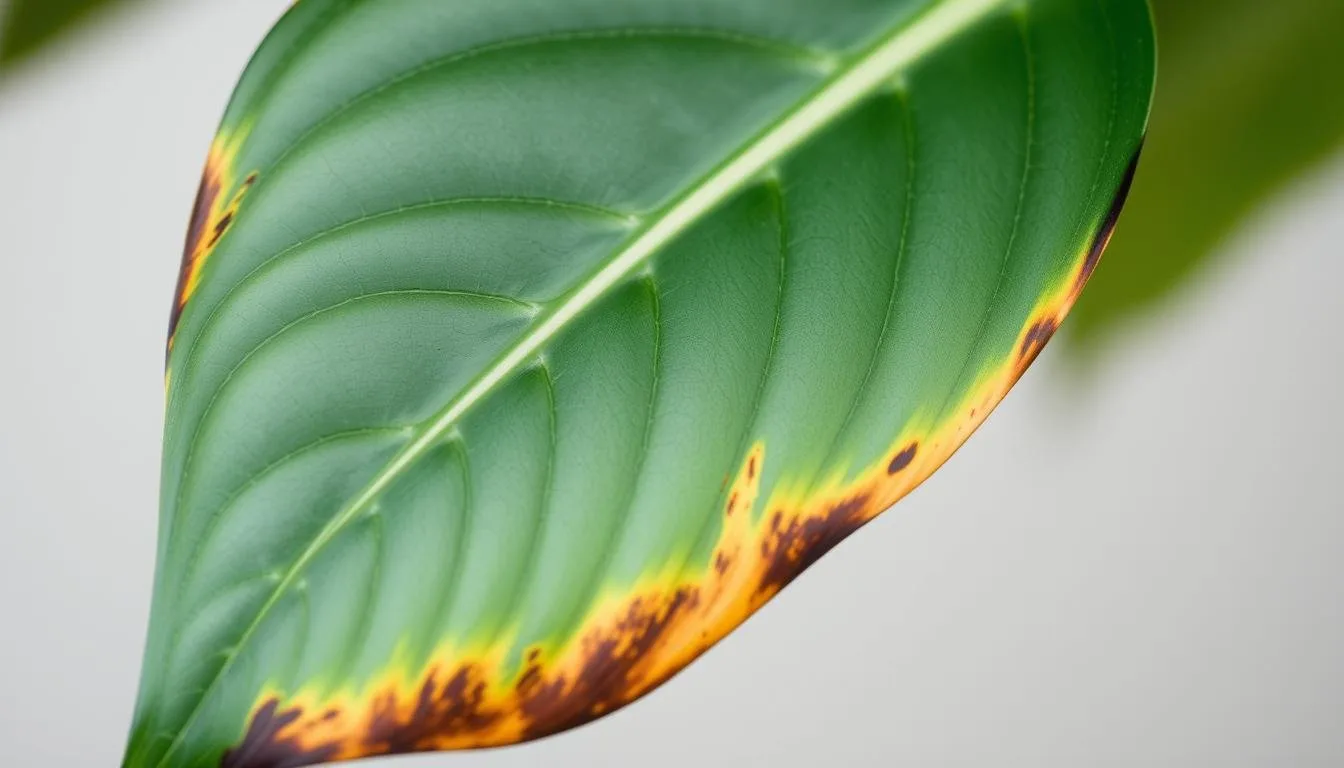
For large, sturdy leaves, a damp microfiber cloth is the precision tool Iowa State Extension recommends—moistened with plain water, without soap or vinegar that can damage sensitive foliage (Iowa State Extension). Support the leaf from underneath with one hand, wipe top surface with slow strokes from petiole to tip, then repeat on the underside where stomata concentrate.
Rinse and wring the cloth often. A dirty cloth just relocates dust. Work in good light so you see remaining film and any pests hiding along midribs. Brittany Goldwyn, a master gardener who writes practical houseplant tutorials, cleans large rubber plants, snake plants, and monsteras on this schedule and notes that plants in nature are washed by rain—a reset indoor plants only get when you provide it (Brittany Goldwyn).
Optional: a few spritzes of diluted neem oil on the cloth—not the leaf—can add light sheen and deter pests, but never coat heavily. Excess oil attracts more dust and risks clogging stomata, the same failure mode as commercial leaf shine.
What Never to Put on Leaves (Leaf Shine, Vinegar, Soap)
Commercial leaf shine products often use mineral oil or wax to create gloss. They temporarily hide dust while sealing stomata and attracting new debris. Skip them entirely on food-producing plants and on any species you are trying to keep pest-free.
Household hacks are worse. Vinegar, dish soap, mayonnaise, and milk recipes circulate online; they leave residues, alter leaf pH, and can burn thin tissue. Iowa State specifically warns against soap and vinegar on houseplant leaves (Iowa State Extension). If you would not rinse produce with it, do not wipe a living leaf with it.
Misting to “wash” dust is ineffective for heavy buildup and can encourage foliar disease when leaves stay wet in stagnant air. Humidity-loving plants still need airflow, not a daily spritz that deposits minerals as droplets dry. See should you actually mist your plants for when misting helps versus when it creates new problems.
How Often to Clean Leaves and Reduce Future Dust Buildup
There is no universal calendar. Use visibility and location as triggers instead of an arbitrary ritual.
A practical baseline for most glossy tropicals in an average home: once a month, or whenever you can see dust at a glance. Homes with pets, wood stoves, ceiling fans, or construction nearby may need every two weeks on large-leaf plants. Succulents and snake plants in bright rooms often coast six to eight weeks unless grime is obvious.
Reduce future buildup by:
- Dusting the room itself—vacuum upholstery, wipe shelves, and change HVAC filters on schedule so plants are not the only dust magnet.
- Rotating plants a quarter turn when you water so both sides of the canopy see light and get inspected.
- Keeping plants out of direct vent blast when possible; airflow is good, sandblasting is not.
- Running an air purifier in dense collections during winter.
- Cleaning leaves the same day you water so the task piggybacks on an existing habit.
Turn each cleaning session into a health audit: firm new growth, firm roots (lift the pot), no sticky honeydew, no webbing, soil not staying soggy. Dust removal is maintenance; what you find underneath is often the real headline.
Group plants by cleaning method to save time. Pull every large-leaf tropical to one table for a wipe session, then move trailing plants to the shower in a batch. Keep a dedicated plant-only microfiber cloth so kitchen cleaners never cross-contaminate foliage. Replace cloths when they stay gray after rinsing—launder without fabric softener, which leaves a residue that can coat leaves on the next wipe.
Conclusion
Dust does hurt houseplants when it builds thick enough to block light and interfere with stomatal gas exchange—especially on large-leaved tropicals struggling through dim winter months. It rarely kills an otherwise healthy plant by itself, but it slows photosynthesis, hides pests, and signals that your indoor environment is depositing debris faster than rain would wash it away outdoors.
Clean leaves with plain water and a soft cloth or a gentle whole-plant rinse, match technique to leaf texture, and use each wipe to scan for mildew, salts, and insects. Tell dust from disease before you treat. Keep the room air cleaner, stick to a monthly baseline on glossy plants, and your collection will look better—and photosynthesize better—without a single spray of leaf shine.