Squirrel Attic Entry Points and How to Seal Them
Squirrels squeeze through roofline gaps you cannot see from the ground. Find every entry route, evict safely, and seal with metal before cold weather locks them in.
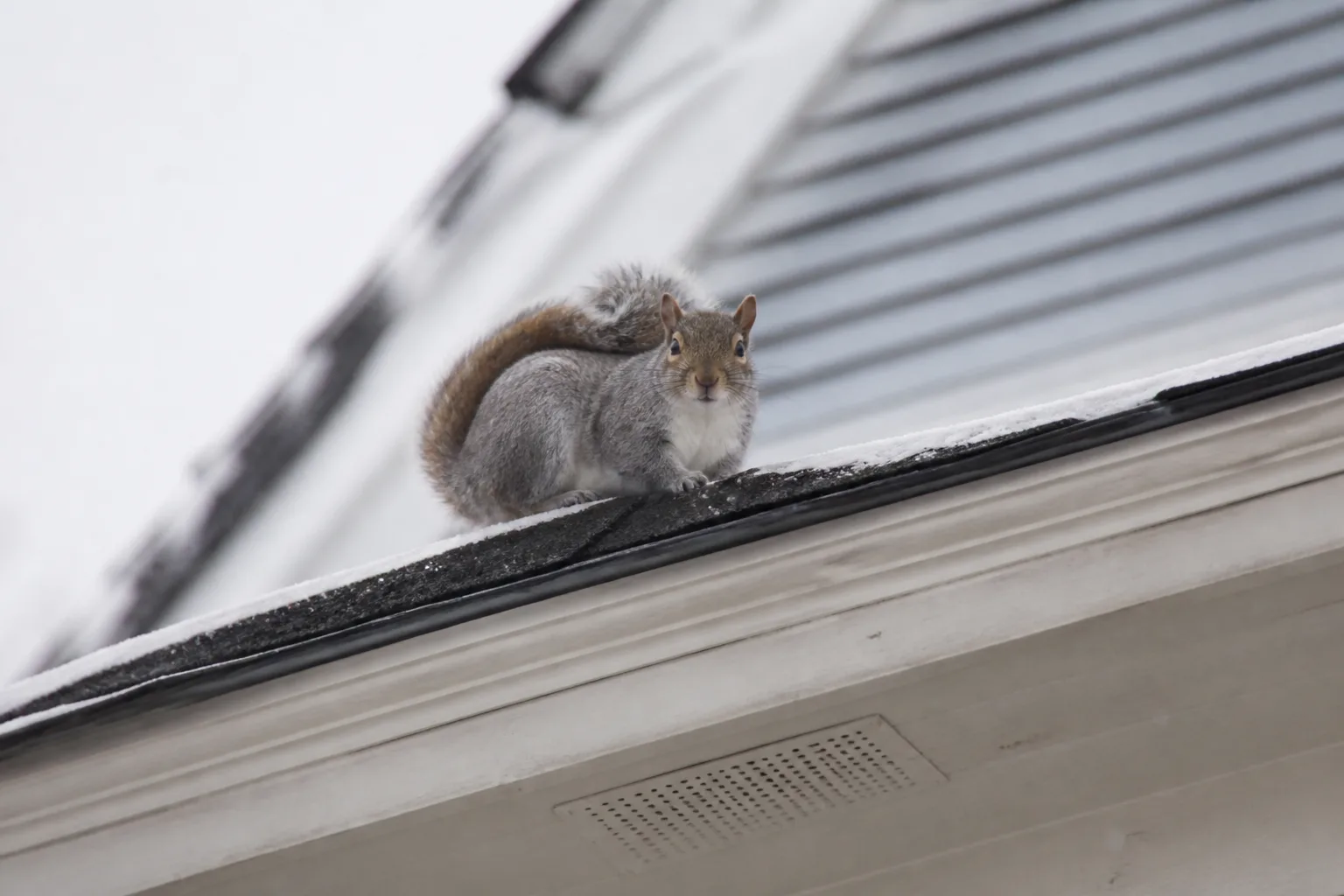
Scratching at dawn. A thump above the bedroom ceiling. Shredded insulation tumbling from a soffit vent. If winter suddenly turned your attic into a squirrel apartment, you are not imagining things—and you are not dealing with a mystery pest. Squirrels get into attics through predictable routes: overhanging branches and roof bridges, uncapped chimneys, gaps where soffit meets fascia, rotted fascia they can chew through, and unscreened attic vents. The hard part is not guessing whether they entered. It is finding the exact hole before you seal the wrong spot and trap an animal inside.
This guide maps those five main entry routes, shows how to locate the breach from inside and outside, and walks through the five fixes that actually work—in the order wildlife agencies recommend. If you only need yard-level deterrence, start with our humane squirrel yard guide. Attic squirrels are a different job: exclusion, not pepper spray on the lawn.
Why Squirrels Move Into Attics When Temperatures Drop
Tree squirrels do not hibernate. When outdoor nests lose heat and predators patrol bare branches, a dry, elevated cavity beats a windswept oak fork every time. Your attic offers insulated warmth, chewing material, and relative safety from hawks and owls. Eastern gray squirrels—the bushy-tailed climbers most homeowners picture—may raise two litters a year, with late-winter and spring births common in milder climates. That means a “quiet” December infestation can become a nursery by March if entry stays open.
Squirrels are also athletic problem-solvers. If one gap fails, they test the next weak seam along the roofline. Michigan DNR nuisance wildlife guidance notes that prevention starts with sealing holes using durable materials like metal flashing or hardware cloth, trimming access routes, and capping chimneys before animals settle in (Michigan DNR). Winter is when that prevention window narrows: cold drives them indoors faster than you can schedule a roofer.
Gray Squirrels vs. Flying Squirrels — Know What You’re Hearing
Eastern gray squirrels are active during the day, especially early morning and late afternoon. Scratching, running, and nut-hoarding noises at those hours strongly suggest a tree squirrel. Flying squirrels are nocturnal—if your attic party starts at 10 p.m. and runs until 3 a.m., you may be hearing a different species that still uses the same entry points but requires slightly smaller mesh (¼-inch hardware cloth blocks both). Rats and mice also favor night hours; daytime noise with a bushy-tail silhouette at the gutter line is almost never a mouse. For rodent-vs-squirrel droppings and gnaw-mark comparisons, see our signs of rats or mice indoors guide—cleanup rules differ, and misidentification sends you to the wrong traps.
How to Find the Exact Entry Point Before You Seal Anything
Most failed DIY jobs share one mistake: sealing a gap instead of the gap. Squirrels often have a primary entry and one or two secondary routes they opened after the first success. Work methodically before buying foam cans.
The Daylight Test Inside a Dark Attic
On a bright day, enter the attic with lights off. Scan the roof deck, ridge, and eave lines for pinholes of daylight. Any beam coming through sheathing, vent frames, or chimney flashing marks a potential breach. Flag each spot with painter’s tape on the interior side, then map those locations on a simple sketch of your roof. Follow grease-stained paths along joists—fur oils leave dark smudges on repeated routes. Look for nesting debris (leaves, shredded insulation, bark strips) piled near the brightest leaks; mothers drag material to the warmest corner.
Safety first: Attics are hot, dusty, and easy to misstep in. Wear a respirator if insulation is disturbed, step only on joists or walk boards, and do not touch chewed electrical wiring. Exposed conductors are a fire hazard; shut power to affected circuits and call an electrician if you see bare copper.
Exterior Walk-Around Checklist
From the ground with binoculars—or from an extension ladder at the eaves if you are comfortable—inspect:
- Chew marks around vent flanges, fascia corners, and pipe boots
- Bent or missing vent louvers, especially on older wooden gable vents
- Staining below suspected holes (urine trails on siding)
- Footprints or tail drag on dusty ledges near dormers
- Branches within jumping distance of the roof plane
Mark exterior holes that line up with interior daylight spots. That overlap is your exclusion target list. Photograph each confirmed hole from two angles before you climb down—the images help when you buy hardware cloth and when you compare progress after sealing. If you rent or share walls, note whether noise runs along a party wall; squirrels in one unit often enter through shared roof cavities, and your landlord may need to coordinate exclusion on both sides of the ridge.
Entry Route 1: Overhanging Tree Branches and Roof Bridges
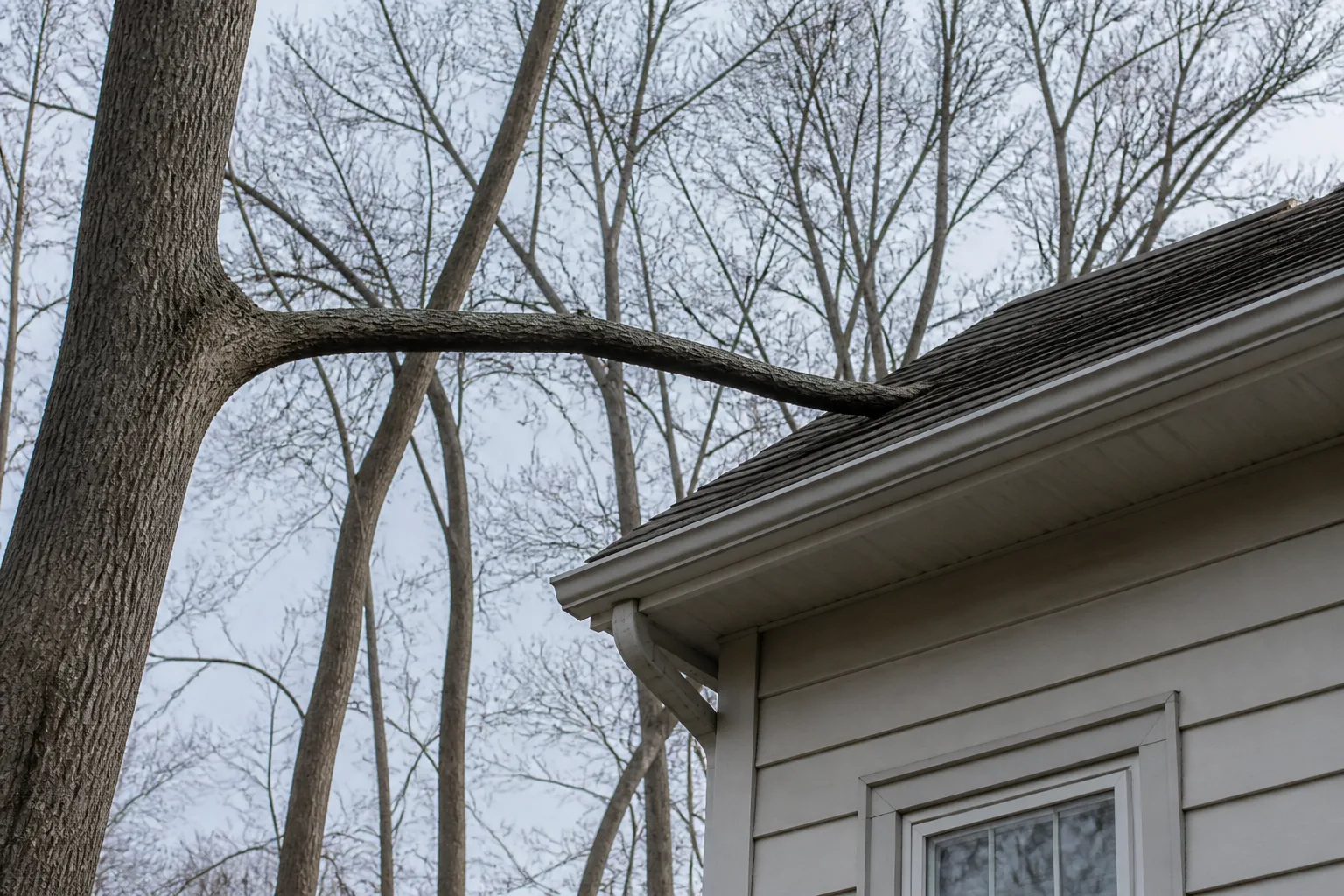
Squirrels are elite climbers, but they are also energy economists. A branch that touches or overhangs the roof is an elevator. From there they walk ridges, jump to dormers, and probe soffit corners. Fences, trellises, stacked firewood, and even utility lines close to the structure can substitute for trees on tight urban lots.
How Far to Trim Back Branches
Wildlife professionals commonly recommend keeping limbs 6–10 feet horizontally from the roof edge—far enough that a squirrel cannot bridge the gap with a leap. Michigan DNR advises cutting limbs within a few feet of the roof (Michigan DNR). Use the longer clearance on low-pitch roofs and where branches angle downward toward shingles.
Trim in late fall or winter when the tree is dormant and you can see structure clearly. Hire a certified arborist for large limbs overhanging power lines or steep pitches. Trimming alone will not evict squirrels already inside, but it stops the commute that reopens sealed holes within weeks.
Entry Route 2: Uncapped or Damaged Chimneys
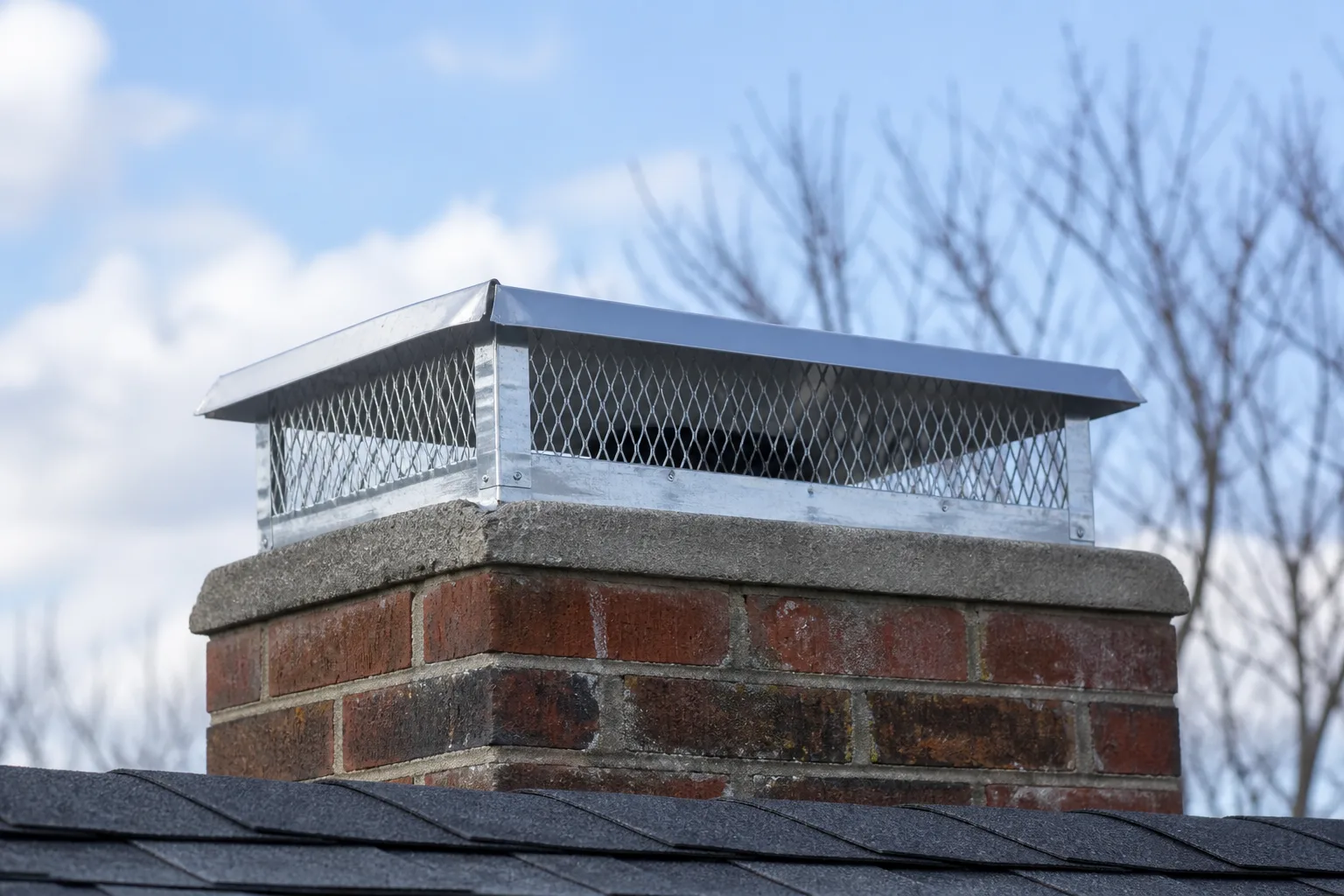
An uncapped chimney mimics a hollow tree: vertical, sheltered, and warm when the flue carries residual heat. Squirrels may enter the flue and chew through attic-side framing to reach open cavity space. Older chimneys with cracked mortar crowns, missing rain caps, or loose spark arrestors are especially vulnerable.
Chimney Cap Specs That Actually Block Squirrels
Install a stainless or galvanized chimney cap with ¼-inch mesh sides—not large decorative screening that lets juveniles pass. The cap must be secured with screws or bolted straps, not friction-fit alone in windy climates. If squirrels are already inside, install a one-way exclusion door at the primary hole first; cap the chimney only after you confirm the attic is empty. Never run a fireplace while animals may be in the flue.
Entry Route 3: Soffit, Fascia, and Roofline Gaps
The seam where roof decking meets fascia and soffit is a construction joint—not a wildlife-proof seal. Thermal expansion, ice dams, and sloppy fascia installs leave pencil-width gaps that squirrels widen with teeth. Dormer cheeks, porch roof intersections, and cut valleys collect debris that hides openings until chewing starts.
Why Squirrels Prefer Wood Over Metal
Rodent incisors grow continuously; gnawing is maintenance, not malice. Exposed wood at soffit returns and fascia ends is easier to excavate than painted metal. Once a squirrel opens a golf-ball hole, it can enlarge it to fist size in a night. Seal active gaps with galvanized hardware cloth backed by metal flashing, screwing through into solid framing. Caulk is finish, not structure—paintable exterior sealant fills edges after metal is mechanically fastened.
Entry Route 4: Rotted or Water-Damaged Fascia Boards
Fascia boards trap roof-edge water when gutters clog. Soft, punky wood invites squirrels the way a wet stump invites mushrooms. You may see cone-shaped chew holes with fresh wood chips on the ground below. Cosmetic putty over rot is a temporary billboard that says “chew here.”
Water damage often starts at mitered corners where two fascia boards meet and at gutter hanger penetrations that were never caulked. Probe suspect areas with a screwdriver—if the tip sinks more than an eighth of an inch, squirrels can too. In freeze-thaw climates, ice dams push meltwater behind the fascia all winter; spring rot becomes summer entry. Fixing gutters and drip-edge is pest control, not just curb appeal.
Replace rotted fascia with pressure-treated or PVC fascia where budget allows, then add drip-edge and flashing so water stays off the wood. If squirrels are actively nesting, complete eviction before replacement; otherwise new lumber becomes nesting material the same week. Prime and paint cut ends the same day you install boards—unfinished end grain wicks moisture and restarts the cycle.
Entry Route 5: Unscreened or Wooden Attic Vents
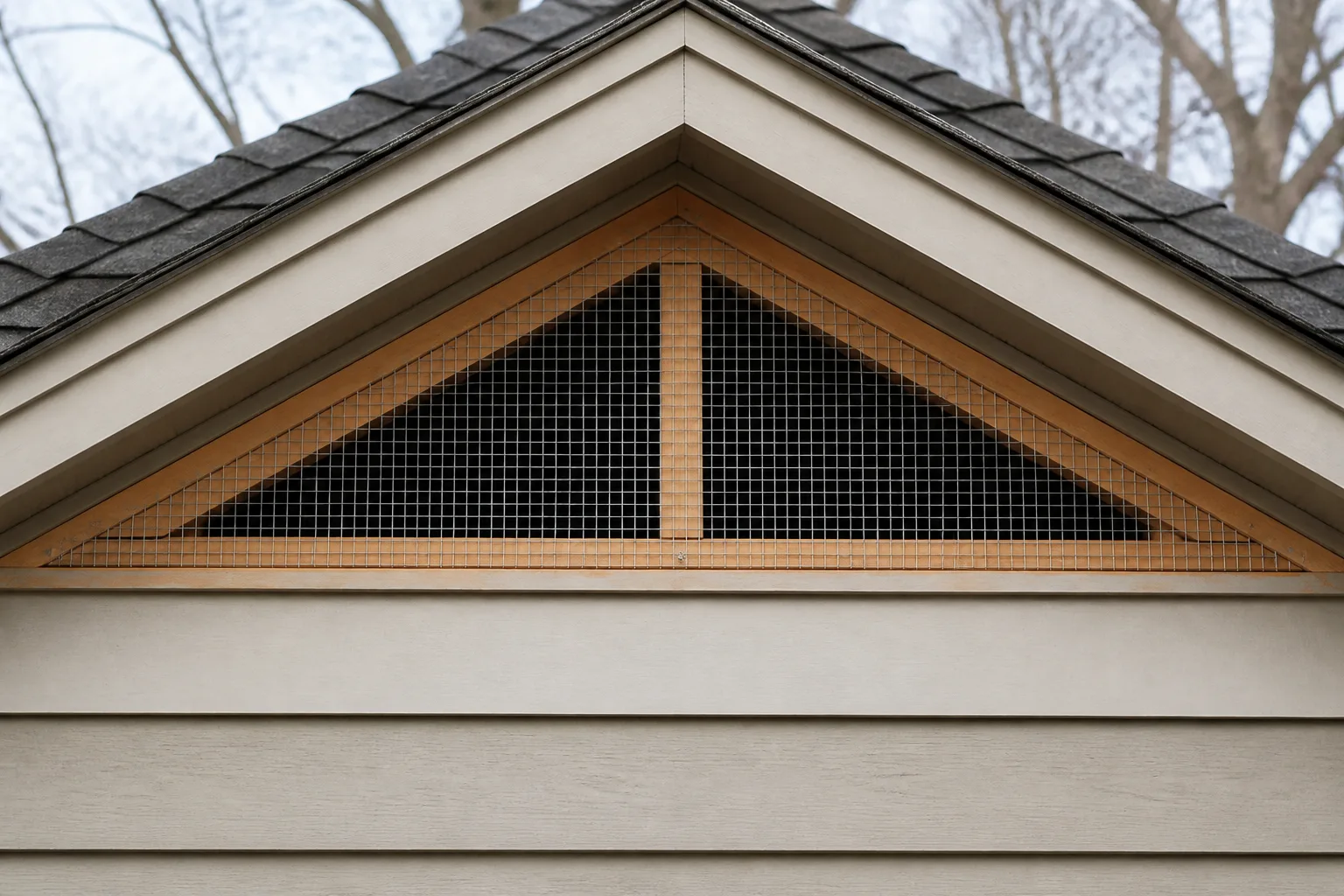
Attics need airflow; squirrels need holes. Wooden gable vents, plastic louvers, and aging turbine bases are common failure points. Squirrels pry louvers, remove rusted screens, or chew perimeter wood until the vent becomes a door.
Cover vent openings from the exterior with ¼-inch galvanized hardware cloth, formed to match the vent profile and screwed into framing—not stapled into soft trim alone. Pre-made steel vent guards rated for wildlife exclusion save time on standard 16×8 gable sizes. Keep interior airflow path clear; do not block soffit intakes when sealing exhaust vents. Balance matters for moisture control.
Secondary Routes Home Inspectors Often Miss
Beyond the big five, check:
- Plumbing and HVAC penetrations through the roof (rubber boot cracks)
- Loose siding where second-story walls meet rooflines on split-level homes
- Pet doors or uncapped dryer vents that enter attic bays
- Construction gaps at new additions where old and new roof planes meet
- Neighbor structures close enough for roof-hopping (detached garages, porches)
Squirrels remember successful routes. After exclusion, walk the perimeter quarterly—especially after windstorms that twist vent caps or pull flashing. Keep a labeled photo folder on your phone of every sealed entry dated at install—when a new chew appears two years later, you will know whether it is an old weak repair or a fresh breach on a different corner.
Five Ways to Stop Squirrels — In the Right Order
Stopping attic squirrels is a sequence, not a shopping list. Do these steps in order and you avoid the two worst outcomes: trapped animals inside and repeat breaches next week.
Step 1: Confirm You Have Squirrels, Not Rats
Match time of activity, droppings (squirrel pellets are larger and rounder than mouse pellets), and entry style (squirrels chew outward at vents; rats often follow pipe runs from crawl spaces). Daytime scrambling plus exterior branch access points strongly implicates tree squirrels. If evidence is mixed, set a camera phone on timelapse in the attic during peak hours before buying exclusion hardware.
Step 2: Evict Before You Seal
Never seal the primary entry while animals remain inside. Trapped squirrels chew new exits through drywall, wiring, or soffits—often in a more expensive room. Humane eviction options:
- One-way exclusion door mounted over the main hole for three to five days
- Harassment (bright lights, talk radio, rags soaked in cider vinegar—replaced daily) combined with open exit routes, as state agencies sometimes suggest for temporary deterrence (Michigan DNR)
- Professional wildlife removal when babies may be present, holes are high, or multiple adults are vocal
Mount the one-way door on the most active hole—the one with fresh chew marks and grease stains—not a secondary gap squirrels ignore. Leave all other entries open temporarily so animals are not forced to dig a new exit through interior walls. Monitor with a phone camera or listen at dawn for three to five quiet days before removing the door and sealing with metal. If you still hear movement, reset the door rather than rushing to foam and caulk.
Baby season warning: Between roughly March and August (varies by region), nursing young may be immobile in the nest. Exclusion that separates mothers from kits is inhumane and illegal in many areas. If you hear high-pitched calls or find juveniles, call a licensed wildlife rehabilitator or humane pro before closing holes.
Step 3: Seal With Metal, Not Foam Alone
After activity stops, seal every flagged entry the same day—squirrels return to familiar territory fast.
| Material | Best use | Squirrel-proof? |
|---|---|---|
| ¼-inch galvanized hardware cloth | Vents, large gaps, chimney mesh | Yes, when screwed to framing |
| Metal flashing | Fascia corners, roofline joints | Yes |
| Chimney cap with fine mesh | Flue tops | Yes, if secured |
| Exterior-grade caulk | Edge seal over metal | Only as backup |
| Expanding spray foam | — | No — chewed through quickly |
| Plastic vent covers | — | No — pried or chewed |
Overlap mesh at least 2 inches past chew marks on all sides. Predrill screw holes so cloth does not tear. Paint metal to match siding if aesthetics matter—function first.
Step 4: Trim Access Routes and Remove Attractants
Cut roof bridges as described above. Move bird feeders at least 20–30 feet from the house or switch to baffled pole setups (how to keep squirrels off bird feeders). Secure trash and compost lids; fallen acorns and fruit under eaves advertise food below the nest. Attic attractants are structural—yard attractants keep survivors nearby after eviction.
Step 5: Schedule Annual Roofline Inspections
Add a 10-minute roofline walk to your fall checklist: vents intact, caps seated, fascia paint failing, gutters draining. Catch soft wood before teeth do. After major storms, repeat. Prevention costs less than emergency drywall repair and insulation replacement.
What Does Not Work for Attic Squirrels
Save money by skipping these common detours:
- Mothballs or ammonia rags in the attic — ineffective at humane concentrations, hazardous to breathe, and illegal off-label in many jurisdictions (see what bugs mothballs keep away for pesticide-law context)
- Ultrasonic repellers — no reliable long-term exclusion data; squirrels habituate
- Bright-light machines alone — may annoy animals but do not close holes
- Poison baits — inappropriate for squirrels, risk non-target pets and predators, and leave carcasses in walls
- Live-trapping and relocating — often illegal across county lines, stresses animals, and does not fix the entry that attracted the next squirrel by Tuesday
If the hole stays open, the attic stays available. Exclusion is the cure; scents are at best a short eviction nudge.
When to Call a Wildlife Professional
DIY exclusion is reasonable for single-entry, single-story homes when no nursing young are present and you can work safely from a ladder. Call a licensed wildlife or pest professional when:
- You hear persistent daytime noise after two eviction attempts
- Chewed wiring or active electrical damage is visible
- Entry points are above safe ladder height or on steep pitches
- You suspect baby squirrels in the nest
- Multiple species (bats + squirrels) share the space
- Your municipality restricts DIY wildlife handling
Pros should provide photo documentation of entries, use one-way doors or hands-on removal as appropriate, and warranty metal repairs. Get quotes that include sealing, not trap-and-leave. Typical jobs run a few hundred to over a thousand dollars depending on height, hole count, and insulation damage—still cheaper than an electrical fire traced to gnawed Romex.
Conclusion
Squirrels are not breaking into your attic through bad luck. They are using branches, chimneys, roofline gaps, rotted fascia, and unscreened vents—the same five routes pest pros see every winter. Find the hole with the daylight test and an exterior chew-mark walk, evict humanely before you seal, and close every breach with metal mesh and flashing the same day the last animal leaves. Trim roof bridges, cap the chimney, and inspect vents each fall so the next cold snap does not move another family in.
Attic squirrels overlap with broader yard pressure—feeders, fruit trees, and planting beds all matter. Our yard squirrel guide handles outdoor attractants; this page handles the roofline. Fix the structure first. Everything else is decoration.