The 5 Best Zero-Turn Mowers for 2026, As Tested by Our Team
Compare five zero-turn mowers for 2026 by yard size, deck width, gas vs. battery power, terrain limits, safety, and current model status.
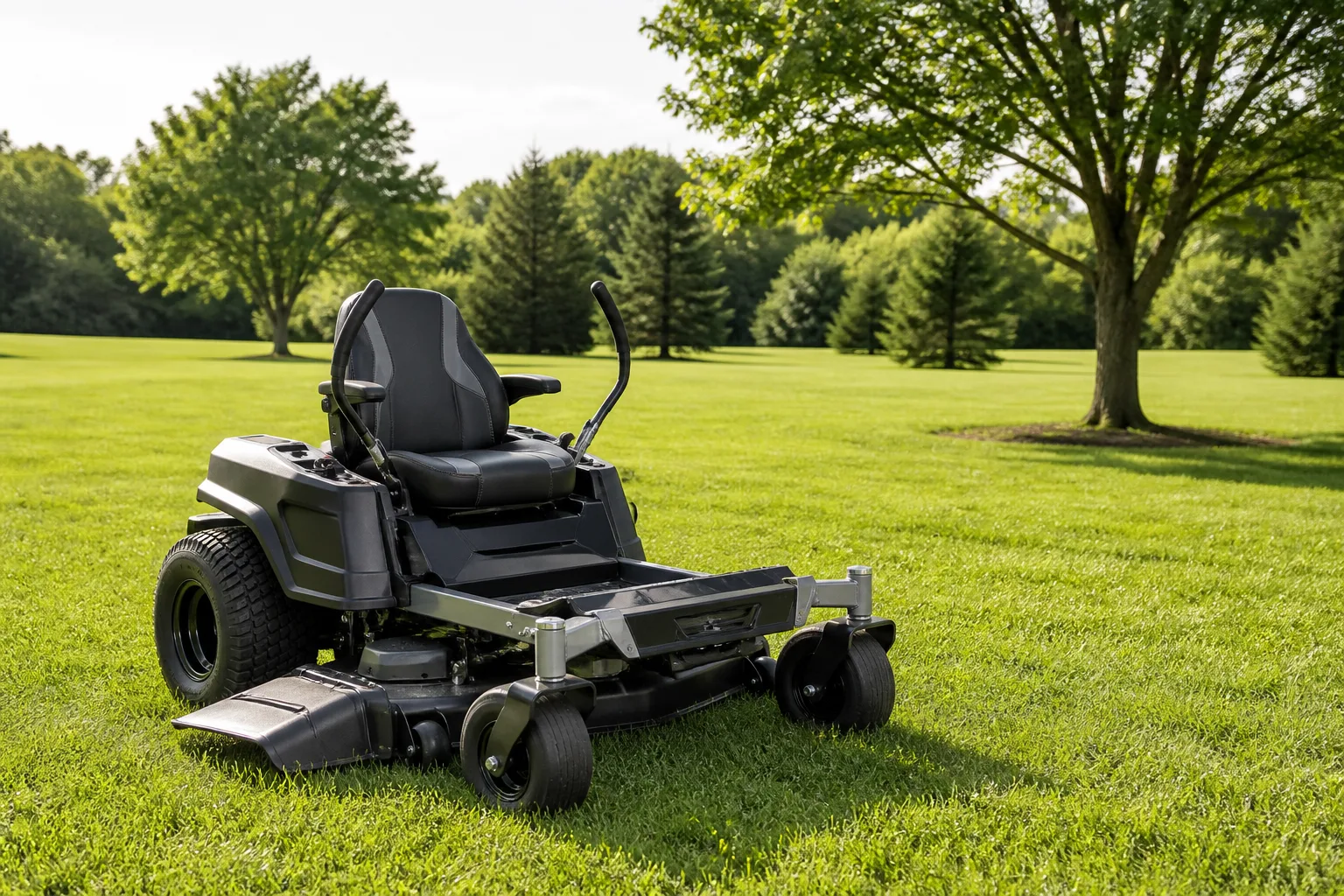
The best zero-turn mower is not automatically the one with the widest deck or the highest horsepower number. It is the one that can cover your mowable grass area, fit through your route, turn around obstacles without tearing the turf, and be maintained or charged in a way you will actually keep up with.
This 2026 update narrows the field to five current models: two gas options, two battery-powered options, and one large-property gas mower. The recommendation for each model comes from its current manufacturer specifications, service and warranty information, and independent product-testing coverage where available. I did not run a new in-house, six-month test cycle for this update, so third-party mowing impressions are identified as reported testing rather than presented as firsthand results.
One important model-status change affects the supplied comparison: the Ryobi 80V 30-inch and 42-inch models featured there are now marked Discontinued on Ryobi’s product pages. They are not included as 2026 picks. The current Ryobi ZR3 is a better starting point for a compact electric zero-turn. Confirm the exact model number and manual before ordering.
Quick Picks by Yard Size, Terrain, and Power Source
Use this table as a shortlist, not a promise that a mower will handle every property with the same results. “Up to” acreage figures are manufacturer estimates, and battery range is especially sensitive to grass height, moisture, slope, speed, blade engagement, and attachments.
| Best fit | Mower | Current capacity or deck | Why it stands out | Think twice if… |
|---|---|---|---|---|
| Flat lawn with obstacles, up to about 2 acres of mowable grass | Toro TimeCutter MyRIDE 42 | 42-inch deck; 22-hp gas engine; Toro lists up to 2 acres | MyRIDE suspension, fabricated 10-gauge deck, 7-mph mowing speed | You need California shipment, a hill-capable machine, or a deck wider than 42 inches |
| Homeowner gas mower who wants deck-size choice | John Deere Z330R | 48- or 54-inch deck; 23-hp V-twin | Deep 10-gauge Accel Deep deck, high-back seat, three-year/200-hour machine warranty | You want quiet, low-maintenance electric operation or have narrow gates |
| Low-maintenance electric mowing for up to about 2 acres | John Deere Z370R Electric | 42- or 48-inch deck; 3.2-kWh sealed battery; up to 2 acres per charge | Five-year/200-hour battery warranty, no oil or filters, built-in charger | You regularly mow beyond the published range or cannot plan around charging |
| Current electric option with a lower observed list price | Ryobi ZR3 42 | 42-inch fabricated deck; two 80V 14-Ah batteries; up to 2 acres in ECO mode | Current listing, onboard charging, steering assist, no gas or belts | You need long runtime, exact commercial-grade service support, or a larger deck |
| Large, open property with mostly flat or obstacle-filled ground | Toro TITAN MAX MyRIDE 60 | 60-inch deck; 24-hp Kawasaki; Toro lists up to 7 acres | MyRIDE platform, 7-gallon tank, 9-mph mowing speed, ROPS | You have tight gates, small storage, steep terrain, or a limited budget |
When I checked the official pages, Toro listed the TimeCutter at $4,499 and the TITAN MAX at $8,499, while Ryobi listed the ZR3 at $3,999. John Deere directs shoppers through its dealer network and notes that availability, specifications, and prices can change. Treat all of those numbers as a time-stamped reference, not a permanent ranking.
What a Zero-Turn Mower Is—and What It Is Not
A zero-turn mower uses two independently controlled drive wheels at the rear and swiveling caster wheels at the front. The lap bars control the drive wheels separately: push both forward to travel straight, slow one side to curve, or drive one side forward while reversing the other to pivot. That lets the mower wrap around obstacles with little uncut grass.
The same design creates its limits. Lap bars take practice, a sharp pivot can scuff or tear turf, and a zero-turn is primarily a mowing machine rather than a general-purpose tractor. A lawn tractor may be better if you regularly tow heavy loads, plow, pull a spreader, or prefer a steering wheel and familiar pedal layout. A zero-turn is at its best when the property has broad grass passes and obstacles that would force repeated loops with a conventional rider.
When a Zero-Turn Is Worth the Cost
A zero-turn begins to make sense when mowing is a long, recurring job and maneuverability will save meaningful time. Total lot size is a poor shortcut: a two-acre parcel with a house, woods, slopes, and narrow passages may have less usable mowing area than a one-acre open lawn.
Before you shop, walk the mowing route. Count the grass area, note every gate and bottleneck, and mark slopes, wet spots, tree roots, retaining walls, ponds, and dropoffs. If the mower will spend much of its time creeping around obstacles, a very wide deck can add more frustration than productivity.
How We Evaluated the 2026 Picks
I first checked current manufacturer pages for model identity and availability, then compared deck width and construction, cut height, power source, battery or fuel capacity, speed, weight, terrain labeling, warranty, and service path. Official pages are the right source for current specifications, but they are not a substitute for reading the manual or measuring your property.
For real-world context, Popular Mechanics describes raising and lowering decks, adjusting seats, checking service access, mowing about an acre, and evaluating cut quality on varied terrain. BobVila’s large-property testing describes repeated mowing on three-acre areas with flat, gently sloping, wet, and uneven sections. Those reports illuminate comfort and handling, but their test conditions do not authorize operation on a slope that your mower’s manual prohibits.
The result is a list of five recommendations with evidence boundaries. Manufacturer claims such as “up to 2 acres” or “25 horsepower equivalent” remain labeled as claims. Independent observations remain tied to the reviewer who reported them. No model here is called universally reliable or universally safe on hills.
Best Overall Gas: Toro TimeCutter MyRIDE 42
The Toro TimeCutter MyRIDE 42 is the most balanced choice for a homeowner with a flat, obstacle-filled lawn and up to about 2 acres of mowable grass. Toro’s current model 75747 page lists a 42-inch IronForged high-strength 10-gauge steel deck, a 22-hp Kohler 725cc gasoline engine, a 7-mph forward mowing speed, a 3-gallon tank, a 1.5- to 4.5-inch cut-height range, and a 589-pound weight. Toro labels the terrain type “Flat with Obstacles” and the yard size “Up to 2 acres,” which is more useful than treating the mower as an all-terrain machine. (Toro TimeCutter MyRIDE 42 official product page)
The MyRIDE suspension platform is the main reason to choose this model over a basic residential rider. The isolated operator platform and high-back seat with armrests support a comfortable setup for weaving around trees and beds. Toro also lists Smart Speed control, dual hydrostatic transmissions, electric start, and a 48-inch assembled width.
Choose it if: you want a current gas zero-turn for a mostly flat yard, prefer quick refueling, and value suspension more than maximum deck width.
Think twice if: your route includes steep slopes, you need to ship the mower to California, or a 42-inch deck will make a large property unnecessarily slow. Toro marks this model not CARB compliant and says it cannot ship to California; regional rules and dealer availability matter.
Best Gas Deck Choice: John Deere Z330R
The John Deere Z330R is the better gas starting point when you want to choose between a 48- and 54-inch deck and prefer a familiar dealer-supported brand. Its current official page lists a 23-hp V-twin engine, a three-year/200-hour warranty, and a high-back 20-inch seat with armrests. The Accel Deep deck is 4.5 inches deep, uses thick 10-gauge steel, and includes a 5/8-inch steel reinforcement bar. (John Deere Z330R official specifications)
This is a deck-and-ownership pick, not a hill-specialist claim. The 48-inch version suits routes with gates or beds; the 54-inch version makes more sense on broader ground with fewer pinch points. John Deere says availability, specifications, and pricing can vary, so confirm the exact configuration at the dealer.
Optional MulchControl and a 6.5-bushel two-bag collector can change the machine’s width, storage needs, and daily workflow, so include them when measuring the route.
Choose it if: you want gas power, a substantial homeowner deck, and a choice between two widths from a brand with an established dealer network.
Think twice if: your priority is low routine maintenance, you have to carry a mower through a narrow gate, or you are shopping specifically for a machine approved for steep slopes. A larger deck does not remove slope risk.
Best Electric for Most 1- to 2-Acre Lawns: John Deere Z370R
The John Deere Z370R Electric ZTrak is the strongest current electric fit for a homeowner with roughly 1 to 2 acres of mowable grass and a reliable place to charge. John Deere lists 42- and 48-inch deck choices, a 3.2-kWh sealed lithium-ion battery, and “up to 2 acres per charge,” while noting that actual area varies with conditions and attachments. The same page lists a five-year/200-hour battery warranty and a three-year/200-hour bumper-to-bumper machine warranty, whichever comes first. (John Deere Z370R official specifications)
The ownership advantage is straightforward: there is no engine oil or filter service, and the mower has a built-in smart charger. John Deere describes the battery enclosure as sealed to IP66 and says the mower can be washed with a hose and stored outdoors according to its instructions. Charging location, storage temperature, cleaning, and winter procedures still matter.
Its battery and machine warranties are clearly stated on the current page, but the “up to 2 acres” figure is not a timed guarantee. Thick grass, damp conditions, hills, bagging, and a dull blade all consume more energy.
Choose it if: you want a quiet, low-maintenance zero-turn and your lawn can be finished within the published battery range.
Think twice if: you regularly mow more than 2 acres, cannot recharge between sessions, or want to refuel and resume immediately after a long job. A second battery system or a gas mower may be a better operational fit.
Best Current Electric Value: Ryobi ZR3 42
The Ryobi ZR3 80V HP Brushless 42-inch Zero Turn Riding Mower, model RY80HPRM04K-ZR3, is the current Ryobi model to consider instead of the discontinued 30- and 42-inch products that often appear in older comparisons. Ryobi’s current page listed the ZR3 at $3,999 when checked and describes up to 2 acres in ECO mode using two included 80V 14-Ah batteries. It has a 12-gauge fabricated steel deck, two blades, steering assist, onboard charging, and no gas, oil, belts, engine fumes, or engine maintenance. (Ryobi ZR3 official product page)
Ryobi calls the output “25 HP gas equivalent.” That is a manufacturer performance comparison, not a standardized engine measurement. The practical questions are whether the 42-inch deck suits the route, whether the included batteries cover the lawn, and whether local service can support the machine.
This is the compact electric pick for someone who wants a current listing and lower routine maintenance without stepping up to a larger battery mower. Ryobi also lists a front and rear 2-inch square hitch rated for materials up to 250 pounds; treat that as a manufacturer rating, not permission to tow on any slope.
Choose it if: you want a current electric zero-turn with a 42-inch fabricated deck and can finish your mowing within the ECO-mode estimate.
Think twice if: you have more than about 2 acres of grass, need long continuous runtime, or expect a compact battery mower to replace a heavy-duty gas machine on rough ground. The old Ryobi RYRM8010 30-inch and RYRM8021 42-inch pages are marked discontinued; check that the ZR3 model number is the one on your quote.
Best for Large Open Properties: Toro TITAN MAX MyRIDE 60
The Toro TITAN MAX MyRIDE 60, model 76609, is the large-property choice when the route is wide, the grass area is substantial, and storage and dealer delivery are already solved. Toro’s current page lists a 60-inch IronForged 10-gauge steel deck, a 24-hp Kawasaki FR730 726cc engine, up to 9 mph mowing speed, a 7-gallon fuel tank, a 1.5- to 5-inch cut-height range, and a weight of 839 pounds. Toro lists a yard size of up to 7 acres, labels the terrain type “Flat with Obstacles,” and includes a ROPS. (Toro TITAN MAX MyRIDE 60 official product page)
The MyRIDE suspension system and 23-inch rear tires are the comfort-and-traction features most likely to matter over a long session. Popular Mechanics reported a comfortable suspended platform and helpful open-tread tires on damp grass and slopes in its Toro Titan Max MyRide 60 test. BobVila likewise reported fast mowing, good cut quality, and a smooth ride with a Toro Titan MyRide. Those observations do not override Toro’s current “flat with obstacles” terrain label or model 76609’s instructions. (Popular Mechanics zero-turn mower testing) (BobVila large-property zero-turn mower testing)
Choose it if: you have a broad property, want to minimize refueling stops, and can use a 60-inch machine without clipping gates, beds, or storage doors.
Think twice if: the mower will spend more time in tight spaces than open grass, you cannot accommodate an 839-pound machine, or you need a California-compliant model. The official page lists the model as not CARB compliant, and a 60-inch deck plus 23-inch tires creates a much larger route and trailer requirement than a residential 42-inch mower.
How Much Deck Width Do You Need?
Deck width is a productivity decision, but it is also a clearance, turning, storage, and cut-quality decision. A wider deck can reduce passes across open ground but force wider turns around beds and make a mower harder to transport or maintain. BobVila notes that 60- or 61-inch decks suit many open five-acre properties, while a 54-inch deck can be better where passages and obstacles narrow the route. (BobVila five-acre zero-turn mower guide)
| Deck size | Often makes sense for | Main trade-off |
|---|---|---|
| 42 inches | Smaller properties, gates, beds, and battery-powered mowing | More passes on broad lawns; less margin for long grass or heavy conditions |
| 48 to 54 inches | Medium lawns with a mix of open areas and obstacles | Requires careful gate and storage measurements; more weight and cost |
| 60 inches | Large, open properties where the full deck can stay productive | Wide route, large storage footprint, heavier machine, and more expensive attachments |
Measure the Route, Not Just the Lawn
Measure the narrowest gate, the storage doorway, the trailer ramp, and the turning space beside your largest obstacles. Use the manufacturer’s assembled width—not just the cutting width—and add clearance for your hands, lap bars, discharge chute, and any bagger. Toro’s 42-inch TimeCutter, for example, is listed at 48 inches assembled, so a nominal 42-inch deck does not mean a 42-inch-wide machine.
Estimate mowable grass rather than total property acreage, and note how much time you spend in tight corners. If the route requires repeated backing and repositioning, a smaller deck may produce a cleaner, less stressful session even if it takes a few more passes.
Deck construction matters too. A fabricated deck is built from welded pieces and is generally chosen for rigidity and durability; a stamped deck is pressed from a sheet and can have useful airflow characteristics. Thickness alone does not guarantee a better cut. Blade condition, deck level, grass height, speed, and the mower’s discharge or mulch setup all matter.
Gas vs. Battery: Compare the Ownership Job
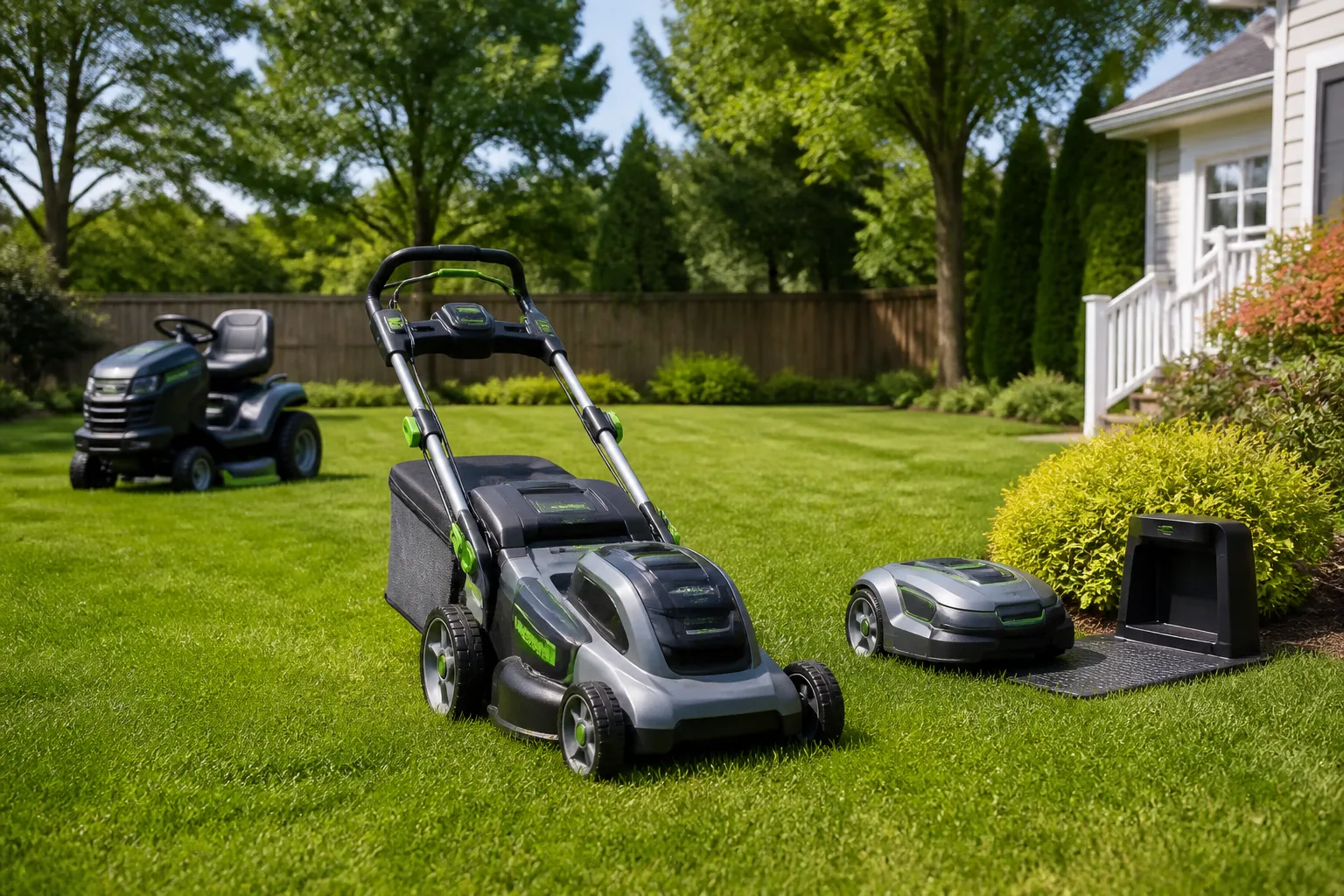
Gas and battery zero-turn mowers solve different ownership problems. Gas models remain the easier choice for long, uninterrupted mowing when fuel is available and local emissions rules allow the exact model. Tanks can be refilled quickly and gas machines are common across dealer networks. The cost is engine maintenance, fuel handling, noise, exhaust, and seasonal storage work.
Battery models remove oil changes, spark plugs, air filters, fuel stabilizer, and engine exhaust from the routine. They are quieter and easier to start, but the purchase cost can be high and the work ends when the usable charge is gone. A battery mower that reaches 2 acres in light, dry conditions may cover less in tall, damp grass with a bagger.
| If your priority is… | Start with… | Check before buying |
|---|---|---|
| Mowing for hours with one quick stop | Gas | Fuel access, emissions rules, oil and filter service, and dealer support |
| Minimal routine engine maintenance | Battery | Charge time, usable range, replacement-battery cost, and storage instructions |
| Broad commercial-feeling coverage | Large-deck gas | Gate width, trailer, storage, slope limits, and attachment cost |
| Lower-noise mowing near neighbors | Battery | Whether the battery covers the full job and how long charging takes |
| Smaller route and easier storage | 42-inch model | Actual assembled width, discharge clearance, and turning room |
The best power source is the one that matches your complete mowing loop: start, cut, clean the deck, park, refuel or recharge, and repeat the following week.
Why “Best for Hills” Needs a Safety Asterisk
No zero-turn mower should be labeled universally safe for hills. Independent reviewers may test a model on slopes, and a manufacturer may show a mower on a hillside, but neither changes the safe operating limits in the manual. The Ag Safety and Health Community of Practice advises inspecting the area, keeping people away, avoiding wet grass, operating more slowly, and mowing up and down slopes with a riding mower rather than crossing them. It also warns about overturns, runover hazards, projectiles, and bypassed safety features. (Ag Safety and Health Community of Practice riding-mower guidance)
Popular Mechanics describes testing sidehills up to about 20 degrees while noting that manufacturers generally recommend avoiding slopes above 10 degrees. That is a description of a test condition, not an invitation to reproduce it. Use the exact gradient limit in your mower’s manual, stay away from dropoffs and water, avoid wet or loose ground, and choose another mowing method when the route feels unstable.
Read the Manual Before Trusting Tires or Weight
Large rear tires, a heavy frame, suspension, and a ROPS can improve comfort or protection, but they do not erase rollover risk. Weight can also make a machine harder to stop or recover on a slope. Before buying, look for the model-specific slope guidance, seat-belt instructions, ROPS position, parking-brake behavior, and limits for attachments or towing.
If you are unsure about a slope, mark it and ask the dealer to show you the manual’s operating diagram for the exact model and deck configuration. Never let a “best for hills” label substitute for a property-specific safety decision. The safest choice may be a walk-behind mower, a slope-rated machine, or professional mowing service.
Controls, Cut Quality, and the Turfing Problem
Lap bars are simple once learned, but new operators should practice on a flat, open section with the blades disengaged and plenty of clearance. Learn neutral, reverse, parking brake, deck engagement, and emergency-stop behavior before approaching trees or beds. Make broad turns until you can control each wheel without repeatedly pivoting in place.
Zero-turn maneuverability can damage turf when the inside drive tire spins against the soil. Reduce speed before turning, avoid abrupt opposing bar movements, and use gradual arcs on soft or wet ground. If the mower leaves ruts or scuffs, the problem may be moisture, tire pressure, aggressive steering, a full hopper or bagger, or a route that is too tight for the machine.
Cut quality is not the same as maximum speed. The cleanest finish usually comes from a level deck, sharp blades, the right height for the grass species, dry enough conditions, and a speed that does not force the deck to overwhelm its discharge system. Going faster around an obstacle can create a missed strip, a clump, or a torn turn that takes longer to repair than the extra pass would have taken.
Maintenance, Charging, and Seasonal Storage
Every zero-turn needs more than a quick hose-down. Before each session, inspect the route, check the tires, look for loose hardware or damaged guards, and confirm that the seat switch, parking brake, and blade-control system behave as the manual describes. After mowing, remove packed clippings using the manufacturer’s approved method and never reach under a deck with the key in place or the power source connected.
For gas models, follow the engine schedule for oil, filter, spark plug, belt, fuel, and cooling-system checks. Do not store fuel casually or refuel a hot engine. For battery models, use the supplied charging equipment and follow the instructions for charging, cleaning, storage temperature, and long-term battery care. A battery mower still has blades, belts or drive components, bearings, tires, and safety systems that need attention.
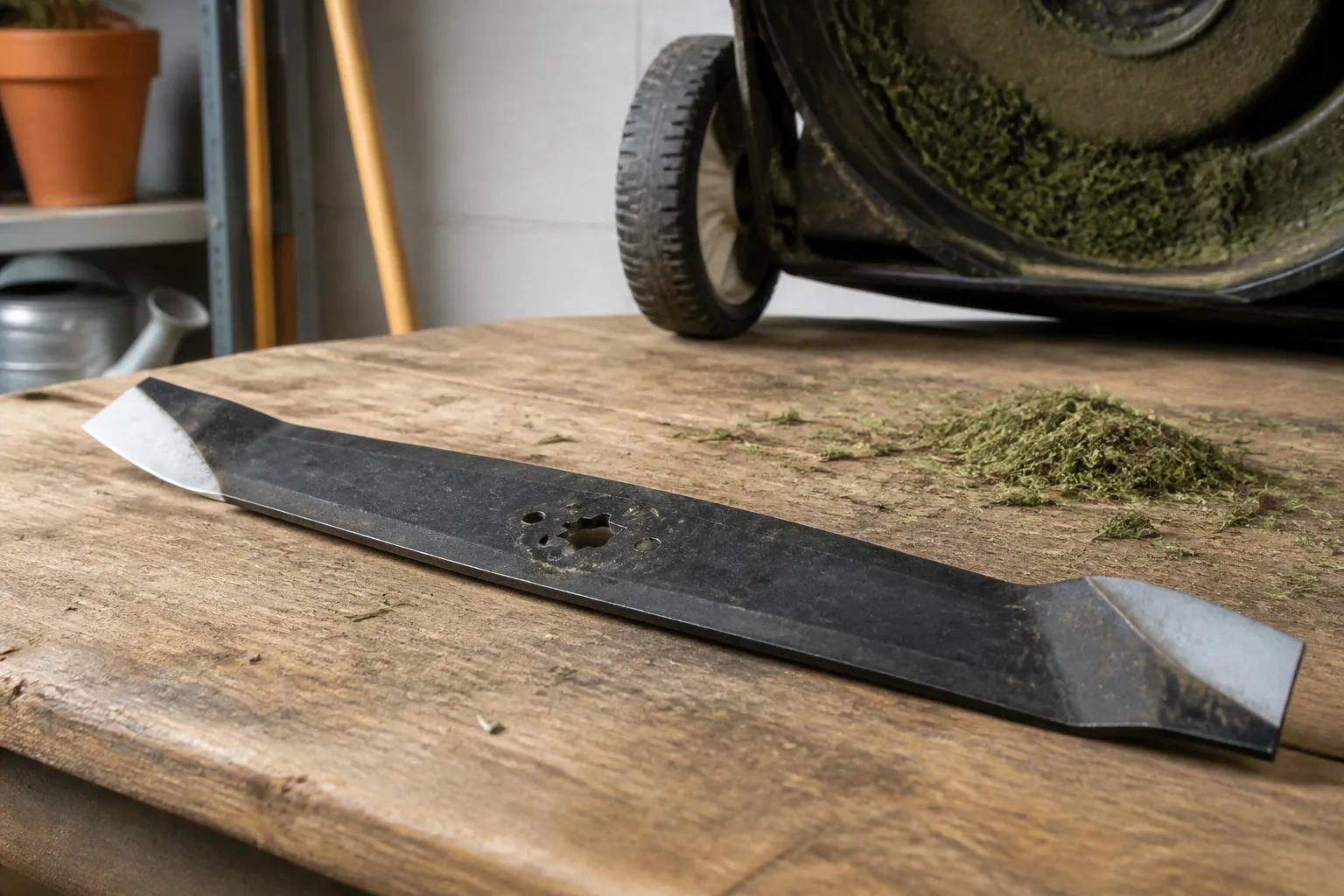
Blade condition affects both the finish and the workload. A dull or bent blade can make the mower work harder, leave ragged grass, and reduce battery range. Inspect the blade and deck only after the mower is shut down, the key is removed, and the manual’s isolation procedure is complete.
For seasonal storage, clean and dry the machine, protect it from weather as the manufacturer directs, and complete the gas or battery storage steps in the manual. Note the date of the last blade service, oil change, belt inspection, and battery charge so spring setup is a checklist rather than a guess.
What to Check Before You Buy
Use this short checklist before you compare a final price:
- Model status: Is the exact model still active on the manufacturer’s site, or is it marked discontinued?
- Mowable area: How many acres are actually grass, and how much of that area is open enough to use the mower’s full width?
- Route width: What is the narrowest gate, storage doorway, path, and trailer ramp? Use assembled width and add clearance.
- Terrain: What does the exact manual say about slopes, wet ground, dropoffs, ROPS, seat belts, and attachments?
- Power plan: Can gas be stored and serviced safely, or can the battery finish the job and recharge before the next one?
- Deck and cut: Is the deck fabricated or stamped, what is the height range, and can you level and service it easily?
- Support: Who handles warranty work, parts, battery replacement, and seasonal service in your area?
- Ownership total: Include delivery, trailer or ramp needs, baggers, mulch kits, spare blades, fuel, electricity, and storage.
- First-session routine: Will you have a flat practice area and time to learn lap bars before mowing around obstacles?
If a model fails the route or terrain check, a wider deck, lower price, or more horsepower will not make it the right mower.
Conclusion
For many homeowners, the Toro TimeCutter MyRIDE 42 is the most balanced gas choice for a flat lawn with obstacles and up to about 2 acres of mowable grass. The John Deere Z330R is a strong gas alternative when deck-size choice and dealer support matter. For battery power, the John Deere Z370R is the clearest low-maintenance fit for lawns within its published range, while the Ryobi ZR3 42 is the current compact electric option to investigate after the older Ryobi models were discontinued. The Toro TITAN MAX MyRIDE 60 earns the large-property spot when the route is broad, the ground is mostly flat or obstacle-filled, and you can handle its size and cost.
The final decision should come from the property: measure the route, calculate the mowable grass, read the slope guidance, and choose the power source you can maintain. A mower that fits those realities will usually beat a more powerful machine that cannot get through the gate, finish on one charge, or be operated safely.