How to Grow and Care for Sweet William
Learn how to grow and care for Sweet William with the right seed timing, sun, drainage, watering, deadheading, winter care, and troubleshooting.
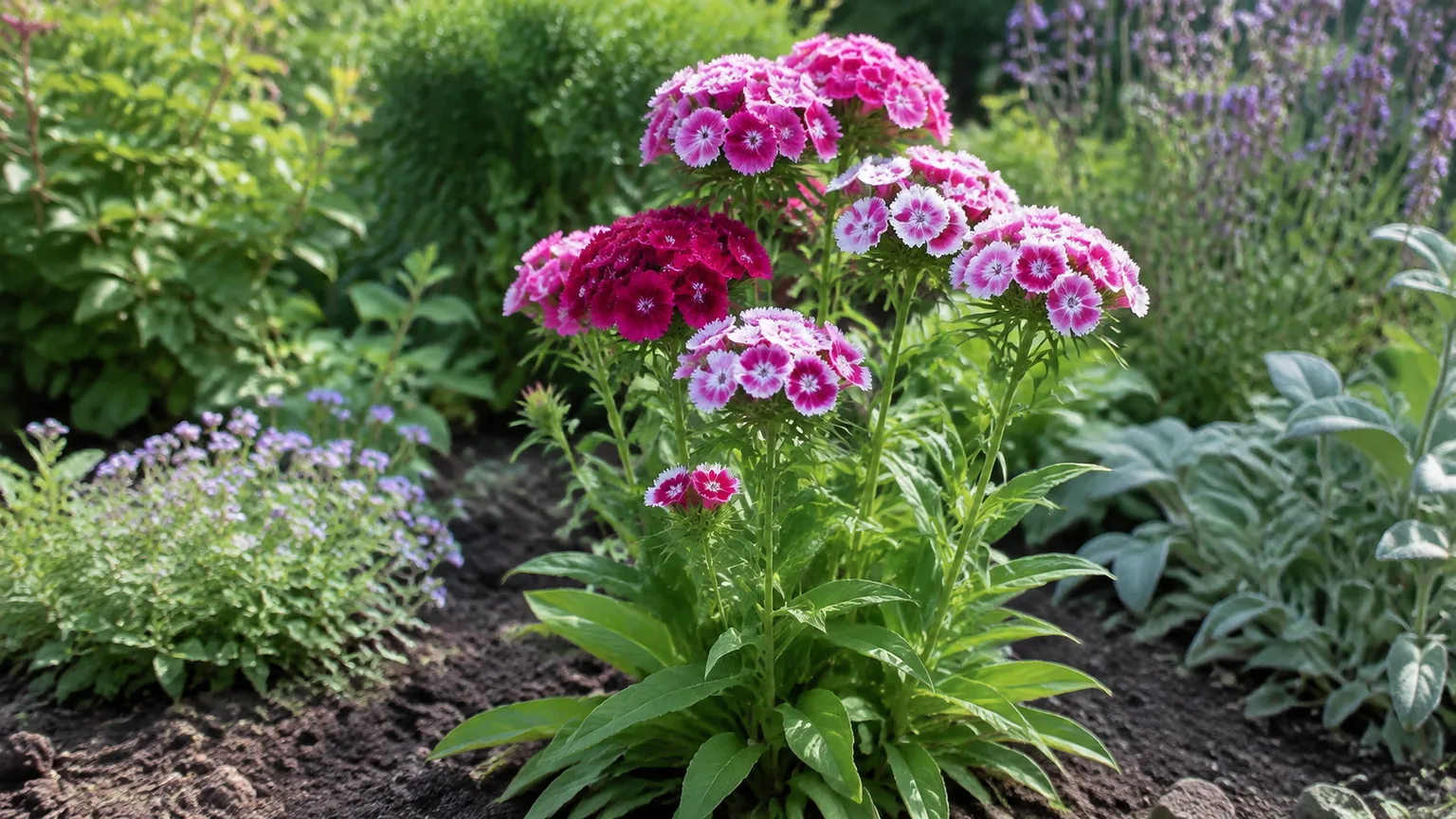
Sweet William (Dianthus barbatus) is easiest to grow when you stop treating it like a permanent shrub and start planning around its clock. A traditional sowing spends its first season building a low leafy rosette, flowers heavily in the next cool-to-mild season, then often fades after setting seed. That is not a care failure; it is the plant’s normal rhythm.
The practical reward is substantial: dense heads of fringed flowers in pink, red, white, purple, or bicolors, often on strong stems that work in a vase. Give it at least six hours of light, loose soil that drains quickly, even moisture, and enough space for air to move around the foliage. The Missouri Botanical Garden lists D. barbatus as hardy in USDA Zones 3–9, but the experience of a gardener in a hot, humid summer is different from that of someone with cool nights and a long spring. Missouri Botanical Garden
If you want flowers this year, buy a blooming plant or a quick-flowering cultivar and plant it while temperatures are moderate. If you want the widest choice of colors and a self-renewing patch, sow seed early enough to let the seedlings establish before winter. This guide helps you choose between those paths, then carries the plant through planting, bloom, seed, and dormancy.
Light, Soil, Water, and Feeding
Sweet William does not need an elaborate care routine, but it does need the basics to work together. More sun cannot compensate for a saturated root zone, and fertilizer cannot repair a crowded planting with wet leaves. Start with the site; maintenance becomes easier when the plant is not fighting its location.
Give Sweet William bright light without baking it
Choose full sun for the strongest stems and fullest flower clusters. A site with morning through early afternoon sun is usually ideal, especially where summer heat is intense. Six or more hours of direct light is a useful target; less light can produce stretched growth, fewer flowers, and a floppy plant that stays damp inside.
In a hot region, light afternoon shade is a tactical adjustment, not an invitation to grow Sweet William in deep shade. Shade after the hottest part of the day can protect flowers and keep the root zone from cycling between severe heat and rapid drying. GrowVeg and the Missouri Botanical Garden both describe full sun to part shade as workable, with shade particularly useful in hot conditions. GrowVeg
Watch the plant rather than the label on the patio. If stems lean toward the brightest side, move a container before it becomes top-heavy. If leaves stay wet overnight in a dim, crowded bed, more sun and more spacing may solve what looks like a disease problem.
Build drainage before adding fertilizer
The best soil is fertile, crumbly, and free-draining, with enough organic matter to hold moisture without becoming a basin. Sweet William tolerates a broad pH range, but neutral to slightly alkaline soil is a sensible target. A soil test is more useful than adding lime by guesswork; a pH amendment that is unnecessary can create a new imbalance without fixing compaction.
Before planting, dig a broad area rather than a narrow, deep hole. Mix finished compost into poor soil, break up compacted layers, and check that water disappears rather than sitting in a saucer after irrigation. In heavy clay, a raised bed or a gently mounded planting area is often a better long-term fix than repeatedly adding small amounts of amendment to an individual hole.
Avoid burying the crown. Set a transplant at the same level it grew in its pot, with the rosette sitting just above the soil surface. A thick, wet mulch against the crown can trap moisture where stems meet roots; leave a small clear ring around the plant and keep mulch thin enough that the crown stays dry.
Water to the root zone, not by the calendar
Water new plants when the upper soil begins to dry, then soak the root zone thoroughly and let excess water drain away. Established plants need consistent moisture during active growth and flowering, but “moist” does not mean constantly wet. In a garden bed, rainfall may be enough in a cool spring; in a pot, the same plant may need checking every day during hot, windy weather.
Feel the soil several inches down before watering. If it is cool and sticky, wait. If it is dry below the surface and the foliage is losing firmness, water slowly at the base until the root zone is wetted, then empty a saucer beneath a container. Drip irrigation or a narrow-spout watering can keeps foliage drier than overhead sprinklers, which matters because UC IPM links Sweet William leaf spot with wet weather and overhead irrigation. UC IPM
Feed lightly. A compost top-dressing or one balanced fertilizer application when spring growth becomes vigorous is usually enough in fertile soil. GrowVeg recommends feeding when new growth is active rather than running a heavy schedule. Excess nitrogen can create lush, soft foliage that flops, shades the center, and stays wet; it does not reliably buy more flower clusters. GrowVeg
Choose Seed, Starts, or Blooming Plants
Your starting material determines what “success” looks like. Seed is inexpensive and gives you more cultivar choices, but it asks for patience. A young plug or fall plant can make a strong flowering display the following season. A nursery plant already carrying buds is the fastest route to color, but it may have been raised under conditions different from your garden and may be sold as an annual even though it can persist longer.
Use seed timing to control the bloom year
Traditional Sweet William is usually grown as a biennial: foliage first, flowers second. Sow in late spring or early summer, keep the seedlings evenly moist, and transplant them once they have developed a sturdy root system. A late-summer sowing can also work where autumn stays mild long enough for plants to establish before cold weather.
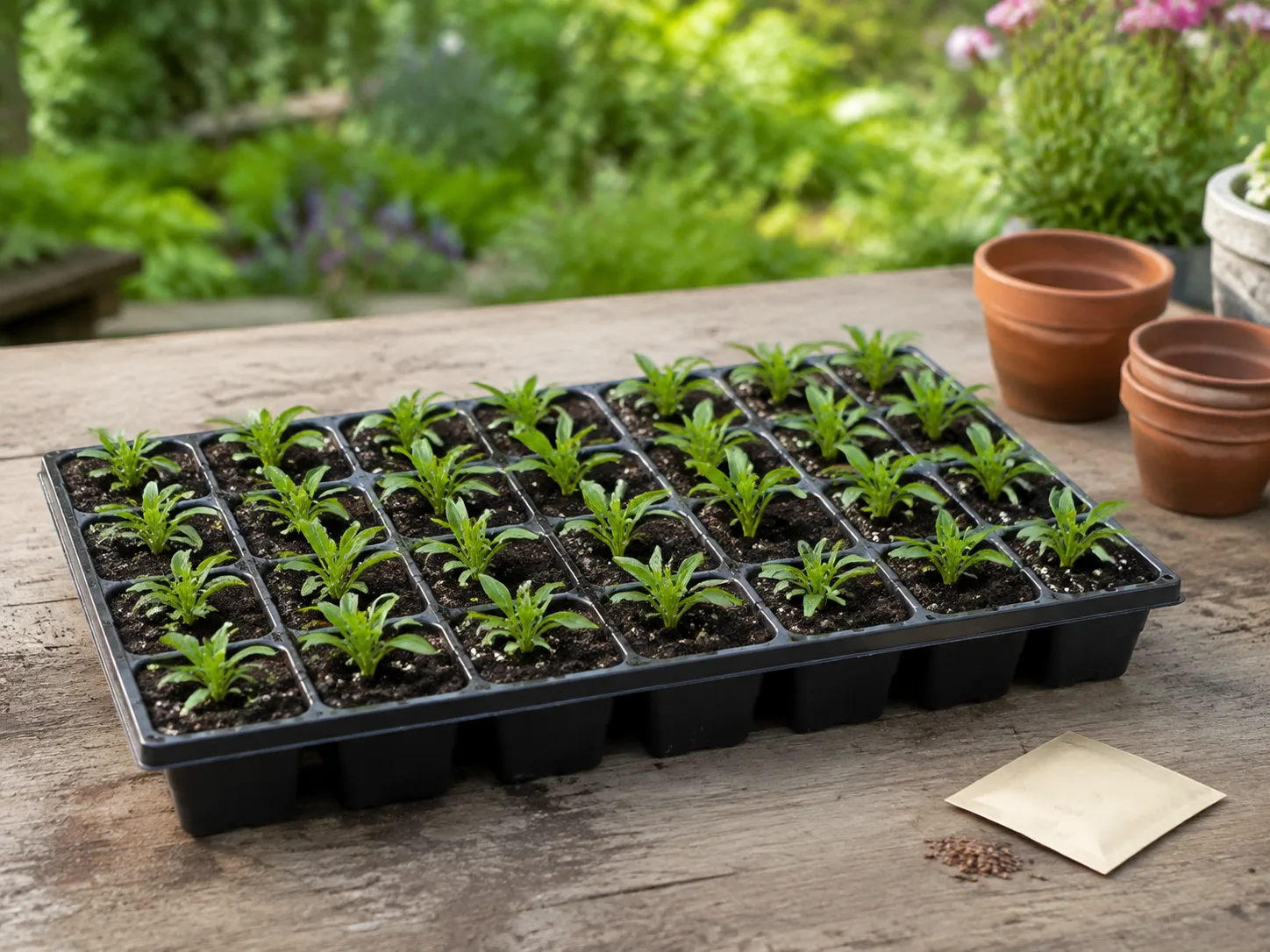
For first-year flowers, start early indoors or choose a cultivar bred for quick flowering. Cool conditions are helpful during establishment; the GrowVeg guide gives a germination window of about 7–10 days and recommends setting plants out while the weather is still cool. A seedling that becomes tall and thin on a hot windowsill is not necessarily weak genetics; it may simply be chasing light and growing too warm. GrowVeg
Fill clean cells with a fine, well-drained seed-starting mix and sow according to the packet, usually covering seed only lightly. Give the tray strong light as soon as seedlings emerge, provide gentle air movement, and water from below or at the soil surface. Thin crowded seedlings early. Crowding is not just a cosmetic problem: it creates a humid canopy that makes transplanting harder and increases the chance of leaf disease.
Harden seedlings before planting outside. Over about a week, expose them to increasing amounts of outdoor light and wind while protecting them from the harshest midday conditions at first. Transplant on a mild day, water the root zone, and avoid pushing a soft seedling directly from a warm indoor room into a hot, bright border.
Plant young starts while the weather is cool
Plug plants and sturdy young starts are a good middle route. They remove the most delicate seedling stage but still let the plant build its rosette before the main bloom season. BBC Gardeners’ World recommends growing seed in small pots until established, then planting out in summer or early autumn; it also notes that ready-grown plants are commonly available for same-season color. BBC Gardeners’ World
When buying, choose a plant with a compact center, firm stems, and clean foliage. Avoid a root ball that smells sour, has roots circling densely around the outside, or stays visibly waterlogged. Check the botanical name on the label: “dianthus” covers annuals, biennials, and perennials with different habits, while Dianthus barbatus is the Sweet William you are planning for here.
How to Plant Sweet William Outdoors
Planting is the moment to prevent the problems that later look mysterious. A plant set too close to its neighbor may flower well at first, then develop a damp, collapsing center. A plant placed in a shallow pot may dry out every afternoon even though the soil is technically well drained.
Prepare the site and space plants for airflow
Clear perennial weeds, loosen the soil, and add compost only if the bed needs more organic matter. Set each plant at its original depth, firm the soil gently, and water it in. Leave roughly 8–12 inches between plants, adjusting for the cultivar’s mature width; compact series can sit closer, while tall cut-flower types benefit from more room.
Spacing is a health decision as much as a design decision. The GrowVeg guide lists 8 inches as a minimum, while BBC Gardeners’ World gives 30cm spacing for plants grown in rows as cut flowers. Wider spacing helps leaves dry after rain and makes it possible to inspect the crown, remove weeds, and harvest stems without brushing against every neighboring plant. GrowVeg BBC Gardeners’ World
Water deeply after planting, then check the soil before repeating. Do not build a raised ring that holds water against the crown. If the bed is prone to puddling, raise the entire planting area or choose a different location; Sweet William is a poor candidate for a low pocket that stays saturated after storms.
Grow compact varieties in containers
Sweet William can grow well in a pot when the container is wide enough for the plant’s mature spread and has an unobstructed drainage hole. Choose a quality container mix rather than garden soil, which can compact in a pot. A compact cultivar in a 5-inch pot may flower, but a larger container is more forgiving because it holds moisture and supports the top growth without tipping.
Place the pot in full sun or morning sun with afternoon relief in a hot climate. Containers dry faster than beds, so check the mix with a finger instead of assuming yesterday’s rain reached the roots. Water until it drains from the bottom, then remove collected water from the saucer. Terra-cotta dries faster but gives a helpful visual cue; plastic holds moisture longer and needs more cautious watering.
Do not expect an indoor windowsill to be an ideal permanent home. Sweet William is an outdoor, cool-season garden plant, and an indoor location usually provides less direct light and weaker air movement than the plant needs for compact growth. A sunny porch, balcony, or patio is generally the better container setting.
Deadheading, Cutting Back, and Reseeding
Sweet William gives you a useful choice after flowering: extend the display, collect seed, or let the patch renew itself. There is no single “correct” cleanup method. The right timing depends on whether you want another flush of flowers, predictable color, or volunteers next year.
Choose between more flowers and more seed
To encourage the longest display, remove a spent flower cluster before it turns fully brown. Follow the stem down to a healthy pair of leaves or a side shoot and cut just above that point with clean snips. Removing the whole flowering stem rather than only pinching off the top keeps the plant tidy and reduces dead material inside the canopy.
Deadheading redirects the plant away from seed production and can support additional flowering when the cultivar is capable of it. It also prevents seedlings from appearing exactly where the parent grew. If your goal is a naturalized cottage-garden patch, leave a few late flower heads on the strongest plants and let their seeds mature.
Saved seed is not a guarantee of identical plants. Mixed-color plantings can cross, and Missouri Botanical Garden notes that double-flowered forms may not come true from seed. Treat the resulting seedlings as a pleasant surprise rather than a way to reproduce a named double cultivar exactly. Missouri Botanical Garden
Finish the season without smothering the crown
Once flowering is finished, remove collapsing flower stems and diseased foliage, but avoid an automatic hard cutback while the plant is still green and building reserves. In many gardens, a clean cut to the base after flowering is reasonable, especially when the plant is declining or the bed needs better airflow. In colder climates, leave a low, healthy rosette until it naturally slows, then protect the root zone with a light mulch applied around—not over—the crown.
Container plants are more exposed to winter cold than plants in the ground because the entire root ball can freeze. Move pots to a sheltered spot out of prevailing wind and away from repeated freeze-thaw swings, while still keeping the mix on the dry side of moist. Do not wrap a wet pot so tightly that drainage and air movement disappear.
Propagation and a Simple Succession Plan
Seed is the most practical way to propagate Sweet William for most home gardeners. Collect dry, dark seeds when capsules have matured, or allow a few heads to drop seed naturally. Sow more than you need, because seedlings vary in vigor and natural self-sowing is less predictable in a heavily mulched or frequently disturbed bed.
Cuttings are possible, particularly from healthy soft growth, but they are less straightforward than seed for a biennial plant. Use a clean, nonflowering shoot, remove the lower leaves, and place it in a sterile, free-draining propagation medium. Keep the medium lightly moist, provide bright filtered light, and give the cutting gentle airflow. The Gardening Know How overview notes that Dianthus cuttings are commonly rooted from soft stem segments and may root in roughly one to two weeks under suitable conditions, but success depends on timing, cleanliness, and the type of Dianthus. Gardening Know How
For dependable annual color, use a three-part succession plan. In year one, sow a new batch while the current plants flower. In year two, transplant or thin the young rosettes into their final positions. As the older plants bloom, retain a few seed heads or start another packet. This staggered approach prevents the entire border from reaching the end of its short life at once.
Diagnose Common Problems
Most Sweet William problems become easier to solve when you examine the soil and the newest growth before reaching for a spray. A yellow leaf at the base of an aging rosette is not the same as a whole plant that is yellowing, stunted, and wilting. Likewise, a few holes from slugs call for a different response than brown lesions spreading across wet foliage.
Separate yellowing, droop, and crown rot
If lower leaves yellow slowly while the plant remains firm and new growth looks healthy, check age, crowding, and watering first. Remove leaves that are fully spent, improve airflow, and let the surface dry slightly between waterings. If the soil is saturated, do not add fertilizer; correct drainage and inspect the roots instead.
Yellowing accompanied by a soft crown, sour-smelling soil, or a plant that pulls loose points toward crown or root rot. Remove the plant from a container, or gently expose the crown in a bed, and look for dark, mushy roots rather than firm pale ones. There is no reliable rescue for a plant whose crown has collapsed; discard affected material and improve drainage before replanting.
UC IPM describes Fusarium wilt on Sweet William as yellowing of new growth, downward-pointing leaves, stunting, and brown discoloration in the lower stem and roots. Because the pathogen can persist in soil, a plant showing that pattern should be removed rather than repeatedly watered or treated as a simple thirst problem. Avoid moving soil from the affected root zone to clean beds, and use clean medium for future starts. UC IPM
Manage leaf spots, rust, slugs, and snails
Small yellow-brown spots with a darker margin that expand after wet weather are more concerning than a single sun-scorched patch. UC IPM identifies leaf spot as favored by wet weather and overhead irrigation and recommends avoiding overhead watering; remove badly affected leaves, space plants better, and water at the base. If symptoms continue, use only a fungicide labeled for the crop and disease in your area, following that label exactly. UC IPM
Rust can show as orange or rust-colored pustules and premature leaf decline. Improve ventilation, avoid handling wet plants, remove infected debris, and do not compost diseased material unless your local composting guidance confirms that the process reaches a reliable pathogen-killing temperature. Missouri Botanical Garden also flags rust and crown rot as problems that are more likely in poorly drained soil. Missouri Botanical Garden
Slugs and snails often damage young foliage close to the soil, especially in cool, damp spring weather. Check at dusk or early morning, remove hiding places such as boards and dense debris, and use a control method permitted by your local label and safe for the people and animals using the garden. The GrowVeg guide lists slugs and snails as the main pests to watch, while Gardening Know How recommends regular monitoring for slug and aphid damage in Dianthus. GrowVeg Gardening Know How
Harvest Flowers and Finish the Season
Sweet William is a strong cut flower because its stems hold dense heads above the foliage and the blooms can last well in water. Harvest when the cluster is partly open, with several florets showing color but before every flower has fully expanded. Cut in the cool morning, choose a stem with a firm base, and remove leaves that would sit below the waterline.
Re-cut the stems at an angle with a clean blade and place them immediately in a clean vase of fresh water. Change the water when it becomes cloudy and remove any submerged leaves. Do not strip every stem from a small plant; leave enough foliage and flowering shoots for the plant to keep building energy if you hope it will return or set seed.
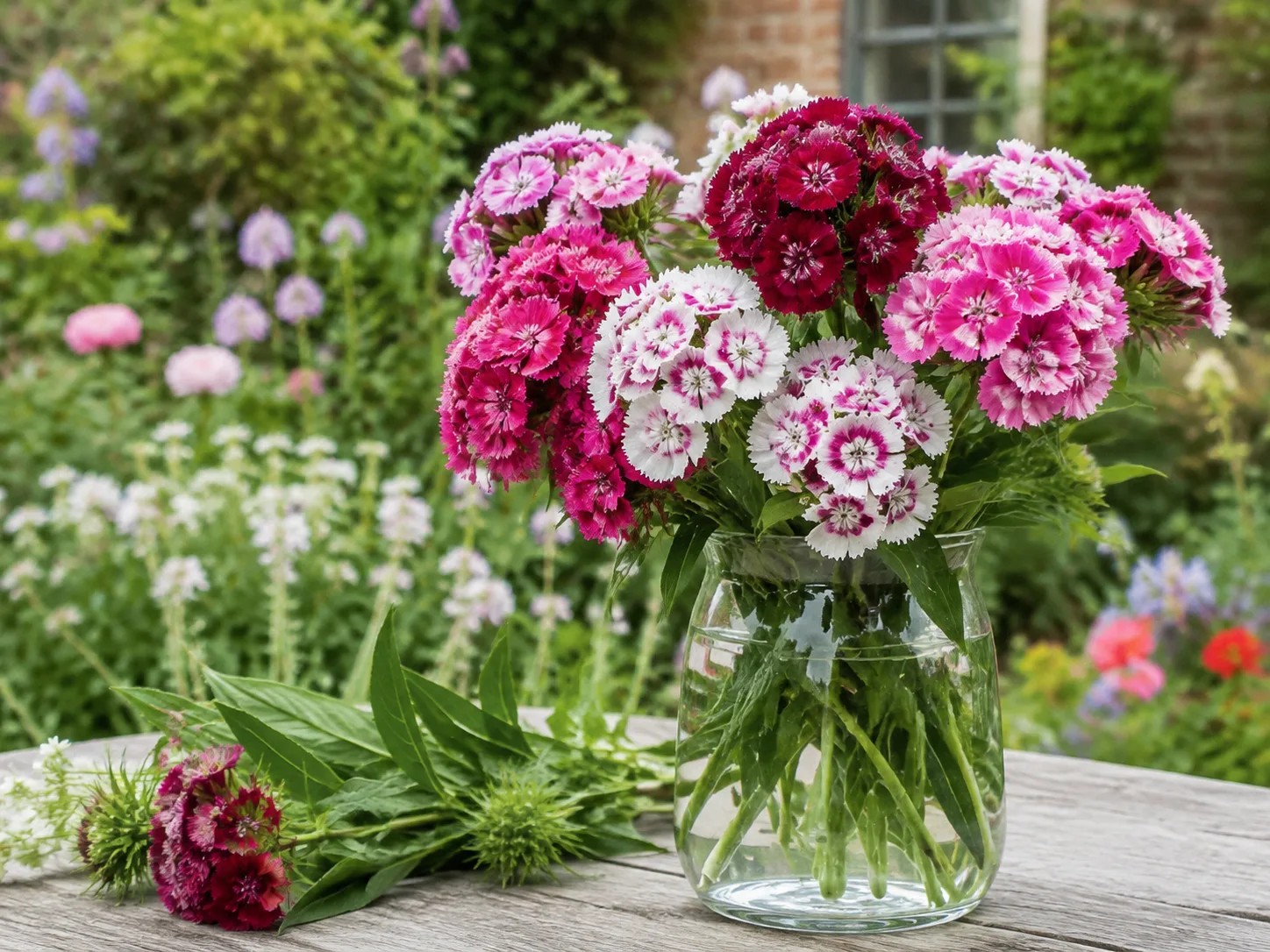
For the strongest cutting patch, grow tall varieties in a dedicated row and give them enough spacing for straight stems. A mixed border produces charming stems but can make harvesting awkward if neighboring plants lean into the cluster. BBC Gardeners’ World recommends row-growing and thinning seedlings to 30cm for cut flowers, a useful reminder that the best spacing for a bouquet garden may be wider than the spacing for a dense bedding display. BBC Gardeners’ World
Conclusion
The key to Sweet William is timing: give first-year seedlings time to make a rosette, give flowering plants sun and drainage, and decide deliberately whether spent flowers should become another flush of bloom or next year’s seed. Plant in loose soil, water deeply only when the root zone needs it, and keep foliage from staying wet overnight.
If you want predictable color, buy a cultivar chosen for your bloom window or start seed early. If you want a self-renewing cottage-garden patch, allow a few seed heads to mature and sow a new batch every season. With that succession plan—and with prompt attention to wet soil, crowded foliage, and unusual whole-plant yellowing—Sweet William can give you reliable flowers without pretending to be a permanent perennial.