How to Water a Fiddle Leaf Fig the Right Way
Water a fiddle leaf fig at the right time with a simple soil check, thorough soak, full drain, and troubleshooting guide for yellow or crispy leaves.
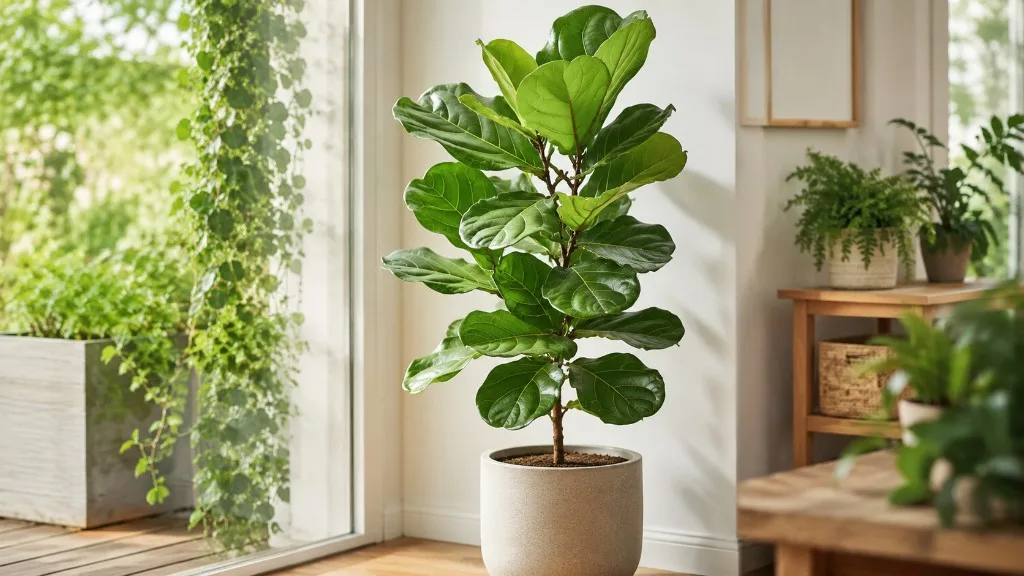
The right way to water a fiddle leaf fig is simple: check the upper root zone, water thoroughly when it has dried enough, and let the pot drain completely. Do not water because it is Tuesday, because one leaf is yellow, or because the surface looks dry while the bottom of the pot is still wet.
Fiddle leaf figs (Ficus lyrata) are tropical trees that can handle a little dry-down but dislike roots that stay saturated. The NC State Extension plant profile describes them as sensitive to overwatering and recommends moist, well-drained soil, while the Royal Horticultural Society’s ornamental-fig guide advises regular watering during active growth and only slightly moist compost in winter. That combination points to a rhythm rather than a fixed number: check on a schedule, but water from evidence.
The short answer: check the root zone, then water deeply
For most indoor fiddle leaf figs, start by checking the mix about 2 to 3 inches down. If that depth feels dry, the pot feels lighter than it did after watering, and the container has open drainage, water slowly until a little runs from the bottom. If the mix is still cool or damp, wait several days and check again.
The upper surface is a poor decision-maker by itself. A large pot can have a dry crust over a wet center, especially in winter or in a dim room. Conversely, a small plant in a warm, bright window can have a dry root ball even when the soil surface still looks dark. Your goal is a partially dry root zone, not a particular day of the week.
How often to water a fiddle leaf fig
Many indoor fiddle leaf figs need a moisture check about once a week during bright, active growth. Watering may then land around every 7 to 10 days, but that is only a starting range. A plant in a large plastic pot with dense mix may need much longer; one in a small nursery pot near a bright window may dry sooner.
The Missouri Botanical Garden’s plant profile describes Ficus lyrata as a medium-water plant, with regular watering in the growing season and reduced watering from fall through late winter. An Ideal Home watering guide likewise treats 7 to 10 days in summer and 10 to 14 days in winter as starting points that must yield to dry soil and pot weight. That is more useful than a universal cup measurement because it connects water demand to growth and drying conditions.
Starting intervals by light and season
Use these as check-in windows, not automatic watering appointments:
- Bright indirect light and active growth: inspect weekly; watering often falls every 7 to 14 days.
- Average light and a medium pot: inspect every 7 to 10 days; water only when the mix passes the depth test.
- Low light, cool rooms, or winter slowdown: inspect every 2 to 3 weeks; the interval can stretch much longer.
- Hot, dry, bright conditions: inspect more often, sometimes every few days, but increase water only when the root zone actually dries.
Light changes the plant’s energy use, while temperature and air movement change evaporation. A sunny bay window, heater, or air-conditioning vent can shorten the interval; a dim corner and a large moisture-holding pot can lengthen it. If you move the plant, treat the next two or three checks as a new calibration period.
Seasonal change is not the same as outdoor weather. A heated winter room may feel dry to you while the pot remains wet because short days reduce growth and the plant uses less water. In summer, a bright room can dry a container quickly, but a humid or rainy spell can do the opposite. Check the pot after a weather change instead of adding water just because the leaves feel less glossy.
How to tell if it needs water today
Use three clues together: soil feel, pot weight, and drainage behavior. Leaves are supporting evidence, not the first test, because drooping and leaf drop can follow both dehydration and damaged roots.
The finger test and pot-weight clues
Push a clean finger into the mix near the pot edge, going about 2 inches down in a small or medium pot and farther in a large container when you can. Dry and crumbly at that depth usually means it is time to water; cool, dark, or tacky mix means wait. Check two spots if the pot is wide, because a root ball can dry unevenly.
Lift the pot whenever you check it. A recently watered plant should feel substantially heavier than a plant that is ready for another drink. The exact weight is not important; comparing the same pot before and after watering teaches you more than a generic “one cup per two feet” formula ever can.
If you cannot lift a floor plant safely, press the mix near the edge and use a wooden skewer as a second check. Push it down into the pot, pull it out, and look for damp soil clinging below the surface. This can reveal a wet lower layer that a fingertip cannot reach. Avoid repeatedly stabbing through dense roots in the same spot; rotate the checking position.
Look for soil pulling away from the pot wall, but do not wait for severe shrinkage. A gap can allow water to run down the sides while leaving the center dry. If the mix has become water-repellent, use a slower pour or a short bottom-watering session to rewet it evenly.
When a moisture meter helps
A moisture meter is useful for a tall pot you cannot reach, for comparing different spots, or for learning how quickly your mix dries. Insert the probe into the root zone rather than just the top inch, test more than one location, and use the reading as a trend.
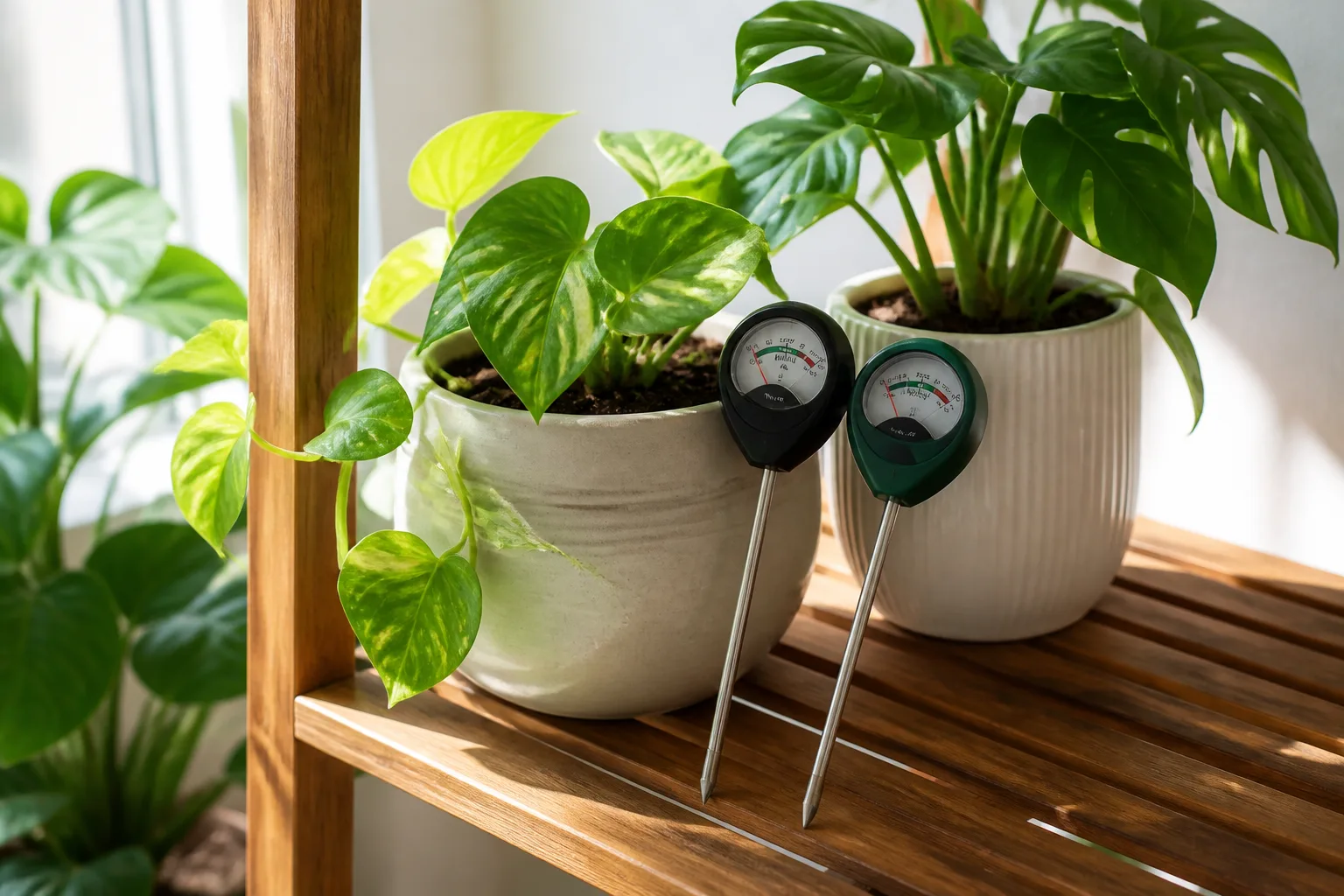
Meters are not infallible. Bark, perlite, compacted pockets, roots, mineral deposits, or a dirty probe can make a cheap meter look more exact than it is. If the meter says dry but the soil is visibly wet, clean the probe and cross-check with touch, pot weight, and whether the container has drained.
How to water a fiddle leaf fig step by step
When the plant passes the moisture check, take the inner pot out of its decorative container or move it to a sink, tub, shower, or protected outdoor spot. Use room-temperature water and aim at the soil, not the leaves or trunk. Watering in the morning gives splashed foliage more time to dry, but good drainage matters more than the clock.
Top-water until runoff
Pour slowly around the surface in a circle, wetting the mix evenly rather than creating one channel beside the stem. Pause if the water races through immediately; very dry or hydrophobic mix may need several smaller passes so the root ball can absorb water instead of shedding it along a pot wall.
Continue until water begins to flow from the drainage holes. The goal is to wet the full root ball, not to deliver a measured number of cups. Container size, root density, mix texture, and dryness all change the volume needed. The BHG guide to watering indoor plants likewise recommends saturating dry mix until it drains from the hole.
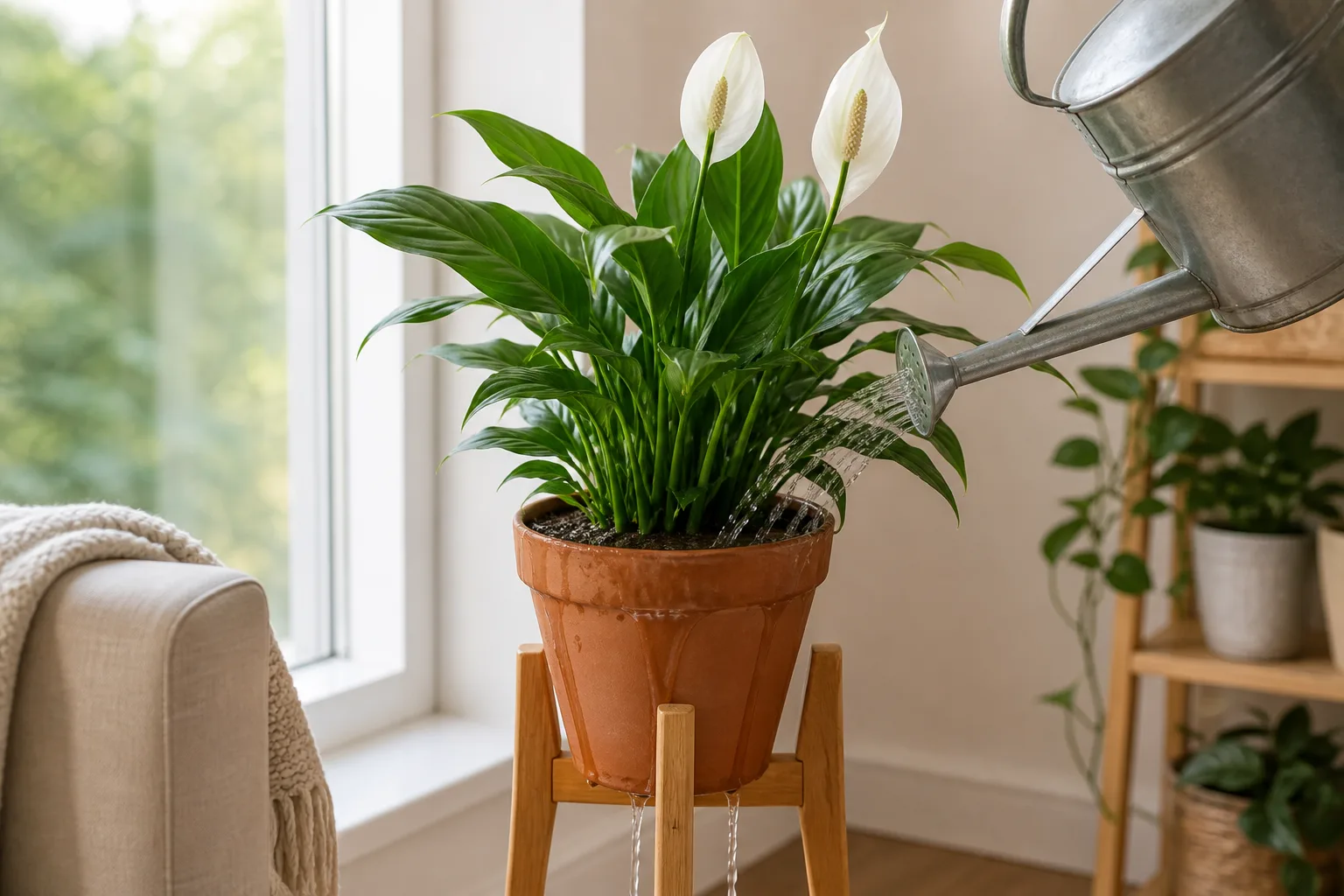
If the first water disappears instantly, do not interpret that as proof that the pot needs more and more water at once. Dry peat-based mix can shrink and create channels, sending water around the root ball. Pour a little, wait a minute, pour again, and watch whether the surface begins to absorb evenly. Once the mix is rehydrated, the next watering should be slower and more uniform.
Let it drain before returning it to a cachepot
Leave the nursery pot alone until the stream slows substantially, then empty the saucer or cachepot. A decorative pot without a drainage hole can hide standing water for days, keeping the lower roots short of oxygen even if the top appears dry.
Never use a full saucer as a reservoir unless the container is specifically designed for controlled sub-irrigation and you are monitoring it. A fiddle leaf fig needs a wet-to-drier cycle, not roots permanently parked in runoff. If water collects in the outer pot, pour it out before returning the plant.
This drain step is especially important when the plant lives in a heavy decorative planter. The outer container can be dry on its rim while holding a surprising amount of runoff at the bottom. Lift the inner pot, feel its weight, and check the base before assuming the plant has dried enough for another watering.
Build a pot-and-soil setup that prevents overwatering
Watering technique cannot rescue a container that traps water. NC State Extension lists fiddle leaf fig as intolerant of wet soils and recommends good drainage, while the RHS profile describes its preferred moisture as moist but well-drained. Think of the pot, mix, and room as one watering system.
Drainage holes and cachepots
Keep the plant in a nursery pot or grow pot with several unobstructed holes. Set that pot inside a cachepot for appearance, but leave enough space for runoff and lift the inner pot out to water. One tiny hole under a large pot is easy to block with roots or compacted mix.
Choose a container only modestly larger than the root ball when repotting. An oversized pot contains more wet mix than the roots can use, so it stays damp longer. A terracotta pot may dry faster through its sides than plastic, but material never overrides the moisture check; a cool, dim terracotta pot can still stay wet.
Airy mix and even rewetting
Use a loose houseplant mix that drains freely but still holds enough moisture for the roots. A quality potting mix amended with perlite or fine bark can create more air space, but adding more grit is not a substitute for drainage holes or appropriate light. If water sits on top, smells sour, or remains wet for an unusually long time, investigate compaction and the container rather than watering more often.
Watch the first watering after a repot. If water flows around the edge and out immediately while the center stays dry, the mix may be hydrophobic or the root ball may have shrunk away from the pot. Rewet in slow passes, check below the surface, and avoid repeating the process the next day unless the root zone is genuinely dry again.
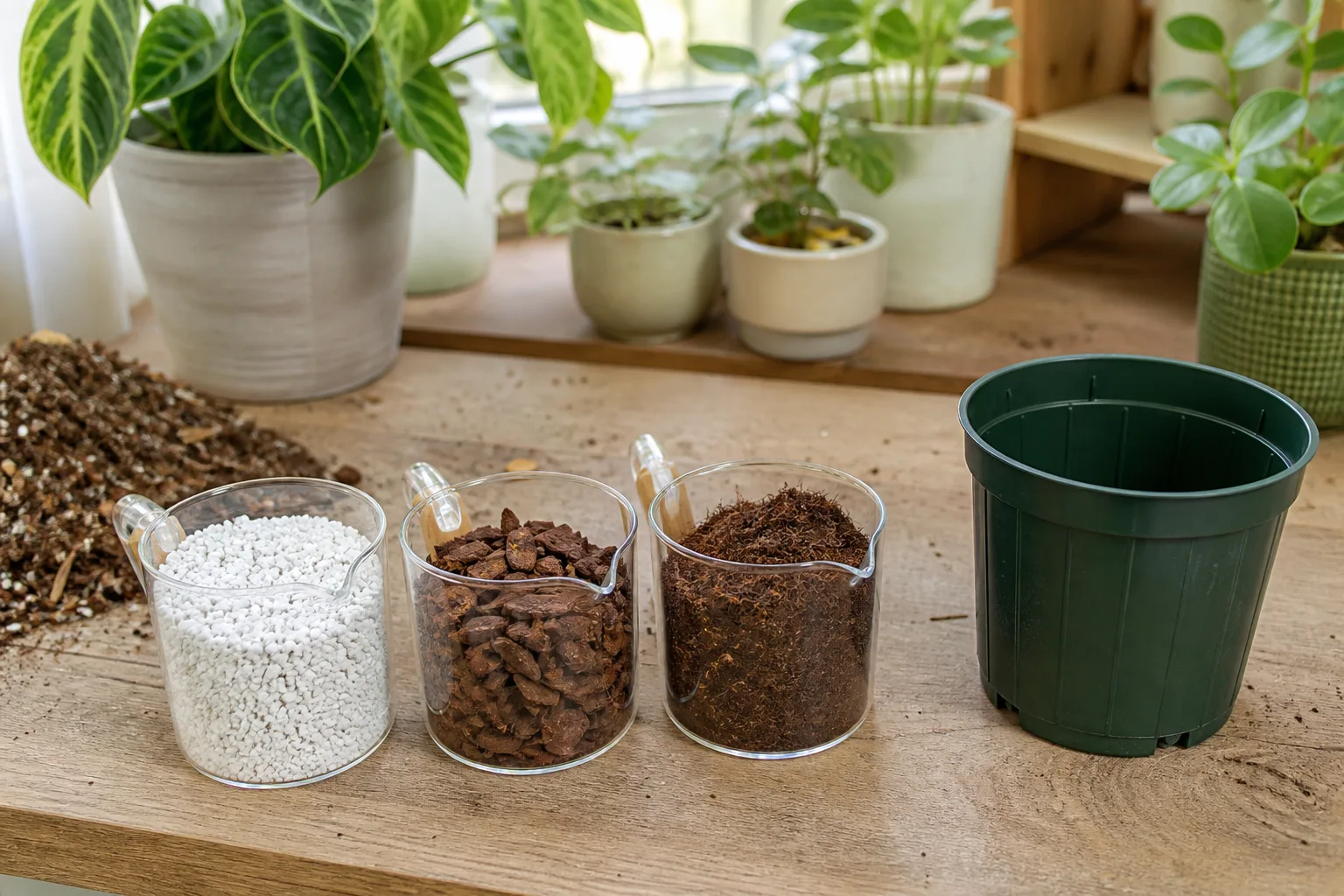
Do not put a layer of stones in the bottom of a pot as a substitute for a drainage hole. It reduces the volume available to roots but does not create a raised water table that keeps the root zone dry. A real hole, an appropriate pot size, and a mix with stable air spaces are the controls that matter.
Bottom watering: when it helps and when it hurts
Bottom watering can be useful when a severely dry root ball repels water from above. Set the nursery pot, with drainage holes, in a shallow basin of room-temperature water for about 15 to 30 minutes, or until the surface becomes lightly moist. Lift it out, let it drain fully, and empty the basin.
This is a rehydration tool, not permission to keep the pot sitting in water. For a large fiddle leaf fig, top watering is usually easier and gives you a better chance to flush salts through the mix. If bottom watering becomes your default, periodically water from above until runoff appears so fertilizer and hard-water minerals do not concentrate in the upper mix.
Do not bottom water a plant whose soil is already wet. That only extends the saturated period. Also skip the method for a decorative pot without drainage holes; water cannot enter and leave in a controlled way, so the setup becomes a submerged container.
Self-watering planters are a separate decision. A reservoir can work when the pot has a designed wick or sub-irrigation zone and the mix, light, and plant size are suited to it, but an ordinary pot sitting in a saucer is not a self-watering system. If you use a reservoir planter, still inspect the mix and reservoir rather than assuming the indicator replaces plant observation.
Troubleshoot wet versus dry symptoms
Start with the soil before changing the schedule. A wilted-looking fiddle leaf fig can be thirsty, but it can also have roots too damaged to move water through the plant. The direction of the diagnosis comes from the root-zone condition and the timeline, not from one leaf.
Signs of overwatering
Overwatering usually means watering again before the mix has dried enough, not simply giving one generous drink. Suspect it when the soil stays wet for many days, the pot feels heavy, yellowing spreads, dark or soft spots appear, the base becomes weak, or the mix smells sour. Fungus gnats and stalled new growth can support the diagnosis, but none is conclusive alone.
The RHS notes that sudden leaf drop can also follow low winter temperatures, low light, drafts, or excess fertilizer. If the soil is damp, stop watering, remove the cachepot, confirm that holes are open, and move the plant to bright indirect light with normal airflow. Do not put a waterlogged pot into harsh direct sun to force-dry it; that adds heat stress without restoring damaged roots.
If wetness persists or the stem base softens, inspect the roots. Healthy roots should feel firm; roots affected by rot are often brown or black, soft, and easy to pull apart. At that point the problem is no longer solved by waiting for the next calendar date.
Do not remove a healthy plant from its pot every time one leaf changes color. First compare the symptom with the soil condition, check whether the plant was moved, and look for a pattern across several leaves. Root inspection makes sense when wetness is persistent, the plant is collapsing despite saturated soil, or the pot smells sour and drains poorly. Unnecessary disturbance can add stress to a plant that simply needs a corrected schedule.
Signs of underwatering
Underwatering is more likely when the mix is dry several inches down, the pot is unusually light, the soil has pulled from the sides, and leaves are curling, puckering, drooping, or developing crispy edges. New leaves may stay small, and the plant may recover some firmness after a thorough drink.
Water slowly until the root ball is evenly wet and runoff appears. If water immediately races through a gap, pause and repeat with smaller pours, or bottom-water once to rehydrate the mix. Do not respond with daily splashes; one complete drink followed by a fresh drying observation is easier on the roots.
Brown edges can also reflect dry air, salt buildup, direct sun, or root damage. A plant can have a dry surface and still have a problem below, so use leaf appearance to prompt a soil check, not to set the watering amount.
When a plant is genuinely dry, avoid swinging from neglect to a daily rescue routine. A root ball that has dried hard may take two or three slow passes to accept water; let each pass soak in, then drain the pot. Once it is evenly wet, record how long it takes to dry at the same depth. That interval is the useful lesson from the rescue, not a permanent instruction to water more often.
Adjust watering after repotting or root damage
After repotting, do not copy the old schedule. Fresh mix, a larger container, fewer roots, or a different pot material changes how quickly moisture disappears. Check the new container more often at first, then record how many days it takes to move from thoroughly wet to dry at the root-zone depth.
If you removed rotted roots, the plant may need less water for a while because it has less functioning root tissue. Keep the mix lightly and evenly moist only if the remaining roots and plant condition call for it; otherwise wait for the same dry-down signal you use for a healthy plant. Watering heavily to compensate for leaf loss can restart the problem.
Root damage also makes symptoms slower to interpret. If the plant declines in wet soil after repotting, check the roots, drainage, and light before adding fertilizer or changing water sources. Make one meaningful change at a time so you can see what actually improves the plant.
Avoid feeding a severely stressed or newly unpotted fig immediately just because the leaves are pale. Fertilizer does not replace functioning roots, and salts can add another stress while the plant is recovering. Let new growth and a stable moisture pattern return first, then follow the label for a balanced houseplant fertilizer during active growth.
Misting, humidity, and watering are different jobs
Misting leaves does not water the roots. It may briefly raise the humidity immediately around the foliage, but it cannot replace a root-zone drink and repeated wet leaves can be unhelpful in a poorly ventilated room.
The RHS recommends medium to high humidity for ornamental figs and explains that dry air increases transpiration. If your home is very dry, group plants, move the fig away from hot vents, or use a humidifier with airflow. A pebble tray can add a small local effect only when the pot sits above the waterline; it must not turn into a saucer of standing water.
Water quality is usually a secondary variable. Room-temperature tap water is fine for many homes, but persistently browned edges, a white crust on the mix, or softened water that adds sodium are reasons to compare filtered or rainwater. Change one variable at a time and keep the main focus on root-zone moisture and drainage.
If you switch water sources, keep the volume and timing consistent so the comparison means something. Do not assume distilled water will fix a plant that is sitting in a sealed cachepot or a dense, wet mix. Water chemistry can contribute to edge damage, but it cannot compensate for roots that never get air.
Conclusion
Water a fiddle leaf fig when the upper 2 to 3 inches of mix have dried, the pot has become lighter, and the container can drain freely. Water deeply enough to wet the root ball, let the excess run out, and empty the saucer or cachepot before the plant goes back in place.
Check weekly in bright, warm growing conditions and less often in winter or low light, but let soil moisture overrule the calendar. If the mix stays wet, fix the pot, soil, light, or root problem before watering again. If it is truly dry, rehydrate thoroughly rather than sprinkling a little every day. That repeatable soil-first routine is what keeps a fiddle leaf fig hydrated without keeping its roots underwater.