Salvia Landscaping: Where Each Type Works Best
Use salvia in your landscape by matching species to sun, drainage, size, and winter climate. Get a front-yard layout, spacing tips, and plant pairings.
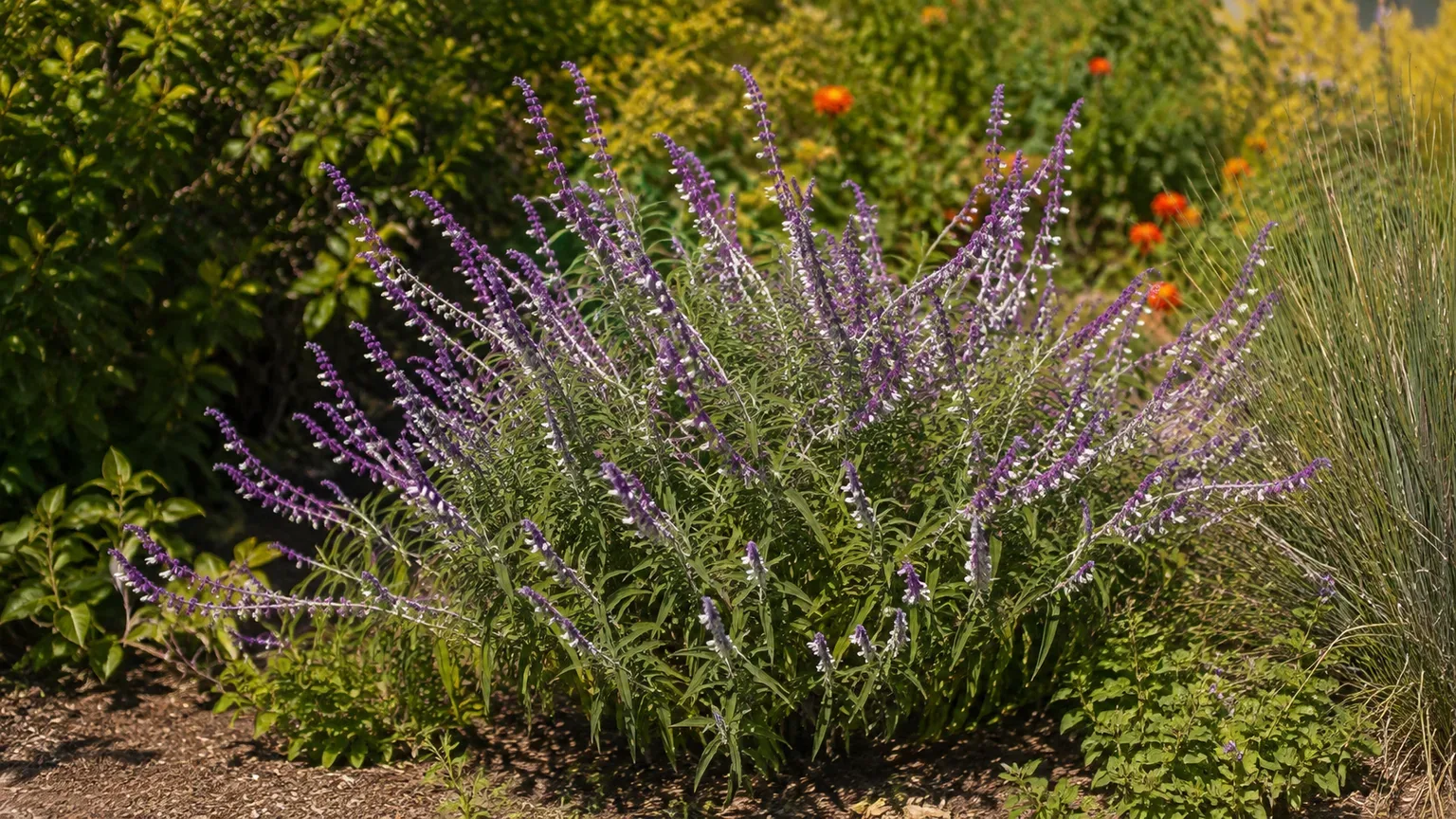
Salvia can edge a front walk, repeat through a sunny border, soften a mailbox bed, or provide a tall flowering accent—but only if you choose a type that fits the site. The name covers a very large genus: NC State Extension describes more than 1,000 species along with many hybrids and cultivars, while UF/IFAS notes that salvias vary widely in height, spread, color, and season. Treating them as one plant is the quickest route to a mismatched bed.
For a front yard that looks good beyond the nursery bench, plan in this order: map the light and drainage, choose a salvia with a compatible hardiness range and mature footprint, then repeat it in a few deliberate groups. Add companions that share its growing conditions. That small shift—from choosing by flower color first to choosing by site first—makes the design easier to maintain and more likely to thrive. (NC State Extension; UF/IFAS Extension)
A simple rule: choose the plant for the place
Start with the part of the front yard you want to improve: a strip along the walk, a sunny foundation bed, a slope, a foundation corner, or a pot by the entry. Then describe that exact spot in practical terms—hours of direct sun, reflected heat, how quickly the soil drains, and how much room the mature plant can occupy. A “sunny yard” can still contain a shaded north-facing foundation and a scorching strip beside pavement.
Next, shop by the botanical name and cultivar, not by the word salvia on a tag. Check the mature height and width, hardiness information, bloom timing, and moisture preference before buying. A compact perennial that stays in scale with a low window is a different tool from a tall blue-flowering native or a warm-climate shrub sage, even though all belong to the same genus.
That distinction also keeps expectations realistic. Many salvias are useful for pollinator plantings, and many tolerate dry conditions after establishment, but neither feature applies in exactly the same way to every species. The NC State profile for blue sage, Salvia azurea, for example, describes a tall native perennial that prefers moist but well-drained soil and only tolerates occasional drought. A broad “salvia is drought tolerant” label is not a watering plan. (NC State Extension’s blue sage profile)
Read your front yard before choosing a cultivar
The best-looking plant in a photo can struggle in the wrong microclimate. Before choosing varieties, sketch the bed and note the house, windows, path, roof dripline, downspouts, existing irrigation, and large plants that cast shade. That simple map helps you avoid placing a tall flowering plant in front of a window or a moisture-sensitive type where roof runoff keeps the soil wet.
Map sun and heat
Observe the bed at more than one time of day. NC State Extension defines full sun as at least six hours of direct light and partial shade as two to six hours, but the way that light arrives matters too: afternoon sun reflected from masonry or pavement can be harsher than open morning sun. Record shade from the house and trees in midsummer, when growth and flowering are active, rather than relying on a winter view.
Many salvias flower best in full sun, and UF/IFAS says most perform best in full to partial sun, with flowering reduced in part shade. That is a useful starting point, not permission to ignore the plant label. In a hot southern exposure, a site with morning sun and light afternoon protection may suit a particular tender or light-flowered type better than the hottest reflected-heat pocket. In a bright but cooler yard, that same pocket may be an advantage. Match the species to both sunlight and local summer intensity. (UF/IFAS Extension)
If you are unsure, spend a clear day checking the bed in the morning, around midday, and late afternoon. A phone photo from the same place at each time can show whether the shade is brief or substantial. Do this before you buy several plants; moving a group later is more expensive than correcting the plan on paper.
Check drainage and seasonal moisture
Look at the bed after a heavy rain and again a day later. Note standing water, runoff from a downspout, soil that stays tacky, and areas that dry quickly beside concrete or under an eave. Salvia needs vary: many grow well in drained soil, but species and cultivars differ, and “well drained” does not mean every type wants a bone-dry site.
The point is not to make every bed uniformly dry. It is to avoid forcing plants with different water needs into one irrigation zone. If a downspout keeps one end moist while the sunny edge dries quickly, use separate groups or choose plants for each condition rather than watering the whole border to satisfy its thirstiest occupant. The blue sage profile from NC State is a useful reminder that a salvia can prefer moisture while still requiring good drainage.
Soil texture also affects the choice. Sandy or shallow rocky ground dries rapidly; dense soil and low spots can stay wet. If drainage is poor, do not assume that adding a small scoop of gravel to each planting hole will fix the bed. Select a salvia suited to the conditions, improve the broader planting area appropriately, or use a raised bed if the site remains saturated. The plant’s tolerance and the site’s water movement should agree before you use color as the deciding factor.
Choose salvia by landscape job
Think of each plant as performing a role in the composition. A salvia may create a low front edge, a repeated mid-height rhythm, a tall see-through accent, or a temporary container display. The exact role depends on its mature size and growth habit, so use the variety’s own label or a reliable species profile instead of assuming that a common name guarantees a certain height.
Low front-edge color
For a narrow bed against a walk, choose a compact form that will not spill into the route or hide edging. Leave enough clearance for the mature clump, mowing, and winter cleanup; a plant that looks tiny in a quart pot can become a broad mound. Repeating one compact cultivar at intervals usually reads more clearly than alternating several unrelated salvias along the entire path.
Ground-covering salvia can work where the selected species naturally spreads and the site matches it. Do not assume that all low salvias behave like a stable ground cover: some spread by runners or seed, while others form tidy clumps. Check how the plant expands, whether it self-seeds, and whether it is locally appropriate before using it near lawn, pavement, or neighboring natural areas.
Mid-border bloom and repetition
The middle of a front border is where many upright, clumping salvias earn their place. Perennial forms such as Salvia nemorosa cultivars can provide vertical flower spikes at a manageable scale; BBC Gardeners’ World describes the cultivar ‘Caradonna’ at about 60 centimeters and shows it paired with airy ornamental grass and blue-gray Eryngium. Use those as design cues—upright spikes against fine texture and a different flower shape—then confirm hardiness and water needs for your own climate. (BBC Gardeners’ World)
Choose one or two colors and repeat them in several small groups. A single clump can look like an accidental leftover; a repeated group creates a visual beat that ties the bed together from the sidewalk to the front door. In a small foundation bed, three repeated groups of one variety may look calmer and more intentional than six one-off colors.
Annual or tender salvias can add stronger seasonal color where winter kills perennial growth. Scarlet salvia, Salvia splendens, is often treated as an annual in colder climates and is available in several flower colors. Use it as a planned seasonal layer, not as proof that every Salvia will return next spring. UF/IFAS distinguishes annual and perennial forms and notes that their height, spread, and flowering season vary. (UF/IFAS Extension)
Tall accents and open pollinator planting
Taller salvias work best where they have breathing room: behind lower perennials, at a broad bed’s corners, or in a naturalistic planting where stems can sway without blocking a view. Salvia azurea is a clear example—NC State lists a mature height of three to five feet and a width of two to four feet. Its airy blue flowers can lift the back of a sunny border, but the plant may flop, especially in organically rich soil. NC State recommends cutting stems back by half in late spring to encourage fuller growth. (NC State Extension’s blue sage profile)
This species also shows how a salvia can support more than color. NC State identifies blue sage as a native pollinator plant, reports that its flowers attract bees and butterflies, and recommends leaving dead stems 12 to 24 inches tall through winter for stem-nesting native bees. If you want a tidy edge, plant it farther from the front walk and accept a less clipped winter silhouette; if you prefer a crisp foundation bed, choose a more compact type instead.
Regional native species can be especially useful in wildlife-oriented beds, but “native salvia” is not a universal category for every U.S. garden. Check the native range for the species and your local ecoregion, then use a locally adapted plant list or extension office to confirm the fit. A plant native to one state may be nonnative or poorly adapted several climate regions away.
Containers and temporary color
Salvia can add height to a container by the front door or on a sunny porch, and UF/IFAS includes containers among its landscape uses. Choose a cultivar that fits the pot’s final dimensions, has a compatible sun requirement, and can handle your winter conditions. A large, vigorous type can quickly overwhelm a small pot, while a tender perennial may need to be replaced or protected when cold weather arrives.
Use a container with drainage holes and a potting mix appropriate for outdoor containers. Group salvia with plants that want comparable sun and watering, not merely colors that look good together. A container dries faster than an in-ground border, especially in wind and heat, so a drought-tolerant mature plant still needs close attention while establishing and may need more frequent checks in a small pot.
Design the bed in layers
A front-yard bed is seen from several angles, so think about how the planting reads from the street, path, and windows. Salvia’s upright flower spikes are a strong repeated line; use them to direct the eye toward the entrance or along a walk, then soften the effect with contrasting leaf shapes and lower plants. A layered design can feel abundant without hiding the house or swallowing the walkway.
Place plants by mature width, not pot size
Sketch the outline of each plant at its expected mature spread. Put low or mounding forms nearest the edge, medium upright plants behind them, and taller, airier forms toward the back or at the ends of the bed. Keep the tallest plants out of important sightlines, including windows, steps, address numbers, and the view from a driveway.
Spacing should come from the specific cultivar’s mature width. UF/IFAS offers 24 to 36 inches as a general spacing range for salvia transplants, but that is not a universal rule for every species or cultivar. Use the label’s spread as the starting point: a plant expected to reach about 24 inches wide generally needs roughly that much center-to-center room if you want distinct, healthy clumps. If the goal is a continuous mass, a designer may place plants somewhat closer, but crowding can reduce airflow and turn maintenance into repeated pruning. (UF/IFAS Extension)
Leave clearance around the foundation and walk, too. Do not count a plant’s stems as its full footprint; foliage and flower stalks can lean outward, and access for weeding or cleaning matters. On paper, draw circles for mature widths and check where circles overlap. Adjust the spacing before planting rather than cutting back healthy plants every week to preserve a too-tight layout.
Repeat colors, then vary flower form
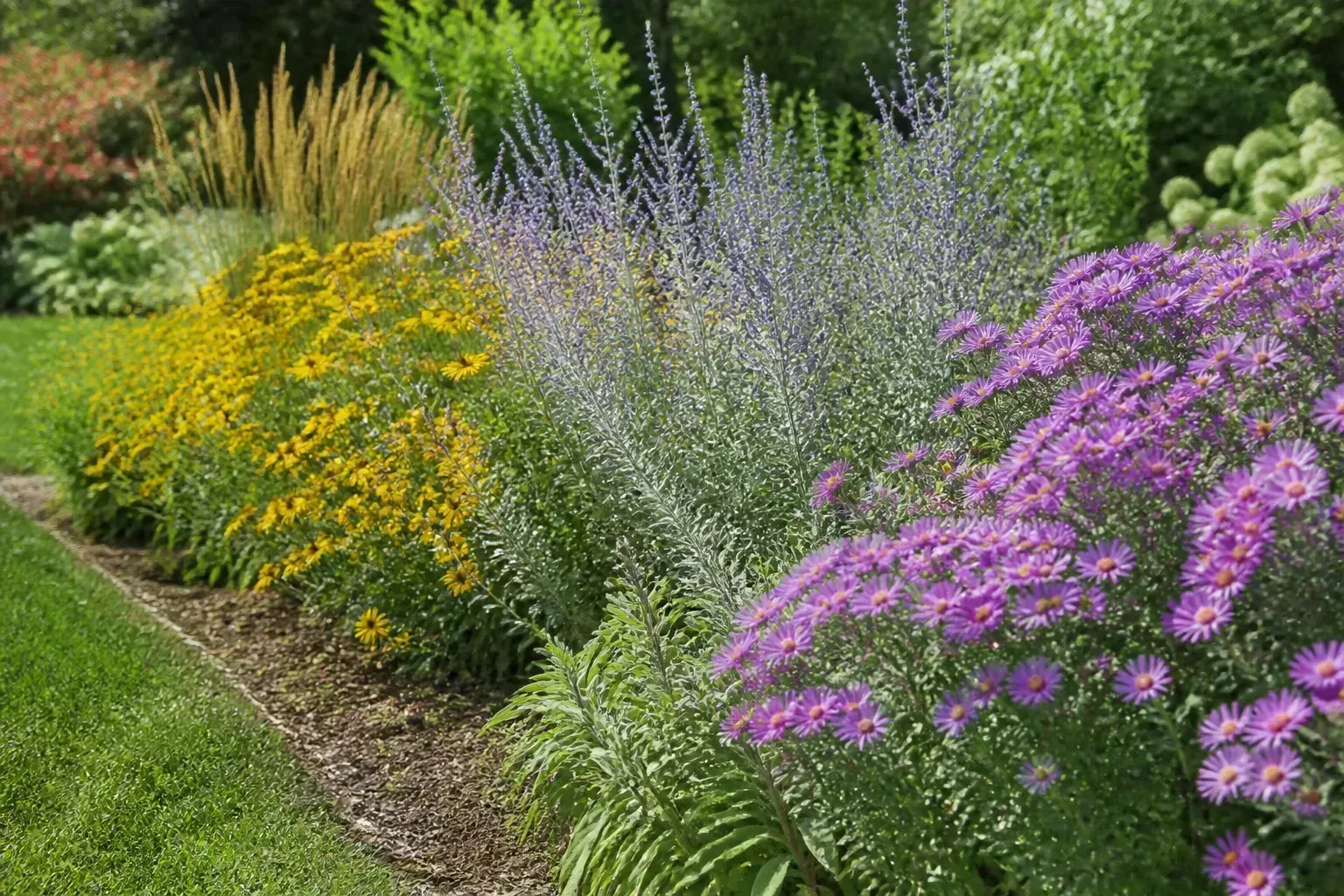
The simplest way to make a front border feel designed is repetition. Repeat one salvia color at a few points along the bed, then vary the companions by form: fine grasses, broad leaves, flat-topped flowers, or rounded mounds. BBC Gardeners’ World’s examples pair spiky salvia with feathery Stipa and sculptural Eryngium, and use purple salvia against pale agapanthus. Those combinations show contrast in line and color; they are not a guarantee that the plants share hardiness or watering needs in your location. (BBC Gardeners’ World)
Color relationships can also solve a specific front-yard problem. Cool blues and purples recede visually and can make a narrow bed feel less crowded; bright reds and corals draw attention and suit a focused entry accent. White flowers can bridge strong color blocks, while silver or gray-green foliage can echo salvia’s often aromatic leaves. Keep the palette selective: one dominant flower color, one supporting color, and green or silver foliage is a dependable starting point.
Combine plants by care needs first
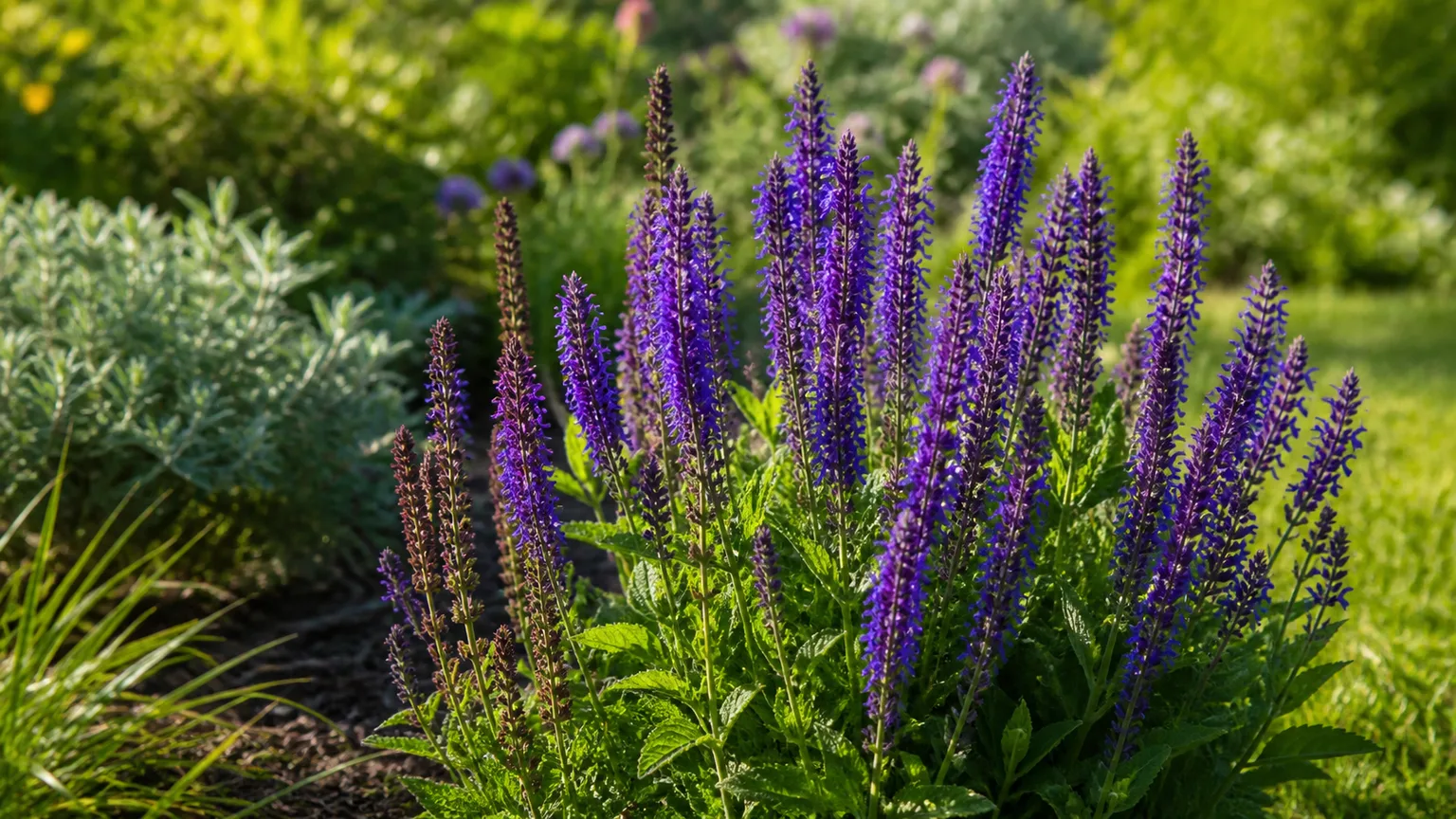
Use color and form to choose companions only after you have matched the growing conditions. A plant that needs frequent irrigation can be a poor neighbor for a salvia planted for dry-soil tolerance, even if the pairing looks good in a photograph. Conversely, a moisture-loving salvia may struggle in an intentionally xeric bed. Gardenia’s Salvia combination guide makes exposure, soil type, drainage, and tolerance available as design filters—a useful reminder to screen compatibility before shopping for a color match. (Gardenia)
For a sunny, drained border, consider companions with similar light and moisture needs: ornamental grasses for movement, coneflowers or yarrow for flatter flower shapes, and silver-leaved plants for contrast. Treat each name as a starting point, not a prescription; cultivars can have different size and water needs, and regional hardiness matters. Ask whether the companion needs the same irrigation schedule, reaches a compatible height, and blooms at a useful time before committing to a full group.
Build bloom succession rather than expecting salvia to carry the yard for the whole year. Combine early foliage or spring flowers with salvia’s main bloom period, then leave late-season plants or seedheads for fall interest. The bloom calendar will vary by species and climate, so use local nursery tags and extension profiles to map the actual seasons for the plants you select.
Plant salvia so the design fills in cleanly
Once the layout works on paper, buy healthy plants with labels intact and check that the name matches your plan. If you are comparing several cultivars, note mature dimensions and hardiness in the same place before you decide; nursery displays often put plants with similar colors together even when their site needs differ. Set containers on the bed before planting and view them from the street and front door to confirm the rhythm.
Set spacing and plant depth
Plant when the soil is workable and conditions are mild enough for roots to establish—commonly spring after the risk of hard freezes has passed, or early fall with enough growing time before severe cold. Local timing matters more than a national calendar. In hot regions, avoid putting a new transplant into its most stressful period without a reliable establishment-watering plan.
Water the root ball before planting, remove the container without pulling on the stems, and loosen tightly circling roots gently. Set the crown at the same depth it grew in the pot, backfill with the site soil, and water the planting area to settle it. Avoid burying the crown under extra soil or piling mulch against the stems; excess moisture at the base can undermine a plant that otherwise tolerates dry weather.
Do not fertilize automatically to make the display grow faster. A strong flush can create a larger maintenance problem if the species naturally becomes tall or flops in rich soil. If growth is poor, first check light, drainage, and root establishment; use a soil test and local recommendations before adding nutrients to a whole bed.
Water through establishment
Newly planted salvia needs consistent moisture while roots extend into surrounding soil. Water the root zone deeply enough to moisten the original root ball and nearby soil, then check before watering again. The aim is not daily surface sprinkling; it is to prevent the new plant from drying out while also avoiding persistently saturated soil.
After establishment, adjust to the species and the weather. Many salvias become more tolerant of dry intervals, but prolonged heat, sandy soil, pots, and newly divided plants all change the calculation. Blue sage, for instance, tolerates occasional drought yet prefers moist, well-drained conditions. Let the plant’s profile and visible soil moisture guide you rather than applying one schedule to every salvia in the yard. (NC State Extension’s blue sage profile)
A light mulch layer can reduce weeds and moderate moisture swings, but keep the crown exposed and leave room for stems to emerge. If one part of the border repeatedly needs more water, separate it from the drier planting instead of compensating with extra irrigation across the whole bed. A layout that matches plant needs often saves more work than an elaborate watering routine.
Keep the border attractive across the season
Some salvias can produce another flush after spent flower stems are removed; others offer more value when their seedheads remain. Deadhead selectively: trim a finished spike back to a leafy point if you want a tidier look or possible rebloom, and leave some seedheads if you want seed for birds or winter structure. Do not shear the whole plant simply because one flower spike has faded.
Plan for the plant’s full seasonal shape, not just its peak bloom. If a tall variety looks loose after flowering, use its mature habit as a design feature in an informal bed or choose a more compact cultivar next time. For blue sage, late-spring cutback can promote a fuller form, and leaving hollow dead stems at 12 to 24 inches through winter can provide nesting sites for stem-nesting bees, according to NC State Extension. These two goals can work together: shape the plant while it is growing, then delay the final cleanup until spring.
Winter behavior varies. Some salvias are hardy perennials, some are tender perennials, and some are usually grown as annuals outside warm regions. Check the cultivar’s cold tolerance against your local conditions and decide whether you are willing to protect it, take cuttings, or replace it seasonally. A front-yard plan is more dependable when every plant’s role still makes sense if a tender salvia does not survive winter.
Common design mistakes that lead to rework
Buying by color alone is the first avoidable mistake. A blue-flowered plant may be too tall for a foundation bed, too tender for the winter, or wrong for a wet site. Read the botanical name and mature dimensions before buying, then confirm the tag’s hardiness and moisture notes.
Assuming every salvia is drought-proof can lead to under-watering new plants or placing a moisture-preferring species in an overly dry bed. Establishment and long-term tolerance are different stages, and species differences matter. Match the variety to the site and water it according to its actual profile.
Planting too close for instant fullness creates a bed that may look lush for a few weeks but becomes crowded as the plants mature. Use mature width, not pot diameter, as your spacing reference. Where a bed needs immediate coverage, add a compatible annual or mulch rather than squeezing long-lived plants into insufficient space.
Putting tall forms at the front can hide shorter companions, path edges, or windows. Place them where their height becomes a backdrop or accent, and use compact cultivars where sightlines are tight. If a particular species tends to flop, give it room, avoid excessive enrichment, and use the pruning timing recommended for that plant.
Mixing plants with conflicting water needs makes maintenance harder and can leave one group chronically too wet or too dry. Divide the bed into moisture zones, or select a companion palette with compatible needs. A color combination is successful only if the plants can share the site.
Treating pollinator value as a reason to ignore local fit is another trap. Salvia flowers can attract pollinators, but native status, nectar availability, and the needs of local wildlife vary by species and region. Choose a locally appropriate plant and leave some winter stems where safe and compatible with the design rather than assuming one ornamental planting will serve every pollinator.
Conclusion
Use salvia in the front yard by matching a specific species or cultivar to a specific place: light, heat, drainage, mature width, and winter conditions come first. Then give it a clear role—low edge, repeated mid-border color, tall accent, or seasonal container—and arrange companions around shared care needs as well as color and texture.
Before planting, sketch the mature footprints, set the containers in place, and view the bed from the sidewalk and entry. If the salvia fits the site and has room to reach its natural shape, a few repeated groups can provide a more coherent, pollinator-friendly landscape than a crowded assortment chosen only for bloom color.