String of Hearts Care Guide: Light, Watering, Soil and Tubers
String of hearts care: bright light, dry-down watering, gritty soil, aerial tuber prop, and how to tell rot from thirst.
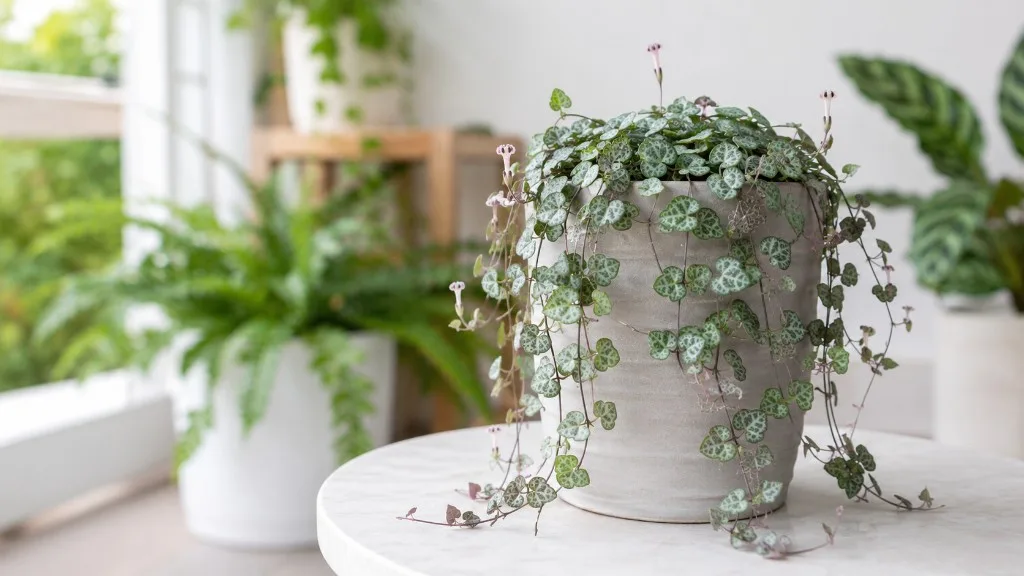
String of hearts (Ceropegia woodii, also listed as Ceropegia linearis subsp. woodii) looks delicate, but it is a trailing semi-succulent built around water storage. Wiry pink-purple stems, silver-marbled heart leaves, and bead-like aerial tubers make it a favorite hanging plant — and those same tubers are why soggy soil kills it faster than a missed watering. Good string of hearts care is simple once you stop treating it like a thirsty tropical vine: bright light, fast-draining mix, and water only after a real dry-down.
Most failures share the same stack: a dim corner, peat-heavy potting soil, and a weekly watering habit that never adjusts for winter. By the time leaves yellow or stems go soft near the rim, underground and aerial storage tissue has often been wet for too long. Start with the diagnosis below, then use the String of Hearts care hub when you need a symptom-first workflow.
Compact internodes and clear silver marbling are the visual proof that light and dry-down are aligned.
Why Tubers Change Everything
String of hearts is a tender evergreen trailer in the dogbane family (Apocynaceae), milkweed subfamily (Asclepiadoideae). NC State Extension describes long wiry stems suited to hanging pots, heart-shaped leaves etched with silver above and purple beneath, and bead-like aerial tubers that root when they contact soil.
Those tubers — plus thickened roots and, on mature plants, a woody basal caudex — store water through dry spells. That is why the plant forgives drought better than constant moisture. Care that keeps the root zone oxygen-poor fights the plant’s entire design. Treat string of hearts closer to a hanging succulent than to pothos: soak thoroughly when dry, then wait.
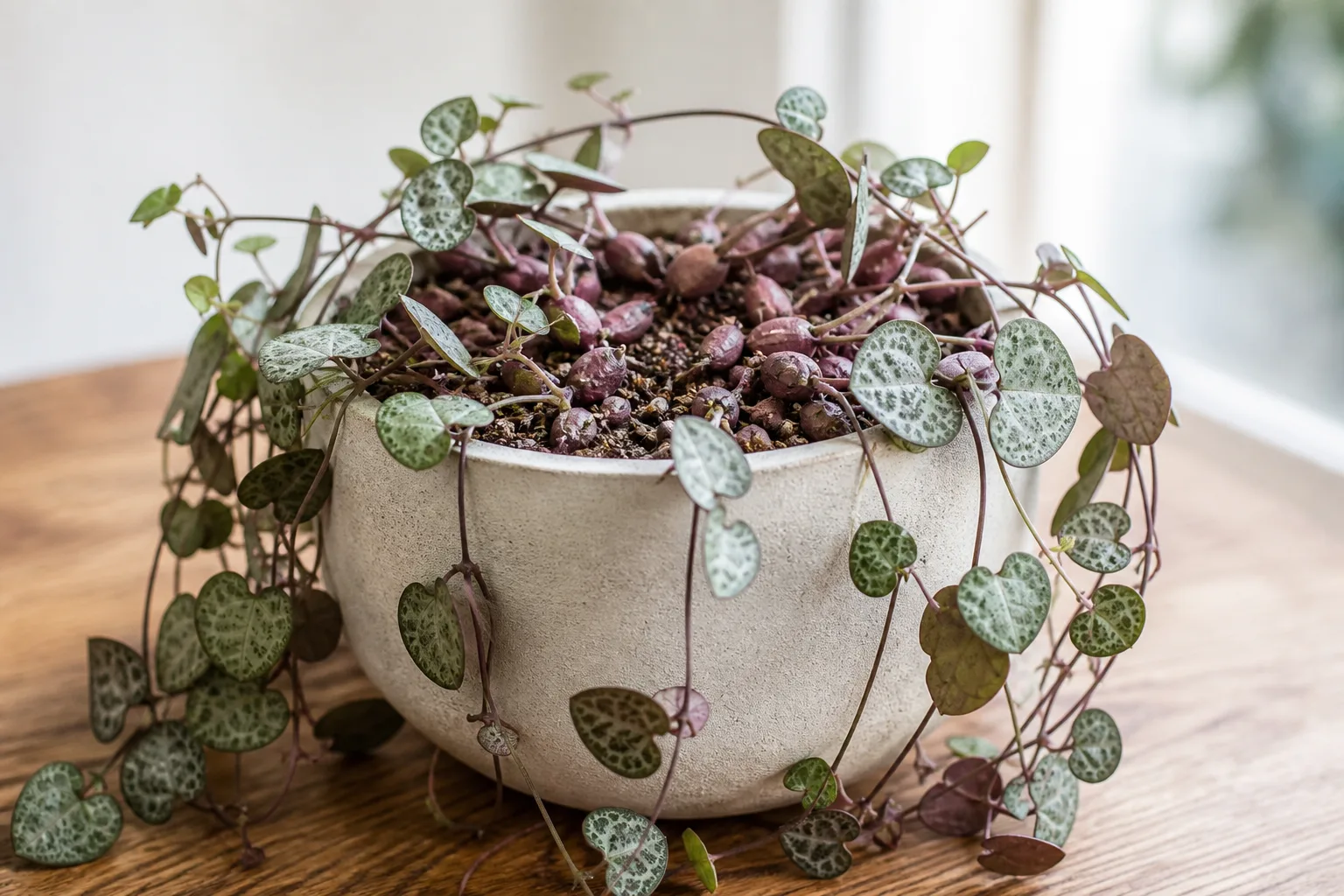
Bead-like aerial tubers and thickened storage tissue sit along the stems and in the pot — leave them in airy mix, never buried in wet peat.
Botanical Profile, Common Names, and Cultivars
Common names include rosary vine, chain of hearts, collar of hearts, and sweetheart vine — all pointing at the same plant, not a grab bag of lookalikes. Native range runs from Zimbabwe through eastern South Africa into Mozambique and Eswatini. SANBI PlantZAfrica notes plants on rocky forest ledges in thin humus-rich or sandy soil, with mature tubers roughly 25–50 mm across and stems that may scramble or hang.
Indoors, vines commonly trail several feet; NC State notes stems can reach about 3 feet hanging from a container and up to 12 feet in habitat. Related naming also appears under Ceropegia linearis in the Extension Gardener Plant Toolbox. Leaves are typically 1–2 cm across, opposite along the stem. Summer-to-fall blooms are small tubular lantern flowers with fused tips — interesting, not the main reason most people grow the plant. Wisconsin Horticulture places the species in the same family framing and confirms the caudiciform habit: a swollen base for storage as plants mature. The RHS Ceropegia genus pages likewise treat these trailers as popular ornamental houseplants.
Silver Glory, Variegated Forms, and String of Arrows
NC State lists cultivars and forms such as f. variegata (cream and pink variegation), ‘Silver Glory’ (silver, apple-shaped leaves with a dark midrib), and ‘String of Arrows’ (lime-green and silver pointed foliage). The dry-down rule does not change. What does change is light demand: variegated and heavily silvered types usually need more brightness to keep contrast. In the same east window, a green standard plant may look happy while a variegated strand stretches and greens out. Move the pale cultivar closer to the glass before you fertilize.
Quick Care Snapshot
For healthy indoor string of hearts, place the plant in bright indirect light (with optional gentle morning sun), water when the mix has dried substantially for the season, use a gritty cactus-style mix in a pot with drainage holes, and reduce water and skip fertilizer in winter rest. It is not a true low-light plant. It tolerates missed waterings better than wet feet.
| Care factor | Baseline target | Deeper guide |
|---|---|---|
| Light | Bright indirect; gentle morning sun OK | Light guide |
| Water | Dry-down, then soak and drain | Watering guide |
| Soil | Fast-draining cactus mix + grit | Soil guide |
| Feed | Half-strength, monthly in active growth | Fertilizer guide |
| Prop | Aerial tubers or stem cuttings | Propagation guide |
Check pot weight and soil depth before you water. A hanging basket on a bright Bengaluru balcony will dry faster than a dense ceramic pot on a cool London shelf — the plant answers to moisture and light, not the calendar.
Light for Compact, Marbled Vines
String of hearts wants bright, dappled or indirect light for most of the day. NC State lists dappled sunlight and warns that large gaps between leaves mean the plant is not getting enough light, while too much harsh sun scorches foliage. Wisconsin recommends a west- or south-facing window indoors: strong light deepens color and silver marbling; weak light turns leaves a flat light green. SANBI notes that indoor plants need at least 3–4 hours of direct sun when cultivated strongly, or stems elongate and marbling washes out.
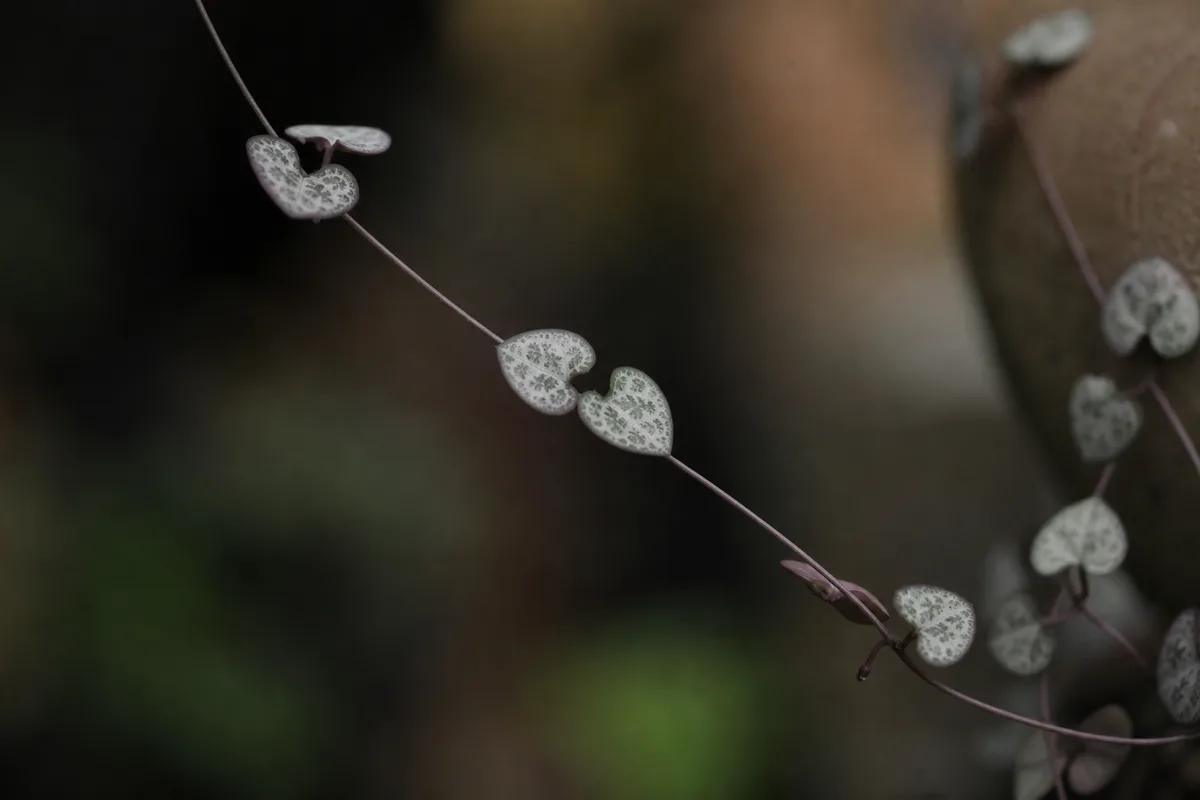
A practical placement: hang or set the pot near an east window, or a few feet back from a bright south or west window with sheer filtering in hot summers. The plant should see strong ambient brightness without baking against hot glass all afternoon. If new leaves stay tiny with long internodes, move closer to the window before you fertilize.
Low Light vs Bright Indirect
Retail tags often sell string of hearts as easy, which people translate as fine in a dark hallway. Survival and good looks are different. In low light, vines stretch, leaves shrink and pale, marbling fades, and water use drops — so the same watering schedule that worked near a window becomes overwatering in a corner.
In bright indirect light, internodes shorten, leaves firm up, and silver patterning returns on new growth. Judge success over three to four weeks, not on old etiolated strands. Sparse growth is a light problem first; see not enough light and leggy growth when gaps keep widening.
Morning Sun, Scorch, and Grow Lights
Gentle morning sun is often beneficial once the plant is acclimated. Harsh afternoon sun through glass can bleach or crisp leaves, especially after a sudden move from a dim shop shelf. Acclimate over one to two weeks when increasing light. Damaged patches will not re-green; new growth can still look healthy after you correct placement. For scorched tissue diagnosis, use sunburn and scorched leaves.
When natural light is weak, a full-spectrum LED about 12–18 inches above the canopy for roughly 12–14 hours daily on a timer helps more than a lamp across the room. Rotate the pot so both sides of the cascade receive light. Pair north-window plants with LEDs rather than hoping dim ambient light is enough.
Watering Without Rot
Water thoroughly when the root zone has dried to the depth your season requires, then let excess drain and empty the saucer. NC State advises letting the mix dry out completely between waterings and reducing water further in winter dormancy. Wisconsin puts it bluntly: the plant tolerates dry soil much better than soggy soil and is easily killed by overwatering.
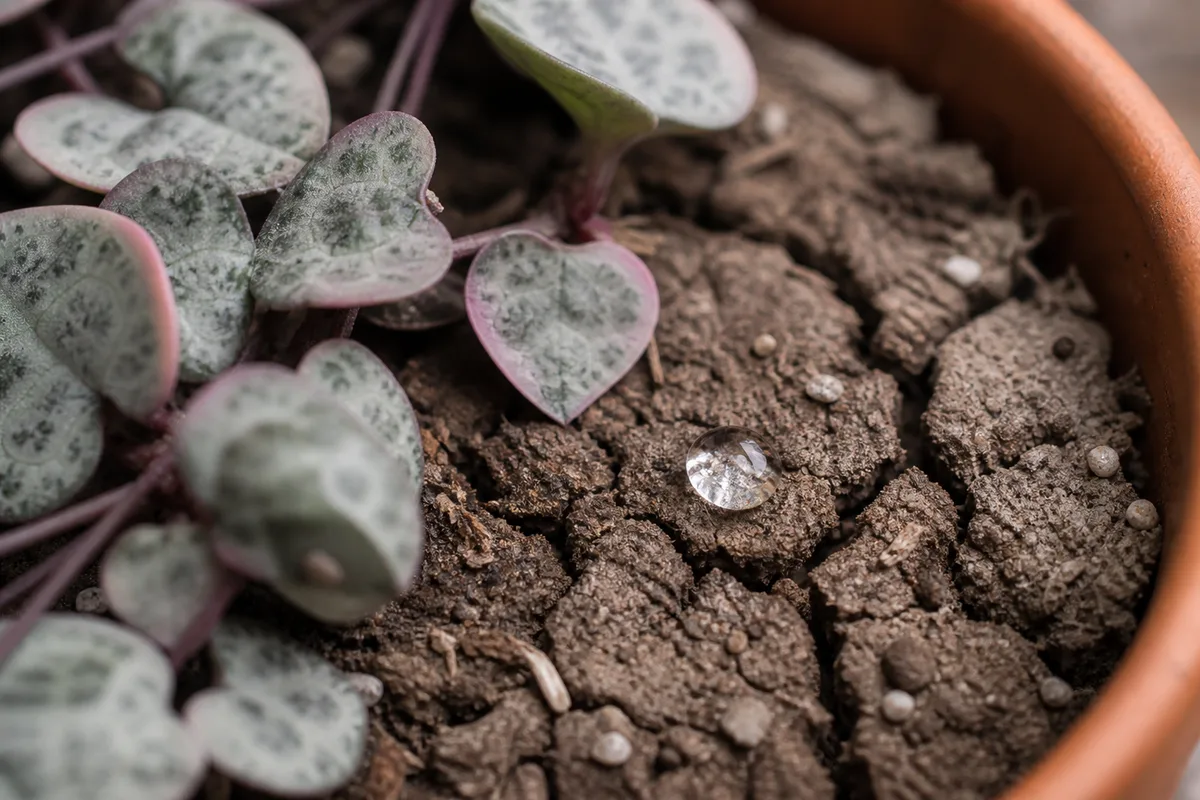
There is no universal every-Sunday interval. In warm bright active growth, many pots need water roughly every 7–14 days; in cool short days, 14–21 days or longer is common. Always confirm with a finger, wooden skewer, or pot weight. Firm, slightly plump leaves that soften when dry are a secondary cue — soft leaves on wet soil mean trouble, not thirst. For transferable soil-check skill, see how to water indoor plants the right way.
Seasonal Dry-Down Rule
Active growth (spring–early fall): allow the top 1–2 inches (or about the top third of a small pot) to dry, then soak until water exits the drainage holes. Deep drinks beat frequent sips that wet only the surface.
Winter rest: growth slows even if the plant stays green. Reduce frequency, let the mix dry deeper (often half to two-thirds of the pot), and skip fertilizer. Wisconsin recommends a winter rest with reduced watering and no feed. SANBI similarly says keep the mix moist but never soggy in growth, allow the top two-thirds to dry between drinks, and water still more sparingly in dormancy without abandoning the plant until leaves collapse.
If soil has gone hydrophobic and water runs down the sides, bottom-water briefly until the root ball rewets, then drain fully. Resume normal dry-down checks — do not compensate with daily dribbles. See dry hydrophobic soil when runoff is chronic.
Soft Leaves on Wet Soil vs Wrinkled Thirst
This is the diagnosis that saves plants. Soft, yellowing leaves on a heavy, wet pot usually mean overwatering or early rot — stop watering, improve light and airflow, and unpot if decline continues. Wrinkled, thin leaves on a light, dry pot usually mean underwatering — one thorough soak often firms foliage within a day or two.
| Cue | Likely cause | First move |
|---|---|---|
| Soft yellow leaves + wet mix | Overwatering / poor drainage | Stop water; check roots |
| Wrinkled leaves + light pot | Underwatering | Soak and drain |
| Soft leaves + wet mix + sour smell | Root / tuber rot | Unpot; trim mushy tissue |
| Long gaps + pale tiny leaves | Low light (then wet risk rises) | Move to brighter spot |
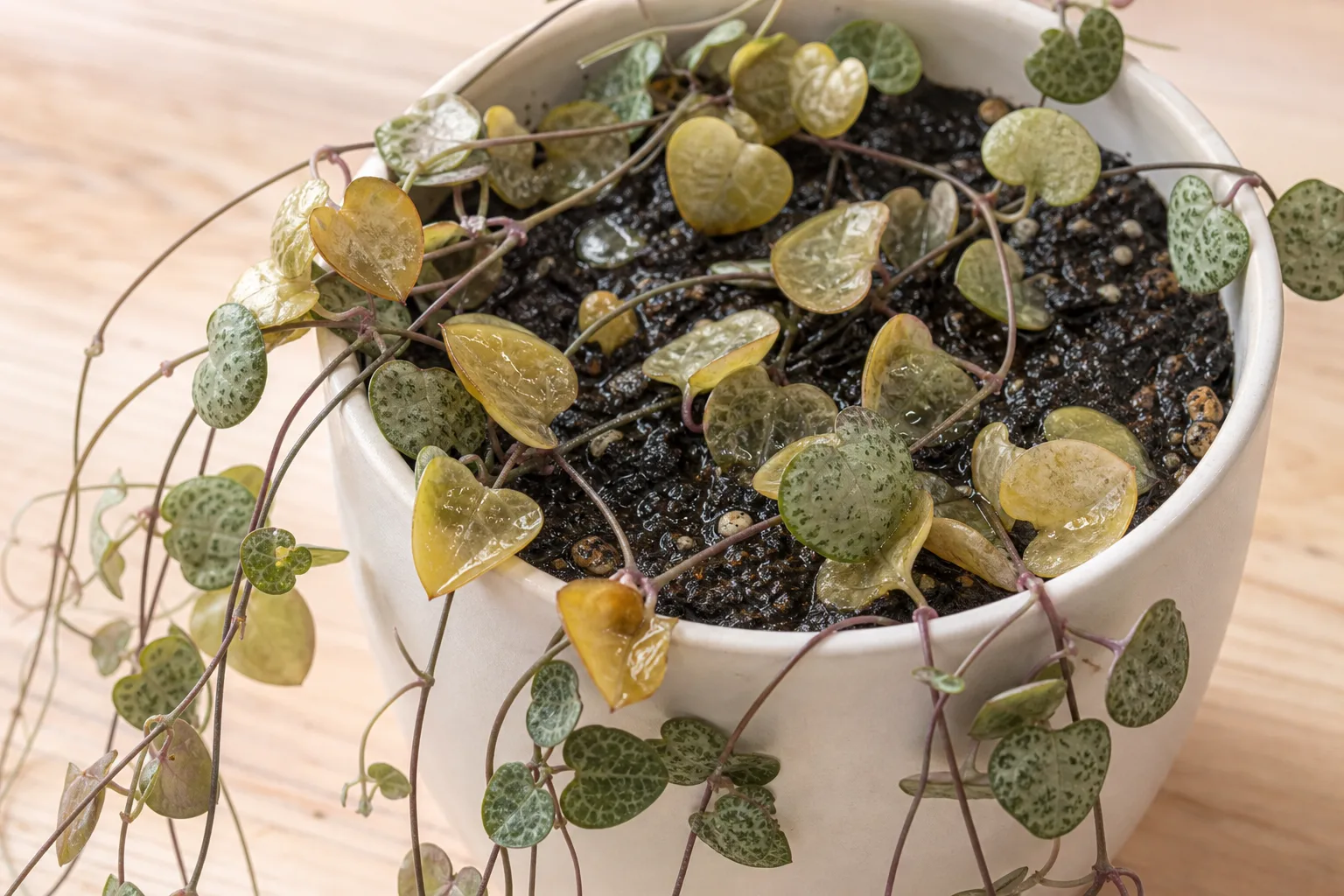
Overwatering: soft, dull leaves while the pot still feels heavy.
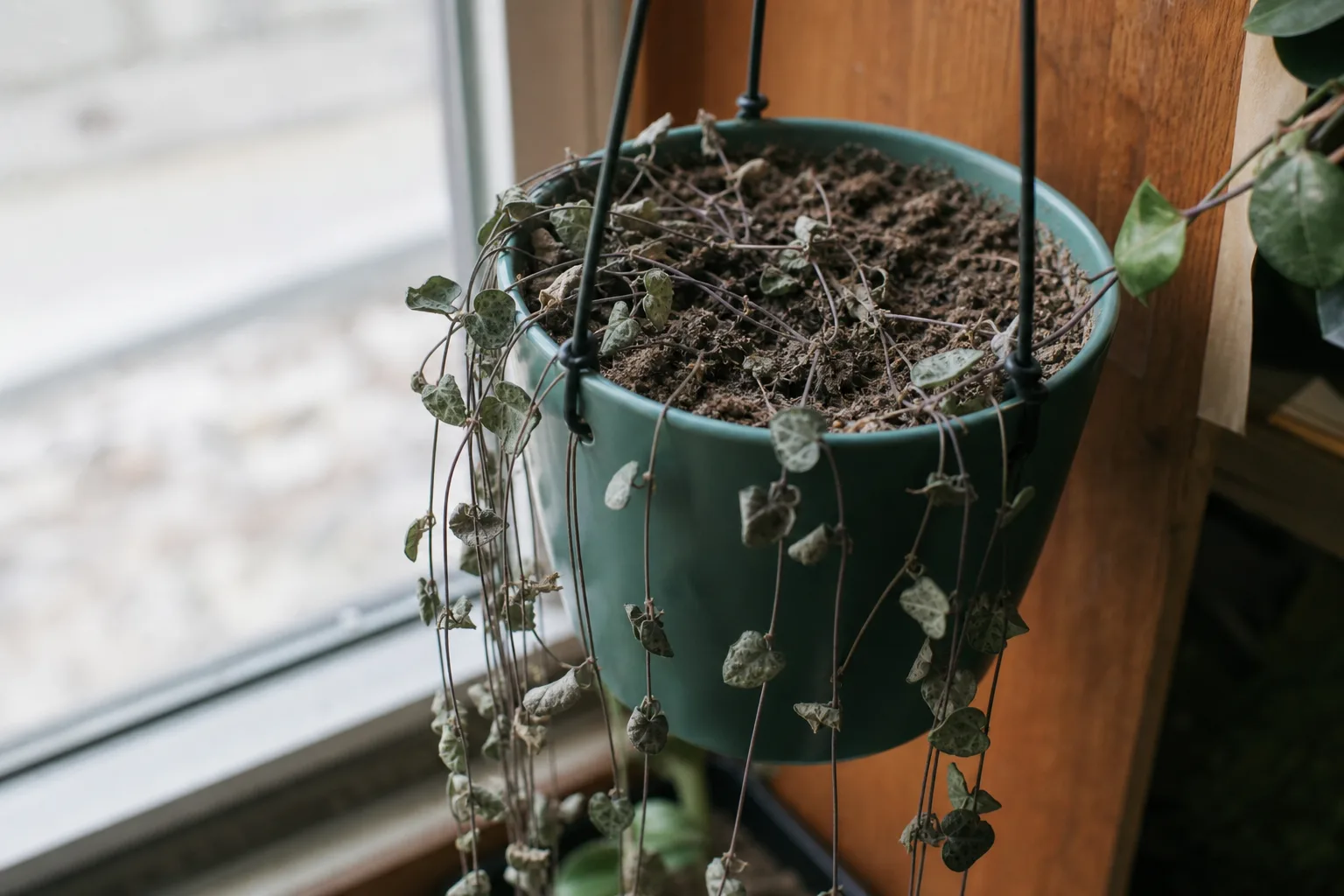
Underwatering: wrinkled, deflated hearts on a light, dry pot — soak once, then resume dry-downs.
Overwatering is the main killer because tubers and thickened roots sit in the wettest zone of a poorly draining pot. Early signs include yellowing leaves, soft stems near the soil line, a sour smell, and fungus gnats. Advanced root rot can leave vines looking thirsty while the mix stays wet — damaged roots cannot take up water even when the pot feels heavy. Prefer extension-style cultural fixes (drainage, dry-down, light) over fungicides as a first step.
If you suspect overwatering, stop watering, improve light and airflow, and let the mix dry. Unpot if decline continues: trim mushy brown tissue with clean tools, refresh into gritty mix, and wait before the next thorough soak. Salvage healthy vine sections or firm aerial tubers via propagation when the crown is gone. See also underwatering and yellow leaves.
Soil, Pot Material, and Crowding
Use a freely draining mix with coarse texture — commercial cactus and succulent mix amended with perlite, pumice, or coarse sand is the Wisconsin baseline. NC State prefers well-drained sandy potting soil. A reliable DIY ratio for many homes is 2 parts cactus mix : 1 part perlite or pumice : 1 part orchid bark or coarse sand. SANBI recommends equal parts soil-based mix, coarse sand, and perlite as a useful grit target when rooting tubers.
Drainage holes are mandatory. Gravel in the bottom of a sealed pot does not replace an exit path for water. Terracotta dries faster than plastic or glazed ceramic, which helps beginners who water generously. Choose a pot only slightly larger than the root and tuber mass — string of hearts likes to be somewhat crowded. A practical cue: when firm tubers and roots press the sides and water sits longer than usual after a soak, size up one pot diameter in spring — not a decorative cachepot twice as wide. Wisconsin advises repotting only when necessary, ideally in spring before new growth. Full mix recipes live in the soil guide and repotting guide. Shared dry-down habits for other trailing succulents appear in indoor succulent care.
Temperature, Humidity, and Light Feeding
Keep plants roughly 65–80°F (18–27°C) in active growth, with a practical winter floor near 60°F (15°C) per Wisconsin; SANBI prefers not dropping below about 15°C for houseplants and notes frost tenderness outdoors. Avoid cold drafts and wet roots together — that combination accelerates rot.
Average home humidity (about 30–50%) is fine. Extreme dryness can favor spider mites; misting is a poor fix because it wets leaves briefly without changing root moisture. Group plants or use a nearby humidifier if air is desert-dry.
Feed lightly: Wisconsin suggests at most monthly half-strength houseplant fertilizer in active growth, then none in winter. SANBI likewise recommends monthly half-strength liquid feed in the growing season. Do not fertilize dry, freshly repotted, or rotting plants — salts will not fix a light or water problem. Details: fertilizer guide.
Propagation from Aerial Tubers (and Cuttings Backup)
Aerial tubers (rosary beads) are the easiest clone path. Follow this short sequence in spring or summer:
- Choose a firm aerial tuber about marble-to-pea size on a healthy vine.
- Press it onto the surface of moist, gritty mix — ideally while still attached to the parent vine (Wisconsin and SANBI both describe this method).
- Keep the medium lightly moist, not wet, in bright indirect light until feeder roots form (often a few weeks; SANBI notes up to about eight weeks before aerial growth resumes).
- When the tuber resists a gentle tug, sever it from the parent stem.
- Resume normal dry-down watering for the new plant.
Do not bury tubers deeply in wet peat. Stem cuttings with several nodes can root in water or pinned to moist mix as a backup. Propagate only from pest-free vines. Pin pruned tips back into the same pot if you want a fuller crown; see pruning for timing without stripping the cascade bare. Step-by-step troubleshooting sits in the propagation guide.
Common Problems Diagnosis Matrix
Diagnose with soil moisture + leaf feel + light history before changing everything at once.
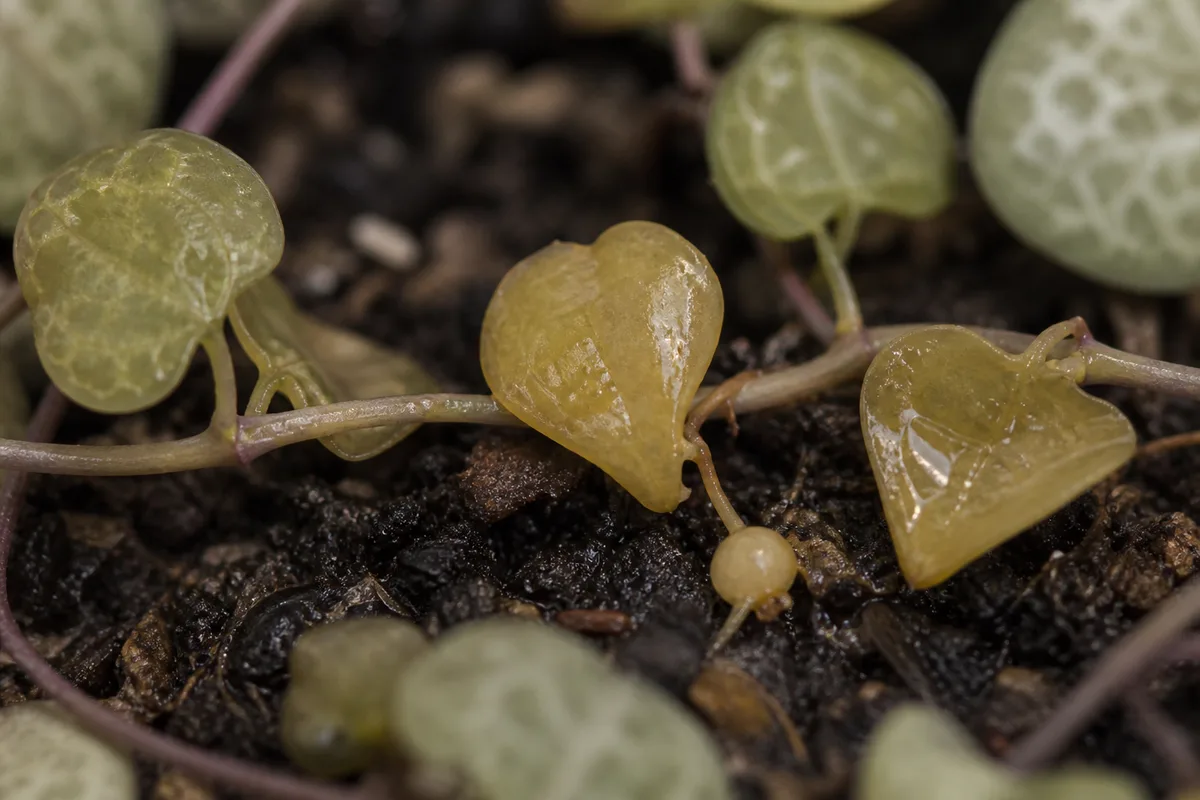
Yellow, soft leaves on wet soil: overwatering or poor drainage — dry down, check roots (overwatering, root rot, yellow leaves, poor drainage).
Wrinkled leaves, light pot: underwatering — soak and drain (underwatering).
Long gaps, tiny pale leaves: insufficient light (not enough light, leggy growth).
Bleached or crispy patches on the window side: sun scorch after a sudden move (sunburn).
White cottony clusters in leaf joints or on tubers: mealybugs — isolate, dab with isopropyl alcohol on a swab, improve airflow; SANBI notes woolly aphids can follow chronically wet tubers.
Most mystery decline is still wet mix in low light. Fix environment before buying fungicides.
Pet Safety and Chewing Risk
As of our August 2026 crawl of ASPCA’s published plants toxic to cats and plants toxic to dogs lists, Ceropegia woodii / string of hearts / rosary vine does not appear among plants listed as toxic to cats or dogs. Dedicated ASPCA species pages at common slugs (string-of-hearts, ceropegia, rosary-vine) were not available to scrape. That is a list-level finding — absence from the toxic roster — not the same as a named ASPCA Non-Toxic species card with clinical-sign fields. Re-check the ASPCA toxic and non-toxic plants database before you rely on it, because listings can change.
Eating large amounts of any plant can still cause mild stomach upset. Keep long vines out of reach of enthusiastic chewers. If a pet eats a concerning amount, call your veterinarian or ASPCA Animal Poison Control at (888) 426-4435 (consultation fees may apply). For broader pet-safer houseplant context, see pet-safe houseplants and the pet-safe indoor plants listicle — and always confirm botanical names on the tag.
What We Observed Growing String of Hearts
These notes are editorial observations from specific pots, not universal schedules. Your mix, climate, and root mass will shift the numbers.
Bengaluru east balcony, March–May 2026 (plastic hanging basket). A standard green C. woodii in a 6-inch plastic hanging basket with a 2:1:1 cactus mix / perlite / bark blend, hanging about 30 cm from an east opening with morning sun until ~10:30, dried to a light pot weight in about 7–9 days after a full soak during the warm dry stretch. The same cultivar moved indoors to a cooler AC room (~24°C, dimmer ambient) stretched the dry-down to 12–16 days. We stopped weekly watering after the first month and switched to pot weight plus a skewer at mid-depth.
London shelf contrast, winter 2025–26 (glazed ceramic). A denser 12 cm glazed ceramic on a cool north-ish shelf (no LED) stayed heavy for 18–24 days between soaks once growth slowed. Leaving the plant on an every-Sunday habit from summer would have overlapped wet soil. We lengthened checks and skipped fertilizer from November through February.
Tuber pinning timeline. Firm aerial tubers pressed onto moist grit while still attached showed resistance to a gentle tug in roughly 3–6 weeks in bright warm conditions; we severed only after that tug test. Tubers buried deep in peat stayed soft and failed twice — surface pinning in grit succeeded.
Light-move outcome. One etiolated basket moved from a dim hallway to the east balcony produced shorter internodes and clearer marbling on new growth within about four weeks; old stretched segments never filled in. We pruned the worst bare strands for cuttings rather than waiting for miracles.
Related Guides
Use this page as your setup checklist, then drill into the hub by topic:
- String of Hearts hub — overview, cultivars, problem index
- Light · Watering · Soil · Fertilizer · Propagation · Repotting · Pruning
- How to water indoor plants — soil-check skills that apply across species
- Indoor succulent care — shared dry-down habits for other trailing succulents
- Pet-safe houseplants — broader pet-placement context
Seasonal Checklist
Spring: Move toward brighter light gradually; resume monthly half-strength feed only after new growth appears; repot only if tubers press the pot sides; start tuber pinning and cuttings.
Summer: Expect faster dry-downs in hanging baskets; watch afternoon glass heat; keep saucers empty; scout leaf joints for mealybugs.
Fall: Lengthen dry-downs as days shorten; stop fertilizer once growth slows; bring outdoor plants in before frost.
Winter: Deeper dry-downs (often half to two-thirds of the pot); keep above about 60°F / 15°C; no feed; resist sympathy watering when leaves look still but the pot is heavy.
Conclusion
Strong string of hearts care is restraint plus setup: bright light for compact marbled leaves, a gritty mix in a draining pot, thorough watering only after a real dry-down, and a deliberate winter rest so tubers are not sitting cold and wet. Watch new growth for light quality and leaf firmness plus pot weight for water timing. When something looks wrong, check moisture and roots before you fertilize or mist. For symptom-specific fixes beyond this overview, start at the String of Hearts care hub — the plant forgives drought far more willingly than it forgives soggy soil.