Yellow Leaves on String of Hearts: Causes, Checks & Fixes
Quick answer
Yellow leaves on String of Hearts are most often overwatering or root trouble on tuberous roots, not nutrient deficiency. Check soil moisture deep in the pot and squeeze underground tubers for firmness before changing anything.
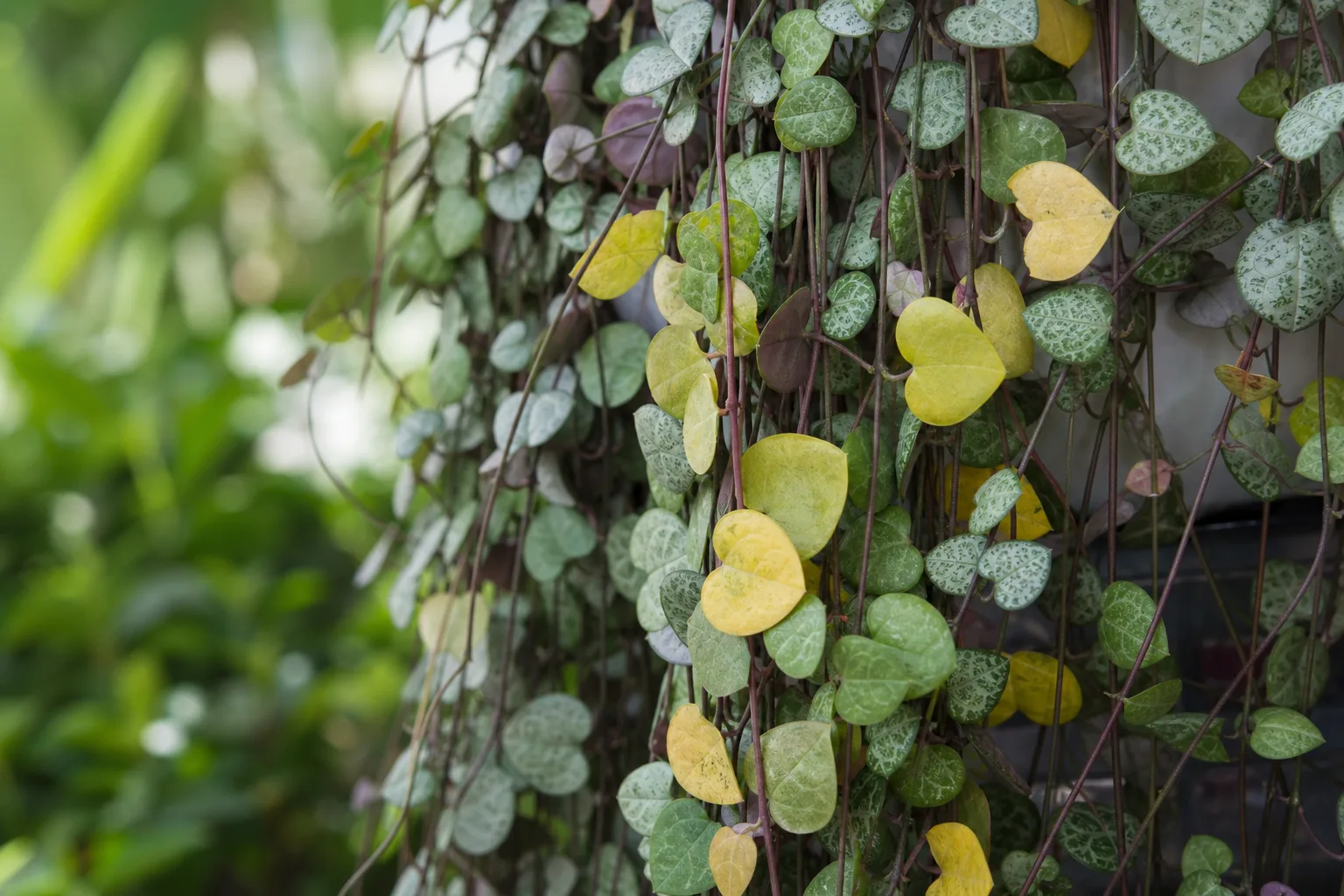
Yellow Leaves on String of Hearts: Causes, Checks & Fixes
This guide covers yellow leaves on String of Hearts. See also the general Yellow Leaves guide, watering, and light pages for this plant.
Yellow Leaves on String of Hearts: Causes, Checks & Fixes
Quick answer
Yellow leaves on String of Hearts (Ceropegia woodii) look alarming on a trailing vine, but color change here is almost always a water or root problem-not a nutrient shortage. This semi-succulent stores moisture in fleshy leaves, succulent stems, underground tubers, and bead-like aerial tubers along the vines. When tuberous roots sit in wet mix or cannot take up water, hearts lose their silver-marbled green and turn yellow before they drop.
First step: check soil moisture deep in the pot and squeeze underground tubers for firmness before changing anything. Soft yellow hearts on a heavy wet container mean overwatering can cause root rot and yellowing of the leaves. Thin flat yellow hearts on a light dry pot mean drought stress-see the underwatering guide. Pale stretched growth with damp mix that never dries points to low light. Do not fertilize, repot, or increase watering until you know which pattern you have.
What yellow leaves look like on String of Hearts
On this trailing semi-succulent, yellowing shows up differently depending on cause:
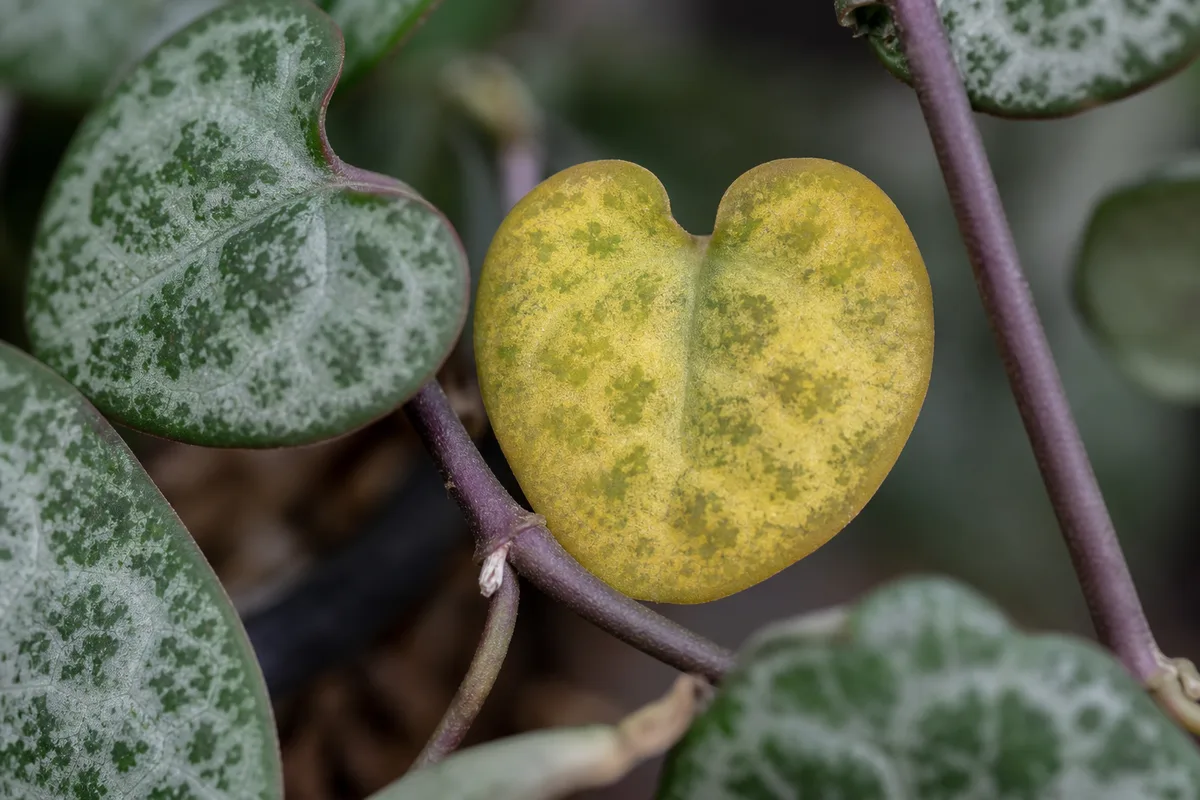
Yellow Leaves symptoms on String of Hearts - compare with healthy tissue on the same plant.
Overwatering or root trouble (most common):
- Hearts turn pale yellow or yellow-green along one or more strands while the pot still feels heavy
- Strands may limp or wilt even though soil is wet-damaged tubers cannot move water upward (the wilt-on-wet-soil paradox)
- Underground tubers feel soft or squishy when you unpot; mix may smell sour near drainage holes
- Pattern often starts on lower or inner leaves on long trailing strands while the crown still looks full
- Yellowing may follow a winter when watering did not slow with dormancy
Underwatering (less common for yellow, but real):
- Hearts look thin, flat, and dull yellow-green rather than mushy
- Pot feels light; mix is dry throughout
- Strands hang limply; tubers feel firm when squeezed, not soft
- Wilted leaves are the result of underwatering on dry mix-not the wet-soil wilt pattern above
Low light compounding:
- Uniform pale or yellow-green hearts along stretched stems with long gaps between leaves
- Mix stays wet longer than expected because the plant uses water slowly in dim rooms
- Large gaps between the leaves indicate the plant is not getting enough light
- Yellowing may look like hunger but persists until light and dry-down rhythm both improve
Pest damage:
- Patchy yellow hearts, not uniform yellowing across the whole plant
- White cottony mealybug clusters or fine webbing at dense crown nodes where strands pile up
- Monitor for aphids, mealybugs, and scale on String of Hearts overview
Normal aging:
- One or two fully yellow hearts at the end of an old strand while the rest stays marbled and firm
- No wet soil, no soft tubers, no pests, no rapid spread over a week
Unlike many leafy houseplants, String of Hearts rarely yellows from nitrogen deficiency indoors. Ceropegia woodii is easily killed by overwatering far more often than it starves.
Why String of Hearts gets yellow leaves
Ceropegia woodii evolved in South Africa’s dry scrublands as a tuberous trailing perennial. Its heart-shaped leaves, succulent stems, and underground tubers store water during dry intervals-but roots still need oxygen in fast-draining mix. When soil stays soggy, tubers decay; above ground, hearts yellow even though water is present in the pot.
Overwatering tops the list: watering on a calendar, using peat-heavy potting soil, pots without drainage, oversized containers sized for trailing length rather than tuber mass, or leaving saucers full after watering all keep tuberous roots wet. Cool winter rooms and short days slow growth, so the same summer watering rhythm becomes excessive. The plant is dormant over the winter and watering should be reduced even further.
Low light compounds wet soil. In dim corners, the plant photosynthesizes and transpires slowly, so mix dries slowly. Yellow-green lower leaves on damp mix in a north-facing room is a common indoor pattern-light and water both need correction.
Underwatering can yellow hearts when reserves empty, but the signature is thin flat firm leaves on dry mix, not translucence on wet soil. Extended drought stresses tubers and older hearts may bleach before dropping.
Pests drain sap from tender growth at crowded crown nodes. Patchy yellow with insects at the soil line changes the diagnosis away from simple watering.
Oversized pots are a hidden trigger: growers choose a large hanger to accommodate trailing length, but sparse tuberous roots in a big volume of mix stay wet for days-a setup that yellows otherwise healthy specimens.
How to confirm the cause
Work through these checks in order-tuber firmness and pot weight matter more than leaf count alone. For seasonal dry-down depth targets, cross-check the String of Hearts watering guide taco test and skewer protocol.
- Tuber squeeze test - Gently press underground tubers through the drainage hole or after a careful knock-out. Firm and bead-like = roots likely intact. Mushy or collapsing = overwatering or rot until inspection proves otherwise.
- Pot weight - Lift the container. Heavy days after watering with soft yellow hearts confirms excess moisture. Very light with thin flat hearts confirms dry-down.
- Moisture at depth - Push a finger or dry wooden skewer into the center of the mix. Wet deep soil with yellow soft hearts is a stop-watering situation. Dust-dry throughout with thin firm hearts means thirst.
- Crown and aerial tuber inspection - Part trailing strands at the soil surface. White mealybug fluff, fine silk webbing, or black mushy stems at the base change the diagnosis toward pests or advanced rot.
- Light honesty - If hearts are pale, spaced far apart, and mix stays damp for two weeks, low light is part of the problem. See not enough light if stretched internodes dominate.
- Recent changes - New pot without drainage, repot into heavy mix, moved to a dim room, doubled watering through winter, or upsized the pot for trailing length are high-probability triggers.
If mix is wet and tubers soften, treat as root trouble and read the root rot guide before the next watering. If mix is dry and hearts are merely thin and flat, a single deep watering is the right test-not a repot.
Lookalike symptoms at a glance
| Pattern | Pot weight | Tuber feel | Soil moisture | Leaf texture | First fix |
|---|---|---|---|---|---|
| Overwatering | Heavy | Soft or mushy | Wet deep | Soft yellow hearts | Stop water; improve light/airflow |
| Underwatering | Light | Firm | Dry throughout | Thin flat yellow | One deep soak; resume dry-down |
| Low light | Moderate–heavy | Firm | Slow to dry | Pale, stretched | Move to bright indirect light |
| Normal aging | Normal | Firm | Appropriate | One–two yellow at strand tip | No action if plant is otherwise healthy |
| Advanced root rot | Heavy | Mushy, sour smell | Wet | Yellow + limp on wet mix | Escalate to root rot recovery |
Wilting with wet mix means tuber failure, not thirst. Adding water to wet rotting roots worsens yellowing-the opposite of what drought wilt needs.
Brown or crisp hearts on the sun-facing side usually mean sunburn after a sudden move to harsh direct sun, not rot. Too much sunlight will result in scorched leaves.
First fix for String of Hearts
Stop and diagnose: check soil moisture at depth plus tuber firmness before any other change.
Move the pot to bright indirect light with airflow. Do not fertilize. Do not repot on day one unless tubers are already mushy.
- Wet mix + firm tubers + scattered yellow: Hold all water. Let the mix dry completely. Improve light so the next dry-down cycle completes within a reasonable window. Judge success by firm tubers and fresh marbled growth-not old yellow hearts re-greening.
- Wet mix + soft tubers: Stop watering immediately. Follow the overwatering and root rot recovery paths-unpot, trim mushy tissue, air-dry, repot into dry gritty mix.
- Dry mix + thin flat yellow hearts: Water thoroughly once until excess drains from the holes, then empty the saucer. Wait 24–48 hours for leaves to plump.
- Pale stretched hearts on damp mix: Improve light first-move closer to a bright east or west window-while correcting watering to dry-down only per the light guide.
- Patchy yellow with pests: Isolate the plant. Dab visible mealybugs with 70% isopropyl alcohol on a cotton swab at crown nodes before any spray.
One correction at a time. Stacking repot, fertilizer, and increased watering on a stressed String of Hearts usually accelerates tuber decay.
Step-by-step recovery
Wet mix with firm tubers (early overwatering)
- Stop watering immediately.
- Move to bright indirect light with airflow so mix dries faster.
- Wait until the pot feels light and skewer probes dry at the depth appropriate for the season-often full dry-down in winter, top 1–2 inches dry in summer per the watering guide.
- Resume with one thorough soak only when dry-down criteria are met.
- Trim fully yellow hearts that detach easily; keep partially green tissue for photosynthesis.
Wet mix with soft tubers (rot confirmed)
- Stop watering. Unpot and inspect all tubers and roots.
- Trim brown, black, or mushy tissue back to firm white or tan tissue with clean scissors.
- Air-dry the plant 24–48 hours in bright indirect light.
- Repot into dry well-drained sandy potting soil or the gritty cactus mix recipe in a pot only slightly larger than the tuber mass.
- Wait 7–10 days before the first light watering. Full rot protocols live on the root rot page.
Dry mix with thin flat leaves (underwatering)
- Water deeply once until water runs from drainage holes.
- Discard saucer water; never leave the pot standing in it.
- Resume normal dry-down rhythm-do not compensate with frequent small sips.
Low light contributing
- Move to bright indirect light; an east window with morning sun often works well indoors.
- Reduce watering frequency to match slower dry-down in the brighter spot.
- Trim only fully yellow hearts that detach easily.
Recovery timeline
- 24–48 hours: Underwatered thin hearts should plump after one proper watering; soft wet hearts should not worsen once water stops.
- 1–2 weeks: Tuber firmness stabilizes; yellow spread halts if the cause was caught early on firm tubers.
- 3–6 weeks: New marbled hearts appear along strands when tubers are healthy again.
- Already-yellow hearts: Do not expect them to re-green. They drop or stay pale; judge success by firm tubers and fresh growth at strand tips.
Severe rot with mushy tubers through most of the root zone may not recover in place. Take firm cuttings or healthy aerial tubers from upper strands before the last tissue fails-see propagation guidance on the main String of Hearts hub if salvage is needed.
Mistakes to avoid
- Fertilizing yellow hearts on wet soil - salts stress damaged tubers and cannot fix drowning.
- Watering more because strands look limp when the mix is already damp-the classic killer on this species.
- String of Hearts repotting guide into standard potting mix - peat-heavy soil stays wet too long. Use cactus mix with added grit.
- Choosing an oversized pot for trailing length while tuber mass stays small-wet soil lingers for days.
- Continuing summer watering through winter in a cool room-the highest-risk repeat-yellowing combination.
- Assuming every yellow heart means overwatering without touching tubers or checking pot weight-dry drought and patchy pest yellow look different once you inspect.
String of Hearts care cross-check
Healthy String of Hearts culture prevents most yellowing:
- Light: Bright indirect sunlight with some morning direct sun; avoid harsh afternoon scorch. Details on the light guide.
- Water: Allow the soil to dry out completely between waterings in growth season; far less in winter dormancy-often 14–21 days or longer between drinks.
- Soil: Fast-draining sandy or cactus-style mix in a pot sized to tuber mass, not vine length.
- Pot: Open drainage; empty saucers after every watering.
When basics are right, occasional yellow hearts at strand tips are normal turnover-not a crisis.
How to prevent yellow leaves next time
Water by dry-down, not calendar. Lift the pot, run the skewer depth check from the watering guide, and confirm mix is fully dry before each drink in the growing season. Reduce watering during winter dormancy sharply-continuing a summer schedule through December is how healthy plants yellow in January.
Use gritty cactus mix in an appropriately sized pot with open drainage. Keep the plant in enough light that soil dries predictably within about a week after watering during active growth. Scout crown nodes monthly for mealybugs where strands cluster.
When to worry
Treat yellowing as urgent when:
- Hearts turn soft yellow across multiple strands while mix stays wet
- Tubers soften or blacken at the base while soil smells sour
- Yellowing spreads rapidly over 7–10 days despite stopping water
- Strands collapse from the crown outward on a heavy pot
A few isolated yellow hearts on firm marbled strands with appropriate dry soil is lower priority-confirm whether it is normal aging before intervening.
String of Hearts is non-toxic to cats and dogs if ingested-safe around pets, though keep trimmings out of reach during recovery.
Related String of Hearts care
- Watering guide - dry-down protocol, taco test, seasonal depth targets
- Overwatering - confirmed wet-soil cause and stop-water workflow
- Root rot - mushy-tuber rescue and trim-repot protocol
- Underwatering - dry-mix thirst pattern
- Not enough light - pale stretched growth on slow-drying mix
- Soil guide - gritty cactus mix recipe
- Light guide - bright indirect baseline
When to use this page vs other String of Hearts guides
- String of Hearts watering guide - Use for routine moisture checks before assuming yellow leaves is the main issue.
- String of Hearts problems hub - Browse all 45 common issues on this species.
- Root Rot on String of Hearts - Different entry point when symptoms overlap with yellow leaves.