Underwatering on String of Hearts: Causes, Checks & Fixes
Quick answer
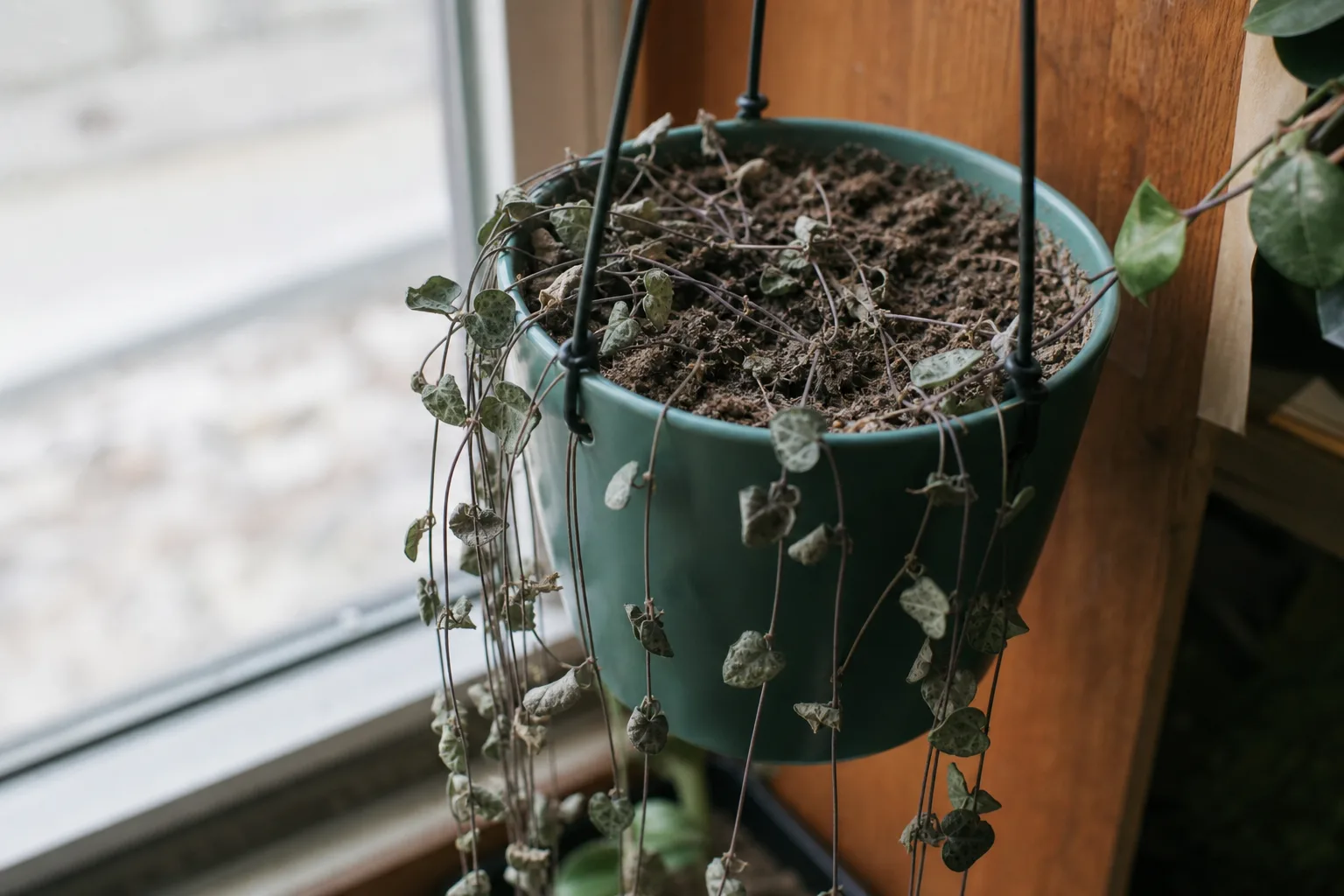
Underwatering on String of Hearts shows as thin flat heart-shaped leaves and limp trailing strands during active growth-not soft tubers on wet soil. Water deeply once, then wait for the mix to dry completely again. Do not keep soil constantly wet as a panic reaction.
Underwatering on String of Hearts: Causes, Checks & Fixes
This guide covers underwatering on String of Hearts. See also the general Underwatering guide, watering, and light pages for this plant.
Underwatering on String of Hearts: Causes, Checks & Fixes
Quick answer
String of Hearts stores water in fleshy leaves, succulent stems, underground tubers, and the bead-like aerial tubers along its vines-so it survives missed waterings better than most trailing houseplants. Prolonged dry spells during bright summer growth still produce thin, flat heart-shaped leaves, limp trailing strands, and a light dry pot.
First fix: water deeply once until excess runs from the drainage hole, discard saucer water, and check leaves again in 24 to 48 hours. Do not switch to daily shallow watering or keep the mix constantly damp out of fear-that reaction causes the rot that actually kills String of Hearts overview.
For ongoing watering rhythm after recovery, use the String of Hearts watering guide. If soil is wet and tubers feel soft, you are likely dealing with overwatering instead.
Why String of Hearts gets underwatered
Ceropegia woodii evolved in the dry scrublands of southern Africa, where it scrambles through other vegetation with trailing stems that can reach several feet. The plant is a caudiciform semi-succulent-it develops a swollen woody caudex at the base and tuberous roots below soil, plus aerial tubers at nodes along the vines. That storage system means underwatering is far less dangerous than overwatering here, but owners who fear rot after a past scare may stretch intervals too long during active growth.
Bright light and small hanging pots
In String of Hearts light guide-and especially near a warm window in summer-a small hanging basket can dry in days. NC State Extension notes the plant prefers bright indirect sunlight and well-drained sandy mix that dries completely between waterings. The same two-week rhythm that worked in spring may leave mix bone dry by July when transpiration spikes. Travel, baskets hung too high to check easily, and newly propagated strands with small root systems all widen the gap between drinks.
Hydrophobic mix and travel gaps
Peat-heavy indoor mix that has gone dry repeatedly can repel water on the surface while the root ball stays under-hydrated. You pour, water runs down the sides, and leaves still look thirsty. That pattern overlaps with dry hydrophobic soil-not simple calendar neglect.
Overcorrecting after a rot scare
Because string of hearts is easily killed by overwatering, many growers swing too far toward drought. Chronic underwatering during summer active growth slows new leaves, shrinks aerial tubers slightly, and can trigger lower leaf drop on very long strands-even though the plant is not in immediate danger.
Variegated forms show drought faster
Cultivars such as Ceropegia woodii f. variegata have cream and pink variegated leaves with less chlorophyll per leaf. Variegated strands often look pale or thin sooner than solid green vines in the same pot, even when soil dryness is similar. Check the whole plant, not one faded strand alone.
What underwatering looks on String of Hearts
Leaf texture - the taco test. Healthy leaves feel firm and resist folding lengthwise. Underwatered leaves feel thin and bend easily like a soft taco shell. Wilted leaves are the result of underwatering on this species when the mix is genuinely dry-not when tubers sit in wet soil.
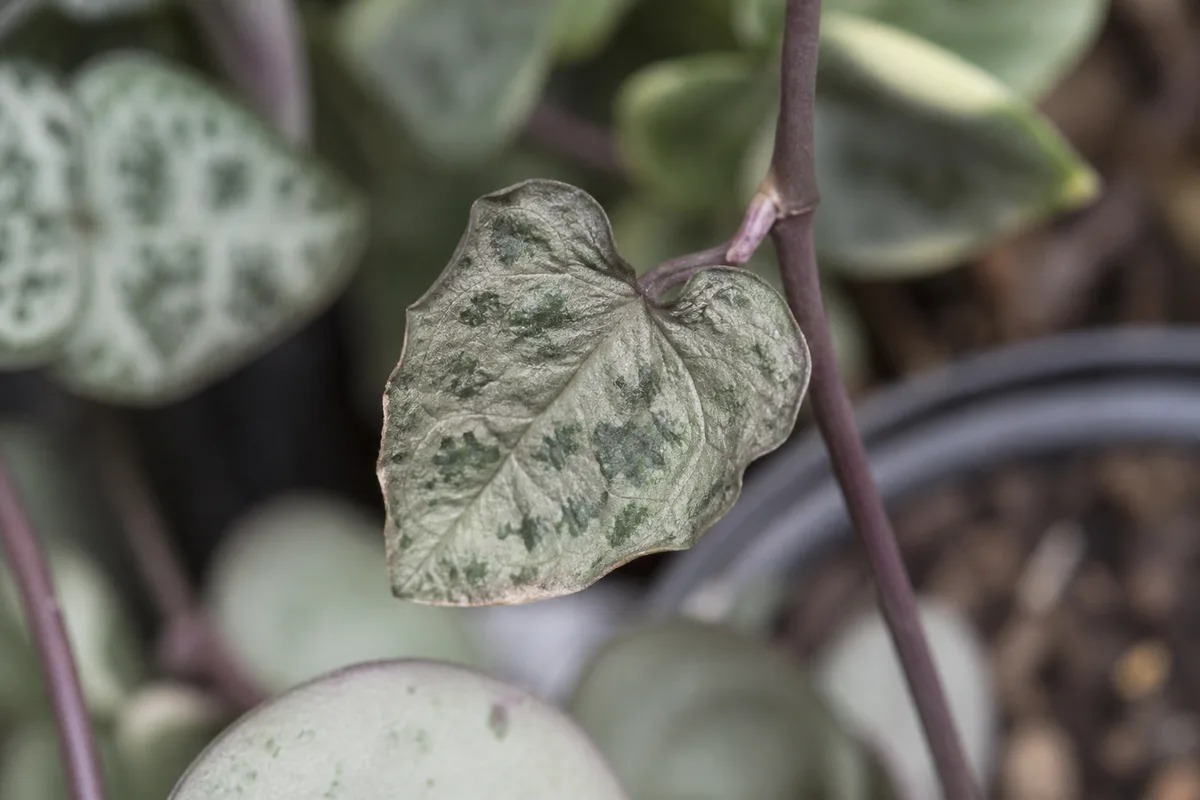
Underwatering symptoms on String of Hearts - compare with healthy tissue on the same plant.
Strand posture. Trailing stems go limp because leaves and stems have lost turgor. The plant may still look alive with green tissue; strands are not blackening at the crown.
Pot and soil cues. The container feels noticeably lighter than after a recent soak. Mix is dry well below the surface-not merely dusty on top over damp roots. In prolonged cases, soil may pull slightly from the pot wall.
Aerial tuber and caudex signals. Bead-like aerial tubers may look slightly smaller or less turgid after repeated dry cycles. The caudex and underground tubers should still feel firm, not mushy. Firm storage organs mean reserves remain.
Lower leaf drop on long strands. A few dried leaves shedding from the oldest sections of very long vines can happen after drought stress-or as normal senescence even when watering is adequate. Context matters: widespread thin leaves plus a light dry pot point to thirst.
Early vs advanced underwatering
Early thirst shows on the most exposed leaves first-usually those farthest from the pot where air movement is highest. Advanced dryness spreads thin folding leaves along multiple strands, stems may look slightly less rigid, and leaf drop increases. Even then, firm tubers and absence of sour smell from drainage holes suggest recovery is realistic after one proper soak.
How to confirm the cause
Work through these checks in order before you pour:
- Soil moisture at depth - Push a finger or dry wooden skewer 5–7 cm (2–3 inches) into the mix. Underwatering shows dry material throughout, not just a dry crust over damp peat.
- Pot weight - Lift the container. A light pot plus taco-test leaves strongly suggests thirst. A heavy pot with limp leaves points to failing roots or overwatering, not dryness.
- Tuber firmness - Gently squeeze an aerial tuber or inspect where stems meet soil. Firm tubers on dry mix mean underwatering. Soft tubers on wet mix mean stop-do not add water.
- Season and light context - Active summer growth in a bright window dries pots faster than winter dormancy when the plant slows and draws on reserves. Sparse winter strands with mostly plump inner leaves may be rest, not neglect.
- The 24–48 hour plump test - If checks point to thirst, water once deeply. Leaves that regain firmness within 24 to 48 hours confirm underwatering. No improvement with wet soil means inspect roots rather than watering again.
First fix for String of Hearts
Water thoroughly once until excess runs from the drainage hole, then empty the saucer.
Direct flow onto the soil surface, not over the hanging vine display. Let water flush through the full root zone. If mix has gone hydrophobic and water runs straight down the sides, bottom-water the pot in a basin for 20 to 30 minutes, poke a few holes through the crust with a chopstick, then let it drain fully on a rack. See dry hydrophobic soil if the first pass leaves the center obviously dry.
After this single soak, stop. Do not water again until the mix has dried to the appropriate depth for the season-allow the compost to dry out completely between waterings during active growth, deeper in winter. Resume the dry-down rhythm from the watering guide, not a daily schedule.
Step-by-step recovery
When dryness has persisted for weeks or hydrophobic soil blocked uptake:
- Soak or bottom-water once as described above. Repeat bottom-watering only if the first pass left the root ball center obviously dry.
- Move to appropriate light if the plant sits in deep shade where it uses water slowly but also grows weakly-bright indirect light supports recovery without baking strands in harsh afternoon sun. Too much direct sun scorches leaves; filter strong glass.
- Trim only fully crisp leaves that have hardened brown and will not plump. Leave thin soft leaves in place; they usually recover.
- Hold fertilizer until new growth along the vines looks normal for at least two weeks. Stressed roots do not need feeding.
- Repot only if mix is years old, compacted, or fails to absorb water after two soak attempts. Use fast-draining cactus-style mix and wait seven to ten days before the next drink if roots were disturbed.
- Check aerial tubers on healthy strands if lower sections were damaged-firm aerial tubers can root into fresh mix as backup propagation if crown roots were stressed by extreme drought.
When to use this page vs other String of Hearts guides
- String of Hearts watering guide - Use for routine moisture checks before assuming underwatering is the main issue.
- String of Hearts problems hub - Browse all 45 common issues on this species.
- Brown Tips on String of Hearts - Different entry point when symptoms overlap with underwatering.
- Leaf Drop on String of Hearts - Different entry point when symptoms overlap with underwatering.
- Drooping Leaves on String of Hearts - Different entry point when symptoms overlap with underwatering.