How to Grow and Care for Chinese Evergreen Indoors
Grow healthy Aglaonema indoors: match light to leaf color, water by soil dryness, choose a draining pot, propagate cuttings, and troubleshoot yellow leaves.
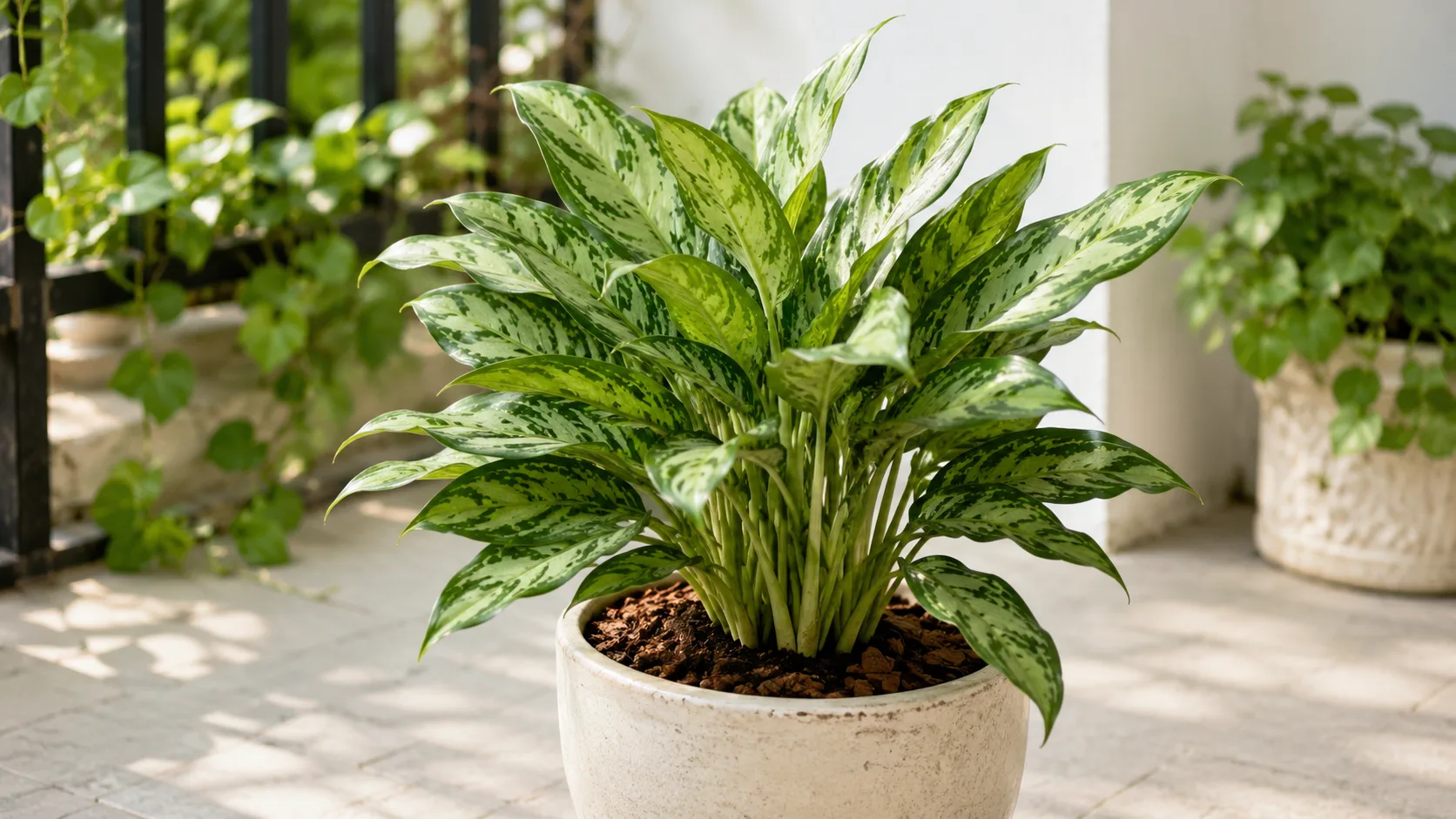
Chinese evergreen, or Aglaonema, is forgiving about light but unforgiving about a pot that stays wet. The most reliable routine is simple: give it low-to-medium indirect light, let the upper layer of soil dry before watering again, use a container with a drainage hole, and keep it warm and away from drafts.
Colorful cultivars need more usable light than solid-green ones, and no Aglaonema thrives in a room with no daylight at all. Clemson Extension places Chinese evergreen among durable tropical foliage plants that tolerate poor light and average indoor air, while UF/IFAS recommends medium-to-low light and watering only after the top inch dries. (Clemson Cooperative Extension; UF/IFAS Gardening Solutions)
Chinese Evergreen Care at a Glance
| Care factor | Practical indoor target | What to watch for |
|---|---|---|
| Light | Low to medium, indirect light; brighter filtered light for silver, pink, or white leaves | Bleached patches mean too much direct sun; stretched or faded growth means too little |
| Water | Water when the top 1–2 inches of mix feel dry, then drain fully | Wet soil plus droop or yellowing points to root stress, not thirst |
| Soil | Airy houseplant mix that holds some moisture but drains quickly | A sour smell, algae, or a pot that stays wet for many days means the mix is too dense |
| Temperature | Roughly 68–80°F is a comfortable range; protect from cold below about 55°F | Cold glass, doors, and air-conditioning vents can trigger curl and decline |
| Humidity | Average indoor humidity is usually workable; moderate humidity improves leaf edges | A pebble tray cannot replace drainage, and misting is temporary |
| Feeding | Diluted, balanced fertilizer during active growth only | Brown edges or crusty mix can signal excess fertilizer |
| Safety | Keep away from pets and children who chew plants | The plant contains insoluble calcium oxalates |
Think of that table as a set of starting conditions, not a calendar. A small plant in a bright, warm room can dry much faster than a large plant in a dim office, so inspect the soil and pot each time rather than watering because it is Sunday.
Choose a Cultivar That Fits Your Room
Aglaonema is a genus, not one identical plant. Garden centers sell solid-green, silver-marked, pink, red, and heavily variegated cultivars, and their light tolerance is not the same. Clemson lists cultivars such as ‘Maria’, ‘Frasher’, ‘Crete’, ‘Pseudobracteatum’, and ‘Tricolor’, along with species that differ in leaf color, size, and shade tolerance. (Clemson Cooperative Extension)
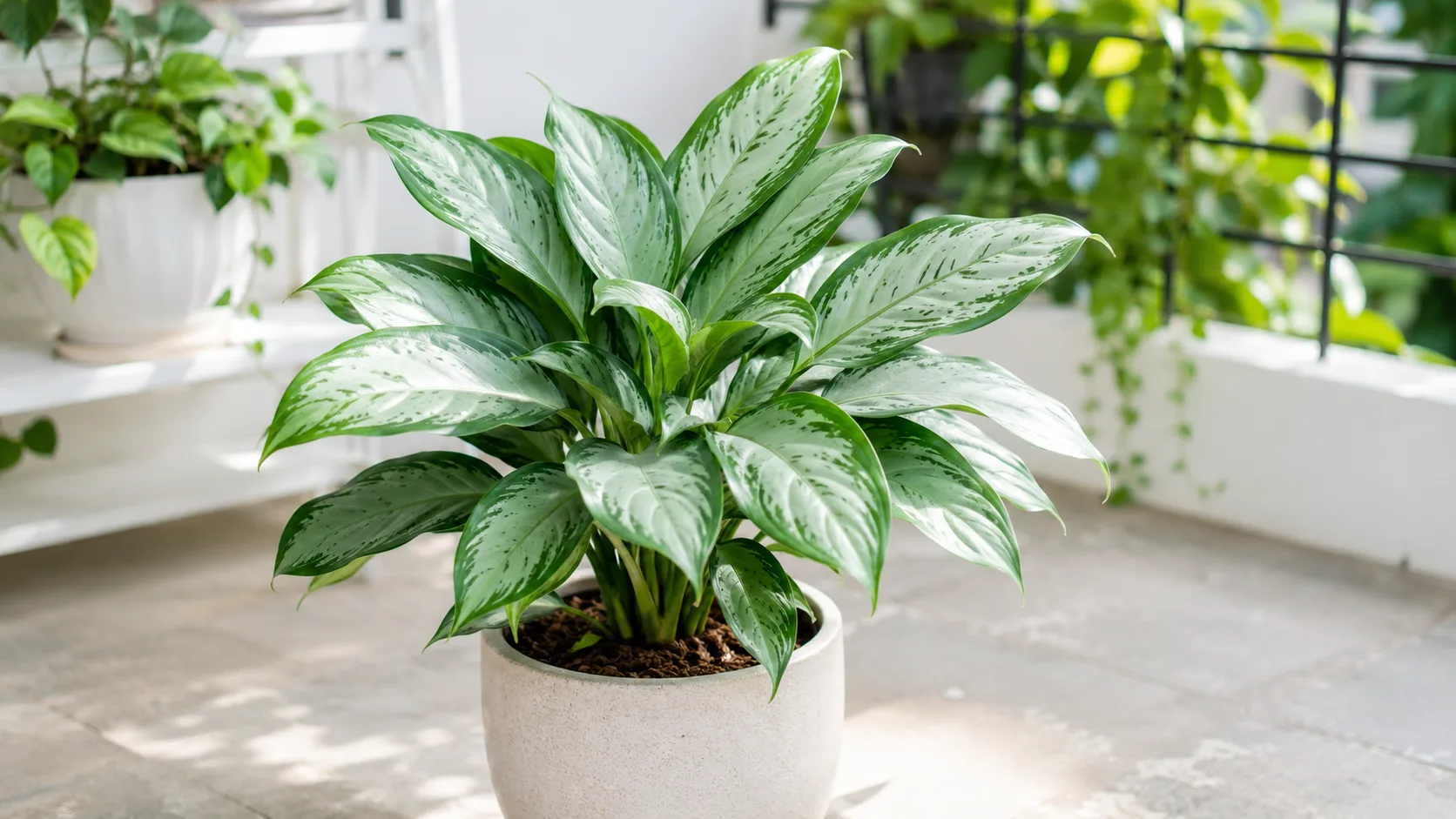
If your room is genuinely dim, choose a darker green or lightly patterned plant. If you want ‘Silver Bay’, ‘Red Valentine’, ‘Pink Dalmatian’, or another high-contrast cultivar to keep its pattern, give it a brighter position without exposing the leaves to harsh midday sun. This is a useful buying rule: choose the plant for the light you have instead of buying a bright-pink plant and hoping a dark corner will preserve its color.
Match Light to Leaf Color and Variegation
Solid-green foliage captures light efficiently, so darker cultivars usually cope better with a low-light room. Silver, cream, pink, and red areas contain less chlorophyll, so the plant generally needs more indirect light to maintain strong color and compact growth. A recent practical guide from Homes & Gardens makes the same cultivar-level distinction, noting that ‘Silver Bay’ can need brighter light to maintain its silver variegation. (Homes & Gardens)
When shopping, inspect the whole plant rather than one dramatic leaf. Look for firm stems, clean leaf undersides, fresh central growth, and a root ball that is moist rather than saturated. Skip plants with cottony clusters, hard brown bumps, fine webbing, sticky residue, or many collapsed leaves; isolate any new purchase from your collection for one to two weeks even if it looks healthy. The University of Minnesota Extension recommends examining tops and undersides of leaves, containers, and saucers and isolating new plants long enough for hidden pests to become visible. (University of Minnesota Extension)
Give Aglaonema Bright, Filtered Light
The safest placement is near a bright window behind a sheer curtain, or a few feet back from an east- or north-facing window. A naturally bright room can also work if direct sun does not land on the leaves for long stretches. Chinese evergreen is a shade-tolerant foliage plant, but shade-tolerant does not mean light-free; in a windowless room, use a grow light or expect slow, sparse growth.
Watch the plant, not the compass direction. New leaves that are smaller, farther apart, or mostly green in a formerly colorful plant suggest that light is too weak. Tan, bleached, or papery patches on the window-facing leaves suggest direct-sun scorch; move the pot back or add a sheer curtain. Rotate it a quarter turn every week or two so one side does not lean toward the window.
If you move an indoor Aglaonema outdoors for warm weather, place it in deep shade or bright open shade first. The leaves have not adapted to outdoor intensity, and a sudden jump from indoor light to sun can burn them even when the outdoor temperature is comfortable. Bring it back inside before nights approach the plant’s cold limit; UF/IFAS notes that Aglaonema prefers 68–77°F and can tolerate temperatures down to about 55°F, while Clemson recommends avoiding temperatures below 55°F. (UF/IFAS Gardening Solutions; Clemson Cooperative Extension)
Water by Soil Moisture, Not the Calendar
Water a Chinese evergreen when the top 1–2 inches of potting mix feel dry, then soak the entire root ball until water exits the drainage holes. Let the pot finish draining before returning it to a cachepot or saucer. Clemson’s current care sheet recommends testing the top two inches with your fingers and using room-temperature water; UF/IFAS similarly advises waiting until the top inch feels dry. (Clemson Cooperative Extension; UF/IFAS Gardening Solutions)
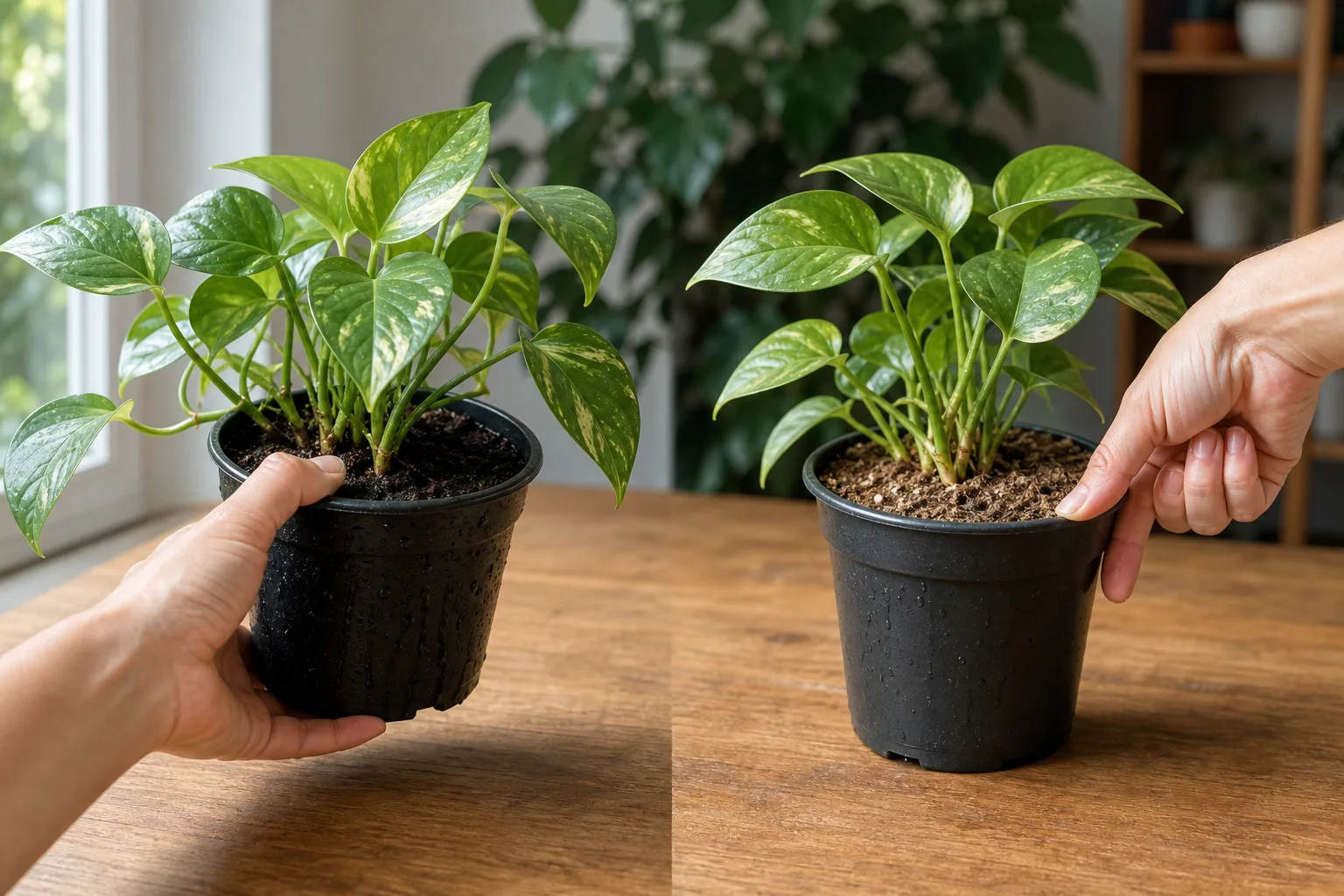
The interval will change with pot size, light, season, temperature, and mix. A small pot in bright indirect light may need checking several times a week, while a large plastic pot in a dim office may stay damp for much longer. If the mix is dry only at the surface but cool and damp below, wait; if water runs straight down the sides of a very dry root ball, water slowly in two passes so the mix can rehydrate instead of shedding the first pour.
Use a finger, wooden skewer, or pot weight as a cross-check. A moisture meter can be useful for a large pot, but no tool replaces looking at the roots when the plant repeatedly droops in wet soil. Empty runoff every time; a drainage hole does not help if the pot sits in a full saucer.
Distinguish Thirst From Overwatering
Drooping leaves do not automatically mean the plant needs water. If the soil is dry, the pot feels light, and the foliage is limp without a sour smell, give it a thorough drink and allow it to drain. If the soil is wet, the pot is heavy, lower leaves are yellowing, or the stems feel soft, adding more water can worsen the problem; inspect the root zone instead.
This wet-versus-dry check is the most important Aglaonema diagnostic. Roots in saturated mix can lose access to oxygen, so the plant may wilt while the pot is visibly wet. Root rot is usually associated with overwatering or a mix that drains too slowly, and Clemson specifically lists both as causes. (Clemson Cooperative Extension)
Use an Airy Mix and a Pot With Drainage
Use a quality indoor potting mix that holds moisture but does not collapse into mud. A workable starting blend is two parts standard houseplant mix to one part perlite or fine pine bark. If your home is very dry and you tend to forget watering, use a little more moisture-holding mix; if the pot stays wet for a week, add more aerating material and improve the light.
The target is not a special brand or a dramatic “aroid” recipe. It is a root zone with both moisture and air spaces. UF/IFAS production guidance describes well-aerated media with peat, bark, vermiculite, or perlite and a mildly acidic-to-near-neutral pH range for commercial Aglaonema, while home growers can usually achieve the same practical result with a fresh, porous houseplant mix. (UF/IFAS Aglaonema Production Guidelines)
Choose a nursery pot with several drainage holes and place it inside a decorative cachepot if you want a cleaner look. Plastic holds moisture longer; unglazed terracotta dries faster. Neither is universally better: use plastic for a fast-drying room, terracotta when you tend to water too often, and always empty the outer pot after watering.
Do not put a layer of gravel in the bottom of a pot as a substitute for drainage. It takes away root-room and does not fix a dense mix. A real hole, an appropriately sized pot, and an airy mix are the useful combination.
Keep Temperature Stable and Humidity Practical
Aglaonema grows best in stable warmth, roughly 68–80°F. Keep it away from exterior doors, cold window glass, heat vents, radiators, and air-conditioning blasts. Short exposure to a cooler room is not the same as immediate death, but repeated chilling slows roots and can cause curled, water-soaked, or collapsing foliage.
Average indoor humidity is often adequate, especially for darker green cultivars. If leaf edges crisp in a dry heated room, first check watering consistency, root health, direct sun, and fertilizer buildup; humidity is one possible contributor, not the only diagnosis. Clemson notes that Chinese evergreen tolerates low-to-moderate humidity, which is why it can adapt to ordinary homes better than many fussier tropicals. (Clemson Cooperative Extension)
Raise Humidity Without Keeping Leaves Wet
The most effective option for a very dry room is a small humidifier used with a hygrometer, positioned so air circulates rather than blowing constantly at the leaves. Grouping plants can create a slightly more humid pocket, and a bright bathroom can work if it also has enough daylight and reasonable airflow.
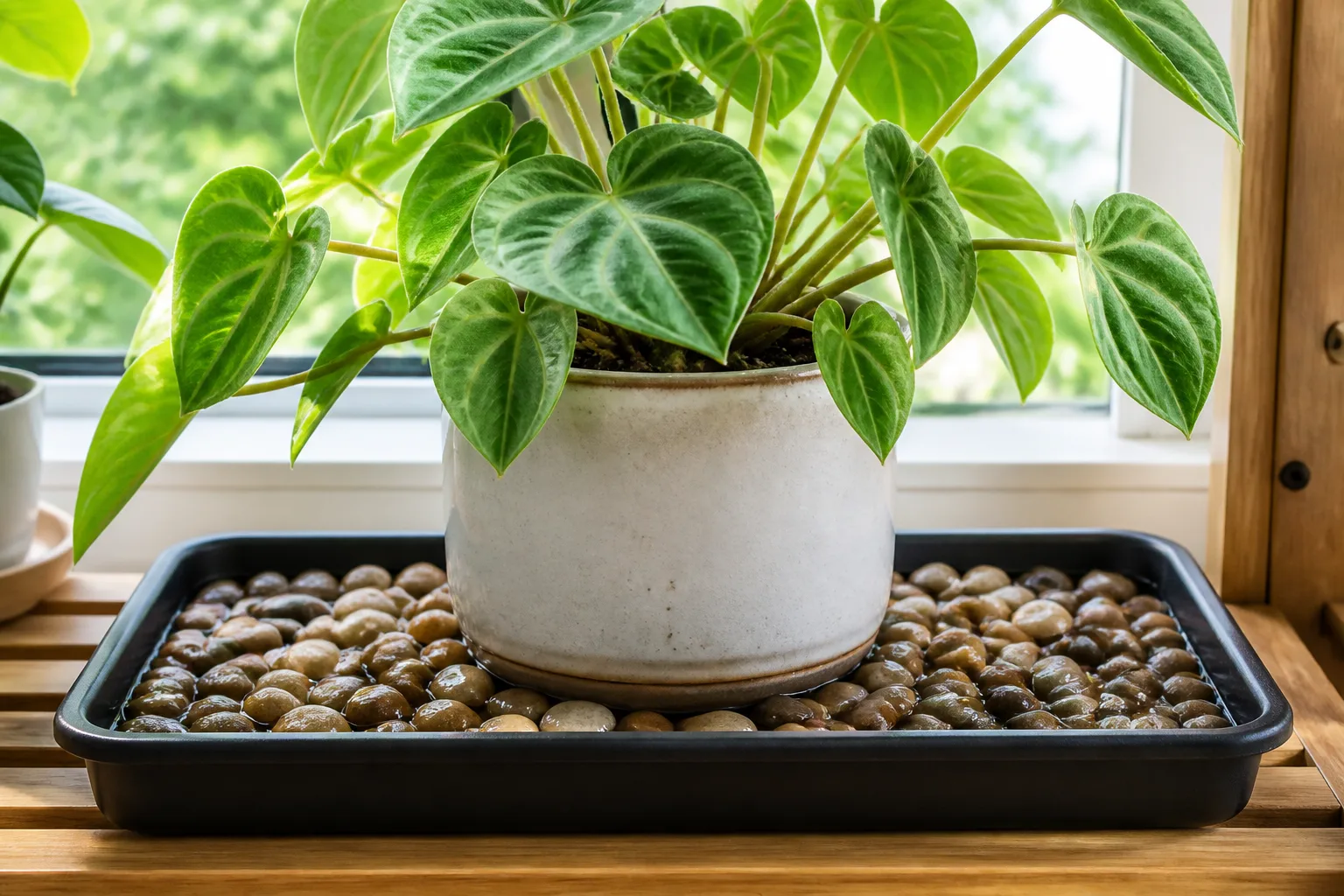
A pebble tray is a modest local aid, not a root-watering system. Set the pot on pebbles in a shallow tray with water below the tops of the stones; the base of the pot must remain above the waterline. Nebraska Extension warns that the plant should never sit in the tray water because constantly wet soil invites root rot. It also explains why misting is a poor long-term fix: you would need to mist continually to change overall humidity, and persistently wet leaves can increase leaf-spot risk. (Nebraska Extension)
Fertilize Lightly During Active Growth
Chinese evergreen is not a heavy feeder. During spring and summer, when you see active new leaves and the plant has adequate light, use a balanced liquid houseplant fertilizer diluted to a conservative strength, such as one-quarter of the label rate, about once a month. A slow-release product can also work, but do not stack it with frequent liquid feeding.
Reduce or skip fertilizer in winter, in a dim room, immediately after repotting, or while roots are damaged. Gardening Know How recommends light feeding—roughly quarter-strength once or twice in the growing season—and Clemson warns that excessive fertilizer can burn leaf edges. (Gardening Know How; Clemson Cooperative Extension)
Fertilizer cannot repair low light or root rot. If the plant is yellowing in wet soil, correct drainage before feeding. If white crust accumulates on the soil surface or leaf margins turn brown soon after feeding, pause fertilizer and flush the mix with plain water while allowing the pot to drain fully.
Prune, Clean, and Handle Flowers
Pruning is mostly a cleanup job. Remove fully yellow, brown, or damaged leaves at the base with clean, sharp pruners rather than cutting healthy leaves in half. Wipe dust from broad foliage with a soft damp cloth so you can see pests and the plant can use its available light more effectively.
If a cane becomes bare or leggy, cut it just above a visible node or leaf attachment point. The remaining stem may push new growth from a lower node, while the top section can become a cutting if it has a node and enough healthy tissue. Make one clean cut, sanitize the tool between plants, and do not remove more than about one-third of a stressed plant at once.
Aglaonema can produce a small spathe-and-spadix inflorescence. The foliage is usually the reason to grow it, so you can remove a fading flower at its base if you prefer a cleaner plant or do not want it to invest in berries. Leaving the flower is not a care failure; it simply may divert a little energy from new leaves.
Propagate by Division or Stem Cuttings
Propagation works best when the parent plant is actively growing and already healthy. Do not propagate a plant with mushy roots, widespread pests, or severe dehydration; stabilize the parent first so every cutting is not carrying the same problem into a new pot.
There are two dependable home methods: division when the plant has separate basal shoots, and stem cuttings when you have a healthy cane with at least one node. UF/IFAS identifies cuttings and division of basal shoots or suckers as the main propagation routes and notes that cultivars vary in how many offsets they produce. (UF/IFAS Aglaonema Production Guidelines)
Division: The Fastest Route to a Second Plant
Division gives you the highest head start because each new section can retain established roots. Use it when the plant is crowded or due for repotting.
- Water the parent lightly a day before working so the root ball is flexible, not saturated.
- Slide it from the pot and loosen enough mix to see where separate shoots join.
- Gently tease apart a clump with its own roots and at least one growing point. Cut only roots that are clearly dead, mushy, or blackened.
- Pot each division into a container only slightly wider than its root mass, using fresh airy mix.
- Water once until excess drains, then keep the mix lightly moist while the divisions re-establish in bright indirect light.
Do not force a division if all stems emerge from one solid crown with no separable roots. A rough split can damage the parent more than it helps. Wait for offsets or use a node-bearing stem cutting instead.
Stem Cuttings: Root a Cane With a Node
Choose a firm, healthy stem about 4–6 inches long with at least one visible node; a cutting with a few leaves has more stored energy. Remove lower leaves, leaving one or two at the top, and keep the cutting upright so you do not bury the wrong end.
You can root it in water or a moist, airy medium. Water makes root emergence easy to observe, but the cutting will need a gentle transition into soil. A small pot of damp perlite-and-potting-mix blend keeps oxygen around the cutting and avoids the shock of moving long water roots. Keep the setup warm, bright but indirect, and just moist—not sealed and swampy.
When roots are a couple of inches long and new growth begins, pot the cutting. A leaf blade without a section of stem and a node is not a reliable new plant because it lacks the growing point needed to make a shoot. Practical propagation guidance from Homes & Gardens also emphasizes that Aglaonema cuttings can be rooted in water or soil and that the genus is slow enough to reward patience rather than constant disturbance. (Homes & Gardens)
Repot When the Root Zone Tells You To
Repot every two to three years or sooner when the root zone gives you a reason. Useful signs include roots circling tightly, roots emerging from drainage holes, mix that has broken down and stayed wet, water running through without wetting the root ball, or a plant that dries almost immediately after watering because roots fill the pot.
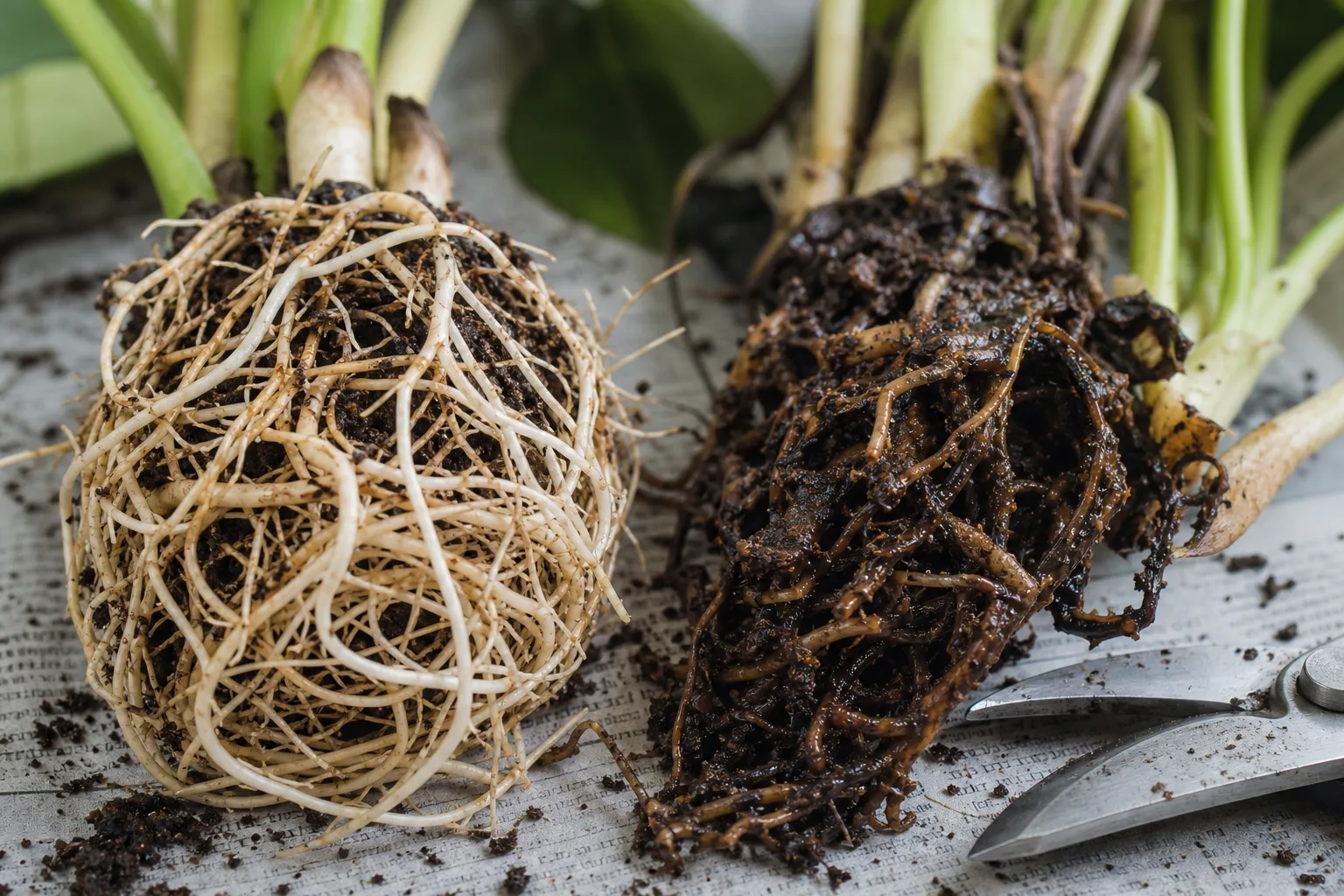
Spring and early summer are convenient because growth is returning, but do not wait for a season if you find root rot. The RHS recommends repotting houseplants in spring when possible and choosing a container only a few inches wider than the existing pot; the same size rule helps prevent an Aglaonema from sitting in a large reservoir of unused wet mix. (Royal Horticultural Society)
Slide the plant out, inspect the roots, and separate healthy firm roots from brown, mushy tissue. Trim the damaged parts with clean scissors, discard the old saturated mix, and use a clean pot with drainage. Set the plant at the same depth as before—do not bury the crown or pile wet mix against the stems—then water thoroughly once and hold fertilizer until you see new growth.
Prevent and Treat Common Pests and Diseases
Common Aglaonema pests include mealybugs, scale, aphids, spider mites, and sometimes thrips. Check leaf undersides, the joints where petioles meet stems, the crown, pot rim, and saucer. Cottony white clusters suggest mealybugs; fixed brown or tan bumps suggest scale; fine webbing and pale stippling suggest mites; sticky honeydew can point to sap-feeding insects.
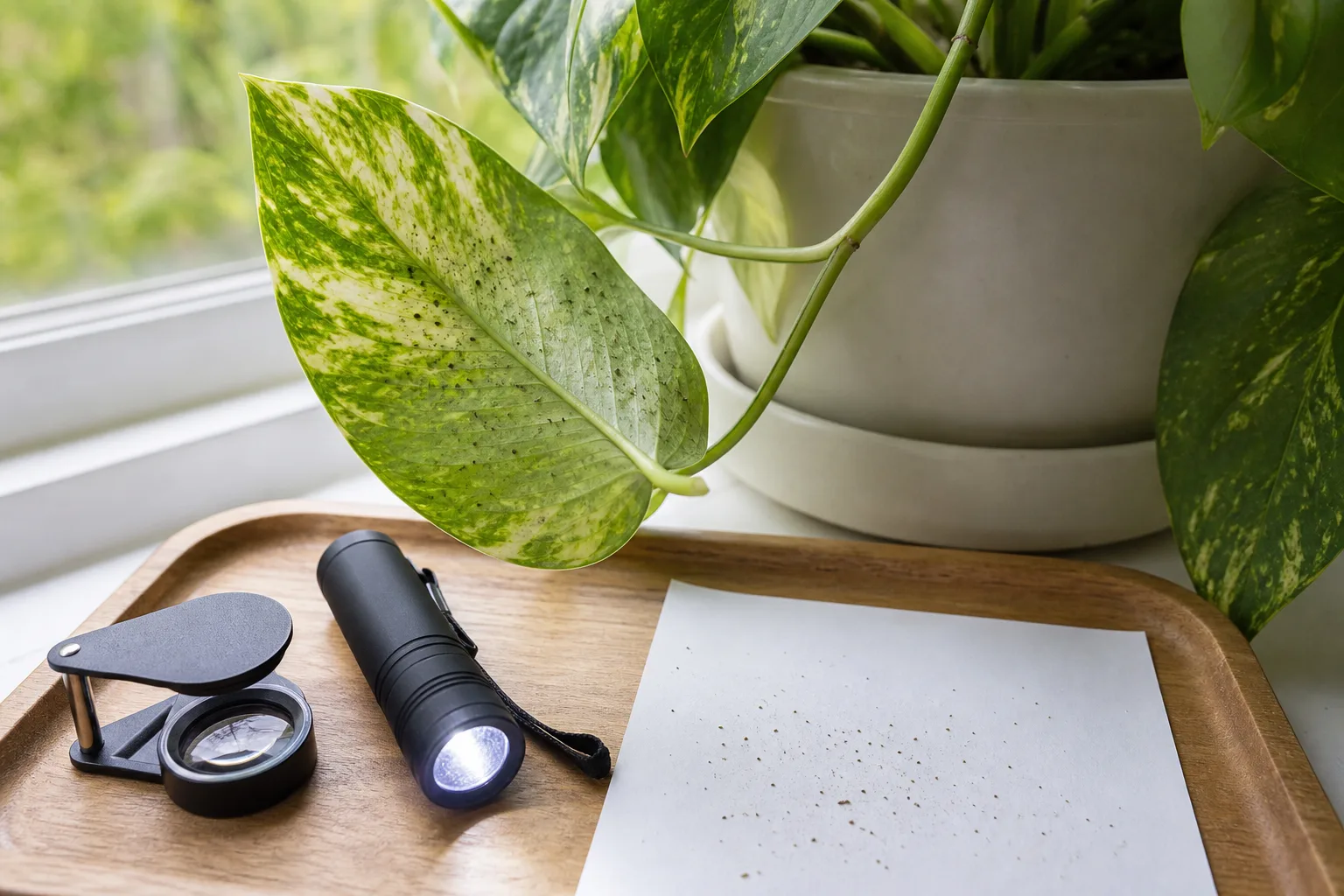
Start with containment. Move the plant away from other houseplants, wipe or rinse visible pests from the foliage, prune heavily infested leaves, and inspect nearby plants. Minnesota Extension recommends physical removal, water sprays, pruning of severely affected tissue, and one-to-two-week isolation for new plants; it also warns against homemade soap mixtures that can burn foliage. (University of Minnesota Extension)
If pests persist, use a product labeled for indoor plants and for the pest you found, following the label exactly. Insecticidal soap and horticultural oils work only when they contact the insect, so coverage of leaf undersides and repeat applications matter. Do not spray a stressed plant in direct sun, do not combine products casually, and do not use a systemic product outdoors on a flowering plant where pollinators could be exposed.
Disease is less common than care stress, but chronic wetness can lead to root rot, while high humidity with poor airflow can encourage powdery mildew or leaf spots. Keep leaves from staying wet overnight, remove infected tissue, improve air movement, and correct the watering or drainage problem before reaching for a fungicide. Clemson lists root rot as a result of overwatering or slow drainage and notes that powdery mildew can appear under high humidity. (Clemson Cooperative Extension)
Diagnose Yellow Leaves, Brown Tips, Curling, and No Growth
Use the whole plant and the soil together. One old lower leaf turning yellow can be normal aging; several leaves changing at once deserves a moisture, light, temperature, and pest check before you prune or feed.
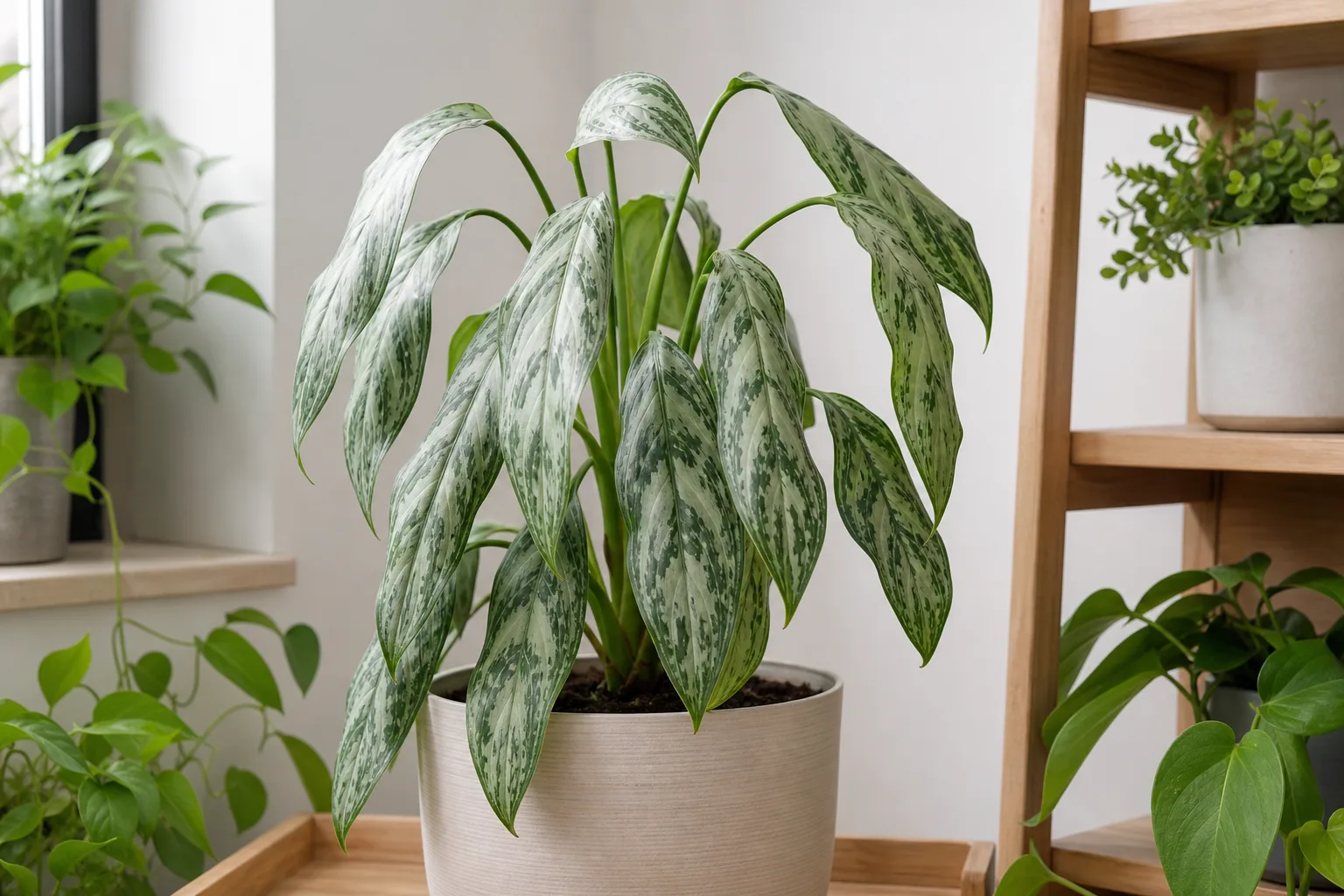
| What you see | Check first | Best first action |
|---|---|---|
| Yellow leaves with wet mix | Pot drainage, pot size, mushy roots | Stop watering, inspect roots, and repot if rot is present |
| Yellow leaves with bone-dry mix | Missed watering, severe root binding, hot airflow | Rehydrate slowly, then establish a soil-based watering cue |
| Brown crispy edges | Dry air, inconsistent moisture, salts, fertilizer strength, direct sun | Check moisture and light, flush excess salts, and keep heat or sun off leaves |
| Curling leaves | Dry roots, cold draft, hot vent, direct light, pests | Check the underside and soil before changing humidity |
| Pale or stretched new growth | Insufficient light or a sudden low-light move | Increase filtered light gradually; do not compensate with extra fertilizer |
| Droop while soil is wet | Root stress, cold, or stem damage | Do not water again; slide the plant out and inspect the roots |
| Sticky leaves or fine webbing | Scale, mealybugs, aphids, or spider mites | Isolate and inspect with a magnifying lens |
| No new growth | Low light, cold, root-bound mix, or winter rest | Improve light and warmth, then wait for a growth cycle |
Brown tips are not a single diagnosis. A humidifier may help a truly dry room, but it will not repair roots sitting in a waterlogged pot or reverse fertilizer burn. Likewise, a yellow leaf is not proof of overwatering until you feel the soil; the moisture check comes before the treatment.
Keep Chinese Evergreen Away From Chewing Pets
Chinese evergreen is toxic to cats, dogs, and horses if chewed or ingested. The ASPCA lists insoluble calcium oxalates as the toxic principle and reports oral irritation, pain and swelling of the mouth, tongue, and lips, excessive drooling, vomiting, and difficulty swallowing. (ASPCA Animal Poison Control)
Place the pot where a curious pet or child cannot reach the leaves, and remove fallen pieces from the floor. Routine contact is not the same as chewing, but wear gloves if the sap irritates your skin and wash your hands after pruning. If a pet has eaten part of the plant, contact a veterinarian or an animal poison-control service promptly—especially if there is swelling, repeated vomiting, trouble swallowing, or breathing difficulty—and do not induce vomiting unless a professional instructs you to do so.
Conclusion: Build a Stable Routine
Good Chinese evergreen care is mostly consistency with room for observation. Give darker cultivars lower indirect light and colorful ones brighter filtered light; water only after the upper soil dries; use an airy mix and a drainage hole; keep the plant warm; and treat humidity as a support, not a reason to keep roots or leaves wet.
Once a week, inspect the leaf undersides, feel the top of the soil, lift the pot, and look for new growth. That short routine catches pests before they spread, distinguishes thirst from root trouble, and tells you whether your Aglaonema needs more light, less water, a repot, or simply time.



