Aphids on Calathea Dottie: Pink-Vein Spear Checks & Fixes
Quick answer
Aphids on Calathea Dottie colonize the newest rolled spears, petiole bases, and tender pink-veined tissue—often with sticky honeydew on near-black blades. First step: isolate the plant and rinse leaf undersides with lukewarm filtered or rainwater before any spray.
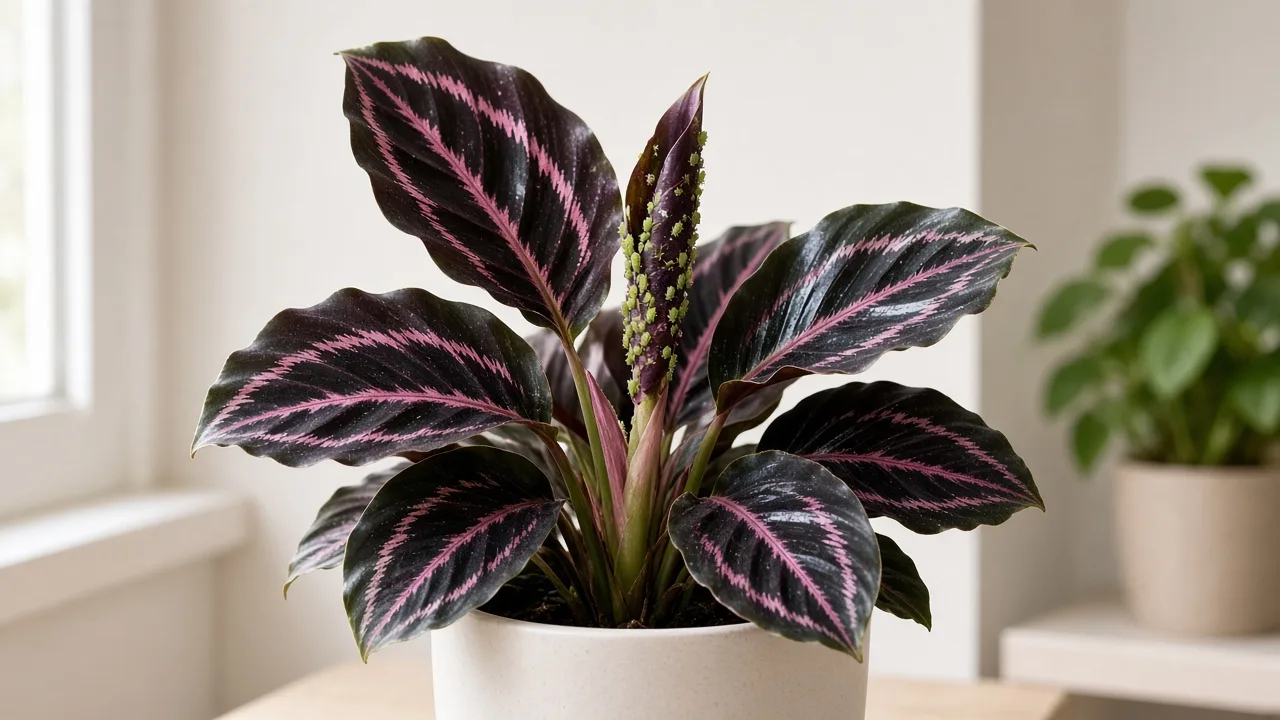
Aphids on Calathea Dottie: Causes, Checks & Fixes
This guide covers aphids on Calathea Dottie. See also the general Aphids guide, watering, and light pages for this plant.
Aphids on Calathea Dottie: Causes, Checks & Fixes
Quick answer
Soft-bodied aphids on Calathea Dottie (Goeppertia roseopicta ‘Dottie’) almost always show up on the tenderest tissue in the crown—the rolled spear still showing its vivid pink central vein, fresh petioles, and stem tips where the plant pushes its next dark blade. They drain sap, leave sticky honeydew that can feed sooty mold, and can distort a single new leaf badly enough to ruin Dottie’s signature contrast for months.
For how aphids reproduce, why ants defend them, and when a strong water rinse works in general, see our aphids pest guide. On Dottie, the practical pattern is warm-season clusters inside the unfurling spear, sticky residue on near-black leaves where every speck shows, and extra care because this cultivar marks easily from harsh sprays or cold tap rinses.
First step: isolate the plant away from other prayer plants, then rinse leaf undersides and the inner spear with lukewarm filtered or rainwater—support the crown, tilt the pot in a sink, and let foliage air-dry in bright indirect light before reaching for soap or oil.
Sticky new growth with no insects may still mean mealybugs on Calathea Dottie—confirm pear-shaped bodies, not cottony wax.
When to use this page vs other Calathea Dottie guides
This page is the pest-first entry for soft sap feeders on new spear growth and pink-veined tissue.
| What you see | Read next |
|---|---|
| White cottony tufts in crown crevices | Mealybugs |
| Fine webbing + dull stippling | Spider mites |
| Crisp pink-brown edges, no insects | Brown tips or low humidity |
| Yellow lower leaves, wet mix | Overwatering or root rot |
| Leaves fold up at night only | Normal nyctinasty—see unfurl section below, not this pest page |
| Weak pink veins, long petioles | Not enough light or leggy growth |
- Calathea Dottie overview — Baseline culture, buying checks, and how dark leaves with pink veins should look when healthy.
- Calathea Dottie problems hub — Browse all common issues on this species.
Why Calathea Dottie gets aphids
Aphids are generalists indoors—almost any houseplant with soft new growth can host them, including rose-painted calatheas like Dottie. They usually arrive on a new purchase, an open window near outdoor ornamentals, or a neighboring infested pot on a humid plant shelf.
Overlapping dark blades hide colonies. Dottie holds several broad leaves in a tight rosette. Aphids feed on undersides and petiole bases you cannot see from across the room, while honeydew on glossy near-black tissue stands out once colonies build.
Soft nitrogen-rich shoots attract feeders. Growers who push fertilizer during active growth can produce tender spears aphids prefer. That is a timing mistake, not proof the plant is “weak”—even a well-humidified Dottie on filtered-water watering can get aphids if a crawler lands on the newest leaf.
Humid groupings spread pests. Dottie culture targets 60%+ RH and often sits beside Maranta, other Goeppertia, or ferns. Crowded shelves make winged adults and crawlers easy to miss until honeydew appears on multiple plants.
Indoor conditions limit predators. Outdoors, lady beetles and lacewings curb aphids; inside, ants often protect colonies on pot rims and cachepot saucers unless you isolate and rinse early.
What aphids look like on Calathea Dottie
Aphids are small, soft-bodied, pear-shaped insects roughly 1/16 to 1/8 inch long. They may be green, black, brown, pink, or yellow and often cluster on undersides of young leaves and stems. Mature outer Dottie blades may look fine while the crown holds dense groups.
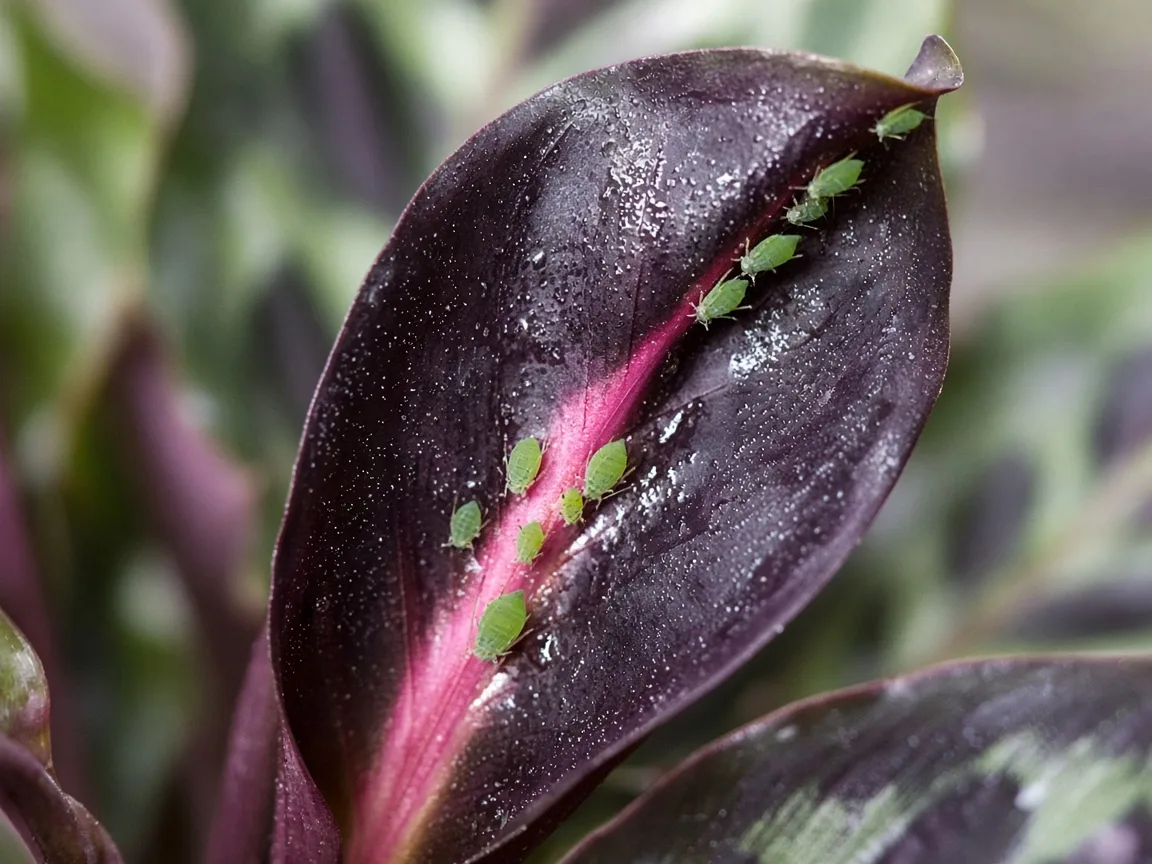
Soft aphids packed on a still-rolled Dottie spear—the pink central vein and sticky shine on dark tissue confirm sap feeding, not fluoride spotting.
- Clusters on the innermost rolled spear — New leaves emerge as tight tubes; aphids colonize the soft edge before the blade opens
- Sticky shine on near-black leaves or pink midribs — Honeydew shows clearly against Dottie’s dark pigmentation
- Pale or puckered new tissue — Feeding distorts the spear while older leaves keep their color
- White flecks on stems or leaf bases — Shed exoskeletons from molting aphids, not hard-water dust alone
- Ant trails on saucers or shelf edges — Ants harvest honeydew and shield aphids from predators
- Fine black sooty speckles — Mold growing on honeydew; wipes off but returns if aphids remain
Healthy Dottie spears should show even pink veining on dark green to purple-black tissue as they unfurl per NC State Goeppertia culture notes. One distorted spear with stickiness matters more than an older lower leaf with normal night folding.
Where aphids hide on dark Dottie spears and pink midribs
Dottie’s showy contrast concentrates on the still-furled center leaf. Aphids follow that soft tube, not the leathery outer row you see at eye level.
Inside the rolled spear is the primary hideout—along the pink midrib on the leaf’s inner face before it opens flat. Colonies stay shaded until the blade expands.
Petiole collars where leaves meet the rhizome crown collect aphids in the tight junction sprays miss. Work a magnifier around each base on the two innermost leaves.
Stem tips below the spear can host early colonies before they move onto the unfurling blade—especially after a growth flush in warm, bright conditions per your Calathea Dottie light setup.
Undersides of the youngest fully open leaf often sit vertical and overlap the spear—aphids feed there while the top surface looks clean.
Inspect each plant on a shared humid shelf separately. One sticky Dottie beside clean neighbors means a localized outbreak, not automatic failure of your whole soil and watering rhythm.
Unfurl damage vs prayer-plant night curl
Dottie is a nyctinastic prayer plant: leaves fold upward along the midrib at night and relax by day. That normal rhythm confuses aphid diagnosis.
Night fold alone — Outer leaves stand upright after lights-out, pink veins still crisp, no stickiness, no pear-shaped insects when you check with a lens in morning light.
Aphid puckering on the spear — The center unfurling leaf stays twisted or thin after daytime, with honeydew, pale tissue, or visible colonies on the rolled tube—not just vertical older leaves.
Water-quality curl — Brown tips or washed-out pink from tap water affect margins on multiple leaves without clustered insects on the crown.
Low-humidity stall — Dry air can crisp edges while the spear still opens; again, confirm insects before pesticidal sprays on sensitive foliage.
If only older blades fold at night and the newest spear opens clean with strong pink lines, aphids are unlikely.
How to confirm the cause
Work in bright indirect light with a magnifying glass—never direct sun on wet Dottie leaves.
- The newest rolled or partially open spear at the crown center.
- Petiole bases on the two innermost leaves.
- Undersides of those inner blades and the stem tip below the spear.
- Neighboring prayer plants on the same shelf or windowsill.
Crush one suspect insect with a swab: aphids leave a green or pink smear; perlite, dust, or dried water spots do not. Tap a leaf over white paper—live aphids move slowly compared with thrips.
Lookalike table
| What you see | Likely cause | Key check |
|---|---|---|
| Pear-shaped soft insects on new spear | Aphids (this page) | Honeydew; colonies move when disturbed |
| White cottony masses in axils | Mealybugs | Wax tufts; pink smear when crushed |
| Immobile brown bumps on stems | Scale (if present on your plant) | Shells do not move; not dense soft groups |
| Fine webbing, dull stippling | Spider mites | Dry-air history; no sticky honeydew |
| Yellow lower leaves, soggy mix | Overwatering | No insects; mix stays wet at top 2 cm |
| Night-only upright fold | Normal nyctinasty | Clean spear; no stickiness |
First fix for Calathea Dottie
Isolate the plant first so winged aphids and crawlers do not reach other Goeppertia or Maranta pots.
Then rinse thoroughly with lukewarm filtered or rainwater—the same quality you use for routine Calathea Dottie watering. Tilt the pot, cup the crown with your hand, and spray from below so water hits leaf undersides, petioles, and the inner spear. Wrap the pot in plastic if needed to keep peat-based mix from washing out. Let foliage air-dry in bright indirect light—not a hot window where wet dark leaves scorch.
Repeat rinses every three to four days until two checks find no live insects. Aphids reproduce quickly indoors; one shower rarely clears an established crown colony.
If rinsing is not enough
After a week of rinsing, use a product labeled for houseplants—typically insecticidal soap or neem oil—and test one leaf first. Wait 48 hours before treating the whole plant; Dottie foliage can spot from sprays, especially in heat or direct light. Apply in the evening away from windows, cover undersides and stems, and avoid homemade dish soap.
Dab individual aphids in tight spear clusters with a cotton swab dipped in 70% isopropyl alcohol when a full soak would saturate too much crown tissue at once. Remove a heavily infested rolled leaf with clean scissors only if insects are buried inside a tube you cannot reach—accept that losing one spear beats spreading crawlers across the collection.
Manage ants on saucers or shelves if they return—ant protection keeps natural enemies from helping.
Recovery timeline
Light infestations often clear within one to two weeks of consistent rinsing or combined rinsing and spot treatment. Check the crown weekly for at least a month because nymphs hatch on staggered schedules.
Judge success by the next spear opening with clean pink veining, no fresh honeydew on dark blades, and no live insects—not by whether an old twisted leaf flattens perfectly. Badly distorted leaves may never recover; trim them once the plant is insect-free and pushing healthy new growth.
Worsening signs include sooty mold across multiple blades, ants climbing stems, spears that stop unfurling, and aphids on plants within a few feet of the original host.
What not to do
Do not spray cold tap water or harsh detergents on Dottie foliage—fluoride and temperature shocks add permanent marks on dark leaves already sensitive to water quality.
Do not apply soap or oil in direct sun or on hot afternoons; the combination burns prayer-plant tissue.
Do not fertilize under pest stress—soft new growth from extra nitrogen feeds aphids exactly when you want slow recovery.
Do not return Dottie to a shared humid shelf until two weeks of checks show it clear. Do not assume one rinse finished the job.
Do not confuse normal night folding with aphid damage and spray unnecessarily.
How to prevent aphids next time
Quarantine every new Dottie for at least two weeks before placing it near your collection. Inspect unfurling spears and petiole bases under magnification—match the buying check on the overview page: firm newest spear, clean undersides, no sticky residue.
Fold pest scouting into watering: when you test whether the top 2 cm of mix is dry, lift inner leaves and scan the rolled center. Give plants physical space so blades do not press walls or neighbors—crowding hides colonies.
Feed lightly during active growth only; steady moderate growth beats over-fertilized soft shoots. When buying, examine the crown center closely—a clean outer row can hide an infested spear inside.
When to worry
Escalate when honeydew covers multiple leaves, sooty mold spreads, ants visit the pot, or aphids appear on several prayer plants in the same room. A few insects on one new spear can wait for isolation and filtered-water rinsing if caught early.
If dense colonies persist after three weeks of consistent treatment, or new spears stop opening entirely, prune the worst affected growth, treat remaining stems, or discard a severely compromised plant before the infestation spreads through a Calathea collection.
Related tool
Use the Pest Identifier Tool to narrow causes for aphids on this plant before changing humidity, water type, and pesticides at once.
Related Calathea Dottie guides
- Calathea Dottie overview — Culture baseline when pest stress overlaps with care mistakes.
- Calathea Dottie watering — Filtered-water rhythm; use the same water for pest rinses.
- Calathea Dottie light — Where to dry rinsed foliage safely without scorch.
- Mealybugs on Calathea Dottie — When sticky crowns show cottony wax, not exposed aphids.
- Spider mites on Calathea Dottie — When stippling and webbing replace honeydew.
- Yellow leaves on Calathea Dottie — When lower-leaf yellowing is cultural, not sap feeders on the spear.
- Calathea Dottie problems — Full species issue list.