Root Rot on Calathea Dottie: Wet-Mix Rescue
Quick answer
Root rot on Calathea Dottie follows chronically wet, low-oxygen mix while the plant still needs even moisture. First step: stop watering, empty saucers, and probe the top 2 cm—if mix stays damp and the pot feels heavy, unpot and inspect rhizomes the same day.
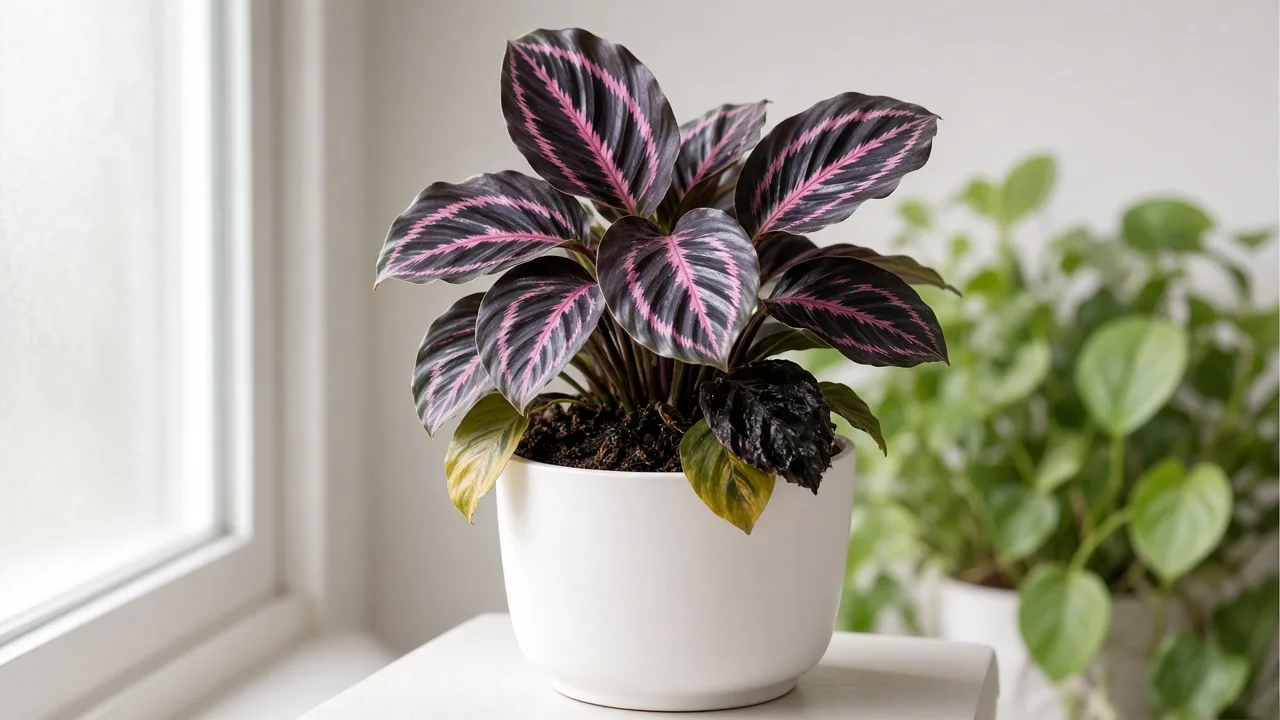
Root Rot on Calathea Dottie: Causes, Checks & Fixes
This guide covers root rot on Calathea Dottie. See also the general Root Rot guide, watering, and light pages for this plant.
Root Rot on Calathea Dottie: Causes, Checks & Fixes
Quick answer
Root rot on Goeppertia roseopicta ‘Dottie’ (Calathea Dottie) is rhizome and root failure from chronically wet, low-oxygen potting mix—not every faded pink vein or curled leaf at dusk. Dottie needs moist, well-drained peaty mix and evenly moist compost in spring and summer, which pushes many owners toward frequent watering in humid bathrooms. When drainage fails, winter slows evaporation, or a decorative cachepot holds runoff, the same “tropical moisture” habit can leave the root zone saturated for days.
For how chronic wet mix destroys roots in general, see our root rot guide. On Dottie, the warning pattern is soft yellow or black lower leaves on soil that stays wet, a heavy pot, sour smell at the drain hole, collapsed new spears, and mushy brown rhizomes when unpotted—not slight evening leaf lift on a light dry pot.
First step: stop all watering and empty saucers or cachepots. Then check whether the top 2 cm has begun to dry before you add another drink. Heavy, soggy mix means unpot and inspect rhizomes the same day—do not fertilize, mist heavily, or repot into a larger pot first.
When to use this page vs other Calathea Dottie guides
| What you see | Read next |
|---|---|
| Heavy wet pot, yellow/black lowers, soft crown (this page) | Stay here for rhizome inspection and salvage |
| Wet mix but rhizomes still mostly firm | Overwatering on Calathea Dottie — dry-down pause may be enough |
| Light dry pot, crisp pink edges, leaves curl at night then reopen | Underwatering or low humidity |
| Limp leaves on wet soil that do not recover by morning | Wilting or drooping leaves |
| Surface mold or small flies, firm stems | Mold on soil or fungus gnats |
| Lower yellow only, firm stem, neutral smell | Yellow leaves — senescence vs root failure |
Browse overlapping symptoms on the Calathea Dottie problems hub when more than one pattern fits.
What root rot looks like on Calathea Dottie
Dottie is a compact clump-forming prayer plant with near-black elliptic leaves, a vivid pink central vein, and pink feathering along the midrib—patterns that wash out in stress long before the whole plant collapses. Root rot hides under that rosette: upper leaves may still show pink contrast while lower leaves yellow and the rhizome crown softens at the soil line.
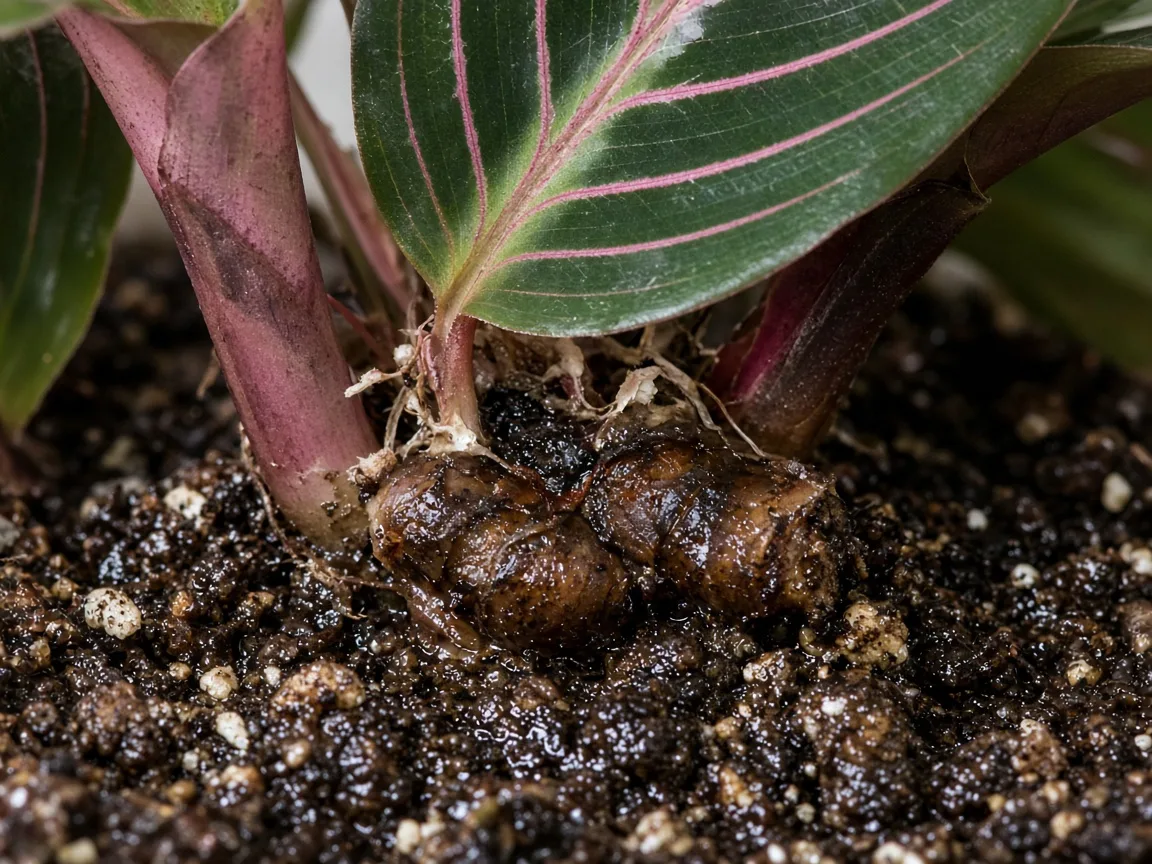
Root rot at the Dottie crown—brown slimy rhizome segments and softened tissue where dark leaves meet damp peaty mix; firm upper spears may still look intact.
Early signs
- Yellowing or blackening lower leaves while the top 2 cm of mix feels moist or wet for many days
- Limp, drooping foliage at midday on a heavy container—wilting that does not match a dry pot (roots in waterlogged soil cannot absorb oxygen)
- Pink vein contrast fading on new unfurling leaves while older blades stay dark—often paired with wet mix, not just low light
- Sour or musty smell when you tilt the pot or lift the nursery pot from a cachepot
- Stalled new spears—rolled leaves that stop opening cleanly
- Fungus gnats hovering over constantly wet surface mix
- Quick unpotting shows brown, mushy rhizome segments; healthy calathea roots and rhizomes are firm and pale
Advanced signs
- Soft, dark stem tissue at the soil line; the clump wobbles in the pot
- Whole-rosette collapse on soggy mix because decaying roots cannot move water upward—same visual as drought, opposite soil condition
- Black leaf spots or spreading edge necrosis on lower leaves while mix stays damp (overwatering can cause root rot on rose-painted calathea)
- Most rhizome tissue slimy on inspection; only small firm sections remain
- Multiple leaves fail within one to two weeks after a cold draft on wet roots or an oversized pot that never dries
Lower leaves that fully yellow or blacken rarely return to glossy dark green with bright pink veins. Judge recovery by new spears unfurling with strong pink contrast and a stable, non-sour root zone—not by old leaf color.
Evening leaf fold vs rot wilt (nyctinasty check)
Calatheas in the Marantaceae family fold leaves upward at night and reopen them in the morning—a habit that confuses many Dottie owners during early rot. This check is plant-specific: it would be meaningless on a snake plant or fiddle-leaf fig.
- Evening: Note whether leaves lift vertically but feel turgid, with pink veins still visible on the upper surface.
- Morning: Leaves should reopen flat or slightly angled; spears should look unchanged.
- Rot pattern: Leaves stay limp or wrinkled at both times, often with yellow lowers, on wet mix. The plant does not “wake up” crisp.
If morning leaves are limp on a heavy pot, skip the humidity tray and inspect roots—see wilting only after you confirm moisture at depth is not saturated.
The “even moisture” watering trap
Rose-painted calatheas are correctly described as needing steady moisture and high humidity. NC State notes moist but not soggy soil and RHS advises evenly moist compost through spring and summer. Commercial guidance also stresses media kept moist but not over-watered—a narrow band in a home pot.
The failure mode looks like good care: you water when the surface looks dry, the bathroom feels humid, but the core of a peat-heavy mix in a plastic pot stays saturated. Dottie’s dark leaves still transpire in warm rooms, so you see droop and assume thirst—then add filtered water to a root zone that already lacks oxygen. Saturated mix deprives roots of oxygen and kills fine roots first, so the plant wilts exactly like a dry one.
Count bottom-watering sessions and misting as moisture inputs. During cool cloudy weeks, let the top 2 cm dry slightly before rewetting, as RHS recommends for winter. Pair rhythm changes with the Calathea Dottie watering guide—not extra fertilizer.
Why Calathea Dottie gets root rot
Primary triggers are waterlogging and poor drainage, sometimes with soil-borne fungi attacking rhizomes already weakened by anaerobic conditions. Overwatering can cause root rot on this species; RHS also links overwatering to root rot in calatheas generally.
Common Dottie-specific setups that lead to rot:
- Calendar watering every five days through a cool winter week while the top 2 cm never truly dries
- Cachepots and saucers holding runoff—roots standing in water can easily rot
- Repotting into a much larger pot “for humidity” while mix stays wet in the outer zone—see repotting for one-size-up rules
- Heavy peat or coir without enough perlite in a slow-drying plastic nursery pot—refresh structure from the soil guide
- Low light plus wet mix—weak transpiration slows dry-down; review light if the clump sits far from a window
- Cold, wet roots after shipping or a drafty sill—growth stalls while mix stays damp
Dottie’s rhizomatous clump spreads horizontally. Rot often starts at the oldest rhizome segments near the drain hole while newer spears still look acceptable—do not wait for whole-plant collapse.
How to confirm root rot
Work from the outside in before you disturb the rootball.
- Moisture at depth: Probe the top 2 cm and, if still wet, slide a dry skewer along the pot wall. Sour smell on the skewer suggests long-term saturation (waterlogged soil often smells rotten).
- Pot weight: A heavy pot many days after the last watering points to internal wetness, not Dottie’s normal evenly moist feel.
- Crown firmness: Press the base of outer leaf stems where they meet the soil. Soft, mushy tissue on wet mix means unpot today.
- New growth: Stalled or rotting spears confirm the problem is below the showy foliage.
- Unpot inspection: Slide the clump out. Healthy rhizomes feel firm; rot shows brown, slimy, or hollow segments that pull away easily.
If roots are mostly firm and only the surface was wet, you may be in overwatering territory—dry-down and observation may be enough without full surgery.
First fix: stop water and inspect rhizomes
First action only: halt irrigation, empty standing water, and unpot the clump onto newspaper if the crown is soft or mix smells sour on a heavy pot.
Do not:
- Add fertilizer to “revive” pink veins
- Repot into a bigger container on day one
- Flood with hydrogen peroxide or fungicide before removing mushy tissue
After unpotting, rinse away loose mix with room-temperature rainwater or filtered water—tap water high in fluoride is a separate stressor on Dottie and can confuse recovery signals on new leaves.
Step-by-step recovery
Severity drives the path. Move through these steps in order; pause if the clump is too far gone (see below).
Mild: firm rhizomes, limited mush
- Trim only clearly mushy roots and rhizome tips with clean scissors.
- Repot into the same or slightly smaller pot with fresh airy mix (peat or coir, perlite)—details in soil and repotting.
- Water lightly once to settle mix, then let the top 2 cm begin to dry before the next drink.
- Keep 60%+ humidity and bright indirect light so new spears can unfurl without crisping.
Moderate: multiple soft segments, some firm clumps remain
- Divide the rhizome so each section keeps at least one healthy spear and firm roots—the standard calathea rescue path (propagation by division matches NC State guidance).
- Pot divisions separately in small containers; bag or dome humidity for two weeks while roots re-establish—see propagation for aftercare.
- Remove badly blackened leaves at the base to reduce mold pressure; do not strip the whole rosette if firm spears remain.
Severe: crown collapse or mostly slimy rhizome
If the stem base is hollow and most rhizome tissue disintegrates, salvage is unlikely. Compost responsibly and restart with a healthy plant—use the overview page Calathea Dottie hub for buying cues (firm spears, no stale standing water in the shop pot).
Recovery timeline
Expect two to four weeks before you trust new growth on a moderate salvage. Mild cases may show a clean new spear within ten to fourteen days in warm, humid conditions. Winter recovery slows; do not interpret dormancy as failure if mix is finally drying correctly.
Improvement signals: new leaves unfurl with strong pink veining, spears emerge upright, no new yellowing at the base, and mix dries on a predictable rhythm.
Worsening signals: spears rot before opening, soft tissue climbs the crown, sour smell returns within days of repotting, or divisions wilt together on freshly moistened mix.
Rhizome division salvage (when half the clump is lost)
When half or more of the rhizome is mush but firm sections with roots remain, division is often the only save—and it is specific to rhizomatous prayer plants, not rosette succulents.
Cut between natural clumps with a sterile knife. Dust cuts if you wish, but airflow and dry-down matter more than products. Pot each piece shallowly so the crown sits just above mix; burying Dottie too deep invites stem rot on wet peat. Keep divisions warm (18–24°C), humid, and out of direct sun until new growth resumes.
Mistakes to avoid
- Watering because leaves curled at 8 p.m. without checking soil—nyctinasty fold is normal.
- Misting heavily while mix is soggy—leaves stay wet; roots stay anaerobic.
- Using tap water to “flush” rot when fluoride already browned pink edges—switch water type after stabilizing roots.
- Moving to a dark corner “to rest”—low light slows dry-down and weakens new spears; use bright indirect light per the light guide.
- Stacking repot, division, fertilizer, and pest sprays the same week—you will not know which step helped.
How to prevent root rot next time
- Water when the top 2 cm begins to dry, not on a fixed weekday—align with watering.
- Use drainage holes; tip cachepots after every drink.
- Refresh perlite-rich, moisture-retentive but airy mix on a two- to three-year cycle.
- Run a humidifier instead of overwatering to compensate for dry air—see low humidity.
- In winter, allow slightly more surface dry-down before rewetting, per RHS calathea guidance.
- Quarantine new plants and inspect nursery pots for stale standing water before placing Dottie near your collection on the overview hub.
Related Calathea Dottie guides
- Calathea Dottie overview — baseline care and pink-vein stress signals
- Watering — top 2 cm dry-down and filtered water
- Soil — peat-coir structure and perlite ratios
- Repotting — one-size-up timing after recovery
- Propagation — division after salvage
- Overwatering — when roots are still firm
- Problems hub — full symptom index
Related tool
Use the Root Rot Risk Checker to narrow causes for root rot on this plant before changing multiple variables at once.