Calathea Dottie Repotting: When and How to Repot
Calathea Dottie Repotting: When and How to Repot
Calathea Dottie Repotting: When and How to Repot
Why Repotting Matters for Calathea Dottie
Dottie at a glance: Goeppertia roseopicta ‘Dottie’ — a rose-painted calathea with near-black leaves and hot-pink midrib feathering. Foliage: deep purple-black blades with vivid pink central veins; pink contrast fades in low light or harsh sun. Humidity: 60%+ RH; humidifier recommended in heated or air-conditioned rooms. Water: filtered, rainwater, or overnight-stood tap water — fluoride causes pink-edged brown tips on new leaves. Difficulty: moderate to high — pattern loss is the first sign of stress.
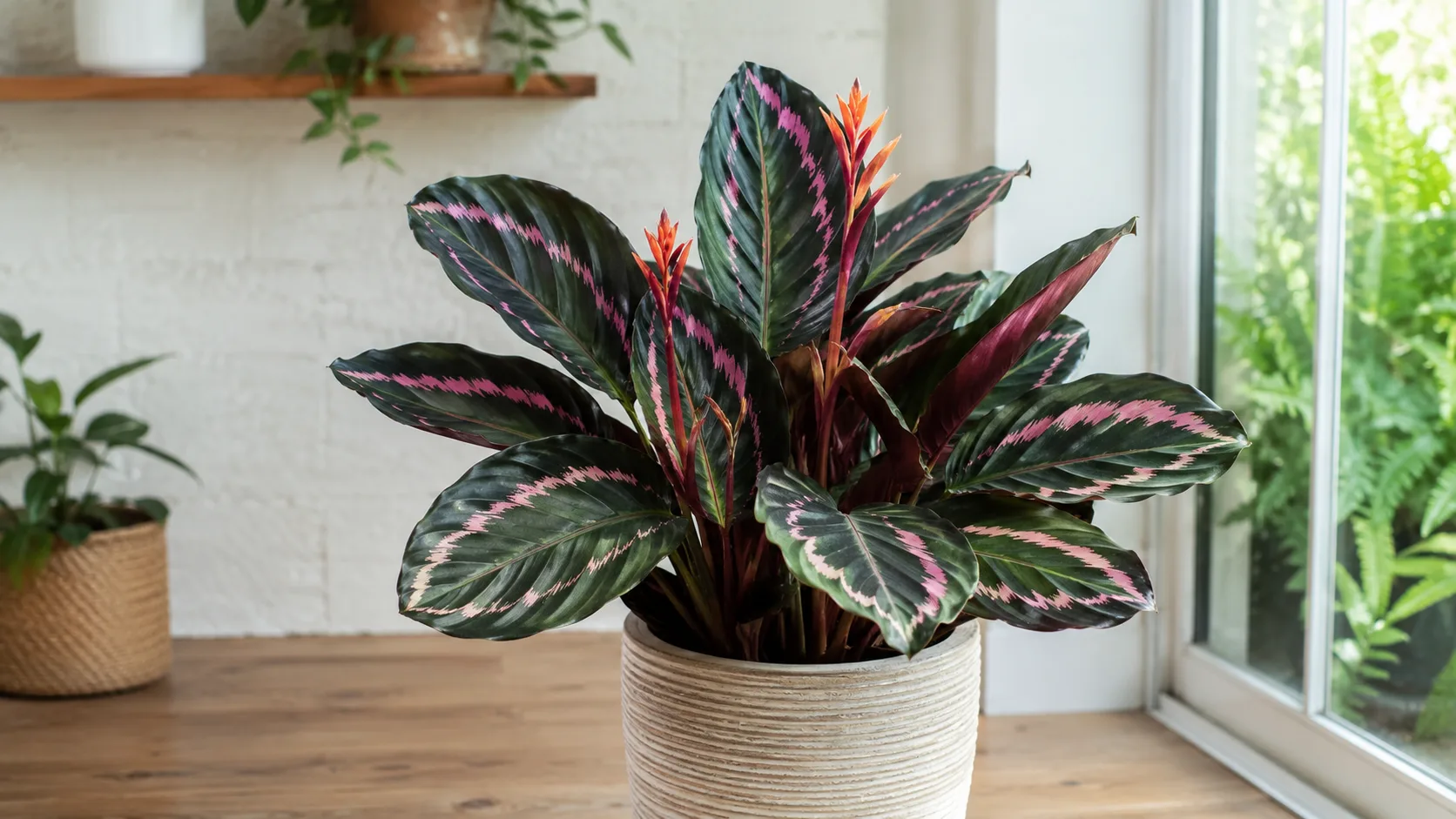
Calathea Dottie repotting is root-zone maintenance for a plant whose entire appeal sits on painted foliage you cannot fix once it blemishes. Goeppertia roseopicta ‘Dottie’ is a compact, rhizomatous evergreen perennial native to tropical areas along the upper Amazon in northwestern Brazil, Peru, and Colombia. NC State Extension lists ‘Dottie’ among the most dramatic rose-painted cultivars in the species. Unlike tougher foliage plants, Dottie shows repot stress on the leaf surface within days: pink veins wash out, new unfurls stall with brown edges, and older blades curl before roots ever look obviously damaged.
That sensitivity follows from how prayer plants in the Marantaceae family grow. Dottie spreads from thick underground rhizomes with fine, shallow feeder roots that need evenly moist but oxygenated mix — the same balance NC State Extension describes for rose-painted calathea: moist, well-drained peaty potting mix amended with perlite or vermiculite, never soggy. Indoor potting media breaks down over one to two years. Peat and coco coir compact, salts from tap water accumulate, and the root zone either repels water or stays wet too long. Repotting resets that environment. Done well, it refreshes mix and gives rhizomes modest room to spread. Done poorly — oversized pot, bare-rooting, repotting in dry winter air — you get weeks of pattern loss that looks like a watering problem but started in the container.
The goal is not a bigger decorative pot. It is a functioning root zone: airy soil, conservative sizing, stable humidity, and timing when the plant can rebuild roots. Treat repotting as maintenance for rhizomes under dark leaves, and most post-repot panic disappears.
When to Repot Calathea Dottie
Most healthy Dotties need attention every one to two years, but the plant and soil tell you more than a calendar. Two categories cover nearly every repot: routine maintenance when mix structure declines or rhizomes fill the pot, and emergency repotting when the root zone is actively failing.
Routine Signs Every 1 to 2 Years
Routine repotting suits a plant that looks generally healthy but has lived in the same container long enough that soil quality has slipped. The Royal Horticultural Society recommends repotting calatheas every few years once the clump has filled the pot, typically in spring or summer using free-draining, moisture-retentive compost. Even without dramatic root-binding, old peat- or coir-based mix compacts and holds water unevenly. A routine repot refreshes that environment before pink vein fade, watering headaches, and stalled unfurls appear.
You do not always need a larger pot. If roots still fit comfortably but mix is tired, return Dottie to the same container after loosening outer roots and replacing most of the soil. Top-dressing — scraping away the top inch of degraded mix and replacing it — can bridge one season if the plant is not yet root-bound, but it does not solve a dense rhizome mat at the pot bottom. When in doubt, slide the root ball out for a thirty-second inspection rather than guessing from leaf appearance alone.
Emergency Signs That Cannot Wait
Emergency repotting means the root zone is limiting health now. Repot soon — ideally in the next viable growth window — if you see multiple signs:
- Roots emerging from drainage holes or circling tightly at the soil surface
- Water racing through in seconds while the root ball center stays dry
- Soil drying unusually fast despite a full-looking pot
- Stunted new leaves or unfurls stuck halfway despite adequate light
- Sour-smelling soil or mix that stays wet for days despite careful watering
- Top-heavy plant wobbling because the root ball is too small for leaf mass
- Persistent leaf curl or pink-edge crisping that does not respond to humidity or Calathea Dottie watering adjustments
One sign alone may not require immediate action. A single root tip through one drainage hole on an otherwise healthy plant can wait until spring. Water channeling plus stalled growth plus sour smell is different — that combination usually means mix has broken down and oxygen around rhizomes is poor. Emergency repotting should include root inspection: trim mushy brown sections with sterilized scissors and repot into fresh, well-draining mix rather than moving a rotting root ball into a bigger pot.
Best Season and Timing for Repotting
Spring through early summer is the safest window for Calathea Dottie repotting. As daylight lengthens, the plant enters active growth and can rebuild feeder roots quickly in fresh mix. Penn State Extension notes that spring is the best time to repot because roots grow into new mix as the plant produces new foliage. Early spring is ideal; late spring and early summer remain workable if indoor temperatures stay above roughly 18°C (65°F) and the plant is not already stressed.
Avoid repotting in late fall and winter unless you have no choice. When growth slows, root repair slows too. Low winter light and dry heated air already stress Dottie; adding repot shock on top rarely helps. Winter repotting is justified when soil is clearly failing, the plant is severely root-bound, or you suspect root rot on Calathea Dottie and waiting until spring risks losing the plant. If you must repot in winter, keep the change gentle: minimal root disturbance, no upsizing unless necessary, stable Calathea Dottie light, humidity above 60 percent, and no fertilizer until new growth appears.
New purchases deserve a waiting period. Unless nursery soil is waterlogged or smells sour, give a new Dottie two to four weeks to acclimate before repotting — your plant-detail guidance recommends skipping day-one repot. Stack one stress at a time. Repot when the plant is neither bone dry nor soaking wet, and avoid repotting the same day you moved it or changed water chemistry.
Choosing Pot Size and Material
Pot choice is where repotting succeeds or fails for Calathea Dottie. The container must match the current root mass and leave only modest room for rhizome spread. Dottie tolerates being somewhat snug but does not tolerate swimming in wet soil.
The One-Pot-Size-Up Rule
Move up only one pot size — roughly 1 to 2 inches (2 to 5 cm) wider in diameter than the current pot. The RHS advises choosing a container just one or two sizes larger than the rootball diameter to avoid overpotting problems. Excess unused soil stays wet longer than rhizomes can colonize it. Roots sit at the edge of the old ball while surrounding mix remains soggy, and the plant looks overwatered even when you are careful.
If you are refreshing soil without upsizing, clean and reuse the same container. Scrub away mineral deposits and rinse briefly. Rhizomatous calatheas spread relatively shallow; a pot slightly wider than deep often suits horizontal growth better than a narrow deep container that keeps the lower layer anaerobic.
Drainage Holes and Pot Types
Drainage holes are non-negotiable. A decorative pot without drainage is only safe if it holds a nursery pot that drains freely and you empty excess water every time. Plastic nursery pots retain moisture longer, which can help in dry rooms. Unglazed terracotta wicks moisture outward and can dry the root zone too quickly for Dottie unless you monitor carefully. The Missouri Botanical Garden notes that indoor rose-painted calathea needs uniformly moist, well-drained peaty mix in bright shade — pot material should support that moisture rhythm, not fight it.
Self-watering planters require extra judgment after repotting. A freshly disturbed root system sitting on a continuously wet reservoir can stay oxygen-starved. Establish Dottie in a conventional draining pot first.
Best Soil Mix for Calathea Dottie Repotting
The best soil for Calathea Dottie repotting is well-draining but moisture-retentive — not garden soil and not straight cactus mix. Missouri Botanical Garden recommends uniformly moist, well-drained, peaty potting mixtures for indoor container growth. NC State Extension describes the ideal as peaty potting mix with slightly acidic pH, amended with perlite or vermiculite so soil stays moist but not soggy.
A reliable DIY blend for repotting:
- 2 parts quality indoor or tropical potting mix
- 1 part perlite or coarse horticultural sand
- 1 part coconut coir or peat moss for moisture retention
- Optional: small amount of orchid bark or coco chips for chunk and airflow
The mix should hold moisture evenly without forming a dense, airless block. When you squeeze a handful, it should feel spongy and crumble apart. Target pH around 6.0 to 7.5, which most peat-free houseplant blends already provide. Pre-moisten mix until evenly damp but not dripping before backfilling — dry peat-based media can repel the first watering and leave channels around the root ball.
Do not reuse old mix from a plant with root rot or sour smell. Discard it, wash the pot, and start fresh. Dense, degraded mix is a common hidden reason growers think they are overwatering on Calathea Dottie when the real problem is poor soil structure. See the full Calathea Dottie soil guide for year-round mix details beyond repot day.
Tools and Supplies Before You Start
Gather everything before you disturb the root ball. Dottie recovers better when repotting is quick and the plant is not left bare on a dry counter. Painted leaves lose turgor fast when roots are exposed, especially in air-conditioned or heated rooms.
You will need: a new pot one size larger (or the same size if refreshing soil only), fresh potting mix slightly dampened, clean scissors or pruners for dead or mushy roots, a chopstick or pencil for settling mix, newspaper or tarp, optional clean knife for dividing a dense rhizome mass, and distilled or filtered water for the first post-repot watering if your tap is hard. Sterilize cutting tools with rubbing alcohol if trimming rot or dividing multiple sections. Calathea species are listed as non-toxic to dogs and cats by the ASPCA, though sap may irritate skin — gloves are reasonable when dividing rhizomes.
Step-by-Step: How to Repot Calathea Dottie
Repotting Calathea Dottie is methodical rather than forceful. The rhizome and root system are the asset; leaves will complain regardless.
Gentle Removal and Root Inspection
Water lightly one to two days before repotting so the root ball holds together. Penn State Extension recommends watering the day before so roots stay workable. Do not soak to mud. Tip the pot on its side and slide the root ball out with gentle pressure on the base. If it resists, run a knife around the inside rim. Never pull by leaves — Dottie blades tear easily and damaged tissue browns at the edges, marring the painted pattern.
Inspect roots in good light. Healthy rhizome roots are firm and pale, often white to light tan. Mushy, dark, or hollow sections indicate rot and should be trimmed to solid tissue. Tease circling outer roots lightly so they point outward. Calatheas have delicate feeder roots and do not benefit from aggressive bare-rooting — keep a soil buffer around the root ball and remove only what is clearly dead, circling, or rotten.
Planting Depth and First Watering
Add a small layer of fresh mix to the pot bottom so the root ball sits at the same depth as before. The crown where leaves emerge should remain at or slightly above the soil line — burying the rhizome invites stem rot. Center the plant, fill around sides with fresh mix, and use a chopstick to remove large air voids without compacting soil. Leave half an inch to one inch of headspace below the rim.
Water lightly until a small amount drains from the bottom, then empty the saucer. Place Dottie in bright indirect light for a few days before returning it to its normal spot if that spot receives stronger light. Direct sun washes out pink veins and browns margins before obvious scorch appears, and impaired roots uptake less water to compensate.
Dividing Calathea Dottie at Repot Time
Division is one of the best reasons to repot Dottie in spring. NC State Extension lists division of rhizomatous roots as the best propagation method for Goeppertia roseopicta, and the RHS recommends dividing calatheas at repotting in late spring. The natural clumping habit means mature plants often contain several rhizome sections that separate into independent plants.
Choose division when the plant is too large for your space, when the rhizome mass is too dense to fit a reasonably larger pot, or when you want backup plants. Each division should include at least two to four leaf clusters and a proportionate share of healthy rhizomes and roots. Separate along natural weak points with your hands when possible; use a clean knife for tough centers. Pot each division into a container sized to that section’s roots, not the original whole plant. Water lightly and keep humidity above 60 percent. A new leaf unfurling with vivid pink midrib feathering is the success signal. Full division steps live in the Calathea Dottie propagation guide.
Fluoride in tap water can brown pink edges on new unfurls even when soil moisture is correct — the University of Florida IFAS Extension notes that calatheas are sensitive to fluoride in irrigation water. After division or repot, use filtered or rainwater for the first month when roots are most vulnerable.
Aftercare: Water, Humidity, Light, and Fertilizer
Aftercare wins or loses repotting for Calathea Dottie. For the first two to three weeks, protect the plant from harsh change. Keep bright indirect light, not direct sun. Water when the top inch or two of mix feels dry — fresh mix often holds moisture longer than old compacted soil, so your previous schedule may be too frequent. Do not keep soil soggy to help it settle; wet, disturbed roots rot easily.
Maintain humidity above 60 percent per NC State Extension guidance. A humidifier outperforms occasional misting during unfurl. Room temperatures around 65–75°F (18–24°C) match Missouri Botanical Garden indoor culture recommendations. Hold fertilizer for at least four to six weeks, or until a new leaf unfurls cleanly. Fresh mix contains some nutrient reserve, and feeding too early burns recovering roots. When you resume, use diluted balanced liquid fertilizer at half strength during spring and summer only.
Recovery Timeline and What Normal Stress Looks Like
Mild transplant stress on Calathea Dottie usually clears within one to two weeks. A few older leaves may curl slightly or show minor edge browning that does not spread. Full root re-establishment takes four to six weeks in spring and summer, longer after a fall or winter emergency repot. New growth is the clearest signal — damaged leaves will not heal, but a new blade opening with clean pink midrib feathering means the root zone is working.
Abnormal stress looks different. Persistent heavy wilting after two weeks despite even moisture, rapid yellowing and leaf drop, wet soil with sour smell, or spreading black stems at the soil line point to oversize pot, buried crown, or rot not fully removed. Days one to three: mild wilt or curl. Days four to fourteen: some lower yellowing as the plant sheds tissue it cannot support. Weeks two to four: wilting should ease; you may see a new leaf spike. Weeks four to six: new growth is the green light to resume normal care including Calathea Dottie fertilizer.
Common Calathea Dottie Repotting Mistakes
Jumping to a much larger pot is the most common error. Excess soil holds water rhizomes cannot use; growth stalls while pink margins brown. One pot size up every time.
Bare-rooting the entire plant strips fine feeder roots and extends recovery by weeks. Keep a soil buffer and remove only dead or rotten tissue.
Repotting in winter without cause slows root repair under low light and dry air. Reserve winter repotting for emergencies.
Fertilizing immediately burns tender roots. Wait four to six weeks minimum.
Watering too heavily in week one saturates disturbed roots. Light, even moisture with drainage is the goal.
Ignoring humidity lets dry air pull moisture from leaves faster than recovering roots replace it. Pink vein contrast fades quickly below 50 percent RH.
Burying the crown too deep invites rhizome rot at the leaf base.
Repotting a brand-new plant on day one unless nursery soil is clearly failing — let Dottie acclimate first.
Troubleshooting Problems After Repotting
Drooping leaves: Mild droop for a few days is normal. Persistent droop with wet soil suggests overwatering or rot; with dry soil, dehydration or low humidity. Adjust moisture and humidity before moving the plant again.
Yellowing leaves: One or two older yellow leaves can be natural shedding. Widespread yellowing with wet mix points to root rot or oversize pot — inspect roots and repot into appropriate size if needed.
Pink veins washing out or brown edges on new unfurls: Often low humidity, hard tap water, or too much light after repot. Raise humidity, switch to filtered water, confirm no direct sun. Old leaves will not regain color; watch new growth.
No new growth for weeks in spring: Verify bright indirect light, adequate humidity, and that you have not over-fertilized or over-watered. In winter after emergency repot, slow growth may be seasonal.
Fungus gnats: Usually mix staying too wet. Let the top layer dry slightly between waterings and improve airflow.
Conclusion
Calathea Dottie repotting is less about a showpiece container and more about keeping a functioning root zone under foliage that cannot hide stress. Repot when roots crowd the pot, water channels through exhausted mix, or growth stalls — typically every one to two years — and favor spring or early summer when possible. Move up only one pot size, use moisture-retentive but well-draining peat- or coir-based mix, protect the rhizome from aggressive bare-rooting, and hold off on fertilizer until new leaves prove roots have settled.
After repotting, stable bright indirect light, humidity above 60 percent, filtered water, and even moisture matter more than any single technique trick. Mild leaf curl for a week is normal; persistent decline signals pot size, drainage, or root health problems. Match the repot to Dottie’s rhizomatous growth habit and painted-leaf biology, and the plant rewards you with clean new blades carrying the vivid pink midrib that made you buy it.
When to use this page vs other Calathea Dottie guides
- Calathea Dottie overview — Start here for whole-plant context before deep-diving this topic.
- Calathea Dottie problems hub — Jump to symptom-specific fix guides when repotting alone does not resolve the issue.
- Root rot on Calathea Dottie — Escalate here when repotting adjustments are not enough.