Calathea Dottie Light Needs & Window Guide
Calathea Dottie Light Needs & Window Guide
Calathea Dottie Light Needs & Window Guide
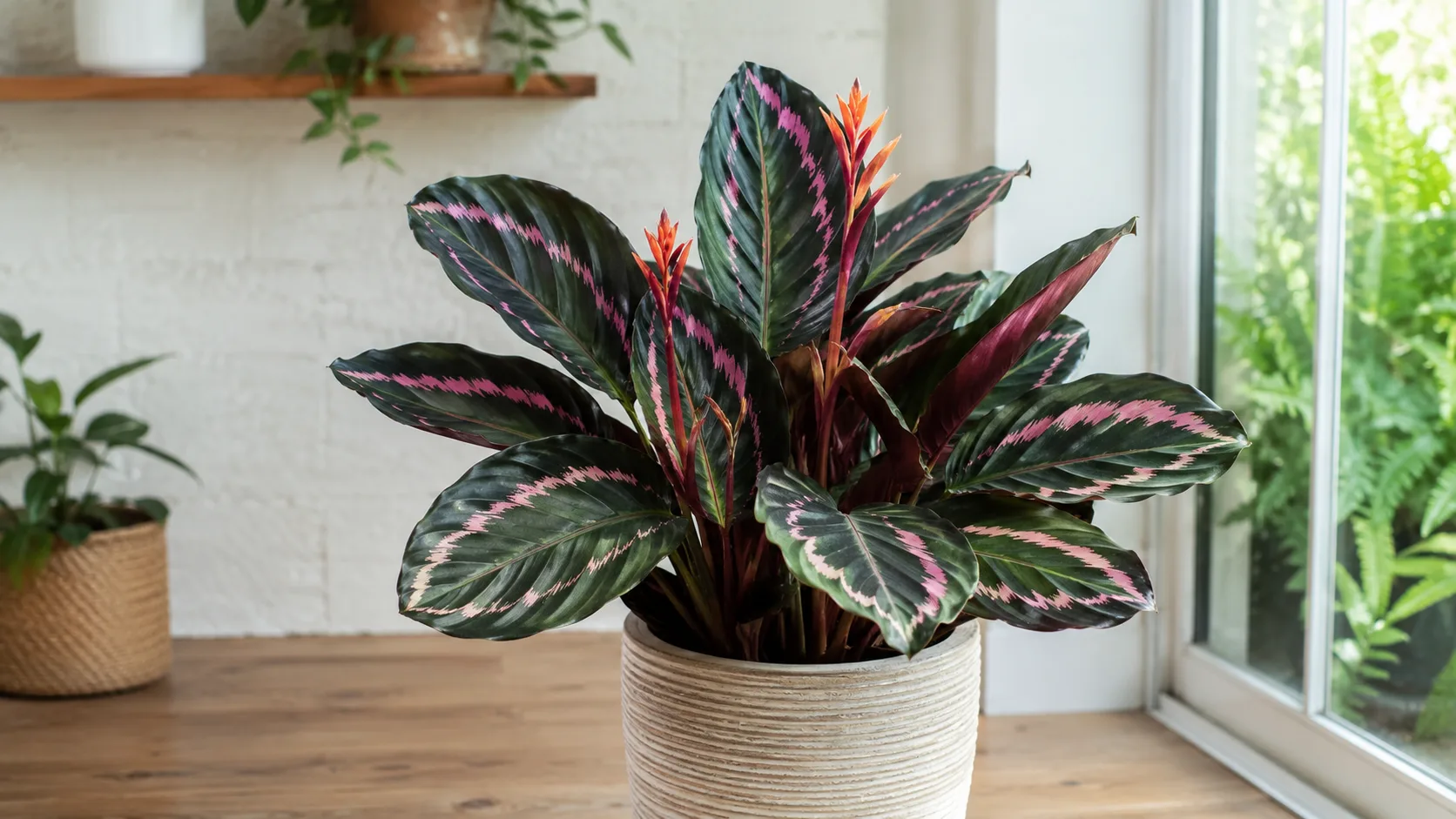
A Calathea Dottie can look like a living watercolor — near-black leaves with hot-pink midrib feathering — until light is wrong. Then the same plant dulls its pink contrast, browns the painted edges first, or sits in a dim corner looking fine for months while new leaves arrive smaller, paler, and slower than the ones you bought. The frustrating part is that Goeppertia roseopicta ‘Dottie’ (still sold widely as Calathea Dottie) tolerates mediocre light long enough to make you think the placement works. It is not a snake plant and not a pothos. It is an understory prayer plant from the upper Amazon in northwestern Brazil, Peru, and Colombia, and it will eventually tell you — through faded pink veins, crisp sun-facing patches, or stalled growth — whether it agrees with your window choice.
Dottie at a glance: Goeppertia roseopicta ‘Dottie’ — deep purple-black blades with vivid pink central veins. Pink contrast fades in low light or harsh sun — pattern loss is often the first stress sign. Pair bright filtered light with 60%+ humidity and filtered water; fluoride causes pink-edged brown tips that can be mistaken for light damage.
This guide covers the full indoor light picture for Calathea Dottie: how much brightness it actually needs, which window works best, how much direct sun is safe, what too much and too little light look like on the foliage, when to add a grow light, and how to move the pot without burning leaves that spent months adapting to a softer spot.
The Short Answer: How Much Light Calathea Dottie Needs
Calathea Dottie grows best in medium to bright indirect light — strong ambient brightness at the plant without harsh direct sun falling on the leaves for more than brief morning exposure. The NC State Extension Gardener Plant Toolbox lists Goeppertia roseopicta as preferring bright, indirect light, with cultural conditions noting partial shade — direct sunlight for only part of the day (roughly two to six hours). For indoor growers, that translates to an east-facing window, a bright north exposure, or a filtered south or west window where the plant receives good light but not a hot midday beam on the foliage.
University of Florida IFAS research on commercial Calathea production notes that plants tolerate interior light as low as 75 foot-candles but maintain better appearance at 150 to 200 foot-candles indoors. In practical home terms, the pot should sit close enough to a window that you can read comfortably by daylight at the plant, not in the middle of a room that merely feels bright to your eyes. Judge success by firm new leaves with crisp pink midrib contrast and steady prayer-plant movement, not by how decorative the pot looks in a hallway with no usable photons reaching the crown.
Why Calathea Dottie Is Picky About Light
Light is not a background detail for Calathea Dottie. It is the main driver of leaf pattern intensity, growth speed, Calathea Dottie watering, and how quickly minor stress shows at the leaf margins. A Dottie in appropriate filtered light will push new leaves with the characteristic near-black fields and hot-pink central feathering, fold and unfold on a daily rhythm, and use water at a predictable pace. A plant in the wrong light will either bleach and crisp from too much direct exposure or fade, stretch, and stall from too little — and both failure modes get blamed on humidity or water when light was the trigger.
That matters because Calathea Dottie is often grouped with generic “low-light tropicals” that survive dark corners. ZZ plants and cast iron plants can look acceptable far from a window; Dottie cannot if you want the pink-on-black display that justifies the care effort. Its broad, papery leaves evolved for dappled understory light in the Amazon rainforest, not open south-window sun and not a bookshelf six feet from glass. Get the light wrong and you get washed-out pink veins, brown crispy edges that look like underwatering on Calathea Dottie, or months without a single new leaf unrolling cleanly from the crown. The ‘Dottie’ cultivar is especially color-focused — NC State Extension describes it as dark green leaves with pink central vein and pink feathering; too much intensity often browns the pink bands first, before the whole leaf shows obvious scorch.
What the Amazon Forest Floor Teaches About Windows
In its native range in the tropical rainforests of northwestern Brazil, Goeppertia roseopicta grows on the forest floor beneath taller canopy trees — warm, humid, and consistently shaded from harsh midday sun. The Missouri Botanical Garden notes the species features dark reddish or purplish leaf backsides, an adaptation for reflecting light in shaded understory conditions where adequate brightness for photosynthesis is limited. Light reaches the plant as filtered, diffuse brightness broken by moving leaves above, not as a sustained direct beam.
That habitat maps to the brightest soft light you can offer indoors, not the darkest corner that still allows survival. You are trying to give Calathea Dottie enough photons for pink pattern development and steady growth while keeping direct sun off the leaf surface. An east windowsill, a north window in a bright room, or a south or west window with sheer filtering is the closest indoor analogue most homes can provide.
What Bright Indirect Light Means for Dottie Indoors
“Bright indirect light” sounds vague until you translate it into what the plant receives at leaf level. Indoors, it means the plant is in a well-lit room and close to a window, but the sun’s disk is not striking the foliage for extended periods. Window glass already reduces intensity; distance from the glass reduces it further. A Calathea Dottie on a coffee table across from an east window is getting a different plant than the same pot on the east sill — even though both spots feel “bright” to you.
For Dottie, the better question is not “direct or indirect?” in the abstract. It is: Does soft, usable light actually reach the leaves for most of the day, and is harsh direct sun kept off the pink veins? Intensity drops sharply with distance. UF IFAS production guidelines place commercial Calathea under at least 80% shade (100 to 200 foot-candles) — bright but indirect — which most homes achieve only when the pot sits near filtered glass.
Foot-Candles, Lux, and the Hand-Shadow Test
Horticultural references quantify light in foot-candles or lux. UF IFAS notes that Calathea species tolerate roughly 75 foot-candles at the low end indoors, with 150 to 200 foot-candles supporting better aesthetic quality. You do not need a meter to apply this at home, but the numbers explain why “it looks bright here” often fails: human eyes adapt to indoor dimness, while the plant measures photons at the leaf surface.
A practical test: on a reasonably bright day, hold your hand between the plant and the window around midday. A soft, fuzzy shadow with no hard edge usually indicates bright indirect light — often ideal for Calathea Dottie. A sharp, dark shadow means direct sun is hitting that spot; Dottie’s pink veins will usually bleach or crisp there over time unless exposure is brief morning light. Almost no shadow means the spot is too dim for long-term pattern quality, even if the plant does not die immediately. Combine the shadow test with new growth: if the newest leaf shows weaker pink contrast than older leaves, light is likely limiting the plant.
Best Window Placement for Calathea Dottie
The best window for Calathea Dottie is the one that delivers steady, filtered brightness for most of the day without hot direct sun on the leaves. Distance matters as much as direction. Place the pot on or within one to two feet of the glass for east and north exposures, and two to four feet back or behind a sheer curtain for south and west windows unless you are certain only soft morning light reaches the plant. Rotate the pot a quarter turn every week or two so the crown does not lean permanently toward the light source. Wipe dust from the broad leaves monthly with a clean damp cloth; NC State Extension recommends this because dust slows photosynthesis on large-leaved houseplants.
The RHS Calathea growing guide notes that in summer a position near a north- or east-facing window is ideal, while in winter — when light levels are lower — a south-facing windowsill can work better, provided direct sun still does not strike the leaves. If window-facing leaves look pale while the rest of the plant stays dark, the issue is often uneven exposure, not total room brightness.
East and North Windows: Usually the Easiest Fit
An east-facing window is the default recommendation for Calathea Dottie in the Northern Hemisphere. NC State Extension lists partial shade as the preferred light level, which indoors usually means east exposure with gentle morning direct sun that is usually cool enough not to scorch, followed by bright indirect light for the rest of the day. Many growers keep Dottie directly on an east sill year-round without drama, provided summer morning intensity is not amplified by magnifying glass or a very hot microclimate.
A north-facing window can work well when the room is not shaded externally by buildings or deep porches. North light is consistent and soft — excellent for preventing scorch — but it weakens in winter. If new leaves become smaller or pink veins lose contrast by February, the plant may need closer placement to the glass or a supplemental grow light rather than a move to harsh south sun.
South and West Windows: When Filtering Is Required
A south-facing window can support Calathea Dottie only with sheer curtains, blinds, or placement several feet back so midday and afternoon beams do not land on the leaves. Unfiltered south glass is one of the fastest ways to wash out Dottie’s pink patterning and brown the colored veins. If south is your brightest option, treat filtering as required, not optional, and watch the plant through seasonal shifts when bare winter sun differs from summer haze.
A west-facing window delivers warm afternoon direct sun that is particularly damaging to prayer plants. West exposure can work if the plant sits outside the direct beam — for example, to the side of the window where bright ambient light fills the space — or behind a sheer panel that diffuses the afternoon ray. Never place a nursery-fresh Dottie in unfiltered west sun at midsummer.
| Window direction | Typical light profile | Suitability for Calathea Dottie |
|---|---|---|
| East | Cool morning direct sun, then bright indirect | Best default for most homes |
| North | Soft, consistent indirect light | Excellent if bright and unobstructed; may need grow light in winter |
| West | Warm afternoon direct sun, intense in summer | Usable only with filtering or off-beam placement |
| South | Strong direct sun most of the day | Requires sheer curtain or distance; risky without filtering |
Can Calathea Dottie Take Direct Sun?
No — Calathea Dottie should not receive harsh direct sunlight indoors, especially midday or afternoon beams. The Missouri Botanical Garden warns that direct sun usually causes leaf scorch on Goeppertia roseopicta. NC State Extension similarly notes that inadequate light fades the bright leaf coloring, while direct sunlight causes leaf scorch. The distinction that saves most plants is not “zero sun ever” but duration, intensity, and acclimation: brief cool morning rays through east glass are different from three hours of west-window July sun on leaves that formed in a shaded greenhouse.
Direct sun damage on Dottie often begins as pattern washout — the hot-pink midrib and feathering dull to pale green or brown before obvious scorch appears on the whole leaf. Growers who wait for crispy brown patches before moving the plant have already lost display quality on those leaves. Never move a plant from a dim spot directly into unfiltered south or west sun.
Warning Signs Your Calathea Dottie Is Getting Too Much Light
Too much light — or more accurately, too much direct light too fast — shows up on Calathea Dottie as pattern loss and tissue damage rather than slow stretching. The most common signs include bleached or washed-out pink veins on sun-facing leaves; brown, crispy edges on the pink feathering first, before the dark field shows damage; curling or folding tightly during the brightest hours even when soil moisture is appropriate; new leaves that open with weak pink contrast or look translucent; and one-sided damage concentrated on foliage facing the glass while the shaded side still looks normal.
These symptoms overlap with low humidity and fluoride sensitivity, but timing and location tell the story. Sun stress usually follows a placement change toward unfiltered glass, a seasonal intensification when winter sheers come off, or a summer west-window exposure that was tolerable in March. Damage is often directional, not uniform across the plant.
How to Recover a Sun-Stressed Dottie
Move the plant immediately to a spot with bright indirect light and no harsh direct beam on damaged tissue — an east sill, a filtered south window, or one to two feet back from west glass behind a sheer curtain. Do not compensate by overwatering Calathea Dottie; stressed leaves do not recover faster in wet soil, and Calathea roots rot easily when light drops and metabolism slows. Leave partially damaged leaves in place unless they are fully brown and dry.
Give the plant two to four weeks in stable, softer light before judging recovery. Old bleached or crispy tissue will not regain its original pink pattern. Your success metric is new leaves: firm blades with sharp pink midrib contrast emerging from the center of the clump.
Warning Signs Your Calathea Dottie Is Not Getting Enough Light
Insufficient light is the slower, quieter failure mode for Calathea Dottie — and it is easy to misread because the plant can survive dim conditions longer than it can survive scorch. NC State Extension notes that inadequate light fades the bright leaf coloring and slows growth. Warning signs include smaller, paler new leaves with reduced pink contrast compared to older growth; longer petioles and looser spacing between leaves as the plant reaches toward the brightest source; slow or absent new growth for months; leaves that stay partially folded or fail to open fully; and strong one-sided leaning toward the nearest window.
Low light also changes how the plant uses water. A dim Calathea transpires less, so soil stays wet longer. That wetness invites root problems, and yellowing or mushy stems can follow — symptoms often blamed on overwatering when the real fix is more usable light plus a slower watering hand. If your Dottie yellows in a dim corner with soil that never dries, improve light first, then adjust watering. See not enough light on Calathea Dottie and leggy growth on Calathea Dottie if pattern loss persists after a light upgrade.
How Light Affects Pink Veins, Color, and Prayer-Plant Movement
Calathea Dottie is grown for ornamental foliage — near-black oval leaves with vivid pink central veins and feathering. That pattern is light-dependent. NC State Extension notes that inadequate light fades the bright leaf coloring, while direct sunlight causes leaf scorch. Too much bright light can make pink veins fade to a washed-out appearance before obvious scorching occurs. Too little light produces darker, duller overall color with weak contrast between markings.
Prayer-plant nyctinasty — leaves folding upward at night and lowering by day — also responds to light rhythm. A healthy Dottie in appropriate brightness typically shows visible daily movement when humidity and water are stable. If movement stops or leaves stay curled daytime, check light alongside humidity; a plant pushed into dim stress or sun shock often locks into a partial fold until conditions stabilize.
Grow Lights for Calathea Dottie: Setup, Hours, and Distance
When natural light is insufficient — north rooms blocked by buildings, interior offices, short winter days, or apartments where the only bright window is south-facing and too harsh unfiltered — a full-spectrum LED grow light is the most reliable fix. The RHS recommends artificial grow lights when there is insufficient natural light, especially for Goeppertia species prone to weak growth in dim rooms.
Start with 10 to 12 hours of supplemental light daily on a timer during winter or in permanently dim rooms. Place a standard household LED grow panel or bar light 12 to 18 inches (30 to 45 cm) above the top of the tallest leaf. Closer placement increases intensity but also heat; if new leaves look pale, tight, or slightly crisp at the tips, raise the fixture a few inches. Farther placement reduces intensity — if petioles stretch toward the bulb and new leaves stay small, lower the fixture slightly or extend daily duration by an hour.
Choose a full-spectrum LED in the 4000K to 6500K range. Combine artificial light with the brightest filtered natural window you have when possible. A working setup produces new leaves with restored pink contrast within four to six weeks.
Dottie vs. Other Calatheas: Light Differences Worth Knowing
Most Calathea care articles treat the genus as uniform, but leaf shape and pattern affect how quickly light stress shows. Calathea Dottie has broad, relatively soft leaves with hot-pink veins that fade and brown in excess light before Medallion or Rattlesnake might show obvious burn. Calathea rattlesnake (lancifolia) has narrower leaves that tolerate slightly brighter ambient conditions in some homes, though direct sun still damages them.
If you grow multiple prayer plants on the same sill, Dottie is often the first to wash out or brown its pink veins under too much south or west exposure — use it as a sensitive indicator. Do not copy light advice from high-light tropicals when placing Calathea Dottie.
Seasonal Light Shifts and Winter Placement
Window light is not static. Winter sun sits lower, enters deeper, and can surprise growers who filtered summer rays but expose winter beams to the same sill. Calathea Dottie may look perfect in a west window in June and bleach by January when leaf angle and sun path change. Summer sun is stronger and longer; sheer curtains that were optional in November become essential in July on south and west exposures.
Short winter days also drop total daily photons even on good windows. A plant that grew steadily in October may stall in February without any change in your watering — the plant is responding to lower cumulative light, not moral failure. Move the pot closer to the glass in winter if temperature allows, add a grow light on a timer, or accept slower growth and reduce water slightly until days lengthen. Do not chase winter vigor with fertilizer in a dim spot; see Calathea Dottie fertilizer only after light is adequate.
How to Move Calathea Dottie Without Scorched Leaves
Calathea Dottie reacts badly to sudden light changes — especially moves from a shaded nursery bench or dim interior into unfiltered south or west windows. You may see leaf curl, edge burn, pattern fade, or leaf drop within days even when the new spot is technically correct long term. The fix is gradual acclimation: change brightness in small steps over seven to fourteen days.
When moving to brighter indirect light, start farther from the window or behind a sheer curtain, then advance in stages. When moving to softer light, do not jump straight to a dim hallway; reduce intensity over a week. Make one change at a time — do not simultaneously repot, fertilize, and move to a new window.
A Practical 7–14 Day Acclimation Schedule
Days 1–4: Place the plant in the new room at double your intended final distance from the window, or behind a sheer curtain. Water normally. Watch for bleaching, pink vein washout, or sudden edge crisping.
Days 5–9: Move halfway to the final position, or remove one curtain layer if brightness is still soft. Rotate the pot a quarter turn every few days if light is strongly directional.
Days 10–14: Move to the final placement. Keep monitoring new growth for three more weeks before treating the move as complete.
If leaves bleach during acclimation, hold at the current step for several extra days rather than advancing. Firm new leaves with good pink contrast from the crown are the green light to continue.
Conclusion
Calathea Dottie light needs come down to one practical target: medium to bright indirect light close to a window, with harsh direct sun kept off the pink veins. An east or bright north window on or near the sill, filtered south or west exposure when those are your only bright options, and supplemental grow lights in winter or dim rooms give Dottie the best shot at vivid pink-on-black patterning and steady growth. Dark corners and unfiltered afternoon sun are the two extremes that cause most failures.
Read the plant, not the room. Firm new leaves with sharp pink markings mean the placement works. Bleached veins, one-sided crisp edges, and sudden curl after a move toward the glass mean too much direct light. Small pale leaves, long reaching petioles, and months without new growth mean too little usable brightness. Change exposure gradually, adjust watering when light changes, and judge success by new leaves from the crown — not by whether old washed-out tissue regains its pattern, because it usually will not. Get the window right and the rest of Dottie care — humidity, water quality, and stable temperatures — becomes far easier to balance.
When to use this page vs other Calathea Dottie guides
- Calathea Dottie overview — Start here for whole-plant context before deep-diving light placement.
- Calathea Dottie watering — Use when soil moisture, fluoride sensitivity, or watering cadence is the main question; light and water interact closely on Dottie.
- Calathea Dottie problems hub — Jump to symptom-specific fix guides when light adjustments alone do not resolve the issue.
- Not enough light on Calathea Dottie — Escalate when dim conditions persist despite your best window.
- Leggy growth on Calathea Dottie — Escalate when the plant reaches but pink contrast does not return.