21 Purple Indoor Plants for Color at Home
Compare 21 purple houseplants by light, humidity, and pet safety—with a quick-pick table so you choose the right pop of color the first time.
Purple indoor plants solve a design problem green-only shelves cannot: they add depth, contrast, and mood without repainting a wall. The mistake is treating every purple leaf the same—buying a Persian shield for a north-facing desk, or a rex begonia for a sunny sill, then blaming the plant when color washes out. This guide covers 21 purple houseplants worth growing indoors, grouped by how bold the color is, how much light and humidity they need, and whether they are safe around pets.
If leaves on a normally green plant suddenly turn purple, that is a different problem—stress, cold, or nutrients—not the curated color this list targets. See the houseplant purple leaves diagnosis guide before you fertilize a stressed pothos.
What Counts as a Purple Indoor Plant
For this list, a purple indoor plant is a houseplant whose selling point is purple, burgundy, violet, or silver-purple foliage you can expect under normal indoor care—not a temporary stress tint. That includes:
- All-purple leaves (purple shamrock, purple heart, many coleus cultivars)
- Purple patterning (rex begonia, calathea roseopicta ‘Dottie’, iron cross begonia)
- Purple undersides or margins (prayer plant, rubber plant ‘Burgundy’, ti plant)
- Metallic purple sheen (Persian shield, purple passion)
Lavender and gloxinia qualify because shoppers search them for purple color even though blooms matter too. Sweet potato vine and Moses in the cradle sit on the edge—purple is real but often paired with green tops.
Choose Your Purple Plant in Three Steps
Match Color Intensity to Your Room
Bold purple (shamrock, Persian shield, purple heart) reads from across a room and suits open shelves, mantels, and bright corners. Subtle purple (rubber tree undersides, Chinese evergreen stems) works in offices and bedrooms where you want texture without a neon effect. Patterned purple (rex begonia, calathea) rewards close viewing—place them at eye level on a side table, not on a high shelf you never pass.
Sort by Light and Humidity Before You Shop
Purple pigment often needs bright indirect light to stay saturated. Direct hot afternoon sun bleaches prayer plants and calatheas; too little light turns coleus and Persian shield muddy green within weeks. Tropical purple picks—calatheas, rex begonias, Persian shield, waffle plant—also want 50%+ humidity or they brown at the edges while color fades. Succulent purples (echeveria, graptoveria, ruby’s necklace) flip the script: they need strong light and infrequent water, not misting.
Check Pet Safety Before You Buy
Many purple houseplants are toxic to cats and dogs if chewed. ASPCA lists lavender, rex begonia, coleus, and Chinese evergreen among plants that can cause oral irritation or worse in pets. Purple shamrock contains soluble oxalates (NC State rates toxicity low severity, but ingestion still matters). If you cannot keep pots off the floor, prioritize non-toxic options like purple heart (Tradescantia pallida—verify species; some Tradescantia are safer than others) or place toxic plants on wall shelves with no cat access. When in doubt, search the exact species on the ASPCA toxic and non-toxic plants database.
21 Purple Houseplants — Quick Comparison Table
Use this table to shortlist, then read the grouped sections for placement pitfalls.
| Plant | Purple type | Care | Light | Pet note |
|---|---|---|---|---|
| Purple shamrock (Oxalis triangularis) | Solid purple | Easy–Medium | Bright indirect to partial sun | Toxic (oxalates) |
| Lavender (Lavandula) | Gray-purple foliage | Hard indoors | Full sun | Toxic to cats/dogs |
| Prayer plant (Maranta leuconeura) | Purple underside | Medium | Bright indirect | Non-toxic |
| Rex begonia (Begonia rex-cultorum) | Burgundy patterns | Medium | Bright indirect | Toxic |
| Coleus (Plectranthus scutellarioides) | Purple cultivars | Easy | Bright indirect | Toxic |
| Purple passion (Gynura aurantiaca) | Velvety purple | Easy | Bright indirect | Mild toxicity |
| Calathea cultivars | Purple patterns/undersides | Hard | Bright indirect | Non-toxic |
| Tradescantia zebrina | Purple stripes | Easy | Bright indirect | Mild |
| Persian shield (Strobilanthes dyerianus) | Metallic purple | Medium–Hard | Bright indirect | Generally safe; verify |
| Purple heart (Tradescantia pallida) | Solid purple | Easy | Bright to direct | Mild |
| Ti plant (Cordyline fruticosa) | Purple-red leaves | Easy–Medium | Bright indirect | Non-toxic |
| Echeveria (Echeveria spp.) | Purple-pink rosettes | Easy | Direct sun | Non-toxic |
| Purple waffle (Hemigraphis alternata) | Purple textured | Medium | Bright indirect | Non-toxic |
| Moses in the cradle (Tradescantia spathacea) | Purple leaf bases | Easy | Bright indirect | Mild |
| Ruby’s necklace (Othonna capensis) | Purple trailing stems | Easy | Direct sun | Non-toxic |
| Gloxinia (Sinningia speciosa) | Purple blooms + green | Medium | Bright indirect | Non-toxic |
| Sweet potato vine (Ipomoea batatas) | Purple leaves | Easy | Full sun | Non-toxic tuber plant |
| Graptoveria ‘Fred Ives’ | Pale purple rosette | Easy | Direct sun | Non-toxic |
| Rubber tree (Ficus elastica) | Burgundy cultivars | Easy | Bright indirect | Toxic sap |
| Iron cross begonia (Begonia masoniana) | Purple cross pattern | Medium | Bright indirect | Toxic |
| Chinese evergreen (Aglaonema) | Purple-stem cultivars | Easy | Low–bright indirect | Toxic |
Bold All-Purple Foliage Statement Plants
These are the plants you buy when you want unmistakable purple—not a hint on the back of a leaf.
Purple Shamrock, Purple Passion, Persian Shield, and Purple Heart
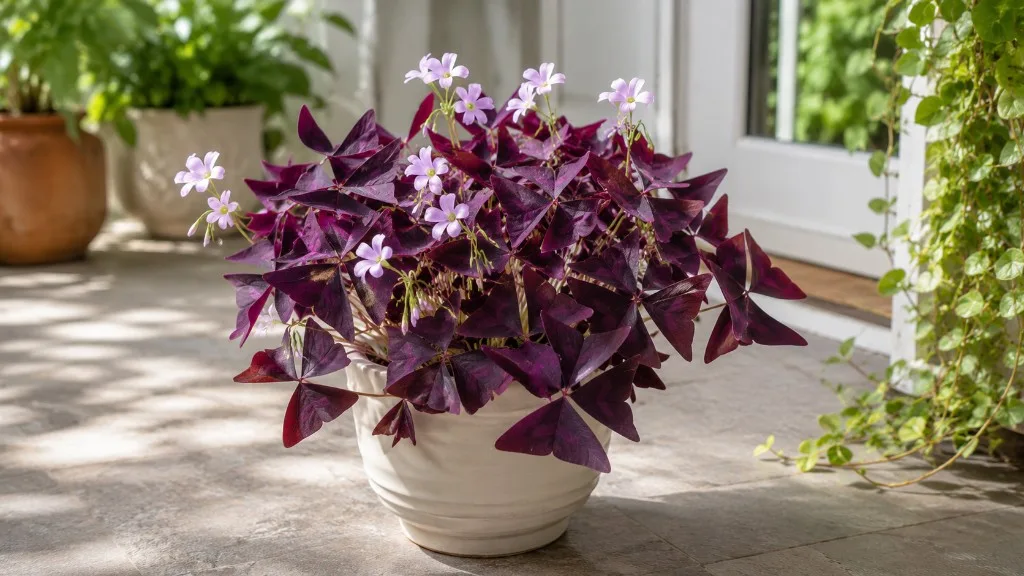
Purple shamrock (Oxalis triangularis) folds its triangular leaves at night and opens them by day—a living clock on a windowsill. NC State Extension notes it grows from rhizomes, prefers a loamy mix with surface drying between waterings, and may go dormant if too dry, too hot, or in autumn; cut back water until new growth returns. (NC State Extension — Oxalis triangularis) Bright indirect to partial sun keeps color deep; pure dim corners pale it to greenish purple. Full hub: Oxalis triangularis.
Purple passion (Gynura aurantiaca) looks sprayed with violet velvet. It wants bright indirect light, evenly moist soil during growth, and less water in winter. Pinch leggy stems to keep a compact bush; humidity above 40% prevents crispy leaf edges. Purple passion roots easily from stem cuttings in water—refresh older pots every year because bare lower stems look scruffy unless you propagate.
Persian shield (Strobilanthes dyerianus) is the most iridescent purple on this list—until conditions slip. NC State warns cool temperatures and low light wash out the metallic sheen, and older plants lose intensity with age. (NC State Extension — Persian shield) Give bright indirect light (no scorching noon sun), warm room temps above 65°F, even moisture, and pinch tips for bushiness. Watch for spider mites in dry winter air. If color dulls on a mature plant, take tip cuttings in spring and start a fresh pot rather than fighting woody stems.
Purple heart (Tradescantia pallida) is the forgiving trailing purple: deeper color in stronger light, pale lilac in shade. Let the top inch of soil dry between waterings; pinching prevents bare stems. Excellent in hanging baskets near east or west windows. ‘Variegata’ adds pink stripes but needs more light to keep contrast sharp.
Patterned and Variegated Purple Leaves
Pattern plants deliver designer color—but punish inconsistent water and dry air faster than solid-purple tradescantias.
Rex Begonia, Coleus, Calathea, and Tradescantia Zebrina
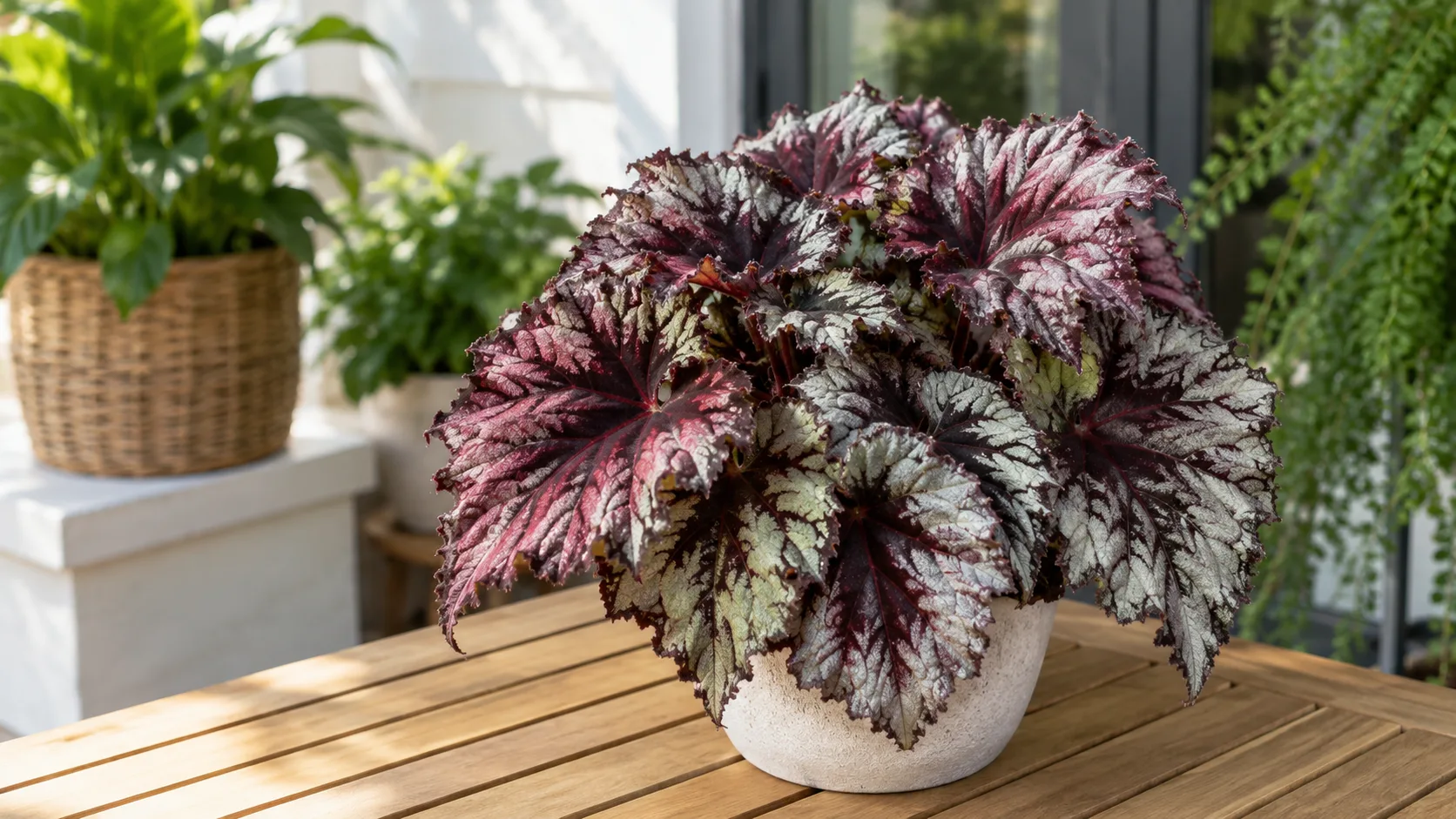
Rex begonia (Begonia rex-cultorum) and iron cross begonia (Begonia masoniana) use purple as part of intricate patterns—silver swirls, burgundy fields, or a dark cross on green. They need warm air (60–70°F), 50%+ humidity, and watering when the top of the mix dries slightly—never soggy cold soil. ASPCA lists rex begonia as toxic to pets. Epic Gardening notes rex begonias excel as individual potted houseplants rather than mixed bowls because humidity needs differ. (Epic Gardening — rex begonias) Hub: Begonia rex.
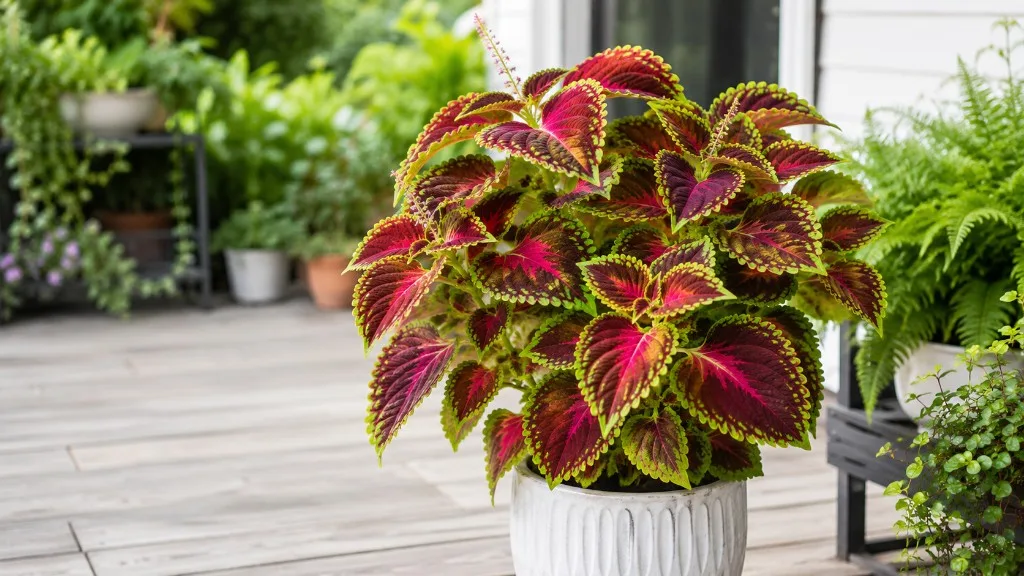
Coleus (Plectranthus scutellarioides) is the fastest purple gratification indoors if you have light. Purple cultivars (‘Royal Tapestry’, ‘Black Dragon’, ‘Dark Star’, and similar) stay saturated in bright indirect sun; dim rooms revert to green within weeks. Keep soil evenly moist—not wet—and pinch flower spikes so energy stays in leaves. ASPCA lists coleus as toxic to dogs, cats, and horses. Coleus is not a long-lived perennial indoors; take cuttings in water every few months to refresh color. (Epic Gardening — coleus care) Rotate the pot weekly so all sides stay evenly purple instead of one pale flank facing the room.
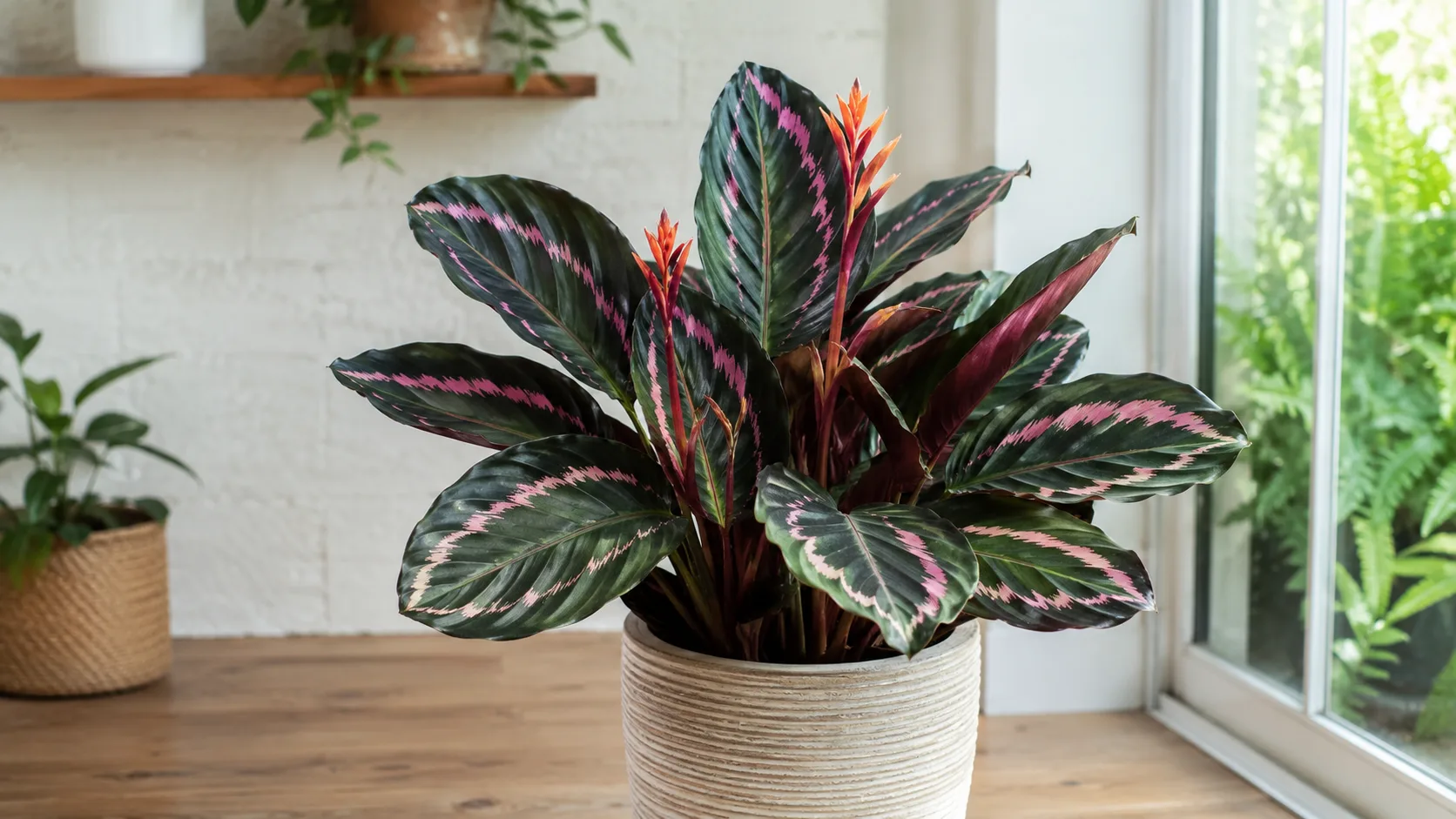
Calathea cultivars—especially Calathea Dottie, roseopicta, medallion, and rattlesnake plant—bring purple on undersides or pinstripe margins. They are not low maintenance despite nursery tags: the RHS calathea growing guide groups them with prayer plants needing warm humid air, bright filtered light, and evenly moist peat-free mix. Direct sun fades patterns; dry air browns edges. See growing rattlesnake plants for humidity tactics that apply across the genus.
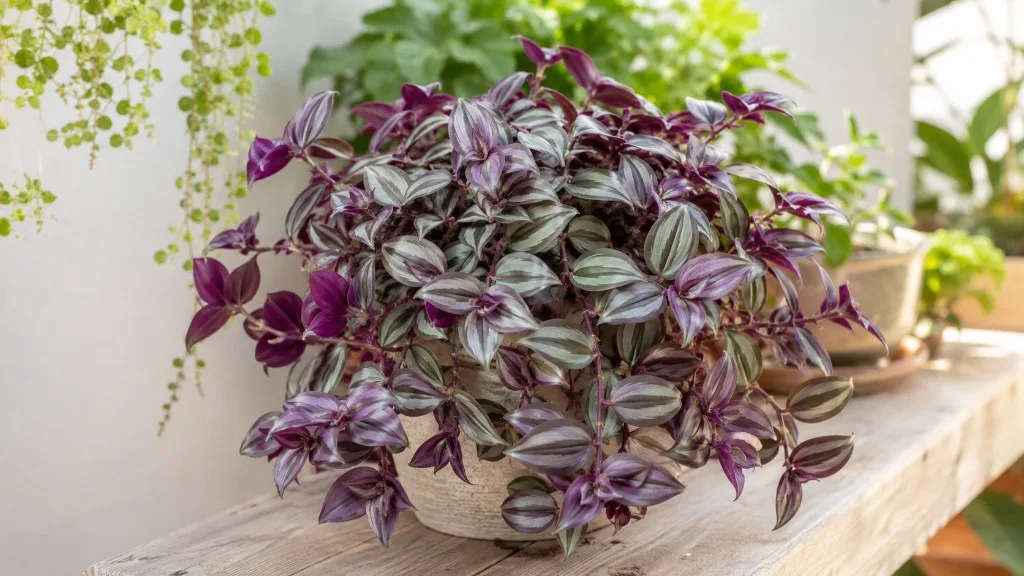
Tradescantia zebrina and Tradescantia Nanouk stripe purple with silver and green—compact color for shelves and hangers. Bright indirect light intensifies purple; let soil dry slightly between waterings. Leggy stems mean pinching or more light. Hub: Tradescantia zebrina.
Subtle Purple Undersides and Accents
Not every purple plant shouts. These work when you want depth without turning a room into a goth greenhouse.
Prayer Plant, Rubber Tree, Ti Plant, and Chinese Evergreen
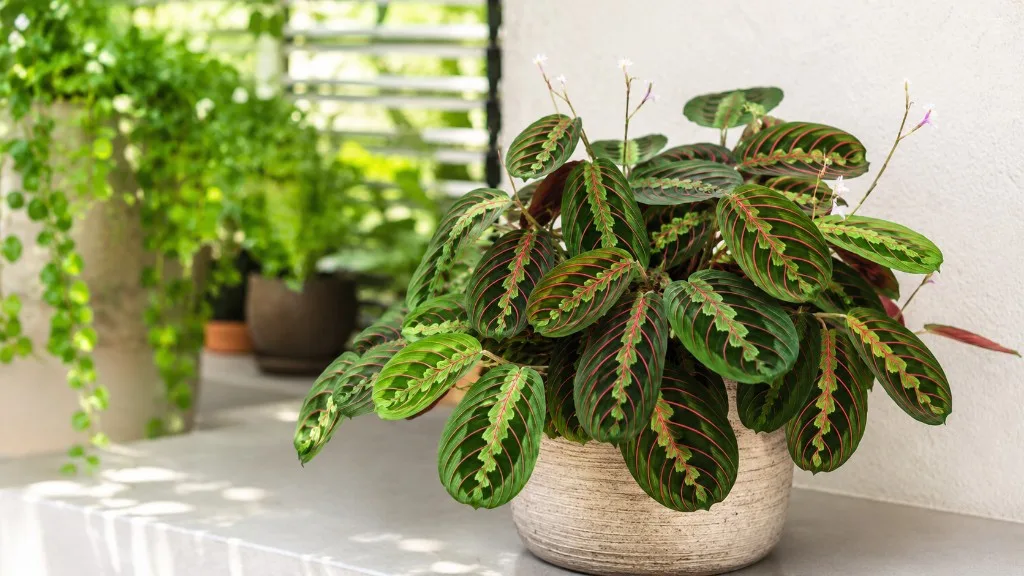
Prayer plant (Maranta leuconeura) keeps green patterned tops with purple-red undersides that flash when leaves fold at night. It hates direct sun—leaves bleach and curl— and wants steady moisture with distilled or filtered water if your tap is hard. Non-toxic to pets. Full care loop: grow prayer plant indoors and Maranta leuconeura hub.
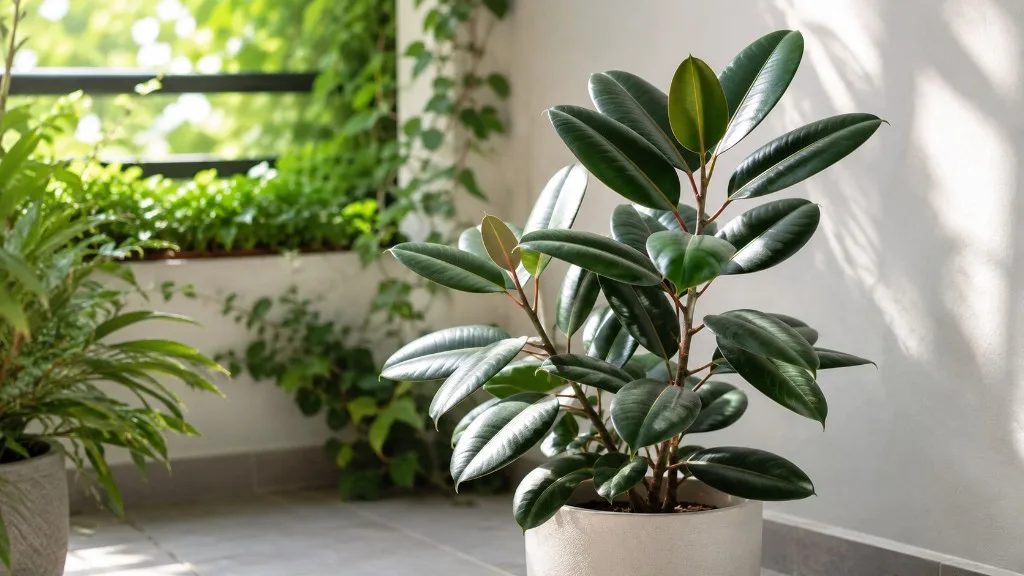
Rubber tree (Ficus elastica) cultivars like ‘Burgundy’ show purple-new leaves maturing to deep green with purple undersides. Forgiving of missed water compared to calatheas; bright indirect light and drying the top inch of soil between waterings. Toxic sap—keep away from chewers. Rubber plant hub.
Ti plant (Cordyline fruticosa) purple cultivars add upright structure with sword leaves in wine-red and magenta. Well-drained mix is non-negotiable—roots rot in heavy wet soil. See ti plant profile for indoor light and watering rhythm. Lower leaves brown naturally as the cane grows; peel them off rather than overwatering in response.
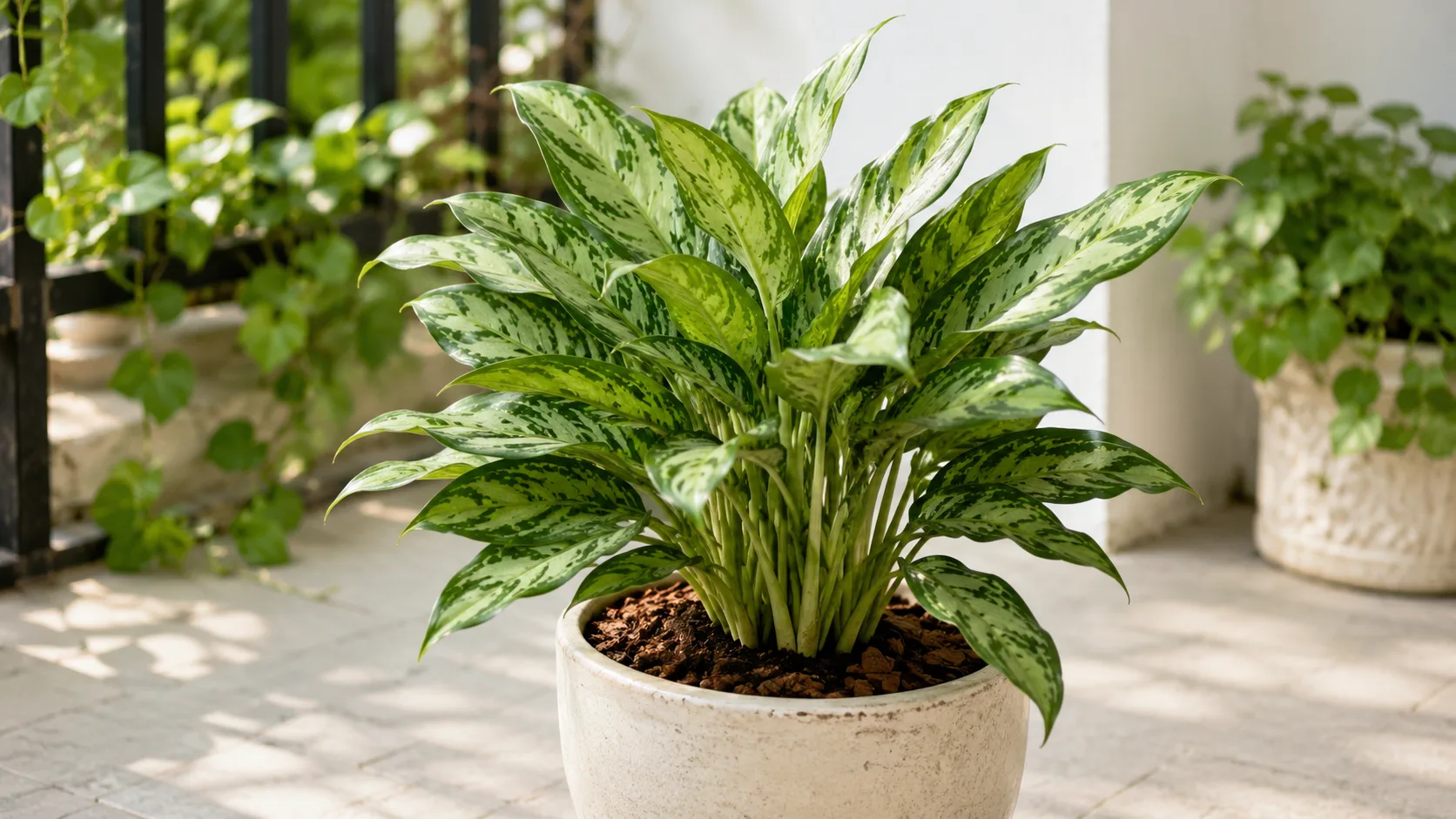
Chinese evergreen (Aglaonema) purple notes appear on stems and petioles of cultivars like Red Valentine and Siam Aurora—not all-green species. Tolerates lower light than most entries here, which means purple may stay subtle. Toxic to dogs and cats per ASPCA. Deep dive: grow aglaonema houseplants and Aglaonema hub. For stronger purple indoors, choose explicitly red or pink cultivars over generic green silver-bay types.
Succulents, Trailing Picks, and Textured Foliage
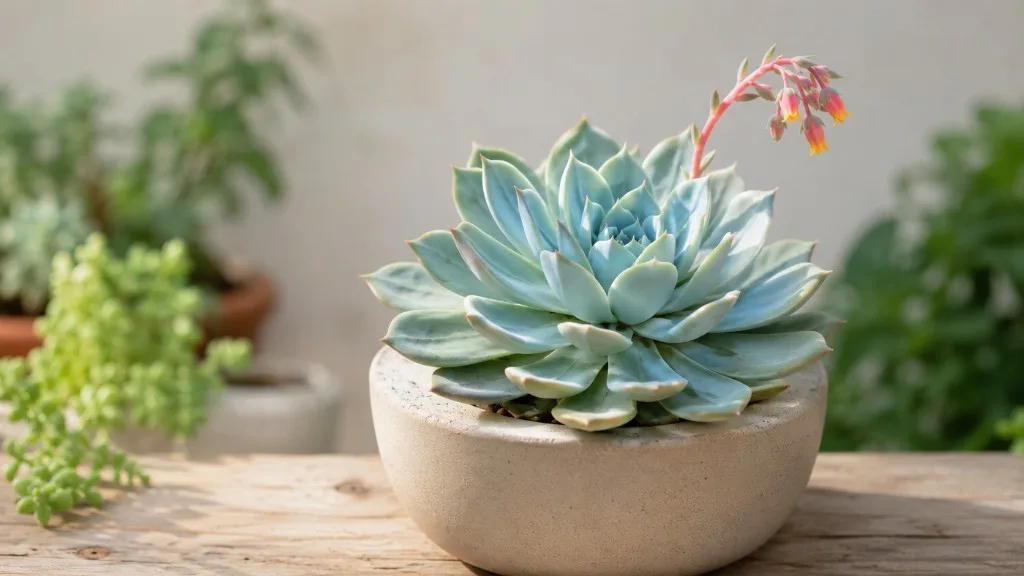
Echeveria and graptoveria ‘Fred Ives’ blush purple-pink when sun-stressed—place in your brightest window indoors. Water only when mix is dry; soft purple leaves that turn mushy mean overwatering. Use a gritty succulent mix and a pot with drainage holes; winter dormancy means stretching waterings to every three or four weeks in cool rooms.
Ruby’s necklace (Othonna capensis) trails purple stems with plump leaves; treat like a succulent with direct light and sparse water. Hang it where stems can cascade—cramped shelves tangle new growth and hide the color.
Purple sweet potato vine (Ipomoea batatas ‘Blackie’ or similar) needs more sun and water than most houseplants—often better as a summer container plant brought indoors to a sunny sill for winter color. Daily wilting in heat is normal; chronic soggy soil is not.
Purple waffle plant (Hemigraphis alternata) and Moses in the cradle (Tradescantia spathacea) add texture: quilted purple leaves or green blades with purple bases. Both want bright indirect light and even moisture without sogginess; waffle plant declines fastest in dry air. Moses in the cradle tolerates more direct sun than prayer plants—up to a few hours morning light—but scorches in hot afternoon glass.
Lavender and Gloxinia — Purple Leaves Plus Bonus Blooms
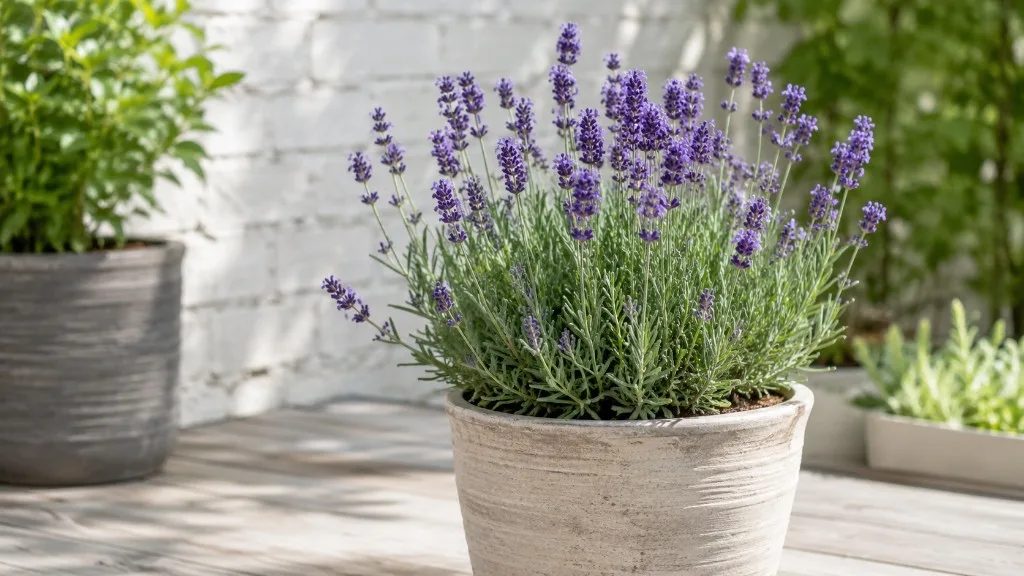
Lavender (Lavandula) brings silvery purple foliage and fragrance—but honest indoor performance is tough. It wants 6+ hours of direct sun, excellent drainage, and cool nights; most rooms grow leggy, gray plants that never bloom. ASPCA lists lavender as toxic to cats and dogs. Treat it as a sunny windowsill experiment, not a sure thing. If fragrance is the goal, a dried bundle costs less heartache than fighting winter etiolation.
Gloxinia (Sinningia speciosa) delivers purple velvety flowers above green leaves in bright indirect light with evenly moist mix. After bloom it may go dormant—reduce water until new growth. Non-toxic to pets, unlike many purple foliage picks. Treat it like an African violet cousin: no cold water on leaves, no direct midday sun, and repot only when roots circle the pot.
When Purple Color Fades Indoors
When a plant bred for purple turns green or dull, check these in order:
- Light: Move one step brighter (closer to an east or west window, or add a grow light)—most fade cases are insufficient light, not fertilizer deficiency.
- Temperature: Cool nights and cold glass can wash Persian shield and coleus; warm stable rooms restore pigment faster than plant food.
- Humidity: Browning edges plus faded color on calatheas and rex begonias usually mean dry air, not wrong purple genetics.
- Age: Persian shield and some coleus lose intensity on old stems—propagate fresh cuttings.
- Stress vs genetics: If a normally green plant purples suddenly, read purple leaves on houseplants before changing care.
Avoid dumping high-phosphorus fertilizer on faded purple leaves—that fixes almost none of the cases above and can salt-burn roots in winter.
Conclusion
The best purple indoor plant for your home is the one that matches your window, humidity, and household—not the one that looked deepest in a nursery under grow lights. Beginners with bright light should start with purple heart, Tradescantia zebrina, or coleus (pet-free homes). Collectors with humidifiers can graduate to Persian shield, rex begonia, and calathea cultivars. Pet households should cross-check ASPCA before buying and favor non-toxic prayer plants, calatheas, and peperomia-adjacent picks over rex begonias and Chinese evergreens.
Shortlist two or three names from the comparison table, verify light at the actual shelf for a week, then buy one plant and acclimate it before filling the room. Purple that lasts beats purple that photographs well for a month.