How to Grow and Care for Ti Plant (Good Luck Plant)
Grow ti plant indoors or outdoors with bright light, fluoride-safe watering, humidity tricks, and propagation steps that keep pink and purple leaves vivid.
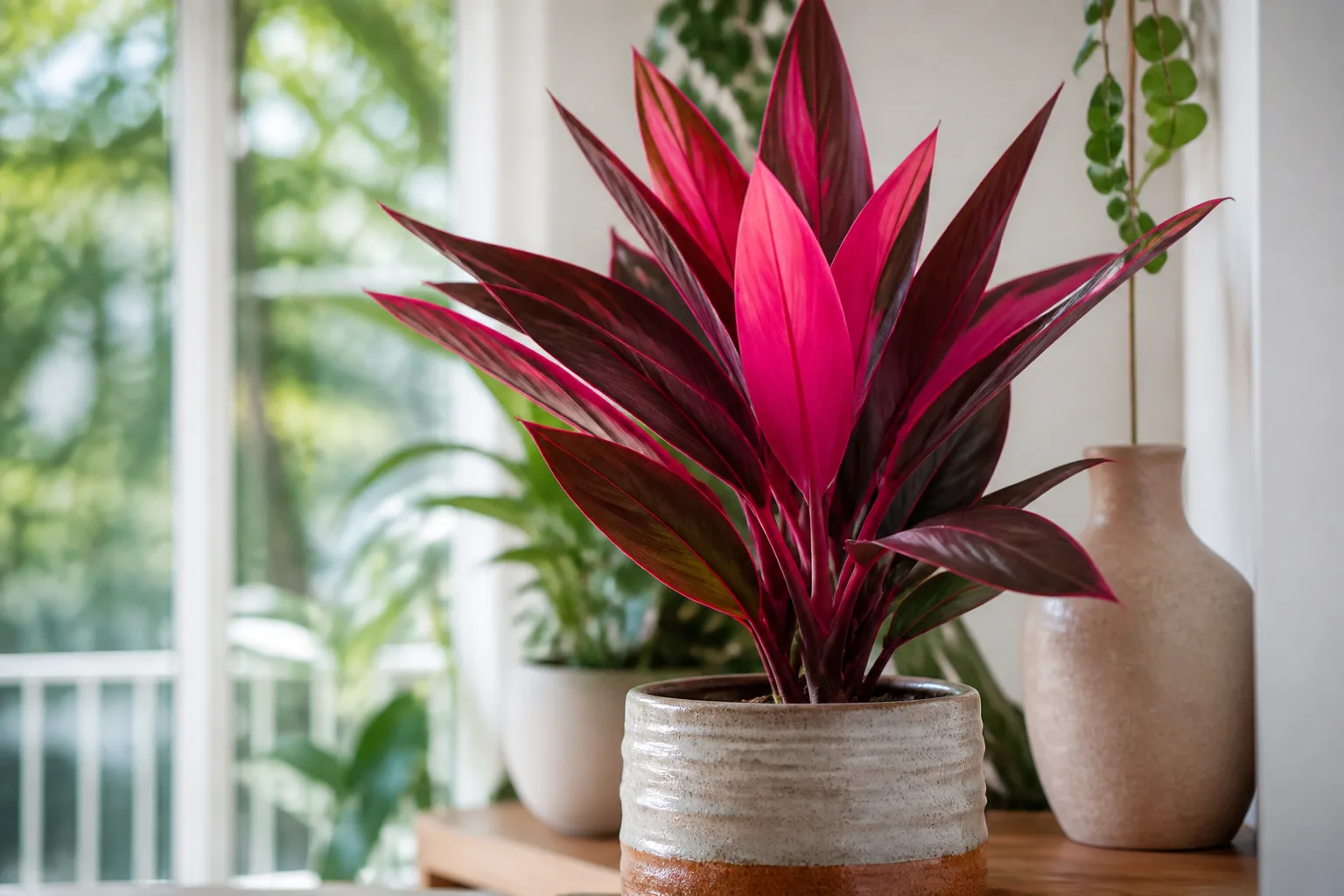
A ti plant (Cordyline fruticosa) is one of those houseplants people buy for the color and keep for the drama—sword-shaped leaves in magenta, burgundy, pink, cream, and green that look like someone painted tropical sunset stripes onto a shrub. It is also sold as the Hawaiian ti plant or good luck plant, and it behaves like a true tropical evergreen: it wants warmth, steady moisture, bright filtered light, and air humid enough that leaf edges do not crisp the moment your furnace kicks on. Give it that baseline and a ti plant can stay vivid for years indoors or become a landscape anchor in frost-free climates. Skip one pillar—especially light or fluoride-free water—and the same plant quietly reverts to plain green with brown margins.
Ti Plant Quick Reference
Use this table before you change watering, move a pot, or chop a leggy cane. Most ti plant failures trace back to one row here.
| Factor | Indoor target | Outdoor target (zones 10–12) |
|---|---|---|
| Light | Bright indirect; some gentle morning sun OK | Partial shade; afternoon shade in hot climates |
| Water | Water when top 1 in. dry; reduce in late fall–winter | Keep soil evenly moist; deep water if no rain |
| Soil | Peaty, well-drained potting mix; slightly acidic | Loamy, fertile, well-drained; mulch 2–4 in. |
| Temperature | 65–95°F; avoid sustained below 50°F | Same; brief dips possible but not reliable |
| Humidity | Medium–high; pebble tray or humidifier helps | Natural coastal humidity usually sufficient |
| Fertilizer | Balanced liquid monthly in spring–summer | Slow-release balanced once in spring |
| Hardiness | Houseplant below zone 10 | USDA zones 10–12 per NC State Extension |
| Pets | Toxic to cats, dogs, horses (ASPCA) | Same; supervise children—low human toxicity |
| Propagation | Cane sections, division, water roots | Same methods; Ti logs common |
North Carolina State Extension notes that Cordyline fruticosa needs bright indirect light to hold its bright foliage colors, prefers moist but well-drained soil with a slight dry-down between waterings, thrives at 65–95°F, does not tolerate sustained temperatures below 50°F, and is winter hardy in USDA zones 10–12. (NC State Extension)
What Is a Ti Plant?
Ti plant is the common name for Cordyline fruticosa, a broadleaf evergreen shrub in the Asparagaceae family. You will still see older labels reading Cordyline terminalis or Dracaena terminalis—same species, updated taxonomy. Native to tropical Asia, Australia, and Pacific Islands, it grows from a rhizomatous root system and produces spirally arranged leaves up to about 30 inches long, often variegated in greens, pinks, and deep reds. Outdoors in warm climates it can reach roughly 2–10 feet tall depending on cultivar and site; indoors it usually stays shorter unless you give it ceiling height and strong light.
The USDA PLANTS Database lists common names including good luck plant, palm lily, broadleaf palm lily, and ti, reflecting both ornamental and cultural use across the Pacific. (USDA PLANTS) Small white to pink flowers may appear on outdoor plants in spring, followed by berries, but indoor potted specimens rarely bloom unless they receive very bright light, warm nights, and consistent care over multiple seasons.
Why It’s Called the Good Luck Plant
In Hawaii and broader Polynesian traditions, Cordyline species were planted near homes and used in ceremonies; red-leaved forms especially carried symbolic weight. NC State Extension notes the plant is frequently grown in Hawaiian gardens and is believed to bring good luck. (NC State Extension) That cultural history is why nurseries still market pots with a “good luck” sticker—not because the plant changes your fortune if you forget to water it. Treat the name as a reminder that this is a ceremonial and garden plant in its native range, not a low-light desk succulent. It still needs real horticulture behind the label.
Ti Plant vs Dracaena: How to Tell Them Apart
Ti plant and dracaena are the classic look-alike pair at the garden center: both sell colorful strap leaves on woody canes and both want similar indoor conditions. The fastest field ID is root color. Ti plant roots are white; dracaena roots run orange or yellow. If you are repotting and unsure which you own, wash a small root section and compare. Foliage alone is unreliable because breeders have pushed both genera into red, pink, and green variegation.
Care overlaps heavily—bright indirect light, warm rooms, careful watering—but ti plant is often more humidity-sensitive and more fluoride-sensitive than many dracaenas. If you already grow a Dracaena successfully, use that as a starting point, then add humidity and filtered water for ti plant.
Light Requirements for Bold Leaf Color
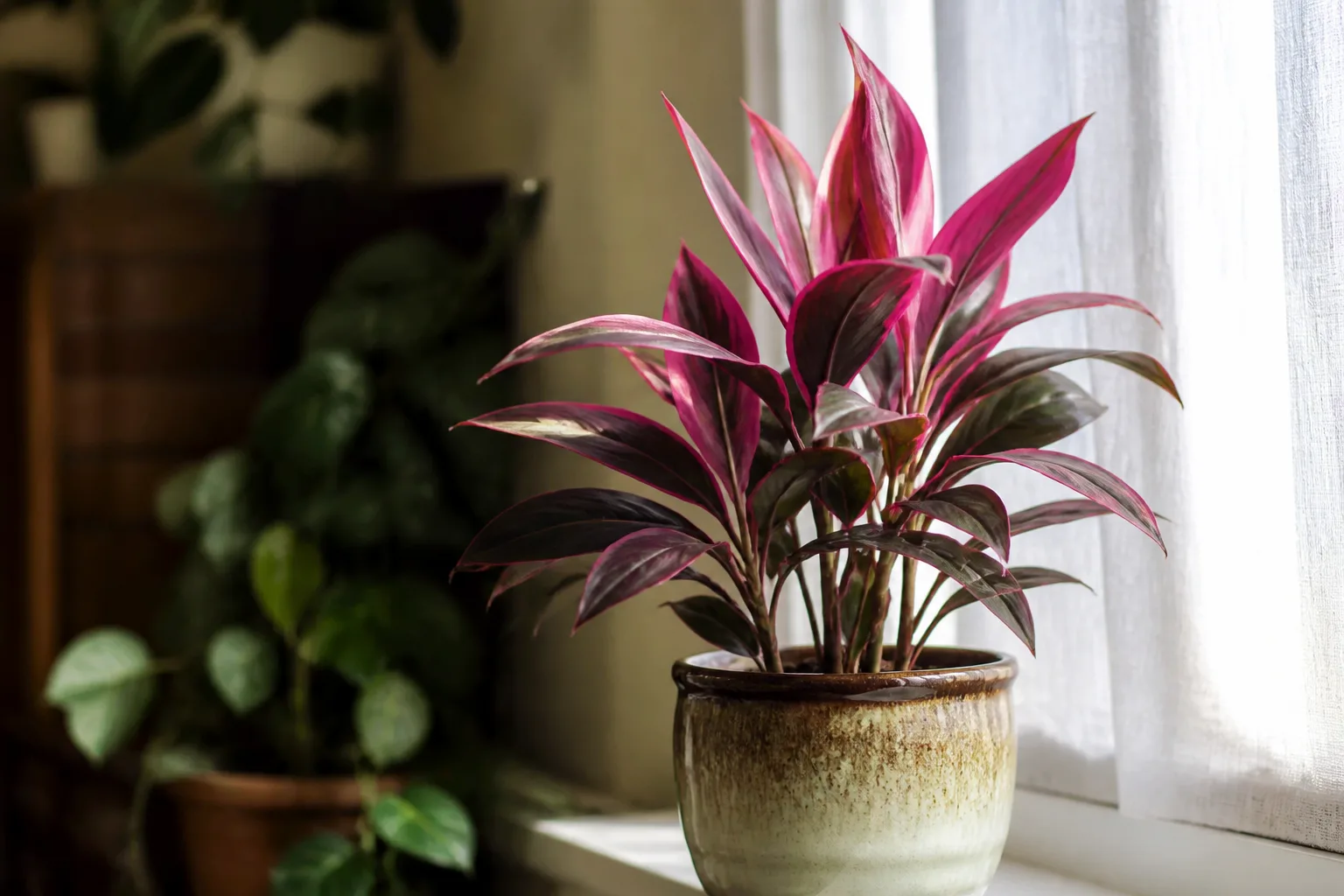
Ti plant color is light-dependent. NC State Extension is explicit: bright indirect light is required to maintain bright foliage colors. (NC State Extension) Indoors, place the pot within a few feet of an east- or west-facing window, or set it behind a sheer curtain on a south exposure so leaves receive strong brightness without scorching midday sun.
Outdoor plants tolerate partial shade and dappled sunlight better than all-day blazing sun on unacclimated leaves. Hot afternoon direct sun commonly burns margins and tips—exactly the damage new growers blame on underwatering. If you summer a houseplant outdoors, harden it off over a week: morning sun first, then slightly longer exposure, while you watch for bleached or crispy patches.
When variegated leaves fade toward plain green, light is the first suspect—not fertilizer. Move the plant closer to the window, remove obstacles blocking the glass, or add a full-spectrum grow light for 10–12 hours daily. Green-leaf seedlings and cultivars tolerate more direct sun than pink or purple forms, but even they brown if light jumps from a dim corner to a hot sill overnight.
Soil and Potting Mix
Ti plant wants fertile, well-drained, slightly acidic soil. NC State recommends loamy garden soil or peat-based potting mix with regular moisture but a bit of drying between waterings. (NC State Extension) A workable indoor blend is high-quality potting soil amended with perlite or pine bark so water exits quickly. Avoid heavy garden clay and never leave the pot in standing water.
For outdoor beds in zones 10–12, incorporate compost, plant on a slight mound if drainage is slow, and mulch 2–4 inches out from the stem—keep mulch off the crown to reduce rot. Ti plant is not salt-spray tolerant; coastal wind exposure can burn leaf edges.
Every pot needs drainage holes. Decorative cache pots are fine only if the inner nursery pot lifts out and you empty excess water after each soak.
Watering Without Browning the Tips
Water ti plant deeply when the top inch of soil feels dry—typically about once a week for an average indoor pot in active growth, faster in summer heat and slower from late fall through winter when growth slows. NC State advises reducing watering from late fall to late winter and allowing a slight dry-down between drinks. (NC State Extension) Soak until water runs from the drainage holes, then discard the saucer water.
The second half of ti plant watering is water chemistry. University of Florida foliage research lists Cordyline among plants highly sensitive to fluoride, which accumulates at leaf tips and margins. (UF/IFAS MREC) Iowa State Extension groups ti plant with spider plant, dracaena, prayer plant, and calathea as species prone to brown tips from chlorine, fluoride, and other tap-water chemicals over time. (Iowa State Extension)
Practical fix: run a four- to six-week trial on one plant using rainwater, distilled water, or reverse-osmosis water while keeping light and humidity stable. If new leaves emerge clean, switch your collection—or at least your ti plants—to filtered water. Letting tap water sit overnight helps free chlorine but not always chloramine. See our RO water for indoor plants guide if tip burn persists across several sensitive species.
Outdoor specimens in rainy climates rarely show fluoride burn; container plants on municipal water are the usual victims.
Temperature, Humidity, and Winter Protection
Ti plant performs best between 65°F and 95°F. NC State warns it does not tolerate temperatures below 50°F for extended periods; brief colder snaps may occur in marginal microclimates but should not be your plan. (NC State Extension) Keep pots away from cold drafts, heat vents that desiccate leaves, and single-pane winter glass that radiates chill.
Humidity matters indoors. NC State notes high humidity may require a humidifier when grown as a houseplant, and that leaf tips turn brown if air is too dry. (NC State Extension) A pebble humidity tray—wide saucer, stones, water below stone tops, pot sitting above the waterline—raises local humidity modestly.
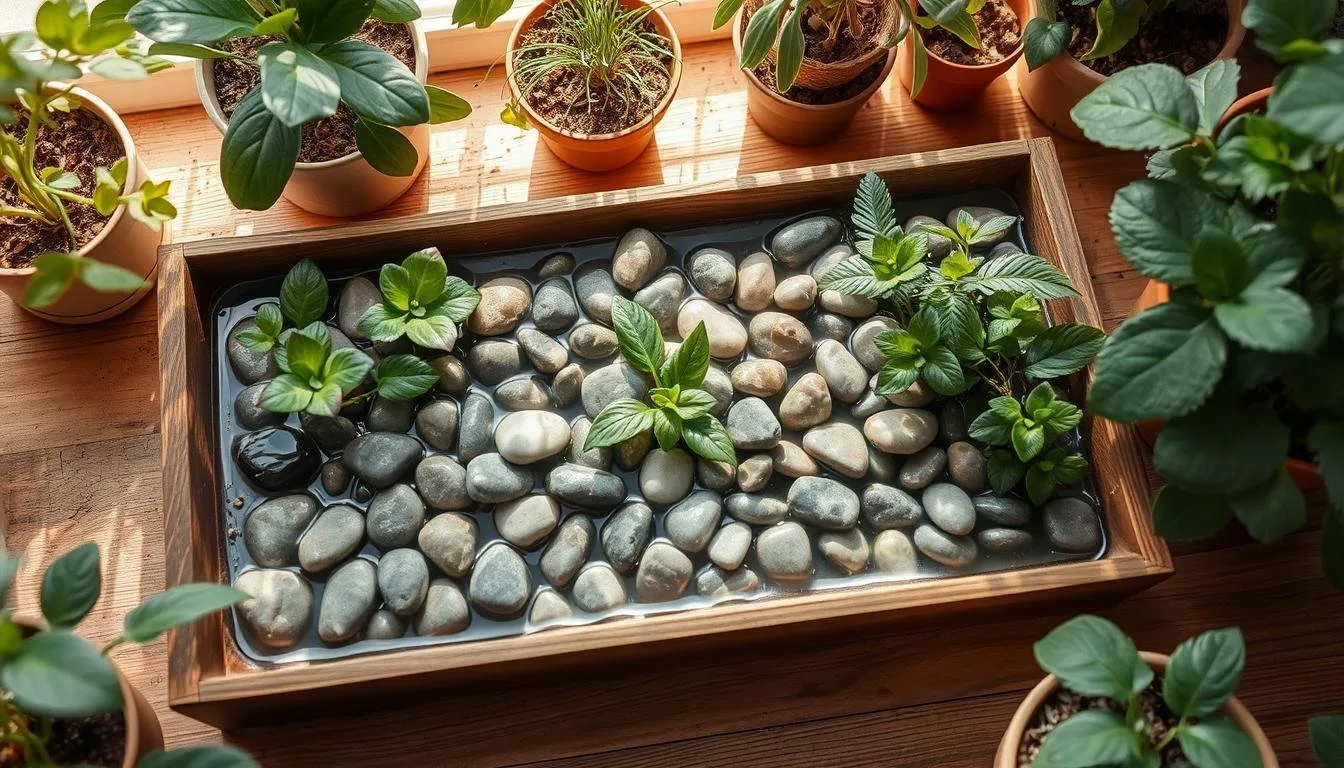 It will not fix a plant in a hot, dry draft, but paired with grouping plants it helps. Our indoor humidity and pebble trays page walks through setup without the common drowning mistake.
Winter checklist for potted plants below zone 10: bring pots inside before nights hit the low 50s°F; stop fertilizing; reduce watering frequency; keep leaves away from heating registers; increase humidity if tips brown despite good water quality.
In-ground plants in zone 9 or marginal zone 10 may survive occasional dips with 6 inches of mulch over the root zone and frost cloth on cold nights, but ti plant is not reliably hardy there—treat protection as insurance, not a guarantee.
Fertilizer Schedule
Feed ti plant to support leaf color, not to rescue low light. For potted plants, use a balanced water-soluble fertilizer (such as 10-10-10 or 20-20-20 diluted per label) monthly during spring and summer. Withhold fertilizer from late fall through winter when growth slows. For in-ground landscape plants, NC State’s profile aligns with a single spring application of slow-release balanced fertilizer worked into soil at least a foot from the stem, followed by a deep soak.
Over-fertilizing causes salt buildup and tip burn that mimics fluoride damage—flush the pot with plain water if white crust appears on soil or pot rims. If leaves are green and pale despite good light, verify you are not starving the plant before you double the dose.
Popular Ti Plant Cultivars
Cultivar names vary by nursery, but these are widely sold forms worth knowing before you buy:
- ‘Hawaiian Boy’ — classic dark purple to red foliage.
- ‘Florida Red’ — strap leaves in deep purple-red with pink highlights.
- ‘Candy Cane’ — green base with cream streaks and pink margins.
- ‘Black Magic’ — near-black purple mature foliage.
- ‘Pink Passion’ — bright pink-purple blades with bold pink edges.
- ‘Morning Sunshine’ — yellow, pink, orange, and green multicolor mix.
- ‘Sherbert’ and ‘Maria’ — pink-heavy variegation patterns.
Buy from a bench where you can see actual leaf color in store light, not from a photo alone. A cultivar pushed into a dim shop corner may already be reverting toward green before you checkout.
Pruning Lanky Stems
Ti plant naturally sheds older lower leaves as canes elongate—that is normal, not disease. Remove yellow or fully brown leaves at the base with clean snips. If stems grow tall and bare indoors, you can cut canes back hard—even to about 6 inches above soil on healthy plants—and new shoots will emerge from nodes or the base over the following weeks.
Disinfect blades between plants with rubbing alcohol, especially if you recently trimmed a diseased specimen. Penn State Extension notes Cordyline can carry bacterial problems spread by contaminated tools and potting media; sterile cuts and reputable soil reduce that risk. (Penn State Extension)
Prune in spring or early summer when warmth and light support fast regrowth. Avoid heavy cutting in late fall when recovery is slow.
How to Propagate Ti Plant
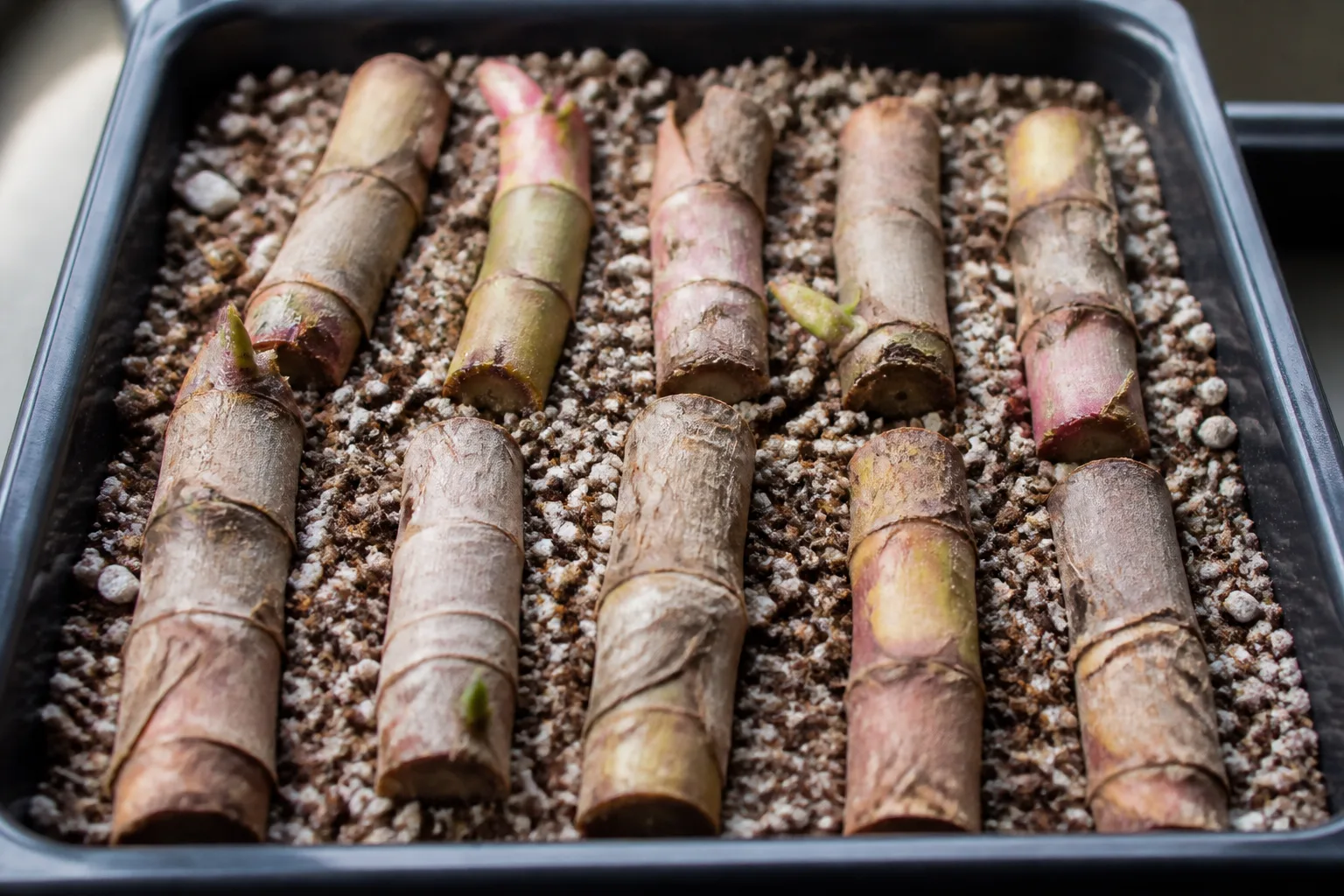
NC State lists division and stem cuttings as recommended propagation strategies. (NC State Extension) Commercial Ti logs—short cane sections sold bare or partially rooted—are the same biology packaged for impulse buyers. All methods work; pick based on what plant you have.
Cane sections (Ti logs): cut 1-inch to several-inch segments from firm, healthy canes with a sterile blade. Lay a segment horizontally in moist, airy mix (peat, perlite, and sand) buried about one-quarter of its diameter, or stand a longer piece vertically with the bottom inch in mix. Keep warm (70°F+), bright indirect light, and steady moisture—not sogginess. Roots from nodes typically appear in two to four weeks; transplant when new green shoots form.
Water rooting: place a 5-inch cane piece in shallow clean water covering the base without submerging the whole stem. Change water every few days. Pot into well-drained mix when roots are several inches long.
Division: on multi-stem clumps or rhizomes with separate shoots, unpot and split rooted sections with a knife, ensuring each division has roots and leaves. Pot up, water, and keep humidity high for two weeks while they settle.
Seeds and berries from outdoor flowers are possible but slow; stem methods are what most home growers should use.
Repotting Container Plants
Repot when roots circle the pot or emerge from drainage holes—often every two to three years for indoor plants because container growth is slower than in-ground specimens. Jump only one pot size up; excess soil stays wet and invites root rot. Choose a wide, heavy pot for tall top-heavy specimens on windy patios.
Use fresh, well-drained mix; tease circling roots gently. Water once, then resume normal dry-down watering. Hold fertilizer for four to six weeks while roots heal.
Growing Outdoors vs Indoors
Outdoors year-round: USDA zones 10–12 with partial shade, moist well-drained soil, and frost-free winters. Plants become shrubby landscape anchors, hedge components, or container specimens on shaded lanais.
Indoors or seasonal patio: everywhere else. Grow as a houseplant in bright humidity, move pots outside only after nights stay above about 55°F, and bring inside before nights drop toward 50°F. Indoor air in winter is the hard part—pair filtered water with humidity support.
Ti plant is not a low-light plant and not a drought-tolerant succulent despite the cane-like silhouette. If your room only supports pothos, ti plant will slowly lose the color you paid for.
Pests, Diseases, and Safety
NC State lists aphids, scale, spider mites, fungus gnats, thrips, and mealybugs as insects to monitor, plus leaf spot and fungal issues in soggy, crowded conditions. (NC State Extension) Improve airflow, avoid overhead watering, and isolate new purchases for two weeks.
Mealybugs and scale hide at leaf bases—inspect with a flashlight monthly. Wipe foliage with a damp cloth as prevention. Mites flare in hot, dry indoor air; raise humidity and treat early with insecticidal soap on leaf undersides if webbing appears.
Pet and human safety: ASPCA lists ti plant as toxic to cats and dogs. (ASPCA) NC State adds toxicity to horses and notes low human toxicity with possible gastrointestinal discomfort if ingested, plus skin irritation for sensitive people—wear gloves if sap bothers your hands. (NC State Extension) Keep pots off pet routes, clean fallen leaves, and call ASPCA Animal Poison Control at (888) 426-4435 or your veterinarian if chewing is suspected.
Common Problems and Fixes
Brown leaf tips and margins: rank causes—(1) fluoride/chlorine in tap water, (2) low humidity, (3) underwatering. Fix water first with a filtered-water trial, then humidity, then watering frequency. Old damaged tips never green up; judge success by new leaves. More detail in our brown tips on houseplants guide.
Fading variegation / green leaves: almost always insufficient light. Move closer to the window or add grow lights before fertilizing harder.
Soft stem base or sour soil smell: overwatering or poor drainage. Unpot, trim mushy roots, repot in fresh mix, reduce water.
Leaf spots with yellow halos: fungal leaf spot from wet foliage or crowded plants. Remove affected leaves, improve airflow, keep water off blades.
Sudden leaf drop after moving indoors: temperature or light shock. Stabilize warmth, avoid drafts, accept some adjustment leaf loss, hold fertilizer until new growth appears.
Conclusion
Ti plant rewards growers who treat it like the tropical shrub it is: bright filtered light for color, well-drained soil kept evenly moist, warm stable rooms, and fluoride-aware watering with humidity support in winter. Outdoors it shines in USDA zones 10–12; everywhere else, grow it in a pot you can rescue before cold nights arrive. When a cane gets leggy, prune or propagate instead of tossing the plant—ti logs and cane sections make replacement cheap. Respect pet toxicity, watch for mites in dry air, and fix brown tips with water quality before you chase exotic cures. Nail those basics and Cordyline fruticosa stays the good luck plant you actually wanted on the windowsill—not a green dracaena impostor with crispy edges.