How to Grow and Care for Thai Constellation Monstera
Grow Thai Constellation Monstera indoors with brighter light than green deliciosa, chunky aroid mix, careful watering, and support for fenestrations—plus fixes for brown variegation.
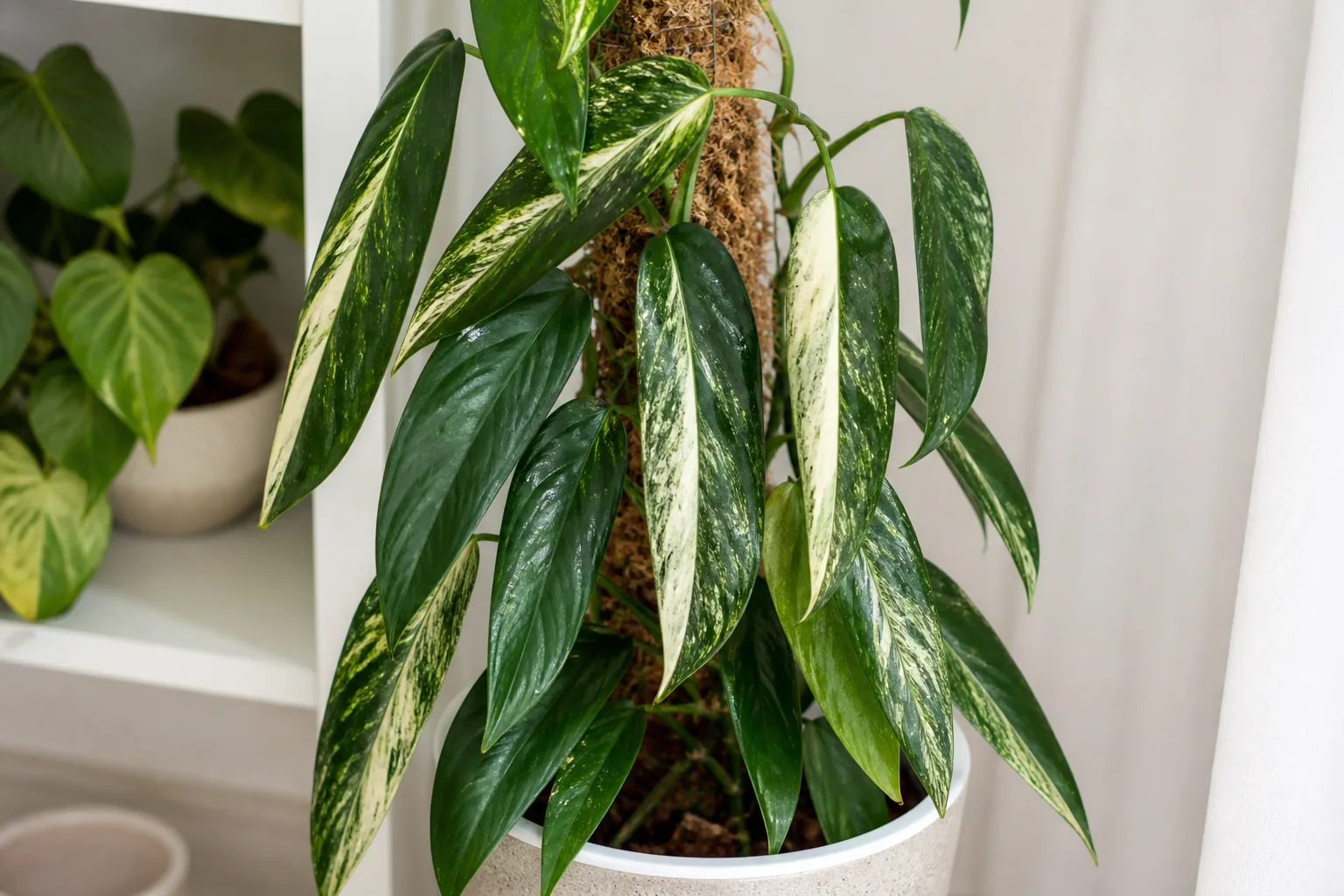
Monstera deliciosa ‘Thai Constellation’ looks like someone splattered cream and pale yellow across deep green leaves—and then punched holes through them as the vine matures. It is the most widely sold variegated monstera in North America for a reason: the speckled constellation pattern is bred into the plant through tissue culture, so every leaf carries variegation instead of the hit-or-miss green streaks you see on chimeric Monstera albo cuttings. That stability does not make it a set-and-forget houseplant. Thai Constellation still photosynthesizes with less total chlorophyll than a solid-green Monstera deliciosa, grows slower, drinks on a different schedule, and punishes both drought and soggy soil faster than beginners expect.
Treat it like a premium climbing aroid with a light budget closer to a grower’s bench than a dim hallway, and a Thai Constellation can push large fenestrated leaves for years indoors. Treat it like a regular monstera that “probably gets enough light,” and you get crispy white patches, mushy stems, or new leaves that lose their starry speckles. This guide covers the full indoor setup—light, water, soil, humidity, support, propagation, buying, and the failure modes variegation adds on top of standard deliciosa care.
Thai Constellation Monstera Quick Reference
Use this table before you change anything. If one factor looks wrong, fix that first instead of stacking fixes.
| Factor | Indoor target | Notes |
|---|---|---|
| Light | Bright indirect; upper end of deliciosa range | Variegated cultivars need more brightness than green types (NC State Extension) |
| Water | Soak when top ⅔–¾ of mix is dry | Slower growth = slower uptake; rot risk if wet too long |
| Soil | Chunky aroid mix, fast drainage | Equal parts potting soil, orchid bark, perlite is a solid start |
| Temperature | 60–85°F | Avoid cold drafts and heat vents (NC State Extension) |
| Humidity | 40–60%+; higher helps new leaves | Pebble tray or humidifier near the plant, not misting alone |
| Fertilizer | Monthly liquid in spring–summer | Dilute; skip fall–winter unless under strong grow lights |
| Support | Moss pole or sturdy trellis | Fenestrations and larger leaves need climbing habit |
| Pets | Toxic to cats and dogs | Calcium oxalate crystals (ASPCA Swiss cheese plant) |
| Mature size indoors | Often 6–8 ft tall on support; can exceed that in bright conditions | NC State Extension |
| Outdoor zones | USDA 9–11 frost-free | Same species as deliciosa; protect from direct hot sun when acclimating |
For species-level schedules on watering rhythm, soil amendments, and propagation technique, the Monstera deliciosa plant hub breaks care into focused pages you can jump to when one lever—not the whole plant—needs attention.
What Makes Thai Constellation Different From Regular Monstera Deliciosa
Thai Constellation is not a separate species. It is a cultivar of Monstera deliciosa—the same Swiss cheese vine native from Mexico to Panama that climbs tree trunks as a hemiepiphyte and can reach enormous size in tropical forests (Missouri Botanical Garden). Indoors, both green deliciosa and Thai Constellation usually stay in the 6–8 foot range with support, though bright rooms and moss poles can push them taller over many years.
The differences that matter day to day are growth speed, light demand, and variegation behavior—not a different watering genus.
Lab-Cultured Stable Variegation
NC State Extension describes ‘Thai Constellation’ as marbled and speckled creamy white and green variegation resembling a constellation (NC State Extension). Commercial plants are produced through tissue culture, which is why most leaves show some speckling from juvenile stages onward. That is fundamentally different from ‘Albo Variegata’, where variegation comes from unstable chimeric tissue and individual leaves may emerge fully green or fully white.
Stable speckling is easier to live with aesthetically, but white and cream sectors still contain less chlorophyll. The plant cannot photosynthesize as efficiently per square inch of leaf, so it compensates by needing brighter indirect light and by growing more slowly than a green deliciosa in the same pot. Fully white leaves are rare on Thai Constellation compared with albo, but when they appear they often fail quickly because they cannot sustain themselves—remove them only if they are browning and pulling energy, not just because they look pale.
Thai Constellation vs Monstera Albo
Both are variegated M. deliciosa, but they solve different buyer goals.
Choose Thai Constellation if you want predictable speckling on most new leaves, a plant that is widely stocked at nurseries and big-box stores (though still pricier than plain deliciosa), and care closer to a standard monstera with extra brightness. Propagation from your own plant usually preserves the constellation look because the variegation is genetic, not random chimerism.
Choose Monstera albo if you want dramatic white blocks and pure white leaves and accept higher price, slower availability, and unstable variegation that can revert or produce non-viable all-white growth. Albo is smaller-leaved and often more finicky; many collectors treat it as an advanced project.
If you are on the fence and this is your first variegated vine, Thai Constellation is the more forgiving entry point—still not a true beginner plant, but less of a gamble than albo.
Light Requirements for Strong Variegation
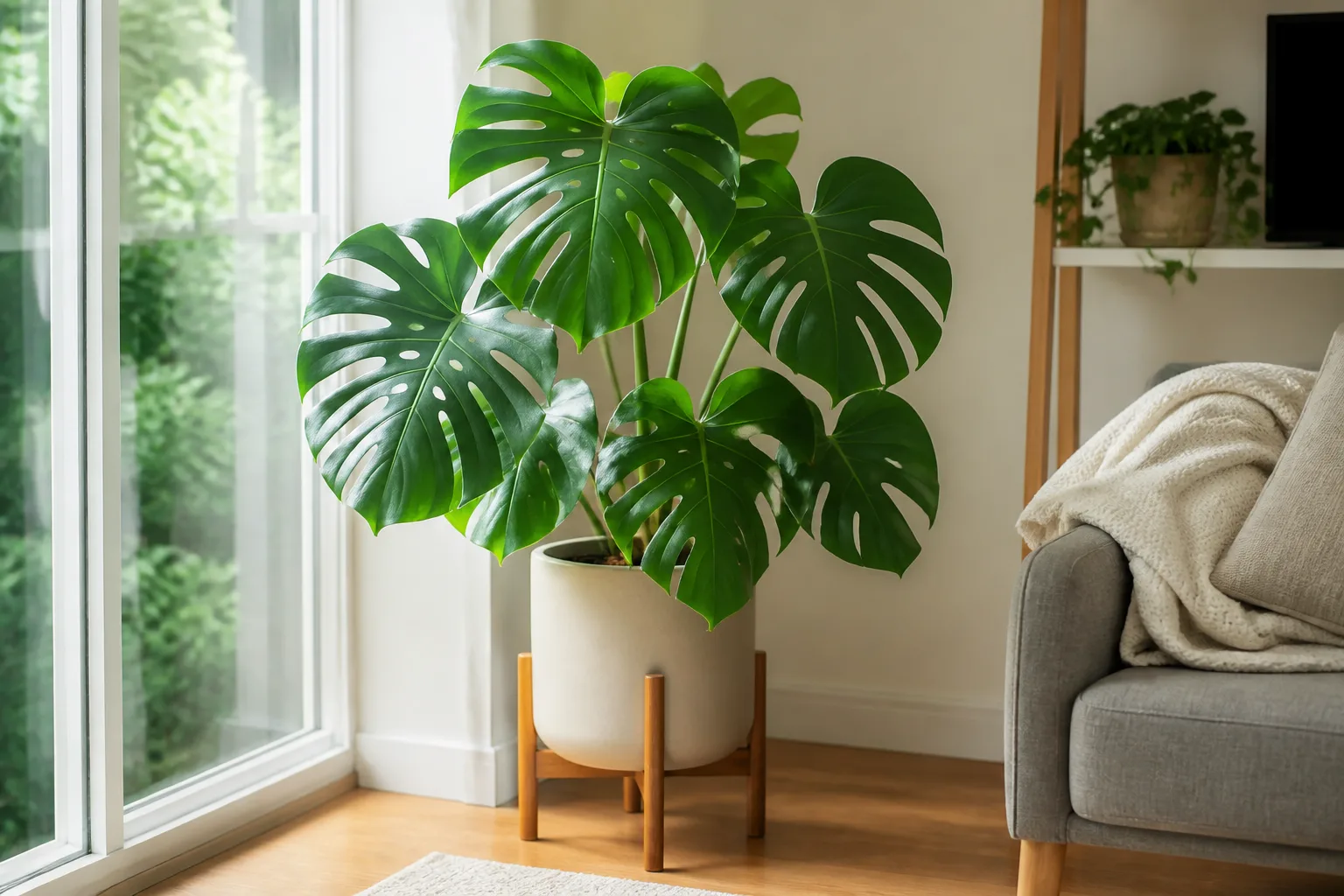
Variegation is a light story. Cream sectors do not photosynthesize as well as green tissue, so Thai Constellation needs more total brightness than a green deliciosa in the same window (NC State Extension). Wisconsin Horticulture Extension notes that inadequate light prevents fenestrations even when the plant survives—on a variegated cultivar, weak light also pushes greener, less speckled new leaves.
Aim for bright indirect light most of the day: roughly the upper half of the 200–400 foot-candle band that supports fenestrations on green deliciosa, with variegated plants benefiting from the top of that range. An east window a foot or two from the glass, or a south- or west-facing window filtered by a sheer curtain, is a common sweet spot. NC State recommends moderate brightness but not direct sunlight indoors; for Thai Constellation, read that as “bright, filtered, and consistent,” not “any corner that feels sunny to you.”
Watch the newest leaf, not the oldest. If emerging leaves are smaller, farther apart on the stem, or losing speckles, light is the first suspect before you reach for fertilizer or extra water.
Window Placement and Grow Lights
Move gradually. Shift the pot closer to the window over two weeks rather than jumping from a shelf to blazing afternoon glass in one day—white variegated tissue burns faster than green. If only the cream patches crisp while soil moisture looks fine, that is sunburn on variegation, not underwatering.
When natural light is weak in winter or you only have a north exposure, add a full-spectrum LED grow light 10–12 hours daily, positioned about 12–18 inches above the tallest leaf. Wisconsin Horticulture Extension confirms artificial light can sustain monstera, but perforations and strong variegation still require adequate intensity, not just a dim lamp left on all day. After upgrading light, check soil moisture more often because transpiration increases even if your watering calendar does not.
For deeper foot-candle targets and acclimation steps, see the Monstera deliciosa light guide—the same window logic applies, but Thai Constellation should sit at the brighter end of each recommendation.
Watering Without Triggering Root Rot
Thai Constellation is often described as less drought tolerant than green deliciosa yet more rot-prone when overwatered. Both things are true because slower growth means slower water uptake, while chunky roots still suffocate in wet mix. The fix is not a calendar—it is a dry-depth check before every soak.
NC State Extension advises watering thoroughly, then allowing the top quarter to one-third of the soil to dry between waterings (NC State Extension). Many Thai Constellation growers push slightly drier—around ⅔ to ¾ of the pot depth dry—because retail plants often arrive in heavy peat that stays wet too long. Stick your finger or a bamboo skewer down the side of the pot; when the deep layers still feel cool and damp, wait.
When you do water, soak until excess runs from the drainage hole, then empty the saucer within 30 minutes. Never let the pot sit in standing water. In winter or under weak light, stretch the interval; in bright summer growth, shorten it. A moisture meter helps beginners, but learn to corroborate readings with finger checks—meters lie in chunky bark.
The Dry-Depth Test That Prevents Rot
Use this sequence when leaves look unhappy:
- Check soil depth first before assuming thirst or hunger.
- If mix is wet below two inches and leaves are yellowing, stop watering and improve airflow; read Monstera root rot if stems feel mushy.
- If mix is dry through most of the pot and leaf edges are crispy, water deeply and review humidity and light—not just the watering can.
- After repotting into a larger container, reset expectations: extra soil volume holds moisture longer even if you watered on the old schedule.
Thai Constellation in an oversized nursery pot is a common silent killer. If the root ball is tiny relative to the pot and mix stays wet for a week, repot down or up-pot with much chunkier mix rather than watering less and starving the plant.
Soil Mix and Pot Drainage
Monstera roots want air as much as moisture. A loose, rich, well-draining aroid mix mirrors the epiphytic habit NC State describes: terrestrial juvenile growth that climbs and behaves like an epiphyte once it finds support (NC State Extension).
A reliable DIY blend:
- ⅓ high-quality indoor potting soil
- ⅓ orchid bark or coco coir chips
- ⅓ perlite or pumice
Pre-made aroid mixes from reputable sellers are fine if they feel chunky when you squeeze a handful—they should not compact into a wet brick. Avoid straight peat-heavy bagged soil unless you amend heavily with bark and perlite.
Every pot needs a drainage hole. Decorative cache pots are display only. Terracotta or unglazed ceramic dries faster than plastic—helpful if you tend to overwater. See the Monstera deliciosa soil guide for amendment ratios when you scale up to floor specimens.
Temperature and Humidity Indoors
Thai Constellation prefers warm, stable indoor conditions: about 60–85°F, which overlaps with most heated homes (NC State Extension). Keep pots away from cold drafty windows in winter and blasting heat vents in summer—rapid leaf edge browning often tracks hot dry air, especially on variegated margins.
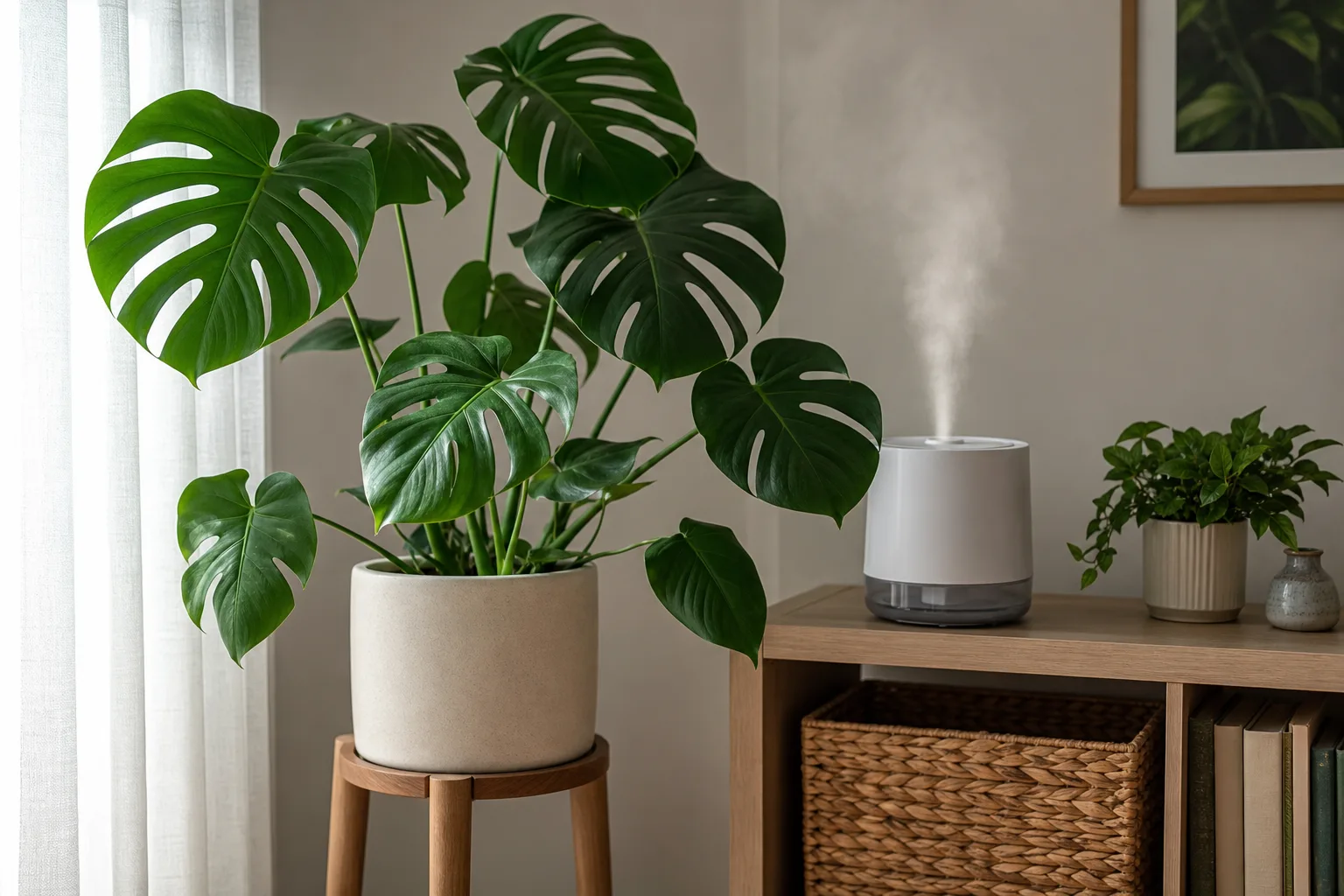
Humidity in the 40–60% range is adequate for established plants, but new leaves unfurl more cleanly when humidity is 50%+. A pebble tray (water below stone tops), grouping plants, or a small humidifier beside the pot beats daily misting, which dries quickly and can spread foliar pathogens. High-humidity cabinets help small newly purchased plants acclimate; most mature Thai Constellations outgrow cabinets once fenestrations develop and airflow becomes more important than greenhouse-level humidity.
If you run a humidifier, pair it with good air movement—stagnant wet air invites fungal spots on damaged variegated tissue.
Fertilizer Through the Slow-Growth Season
Feed monthly during active growth—typically spring through early fall—with a balanced liquid houseplant fertilizer diluted to half the label rate. Thai Constellation does not need heavy feeding; variegation already limits photosynthetic output, and excess nitrogen in dim light can push large soft green leaves with weak speckling.
Stop or cut back fertilizer when growth slows in late fall and winter unless you supplement with strong grow lights that keep the plant pushing new leaves. Never fertilize dry, stressed soil; water first on your normal schedule, then feed a day later if the plant looks actively growing.
Salt buildup shows as crisp leaf tips even when watering is correct—flush the pot with plain water twice a year if you see white crust on the soil surface or pot rim.
Climbing Support and Fenestrations
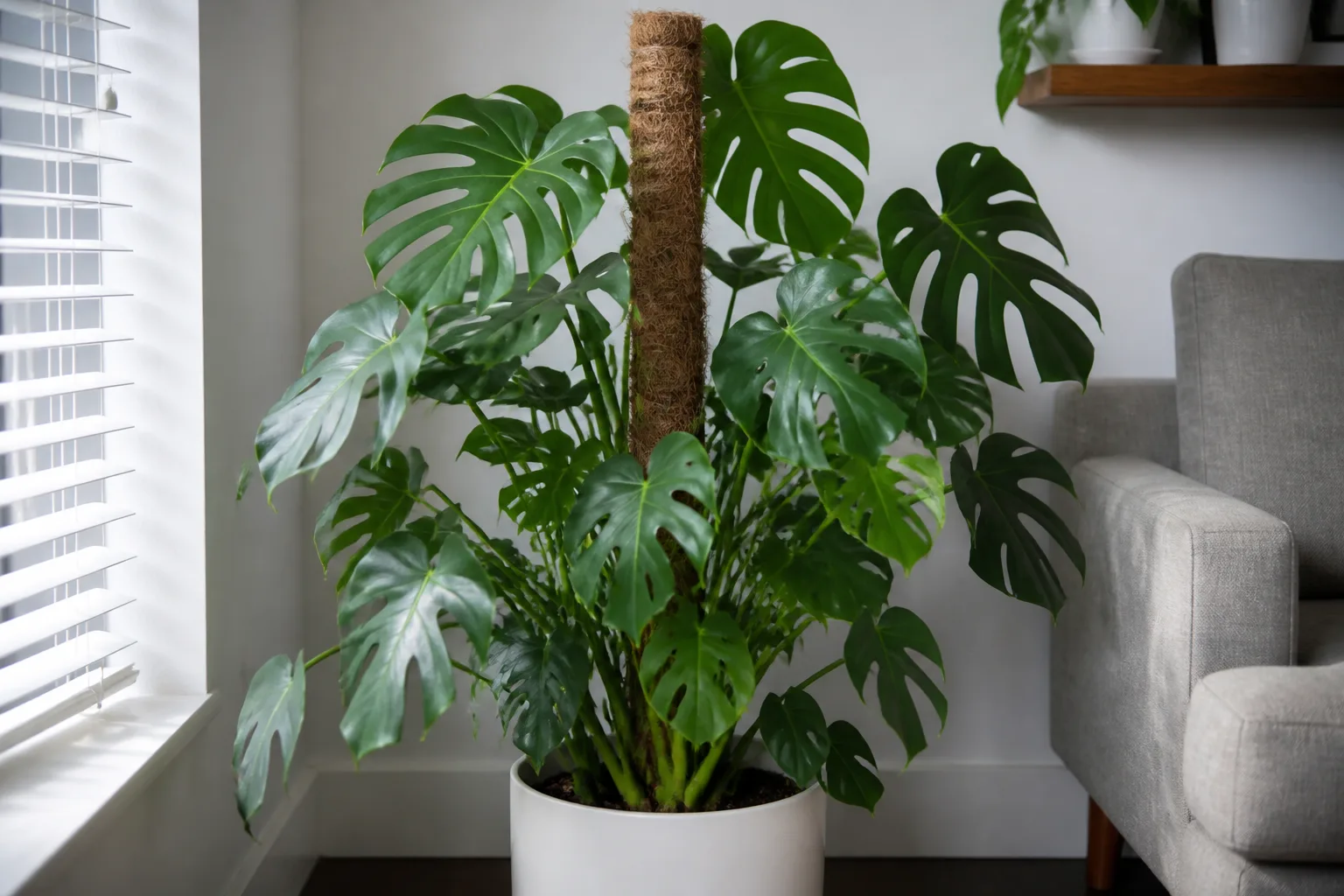
Without support, deliciosa sprawls and produces smaller leaves. With a moss pole, trellis, or sturdy stake, the vine climbs like it would on a tree trunk and allocates energy to larger, fenestrated foliage (Wisconsin Horticulture Extension). Thai Constellation follows the same rule: fenestrations appear as the plant matures on vertical growth, not on a tiny tabletop sprawl.
Secure the stem loosely with soft ties; aim aerial roots toward moist moss if you want them to attach. For pole height, trellis types, and training angles, the Monstera aerial roots guide and how to get Monstera leaves to split cover support decisions in more detail than this page repeats.
Propagating Thai Constellation Monstera
Propagation is straightforward node botany and slow time. You need a stem cutting with at least one node—the swollen joint where roots and leaves emerge—not a leaf alone or an aerial root severed by itself. Use clean, sharp shears; cut ¼ inch below a node with one to two leaves attached.
Water method: Submerge the node in fresh water, keep leaves above the surface, refresh water weekly, and wait three to six weeks for roots 1–2 inches long. Thai Constellation roots more slowly than green deliciosa—patience is normal.
Soil method: Plant the cutting in the same chunky mix, keep humidity high, and maintain even moisture (not sopping) until tug resistance tells you roots formed.
Transfer water-rooted cuttings to mix and keep evenly moist for two weeks while roots adapt from water to soil—then transition to the dry-depth watering rhythm above.
When Cuttings Usually Keep Variegation
Because Thai Constellation variegation is tissue-culture stable, cuttings from a speckled mother plant typically produce speckled offspring. That is a major advantage over albo, where each cutting is a variegation lottery. Still, a stressed cutting pushed in too-low light may grow greener leaves until brightness improves—it is not true genetic reversion so much as the plant maximizing photosynthesis.
For step-by-step photos and air-layering options, use the Monstera deliciosa propagation guide.
Repotting and Choosing the Right Container
Monsteras tolerate slight root binding; repot only when roots circle heavily, emerge from drainage holes, or growth stalls despite good light. For Thai Constellation, every two to three years is typical—often less if the plant is slow.
Size up only 1–2 inches in pot diameter. Jumping from a 6-inch nursery pot to a 12-inch bowl floods unused soil with moisture and invites rot. If you buy a plant potted too large for its root ball, repot down into an appropriately sized container with fresh chunky mix even if that feels counterintuitive.
Choose porous pots with drainage holes—terra-cotta or ceramic—and a heavy base so a top-heavy vine does not tip as leaves enlarge. Self-watering pots are risky unless you understand wicking dynamics; passive bottom water keeps mix wet longer than top-down soaking.
Repot in spring when possible; water lightly after repotting and keep light bright but not harsh while roots recover. Details on timing and root trimming are in the Monstera deliciosa repotting guide.
Toxicity for Pets and People
Thai Constellation carries the same calcium oxalate crystals as green deliciosa. ASPCA lists Swiss cheese plant as toxic to cats and dogs, causing oral irritation, pain and swelling of mouth, tongue and lips, excessive drooling, vomiting, and difficulty swallowing if chewed (ASPCA). University of California toxic plant references also note oxalate concerns for humans if plant parts are ingested.
Keep vines off pet routes and toddler grab zones. Sap can irritate sensitive skin—wash hands after pruning. If a pet eats foliage, contact your veterinarian or ASPCA Animal Poison Control at (888) 426-4435 with plant identification ready.
Common Problems and How to Fix Them
Most failures cluster around light, water, or post-shipping stress on white tissue—not mysterious “variegated plant disease.”
Brown or Crispy Variegated Tissue
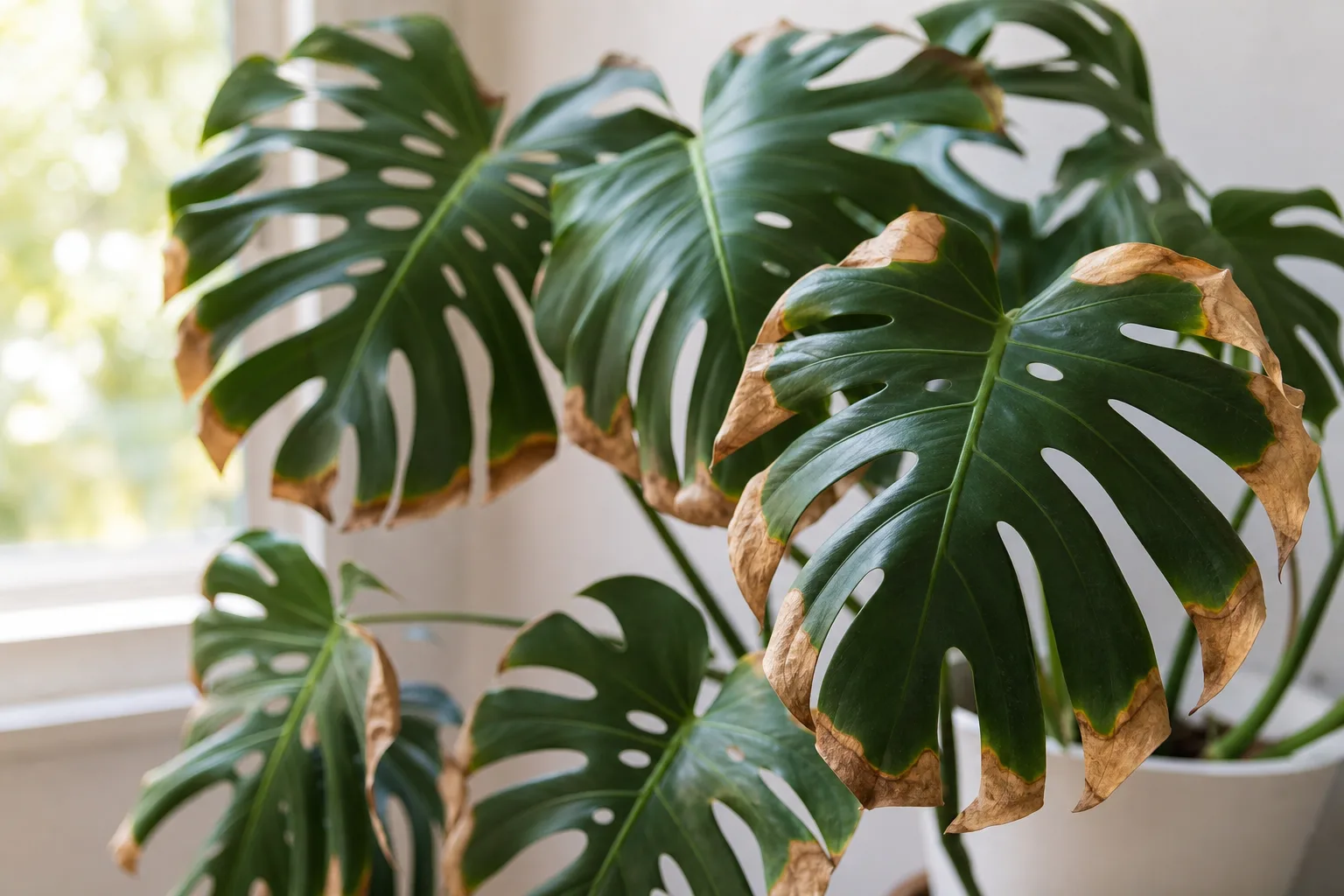
Crispy cream patches with tan edges while soil is appropriately dry → usually too much direct sun or dry air on white sectors. Filter the window, move back, or add humidity.
Crispy edges on green areas with dry soil → underwatering or root constriction; check dry depth and consider repotting if roots are circling.
Soft brown spreading from the stem base with wet mix → root rot; stop watering, inspect roots, repot into fresh mix, remove mushy roots. Severe cases may require salvaging a firm node cutting.
Brown speckles on leaf undersides → inspect for thrips; variegation camouflages them. Isolate, rinse foliage, and treat with insecticidal soap on a weekly cycle until new growth is clean.
Transport stress often hits the most variegated leaves first when you bring a plant home. Extra humidity and stable light for two weeks prevents panic pruning.
Reverting to Solid Green Leaves
True genetic reversion is uncommon on Thai Constellation. More often, new leaves emerge mostly green because light is too low for the plant to sustain heavy speckling. Increase brightness gradually, remove a few older solid-green leaves only if they shade younger growth, and wait for two to three new leaves before judging.
If a seller marketed Thai Constellation seeds, walk away—this cultivar is not sold as true seed-grown stock; seedlings will not replicate constellation variegation.
Buying Checklist and Price Reality
Prices have dropped from peak collector highs as tissue-culture production scaled, but Thai Constellation still costs more than plain deliciosa because propagation is slower and demand stays high. You will see them at specialty shops, online retailers, and increasingly at big-box garden centers—compare leaf count, stem thickness, and root health, not pot size alone.
Before you pay:
- Confirm at least one node on any cutting; no node means no plant.
- Reject fully white cuttings or leaves—they lack chlorophyll to survive long term.
- Avoid “Thai Constellation seeds”; they are a scam.
- Inspect for crispy variegation, mushy stems, and pests hidden in speckling.
- Ask whether the plant was recently imported or repotted; either event adds acclimation time.
A healthy juvenile with two to four speckled leaves and firm green stem tissue is a better long-term buy than a huge leaf on a weak rooted cutting.
Conclusion
Monstera deliciosa ‘Thai Constellation’ rewards growers who respect what variegation costs: extra light, careful watering, chunky soil, and climbing support for the fenestrated leaves that make the cultivar famous. It is easier to live with than Monstera albo because speckling is stable, but it is not a low-light novelty plant—you are managing photosynthesis on leaves that are literally missing green machinery.
Start with brightness you can sustain year-round, water only when the deep mix is dry, and fix light before fertilizer when new leaves lose their stars. Link the basics to the Monstera deliciosa care cluster when you need page-deep guidance on watering, soil, propagation, or root rot, and treat transport-stressed cream leaves with humidity and patience instead of panic. Get those levers right, and Thai Constellation becomes one of the most dramatic vines you can grow indoors without chasing unstable chimeric cuttings.