Monstera Thai Constellation Care Guide: Light, Water & Albo
Monstera deliciosa 'Thai Constellation'
Grow Monstera Thai Constellation indoors with stable cream variegation, bright indirect light, dry-down watering, moss pole support, and pet safety per ASPCA.
Monstera Thai Constellation Care Guide: Light, Water & Albo Comparison
Start with wateringThe most common care mistake for Monstera Thai ConstellationWatering guide →Monstera Thai Constellation care essentials
Light
Water
Every 7–10 days - allow top 3–5 cm to dry. Water thoroughly. Reduce to every 10–14 days in winter. Avoid chronic overwatering on variegated tissue.
Soil
Standard potting mix + 20–25 % perlite + 10–15 % orchid bark. Well-draining chunky aroid mix. pH 5.5–7.0.
Humidity
Temperature
Fertilizer
Use fertilizer as support, not compensation. Variegated Monsteras do not need double fertilizer to make up for cream tissue; excess salts are more likely to mark tender margins than to speed growth.
About Monstera Thai Constellation
Monstera Thai Constellation is native to Horticultural cultivar; species native Mexico to Central America, typically reaches Up to 2–2.5 m indoors on a moss pole; leaves 30–60 cm+ when mature indoors, with moderate (slower than solid-green deliciosa in identical light) growth. Monstera Thai Constellation has a upright growth habit and part of the Araceae family. It is also known as Thai Constellation Monstera, Constellation Monstera, Monstera deliciosa Thai Constellation, and Variegated Swiss Cheese Plant.
| Detail | Information |
|---|---|
| Also known as | Thai Constellation Monstera, Constellation Monstera, Monstera deliciosa Thai Constellation, Variegated Swiss Cheese Plant |
| Native region | Horticultural cultivar; species native Mexico to Central America |
| Mature size | Up to 2–2.5 m indoors on a moss pole; leaves 30–60 cm+ when mature |
| Growth rate | Moderate (slower than solid-green deliciosa in identical light) |
| Growth habit | Upright |
| Scientific name | Monstera deliciosa 'Thai Constellation' |
| Family | Araceae |
Monstera Thai Constellation Care Guide: Light, Water & Albo Comparison
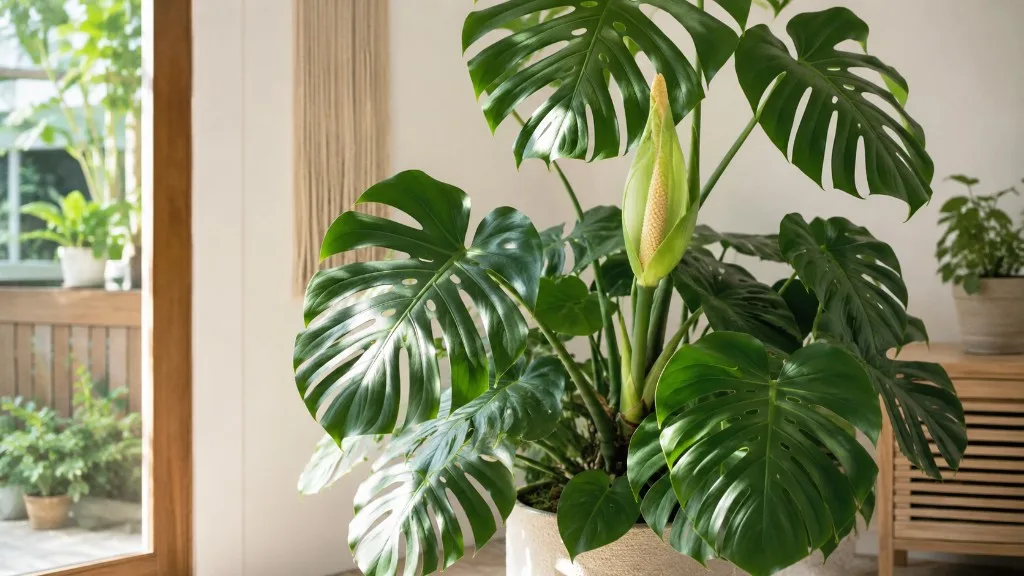
Monstera deliciosa ‘Thai Constellation’ is a variegated cultivar of the Swiss cheese plant, not a separate species. It gives you the same climbing Monstera deliciosa framework: large fenestrated leaves with age, aerial roots, a need for bright indoor light, and irritating calcium oxalate sap. What changes is the margin for error. Cream and pale yellow tissue has less chlorophyll than green tissue, so the plant grows more slowly, needs brighter indirect light, and shows stress first on the variegated areas.
The useful way to think about Thai Constellation care is this: it is easier than many Monstera Albo plants because the variegation is comparatively stable, but it is less forgiving than a solid-green Monstera deliciosa when light, water, and pot size are wrong. The RHS cultivar profile describes it as slightly slower growing than the species, with creamy white splashed leaves and bright indirect light needs. Give it the same strong structure as green deliciosa, then adjust the care upward for light and downward for overwatering risk.
Quick Care Card for Monstera Thai Constellation
| Care factor | Practical target |
|---|---|
| Botanical identity | Monstera deliciosa ‘Thai Constellation’, family Araceae |
| Best light | Bright indirect light; gentle morning sun only after acclimation |
| Watering trigger | Water when the top 3-5 cm, or top quarter in large pots, has dried |
| Soil | Chunky aroid mix with drainage: potting mix, perlite or pumice, and bark |
| Pot | Drainage holes; upsize one pot size only when roots justify it |
| Support | Moss or coir pole before the vine becomes heavy and sprawling |
| Humidity | Average home humidity is workable; 50%+ is better for clean edges |
| Temperature | Warm indoor range; protect from cold drafts |
| Pet safety | Toxic to cats and dogs if chewed |
| Best first move | Quarantine, inspect roots and pests, then adjust light before changing water or fertilizer |
If you only change one thing today, change placement. Thai Constellation usually declines because it is placed like a low-light decor object and watered like an actively growing tropical. Brighter indirect light makes the watering rhythm safer; extra water does not compensate for dim light.
What Monstera Thai Constellation Actually Is
Thai Constellation is a named cultivar of Monstera deliciosa, a climbing aroid. NC State Extension lists Monstera deliciosa as a climbing woody vine in the Araceae family and includes ‘Thai Constellation’ among variegated cultivars with marbled, speckled creamy white and green variegation. The species baseline matters because Thai Constellation is still a hemiepiphytic climber, not a compact tabletop plant forever.
Peer-reviewed micropropagation research identifies Monstera deliciosa ‘Thai Constellation’ as a variegated variety valued for ornamental foliage and describes it as relatively genetically stable and slow growing, which is why tissue-culture production has been studied for this cultivar (Horticulturae/MDPI). That source is useful because “stable variegation” is often repeated in plant shops without any explanation. Stability does not mean every leaf looks identical; it means the pattern is not managed like a chimeric Albo stem where an all-green section can dominate future growth.
Young Thai Constellation leaves may be smaller, less split, and less dramatic than mature sale photos. That is normal. Fenestrations come from age, light, and a climbing habit, not from variegation alone.
Thai Constellation vs Albo vs Green Monstera
| Trait | Thai Constellation | Monstera Albo | Green Monstera deliciosa |
|---|---|---|---|
| Variegation | Cream/yellow speckles and marbling | White sectors or marbling, often chimeric | None |
| Main care risk | Dim light plus wet roots | Reversion or all-white weak growth | Oversizing, low light, overwatering |
| Growth pace | Slower than species | Variable; white-heavy leaves can be weak | Faster under the same conditions |
| Propagation worry | Keep nodes healthy; pattern usually carries | Select variegated nodes carefully | Node health matters most |
| Best buyer mindset | Stable pattern, careful acclimation | Inspect stem pattern and balance | Buy for vigor and structure |
The comparison changes your decisions. Thai Constellation does not need panic pruning every time a greener leaf appears, but it does need enough light to make the cream sectors worth carrying. The RHS guide to plant light explains that white areas of variegated leaves lack chlorophyll, so variegated plants tend to grow more slowly and need bright placement to capture enough light. That is the reason Thai Constellation advice should not be copied straight from a green deliciosa guide.
Before You Buy: Roots, Variegation, and Quarantine
Inspect the whole plant, not just the prettiest leaf. A good purchase has firm new growth, balanced cream speckles across multiple leaves, no sour smell from the pot, no mushy stem base, and no wet mix sitting in a dim shop corner. Avoid plants with mostly crisp cream sectors, algae-covered soggy mix, or leaves that look impressive while the newest growth is small and weak.
Check the underside of leaves and the stem nodes for pests before bringing it near other houseplants. Premium plants are often moved through warm, crowded retail conditions, and the first two weeks are about stabilizing the plant, not proving your care routine. If the mix drains and the plant is not root-rotted, do not repot on day one. Quarantine first, learn how fast the pot dries, and make one change at a time.
The First Two Weeks After Purchase
Set the plant in bright indirect light, isolated from your collection, and leave fertilizer alone. Water only after the dry-down check passes. If the pot is wet on arrival, wait; if it stays wet for more than a week in a warm bright room, unpot gently and inspect the root zone before adding more water.
This acclimation period is where many Thai Constellations are lost. A buyer repots, moves the plant from shop shade to a hot window, waters heavily, and feeds “because it was expensive.” That stacks root disturbance, light shock, wet mix, and salts in the same week. A steadier plan is better: light first, water second, repot only when evidence says the roots need it.
Light: Bright Enough for Cream Sectors, Not Hot Glass
Thai Constellation wants bright indirect light most of the day. The RHS Thai Constellation profile recommends bright, indirect light under glass, and NC State Extension notes that variegated cultivars need more sunlight than darker green types. Indoors, a strong east window, filtered south window, filtered west window, or full-spectrum grow light setup usually works better than a dim display corner.
Use symptoms rather than a slogan. Too little light shows as smaller new leaves, longer gaps between leaves, weak fenestration, cream sectors that look dull, and soil that stays wet longer than expected. Too much direct sun shows as sharply browned or bleached patches on the cream tissue facing the glass. Move gradually; older shade-grown leaves scorch faster than new leaves formed in the brighter spot.
For placement details, use the Monstera Thai Constellation light guide. The overview rule is simple: add light before you add water.
Watering: Let Dry-Down Lead the Schedule
Water Thai Constellation when the top 3-5 cm of mix is dry, or when the top quarter of a larger pot has dried and the pot feels lighter. Penn State Extension recommends letting the top 1-2 inches of soil dry before watering Monstera, while NC State Extension advises allowing the top quarter to one-third of large containers to dry. Soak thoroughly, drain completely, and empty the cachepot or saucer.
Variegation changes the risk calculation. In bright conditions the plant uses water steadily. In dim conditions, slower growth and reduced leaf chlorophyll mean the same pot can stay wet too long. Brown cream patches with wet soil often point toward low-light root stress or chronic moisture, not thirst. The Monstera Thai Constellation watering guide covers the full dry-down routine.
Soil, Pot Size, and Root Rot Prevention
Use a chunky, draining aroid mix rather than dense water-retentive potting soil alone. A practical blend is standard potting mix amended with perlite or pumice and orchid bark so water runs through but the mix still holds some moisture around active roots. Drainage holes are mandatory.
UConn Extension notes that Monstera root and stem rot management depends on correct watering, well-draining potting media, no standing water, and incremental pot-size increases only when roots have reached the pot sides and bottom (UConn Home & Garden Education Center). That is especially relevant for Thai Constellation because a premium plant in an oversized decorative pot can look fine above the soil while roots sit in a cold wet reservoir.
If you need mix ratios or a squeeze-test walkthrough, use the Monstera Thai Constellation soil guide.
Moss Pole Setup and Mature Fenestrations
Thai Constellation matures best when trained upward. Wisconsin Horticulture Extension explains that Monstera climbs with aerial roots and can be grown on a moss-covered support; it also notes that inadequate light prevents the characteristic leaf perforations. In a home, that means a moss or coir pole plus bright light gives the plant the best chance of larger leaves and deeper splits.
Install support before the vine leans heavily out of the pot. Tie the main stem loosely below nodes, keep aerial roots oriented toward the pole, and stabilize the pole during repotting instead of jamming it through the root ball later. Variegation does not create fenestrations; age, energy, and vertical habit do.
Fertilizer, Humidity, and Temperature
Feed lightly during active growth, not as a variegation hack. The RHS cultivar profile recommends balanced liquid fertilizer monthly while the plant is growing. For typical indoor homes, half-strength monthly feeding from spring into early fall is safer than frequent strong fertilizer, especially when light is moderate.
Penn State Extension recommends humidity above 50% for Monstera and warns against cold drafts (Penn State Extension). Thai Constellation can tolerate average homes, but dry air plus salts plus underwatering often crisps cream edges. Keep temperature warm and stable, pause fertilizer in winter or after repotting, and avoid misting as a substitute for root-zone management.
For feeding decisions, use the Monstera Thai Constellation fertilizer guide.
Propagation and Variegation Retention
Propagate Thai Constellation from stem cuttings with at least one node and a healthy axillary bud. Leaves without a node may root temporarily but cannot make a new vine. The University of Minnesota Extension Monstera propagation guidance focuses on stem cuttings with nodes, and the NC State propagation handbook explains that asexual propagation makes genetically identical plants through cuttings, layering, and micropropagation.
Thai Constellation’s advantage over Albo is that you are not trying to preserve a narrow chimeric stripe through one perfect node. Still, propagation is not risk-free. Cut only healthy, settled parent plants; use sterile tools; keep the cutting warm and bright; and expect slower rooting in winter. For step-by-step media choices, use the Monstera Thai Constellation propagation guide.
Toxicity and Safe Placement
Thai Constellation has the same toxicity concern as Monstera deliciosa. The ASPCA Swiss cheese plant listing classifies it as toxic to cats and dogs because of insoluble calcium oxalates, with oral irritation, drooling, vomiting, and difficulty swallowing listed among possible signs. UF/IFAS also discusses calcium oxalate raphides in common poisonous houseplants and recommends relocating risky plants away from pets or small children when accidental ingestion is a concern (UF/IFAS).
Keep the plant out of reach of pets and children, especially because attractive pale leaf sections draw attention. Wear gloves if you are sap-sensitive when pruning or propagating. If a pet chews the plant or shows symptoms after exposure, contact a veterinarian or animal poison-control service instead of waiting to see whether the irritation passes.
Diagnosing Brown Cream Patches
Brown on Thai Constellation is not one diagnosis. Use the pattern.
| Symptom pattern | Likely cause | First action |
|---|---|---|
| Crisp tan patches only on sun-facing cream sectors | Sunburn or heat through glass | Move back or filter direct sun; do not water just because tissue is crisp |
| Brown cream areas plus wet heavy pot | Low light, overwatering, or root stress | Pause watering, increase indirect light, inspect roots if wetness persists |
| Brown leaf edges with white crust on mix | Salt buildup or overfeeding | Flush if roots are healthy; pause fertilizer |
| Limp leaves with dry pot | Underwatering | Soak thoroughly and drain; reassess interval |
| Smaller greener new leaves | Light or root limitation | Improve light gradually and check whether the pot is staying wet |
Old damaged cream tissue will not turn green again. The goal is clean new growth after you correct the cause.
Common Thai Constellation Mistakes
The biggest mistake is treating stable variegation as effortless variegation. Thai Constellation does not need the same reversion management as Albo, but it still needs enough light to carry pale tissue.
Other common mistakes are watering on a weekly calendar, repotting immediately after purchase, using a pot that is much larger than the root ball, skipping support until the plant sprawls, fertilizing a stressed plant, and assuming every brown cream mark means underwatering. Most fixes start with the same sequence: improve placement, check dry-down, inspect roots only when evidence points below the soil, then change one variable at a time.
Which Monstera Thai Constellation Guide to Read Next
Use this overview for identity, buyer decisions, acclimation, and the whole-care picture. Use a topic guide when one variable needs adjustment:
| If your question is… | Read next |
|---|---|
| Where should I place it, and is my window too harsh? | Light guide |
| When should I water this exact pot? | Watering guide |
| Is my mix too dense or staying wet too long? | Soil guide |
| Should I feed, flush, or pause fertilizer? | Fertilizer guide |
| Is it time to upsize or add a pole? | Repotting guide |
| Can I cut it without losing the pattern? | Propagation guide |
| Should I remove damaged leaves or control height? | Pruning guide |
For the species baseline without variegation trade-offs, compare with the Monstera deliciosa overview.
Conclusion
Monstera Thai Constellation is worth buying when you can give it bright indirect light, drainage, patience after purchase, and vertical support. It is not a low-light trophy plant, and it is not a fertilizer project. Stable variegation solves one Albo problem, but the cream tissue still makes light and watering decisions more exacting than green deliciosa.
Before you do anything dramatic, run the readiness checklist: the plant is quarantined, the pot has drainage, the mix dries predictably, the newest leaf is not shrinking, the stem has support, and pets cannot reach it. If one item fails, fix that single item first. Boring, measured care is what keeps Thai Constellation looking expensive for the right reason.
How to care for Monstera Thai Constellation?
When should you water Monstera Thai Constellation?
Every 7–10 days - allow top 3–5 cm to dry. Water thoroughly. Reduce to every 10–14 days in winter. Avoid chronic overwatering on variegated tissue.
- Top 3–5 cm dry test; skewer to mid-depth on large pots - Every 7–10 days - allow top 3–5 cm to dry.
- Drain excess water - Water thoroughly.
What soil works best for Monstera Thai Constellation?
Standard potting mix + 20–25 % perlite + 10–15 % orchid bark. Well-draining chunky aroid mix. pH 5.5–7.0.
- potting mix - Standard potting mix + 20–25 % perlite + 10–15 % orchid bark.
- perlite - Standard potting mix + 20–25 % perlite + 10–15 % orchid bark.
- orchid bark - Standard potting mix + 20–25 % perlite + 10–15 % orchid bark.
Grower notes for Monstera Thai Constellation
Stable variegation vs Monstera Albo
Monstera Thai Constellation is listed by major horticultural references as a variegated Monstera deliciosa cultivar with cream-speckled, constellation- like leaves. Treat its pattern as more predictable than Monstera Albo, but do not overstate origin stories: high-authority sources verify the cultivar name and appearance, not a specific laboratory or breeder history.
What makes Thai Constellation different
RHS describes Thai Constellation as slightly slower than the species, with closer leaf spacing and creamy-white variegation. That combination makes it fuller and more compact than many Albo plants, but the cream tissue still has less green surface to power growth. Give it bright indirect light, not harsh sun.
What matters most with Monstera Thai Constellation
Watch the relationship between light, dry-down, and cream-sector damage. Firm cream tissue plus steady new growth usually means the placement is working. Wet mix that stays heavy, small greener leaves, or crisp cream margins means you should correct light and watering before adding fertilizer.
Best placement in a real home
Place it about 1–2 m from an east window or behind filtered south or west glass. A tested indoor setup for this guide: 15 cm nursery pot, chunky bark- perlite mix, 45–60% room humidity, and watering only after the upper 3–5 cm dried, usually 7–10 days in warm growth and 10–14 days in winter.
Before you buy this plant
Choose a plant with firm new growth, visible cream speckling on more than one leaf, clean undersides, and a potting mix that smells earthy rather than sour. Skip plants sitting wet in dim shops, plants with mushy petioles, or cuttings sold without a clear node.
First two weeks at home
Quarantine first, photograph the newest leaf, and measure how long the pot takes to dry before repotting. Repot only if the mix is collapsed, sour, pest- ridden, or staying wet in good light. Stable cream speckling, firm new leaves, and predictable dry-down are better settling-in signs than fast growth.
Is it pet safe?
Monstera Thai Constellation is toxic to cats and dogs.
Contains insoluble calcium oxalate crystals and other irritants. Ingestion causes oral irritation, intense burning, swelling, drooling, and vomiting in pets.
Watering Monstera Thai Constellation
For Monstera Thai Constellation, top 3–5 cm dry test; skewer to mid-depth on large pots and water every 7–10 days in summer. Reduce in winter when growth slows.
| Detail | Information |
|---|---|
| How often | Every 7–10 days in summer |
| How to check | Top 3–5 cm dry test; skewer to mid-depth on large pots |
| Seasonal changes | Reduce in winter when growth slows |
Signs of overwatering
- yellowing leaves
- brown patches on cream sectors
- mushy stem base
Signs of underwatering
- limp leaves
- crispy variegated edges
Soil & potting for Monstera Thai Constellation
Use a mix of potting mix, perlite, orchid bark for Monstera Thai Constellation. Good. Target soil pH around 5.5–7.0. Repot every 1–2 years, ideally in spring.
| Detail | Information |
|---|---|
| Recommended mix | potting mix, perlite, orchid bark |
| Drainage | Good |
| Soil pH | 5.5–7.0 |
| Repotting frequency | Every 1–2 years |
| Best season to repot | Spring |
Signs it needs repotting
- roots circling pot
- mix drying in under 4 days every cycle
Humidity & temperature for Monstera Thai Constellation
Fertilizer & pruning for Monstera Thai Constellation
Use use fertilizer as support, not compensation. Variegated Monsteras do not need double fertilizer to make up for cream tissue; excess salts are more likely to mark tender margins than to speed growth. for Monstera Thai Constellation.
| Detail | Information |
|---|---|
| Fertilizer type | Use fertilizer as support, not compensation. Variegated Monsteras do not need double fertilizer to make up for cream tissue; excess salts are more likely to mark tender margins than to speed growth. |
Common problems on Monstera Thai Constellation
Yellow Leaves
MediumLikely cause: Common on this plant type; confirm with recent watering, light, and root checks.
Quick fix: Inspect the plant and correct the most likely care stressor before stacking treatments.
Full fix guide →Brown Tips
MediumLikely cause: Common on this plant type; confirm with recent watering, light, and root checks.
Quick fix: Inspect the plant and correct the most likely care stressor before stacking treatments.
Full fix guide →Root Rot
MediumLikely cause: Common on this plant type; confirm with recent watering, light, and root checks.
Quick fix: Inspect the plant and correct the most likely care stressor before stacking treatments.
Full fix guide →Overwatering
MediumLikely cause: Common on this plant type; confirm with recent watering, light, and root checks.
Quick fix: Inspect the plant and correct the most likely care stressor before stacking treatments.
Full fix guide →Underwatering
MediumLikely cause: Common on this plant type; confirm with recent watering, light, and root checks.
Quick fix: Inspect the plant and correct the most likely care stressor before stacking treatments.
Full fix guide →Spider Mites
MediumLikely cause: Common on this plant type; confirm with recent watering, light, and root checks.
Quick fix: Inspect the plant and correct the most likely care stressor before stacking treatments.
Full fix guide →Mealybugs
MediumLikely cause: Common on this plant type; confirm with recent watering, light, and root checks.
Quick fix: Inspect the plant and correct the most likely care stressor before stacking treatments.
Full fix guide →Aphids
MediumLikely cause: Common on this plant type; confirm with recent watering, light, and root checks.
Quick fix: Inspect the plant and correct the most likely care stressor before stacking treatments.
Full fix guide →Leggy Growth
MediumLikely cause: Common on this plant type; confirm with recent watering, light, and root checks.
Quick fix: Inspect the plant and correct the most likely care stressor before stacking treatments.
Full fix guide →Slow Growth
MediumLikely cause: Common on this plant type; confirm with recent watering, light, and root checks.
Quick fix: Inspect the plant and correct the most likely care stressor before stacking treatments.
Full fix guide →Wilting
MediumLikely cause: Common on this plant type; confirm with recent watering, light, and root checks.
Quick fix: Inspect the plant and correct the most likely care stressor before stacking treatments.
Full fix guide →Drooping Leaves
MediumLikely cause: Common on this plant type; confirm with recent watering, light, and root checks.
Quick fix: Inspect the plant and correct the most likely care stressor before stacking treatments.
Full fix guide →Low Humidity
MediumLikely cause: Common on this plant type; confirm with recent watering, light, and root checks.
Quick fix: Inspect the plant and correct the most likely care stressor before stacking treatments.
Full fix guide →Not Enough Light
MediumLikely cause: Common on this plant type; confirm with recent watering, light, and root checks.
Quick fix: Inspect the plant and correct the most likely care stressor before stacking treatments.
Full fix guide →Fungus Gnats
MediumLikely cause: Common on this plant type; confirm with recent watering, light, and root checks.
Quick fix: Inspect the plant and correct the most likely care stressor before stacking treatments.
Full fix guide →Mold on Soil
MediumLikely cause: Common on this plant type; confirm with recent watering, light, and root checks.
Quick fix: Inspect the plant and correct the most likely care stressor before stacking treatments.
Full fix guide →