Aphids on Monstera Thai Constellation: Safe Removal & Care
Quick answer
Aphids on Monstera Thai Constellation cluster in tight colonies along tender unfurling leaves, petiolar sheaths, and petiole wings, sucking sap and stunting emerging fenestrations. First step: isolate the plant and gently rinse vulnerable shoots under lukewarm water to dislodge pests without soaking the chunky aroid mix. Avoid heavy horticultural oils or soap sprays under bright grow lights, which scorch delicate cream-white variegated sectors.
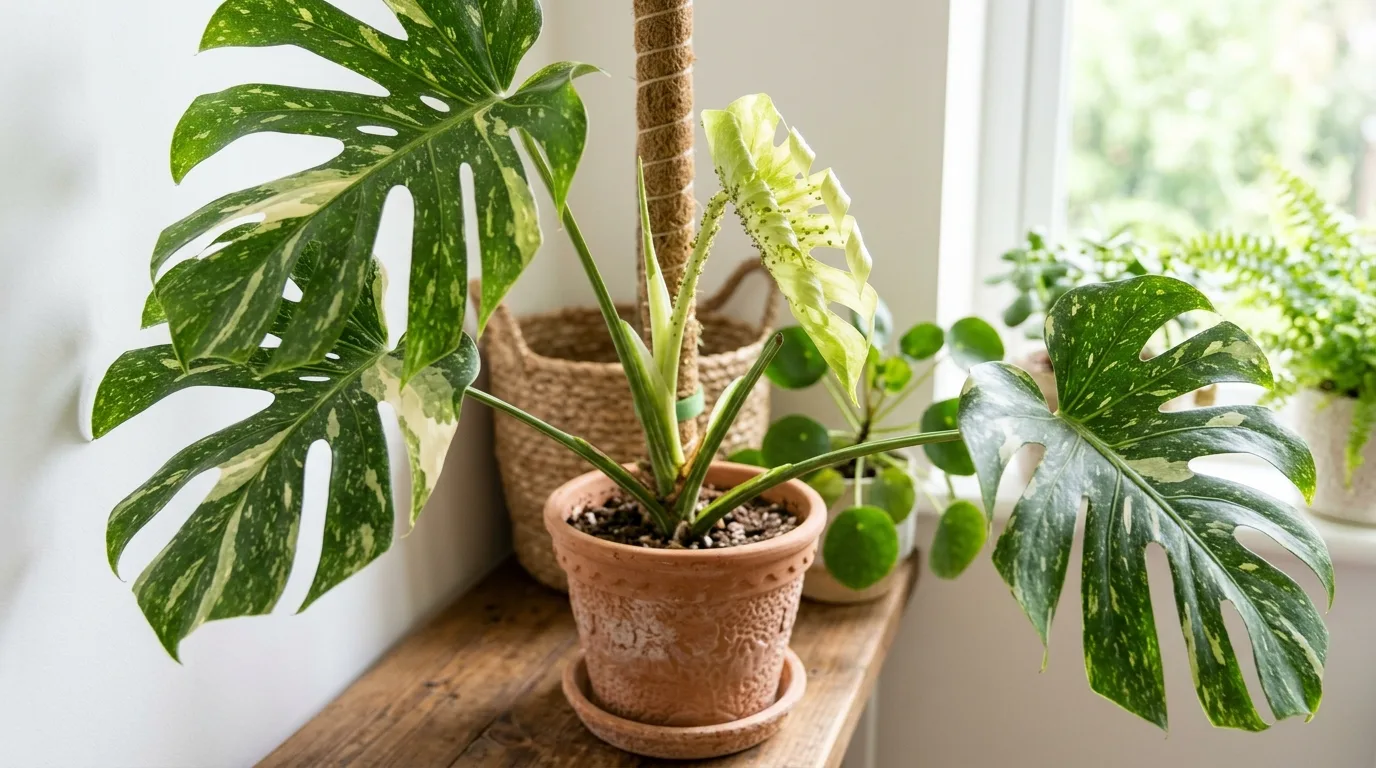
Aphids on Monstera Thai Constellation: Identification, Safe Removal & Leaf Protection
This guide covers aphids on Monstera Thai Constellation. See also the general Aphids guide, watering, and light pages for this plant.
Aphids on Monstera Thai Constellation: Identification, Safe Removal & Leaf Protection
Quick answer
Aphids on Monstera Thai Constellation are soft-bodied, sap-sucking insects that exploit the tender, nutrient-rich tissue of unfurling leaves, petiole sheaths, and expanding fenestrations. Because Monstera deliciosa ‘Thai Constellation’ is a prized, genetically stable chimeric cultivar with creamy-white sectors lacking photosynthetic chlorophyll, an aphid infestation carries consequences far beyond routine cosmetic annoyance. Piercing feeding punctures deplete vital carbohydrates, while the pests excrete sticky, sugary waste known as honeydew that coats the broad leaves and triggers opportunistic black sooty mold (Capnodium spp.). For comprehensive mechanics on how these pests reproduce, feed, and behave universally across indoor crops, see our global aphid symptom guide. On Thai Constellation, however, eradication demands a careful horticultural balance: the grower must swiftly eliminate colonizing clusters without burning fragile, unpigmented leaf sectors using overly harsh horticultural oils or chemical washes.
First step: isolate the plant immediately and dislodge colonies with a gentle, targeted rinse of lukewarm water. Wrap the container’s soil surface in plastic wrap to keep runaway water and dislodged insects from drenching the chunky aroid substrate. Position the emerging shoot under a mild sink or shower spray, focusing specifically on the crevices of the petiolar sheath where nymphs take shelter. Only after mechanical washing has reduced the bulk pest population should you evaluate whether secondary topical treatments are necessary.
What aphids look like on Monstera Thai Constellation
Scouting for aphids on a variegated Monstera differs significantly from inspecting standard green foliage. The marbled, cream-flecked coloration can camouflage pale nymphs, requiring focused inspection with good lighting and a magnifying lens.
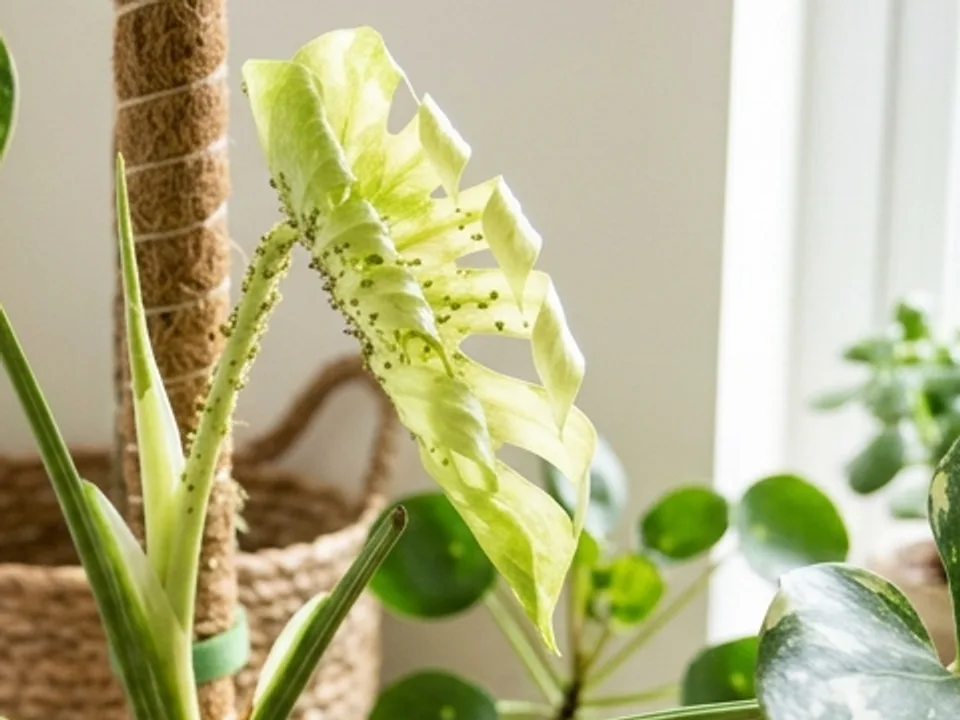
Aphid colonies and sticky honeydew on the tender expanding variegated tissue of Monstera Thai Constellation.
Key visual identifiers on variegated tissue
According to the University of California IPM Pest Notes on Aphids, aphids are small, pear-shaped insects ranging from 1/16 to 1/8 inch (1.5 to 3 mm) in length. Indoors, infestations on aroids are predominantly driven by polyphagous species such as Aphis gossypii (melon/cotton aphid) and Myzus persicae (green peach aphid). On Monstera Thai Constellation, they typically manifest through the following distinct signs:
- Cluster formation in sheltered margins: Colonies gather tightly inside the rolled curl of newly emerging leaves, along the inner margins of petiolar sheaths, and at the junction where the petiole connects to the climbing stem.
- Color variation: Indoor aphids commonly appear pale green, lime, translucent yellowish-white, or peach. Against dark green leaf sectors, green aphids blend in; on cream-white variegated sectors, pale yellow nymphs can look like harmless specks until movement or cast skins give them away.
- Cast white skins (exuviae): As aphid nymphs molt through their developmental instars, they shed paper-thin, translucent white exoskeletons. These cast skins stick to petiole crevices and adhere to honeydew-coated leaf surfaces, frequently serving as the very first diagnostic clue for growers.
- Glistening honeydew residue: Because aphids ingest vast quantities of plant sap to extract amino acids, Penn State Extension notes that aphids excrete excess water and carbohydrates as honeydew. This clear, sticky liquid drips down onto the wide horizontal surfaces of lower mature variegated blades, giving them an unnatural lacquered sheen.
- Secondary sooty mold: Airborne fungal spores settle onto sugary honeydew deposits, forming dark, powdery patches of black sooty mold. While sooty mold does not infect plant cells directly, it blocks sunlight from reaching the underlying tissue, severely compromising photosynthesis on a plant that already operates with reduced green surface area.
- Asymmetric puckering and distorted fenestrations: When aphids feed on an expanding leaf before it unrolls, localized stylet punctures disrupt cell elongation. As the leaf expands, the pierced zones fail to grow at the same pace as surrounding healthy cells, resulting in crinkled margins, aborted fenestrations, or irregular tears in the blade.
Why Monstera Thai Constellation is especially vulnerable to aphids
While aphids attack a broad spectrum of indoor houseplants, several unique morphological and physiological traits of Monstera deliciosa ‘Thai Constellation’ make an infestation particularly damaging and difficult to resolve.
1. Petiolar sheaths and climbing anatomy create pest sanctuaries
As documented by NC State Extension, Monstera deliciosa is a vigorous tropical climbing aroid with large, persistent petiolar structures. On Thai Constellation, each emerging leaf develops within the protective clasp of the preceding petiole’s winged petiolar sheath (vagina / petiolar wing, botanically distinct from true scale-like cataphylls). This deep anatomical fold traps humidity and shields colonizing insects from air currents and predatory beneficials. Aphids exploit these tight crevices, multiplying inside the sheath long before the grower notices pests on the open leaf blade. Furthermore, specimens trained up cedar planks or sphagnum moss poles provide sheltered vertical pathways where aphids travel unimpeded between successive nodes.
2. Thinner epidermal cuticles in cream-white sectors
The creamy-white constellation patterns that define this cultivar are the result of a stable somatic mutation preventing chloroplast formation in specific cell layers. As highlighted in the Royal Horticultural Society plant profile for Thai Constellation, the plant exhibits slower growth and distinct leaf spacing compared to the all-green wild species. Crucially, the chlorophyll-deficient variegated cells possess significantly thinner cuticular waxes and weaker cell walls than pigmented green cells. Aphid piercing stylets penetrate this fragile cream tissue with minimal mechanical resistance, triggering rapid localized collapse and irreversible brown necrosis in pale sectors while green tissue might show only mild chlorotic flecking.
3. Reduced photosynthetic energy and recovery reserves
Because 20% to 50% of each leaf blade on a Thai Constellation lacks chlorophyll, the plant manufactures fewer total carbohydrates per square decimeter than a standard green Monstera under identical light. When sap-sucking pests tap into the phloem vessels of new petioles, they divert a disproportionate percentage of the plant’s metabolic energy. A heavy aphid infestation that a vigorous green Monstera might tolerate for weeks can cause complete growth cessation, leaf abortion, and prolonged stagnation on a Thai Constellation.
4. Parthenogenic reproduction indoors
Indoor room temperatures create ideal conditions for rapid population expansion. Wisconsin Horticulture Extension explains that indoor aphids reproduce parthenogenetically, meaning adult females give birth to live female nymphs without mating. Each female produces dozens of offspring within a lifespan of several weeks, and nymphs mature to reproductive age in just 7 to 10 days. A single unnoticed aphid hitchhiker brought in on nursery stock or a patio plant can balloon into an overwhelming colony across the vine’s unfurling apex in under three weeks.
The unique danger of aphid treatments on cream variegation
The biggest mistake growers make when treating aphids on Monstera Thai Constellation is treating it like an indestructible outdoor shrub or an all-green houseplant. The very treatments recommended for common pests can permanently ruin expensive variegated foliage if applied improperly.
The phytotoxicity trap: horticultural and neem oils
Horticultural oils, cold-pressed neem oil, and petroleum-based dormants act as physical suffocants, coating insect spiracles to prevent respiration. However, oils also interact directly with plant surface lipids. On the delicate, unpigmented cream sectors of Thai Constellation:
- Wax dissolution: Oil applications dissolve the thin epicuticular wax layer of cream tissue, leaving cells unprotected against moisture loss and ambient air contaminants.
- Phototoxicity under bright light: Variegated Monsteras require substantially more light than green Monsteras to thrive—typically 200 to 400+ foot-candles of bright indirect light. If a grower applies oil or heavy soap and returns the plant to bright filtered sun or beneath high-output LED grow lights, the residual oil acts like an optical magnifier and heat trap. The non-chlorophyllous cream sectors rapidly scorch, turning watery and translucent before turning pitch-black and crispy within 24 to 48 hours.
- Pore clogging on hypostomatous blades: Monstera deliciosa foliage is strictly hypostomatous, bearing stomata almost exclusively on the abaxial (lower) leaf surface. Applying heavy, emulsified oil residues coats these lower epidermal pores, directly hindering gas exchange and transpiration.
Harsh soaps vs gentle formulations
Dish detergents and degreasers contain synthetic surfactants, sodium lauryl sulfate, and fragrances designed to strip grease from cookware. Applying dish soap to a Thai Constellation destroys cell membranes, stripping lipids and causing immediate contact burn across white margins. Only true potassium salts of fatty acids (commercial insecticidal soaps) should ever be considered, and even these must be rigorously diluted and tested before whole-plant application.
Protecting the chunky aroid substrate
Monstera Thai Constellation roots are exceptionally vulnerable to anaerobic stagnation. Aroid growers utilize porous, chunky mixes composed of bark, perlite, pumice, and charcoal. If you attempt to treat aphids by drenching the entire plant over the pot without a protective barrier, excessive runoff saturates the soil column, washing pesticide residues into the root zone and potentially inducing root rot. Mechanical barriers are mandatory during treatment.
How to confirm aphids vs other Monstera pests and symptoms
Before implementing a treatment strategy, verify that the pest is indeed an aphid. Overlapping symptoms such as sticky leaves, deformed shoots, and chlorosis can stem from other indoor arthropods or cultural mistakes.
| Diagnostic Feature | Aphids (Aphididae) | Mealybugs (Pseudococcidae) | Greenhouse Thrips (Thripidae) | Spider Mites (Tetranychidae) |
|---|---|---|---|---|
| Primary Location | Unfurling leaf rolls, petiolar sheaths, tender shoots | Petiole axils, leaf undersides, root collars | Both leaf surfaces, feeding along leaf veins | Leaf undersides, spanning fenestration gaps |
| Pest Appearance | Pear-shaped, 1.5–3 mm, soft bodies, prominent cornicles | Oval, covered in white powdery wax and filament fringes | Slender, cigar-shaped, 1–1.5 mm, fringed wings, dark/tan | Microscopic (0.5 mm), eight-legged, reddish-brown/tan |
| Mobility | Slow-crawling when disturbed; generally sedentary | Very slow crawling; adult females largely stationary | Fast, darting movements across leaf surface | Crawl actively across silk webbing |
| Primary Residue | Clear, copious sticky honeydew; cast white skins | Cottony white egg sacs; moderate honeydew | Black tar-like fecal droplets; silvery bleached patches | Fine, silken webbing gathering dust; no honeydew |
| Leaf Damage Pattern | Puckering, curled margins, distorted fenestration | Yellowing patches, stunted petioles, premature drop | Silvery stippling, bleached tissue, necrotic patches | Fine bronze or yellow stippling, sand-paper texture |
Ruling out non-pest lookalikes
- Normal guttation vs honeydew: Monsteras naturally release clear water droplets from hydathodes along leaf margins following deep watering in high humidity. Unlike honeydew, guttation droplets are purely watery, evaporate cleanly without stickiness, and do not invite black sooty mold. Touch the droplet: if it leaves a tacky, sugary residue on your fingertips, it is pest honeydew.
- Physical unfurling tears vs pest feeding: When indoor humidity drops below 40%, the delicate unfurling leaf of a Thai Constellation can become physically stuck inside the petiolar sheath, resulting in mechanical tears as the petiole forces it open. Inspect the edges of the tear: mechanical tears exhibit clean, brown, calloused margins with no puckering or cast skins. Aphid feeding produces irregular puckering, crimping, and visible exuviae clustered nearby.
- Light scorch vs pest chlorosis: Sunburn on cream sectors produces uniform, parchment-thin tan patches centered on leaf areas exposed directly to unshaded solar rays. Aphid damage produces localized speckling, chlorotic halos around puncture points, and curling along the outer margins.
Step-by-step removal protocol for Thai Constellation
Eradicating aphids from a valuable Monstera Thai Constellation requires a systematic, multi-tiered approach that minimizes chemical stress while ensuring zero pest survival. Follow these five sequential phases.
Phase 1: Immediate quarantine and container protection
At the first sign of an aphid, cast skin, or sticky leaf:
- Relocate the plant: Move the Thai Constellation to an isolated quarantine area at least 15 to 20 feet away from other indoor aroids, particularly other Monstera, Philodendron, or Epipremnum species.
- Seal the pot: Wrap the base of the vine and the entire top of the planter in plastic cling wrap or a clean plastic garbage bag. Secure it snugly around the main stem using a soft hook-and-loop plant tie. This barrier prevents water runoff from saturating the root ball and stops falling aphids from dropping into the bark crevices to re-climb the stem later.
Phase 2: Targeted mechanical dislodging (the primary fix)
Water pressure is your most effective and non-toxic weapon against aphids. UC IPM emphasizes that strong streams of water wash off aphids, and because these soft-bodied insects possess weak legs, dislodged individuals rarely manage to find their way back onto the host plant.
- Transport to rinse station: Place smaller potted specimens in a walk-in shower or large utility sink. For large moss-pole specimens, use a handheld pump sprayer or shower wand.
- Set water temperature: Ensure water is lukewarm (70°F to 78°F / 21°C to 25°C). Cold tap water shocks tropical aroid roots and leaves, while hot water scalds foliage.
- Target the hideouts: Direct a steady, moderate stream of water into the tight folds of the petiolar sheath, along the unfurling leaf tube, and across the undersides of newly expanded blades. Avoid using excessive pinpoint pressure that could tear thin variegated sectors.
- Manual removal with cotton swabs: For aphids wedged deeply inside unopened petiolar sheaths where water streams cannot safely penetrate, dip a pointed cotton swab into lukewarm pure water or use a dry swab. Never use isopropyl alcohol swabs inside the tight petiolar sheath: alcohol evaporates slowly in confined, humid folds and easily strips the ultra-thin epidermal wax of the enclosed embryonic leaf, causing severe chemical burn and leaf abortion.
- Wick trapped water to prevent bacterial soft rot: After rinsing, gently insert the folded corner of a dry paper towel into the basin of the petiolar sheath to wick away any standing water. Water trapped in the warm sheath cavity creates a primary infection pathway for bacterial soft rot (Pectobacterium carotovorum, formerly Erwinia).
Phase 3: Variegation-safe spot treatment
If mechanical rinsing leaves stubborn nymphs or if colonies are widespread, proceed with an ultra-mild, plant-safe topical application.
- Select the appropriate agent: Utilize a pre-mixed or correctly diluted commercial insecticidal soap (potassium salts of fatty acids) at half the label’s standard concentration (typically 1% rather than 2%). Alternatively, use a dilute solution of cold-pressed neem oil emulsified thoroughly with castile soap at no more than 0.5% concentration.
- Perform a patch test: Apply a single drop of the solution to an inconspicuous lower green sector and an adjacent small cream sector. Wait 24 to 48 hours under normal growing conditions to confirm no localized tissue collapse or oil burn occurs.
- Timing is critical: Never apply topical treatments in the morning or during peak daylight. Move the plant away from windows or switch off grow lights. Apply treatment exclusively in the evening or in a dimly lit room, allowing the liquid to remain wet on pest bodies for maximum contact kill without phototoxic magnification.
- Direct contact application: Spray only the affected shoots, leaf undersides, and sheath margins where active pests reside. Coating healthy, hardened mature leaves provides zero preventative benefit and only increases unnecessary chemical load on the plant.
- Systemic insecticide evaluation (Imidacloprid): For chronic infestations where foliage cannot tolerate liquid soap contact, systemic imidacloprid granules applied to the chunky potting mix offer root-absorbed control that spares variegated foliage from topical burns. However, note this critical ecological caution: imidacloprid is ineffective against mites and has been documented to trigger secondary flare-ups of two-spotted spider mites (Tetranychus urticae) by stimulating mite reproduction or suppressing beneficial predators. If utilizing imidacloprid, maintain strict mite scouting.
Phase 4: Residue rinse-off protocol
To guarantee that cream-white sectors do not suffer delayed phototoxic burning once returned to standard light:
- Allow contact kill time: Let the insecticidal soap or oil solution sit undisturbed on the foliage for 2 to 3 hours in the dark. This duration is sufficient to dissolve insect cuticles and suffocate active pests.
- Rinse with distilled or lukewarm water: Using a spray bottle filled with clean, lukewarm water, thoroughly mist and wipe down all treated variegated sectors with a microfiber cloth to remove residual soaps, oils, and surfactant films.
- Allow foliage to dry in darkness: Provide gentle, indirect room ventilation to ensure leaf axils and petiole folds dry completely before turning grow lights back on or returning the plant to bright windowsill exposure.
Phase 5: Cleaning honeydew and sooty mold deposits
Leaving sticky honeydew on broad mature leaves invites lingering sooty mold and attracts house ants (Formicidae) that actively protect aphids from natural mortality.
- Prepare a wipe solution: Mix 1 quart of lukewarm distilled water with two drops of mild baby shampoo or castile soap.
- Support the blade: Place your palm flat beneath the leaf blade to support its weight, preventing accidental petiole snapping.
- Gentle wiping of mature leaves only: Moisten a clean microfiber cloth with the solution and wipe downward from the petiole toward the leaf tip in smooth, gentle strokes. Never wipe or rub an unfurling tender leaf roll, as mechanical friction ruptures expanding chimeric cell layers; rinse emerging shoots with water spray only. Honeydew dissolves readily in water.
- Sooty mold removal: Do not scrub stubborn black sooty mold aggressively on cream patches. Apply a damp cloth, hold it over the spot for 30 seconds to rehydrate the fungal crust, and wipe it away cleanly.
Recovery expectations: what heals and what stays damaged
Setting realistic expectations prevents unnecessary interventions and panic following an infestation.
What cannot recover
- Damaged fenestrations and holes: Cellular damage inflicted on an unfurling leaf is permanent. Stylet puncture scars, asymmetrical fenestration splits, and crinkled leaf margins will remain for the entire lifespan of that specific leaf. No fertilizer, spray, or humidity level can re-stitch wounded plant tissue.
- Necrotic brown cream patches: If cream-white variegated sectors suffered cell death from aphid feeding or oil scorch, the brown, desiccated tissue will remain dead. Do not pick at these dry areas, as tearing them exposes healthy adjacent cells to secondary bacterial pathogens.
What will recover
- Subsequent leaf flushes: The terminal apical meristem remains protected within the stem. Once aphids are eradicated, the very next leaf that develops will emerge completely normal, expanding into a symmetrical, pristine blade with healthy fenestrations.
- Overall vine vigor: Stopping sap depletion halts the downward spiral of energy loss. Within two to three weeks of clean scouting, the vine will resume active root extension and internodal elongation.
- Clean foliage sheen: Wiping away honeydew and sooty mold restores full light transmittance to chlorophyll-bearing green cells, allowing the plant to resume normal photosynthetic efficiency.
Should you prune damaged variegated leaves?
Unless a leaf is more than 70% dead, do not cut it off immediately. Even a distorted, scarred leaf with torn fenestrations contains viable green tissue that actively synthesizes sugars necessary to fuel the next leaf flush. Removing damaged foliage prematurely robs a slow-growing Thai Constellation of vital energy. Wait until the plant has produced at least one or two pristine new leaves before considering aesthetic pruning. When you do prune, follow our dedicated Monstera Thai Constellation pruning guide to sterilize tools and preserve growth nodes correctly.
Recovery timeline and monitoring checklist
Eradicating aphids is a multi-week campaign governed by the pest’s reproductive cycle. Track your plant’s progress using this systematic timeline:
| Timeline | Grower Actions | Positive Milestone Signs | Warning Signs Requiring Action |
|---|---|---|---|
| Day 1 | Isolate plant, wrap root ball, perform thorough lukewarm water shower, swab sheaths. | Bulk aphid colonies dislodged; honeydew rinsed clean from foliage. | Soil mix becomes waterlogged; water pools inside sheath. |
| Days 3–4 | Inspect unfurling leaf roll and petiolar sheath with a hand lens; spot-treat stragglers with cotton swab. | No large adult clusters; zero new honeydew deposits on lower leaves. | Newly hatched translucent nymphs spotted crawling in axils. |
| Day 7 | Conduct second gentle lukewarm water rinse to eliminate emerging first-generation nymphs. | Foliage remains crisp; no leaf droop or yellowing margins. | Sticky honeydew reappears on mature leaves; leaf tip aborts. |
| Day 14 | Complete comprehensive scouting check across all nodes, petiole wings, and moss pole ties. | Zero active aphids or fresh cast skins detected for 7 consecutive days. | Nymphs colonizing the next emerging petiole sheath. |
| Day 21 | Final quarantine inspection. If completely clear, carefully reintroduce plant to display collection. | New leaf begins actively pushing from sheath with clean, unblemished edges. | Secondary pests (spider mites, fungus gnats) capitalizing on stress. |
| Week 4–6 | Monitor expansion of the new leaf blade and resume standard care cadence. | New variegated leaf unfurls symmetrical and fenestrated; root growth resumes. | Persistent stunted growth; check root health and light levels. |
Mistakes to avoid when treating Thai Constellation
Avoid these five critical pitfalls that frequently turn a manageable aphid issue into a catastrophic plant loss:
- Spraying full-strength oils in bright light: Applying neem oil or horticultural oil at high concentrations and placing the plant beneath grow lights or near sunny windows causes severe phototoxic scorch, blackening cream variegation within hours.
- Peeling open the unfurling sheath manually: Trying to force open a rolled leaf to access hiding aphids almost always snaps the fragile leaf tip or tears fenestrations along the central vein. Use water streams and cotton swabs; let the leaf unroll naturally.
- Soaking the potting medium repeatedly: Bringing the plant to the shower multiple times a week without sealing the container saturates the chunky aroid bark mix. Monstera Thai Constellation roots rapidly suffocate when deprived of oxygen, transitioning an insect problem into lethal root rot. Always cross-check soil dry-down using our Monstera Thai Constellation watering guide.
- Applying high-nitrogen fertilizer during an outbreak: Growers often believe fertilizer helps a struggling plant recover. In reality, heavy nitrogen fertilizers stimulate soft, lush, thin-walled vegetative growth loaded with free amino acids—creating the exact buffet that accelerates aphid reproduction. Suspend feeding until active growth resumes cleanly.
- Stacking multiple chemical treatments simultaneously: Combining insecticidal soap, systemic granules, neem sprays, and alcohol dips within a 48-hour window overwhelms the plant’s cuticular defense mechanisms, triggering massive shock and premature leaf drop. Make one intervention, assess the response, and proceed conservatively.
Monstera Thai Constellation care cross-check and long-term prevention
Keeping aphids away from your Monstera Thai Constellation permanently relies on cultural vigilance and establishing optimal growing conditions that build robust natural defenses.
1. Maintain optimal light for sturdy leaf cuticles
Plants grown in dim, substandard lighting produce thin, weak cell walls that pests easily penetrate. Provide your Thai Constellation with 200 to 400+ foot-candles (roughly 2,000 to 4,500 lux) of bright indirect light for 10 to 12 hours daily. Robust lighting thickens the epicuticular wax layer on green tissue, making it significantly harder for aphids to feed. Use our interactive Light Requirement Calculator to calibrate ideal foot-candle targets for your specific room orientation and distance from glass. Learn more about placement nuances in our comprehensive Monstera Thai Constellation light guide.
2. Follow a strict dry-down watering cadence
Never water on a rigid calendar schedule. Always allow the top 2 to 3 inches (5 to 8 cm) of chunky aroid mix to dry out thoroughly before soaking the pot. In winter or lower light, let the upper third of the container dry. A healthy, oxygenated root system maintains internal turgor pressure and delivers essential micronutrients like calcium and silica that strengthen plant cell walls against insect stylets.
3. Practice rigorous quarantine protocols
Almost every indoor aphid infestation originates on a new purchase, a nursery cutting, or a houseplant brought inside from a summer patio. Establish a mandatory 14- to 28-day quarantine protocol for all incoming plants. Keep them in a separate room, inspect leaf axils with a hand lens weekly, and rinse foliage thoroughly before integrating new specimens alongside your prized Thai Constellation.
4. Optimize ambient airflow and foliage hygiene
Stagnant, warm indoor air allows winged aphid alates to navigate easily between plants and fosters fungal spore colonization. Position an oscillating fan on low speed in the room to maintain gentle air movement. Once every two weeks, gently wipe mature leaves with a damp microfiber cloth to remove dust and early pest scouts before colonies establish.
When to use this page vs other Monstera Thai Constellation guides
Related Monstera Thai Constellation guides
Deepen your care routine and protect your variegated foliage with our connected cultivar resources:
- Monstera Thai Constellation Overview: Baseline botanical cultivar data, mature growth habit, moss pole mounting, and comprehensive pet toxicity profiles.
- Monstera Thai Constellation Watering Guide: Prevent root rot risks by mastering seasonal dry-down intervals for chunky aroid mix.
- Monstera Thai Constellation Light Guide: Maintain high foot-candle levels (200–400+ fc) to build thick leaf cuticles and prevent scorch.
- Monstera Thai Constellation Pruning Guide: Safely remove scarred leaves and manage vine nodes without sacrificing vigor.
- Monstera Thai Constellation Problems Hub: Complete diagnostic directory for pests, edema, fungal spots, and leaf yellowing.
Related tool
Calculate precise light exposure to help your plant build thick, pest-resistant foliage using our Light Requirement Calculator.