Monstera Thai Constellation Light Needs
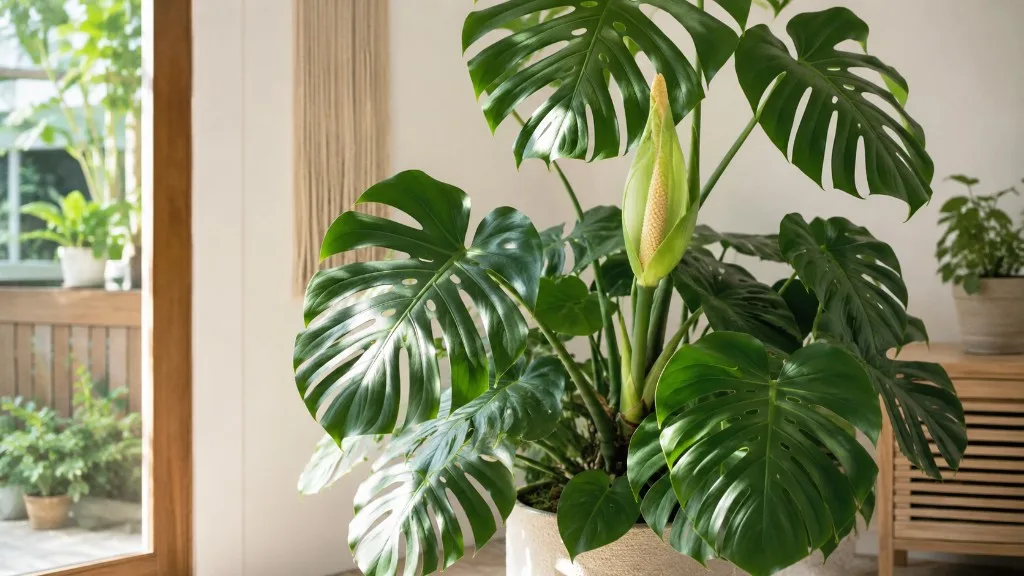
Monstera Thai Constellation Light Needs
Monstera Thai Constellation Light Needs
Monstera Thai Constellation needs brighter placement than a solid-green Monstera deliciosa in the same room, but it does not want harsh all-day sun on the cream parts of its leaves. The useful target is bright indirect light at the leaf surface, with enough intensity to support new splashed leaves, larger blades, and mature fenestrations without heating the pale tissue. NC State Extension lists Monstera deliciosa as a climbing Araceae houseplant that prefers moderate brightness but not direct sunlight, and it adds the key variegated-plant rule: variegated cultivars need more sunlight than darker green cultivars (NC State Extension).
That means a Thai Constellation belongs close to a bright window or under a real grow light, not in the dim corner where a green Monstera might survive. Kew’s Plants of the World Online places the species native range from Mexico to Panama, while indoor Thai Constellation culture asks you to recreate the bright, filtered side of that climbing aroid habit rather than direct tropical exposure on glass (Kew POWO). The goal is not maximum light at any cost. The goal is a steady, measured band where new leaves prove the plant can use the light.
Quick Answer: The Best Light Range
Place Monstera Thai Constellation where the newest leaves receive bright indirect light for most of the day. As a LeafyPixels practical target, aim for roughly 300 to 500+ foot-candles at the upper leaf surface during the brightest useful part of the day. This is not a species-specific number published by an extension service; it is a home-growing target derived from extension guidance that Monstera wants bright light without harsh direct sun, plus the source-backed note that variegated cultivars need more light than darker green forms.
The safest default is an east-facing window, about 1 to 3 feet from unobstructed glass, where the plant gets gentle morning sun and bright ambient light afterward. Filtered south or west exposure can also work if a sheer curtain, distance, or nearby wall reflection prevents hot beams from sitting on cream sectors. The RHS cultivar profile for Monstera deliciosa ‘Thai Constellation’ recommends growing it under glass in bright, indirect light with moderate to high humidity (Royal Horticultural Society).
Treat low light as a maintenance compromise, not a display strategy. Wisconsin Horticulture Extension says Monstera can be grown under fluorescent light, but it will not develop leaf perforations when light is inadequate (Wisconsin Horticulture Extension). On Thai Constellation, inadequate light also makes cream splashes look duller, slows dry-down, and raises the odds that brown variegated patches are actually root stress from wet soil.
How We Measure Bright Indirect Light
For this guide, “bright indirect” means light measured at the leaf surface, not the center of the room and not the windowsill. Use a handheld light meter or a calibrated phone light-meter app, hold the sensor flat at the height of the newest leaves, and take readings in the plant’s actual position. Measure on a clear day around late morning for east windows, early afternoon for south windows, and late afternoon for west windows, then repeat once in a dimmer season if your climate has strong winter-summer swings.
Record three numbers: the lowest useful reading, the typical bright reading, and whether direct sun touches the leaf long enough to heat it. A Thai Constellation that reads 350 foot-candles at 10 a.m. but drops under 75 foot-candles for the rest of the day may still underperform. A plant that reads 600 foot-candles in filtered light but has cool leaves is usually safer than a plant with lower meter numbers plus a hot direct beam concentrated through glass.
If you use lux instead of foot-candles, divide lux by about 10.8 for a rough conversion. A reading near 3,200 lux is about 300 foot-candles; 5,400 lux is about 500 foot-candles. Do not chase decimal precision. The value of measuring is that it turns “looks bright to me” into a repeatable placement check after you move furniture, add a sheer curtain, rotate the pot, or install a grow light.
Foot-Candle Targets Are Practical Home Targets
The 300 to 500+ foot-candle range is best understood as a practical display target for indoor Thai Constellation, not a guarantee that every plant in every home will respond the same way. Household glass tint, tree shade, latitude, season, wall color, and distance from the window can move the reading dramatically. That is why the target belongs beside plant response: new leaves should be firm, progressively larger on a supported vine, and marked with stable cream splashes rather than stretched, thin, or scorched.
Use these bands as a starting map:
| Reading at leaf surface | What it usually means for Thai Constellation |
|---|---|
| Under 100 foot-candles | Survival zone; slow growth, wet-pot risk, weak display |
| 100 to 250 foot-candles | Maintenance zone; acceptable short term but often too dim for premium foliage |
| 300 to 500+ foot-candles | LeafyPixels display target for bright indirect placement |
| Hot direct beam | Risk zone; cream sectors can scorch before green tissue complains |
Old leaves do not become larger or greener because you measured correctly. The report card is the next one or two leaves after the move. If the plant pushes smaller leaves despite better readings, check the Monstera Thai Constellation watering guide and soil guide before assuming light is the only constraint.
Why Variegated Thai Constellation Needs Brighter Placement
Thai Constellation is a variegated cultivar of Monstera deliciosa, and its pale cream sectors contribute less photosynthetic area than green tissue. The RHS describes the cultivar as a tropical evergreen climber that is slightly slower growing than the species with leaves splashed and streaked creamy white (Royal Horticultural Society). Slower growth is not a failure; it is the trade-off that comes with a variegated show plant.
The plant still follows Monstera biology. Juvenile leaves start smaller and less cut, then mature leaves become perforated and split when age, support, and light align. Penn State Extension describes mature Monstera leaves as glossy and perforated, and recommends a spot near a sunny window with bright light but not direct sun; it also warns that Monstera gets leggy in lower light (Penn State Extension). On Thai Constellation, that leggy response often appears as stretched petioles, smaller new leaves, and a pot that stays wet too long.
Stable variegation is often misunderstood. Thai Constellation is not managed like a chimeric Albo stem where you prune for a better variegated node every time. University of Minnesota Extension explains that some variegation mutations are unstable and that non-variegated green growth can outcompete white tissue in chimeric plants (University of Minnesota Extension). Thai Constellation’s pattern is more stable in practice, but stable genetics do not make low light harmless; the plant can keep its pattern and still produce weaker, smaller, greener-looking leaves when energy is short.
Best Window Placement by Direction
Window direction is only the first filter. The plant cares about photons reaching the leaves, not the compass label on the wall. A south window behind a deep porch can be dimmer than an east window with open sky; a west window can be perfect in winter and punishing in July.
| Window | Best use for Thai Constellation | Watch-out |
|---|---|---|
| East | Best default; morning sun plus bright indirect day | Still measure if trees or buildings block the view |
| North | Maintenance only in many homes | Add a grow light if new leaves shrink or soil stays wet |
| South | Excellent in winter or with diffusion | Sheer curtain or distance needed in hot months |
| West | Useful with filtering and setback | Afternoon heat can burn cream sectors fast |
Place the canopy, not just the pot, in the good light. A floor plant can sit close to a window while the newest leaves on the pole are either above the bright band or tucked behind a curtain. Rotate the pot a quarter turn every one to two weeks if the vine leans strongly, but do not rotate immediately after a sunburn event; first move it out of the direct beam.
East, North, West, and South Windows
An east-facing window is the easiest recommendation because morning sun is bright but relatively cool. Most Thai Constellations do well 1 to 3 feet from unobstructed east glass, especially with a pale wall or shelf reflecting light back toward the shaded side. If the plant arrived from a dim shop or shipping box, start a little farther back for the first week.
A north-facing window can keep the plant alive, especially in bright climates, but it often fails the display test. If the newest leaf is smaller than the previous one, petioles stretch toward the glass, or the pot stays cool and damp for two weeks, the location is too dim for this plant’s price tag. Add a full-spectrum LED or move the plant to a brighter exposure.
South and west windows are strong tools when controlled. South glass can be excellent in winter and risky in midsummer; west glass gives useful intensity but carries late-day heat. Filter with sheer fabric, set the plant 2 to 5 feet back, or angle it beside the window rather than directly in the beam. Missouri Botanical Garden’s indoor plant problem guide describes sunburn as brown or tan tissue on the side aligned with sun, which is exactly the pattern to watch on cream sectors (Missouri Botanical Garden).
Direct Sun, Cream Burn, and Acclimation
Thai Constellation can handle some gentle direct sun when acclimated, especially morning light through east glass. The problem is sudden intensity and heat on tissue that formed in lower light. Wisconsin Horticulture Extension notes that container Monsteras moved outside for summer need gradual acclimation to higher light levels or they will sunburn (Wisconsin Horticulture Extension). Indoors, the same principle applies when you move a plant from a north corner to a south window.
Use a two-to-three-week acclimation path. In week one, move the plant into the brighter room but keep it several feet back from the final position. In week two, move halfway closer if the newest leaves stay firm and unbleached. In week three, settle into the target position if leaf surfaces remain cool and no cream sectors crisp along the sun-facing side.
Do not stack a major light upgrade with repotting, heavy fertilizer, or propagation cuts. Change one stress variable, then read new growth. Brown scorch on pale tissue does not heal, but clean new leaves after the move show the new position is working.
Low-Light Warning Signs
Low light on Thai Constellation rarely looks dramatic at first. The plant often stays upright and attractive while growth quietly stalls. The warning signs are smaller successive leaves, longer petioles, duller cream speckling, fewer splits on a mature supported vine, and a pot that remains damp much longer than it did in brighter placement.
Missouri Botanical Garden notes that plants receiving too little light often develop lighter foliage and stretch or lean toward the light (Missouri Botanical Garden). On Thai Constellation, compare the newest two leaves rather than staring at old foliage. Old leaves report the previous location; new leaves report the current one.
The first correction is not fertilizer. Move gradually toward brighter indirect light or add a grow light, then reassess water. If the pot has stayed wet for 14 days or more, pause watering and check the root zone before making the plant even brighter. Low light and wet mix together can mimic thirst, scorch, nutrient deficiency, and random “variegation problems.”
Grow-Light Setup for Thai Constellation
A grow light is useful when architecture blocks good window light: north-only apartments, deep offices, winter at high latitudes, tinted glass, or display spots more than a few feet from the window. Use a full-spectrum white LED meant for foliage plants, not a decorative bulb that makes the room look bright to human eyes while delivering weak plant-facing intensity.
Start with the fixture 12 to 18 inches above the upper leaves and run it 10 to 12 hours daily on a timer. Then measure at the leaf surface if possible. If new leaves lean hard toward the lamp, lower the fixture slightly or extend duration. If cream patches crisp only under the beam, raise the fixture or reduce direct exposure. Treat these distances as starting parameters because output varies widely among bulbs, bars, and panels.
A grow light also changes watering. Clemson Cooperative Extension states that a plant in a warm, dry, sunny location needs more frequent watering than one in a cool, low-light environment (Clemson Cooperative Extension). After adding a lamp, check the pot more often for two weeks, but keep using the dry-down rule from the watering guide instead of moving to a fixed calendar.
Thai Constellation vs Monstera Albo Light Strategy
Thai Constellation and Monstera Albo are both variegated M. deliciosa forms, so both need more light than a green deliciosa. The difference is how you manage risk. Thai Constellation is generally grown for stable cream speckling and shorter internodes; Penn State notes ‘Thai Constellation’ is fuller and more compact because of shorter internodes (Penn State Extension). Albo is managed more cautiously around all-white sectors and reversion-prone stems.
| Factor | Thai Constellation | Monstera Albo |
|---|---|---|
| Variegation look | Cream speckles and marbling | White sectors, half-moons, or marbling |
| Low-light response | Stable pattern but weaker, smaller leaves | Weak growth plus possible reversion pressure on green stems |
| Sunburn risk | Cream sectors scorch first | Pure white sectors scorch very fast |
| Placement goal | Upper bright-indirect band | Bright indirect, often with even stricter beam control |
Do not copy advice that says variegated Monsteras should sit in moderate shade because white tissue burns. That avoids one problem by creating another. The better strategy is bright indirect light with controlled direct beams: enough energy for a variegated climber, not enough heat to cook pale tissue.
Moss-Pole Height and Light Gradients
A Thai Constellation on a moss pole does not receive one uniform light level. The upper canopy may sit closer to the window and read 450 foot-candles, while lower leaves behind the pot read 120. That gradient is normal on a climbing aroid, but it matters when you judge growth. New leaves emerge near the active growing tip, so measure the light there, not at the pot rim.
Wisconsin Horticulture Extension recommends sturdy moss-covered support for Monstera so aerial roots can attach and obtain water and nutrients, while also noting that support helps keep stems from breaking (Wisconsin Horticulture Extension). Light and support work together. A bright unsupported vine may still push awkward juvenile leaves, and a well-supported vine in dim light may stay compact but fail to size up.
If the vine reaches above the window’s bright band, consider lowering the pot stand, rotating the pole, pruning the top, or training new growth sideways for a season. Use the pruning guide if the pole has outgrown the room. Do not assume more fertilizer will fix a top that has climbed into shadow.
Troubleshooting Light Problems
Light problems are easy to misread because Thai Constellation puts stress on the most visible part of the plant: the cream sectors. Brown cream does not automatically mean too much sun, and dull cream does not always mean genetics failed. Diagnose the pattern before moving the plant again.
| Symptom | Most likely light link | First action |
|---|---|---|
| Brown crispy patches on sun-facing cream | Direct sun or heat | Move out of beam; re-acclimate |
| Smaller new leaves and long petioles | Too little light | Measure; move brighter gradually |
| Pot stays wet and leaves look tired | Low light slowing uptake | Pause water; check roots and brightness |
| Cream fades visually but pattern remains | Energy shortage, not reversion | Improve bright indirect light |
| New leaf pale all over under a lamp | Light too close or too intense | Raise fixture and reassess |
Use a one-variable rule. If you change the window, do not also repot, fertilize, and prune in the same weekend. Thai Constellation is slow enough that a clean reading often takes one full new leaf, not three days of anxious checking.
Dim, Scorched, or Water-Stressed?
If damage appears only on the side facing the window, especially on cream or yellow tissue, suspect sunburn first. Pull the plant out of the direct beam and keep care stable while you watch new growth. If the whole plant is leaning, petioles are stretching, and the pot dries slowly, suspect dim placement even if old leaves still look decorative.
If leaves droop while the pot is wet, do not water again. Clemson warns that wilting is not always a water-need signal because root injury from too much moisture can reduce uptake and make watering worse (Clemson Cooperative Extension). Missouri Botanical Garden’s overwatering guidance explains that waterlogged roots lose oxygen, decline, and cannot supply the plant normally (Missouri Botanical Garden).
This is why the best light diagnosis includes a moisture check. Brightness sets the throttle; water follows the throttle. A dim, wet Thai Constellation can show brown cream patches that look like scorch but come from roots struggling in a cool, oxygen-poor pot.
How Light Changes Watering
Every light change changes water use. Move a Thai Constellation closer to glass or add a grow light, and transpiration often increases within days. Move it farther from the window for summer heat protection, and the same pot may stay damp longer. NC State’s species guidance pairs light and water clearly: water thoroughly, then allow the top quarter to one-third of the pot to dry between watering (NC State Extension).
Use light changes as a reminder to revisit the Monstera Thai Constellation watering guide. In brighter placement, check more often but do not water until the target depth is dry. In dimmer placement, stretch intervals and pause fertilizer until new growth confirms the plant is still active. If the mix is heavy, the soil guide becomes part of the light solution because dense peat holds water long after photosynthesis has slowed.
Placement also has a safety dimension in homes with pets. Monstera deliciosa contains insoluble calcium oxalates according to the ASPCA’s Swiss cheese plant listing (ASPCA). When you move a floor plant toward a brighter window or add cords for grow lights, keep leaves, poles, and cables out of chewing range.
When to Use This Page vs Other Monstera Thai Constellation Guides
Use this page when the decision is about where the plant should sit, how bright that spot is, whether a grow light is needed, or whether cream-sector damage looks like sun stress. For the full plant identity, stable variegation context, and settling-in sequence, start with the Monstera Thai Constellation overview.
Use watering when the pot stays wet, leaves droop, or you need a dry-down workflow after changing light. Use soil when the mix stays cool and dense even in good light. Use fertilizer only after the plant has enough light to produce active growth. Use repotting when roots or pot size, not window placement, are limiting the plant. Use propagation when a cutting needs bright, gentle light while rooting.
Related Monstera Thai Constellation Guides
- Monstera Thai Constellation overview — cultivar identity, stable variegation, mature size, and pet-safety context.
- Watering — dry-down timing after a light upgrade or dimmer winter placement.
- Soil — chunky mix that keeps brighter watering safe.
- Fertilizer — feeding only when light supports active growth.
- Repotting — when not to combine pot stress with a major light move.
- Propagation — gentle bright light for node cuttings and new roots.
- Pruning — managing tall vines that grow past the window’s bright band.
Conclusion
Monstera Thai Constellation light care is a balance between more brightness than green deliciosa and less harsh direct heat than cream tissue can tolerate. Start with bright indirect light, measure at the newest leaves, and use 300 to 500+ foot-candles as a practical display target rather than a rigid promise. East windows are the safest default; filtered south and west windows can be excellent when acclimated; north windows usually need grow-light help.
When something looks wrong, diagnose before reacting. Brown cream on the sun-facing side points to beam or heat stress. Smaller new leaves, long petioles, and slow dry-down point to dim placement. Wet soil plus droop points to root stress, not thirst. Adjust one variable at a time, then judge the next leaf.