How to Prune Monstera Thai Constellation: When, Where &
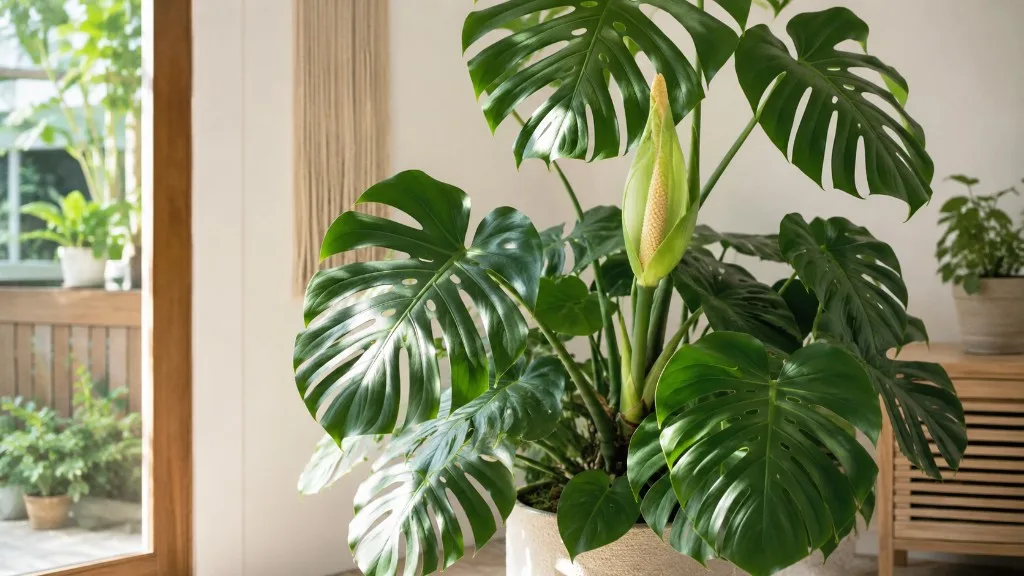
How to Prune Monstera Thai Constellation: When, Where & What to Cut
How to Prune Monstera Thai Constellation: When, Where & What to Cut
First, remove only fully yellow, dead, sun-burned, or pest-damaged leaves at their petiole bases. Do that cleanup before you shorten any healthy vine. On Monstera Thai Constellation, the expensive mistake is not cutting too little; it is removing too much photosynthetic leaf area from a slower variegated climber before you have checked nodes, roots, light, and moss-pole support.
Reviewed by LeafyPixels Review Board · Author: sai-ananth
Thai Constellation is a variegated Monstera deliciosa cultivar, so pruning follows the same node biology as green deliciosa but with a more conservative pace. NC State Extension describes Monstera deliciosa as a hemiepiphytic tropical vine and lists Thai Constellation among variegated cultivars that need more sunlight than darker green forms. The RHS Thai Constellation profile describes it as slightly slower growing than the species, which is why this guide treats hard cutbacks as staged work rather than a one-day reset.
The safety step is simple: wear gloves, use clean sharp pruners, and keep cut pieces away from pets and children. The ASPCA lists Swiss cheese plant as toxic to cats and dogs because of insoluble calcium oxalates, and UF/IFAS notes that all Monstera species and plant parts contain needle-like insoluble calcium oxalate crystals that can irritate the mouth, throat, eyes, and digestive tract.
Quick Decision: Remove, Wait, Shorten, or Propagate?
Use this table before you cut healthy stem tissue. It keeps routine cleanup separate from structural pruning.
| What you see | Best action | Why |
|---|---|---|
| Fully yellow lower leaf, fully brown leaf, or pest-damaged leaf | Remove at petiole base now | Cleanup lowers decay and pest pressure with little stress |
| Crispy cream sector but the leaf is still mostly green | Fix light first; remove later if the leaf declines | Green tissue still feeds recovery |
| Long bare internode below a healthy top | Shorten above a lower node during active growth | Nodes, not bare internode tissue, produce useful new shoots |
| Ceiling-bound vine on a pole | Cut above a node below the ceiling and re-tie immediately | Support keeps the new leader climbing |
| Healthy top cutting with a node | Root it via propagation | Node-bearing prunings are worth saving |
| Wet soil, sour mix, collapsing stem base, or recent repot | Wait on shaping; remove dead tissue only | Structural pruning compounds root stress |
What Pruning Can and Cannot Change
Pruning can remove damaged cream tissue, control height, redirect a long vine, create a fuller lower plant by activating nodes, and give you node-bearing cuttings. It cannot create more fenestrations, fix weak roots, or force a whiter constellation pattern. For whole-plant context on stable variegation, moss-pole habit, and mature leaves, start with the Monstera Thai Constellation overview.
Stable cream marbling depends on genetics, adequate light, and root health more than on which leaf you remove. Penn State Extension describes Thai Constellation as more compact because of shorter internodes and recommends high bright indirect light. If the plant is stretching or producing small leaves, improve light placement before relying on hard pruning.
Tools, Sap Safety, and Tool Sanitation
Use sharp bypass pruners or heavy scissors for petioles, and bypass pruners for thick vine sections. Dull blades crush aroids and leave ragged tissue that browns back. Wipe blades before pruning and between suspicious cuts; NC State Extension emphasizes that pruning wounds plants and that accurate cuts help wounds close with less decay.
Gather gloves, a washable cloth, a bag for trimmings, plant ties, and a stable stool if the vine is above shoulder height. Do not cut a ceiling-height Thai Constellation while balancing the pot, pole, and vine with one hand. If the moss pole is loose, stabilize it before pruning so the remaining vine is not pulled off support after the top comes away.
Identify the Node, Petiole Base, Internode, and Aerial Root
A structural pruning cut must reference a node. NC State defines a node as the point on a stem where a leaf, bud, or stem was or is attached, and an internode as the stem area between nodes. On Monstera, nodes often show as a slightly swollen ring with a leaf scar, petiole attachment, aerial-root nub, or live aerial root.
      leaf blade
         |
      petiole
         |
vine ----●---- aerial root nub      ← node: cut just above this for branching
         |
   smooth vine section              ← internode: do not cut here for new growth
         |
vine ----●---- old leaf scar         ← another node
For leaf cleanup, cut the petiole close to the vine without gouging the main stem. For height control or propagation, cut the vine just above a node, usually about 6-10 mm above the node ring. That distance is a practical LeafyPixels target: close enough to avoid a long dying stub, far enough to avoid slicing into the bud zone.
When to Prune Monstera Thai Constellation
Remove dead, fully yellow, or badly damaged leaves whenever you see them. That is maintenance, not a hard prune. For structural cuts that shorten a vine or activate lower nodes, use late spring through early summer when the plant is actively growing; RHS advises cutting back oversized Swiss cheese plants in spring, and NC State lists spring as the time to prune or repot Monstera.
Delay heavy cuts after repotting, relocation, visible root rot, or a major light move. Two quiet weeks is a reasonable minimum after ordinary disturbance; if leaves are still yellowing or the pot stays wet, wait longer and solve watering or soil first. Emergency removal of clearly dead or pest-infested leaves is still appropriate.
The First Cut: Damaged Leaves Only
Start by cutting fully yellow, fully brown, sun-burned, or pest-damaged leaves at the petiole base. Do not pull downward; Monstera petioles tear stringy tissue from the vine when yanked, and that ragged wound takes longer to dry. Bag the pieces immediately if pets have access.
For sunburn on cream sectors, slow down. Brown cream tissue will not turn green again, but a partly green leaf may still feed the plant while a replacement leaf forms. Fix harsh exposure using the light guide, wait for the next healthy leaf when possible, then remove the old burned leaf if it is more than one-third damaged or visually failing.
How to Shorten a Ceiling-Height Vine
Trace the vine from the pot to the newest leaf and mark every node you can see or feel. Choose a final height at least 15-30 cm below the ceiling so the new leader has room to move. Cut just above a node at that height, then re-tie the remaining vine to the moss pole before the stem shifts.
If there are several leaders, shorten the tallest or least balanced one first. Keep at least one healthy leader climbing so the plant does not lose its vertical architecture. Wisconsin Horticulture Extension explains that aerial roots anchor Monstera to supports and can absorb moisture when they contact damp moss or bark, so support and pruning should be planned together.
Three Common Pruning Scenarios
Ceiling-bound vine: Cut above a strong node below the ceiling, keep the rooted lower section tied to the pole, and propagate the removed top if it has a node and leaf. Watch nodes below the cut for swelling over the next several weeks.
Sunburned cream leaf: Do not remove every spotted leaf on the same day. Fix harsh sun first, remove the worst leaf at the petiole base, and leave partly green leaves until replacement growth confirms the plant is stable.
Sparse lower stem: If the lower vine is alive and has visible nodes, one or two node cuts can encourage lower branching. If the plant is sparse because light is weak, improve placement before cutting or the new shoots will stretch again.
How Much Foliage to Remove in One Session
For a healthy Thai Constellation in active growth, keep structural pruning to about one-third of live foliage in one session. This is conservative guidance, not a rigid botanical law. It reflects general pruning-dose principles, NC State’s warning to remove live material only for a good reason, and the slower pace of variegated Thai Constellation growth.
For dramatic reduction, stage the work across two or three spring sessions, often four to six weeks apart. The interval is an indoor-care checkpoint: wait until remaining leaves are stable, the cut is dry, and at least early bud swelling or new growth confirms recovery. Do not remove another third simply because the calendar says four weeks have passed.
Aerial Roots: Keep Anchors, Trim Problems
Leave healthy aerial roots that attach to the moss pole or help stabilize a heavy vine. Trim only roots that are dead, broken, obstructing a walkway, damaging a surface, or attached to a section you are deliberately removing. Cut them cleanly; never rip them from the vine.
Removing every aerial root makes a top-heavy Thai Constellation less stable. If roots are messy but functional, tuck them into damp moss or guide them along the pole with soft ties. If the plant leans after pruning, fix pole stability and ties before making more cuts.
Propagating Node-Bearing Prunings
A pruning offcut is useful only if it includes a node. University of Minnesota Extension states that Monstera cuttings without a node and axillary bud will not grow new leaves. A leaf-only Thai Constellation cutting may stay attractive in water for a while, but it is not a viable new plant.
Choose top cuttings with at least one node and preferably one healthy leaf. Rooting and first new leaf timing vary widely indoors; two to three months is a reasonable planning range for slow or cool conditions, not a promise. Use the propagation guide for rooting medium, node orientation, and when to pot rooted cuttings.
Thai Constellation vs Albo Pruning Mindset
Do not prune Thai Constellation like a Monstera Albo variegation hunt. Albo growers often inspect stem sectors before cutting because unstable chimeric variegation can produce all-green or all-white growth. Thai Constellation is sold for stable cream-speckled variegation; pruning decisions should center on nodes, support, health, and canopy balance.
The cultivar-specific difference is caution. The RHS profile describes Thai Constellation as slightly slower growing than the species, and NC State notes variegated cultivars need more sunlight. That combination means an over-pruned Thai Constellation in a dim room can sit bare longer than a vigorous green deliciosa, so compare shared mechanics with Monstera deliciosa pruning but keep this cultivar’s slower recovery in mind.
Aftercare and Recovery Timeline
After pruning, keep care boring and stable. Return the plant to bright indirect light, re-tie vines to the pole, and water only when the top 3-5 cm dries; if you removed many leaves, the pot may dry more slowly than before. Hold fertilizer for two to three weeks after structural cuts, then resume the normal active-growth routine in the fertilizer guide.
Use the timeline below as a practical watch list, not a guarantee.
| After pruning | What to expect in good active growth | When to worry |
|---|---|---|
| Same day to 1 week | Cut surface dries; remaining leaves stay firm | Stem turns soft, black, or wet below the cut |
| 2-6 weeks | Node swelling or early shoot activity may appear | New yellowing spreads while soil stays wet |
| 6-8+ weeks | Slower plants may still be forming buds | No activity despite warm bright light and firm roots |
| 2-3 months | Rooted cuttings may start pushing new leaves | Cutting has no node, rots, or never roots |
Signs pruning worked: stable remaining leaves, dry cut surfaces, new bud swell below structural cuts, improved balance on the pole, and new growth that climbs rather than sprawls. Signs pruning was too aggressive or badly timed: widespread yellowing, limp remaining leaves, soft stems, cream edges crisping on new growth, or no node activity after a full active-growth window.
Mistakes to Avoid
- Cutting mid-internode for branching: use nodes for structural cuts.
- Stripping green leaves to chase whiter variegation: pruning does not force a whiter next leaf.
- Pairing major pruning with repotting: stack stresses only when root failure forces it.
- Removing all aerial roots: support loss can matter more than neatness.
- Overwatering after canopy reduction: fewer leaves can mean slower dry-down.
- Ignoring sap and pet risk: gloves and closed-bin disposal are part of pruning.
- Pruning a stretched plant without fixing light: the regrowth will stretch again.
When Not to Prune
Delay structural pruning if the plant was repotted recently, just moved, has sour soil, shows collapsing stems, is actively dropping green leaves, or has stalled in winter with no new growth. Remove clearly dead tissue, but wait on height control and bushiness cuts until the plant is stable. If the problem is moisture or roots, solve that through watering and repotting decisions before asking pruning to fix decline.
Final Pruning Checklist
Before you put the pruners away, confirm each cut had a reason: dead-leaf cleanup, damaged cream removal, height control, support balance, or a node-bearing cutting. Confirm every structural cut was just above a node, every shortened vine is tied to support, and every cutting you want to keep has a node. Then stop; Thai Constellation usually rewards a precise pruning session more than a dramatic one.
Related Monstera Thai Constellation guides
- Monstera Thai Constellation overview — whole-plant context before deep-diving pruning
- Monstera Thai Constellation light — fix placement before trimming sun-burned cream tissue
- Monstera Thai Constellation watering — stabilize moisture before removing yellow leaves
- Monstera Thai Constellation propagation — root node-bearing prunings
- Monstera Thai Constellation repotting — schedule separately from heavy pruning
- Monstera deliciosa pruning — shared species node mechanics and aerial root guidance