Monstera Aerial Roots: What to Do With Them
Monstera aerial roots look wild but are normal. Get a clear train-tuck-trim decision framework, repotting tips, and propagation facts that actually help.
Those thick brown cords sprouting from your Monstera deliciosa stem can look alarming the first time you notice them—especially when they crawl across the floor or probe the wall behind the couch. Monstera aerial roots are normal, not a disease signal. They are the plant’s climbing hardware: anchors that help a rainforest vine reach brighter light and grab moisture from humid air. Your job is not to panic. It is to decide whether to train them onto support, tuck them into mix, trim them for space, or leave them alone.
The Quick Answer: Leave, Train, or Trim Them Safely
Monstera aerial roots are harmless to the plant and do not need removal. If they bother you aesthetically or block walkways, you have three good options: guide them onto a damp moss pole or trellis, redirect pliable roots into the top of the potting mix, or snip them flush with the stem using sterilized shears. Trimming does not kill the plant, but new roots often regrow from nearby nodes within weeks. Do not stick aerial roots permanently in water jars, do not try to propagate from a root alone, and think twice before letting aggressive roots attach to painted walls. Fix underlying light or watering issues if roots explode in number while the vine stretches toward a window.
What Monstera Aerial Roots Actually Are
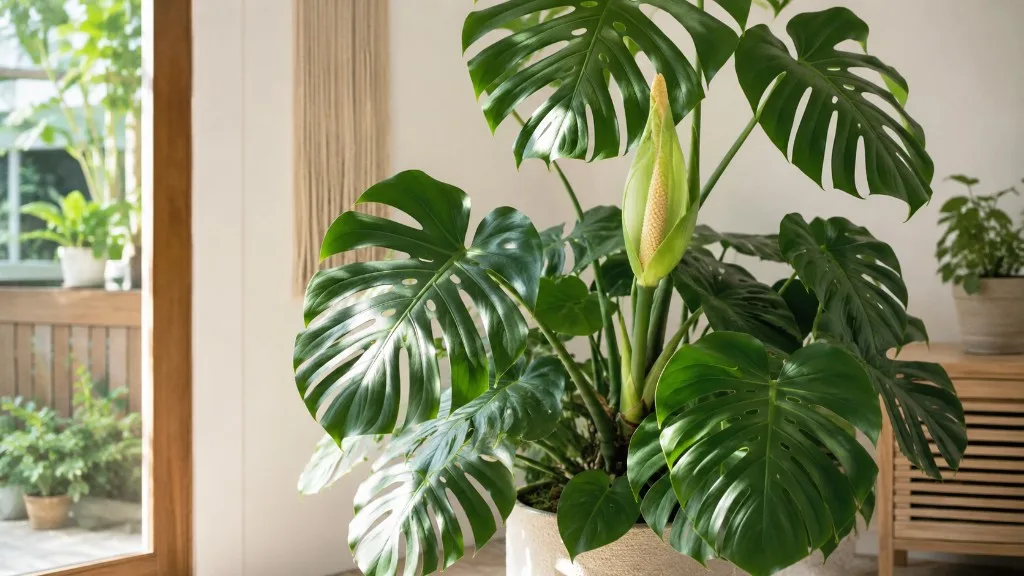
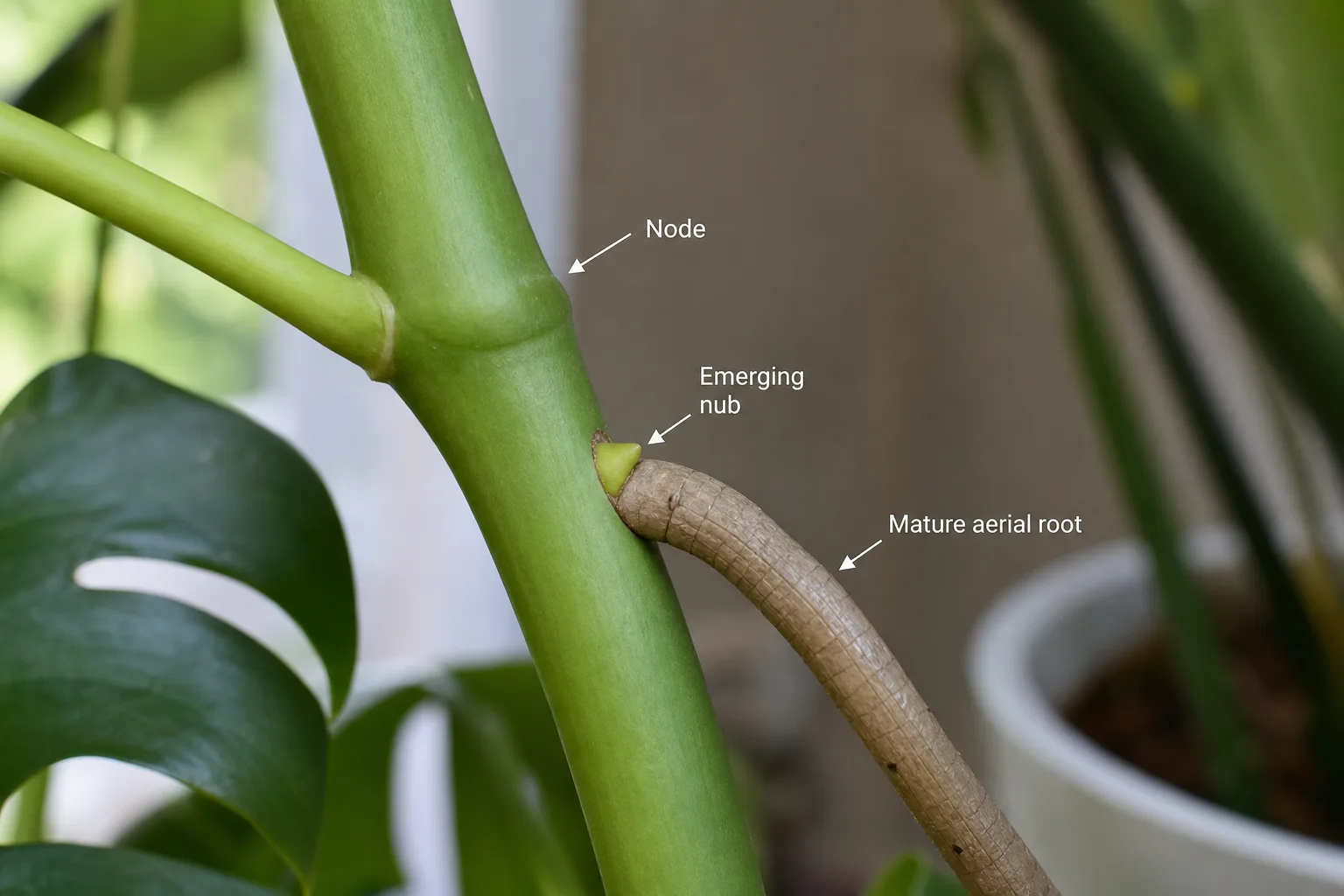
Aerial roots are adventitious roots that form above the soil line on the stem—usually at or just below a node, the swollen joint where leaves and petioles attach. On Monstera deliciosa, they start as firm brown bumps, then lengthen into rope-like cords that can reach several feet on mature indoor specimens. In habitat, the same structures grip tree bark, absorb dew and rain, and help the vine transition from terrestrial juvenile growth to epiphytic adulthood once it finds a trunk to climb (NC State Extension).
They are not parasites, fungus, or a second plant trying to escape. They are structural and supplemental—support first, extra moisture second. Indoors they cannot replicate a wet forest canopy, but the instinct remains, which is why even a healthy pot-bound Monstera on a shelf will still produce them as it matures.
Aerial Roots vs Underground Roots on Monsteras
Mature Monsteras run three root systems that work together. Understanding the split saves you from bad propagation attempts and repot surprises.
Aerial roots stay exposed to air. Their outer sheath is woody and brown because humidity outdoors is intermittent—they need a hard shell to limit water loss. Subterranean roots form when aerial roots enter soil; the tissue softens and fuzzes up to absorb water and nutrients efficiently. Lateral subterranean roots branch off those buried aerial roots like feeder roots on a tree, spreading through the mix below.
Your watering routine feeds the underground network in the pot. Aerial roots add bonus uptake when humidity is high or when they are pressed into damp moss on a pole—but they are not a substitute for well-drained soil moisture at the root ball. For baseline watering rhythm, see the Monstera deliciosa watering guide.
What Healthy Aerial Roots Look Like at Each Stage
Stage 1 — nubs: Small brown or tan bumps at a node, sometimes mistaken for a new leaf about to unfurl. Stage 2 — pliable cords: Lighter brown, flexible roots a few inches long; easiest to train or tuck. Stage 3 — woody runners: Dark, stiff cords that may crack if you force a sharp bend—still healthy if firm, not mushy.
Shriveling, black mush, or dry papery segments after a snap are different problems. Firm woody texture in winter dry air is normal on deliciosa; persistent tip dieback on an otherwise healthy vine usually means physical damage or whole-plant stress, not “the root needs a water glass.” Ohio Tropics notes that unlike orchid aerial roots, Monstera aerial roots stay plump without misting when the parent plant is well cared for—so inspect for breaks before assuming humidity alone is the fix.
Why Your Monstera Is Growing Aerial Roots
Climbing Instinct and Epiphytic Biology
Monstera deliciosa is a woody climbing vine in the arum family—not a true philodendron despite the old “split-leaf philodendron” nickname (NC State Extension). Missouri Botanical Garden describes it clinging to trunks in tropical forests with cord-like roots while reaching 70 feet in the wild, though indoor plants typically stay 6–8 feet (Missouri Botanical Garden).
Aerial roots are how the plant anchors while it climbs toward brighter light under the canopy. Penn State Extension lists Monstera among houseplants that benefit from support stakes or trellises as they grow (Penn State Extension). The roots are the glue between vine and support. Without them—or without you tying stems to a pole—the plant leans, sprawls, and puts more stress on petioles as leaves enlarge.
When Lots of Aerial Roots Signal a Care Gap
Abundant aerial roots on a young plant usually mean maturing genetics, not failure. On a leggy, reaching vine, they often pair with other clues that the plant wants more resources:
- Long internodes and small new leaves → likely insufficient light; read Monstera deliciosa light requirements and compare placement.
- Crispy leaf edges plus feather-light pot → chronic underwatering; the vine may be hunting ambient moisture while soil stays too dry too long.
- Rapid new root nubs after repotting into a much larger pot → sometimes normal rebound growth, but check that fresh mix is not staying soggy (root rot risk).
Treat aerial roots as one data point, not a scorecard. A mature Monstera on a moss pole can be perfectly happy with a dozen visible cords while new perforated leaves unfurl above.
Are Aerial Roots Harmful to Your Plant or Home?
To the plant: No. Cutting them does not inherently harm Monstera if tools are clean, though you remove supplemental anchors and humidity uptake. Leaving them wild does not drain the root ball or cause rot by themselves.
To your home: Mostly cosmetic—except when roots attach to painted drywall or wallpaper. Moist roots can lift paint and leave marks as they thicken, the same way outdoor Monstera climbs masonry in frost-free climates. Trellises, moss poles, or clear adhesive hooks give roots an intended surface and keep them off finishes you care about.
To pets: Aerial roots carry the same calcium oxalate irritant as leaves and stems. Chewing can cause oral pain and drooling in cats and dogs (ASPCA Swiss cheese plant listing). Trimming creates sap exposure—wear gloves if you are sensitive, and discard cuttings where pets cannot reach them.
Decision Framework: Train, Tuck, Trim, or Ignore
| Your priority | Best move | Trade-off |
|---|---|---|
| Bigger fenestrated leaves, upright shape | Train onto damp moss pole | Pole maintenance; roots hide inside moss |
| Neater floor line without cutting | Tuck pliable roots into top of mix | Harder repots later; roots may re-emerge |
| Clean minimalist look | Trim with sterile shears | Regrowth likely; repeat maintenance |
| Jungle aesthetic | Ignore | Roots may wander across furniture |
| Maximum plant support with no DIY | Trellis + soft ties | Roots visible but organized |
When Training Beats Trimming
Choose training when the vine is actively climbing, you want larger split leaves, and you can keep a moss pole or coir totem consistently damp—not sodden. RHS guidance for Swiss cheese plants notes that once a Monstera senses a moist climbing surface, it often produces bigger foliage with more fenestrations (RHS Swiss cheese plant guide). Training converts messy cords into hidden anchors instead of repeated trims that fight the plant’s habit every month.
When Trimming Is the Right Call
Trim when roots block walkways, tangle in vacuum cords, or prevent you from rotating a large specimen. Trim when woody roots cannot reach a pole and look like a tangled nest on the floor. Trim after physical damage—snapped tips or mushy segments should be removed back to firm tissue.
Trimming is also fine if you simply dislike the look and accept regrowth. It is not “bad parenting.” It is maintenance—like hedging a ficus. Just do not confuse aesthetic trimming with fixing yellow leaves or drooping; those need care guides, not root removal.
How to Train Aerial Roots Onto a Moss Pole or Trellis

Training works best on Stage 2 pliable roots before they lignify. You do not need a commercial pole—a DIY moss pole with loose sphagnum around a stake outperforms many tight-packed store poles because roots need air and moisture, not a brick of dry moss.
- Mist the pole and roots lightly so the velamen-like surface can grip damp fiber—Ohio Tropics recommends moistening moss when encouraging attachment.
- Press the root against the pole without creasing it; if it resists, loop it gradually over two days instead of forcing a sharp fold.
- Tie the stem—not just the root—with soft plant tape or velcro garden ties a few inches above and below the node. Roots follow the stem you anchor.
- Keep pole moisture steady by spraying moss or using a moss pole vs trellis setup you can rewet during watering days.
- Re-tie monthly as the vine elongates; roots that contact damp moss for several weeks often fuse on their own.
A bamboo tripod or flat trellis works if you prefer not to maintain moss—tie stems and let roots grab lattice or jute twine. NC State still recommends sturdy support to prevent stem breakage as leaves size up (NC State Extension).
Redirecting Aerial Roots Back Into the Soil
Tucking roots into the pot is the lowest-drama way to hide cords while keeping tissue alive. Gently bend pliable roots toward the surface and bury the tip 1–2 inches into moist—not wet—mix near the stem base. Older woody roots may crack their outer sheath when bent; you will hear a snap. Usually the inner strand survives if the bend is gradual and you do not kink it repeatedly.
Expect buried aerial roots to re-emerge above the soil line later—that is normal growth, not failure. Heavy tucking on a mature plant can make the next repot feel like untangling cables; plan a wider pot opening or slide the root ball out horizontally as described below. If tucking makes repotting unwieldy, switch strategy and train future roots vertically onto a pole instead.
How to Trim Monstera Aerial Roots Without Stressing the Plant
Trimming is straightforward if you respect node anatomy and hygiene:
- Sterilize bypass pruners or scissors with rubbing alcohol.
- Cut close to the stem without gouging green tissue—leave a clean stub, not a torn shred.
- Avoid cutting into the node where leaves emerge; remove only the root cord.
- Optional: dust the cut with cinnamon on fussy plants if you worry about fungal entry—helpful in humid rooms, not mandatory on healthy specimens.
- Expect regrowth from the same node or neighbors within weeks; schedule trims seasonally instead of weekly whack-a-root.
Wear gloves if sap irritates skin. Keep pets away from fresh cuts. For broader pruning timing—when to remove leaves versus roots—see the Monstera deliciosa pruning guide.
What Not to Do With Aerial Roots
Do not propagate from an aerial root alone. New plants require a stem cutting with at least one node—the eye where a leaf and future roots form—not a severed cord. Aerial roots on a cutting are a bonus, not the engine. Use the propagation guide for node cuts, air layering, or division.
Do not permanently submerge aerial roots in water jars. The hack promises extra hydration, but aerial tissue is built for intermittent moisture, not anaerobic soaking. Standing water around woody roots invites rot on the cord and can wick problems toward the stem. Water the potting mix on a dry-down schedule instead; aerial roots are optional accessories, not a second watering system.
Do not let roots attach to rental walls unless you accept cosmetic repair. Use poles, boards, or removable hooks.
Do not confuse aerial roots with root rot. Mushy black cords smell bad and progress upward—that is pathology in the root zone or stem base, not a normal aerial root. Escalate to the root rot page if the base softens while mix stays wet.
Repotting a Monstera Wrapped in Aerial Roots
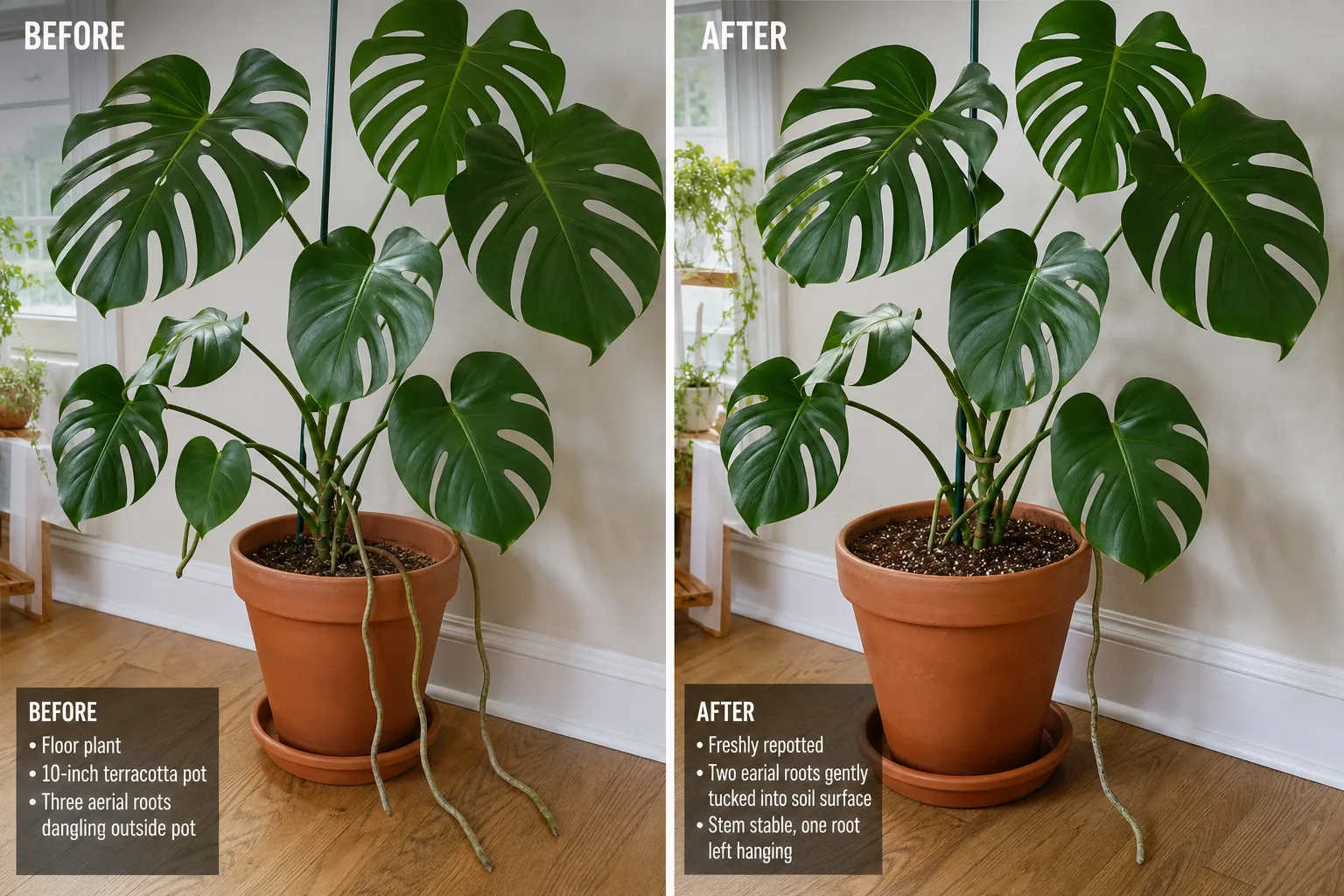
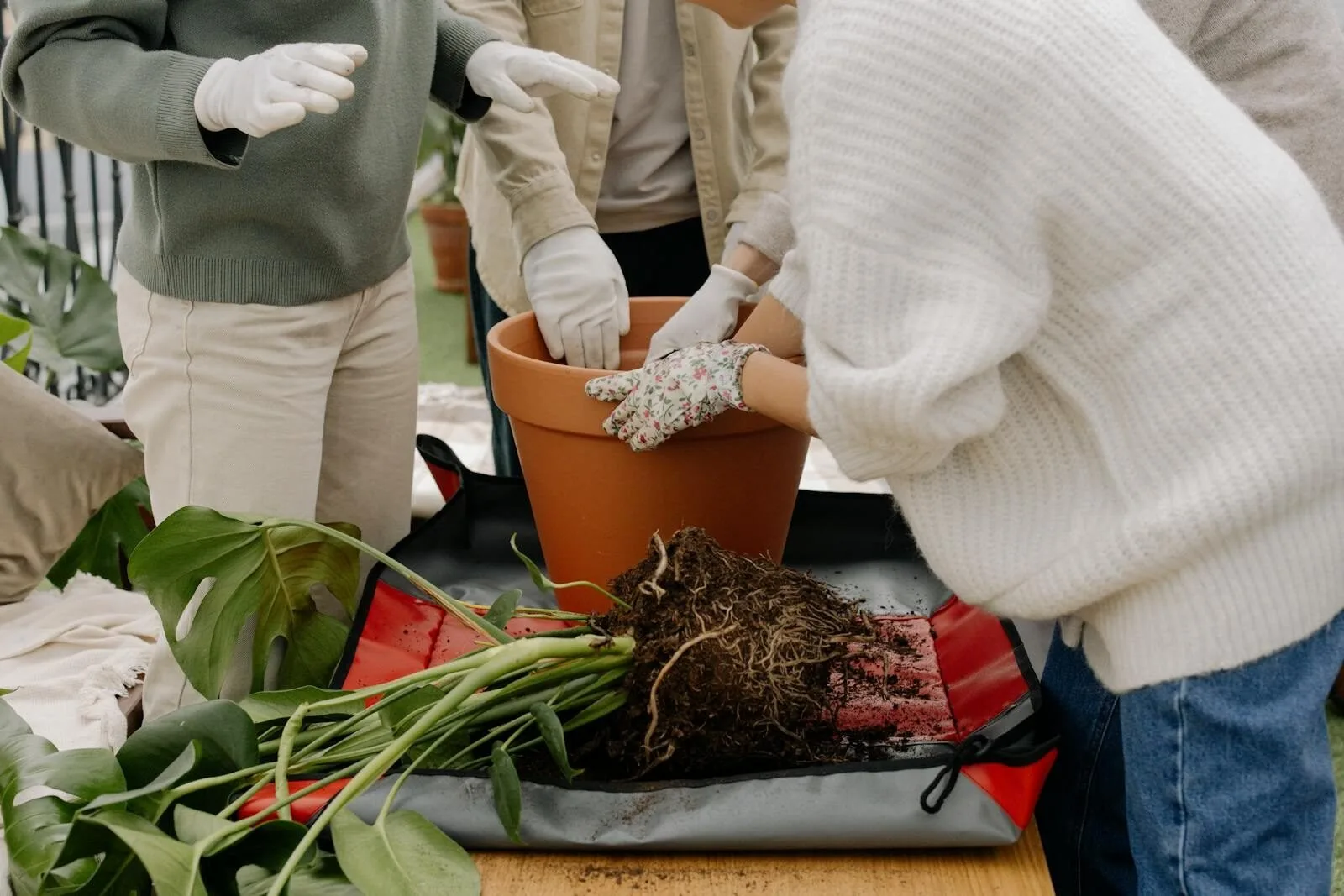
Fast-growing Monsteras can need annual repotting when roots circle the pot or water runs straight through (when and how to repot Monstera). Aerial roots tangled around a trellis turn a simple pot upgrade into logistics. Work slowly:
- Water lightly the day before so the root ball holds together but is not soggy.
- Tip the pot on its side on a blanket; lay stems and aerial roots on the cloth instead of letting them snap over the pot rim.
- Unclip ties from poles or trellises before lifting the root ball—never yank the plant by stems.
- Slide the root ball out with a helper holding the moss pole upright on large plants.
- Accept minor root breaks; healthy Monsteras rebound if the core root ball and apical bud stay intact.
- Repot at the same depth, backfilling chunky aroid mix around the ball while a helper holds aerial roots in the blanket until the plant is stable.
If many roots were tucked into soil over the years, tease only the outer one-third of mix—aggressive bare-rooting a huge vine causes more transplant shock than a slightly tight root mass. Full repot steps live in the Monstera deliciosa repotting guide.
Aerial Roots on Monstera Adansonii and Other Species
All climbing Monsteras produce aerial roots—Monstera adansonii included—but scale differs. Deliciosa cords are thick and floor-length on mature plants; adansonii roots are usually thinner and shorter, often wrapping a small pole without the “jungle tentacle” drama. Variegated deliciosa cultivars follow the same rules but need brighter indirect light so weakened white sectors do not stall while the vine invests energy in roots (NC State Extension).
Juvenile plants of any species may show only nubs for the first year or two. No aerial roots yet does not mean the plant is sick—it often means it has not reached the size where climbing hardware pays off. When fenestrations and stem thickness increase, roots follow.
Tie Aerial Root Care Into Your Monstera Routine
Think of aerial root management as support hygiene, not a separate crisis:
- Bright filtered light reduces desperate reaching; pair with a pole if you want upright growth.
- Water when the top quarter to third of mix dries—NC State’s deliciosa benchmark—not when aerial roots look dry (watering guide).
- Humidity at or above 50% helps roots and new leaves unfurl; pebble trays or humidifiers beat misting alone for consistency (Penn State Extension).
- Inspect monthly while wiping leaves—catch pests at stem joints where roots emerge.
- Choose one strategy—pole, tuck, or trim—and stick with it for a season so you are not fighting regrowth and retraining at the same time.
When yellowing or drooping appears alongside root explosions, diagnose the whole plant via the Monstera deliciosa hub rather than blaming cords you can see.
Conclusion
Monstera aerial roots look unruly because they are doing a rainforest job in a living room: climbing, anchoring, and scavenging humidity. They will not harm your plant, your walls only if you let them attach where you should not, and your sanity only if you treat every cord as an emergency. Pick train, tuck, trim, or ignore based on the look you want and the support you can maintain—not guilt.
If you want bigger split leaves, give roots a damp moss pole and tie stems patiently. If you want clean floors, trim cleanly and expect regrowth. If you want zero maintenance, leave them be and fix light and watering so the vine stops reaching desperately. Anchor the basics through the Monstera deliciosa care cluster, and those brown roots become part of the plant’s character instead of a recurring panic search.