10 Natural Mosquito Deterrents for Fewer Bites
Learn which natural mosquito deterrents help, which are mostly myths, and how to combine water removal, airflow, plants, screens, and repellents.

The most effective natural mosquito deterrent is not a pot of citronella on the patio. It is a sequence: remove water where mosquitoes can reproduce, make the place where you sit harder to reach, and use plants or other low-impact additions as supporting layers.
That order matters. UF/IFAS Extension calls source reduction—the removal of mosquito-producing water—the most important job for homeowners, while the CDC recommends emptying, scrubbing, turning over, covering, or throwing out water-holding items once a week. Plants can make a patio more pleasant, and a fan can reduce landings during dinner, but neither replaces water control or bite protection.
The short answer: build layers, not a magic plant
Think of mosquito control as two separate problems. The first is population pressure: eggs, larvae, and pupae developing somewhere nearby. The second is the adult mosquito already trying to find you. A bucket walk targets the first problem; a fan, screen, long sleeves, or a labeled repellent targets the second.
Here is the practical ranking:
| Method | Best job | Main limitation |
|---|---|---|
| Remove standing water | Prevent the next generation | Does not remove adults already in the yard |
| Fan or screen | Protect one seating area right now | Works only where airflow or mesh reaches |
| Plant a scented herb or flower | Add fragrance and a small local effect | Passive plants do not create a reliable yard-wide barrier |
| EPA-registered plant-derived repellent | Protect exposed skin | Must be chosen and applied according to its label |
| Trap or wildlife habitat | Supplement broader management | Neither is a dependable stand-alone population fix |
The ten ideas below are therefore not ten equal “hacks.” Start at the top, then add the options that fit your yard, climate, budget, and household.
10 natural mosquito deterrents worth using
1. Remove every small standing-water source
Mosquitoes do not need a pond. A flowerpot saucer, clogged gutter, overturned lid, child’s toy, wheelbarrow, tarp fold, old tire, or bottle cap can hold enough water for eggs and larvae. The UF/IFAS mosquito-management guide explains that all mosquitoes need water during their early life stages, and container-breeding species often use ordinary objects around homes.

Walk the property after rain and empty anything you can drain. Scrub the inside of containers that have held water, because simply tipping them out may leave eggs attached to the surface. Store buckets and wheelbarrows upside down, clear leaves from gutters, and fix low spots that stay wet instead of assuming a dry week will solve the problem.
Do this once a week during warm weather, plus an extra check after a storm. If a water container cannot be emptied, cover it tightly or use a labeled larvicide such as Bacillus thuringiensis israelensis (Bti) only as directed. Bti is for mosquito larvae in appropriate non-drinking water; it is not a reason to leave every bucket and saucer in place.
2. Keep birdbaths, rain barrels, and water features moving or covered
You can keep water for birds or a decorative pond, but it needs a maintenance plan. The UF/IFAS Gardening Solutions guide recommends freshening birdbath water every two or three days, refreshing outdoor pet bowls daily, and covering or screening rain barrels so mosquitoes cannot reach the water.
For a larger water garden, a working pump or fountain keeps the surface moving and makes the feature less suitable for some container-breeding mosquitoes. A small container water garden can be flushed regularly, but do not rely on movement alone if leaves, algae, or blocked outlets let stagnant pockets form.
The rule is simple: water intended for wildlife still needs mosquito management. Rinse the basin, scrub the film, clean the pump intake, and inspect the rim and nearby saucers. A neglected birdbath can undo the benefit of an otherwise careful yard.
3. Grow aromatic plants near the places you sit
Lavender, rosemary, basil, mint, lemongrass, marigolds, and catnip are attractive plants with strong scents. They can be worthwhile around a patio because they add flowers, culinary leaves, texture, and fragrance while giving you something useful to brush or harvest. They are also easier to move than a shrub if you need to adjust your seating area.
But a plant releases its scent into a large, changing outdoor space. A single untouched pot will not clear a yard, and even a larger planting is not a substitute for a skin repellent when mosquitoes are abundant. Gardening Know How makes the same practical point: these plants may help when used close to people and paired with other controls, but they are not a magic shield.
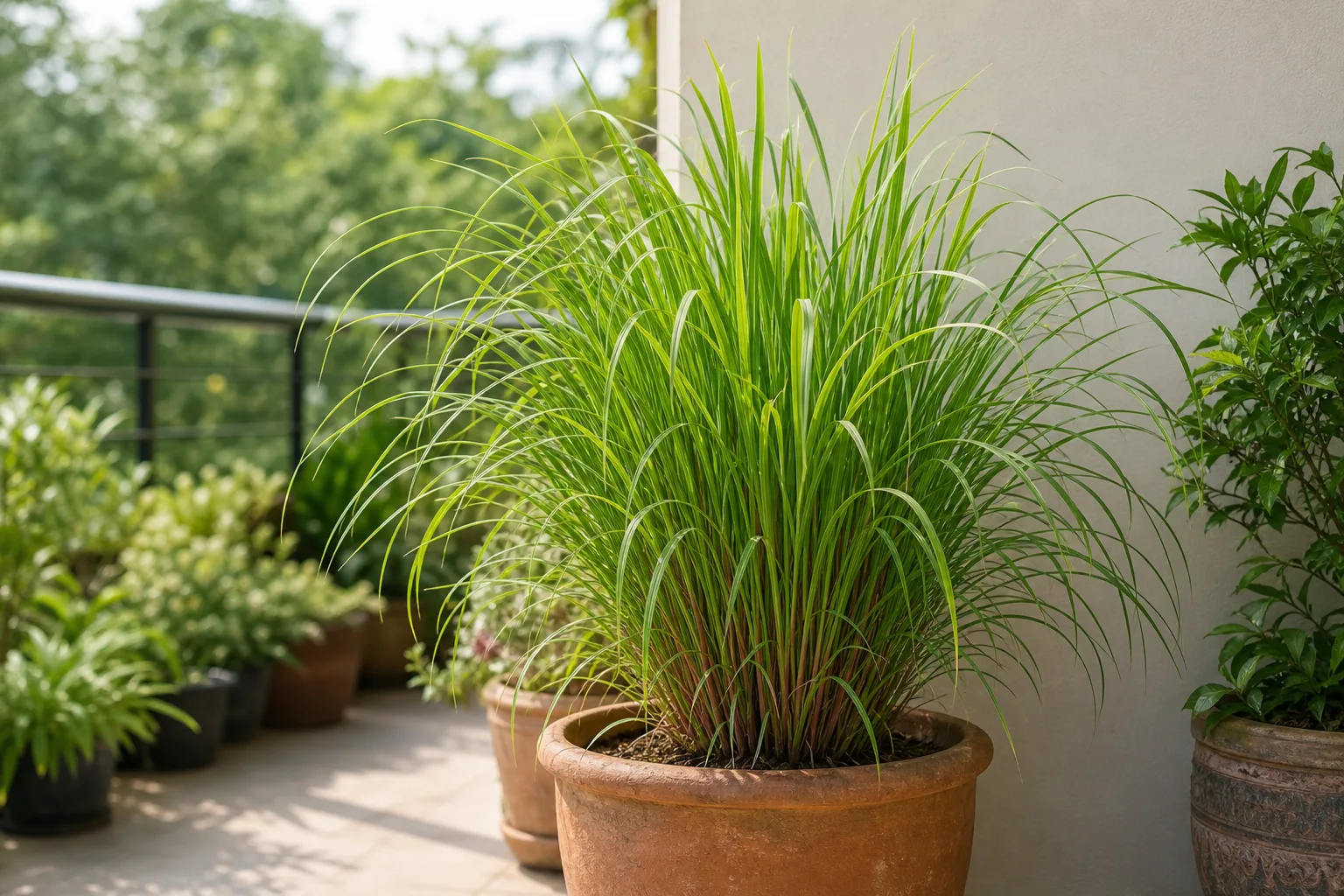
Choose plants for the conditions they can actually tolerate. Lavender wants sun and sharply drained soil; basil and rosemary are useful near a sunny grill or kitchen door; mint is best contained because it spreads; and lemongrass needs warmth and room. The LeafyPixels lavender guide, lemongrass guide, and mint guide can help you match the plant to its growing needs instead of buying a stressed specimen for its label.
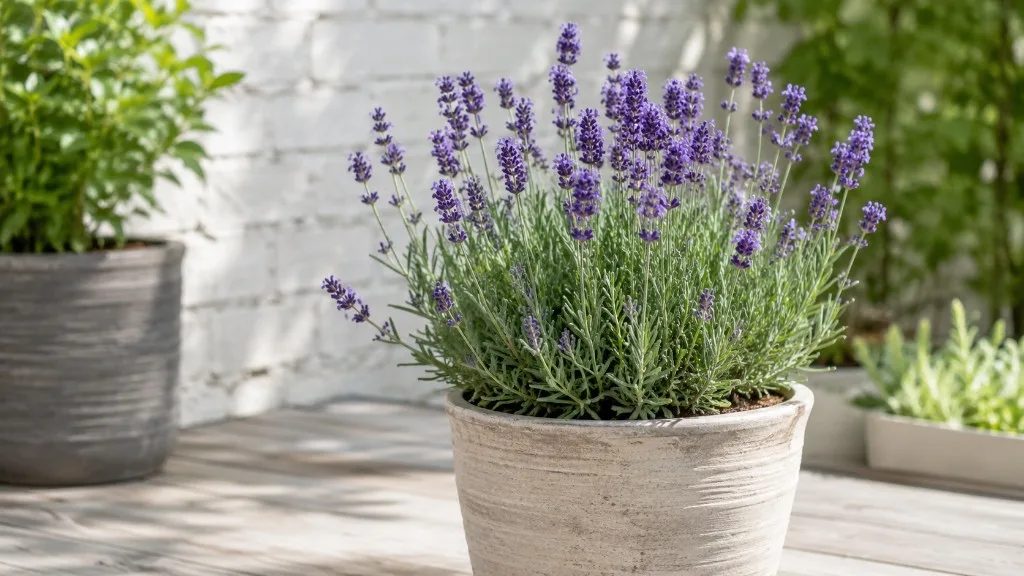
Lavender, rosemary, basil, and mint: useful plants, limited promise
These herbs are good “comfort plants,” not proven perimeter defenses. Their oils are most noticeable when leaves are brushed, crushed, or warmed, which is why a pot beside the path or table is more useful than one hidden at the back of the yard. They can make the space feel intentional even if the mosquito effect is modest.
Give each plant the care it needs. Wet soil, dead foliage, and a crowded pot can attract other pests and make the planting look neglected. Keep the plants healthy, harvest lightly, and place them where you will enjoy them whether or not they change the bite count.

Citronella grass and lemon eucalyptus: do not confuse plant with repellent
Garden centers often sell a “citronella plant” that is actually a scented geranium. It is not the same plant as citronella grass, and neither should be treated as a guaranteed mosquito barrier. The smell may be pleasant to people, but passive scent from a live plant is not equivalent to a tested repellent formulation.
Lemon eucalyptus also needs careful wording. Oil of lemon eucalyptus (OLE) and para-menthane-diol (PMD) are plant-derived active ingredients found in some EPA-registered repellents; pure lemon eucalyptus essential oil is not interchangeable with those products. The CDC’s repellent guidance specifically says not to use OLE or PMD products on children under 3 years old and to follow the product label.
4. Use crushed leaves only as a brief scent experiment
Crushing a little lavender, basil, rosemary, or mint between your fingers releases more scent than leaving the leaf intact. That can be a pleasant pre-dinner ritual, especially when a plant grows beside the chair or walkway. It may provide a short-lived local nudge, but wind, heat, sweat, and time disperse the volatile oils quickly.
Do not turn this experiment into homemade skin protection by rubbing unknown plant sap or undiluted essential oil on your arms. “Natural” does not mean non-irritating, safe for children, safe for pets, or tested for the protection time you need. Wash your hands before touching your eyes or food, and use a properly labeled topical product when avoiding bites matters.
Research can show why the claims sound plausible without proving that a live plant protects your yard. In one PubMed-indexed study, several essential oils showed repellent activity against Aedes albopictus under controlled test conditions, but the authors were evaluating oils and formulations—not an untouched patio pot—and noted formulation work to extend protection. Read the essential-oil study as evidence of potential compounds, not a recipe for a backyard spray.
5. Choose a labeled plant-based repellent for skin
When mosquitoes are biting, protecting your skin is more dependable than relying on landscape scent. The CDC lists EPA-registered repellents containing OLE, PMD, or 2-undecanone among plant-derived options, along with DEET, picaridin, and IR3535. Look for an EPA registration number and use the product exactly as labeled.
This is an important distinction: a plant-derived active ingredient is still a regulated repellent product, while a bottle of pure essential oil or an untested homemade mixture is not automatically safe or effective. UF/IFAS notes that the effectiveness of non-EPA-registered natural products has not been established.
Apply only to exposed skin or clothing as directed, never under clothing, and keep sprays away from eyes, mouth, cuts, and irritated skin. Adults should apply repellent to their own hands before putting it on a child’s face. Do not use OLE or PMD products on children under 3, and follow the label for every age, reapplication interval, and combination with sunscreen.
6. Put a fan across the seating zone
An outdoor fan is one of the most useful non-chemical fixes for a porch, balcony, or small patio because it works on the space where you are sitting. Mosquitoes are weak fliers, and moving air also disrupts the concentrated body odors and carbon dioxide cues they use while approaching a host. A fan will not reduce the population, but it can reduce landings during a meal.
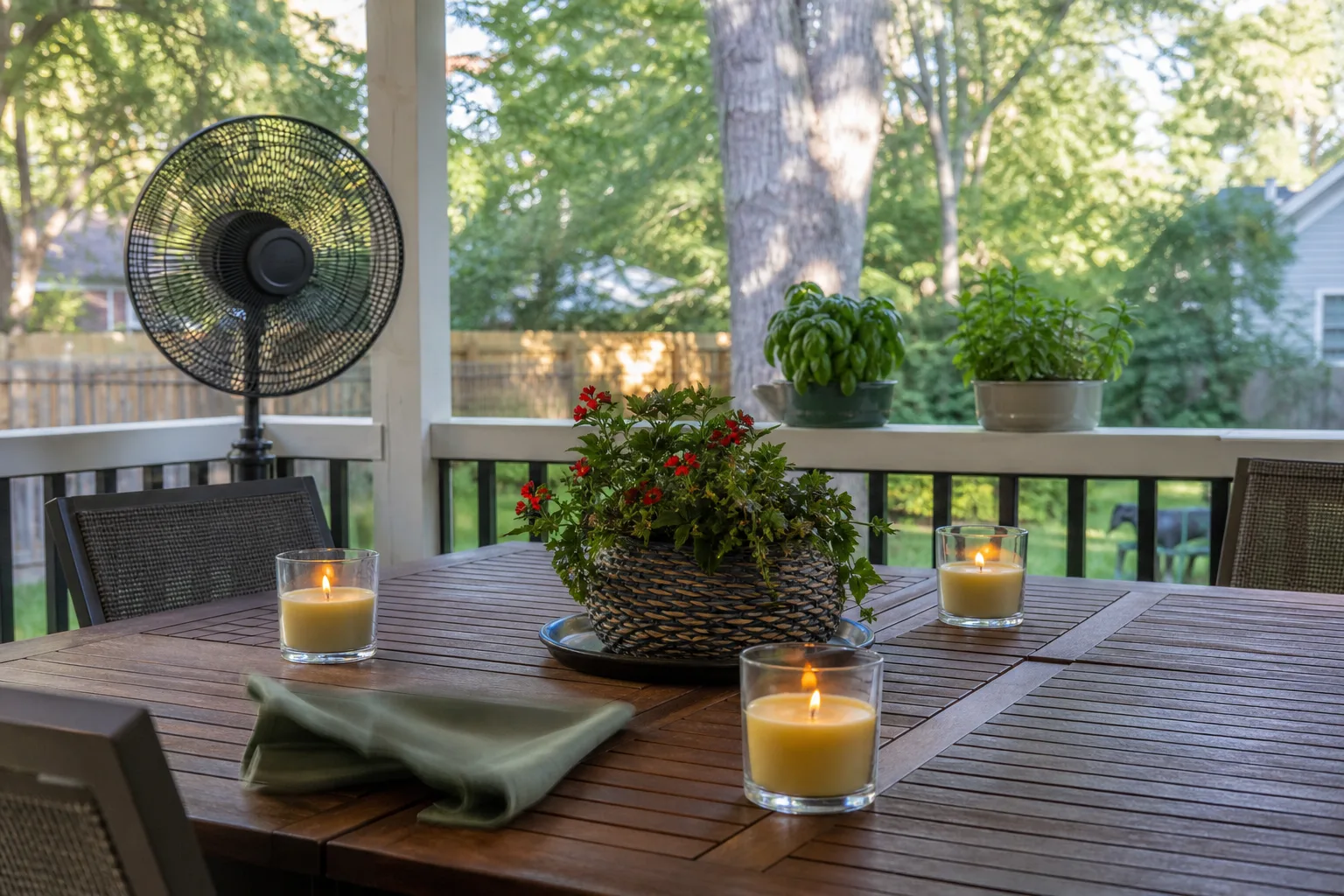
An outdoor fan guide from Terminix recommends oscillating or box fans because they move more air across a wider area than a small tabletop or tower fan. Aim the airflow across the chairs rather than at an empty corner, and use two smaller fans if one leaves a calm pocket behind the table.
Treat a fan as short-term seating protection, not an excuse to ignore water. It works best when combined with screens, long sleeves, and a quick pre-gathering sweep of saucers, toys, and gutters.
7. Make the patio less cool, shady, and overgrown
Adult mosquitoes often rest during the day in cool, damp, sheltered places. Thick weeds, dense shrubs, wet leaf piles, clogged drains, and vegetation touching a deck can provide those conditions even when the lawn itself looks tidy. You do not need to strip the yard bare; focus on the edges of the places people use.
Thin branches that block airflow around a seating area, pull weeds from the patio perimeter, rake wet debris, and keep drainage paths open. Let ornamental beds remain full where they support pollinators, but create a clear, breezy transition between the bed and the chairs. A sunny, dry sitting zone is easier to defend than a chair tucked into a damp hedge.
Avoid overwatering container plants near the patio as well. Saucers under pots, self-watering reservoirs, and decorative trays should be checked every week so the same plants you bought for fragrance do not create new breeding spots.
8. Use traps only as a targeted supplement
Traps can be useful for monitoring or reducing some adult mosquitoes in a defined area, but they do not remove the water where the next generation develops. A trap also has to attract mosquitoes strongly enough to compete with people, pets, shade, plants, and nearby breeding sites. That is a much higher bar than placing a device in the corner and expecting the yard to clear.
Be skeptical of DIY yeast-and-sugar bottles, unverified “natural” trap claims, and any device that promises whole-yard protection without explaining its capture area. A UV bug zapper is not a mosquito strategy: UF/IFAS reports that bug zappers do not reduce mosquito numbers and can kill other insects.
If you use a commercial trap, follow its placement and maintenance instructions, keep it away from the main seating area when the label calls for that, and judge it by observed bites or trap counts rather than marketing language. If standing water remains, fix that first.
9. Invite predators without creating mosquito habitat
Bats, swallows, dragonflies, frogs, and insect-eating birds all belong in a healthy yard, but they are not a biological mosquito-control service. Mosquitoes make up only part of the diet of most predators, and a bat box or bird feeder will not reliably protect a patio during a population surge. UF/IFAS specifically cautions that birds and bats cannot significantly control mosquito numbers during peak abundance.
Support predators for the broader value they bring: grow diverse native plants, avoid unnecessary broad-spectrum insecticides, keep cats indoors, and provide habitat appropriate to your region. Add a bat house only after checking local guidance and choosing a location that suits bats, not because a product promises a bite-free yard.
Be careful with water for wildlife. A birdbath that is refreshed every few days can be useful; a neglected basin is a nursery. Wildlife-friendly and mosquito-smart are compatible when the water is maintained.
10. Use screens, clothing, and sensible gathering habits
Physical protection is natural in the literal sense: it keeps mosquitoes from reaching skin instead of trying to change their behavior. Repair window and door screens, use mesh curtains on a screened porch, and choose loose-fitting long sleeves and pants when mosquitoes are heavy. The CDC recommends screens and protective clothing because mosquitoes can bite during the day and at night.
For a cookout, place food and drinks away from dense vegetation, keep the fan over the seating area, empty containers before guests arrive, and offer a labeled repellent rather than a bowl of undiluted oils. Do not count on eating garlic, taking vitamins, hanging soap, or switching to unscented shampoo as your primary defense. Mosquito attraction depends on multiple cues, and UF/IFAS finds no scientific evidence that eating garlic or similar foods prevents bites.
What not to count as mosquito control
Several popular ideas sound natural because they involve plants, smoke, sound, or household items. Their appeal is understandable, but the evidence and the practical effect are often weaker than the promise.
- A single “mosquito plant” will not protect an entire yard. Use it as a fragrant container plant, not a force field.
- Undiluted essential oils are not automatically safe topical repellents. They can irritate skin and have not all been tested for mosquito protection or household safety.
- Citronella candles and coils may provide a small local scent or smoke effect, but they do not solve breeding water and should not replace labeled skin protection.
- Ultrasonic devices and sound emitters have no reliable role in a prevention plan; UF/IFAS lists sound devices among ineffective methods.
- Bug zappers can kill non-target insects while leaving the mosquito problem largely intact.
- Bats and birds alone cannot keep up with a yard that produces mosquitoes faster than predators can eat them.
The better question is not “Which natural trick kills every mosquito?” It is “Which layer solves the problem I have right now?”
A 15-minute weekly yard routine
Make the check short enough that you will actually do it. Keep a small bucket and a stiff brush near the shed, and walk the same route every week.
- Empty saucers, toys, buckets, tarps, tires, and tools that hold water.
- Scrub sticky container walls and rinse anything that has held stagnant water.
- Replace birdbath water and check pet bowls; inspect rain barrels for a tight lid or intact screen.
- Clear leaves from gutters, drains, pump intakes, and low spots.
- Look inside bromeliad cups, folded outdoor furniture covers, grill covers, and recycling bins.
- Trim or thin damp vegetation that touches the patio, but leave healthy habitat farther from the seating zone.
- Before an outdoor meal, turn on the fan, repair a screen if needed, and choose the right clothing or labeled repellent.
This routine is more valuable after weather changes. A heavy rain, irrigation leak, blocked gutter, or heat wave followed by storms can create new habitat faster than a monthly clean-up catches it.
How to choose the right combination for your yard
For a small patio: start with the weekly water walk, then add one oscillating or box fan that crosses the chairs. Put a few healthy aromatic plants near the path or table for enjoyment, and use screens or a labeled repellent when bites continue.
For a large, landscaped yard: divide the property into zones. Control containers and drainage first, keep dense resting cover away from high-use areas, and maintain ponds or birdbaths on a schedule. Native plantings and predators can support the ecosystem, but do not expect them to replace source reduction.
For a yard that gets bad after rain: search for hidden water rather than adding more scent products. Check gutters, tarps, toys, saucers, downspout outlets, tree holes, irrigation leaks, and a neighbor’s neglected container. If the source is a storm drain, wetland, vacant lot, or property you cannot access, contact your local mosquito-control district or health department.
For homes with children or pets: prioritize screens, clothing, airflow, and a properly labeled repellent. Keep pure essential oils, homemade sprays, Bti products, and any pesticide out of reach; read each label rather than assuming “natural” describes the safety profile.
When natural deterrents are not enough
If you are still being bitten after removing water, improving airflow, and protecting exposed skin, the source may be beyond your lot. Some mosquitoes travel from nearby properties, storm drains, wetlands, or containers you cannot legally or physically inspect. A yard can be well maintained and still sit next to a persistent breeding source.
Escalate thoughtfully. Ask your local extension service or mosquito-control district for species-specific guidance, especially if there is a local disease alert. For a large event or a persistent public-health problem, use only licensed services and products that are legal and labeled for the site. Do not apply a homemade oil mixture to a pond, spray unregistered products over flowers, or fog a neighborhood without understanding the risk to people, pets, pollinators, and aquatic life.
Fewer bites is a realistic goal; a mosquito-free yard is not. The combination with the highest return is usually boring but effective: remove breeding water, defend the sitting zone with airflow or screens, and use a proven labeled repellent when you need skin protection.
Conclusion
Natural mosquito control works best as a layered yard habit, not a single scented plant. Make standing water difficult to keep, maintain birdbaths and rain barrels, open up damp patio edges, and use a fan or screen where people actually sit. Add lavender, basil, rosemary, mint, lemongrass, or marigolds because they fit the garden and may offer a modest local benefit—not because their presence guarantees fewer bites.
When mosquitoes are active, choose protection that has been evaluated for that job. An EPA-registered plant-derived repellent can be a sensible option when used according to its label, while clothing, screens, and direct airflow reduce exposure without adding a product to your skin. That combination gives you a calmer yard and more honest expectations about what any natural deterrent can do.



