How to Use Lemon Peels in the Garden
Compost lemon peels the right way, test a short-term citrus scent barrier, and learn why raw peel is not fertilizer, soil lime, or disinfectant.
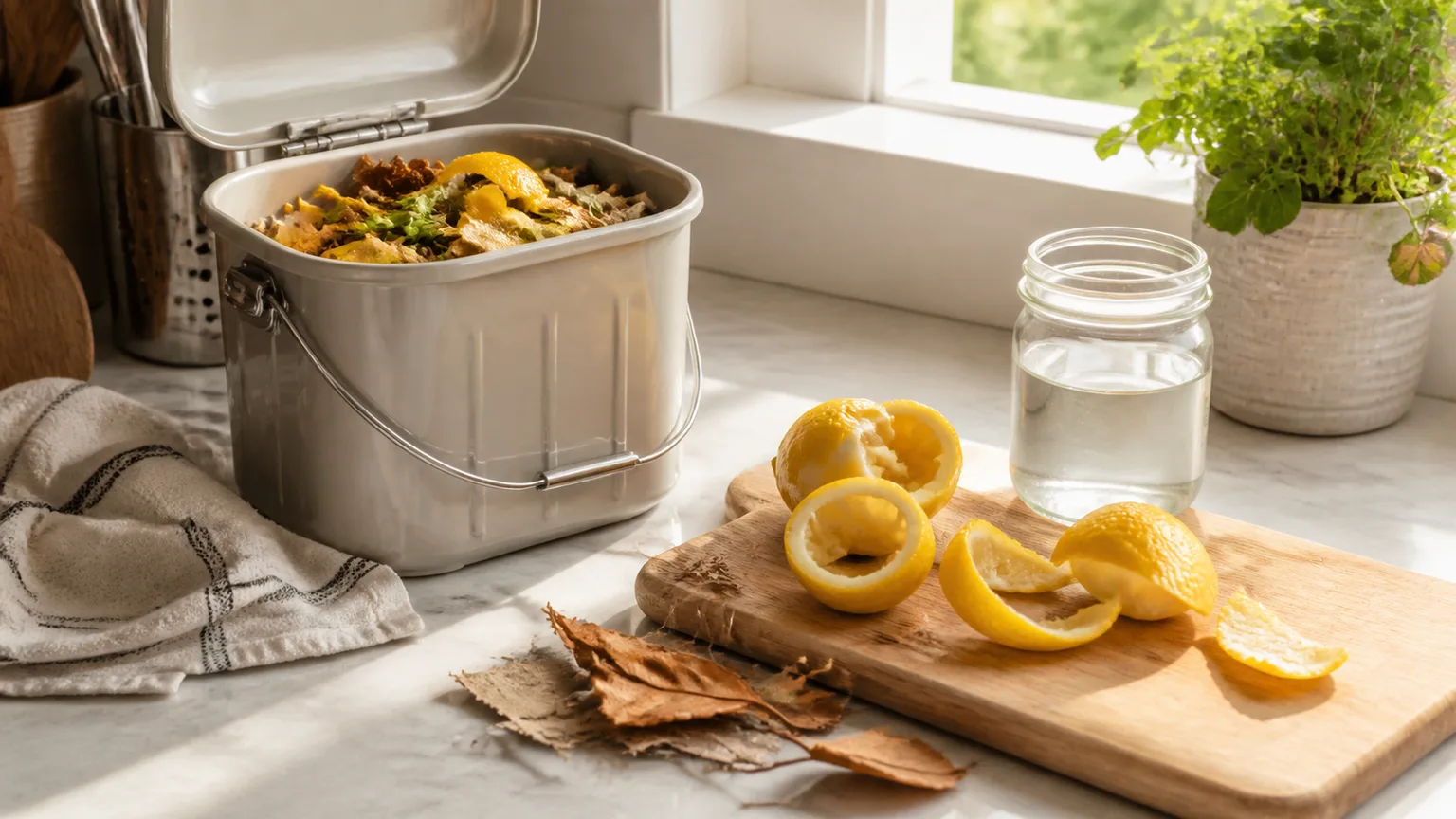
If you have a handful of lemon rinds after cooking, the best garden use is usually composting them, not burying them beside a plant. Lemon peels are moist, fibrous food scraps with aromatic oils; they can become useful organic matter, but they are not a measured fertilizer, a reliable soil acidifier, or a ready-made pesticide.
That distinction makes the rest of the decision easy. Put most peels into a balanced compost system, reserve fresh peel for a brief and controlled scent experiment if you have a specific reason, and keep raw citrus away from pots, seedlings, pets, and places where food scraps attract wildlife.
The best default is to compost lemon peels
Yes, lemon peels can go into a traditional compost pile, enclosed bin, or municipal organics stream. The Royal Horticultural Society’s composting guidance includes plant-based kitchen peelings as green material and recommends combining them with dry brown materials such as woody waste, paper, and cardboard.
Lemon rind breaks down more slowly than soft fruit because it is thick, waxy, and fibrous. Epic Gardening’s citrus-composting guidance and Gardening Know How’s citrus compost guide both point to the same practical fix: cut peels into smaller pieces and distribute them through a balanced pile instead of adding a whole rind as a damp layer.
The garden benefit comes after decomposition. Finished compost can add organic matter that improves the soil’s structure, water handling, and biological activity; a fresh lemon peel sitting beside a tomato stem does not deliver those benefits on demand.
What lemon peels can—and cannot—do
The useful part of a lemon peel is its role in a process, not a secret dose of plant food. It supplies moisture and biodegradable material to a compost mix, and its scent comes partly from volatile compounds such as limonene. That is enough to make it worth saving, but not enough to justify every claim made about citrus scraps.
Think of a peel in three stages:
- Fresh peel: A wet, food-rich scrap that can mold, dry into a hard piece, or attract flies and animals if left exposed.
- Active compost ingredient: Material being processed by microbes, fungi, and other decomposers alongside browns and greens.
- Finished compost: A stable, crumbly soil amendment made from many ingredients, including—but not defined by—the lemon peel.
The difference matters when someone says that “lemon peels feed plants.” The accurate version is that compost made with lemon peels can contribute organic matter. Raw peel does not have a dependable nitrogen-phosphorus-potassium analysis, and it should not replace a crop-appropriate fertilizer or a soil test.
Match the method to your garden goal
Use this quick decision rule before you take a knife to the next peel:
| Your goal | Best route | Why |
|---|---|---|
| Reduce kitchen waste | Chop and compost | The pile controls moisture, airflow, and decomposition. |
| Improve bed soil | Use finished compost | The material is processed and easier to spread evenly. |
| Test whether a pest dislikes citrus scent | Use a few pieces at a bed edge for a short observation | This keeps the experiment separate from the root zone and gives you a stop point. |
| Have no compost bin | Bury a small amount in a future in-ground row | Soil can process it slowly, but the method is less controlled. |
| Start a seed | Use a real seed tray or small nursery pot | Drainage, root space, and predictable moisture matter more than the novelty of a rind. |
| Clean pruning tools | Use a proper cleaning and disinfecting method | Lemon peel can wipe grime; it cannot be treated as reliable pathogen sanitation. |
If you garden in containers, have compacted or waterlogged soil, or already deal with rodents and fruit flies, choose the covered compost route. Fresh food scraps are harder to manage in a small root zone than in a larger compost system.
1. Compost lemon peels the reliable way
Composting is the most forgiving use because it puts the messy stage away from living roots. A good pile has enough volume and variety to dilute one ingredient, and you can correct its moisture and texture with dry leaves, shredded cardboard, or other porous browns.
The RHS describes greens as soft, nitrogen-rich material and browns as dry, carbon-rich material. Lemon peels belong with the greens, even though the rind itself feels tougher and drier than a lettuce leaf. Do not let citrus become the only green material or the only brown material in a small bin; balance matters more than the name of the scrap.
How to prepare peels for the bin
Use this five-step routine:
- Remove stickers, plastic, and rubber bands. The peel belongs in the compost, not the produce label.
- Cut or tear the rind into small pieces. Roughly 1 inch or smaller is a helpful target, but there is no need to zest every scrap.
- Mix the pieces into other food and plant material. Avoid dropping a thick citrus layer into one corner.
- Add dry browns. Cover the fresh scraps with dry leaves, shredded plain cardboard, torn paper, or chopped stems.
- Check the pile over time. It should stay damp but not sodden, and it should have enough air that the contents do not smell putrid.
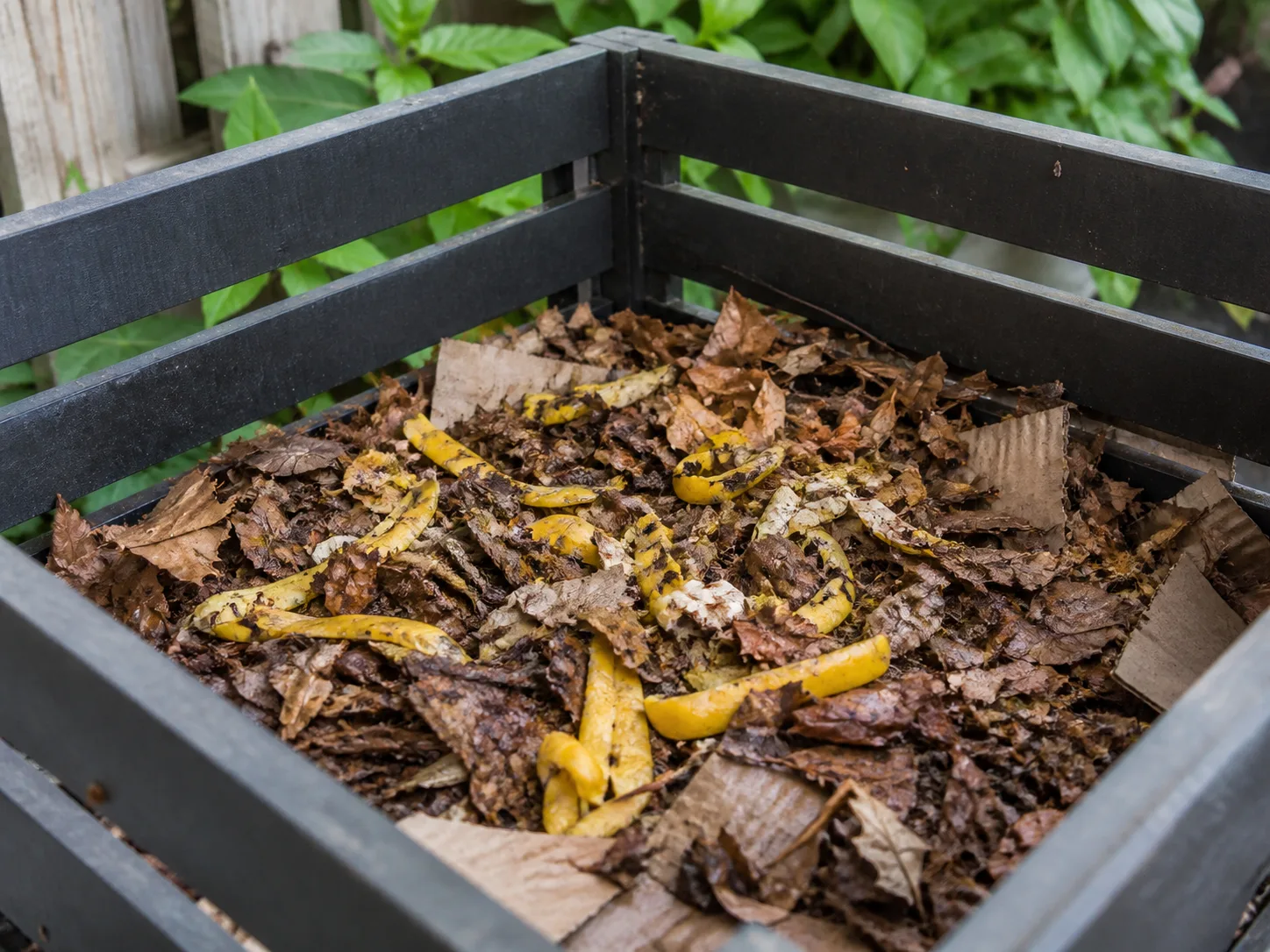
Drying is optional. If your kitchen scraps are very wet or you have accumulated a large bowl of rind, spread the pieces out briefly so they do not arrive as one slippery clump. Do not store damp peel in a sealed container for days; a lidded countertop caddy that is emptied regularly is simpler and cleaner.
The balance does not have to be perfect by volume. The RHS offers a rough guide of 25–50 percent soft green material and 50–75 percent chopped brown material, while practical compost educators often use a different starting ratio. Treat those figures as a way to notice an obviously wet, green-heavy pile—not as a recipe that requires weighing lemon rinds.
Give the pile air by mixing it occasionally, and keep it moist enough for decomposition without making it drip. Home compost may take months or longer; the RHS notes that garden compost can take six months to two years to mature depending on the setup. Judge readiness by appearance and smell: mature compost is dark, crumbly, and earthy, with no hot or sour center.
Fix a sour, wet, or fly-filled pile
If the bin smells sour, the first move is not to add more lemon peel or garden lime. Open the pile, mix in dry browns, and improve airflow. Too much water and too little oxygen can create a slimy pocket whether the ingredient was citrus, grass, or a bowl of melon scraps.
Flies usually mean fresh food is exposed or the pile is too wet. Bury new scraps inside the pile and cap them with leaves or cardboard. If raccoons, rats, or neighborhood pets are investigating, use a secure lid or municipal organics collection instead of trying to mask a food source with citrus fragrance.
Moldy peel is a judgment call based on the whole system. A well-managed active pile can process ordinary moldy plant scraps, but if you have a cool, inactive bin, a large visibly rotten load, or a pile that is already failing, do not add more wet food. Remove the worst material, add browns, and correct the system before returning to normal amounts.
2. Use finished compost around plants
Once the lemon peel is no longer recognizable and the compost smells earthy, it has a much better job than raw rind: it can join your regular soil-care routine. Spread a thin layer over an established bed or lightly incorporate it into the topsoil before planting, keeping compost away from plant crowns and woody trunks.
The RHS explains that homemade compost can improve soil structure, aeration, water-holding capacity, and biodiversity. Those are properties of the finished, mixed compost—not a special lemon effect. The U.S. Environmental Protection Agency’s compost overview also treats composting as a way to return organic material to soil, not as a substitute for every fertility input.
Finished compost is not a guaranteed fertilizer. If vegetables are pale, growth is weak, or a bed has a known nutrient problem, use a soil test and a crop-appropriate recommendation rather than trying to correct it with more kitchen scraps. Compost improves the growing environment gradually; it does not supply a controlled dose of every nutrient a plant might need.
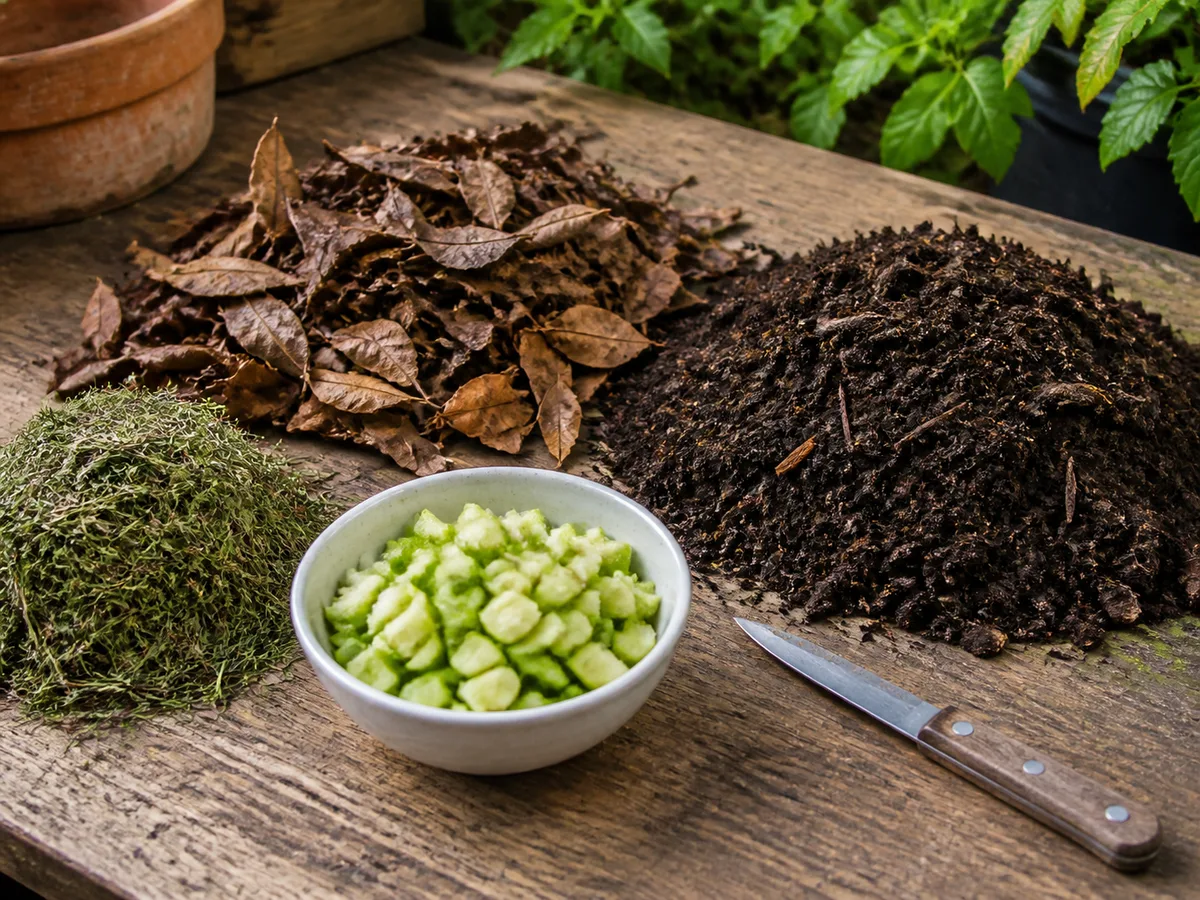
Do not use unfinished compost in seed trays or press raw peels against a stem. The material can continue to heat, settle, or attract small flies. Let the compost finish, pull out any large recognizable pieces, and return those pieces to the next batch.
3. Try fresh peels as a short-term pest observation
Fresh lemon peel has a strong smell, so it is reasonable to ask whether that scent changes pest behavior. The careful answer is possibly for a short time and in some situations, but not reliably enough to call it pest control.
The 2024 review of citrus-based bio-insect repellents describes compounds such as limonene, citral, citronellol, and alpha-pinene, while also emphasizing that composition, extraction method, and dosage affect repellency. That is a very different situation from a kitchen peel exposed to sun, rain, soil microbes, and an unknown amount of oil.
The EPA’s limonene pesticide record is another useful boundary. Limonene can be used in formulated pesticide products, but a chemical’s use in a tested formulation does not turn a loose rind into a labeled treatment with a known concentration, target pest, or application rate.
Why citrus scent is not pest control
Do not use lemon peels to diagnose a pest, protect a whole crop, or justify spraying a homemade citrus extract on leaves. The scent fades, rain redistributes it, and the same aroma that seems unpleasant to one insect may do nothing to another. Fresh oils can also irritate plant tissue or affect non-target insects when concentrated.
When damage is continuing, identify the pest first. Look under leaves, inspect new growth, check the soil surface, and note whether the damage is chewing, sucking, mining, or simply weather stress. Then use sanitation, exclusion, hand removal, traps, beneficial-insect protection, or a product labeled for that crop and pest as appropriate.
A low-risk citrus-peel trial
If you want to observe the scent effect, keep the test small and separate from the plant’s roots:
- Choose a bed edge or a path border, not a seed tray, container, or edible leaf surface.
- Place a few chopped pieces several inches away from stems and away from flowers being visited by pollinators.
- Record what you see for a day or two, including whether the target insect changes course and whether ants, flies, slugs, birds, or mammals investigate.
- Remove the pieces before they become slimy, moldy, or attractive to wildlife.
- If the pest damage continues, stop the peel experiment and switch to identification and integrated pest management.
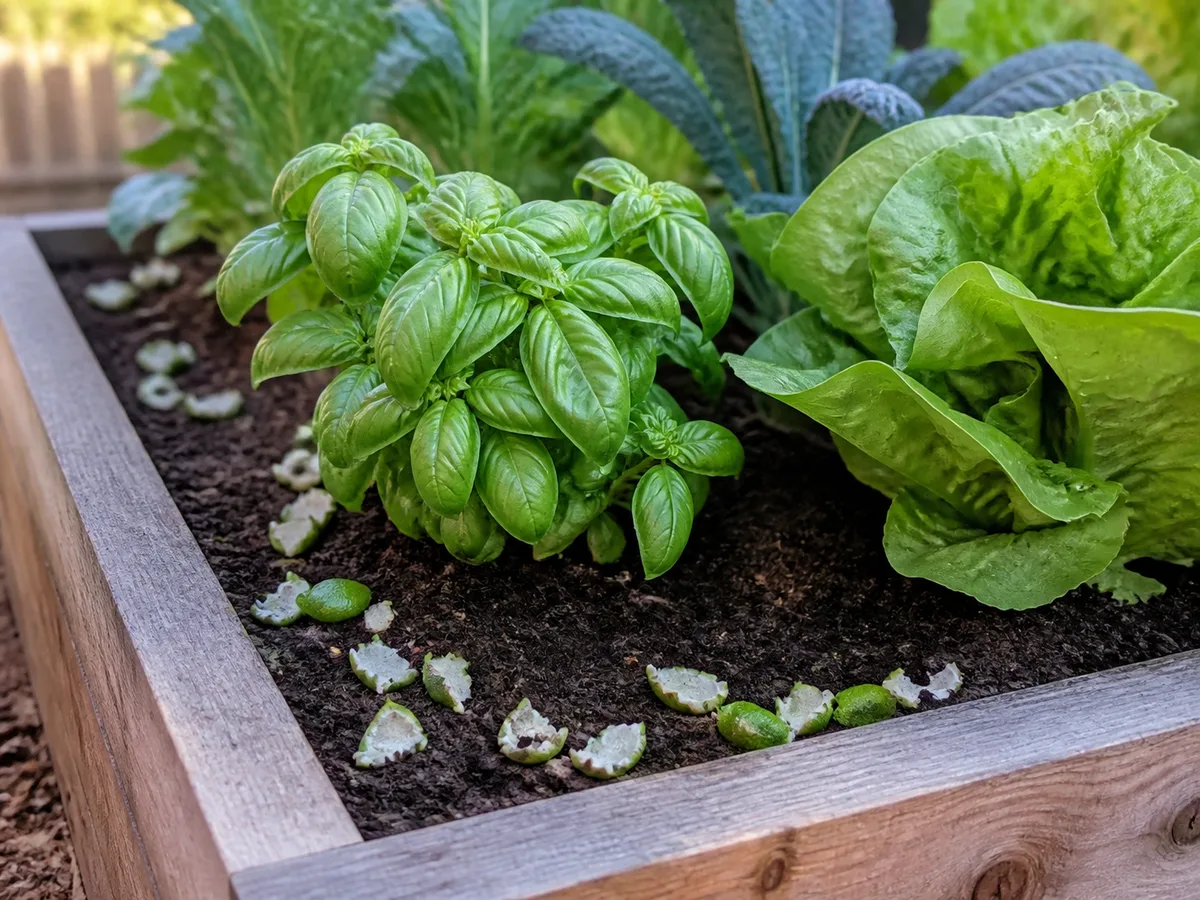
This is an observation, not a treatment. A few pieces that seem to change insect traffic on one warm afternoon do not prove that lemon peels will protect the bed tomorrow. The value of the experiment is that it is small, reversible, and honest about what it can show.
4. Bury a small amount in an outdoor bed
Trench composting is a reasonable backup when you have a few peels and no active compost bin. It works best in an established, in-ground bed with good drainage—not in a container, a freshly planted seedling’s root ball, or a bed already visited by digging animals.
Dig a narrow trench in a future planting row, place a small amount of chopped peel in the bottom, mix it with other plant scraps if you have them, and cover it completely with soil. Keep the material away from stems and crowns. This is slow decomposition in place, not a quick nutrient injection.
Wait until the peel is mostly broken down before planting directly over the trench. Warm, aerated soil may process a small amount in several weeks; cool, compacted, or waterlogged soil can take much longer. If you can still see a wet rind, treat the spot as an active food-scrap pocket rather than a finished planting medium.
Do not use trench composting if your garden has persistent rodent, raccoon, or dog traffic. A covered bin gives you more control over food smells and access. The same rule applies to raised beds with shallow soil: a small open bed is not automatically a safe composting system just because it is outdoors.
5. Lemon halves as seed starters are limited
The lemon-half seed starter is appealing because it turns a kitchen scrap into a tiny planter. It can work as a short-lived demonstration for a quick-germinating seed, but it is not an improvement over a clean cell tray or small pot.
The rind has limited root space, no built-in drainage unless you make holes, and enough residual pulp to mold if it is not cleaned well. Its eventual breakdown also does not provide the controlled, airy, low-salt seed-starting mix that young roots need. A seedling does not benefit just because its container once held lemon juice.
If you try it, scoop out all pulp, make drainage holes in the base, fill it with a proper seed-starting mix, and set it in a tray that can catch water. Use it only temporarily, move the seedling before roots circle the small space, and do not plant a whole lemon half into a container as if it were a slow-release fertilizer.
For most gardeners, use the lemon peel in compost and start the seed in a purpose-built container. That choice is less photogenic but gives you a better chance of managing moisture, transplant timing, and root development.
What to skip: soil acidifying and fertilizer claims
Lemons taste acidic, but that does not make lemon peels a controlled soil-acidifying product. Organic scraps change as they decompose, and the amount of peel, soil volume, moisture, microbial activity, and starting pH all affect what happens. A few peels cannot be translated into a dependable pH adjustment for a whole bed.
Do not confuse lemon peels with garden lime. N.C. Cooperative Extension explains that agricultural lime is ground limestone, while dolomitic lime also supplies magnesium; both are mineral soil amendments used to raise pH when a soil test supports that choice. Penn State Extension recommends soil testing before applying lime or fertilizer, and its current guidance warns that applying more nutrients than recommended can harm plants and waste money.
That distinction protects acid-loving plants such as blueberries, azaleas, and rhododendrons. If a test says the soil is too acidic, follow the test’s amendment and rate. If a plant is yellow, first consider light, watering, roots, pests, and nutrient availability before assuming the answer is a bucket of lemon rinds.
Why lemon peels do not disinfect pruning tools
A lemon peel can wipe away a little sap, grease, or surface dirt, but cleaning is not disinfection. Rubbing citrus over a blade does not give you a known contact time or a dependable pathogen-killing concentration, so it should not be the method you rely on when moving between diseased plants.
An extension response on black spot in roses recommends ethanol or isopropyl alcohol for sanitizing pruning equipment between cuttings. Use a suitable disinfectant according to the product’s directions, let the blade dry, and clean off heavy sap or soil first so the disinfectant can contact the metal.
Keep lemon peels for compost and kitchen cleanup, and use proper tool hygiene when the job is disease prevention. That small separation prevents a pleasant-smelling wipe from creating false confidence at exactly the moment a pathogen could move from one plant to the next.
Keep lemon peels away from pets and sensitive setups
Do not leave fresh lemon peel where a dog, cat, or horse can chew it. The ASPCA lists lemon as toxic to dogs, cats, and horses, identifying essential oils and psoralens as toxic principles and noting that skins and plant material can cause problems.
That makes an open mulch ring a poor choice for a pet-accessible garden. Put peels in a lidded compost bin, keep countertop scrap containers closed, and clean up pieces that fall onto patios or paths. If a pet may have eaten lemon skin or a large amount of peel, contact a veterinarian or animal poison-control service promptly.
Worm bins also deserve restraint. The RHS worm-composting guide says citrus peel should be limited or preferably cooked before adding, while a traditional compost pile handles citrus more easily. A small, established wormery may tolerate a tiny amount mixed into other food, but a large fresh load can be slow to disappear and can upset the bin’s balance.
Do not add lemon peel to a worm bin that already smells sour, has standing liquid, or contains more food than the worms are eating. Pause feeding, improve drainage or add dry bedding as appropriate, and wait for the existing material to reduce before trying a small amount again.
Lemon-peel mistakes that create new problems
The same mistakes appear again and again because they confuse a raw ingredient with a finished garden input:
- Scattering whole rinds around every plant: They dry into hard pieces, rot unevenly, and can attract animals. Chop and compost instead.
- Using peels to change soil pH: The composition is too variable. Test soil and use a mineral amendment only when a recommendation supports it.
- Making concentrated peel spray: The final oil concentration is unknown and may burn foliage or harm non-target organisms. Do not treat a kitchen extract as a labeled pesticide.
- Adding a thick citrus layer to a worm bin: Small systems have less room to dilute acidity and moisture. Use a traditional compost pile or municipal collection.
- Planting a seed into a closed lemon half: Without drainage, the mix can stay wet and moldy. A real seed-starting container is more predictable.
- Calling a lemon wipe a disinfectant: It can remove dirt but does not replace tool sanitation between diseased plants.
- Leaving peels where pets or wildlife forage: Secure the compost system and stop feeding the animals around your beds.
The useful rule is simple: if the peel is still recognizable, treat it like food waste. If it has become stable, earthy compost, treat it like a soil amendment. If the goal is pest control, sanitation, or pH correction, use the method designed and tested for that job.
Conclusion: compost first, experiment second
Lemon peels deserve a place in a garden’s waste loop, but their best role is modest. Chop them, mix them into a balanced compost pile, cover fresh scraps, and wait for finished compost before using the result around plants.
Fresh peel can support a brief scent observation at the edge of a bed, and a small amount can be trench-composted in a healthy outdoor row. Skip open mulch rings, citrus-heavy worm bins, lemon-based pH corrections, raw peel fertilizer claims, and tool-disinfection shortcuts. You will get more reliable results by asking what the garden needs first, then sending the peel to the system that can actually do that job.



