9 Proven Ways to Reduce Ticks in Your Backyard
Learn how to reduce ticks in your backyard with evidence-aware mowing, cleanup, barriers, targeted treatment, tick tubes, and personal checks.

You cannot make a backyard permanently tick-free, especially if it borders woods, wetlands, brush, or a property with plenty of wildlife. You can, however, make the places where your family sits, plays, gardens, and walks less attractive to host-seeking ticks—and make it harder for ticks to travel from risky edges into those activity zones.
The most useful shift is to stop treating every square foot of the property as equally risky. Start with the shaded, leafy, brushy boundary where animals move through. Then work inward: keep the high-use area open, manage the edge, discourage hosts, and use targeted controls only when the problem justifies them. The Centers for Disease Control and Prevention (CDC) recommends this kind of tick-safe zone alongside personal protection, while the National Pesticide Information Center (NPIC) stresses that ticks climb vegetation rather than jump or fly. CDC tick-prevention guidance and NPIC’s tick-control guidance are the best starting points for the plan below.
The fastest way to lower risk: work from the edge inward
Why the lawn edge matters
Ticks are not evenly sprinkled across a lawn. The highest-priority places are usually the transition zones: leaf litter under shrubs, brush at a tree line, low ground cover, stone walls, woodpiles, and the first several feet of grass beside those features. These spots stay cooler and more humid and offer small mammals a place to travel or nest.
That does not mean every shady planting is a tick colony, or that a sunny lawn is automatically safe. It means your first hour of cleanup will usually buy more protection at a woodland edge or brushy fence line than in the middle of an already open lawn. Harvard Health likewise recommends short grass and placing lawn furniture in sunnier areas because ticks favor moist, shady conditions. Harvard Health’s yard guidance makes the same important distinction: yard changes may reduce nearby ticks, but repellents and tick checks remain essential.
How to check for activity with a tick drag
Before you buy a spray or rebuild the yard, sample the places people and pets cross. Attach a square of pale fabric, such as white flannel, to a dowel or rake handle and slowly drag it through grass, leaf litter, and the edges of shrubs. Stop frequently and inspect the cloth for tiny dark specks; use a magnifier if necessary, and do not handle an unknown tick with bare fingers.
This is a rough presence check, not a medical or population survey. A negative drag on one morning does not prove the yard is safe, and a positive one does not tell you which species is present or whether a pathogen is carried. Use the result to rank work: sample again after cleanup, and pay extra attention to the same shaded edges if ticks keep turning up.
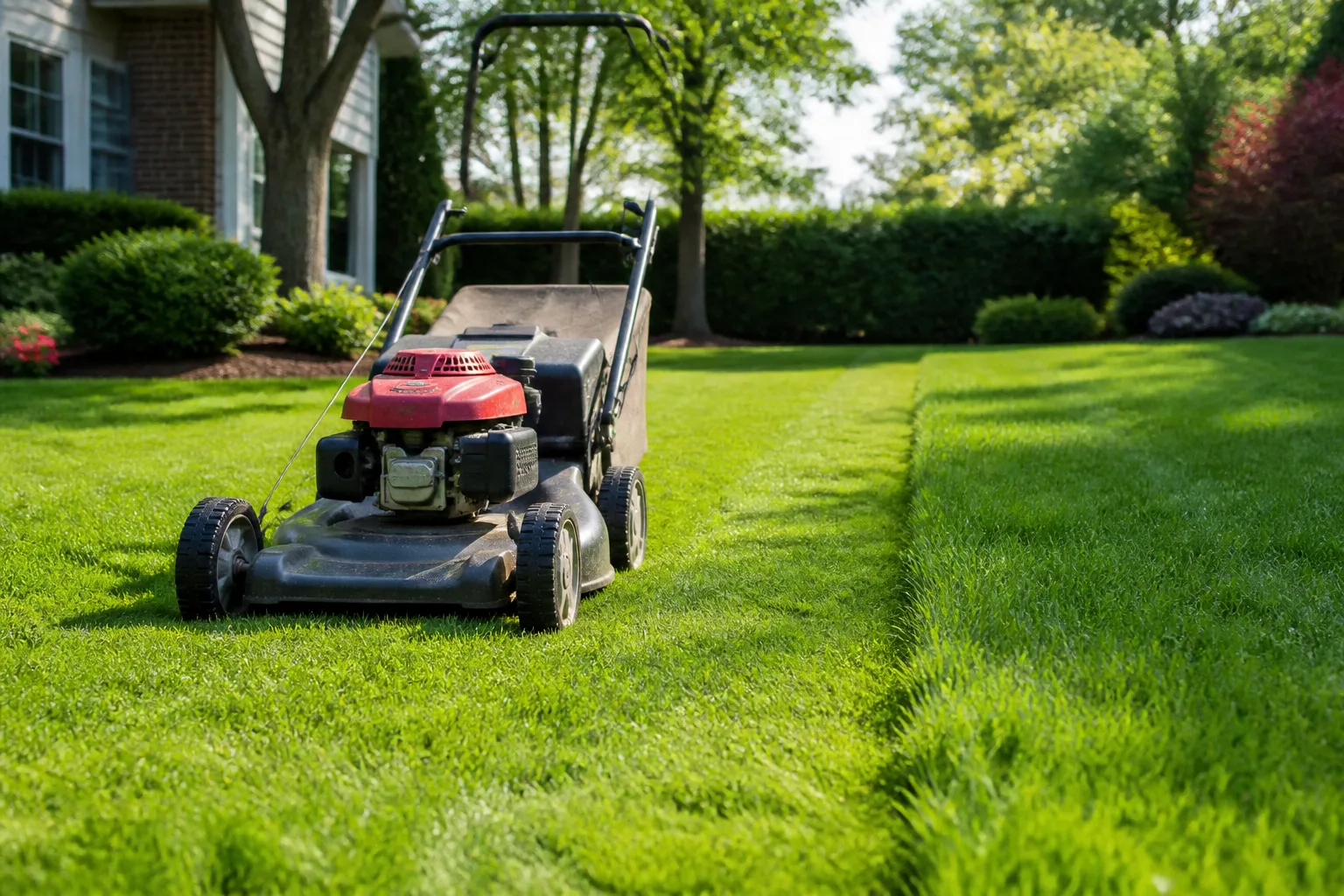
1. Keep grass maintained, but do not chase a magic mowing height
Mow often enough that grass does not become a tall, overgrown corridor around the places people use. Trim the strips along fences, paths, play areas, and planting beds so feet, shoes, and pet fur are less likely to brush against dense vegetation. Keep the mower and trimmer work focused on access and visibility rather than promising that one exact height will kill every tick.
There is an important evidence caveat here. Mowing is a sensible way to improve visibility, reduce overgrowth, and manage some tick species, but it is not a universal blacklegged-tick control. Recent expert reporting in LawnStarter’s research-backed tick-control review describes studies that found no meaningful difference in blacklegged tick density between mowed and unmowed grass, while noting that species such as lone star and Asian longhorned ticks may respond differently. The practical takeaway is simple: maintain the lawn, but do not skip leaf, brush, host, and personal-protection work because the grass looks neat.
If the lawn is drought-stressed, follow the mowing rules for your grass type rather than scalping it. A brown, scalped lawn creates its own problems without proving that the tick risk is gone. The best mowing target is a lawn that is easy to walk through and inspect, with no tall fringe connecting it to dense habitat.
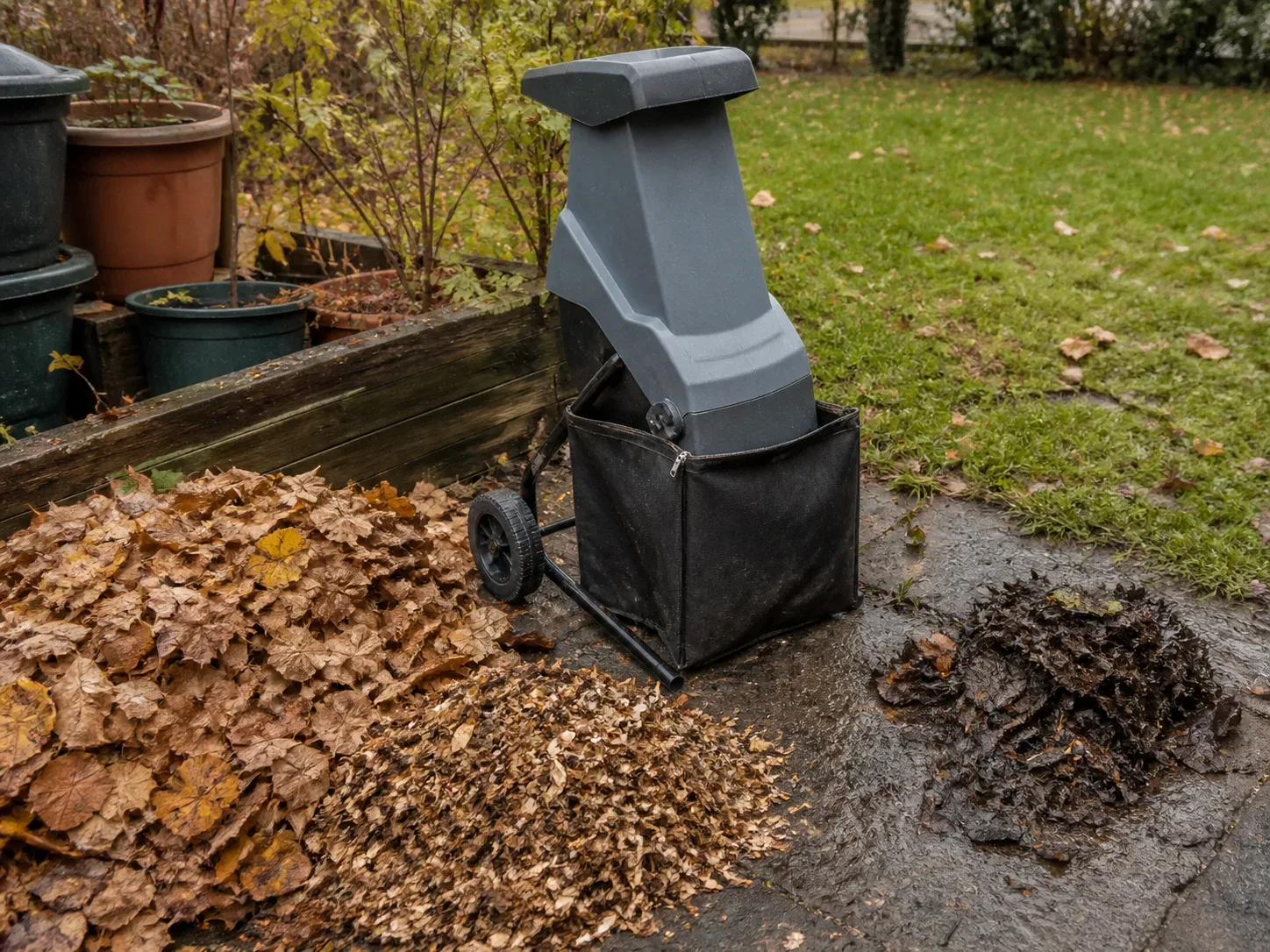
2. Remove leaf litter, brush, and hiding places
Clear leaves, dead grass, fallen branches, brush piles, abandoned furniture, and junk from the areas people use and from the narrow boundary between lawn and woods. Prune shrubs enough to open a walkway and remove vegetation that hangs across paths or creates a damp tunnel beside a deck. Stack firewood neatly, keep it dry, and place it away from the house and play areas.
This is not just cosmetic work. Debris gives ticks cover and gives rodents and other hosts places to move, rest, or nest. The CDC specifically recommends removing leaf litter, clearing tall grass and brush, stacking wood neatly in a dry area, and removing old furniture or trash that can provide hiding places. Its residential yard recommendations are more useful than a blanket instruction to “tidy the yard” because they identify the features to remove first.
What to do with leaves
Do not blow or rake every leaf into a thick windrow at the woodland edge. Cornell Integrated Pest Management summarizes a study in which artificially accumulating leaves along forest margins was associated with about three times as many blacklegged tick nymphs as areas where leaves were not piled there. Cornell’s leaf-management guidance recommends municipal pickup or having collected leaves removed offsite, or at least moved to a lower-use area away from the lawn-forest edge.
If your local conditions and lawn type allow it, mulch-mow a light layer of leaves into the turf rather than creating a deep edge pile. Composting can also be sensible, but the research summarized by Cornell did not test every composting or mulching method under field conditions. Keep the rule practical: avoid creating a damp, deep leaf bank beside the exact path where children, pets, and gardeners enter the yard.
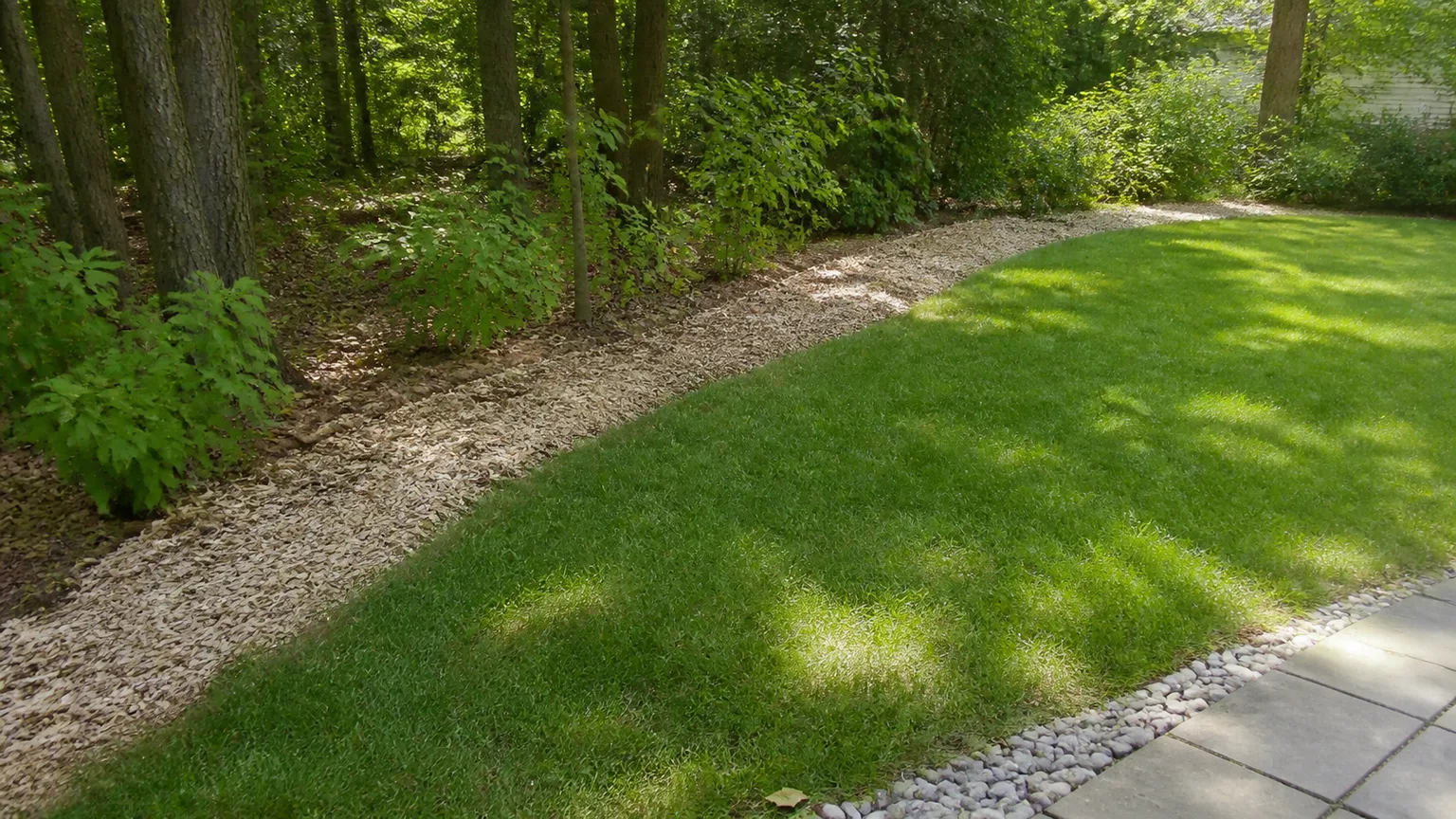
3. Build a three-foot transition zone
A roughly three-foot strip of gravel, stone, or wood chips between lawn and wooded or brushy habitat is a useful design cue and can help separate high-use space from the edge. Use it to create a visible walking route around a play area, patio, or garden rather than letting turf run directly into leaf litter. Keep the strip open enough to inspect and maintain; do not fill it with dense ground cover that recreates the habitat you meant to separate.
The CDC and NPIC both include a three-foot wood-chip or gravel barrier in their residential tick guidance. A path also changes behavior: people can see where the lower-risk lawn ends and the brush begins. That matters because a barrier is only helpful if it keeps shoes and bare legs out of the vegetation on the other side.
What the barrier can and cannot do
Do not treat the strip as a moat that ticks cannot cross. The latest evidence is mixed by species and movement pattern. The Homes & Gardens review of current tick-control research notes that rough borders may be less useful against blacklegged ticks, which often climb vegetation to meet a passing host, than against species that move more horizontally across the ground.
Use the barrier for three jobs: create a maintained gap, mark the risk boundary, and make the route through the yard more deliberate. Repair bare spots where turf grows into the woods, keep leaves from collecting on top, and do not place the family’s favorite chair or a sandbox on the brush side of the strip.
4. Put play and seating in the open
Move patios, chairs, picnic tables, playhouses, and playsets away from the lawn’s wooded edge and from dense shrub beds when you can. Choose the sunniest, airiest part of the yard that still works for shade and heat safety, then connect it to the house with a mowed path or hard surface. Keep the grass trimmed right up to the activity zone so a child or dog is not constantly brushing through tall vegetation.
The CDC specifically advises keeping playground equipment, decks, and patios away from yard edges and trees. This is a high-return change because it reduces exposure even before you solve the entire property. It also makes tick checks easier: people tend to remove shoes, jackets, and backpacks in one predictable place instead of carrying them through brush and into the house.
Do not remove every tree or turn a useful garden into a bare lot. The point is to reserve the most accessible, frequently used area for an open activity zone and let the wilder planting remain a deliberate boundary that people and pets do not cross casually.

5. Reduce deer, rodent, and pet traffic
Ticks often arrive on animals, so habitat work has limits when deer, mice, raccoons, rabbits, stray dogs, or free-roaming pets use the yard. A fence that excludes deer can make a major difference on a deer-heavy property, but it will not stop mice or chipmunks. Think in layers: exclude the largest hosts, remove attractants for small mammals, and keep pets on a veterinarian-approved tick-control plan.
For deer, use a fence designed for the animal and your local rules; an ordinary low decorative fence may only become a convenient rubbing post. Close gaps, maintain gates, and do not assume the fence is working if fresh tracks or browsing continue. The CDC recommends fencing to discourage unwelcome animals, while NPIC notes that keeping deer and rodents out can reduce ticks around the home.
Close the easy food and shelter sources
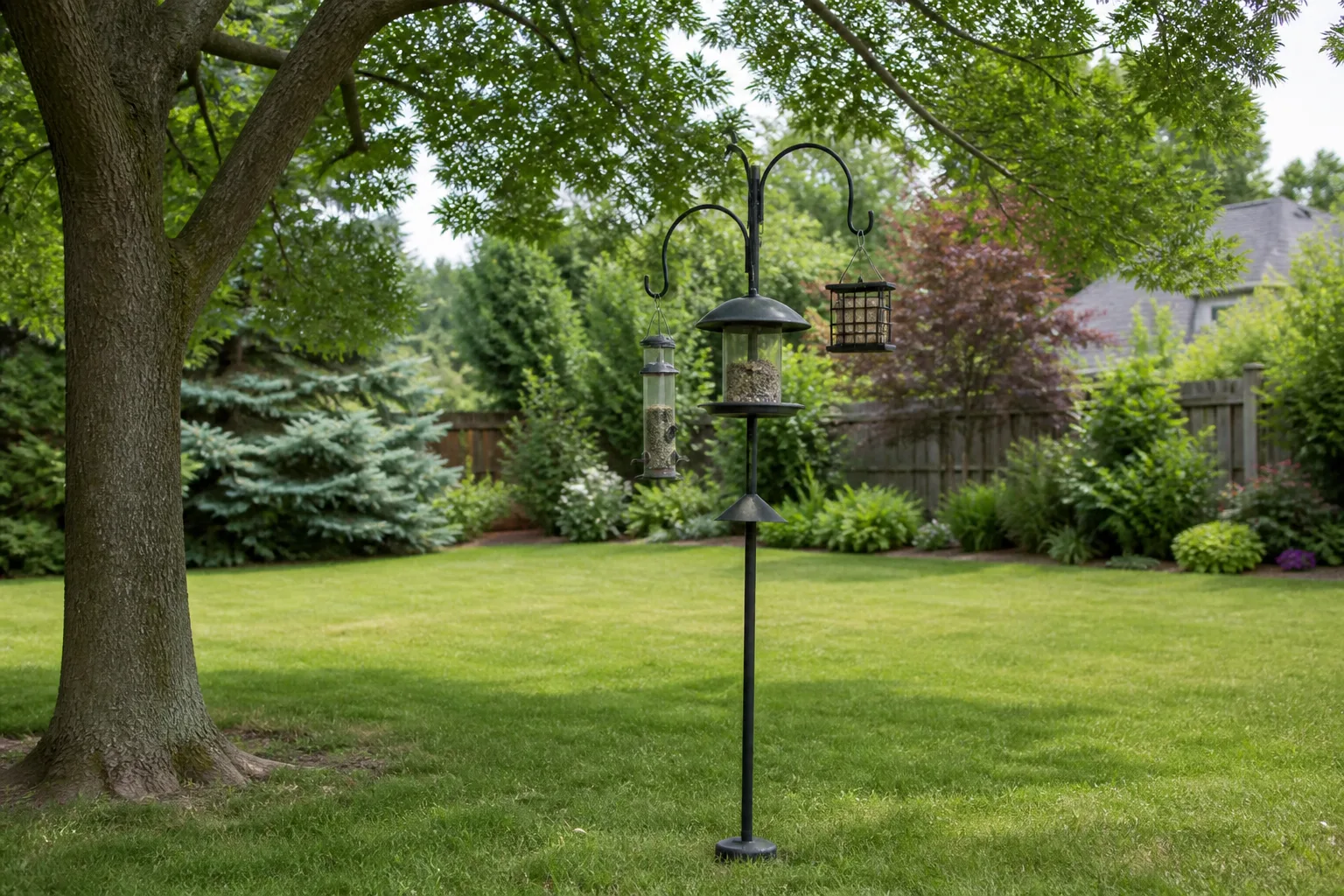
Secure trash and compost, clean up fallen fruit and spilled birdseed, and move feeders away from the places where children play or dogs lounge. Store pet food indoors, close sheds and crawl spaces, and avoid leaving piles of lumber, toys, or unused equipment against a damp fence. These changes do not “repel” ticks directly; they make the property less attractive to animals that can carry them.
Birds and wildlife are part of a healthy yard, so do not turn this into a campaign against every animal. The useful goal is to stop concentrating food and shelter beside high-use paths. If rodents are repeatedly nesting in stone walls, woodpiles, or dense foundation plantings, fix the habitat first rather than scattering poison where pets and non-target wildlife can reach it.
6. Treat only the places that keep producing ticks
When a yard stays positive after cleanup and redesign, a targeted pesticide treatment may be appropriate. Do not automatically spray the whole lawn. Focus on the leaf-litter edge, brush, dense ornamental beds, stone walls, and other microhabitats where your sampling or repeated tick encounters show a problem. A spot treatment reduces the amount of product used and avoids treating low-risk open turf that people and pets occupy most often.
Read the label before buying or applying anything. The label determines whether the product is permitted for ticks, where it may be used, how it must be mixed and applied, re-entry restrictions, protective equipment, and any water or pollinator precautions. The CDC says pesticides can reduce ticks in treated areas but should not be the only way you reduce infection risk; it also recommends checking with local health or agricultural officials about timing, product choice, and residential-application rules.
Be skeptical of the word “natural.” The CDC’s Emerging Infectious Diseases review of unregulated minimum-risk tick products found large differences among products, including products made with the same botanical ingredients. Some plant-oil treatments worked briefly or under specific application conditions, while others had minimal residual effect. “Natural” describes an ingredient or regulatory category, not a guaranteed result or a free pass around label safety.
When a professional is the better choice
Call a licensed pest professional when the property is large, heavily wooded, hard to sample, repeatedly positive, or home to young children or medically vulnerable people. Ask for an inspection and a targeted plan rather than an automatic blanket application. A good provider should be able to explain the treatment zone, active ingredient, timing, re-entry interval, protection of pollinators and water, and what you still need to do after the spray dries.
If a contractor promises a permanently tick-free yard, walk away. Even an effective treatment does not stop ticks from arriving on deer, rodents, pets, clothing, or neighboring vegetation, and it does not replace personal checks.
7. Use tick tubes only as a targeted host strategy
Tick tubes are small cardboard tubes containing pesticide-treated cotton or another nesting material. Mice and some other rodents collect the material for nests; the treatment is intended to kill juvenile ticks in or around those nests. This targets a host stage that fencing cannot reach, which is why tick tubes can make sense on a property with persistent rodent activity near the woodland edge.
Use a commercial product exactly as its label directs, including placement, quantity, replacement schedule, and disposal. Do not make your own tubes by soaking dryer lint or cotton in an insecticide, and do not place treated material where children, dogs, cats, birds, or wildlife can pull it apart. A tube is a narrow tool, not a substitute for removing brush, sealing food sources, or checking people and pets.
The method is best understood as part of integrated pest management. It may help reduce immature ticks associated with rodents, but it cannot address deer-borne adult ticks or every tick species in every region. If you do not know which hosts are present, start with a yard audit and local extension or pest-professional advice rather than buying a large quantity of tubes blindly.
8. Design plantings for sightlines, not “tick-repelling” scent
Lavender, rosemary, marigolds, and other fragrant plants can be beautiful, useful, and worth growing. They do not create a reliable invisible fence around a backyard. Plant them where they fit your climate and garden design, but keep dense plantings, ground covers, and low branches away from the places where people sit, play, and move between the house and lawn.
The distinction matters because a plant’s essential oil may affect ticks in a laboratory test while the living plant releases too little volatile material, in the wrong conditions, to protect a yard. The CDC journal review found that commercial botanical products can vary substantially in both knockdown and residual performance. That is not evidence that every scented plant is useless; it is evidence that fragrance alone is not a dependable yard-control method.
Favor clear sightlines, manageable bed edges, and plant spacing that lets you inspect the soil surface. If you want a wildlife-friendly garden, place the densest habitat in a deliberate low-traffic zone and connect it to the rest of the yard with a clearly maintained path. You can support pollinators and still avoid turning the front step, swing set, or dog run into a damp thicket.
9. Make personal and pet checks part of yard care
The final layer is the one a “tick-proofing” checklist often underplays: protect the people and animals using the yard. Wear shoes and socks, long pants, and a shirt that makes ticks easy to see when you are working at the edge. If you use a skin or clothing repellent, choose an EPA-registered product appropriate for the person and follow its label; the CDC lists DEET, picaridin, IR3535, oil of lemon eucalyptus, PMD, and 2-undecanone among options for people, with age-specific precautions.
After gardening or play, check skin, hair, waist, underarms, behind knees, and around ears. Inspect shoes, coats, backpacks, and pets before they come inside. The CDC advises a shower within two hours after outdoor exposure and recommends putting dry clothing in a high-heat dryer cycle; NPIC likewise recommends prompt checks and a veterinarian conversation about pet tick control. A yard plan fails if a tick rides from the brush onto a dog, then from the dog onto a sofa.
If you find an attached tick, remove it promptly with fine-tipped tweezers, pulling upward with steady pressure, then clean the skin and your hands. Save the tick only if a clinician or local health department asks for identification; do not crush it with bare fingers. Seek medical advice if you develop concerning symptoms after a bite or if you are unsure how to respond.
Common tick-control mistakes to skip
The most common mistakes are understandable: treating a tidy lawn as proof of safety, piling leaves at the woods edge, spraying without identifying the high-risk zones, and expecting a fragrant border to do the work of a fence or tick check. Another is chasing a single perfect mowing height while ignoring the shaded shrub layer where ticks and hosts actually concentrate.
Avoid spreading diatomaceous earth or household chemicals across a lawn as a shortcut. Wet conditions reduce the usefulness of dry powders, airborne dust can irritate lungs, and a product not labeled for the site or pest is not made safer by calling it homemade. Beneficial nematodes are another popular suggestion, but current practical reviews describe species-specific and mostly laboratory evidence rather than a dependable homeowner yard treatment.
Finally, do not put the playset or dog run at the back of the property simply because that is where there is room. A few yards of open, maintained space between daily activity and the brush edge can be more valuable than a long list of decorative “repellent” plants.
A one-week backyard reset plan
You do not need to rebuild the whole landscape in one weekend. Use this sequence so each job improves the next one:
- Day 1: Map the yard. Mark the woods edge, brush, leaf piles, stone walls, play areas, seating, pet routes, woodpile, compost, and bird feeders. Drag-test two or three likely edges.
- Day 2: Open the activity zone. Move chairs, toys, and play equipment away from the densest vegetation. Mow or trim the route people actually use.
- Day 3: Remove habitat. Clear brush, branches, junk, and deep leaf litter from the high-use side of the boundary. Do not blow leaves into the woods edge.
- Day 4: Fix the boundary. Add or refresh a visible gravel, stone, or wood-chip transition strip where it makes sense. Keep it free of leaf buildup and dense ground cover.
- Day 5: Remove host attractants. Secure food, compost, trash, and firewood; clean up fallen fruit and spilled seed; inspect fence gaps.
- Day 6: Choose the next control. If ticks remain in the same microhabitats, discuss a label-compliant targeted treatment, tick tubes, or professional inspection. Do not buy a blanket spray first and ask questions later.
- Day 7: Make prevention routine. Set a reminder for tick checks, pet inspections, seasonal mowing, and edge cleanup. Re-test the same zones after maintenance and after periods of heavy wildlife activity.
This sequence gives you a measurable before-and-after: fewer dense edges, clearer activity zones, fewer host attractants, and a better idea of where any treatment would need to go. It also prevents the false confidence that comes from completing one visible task—such as mowing—and assuming the problem is solved.
Conclusion
The strongest backyard tick plan is layered and specific. Maintain the lawn for access, remove leaf piles and brush, separate people from woodland edges with a visible transition zone, move play and seating into open space, reduce deer and rodent attractants, and use targeted products only when repeated evidence justifies them. Treat lavender, cedar oil, tick tubes, and mowing as limited tools with conditions—not magic words that make a property tick-proof.
Even an excellent landscape plan cannot prevent every tick from arriving. The final proven habit is the simplest: check people, pets, clothing, and gear after yard time, and use appropriate repellents and medical guidance when needed. Your goal is not an impossible sterile yard; it is fewer encounters, less exposure in the places your family uses, and a faster response when a tick does get through.



