How to Grow and Care for Huckleberry Shrubs
Huckleberry care varies by species. Compare eastern black, western evergreen, and mountain huckleberries before choosing a site, soil, or planting method.
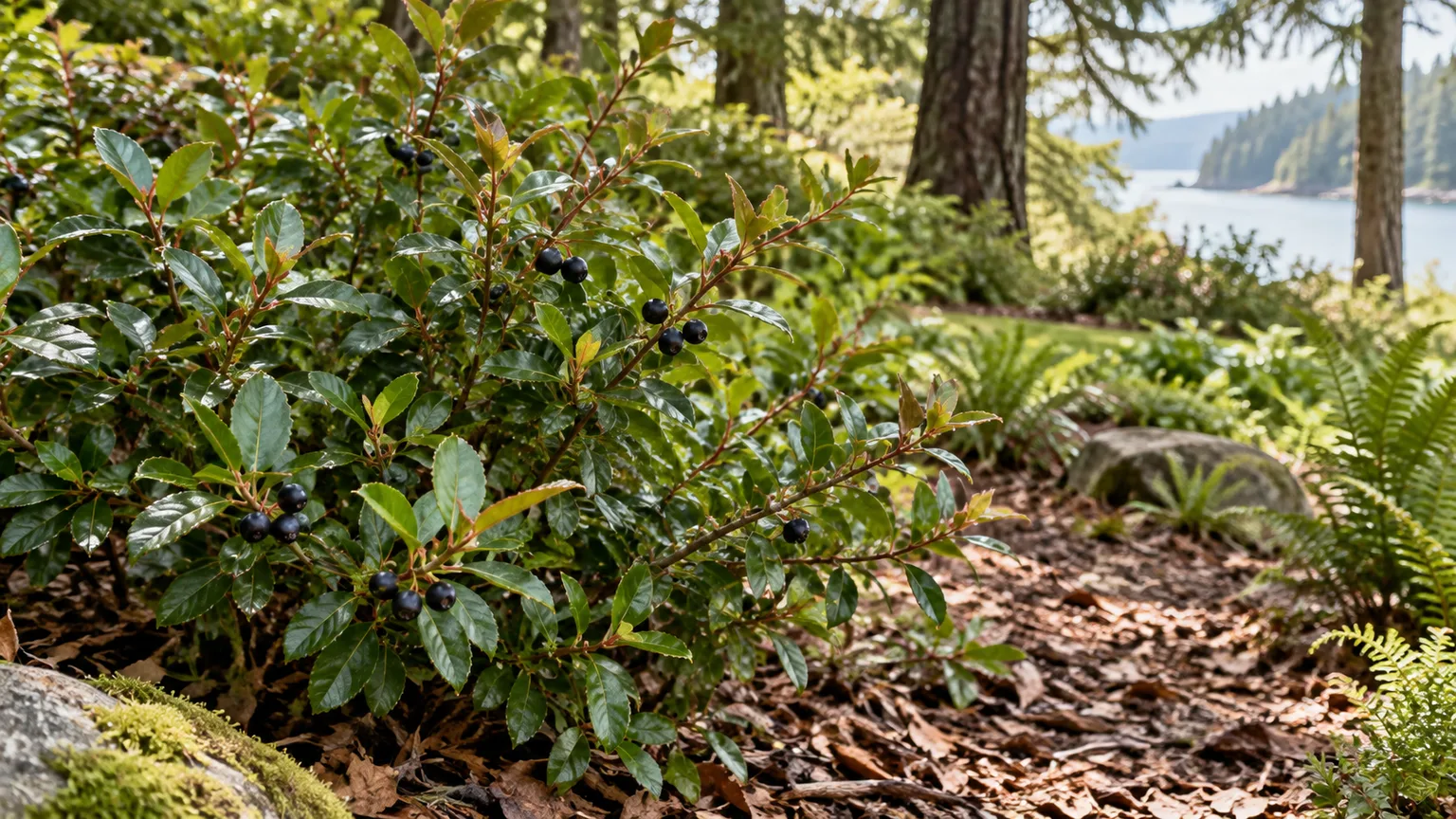
“Huckleberry” is a common name, not one uniform crop. It can describe shrubs in two genera, Vaccinium and Gaylussacia, and those species do not all share the same climate, light, soil, or fruiting requirements. The first useful step is to identify the botanical name on the plant tag; without it, a universal care schedule can send you in the wrong direction.
For most home gardeners, the practical choice is a locally adapted, nursery-grown species rather than a wild plant dug from the forest. Black huckleberry (Gaylussacia baccata) suits many eastern woodland and naturalized gardens, while evergreen huckleberry (Vaccinium ovatum) is a Pacific Coast shrub for mild maritime climates. Mountain huckleberries such as Vaccinium membranaceum are prized wild fruits, but they have resisted ordinary domestication and can be harder to establish. Match the species to your region before you amend soil or plan a harvest.
Identify the huckleberry before choosing a care plan
The name on a nursery label matters more than the word “huckleberry” in a catalog. A plant sold as evergreen huckleberry is not interchangeable with eastern black huckleberry, and neither is the annual garden huckleberry. The shared common name does not establish one hardiness range, one soil pH target, or a universal need for a second pollinator plant.
Look for the scientific name, the nursery’s provenance, and a description of the mature plant. If the label omits the species, ask the seller for it before buying. The Washington State University Magazine overview of huckleberry species illustrates how the name spans several plants and regions; for garden care, that is a reason to narrow the identification, not a reason to treat every species alike.
Western Vaccinium shrubs
The western group includes mountain or thinleaf huckleberry (Vaccinium membranaceum), red huckleberry (V. parvifolium), and evergreen huckleberry (V. ovatum), among others. Mountain huckleberry is a deciduous shrub associated with western mountain landscapes and is largely gathered as a wild fruit; WSU describes ongoing research into cultivation rather than a broadly established commercial nursery crop. If you want this species, look for a reputable native-plant nursery with a clearly labeled, container-grown start and ask where its stock was propagated.
Evergreen huckleberry is a more practical ornamental shrub for gardeners in its native Pacific Coast region. Oregon State University describes V. ovatum as an evergreen shrub native along the coast from British Columbia to California, typically around 3 to 5 feet tall with potential to reach 8 feet, with pink urn-shaped flowers and edible blue-black fruit in late summer. Its preferred exposure is sun to part shade, and OSU lists it as hardy to USDA Zone 7; use that as a documented regional reference, then consult a local nursery for microclimate and cultivar guidance. See the Oregon State University plant profile.
Red huckleberry has red fruit and a deciduous habit, so it is not the same plant as the black-berried evergreen species. Use a species-specific native plant profile to confirm local range, mature size, and site conditions rather than inferring its care from V. ovatum.
Eastern Gaylussacia shrubs
Black huckleberry (Gaylussacia baccata) is an eastern North American native with blue-black berries, orange-to-red fall color, and a low, spreading habit. North Carolina State Extension describes it as roughly 3 feet tall and 4 to 5 feet wide, often forming thickets, and notes that it grows in acidic forests and woodland areas in sun to partial shade. It favors sandy or rocky soil and can tolerate drought once established, although that does not mean a newly planted shrub should be allowed to dry out.
The NC State Extension plant profile identifies bees as pollinators and berries as food for birds and mammals. The University of Maine Cooperative Extension profile gives a useful regional phenology example: in Maine, flowers generally appear in June and ripe fruit in August. Treat those months as Maine observations, not a calendar for every latitude or huckleberry species.
Garden huckleberry is a different plant
Garden huckleberry is an annual nightshade, not a woody shrub in Vaccinium or Gaylussacia. Its growing directions, botanical identity, and fruit-handling guidance are different, so do not use this shrub guide for a packet or plant labeled “garden huckleberry.” If you are unsure what you have, pause before eating the fruit and confirm the plant with a qualified local source.
Choose nursery stock that fits your region
Start with a plant that evolved for conditions reasonably close to yours. A coastal evergreen huckleberry is a more sensible choice for a mild, moist Pacific climate than for a hot, dry inland summer; a mountain species from the interior West is not automatically adapted to a warm, humid eastern garden. Local native-plant nurseries and extension offices can help you distinguish a suitable species from a name that merely sounds familiar.
| Species | Regional fit and traits | Practical starting point |
|---|---|---|
| Black huckleberry (Gaylussacia baccata) | Eastern North American woodland and forest edges; deciduous, low, and capable of forming a thicket. | Use an acidic, well-drained site with sun to partial shade; allow room for spreading. |
| Evergreen huckleberry (Vaccinium ovatum) | Pacific Coast from British Columbia to California; evergreen and often grown ornamentally as well as for fruit. | Best considered in a mild coastal climate, in sun to part shade with dependable drainage. |
| Mountain huckleberry (Vaccinium membranaceum) | Western mountain landscapes; a valued wild fruit that remains challenging to cultivate. | Choose locally propagated nursery stock only if a regional grower can confirm site suitability. |
| Red huckleberry (Vaccinium parvifolium) | Western forest species with red berries and a deciduous habit. | Follow a local native-plant profile rather than evergreen-huckleberry instructions. |
Prefer a nursery-grown plant over a dug wild transplant. Wild shrubs may be part of a larger patch, and disturbing roots can damage a native population while leaving you with a plant that struggles to establish. WSU’s reporting on huckleberry cultivation describes the work researchers have undertaken to propagate western huckleberries, which underscores that “native” does not mean “easy to move.” Buy stock with a botanical name, regional provenance, and clear planting instructions.
Before purchasing, check the mature height and spread against the space you have. G. baccata can spread into a colony, while evergreen V. ovatum can become a substantial shrub with year-round foliage. Plan for the mature dimensions rather than crowding a small nursery pot between larger shrubs.
Select the right light and planting site
Use the species profile as the final guide, but most huckleberries are woodland or woodland-edge plants rather than universal full-sun berries. For G. baccata, NC State lists full sun and partial shade; its natural habitat includes acidic forest and woodland settings. For V. ovatum, Oregon State lists sun to part shade, while the coastal native range signals that heat and summer water stress may matter more than a simple number of sun hours.
A site with morning light and afternoon protection is a useful starting point in a hot-summer area. In a cool, mild climate, more sun may be tolerated if roots stay moist and the soil drains well. Do not choose deep shade solely because a plant is native to forests: low light can reduce flowering and fruiting, while a bright, exposed bed may dry the root zone quickly. For an evergreen huckleberry, a horticulture-reviewed Epic Gardening profile also explains how brighter exposure can produce a denser shrub while increasing its water needs.
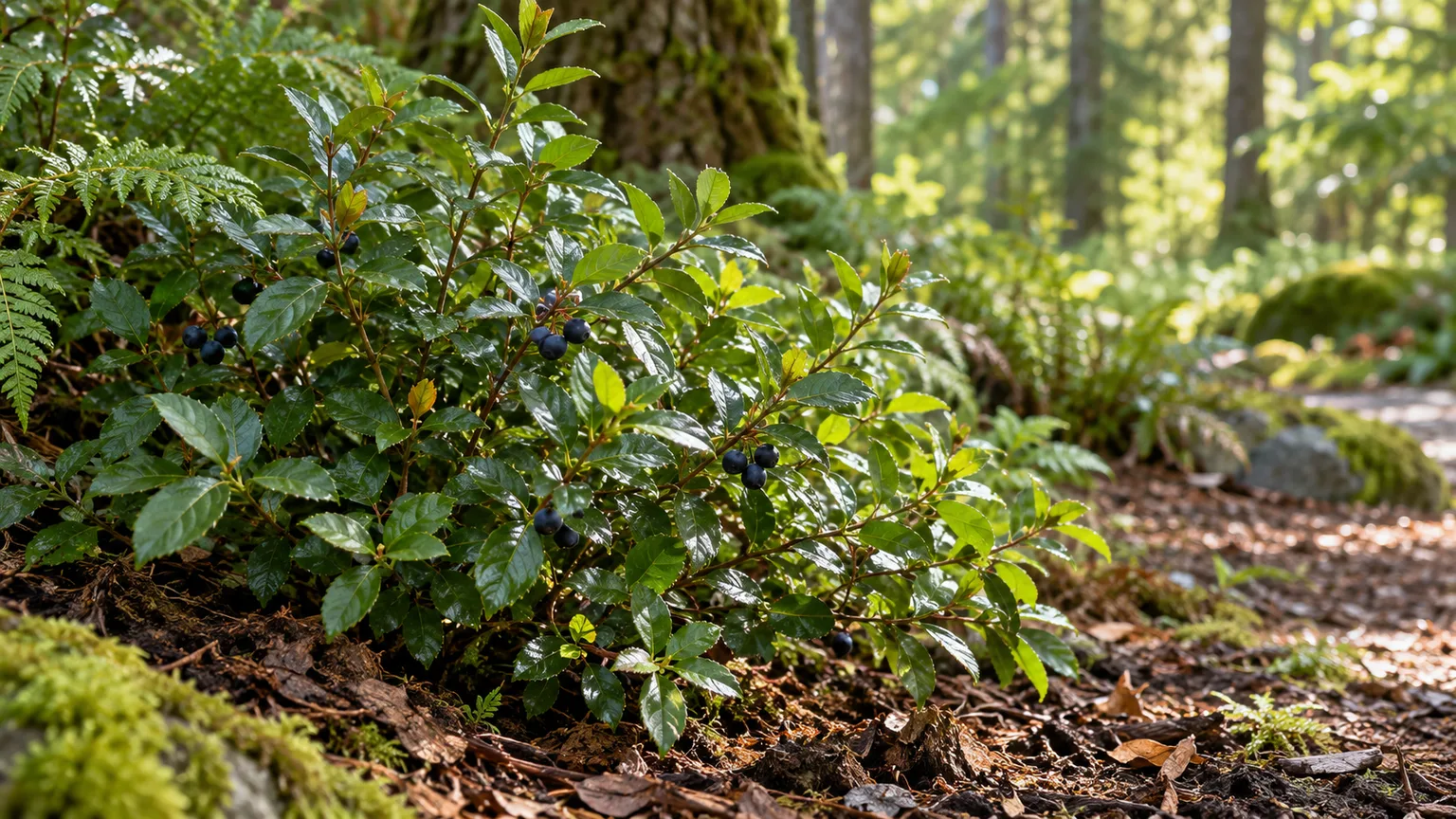
Check the site after rain as well as during a dry spell. Huckleberries need moisture, but water standing around the crown is a different problem from damp, porous soil. If the only available bed is compacted clay or a low spot that stays wet, improve drainage with a raised planting area or choose a better site instead of trying to solve the problem with a thick layer of mulch.
Prepare acidic soil without guessing
Both genera belong to the heath family, but the precise soil requirement should be matched to the plant rather than copied from a generic huckleberry chart. NC State classifies the soil preference for G. baccata as acidic, below pH 6, and describes sandy or rocky, well-drained conditions. That does not establish the exact target for every Vaccinium species. Ask the nursery or a local extension service for a species-specific range before using a strong acidifying amendment.
Test the planting area before changing it. A soil test tells you whether the site is already acidic, near neutral, or alkaline and may also identify nutrient issues. If the pH is far above the range suitable for your species, planting in a raised bed or large container filled with an appropriate ericaceous mix can be more predictable than trying to transform a large area of native soil.
Aim for soil that drains freely but does not dry into dust. Leaf mold, well-aged bark, or other stable organic matter can improve structure and mimic the forest floor without burying the crown. Avoid piling fresh manure or rich compost into a small planting hole; a concentrated pocket of amendment can hold too much water and create a sharp difference between the hole and surrounding soil.
Do not depend on coffee grounds to reliably acidify a bed. Nor should you add elemental sulfur or iron sulfate by guesswork: the response depends on existing soil chemistry, texture, and the amount applied. Make corrections from a test, follow the lab or extension recommendation, and allow time for the change to register before declaring the site fixed.
Plant a container-grown shrub carefully
Plant during a mild period when the ground is workable and the plant is not under heat or drought stress. Fall can suit regions with mild, wet winters; spring is safer where the ground freezes hard or the young shrub would face winter exposure before it establishes. Follow local nursery guidance for the species and avoid planting in waterlogged soil.
Use this sequence:
- Water the nursery pot so the root ball is evenly moist.
- Dig a hole about as deep as the root ball and wider than it, loosening the sides rather than creating a narrow, glazed-sided pocket.
- Slide the plant out and inspect the roots. Gently tease apart only roots that are circling tightly; avoid shredding a fine-rooted plant.
- Set the crown at the same level it grew in the pot. Backfill with the native soil or prepared bed mix recommended for the species.
- Water slowly to settle the soil, then apply a light organic mulch over the root zone while keeping it clear of the stems.
Do not plant more deeply to “hold moisture”; buried crowns and persistently wet roots invite decline. If the plant is root-bound, take time to loosen the outer roots before planting. Afterward, label the shrub with its botanical name so future pruning, watering, and fruit expectations stay tied to the right plant.
Water and mulch according to establishment stage
A newly planted shrub needs more attention than an established one. During the first growing season, check the root ball and nearby soil regularly; water deeply when the root zone begins to dry rather than following a fixed weekly schedule. A small nursery root ball can dry faster than the surrounding bed, especially in wind, sun, or a container.
Once established, black huckleberry may tolerate some dry weather, according to NC State, but tolerance is not the same as maximum fruit production. Evergreen huckleberry in a warm, exposed location may need supplemental summer water even if a plant in a cool, rainy coastal garden does not. Use a finger or moisture probe to check several inches down, and water slowly enough for moisture to reach the active roots.
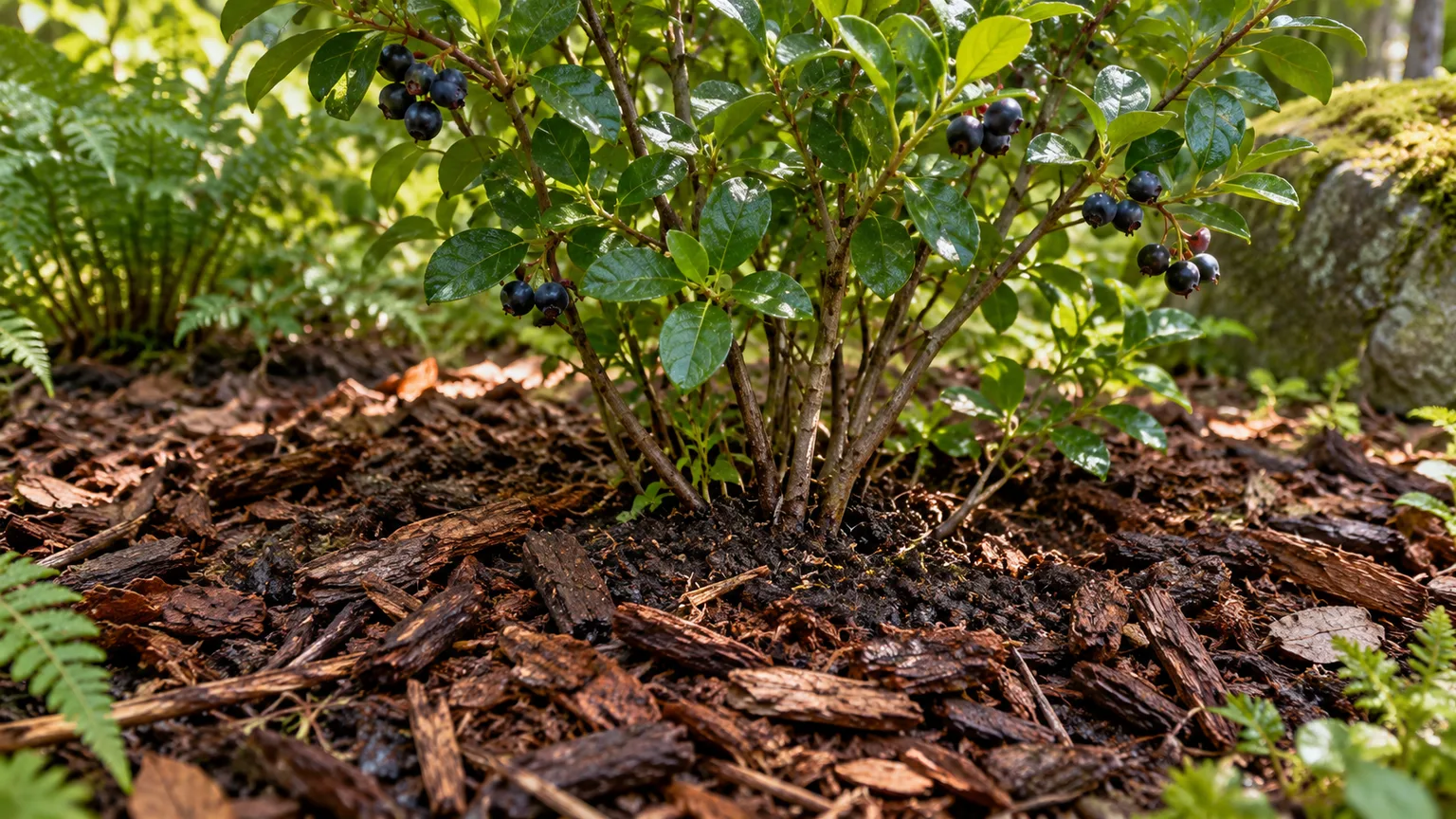
A 2- to 3-inch layer of leaf mold or aged bark can buffer moisture swings and reduce weed competition. Keep mulch a few inches away from stems and refresh it as it decomposes; do not mound it against the crown. If the soil smells sour, remains saturated, or the shrub wilts while the bed is wet, stop adding water and check drainage before watering again.
Fertilize sparingly and prune with a purpose
Do not fertilize automatically just because the shrub grows slowly. Slow growth may reflect the species, its age, shade, seasonal dormancy, or establishment—not a nutrient deficiency. Huckleberries are adapted to acidic, often lean woodland soils, and a heavy dose of general-purpose fertilizer can injure fine roots or push soft growth that does not fit the local climate.
If growth is weak, first check identification, soil pH, drainage, light, and moisture. Use a soil test when the bed seems deficient; if feeding is warranted, choose a fertilizer labeled for acid-loving shrubs and follow its rate and timing exactly. Avoid combining several acidifiers or fertilizers because you can raise salt levels without correcting the actual problem.
Prune mainly to remove dead, damaged, or crossing stems and to maintain a manageable shape. A naturally spreading black huckleberry can be allowed to form a thicket where it has room; contain it by choosing the right location rather than repeatedly shearing it. For evergreen huckleberry, preserve the natural outline and avoid severe cuts unless the nursery or a regional source confirms that the plant tolerates renovation pruning.
Improve pollination without assuming every plant is self-fertile
Flowering does not guarantee a large crop. Bees and other pollinators visit huckleberry flowers, and a garden with a range of flowering plants and no routine insecticide use is more likely to support visits during bloom. The NC State profile specifically notes bees as pollinators of black huckleberry.
There is no single cross-pollination rule that can safely be applied to every species sold under the huckleberry name. Before buying a second shrub for fruit, ask whether the named species or cultivar benefits from a genetically different partner and whether a second plant must bloom at the same time. If you already have flowers but few berries, look first at plant maturity, spring frost during bloom, drought, and pollinator activity; adding an unidentified huckleberry may not address the cause.
Grow huckleberries in a container when the site is unsuitable
A container lets you control the growing medium and drainage, but it does not erase the species’ climate needs. It is most useful for a compact nursery plant, a small garden, or a gardener who needs to avoid alkaline native soil. Confirm that the selected species can handle your winter and summer conditions before investing in a large pot.
Choose a stable container with generous drainage holes and enough room for the expected mature root system. Start only modestly larger than the nursery root ball; a huge pot filled with wet mix can stay saturated around a small root system. Use an acidic, well-drained mix formulated for ericaceous shrubs, and do not put gravel in the bottom as a substitute for drainage.
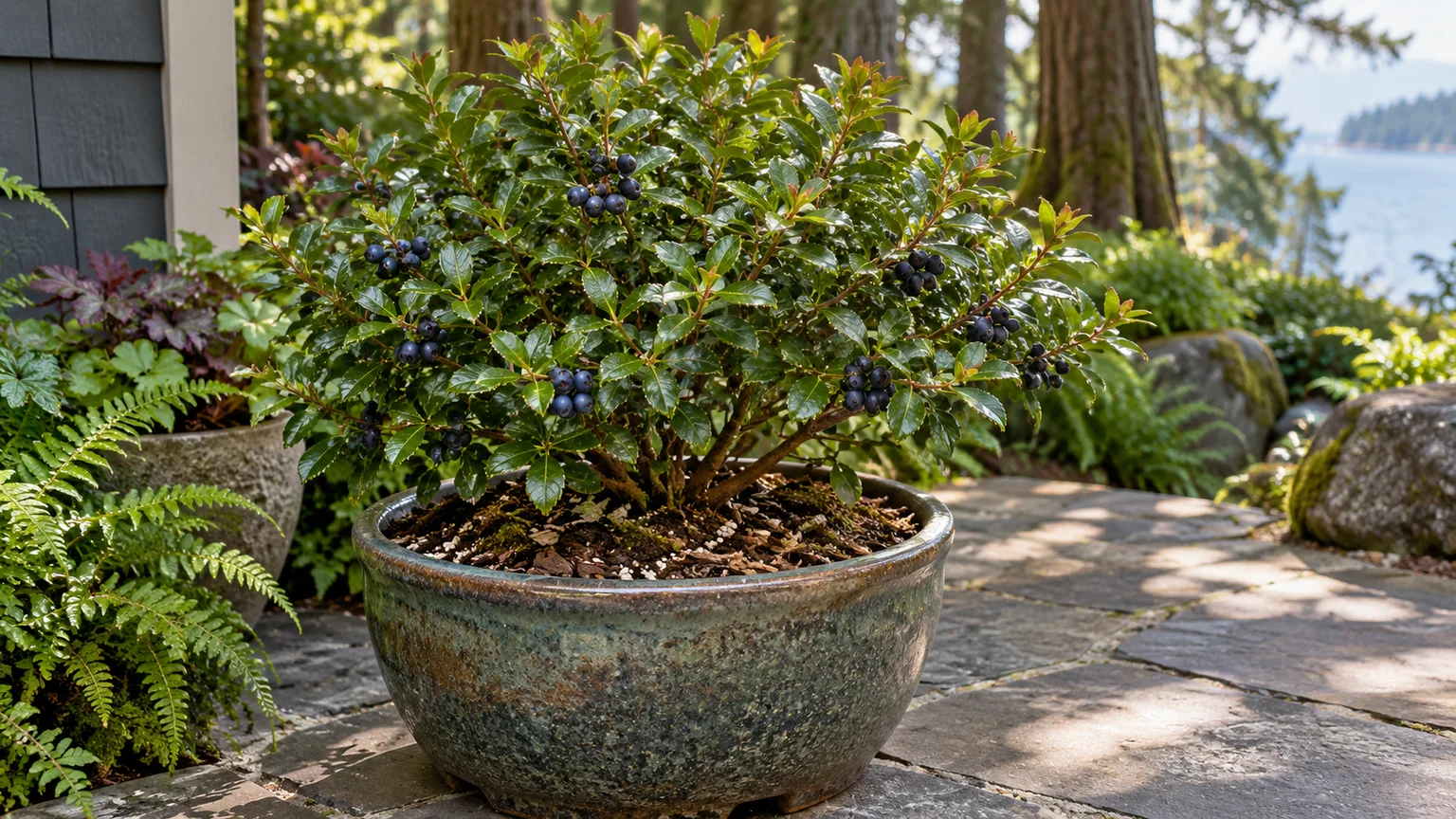
Container shrubs dry faster than in-ground plants and need more frequent monitoring during hot or windy weather. Check the mix below the surface, water until excess drains out, and empty any saucer. As roots fill the pot, move the shrub into the next size or plant it outdoors during a suitable season. If a mountain species requires winter chilling or a cool native climate, a pot will not make a hot subtropical site appropriate.
Propagate from an established plant, not a wild patch
The simplest path for a home gardener is usually to buy nursery-grown stock. Propagation from seed or cuttings can be slow and success varies by species, so treat it as a patient project rather than a reliable shortcut to a fruiting hedge. The Gardener’s Path huckleberry guide discusses the difficulty of cultivating several species, and WSU’s research reporting describes active efforts to improve propagation for western mountain huckleberry.
If you already own a healthy shrub, ask a local native-plant nursery or extension office which propagation method works for that species. Layering a low branch may be a lower-risk experiment than digging up roots because the branch remains attached while it forms roots, but it takes time and may not work on every plant. Keep cuttings in a clean, airy medium that stays evenly moist, and label each one with the parent plant’s botanical name.
Never collect a wild plant, rhizome, or cutting from public land without checking the rules with the land manager. Even where personal berry picking is allowed, removing a shrub is a different activity. Leave established patches intact, especially when you cannot identify the plant or determine whether collection is permitted.
Diagnose yellow leaves, poor growth, or low fruit set
A struggling huckleberry is a cue to check the root zone and species fit before reaching for fertilizer or pesticide. Start with four observations: the botanical name, the soil’s moisture after several days without rain, the measured pH, and the amount of direct light during the warmest part of the day. Compare those conditions with the species profile rather than a general huckleberry care rule.
Yellowing leaves can follow waterlogged roots, drought, or unsuitable soil chemistry. If the plant is yellow and the bed stays wet, improve drainage and reduce irrigation; if the bed is dry several inches down, water thoroughly and add a thin mulch layer. If the soil is moist but growth remains pale, test the pH and nutrients before applying iron or fertilizer.
Brown leaf edges or sudden wilt often point first to moisture stress, especially after planting or during heat. Check whether the original root ball is drying separately from the surrounding soil. A shrub that wilts while the soil remains saturated may have damaged roots or poor drainage, so adding more water can make the problem worse.
Spots, dieback, or distorted growth need closer diagnosis. NC State lists potential issues on black huckleberry, including leaf spots, powdery mildew, aphids, spider mites, scale, and mummy berry. Remove clearly dead material with clean tools, improve airflow where stems are crowded, and take a sample or clear photographs to a local extension office before using a pesticide or assuming that every spot is fungal disease.
Few or no berries may reflect a young plant, too much shade, spring frost at flowering, inadequate water, poor pollinator access, or a species that is not suited to the site. Record when it blooms and what the soil is like during fruit development; that small log is more useful than a generic fertilizer calendar.
Harvest ripe berries and plan for a gradual crop
Harvest timing varies with species, elevation, and weather. In Maine, black huckleberry is reported to ripen in August, while Oregon State describes evergreen huckleberry fruit as ripening in late summer. Use your local plant’s color and softness as the cue, and confirm the species before tasting; do not identify an unknown wild berry by color alone.
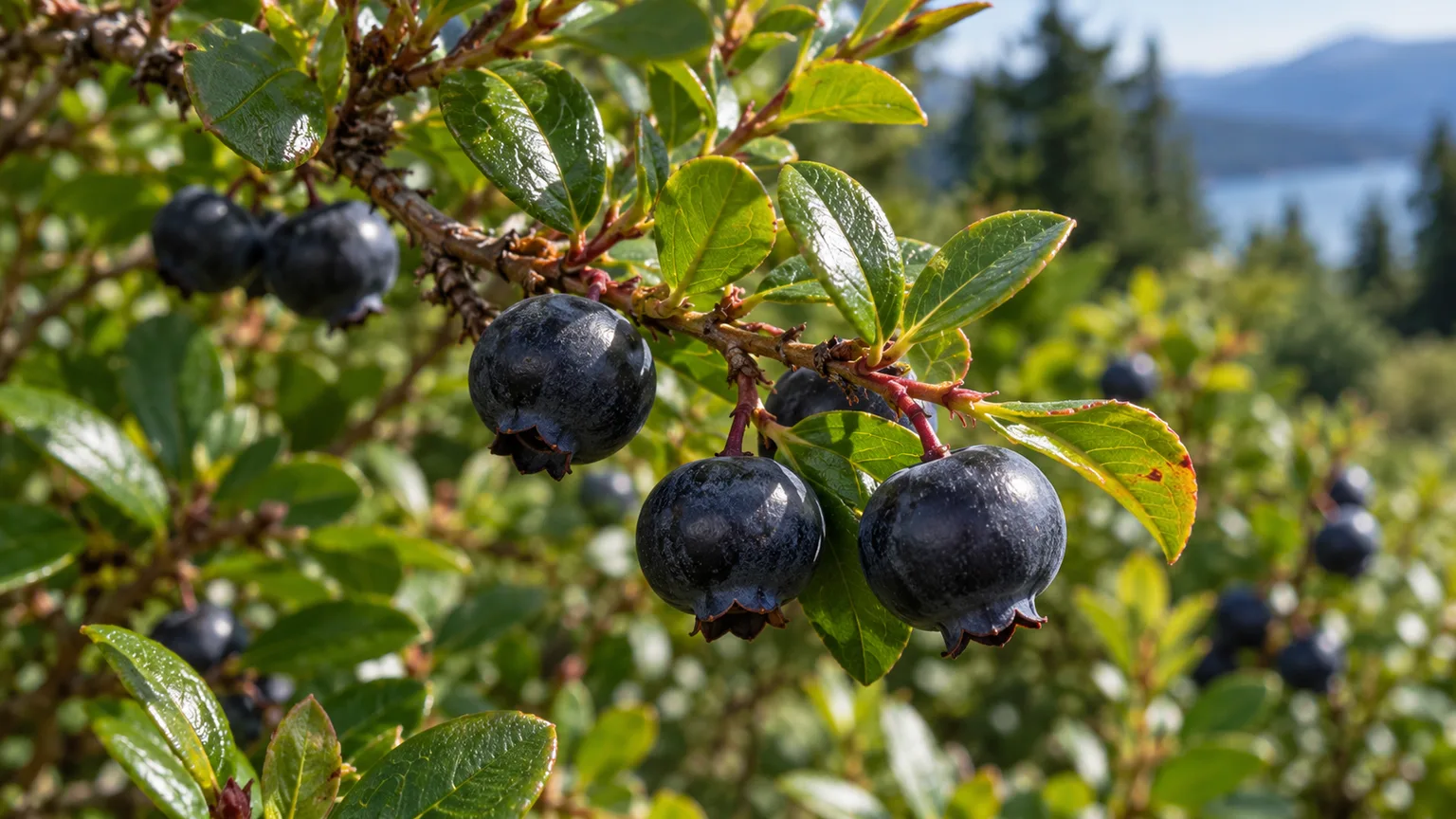
Pick berries when they are fully colored and release easily, taking care not to strip the plant or damage branches. Leave some fruit for birds and other wildlife, particularly on a native shrub planted for ecological value. Rinse the harvest shortly before use and refrigerate or freeze extra fruit promptly.
Do not expect a large crop immediately after planting. The plant must establish roots and reach flowering maturity, and a small shrub may set only a modest amount even when it is healthy. If abundant fruit is your main goal, ask a regional nursery which locally adapted huckleberry species or cultivar has the best documented performance in your area before planting several shrubs.
Conclusion: Match the species to your climate and soil
Huckleberry care begins with the botanical name. Choose a nursery-grown species adapted to your region, give it well-drained acidic soil and moisture appropriate to its establishment stage, and use local guidance for exact pH, winter hardiness, and pollination. With those decisions made before planting, you can grow a healthy native shrub without assuming that every huckleberry follows the same calendar or produces the same harvest.



