How Long to Run Sprinklers: Expert Lawn Watering Guide
Stop guessing sprinkler minutes. Use catch-can tests, head-type runtimes, and cycle-and-soak rules to deliver one inch per week without waste.
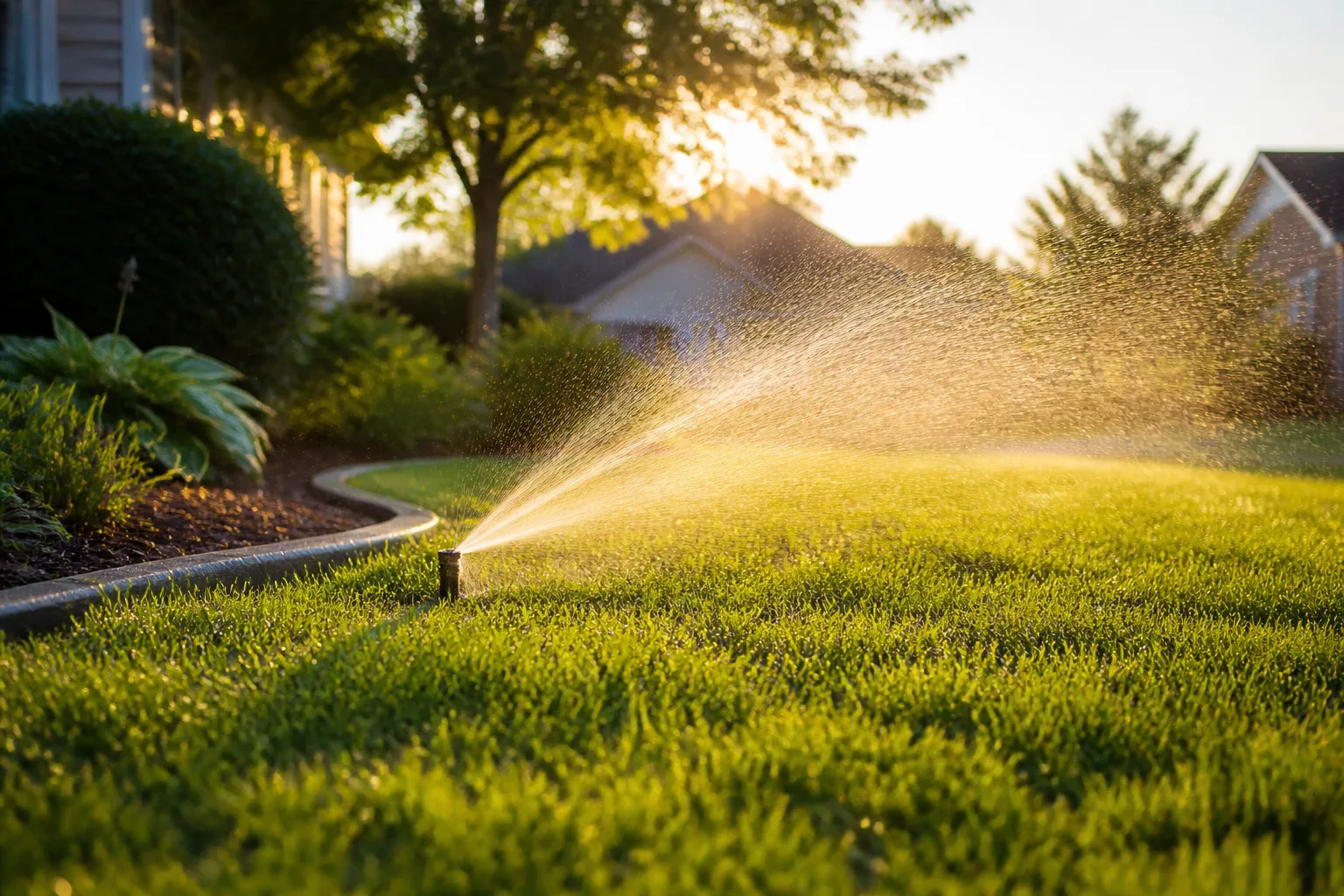
If your irrigation controller says 30 minutes and you have not measured what actually hits the grass, you are watering on faith—not data. That single number might be perfect for a slow MP rotator on loam soil in spring, or it might flood a fixed-spray zone on clay in July and still leave the corners brown. The question is not really “Is 30 minutes too long?” It is “How many inches did that zone get, and did the root zone need them?”
Why Minutes on the Timer Tell You Almost Nothing
Sprinkler runtimes are a shortcut people love because timers are easy to program. Irrigation pros think differently. They measure precipitation rate—how fast a head type puts water on the ground—and match that to a weekly depth target. Two zones both set to 30 minutes can deliver wildly different amounts of water if one uses fixed sprays and the other uses rotors, if pressure differs, or if heads are misaligned and spray the driveway instead of turf.
Manufacturer charts help as a starting point, but installed systems rarely match lab specs. Pipe length, pressure loss, nozzle wear, and head spacing all change output. That is why every serious watering plan starts with a catch-can test on your actual lawn, not a neighbor’s schedule copied off Nextdoor.
The One Rule That Replaces Guessing: About One Inch Per Week
During active turf growth, most established lawns need roughly one inch of water per week from rainfall plus supplemental irrigation combined. Colorado State University Extension treats balanced mowing, fertilizing, and watering as the foundation of efficient turf—and that weekly inch is the baseline extension services and water-efficiency programs cite before you adjust for heat, wind, or soil.
The inch is a depth target, not a calendar rule. Deliver it in one or two deep sessions rather than daily light spritzes. Gilmour’s lawn watering guidance notes that infrequent, deep watering encourages roots to grow downward, while shallow daily watering keeps roots near the surface where they dry out fast.
What Counts Toward Your Weekly Inch
Rain counts. So does water from in-ground zones, hose-end sprinklers, and any hand watering you do on dry patches. What does not count: runoff that flows into the street, mist lost to midday evaporation, or spray that lands on pavement. Subtract recent rainfall from your target before you irrigate—a quarter inch of rain last night might mean skipping tonight’s cycle entirely.
Track weekly totals with a rain gauge near the lawn, not on the porch where roof drip skews readings. If you are building a summer plan from scratch, our guide on how lawn pros save water in summer walks through audit steps that pair well with the runtime math below.
Is Running a Sprinkler for 30 Minutes Too Long?
Sometimes yes, sometimes no. Thirty minutes is a common default because it sits in the middle of many head-type ranges—but “common” is not the same as “correct for your zone.”
When 30 minutes is about right: Thirty minutes per session often lands near the mark when you are trying to apply about one-half inch in a single cycle on a rotor or MP rotator zone running at typical precipitation rates. Sod Solutions estimates rotor heads at roughly one inch per hour, which math converts to about 30 minutes for a half-inch application—exactly what many pros target per watering session when splitting the weekly inch across two cycles.
Fixed-spray zones on loam soil with good coverage may also finish a half-inch in 20 to 30 minutes. If your catch cans show roughly half an inch after 30 minutes and the soil absorbs it without runoff, your timer is in the ballpark—for that zone, on that day.
When 30 minutes wastes water—or leaves grass thirsty: Thirty minutes is too long when water pools on the surface, runs off the curb, or leaves mushrooms and algae in turf within a day or two. That usually means clay soil, compaction, slope, or a high-output fixed spray hitting faster than the ground can absorb. It is too short when rotors or MP streams still leave cans well under a quarter-inch after 30 minutes—you are under-watering while thinking the timer is generous.
Misting nozzles are a special case: they can run 30 minutes and still fail to deliver meaningful depth because so much water evaporates in the air. If corners stay brown while the center looks fine, the problem is often distribution, not total minutes.
How Long to Run Sprinklers by Head Type
Use the ranges below as starting guesses only. Confirm with catch cans on each zone before you lock a schedule.
| Head type | Typical precipitation rate | Minutes for ~½ inch per session* | Notes |
|---|---|---|---|
| Fixed spray / pop-up | ~1.0–1.5 in/hr | 10–25 min | Fast application; watch runoff on clay |
| Rotor / impact | ~0.4–0.8 in/hr | 30–60 min | Slower; better on larger areas |
| MP rotator / multi-stream | ~0.4–0.6 in/hr | 45–90 min | Slowest; high efficiency when tuned |
| Misting / fine spray | Highly variable | Often unreliable | High evaporation loss; pros replace |
*Half-inch per session assumes you water twice weekly to reach ~1 inch total. Adjust frequency for heat, soil, and local rules.
Fixed spray and pop-up nozzles apply water quickly over small areas. Sod Solutions puts typical spray output around one-half inch per hour and suggests roughly 20-minute sessions three times weekly as a starting framework for reaching one inch—though your measured rate may differ. Overspray onto sidewalks is common with sprays; fix head alignment before you add minutes.
Rotor and impact heads rotate a stream across larger arcs, applying water more slowly. Expect 30 to 60 minutes per session for a half-inch if your measured rate falls in the 0.5 to 1.0 in/hr range. Wind drift matters more with rotors; test on a calm morning for accurate catch-can readings.
Multi-stream and MP rotator nozzles trade speed for efficiency. Low-precipitation rotary nozzles trade speed for efficiency. Sessions often run 45 to 90 minutes to apply the same depth sprays deliver in half the time, but slower application reduces runoff and improves absorption on tight soils. Many irrigation upgrades swap old sprays for MP-style nozzles specifically to stretch runtimes without increasing waste—if your controller still shows 15-minute spray settings on MP heads, you are almost certainly under-watering.
Misting nozzles—the head type pros replace first: Fine-mist heads look impressive and feel refreshing on a hot day, but much of the water never reaches roots. If your system relies on misting nozzles for turf, plan a nozzle upgrade before you chase longer runtimes. Beds and containers need different tools anyway—see the garden section below.
Run the Catch-Can Test Before You Trust Any Chart
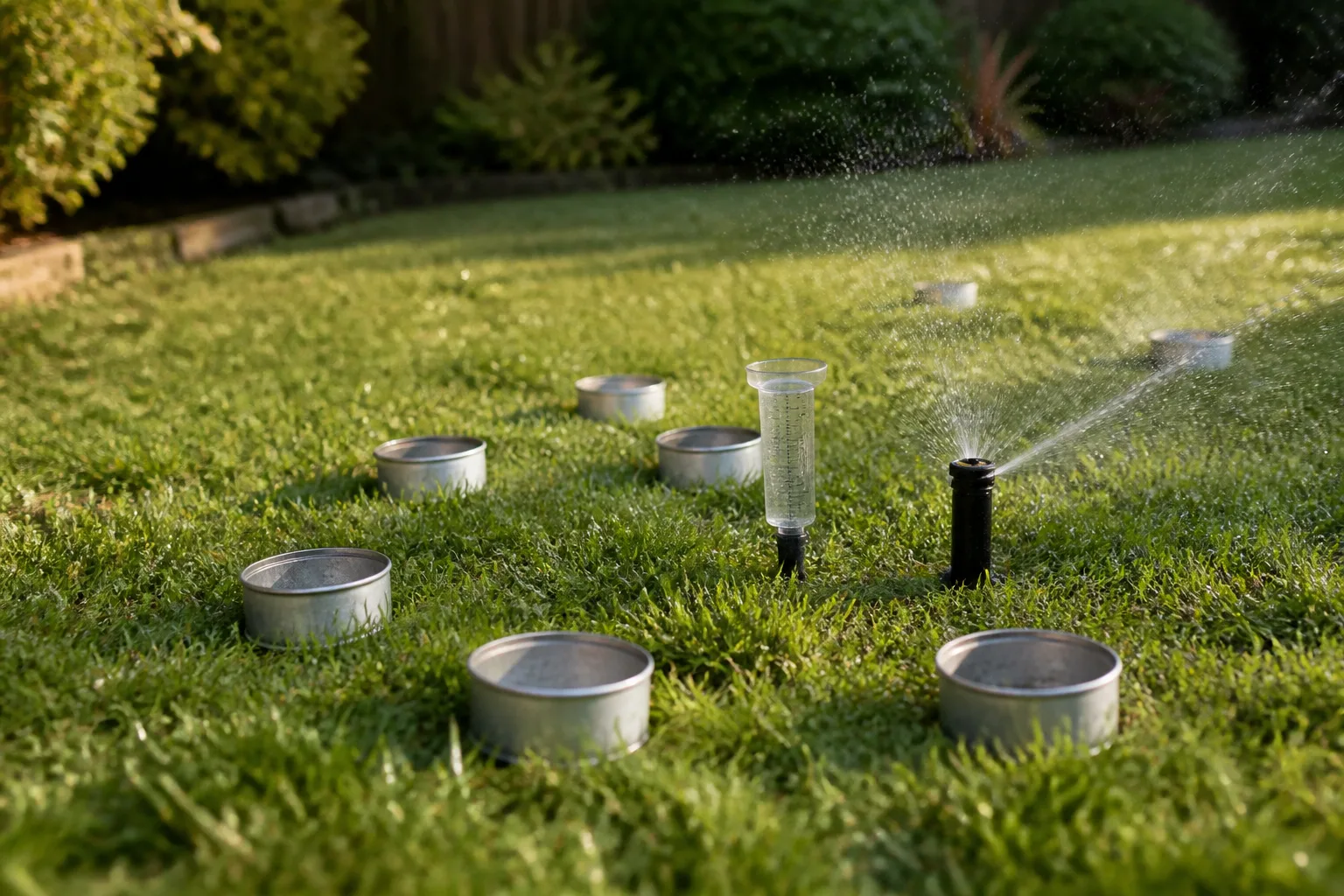
The catch-can test is the industry-standard way to learn what your system actually delivers. EPA WaterSense recommends measuring how long it takes to apply about one-half inch, then adjusting frequency based on weather and how the landscape responds. No purchase required—tuna cans, pet food tins, or rain gauges work fine.
Step-by-Step Tuna Can Method
Place five to ten straight-sided containers across one irrigation zone: center, corners, edges, and any dry or soggy patches you have noticed. Run the zone for a known period—15 minutes is a common test length because the math is easy to scale. Measure depth in each can with a ruler in inches, not eyeballing.
Compare cans. If the deepest and shallowest readings differ by more than 25 percent, you have a coverage problem—tilted heads, clogged nozzles, or spacing gaps—not a runtime problem. Fix distribution before you change minutes. Repeat on your sunniest zone and shadiest zone; they rarely need identical schedules.
Turn Test Results Into Zone Runtimes
Here is the math irrigation calculators use behind the scenes:
- Hourly rate = (average depth in cans ÷ test minutes) × 60
- Minutes for target depth = (target inches ÷ hourly rate) × 60
- Per session = weekly target ÷ number of watering days per week
Example: Your 15-minute test averages 0.20 inches in the cans. Hourly rate = (0.20 ÷ 15) × 60 = 0.80 in/hr. To apply 0.5 inch in one session: (0.5 ÷ 0.8) × 60 ≈ 38 minutes. Split a weekly inch across two sessions and you program roughly 38 minutes twice weekly—nothing like a blind 30-minute default on every zone.
If calculated runtimes exceed 30 minutes per session on clay or slope, switch to cycle-and-soak rather than one long flood—details below.
Yard Conditions That Change Every Schedule
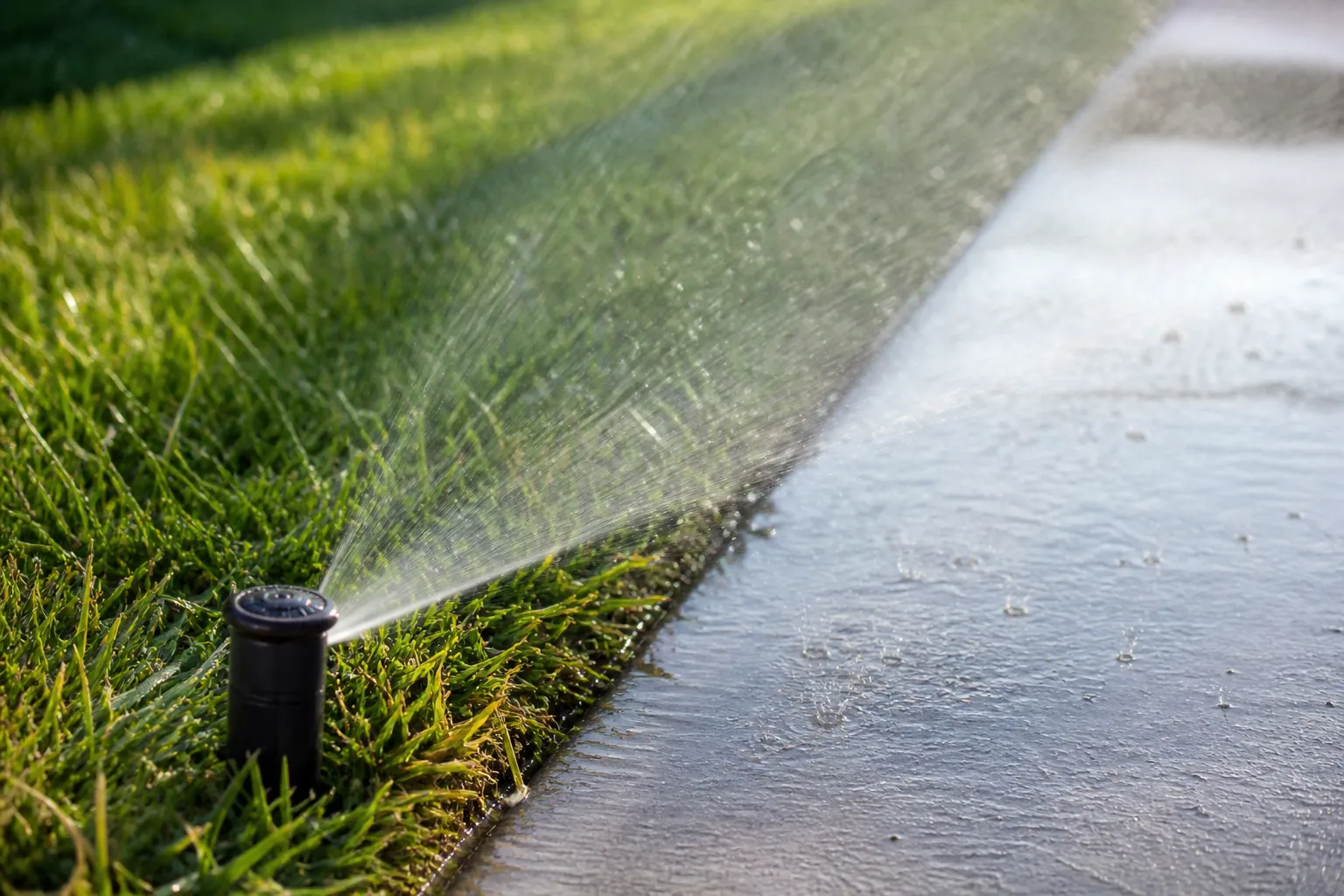
Even perfect math fails if you ignore what happens between irrigation cycles. Pros adjust schedules weekly in summer and monthly in spring and fall.
Season and Climate
Cool-season grasses actively grow in spring and fall; warm-season turf peaks in summer heat. Gilmour notes cool-season lawns still need about an inch weekly until frost ends growth, while warm-season grasses may need continued irrigation as long as they are green and mowing. In mild-winter regions, occasional winter watering prevents desiccation; in cold climates, systems winterize from mid-fall onward.
Hot, dry stretches raise evapotranspiration demand above the one-inch baseline. Cool, rainy weeks may need zero supplemental irrigation if soil probes show moisture 4 to 6 inches down.
Best Time of Day to Run Sprinklers
Early morning—roughly 4 a.m. to 10 a.m.—is the efficiency window most extension services and irrigation educators recommend. Wind and evaporation are lower than midday, and grass dries before evening humidity rises. Afternoon watering loses spray to heat; late-evening watering keeps blades wet overnight, which can invite fungal issues when nights stay warm and muggy.
If you are hand-watering with a hose instead of an in-ground system, the same timing rules apply—see the best way to use your garden hose without spiking your water bill for flow-rate tests that complement catch cans.
Sun, Shade, and Slope
Full-sun turf on south-facing slopes often needs nearly double the runtime of shaded cool-season grass behind a fence—program separate zones or use controller sun/shade adjustments if your system supports them. Slopes need shorter cycles with soak gaps so water infiltrates instead of running downhill; one 30-minute blast on a hill is often 20 minutes of waste and 10 minutes of useful irrigation.
Soil Type and Cycle-and-Soak
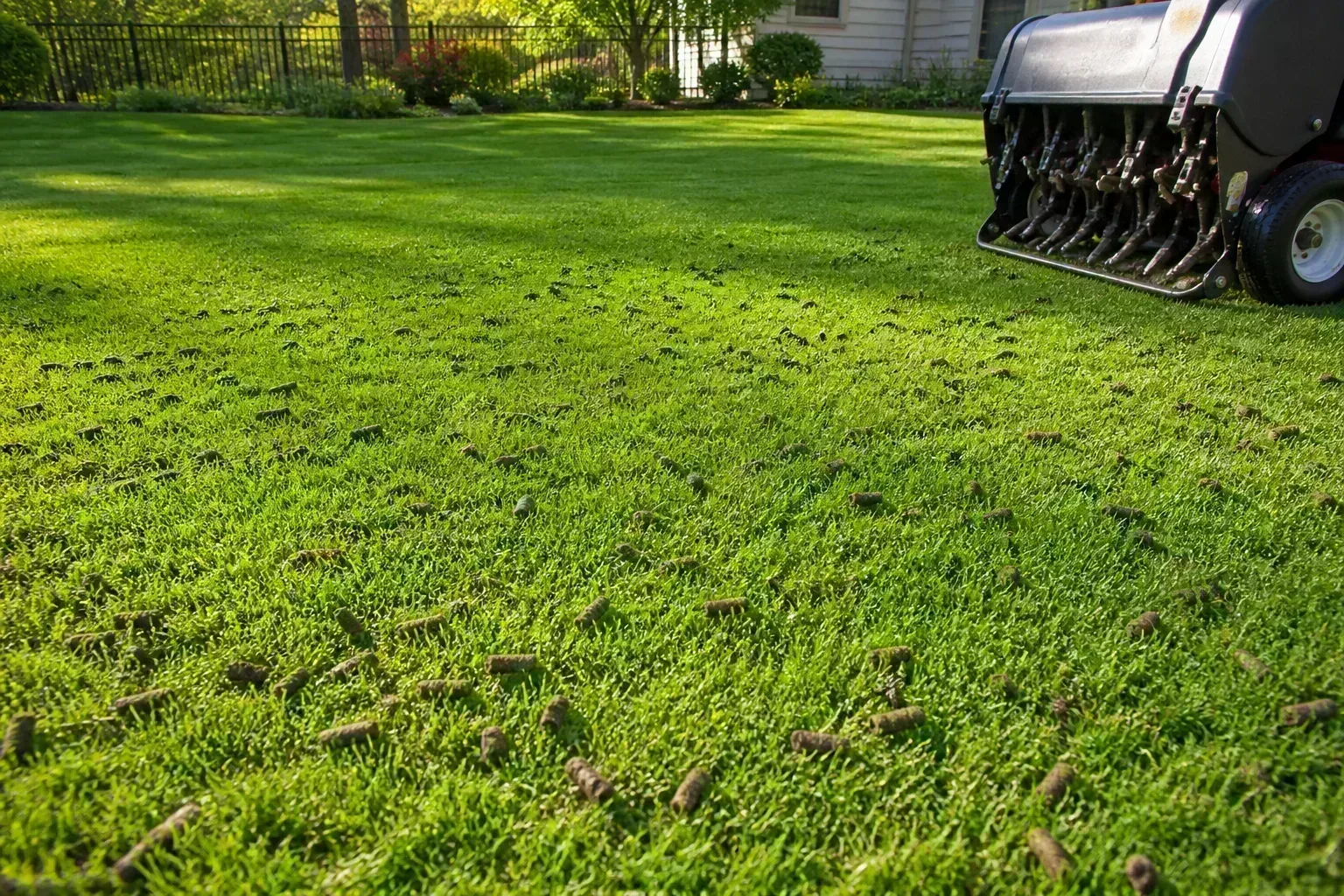
Sandy soils accept water quickly and drain fast; longer single sessions often work without runoff, though you may need slightly more total volume in heat. Clay and compacted soils accept water slowly. Instead of one 30-minute cycle, run three 5- to 10-minute cycles with 30 to 60 minutes of soak time between them—the same total depth, better absorption.
Penn State Extension emphasizes deep, infrequent watering that wets the root zone without saturating the surface. Cycle-and-soak is how you achieve “deep” on clay without creating puddles. If water still runs off after two cycles, aerate compacted turf or improve soil organic matter before you keep adding minutes.
Lawns vs. Garden Beds: Different Tools, Different Rules
Turf and planting beds should not share one sprinkler schedule. Lawn guidelines target grass roots in the top 4 to 6 inches; trees, shrubs, and perennials have deeper or wider root zones and hate wet foliage.
For beds, drip irrigation or soaker hoses deliver water slowly at the soil line, cutting evaporation and foliar disease risk. Runtime is measured in hours per week, not the 10-to-60-minute turf ranges above, and depends on emitter flow rates and plant maturity. Overhead spray on beds is a common water-wasting mistake—it wets leaves, misses root zones on large shrubs, and overlaps lawn zones unpredictably.
If you are redesigning irrigation, our piece on what lawn pros actually run at home compares how specialists zone turf separately from planting areas.
Seven Water-Wasting Mistakes Lawn Pros See Every Week
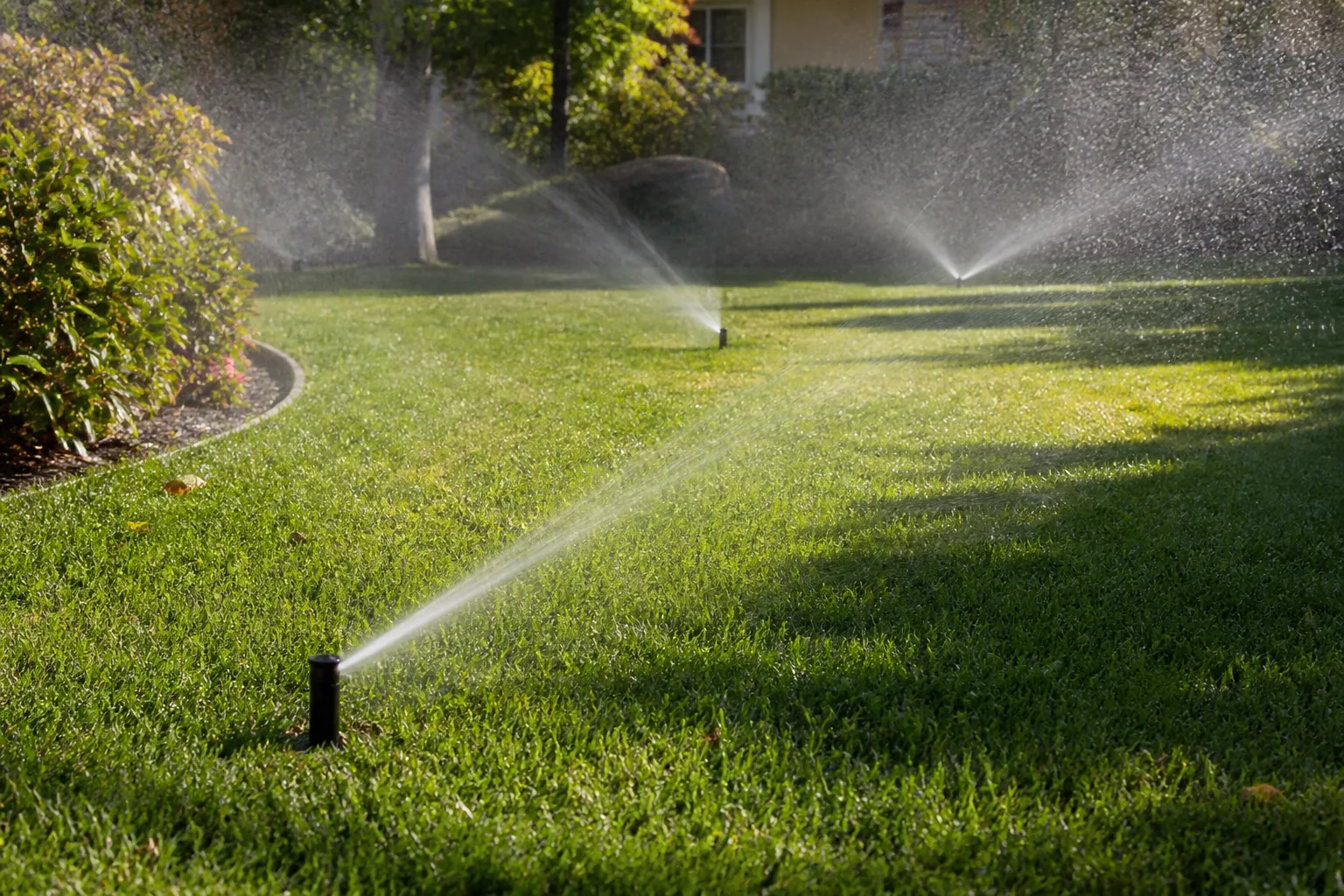
Copying one runtime for every zone. Spray, rotor, sun, and shade zones need different minutes. Program per zone after catch-can tests, not once globally.
Watering on a calendar instead of weather. Rain sensors and soil moisture matter. Irrigating during or right after a storm rewets an already saturated lawn—Pinellas County guidance developed with University of Florida IFAS Extension warns against irrigating wet turf.
Daily light watering. Keeps blades green briefly while roots stay shallow. Two deeper sessions beat seven quick mists.
Ignoring runoff and runoff stains on pavement. Runoff means stop the cycle, fix compaction, or switch to cycle-and-soak—not add more minutes tomorrow.
Watering at midday or late evening by default. Shifts evaporation and disease risk; morning wins on efficiency.
Never auditing head alignment. A tilted head can waste more water in a month than a rain sensor saves. Walk the system monthly during a test run.
Treating brown grass as “needs more water” automatically. Brown patches after heavy watering may signal disease, compaction, or chinch bugs—not drought. Read why your lawn is still brown after watering before you bump every zone by 10 minutes.
After storms, avoid running sprinklers on saturated soil—what not to do to grass after heavy rain covers the damage window most timers ignore.
Signs You Are Running Sprinklers Too Long
Overwatering announces itself if you know what to look for. Squishy turf that stays soft hours after irrigation, mushrooms in lawn areas, algae or moss in sun, and yellowing grass with lush weeds often point to excess moisture—not drought. Chronic overwatering produces shallow roots, making turf wilt faster in heat despite heavy irrigation.
Runoff and ponding are immediate red flags—cut runtime or switch to cycle-and-soak before fungus follows. Gardening Know How recommends watering only when grass shows stress: a slight blue-gray cast, footprints that linger an hour after you walk across the lawn, or a probe that will not penetrate dry soil. If none of those appear but water pools anyway, you are running too long for your soil’s intake rate.
Under-watering looks different: uniform tan dormancy in heat (sometimes normal for cool-season turf), crispy footprints, or probe resistance in the top 2 inches with dry dust below. Measure before you react—surface color lies on hot afternoons.
Conclusion
Thirty minutes on the timer is neither a universal answer nor a universal mistake. What matters is whether that zone delivered the depth your grass needed, on the right day, at the right time, without runoff or waste. Start with the one-inch weekly baseline, run catch cans on each zone, match minutes to measured precipitation rates, and split long runtimes with cycle-and-soak on clay and slopes.
Fix coverage and leaks before you chase smart controllers. Adjust for rain, season, and sun exposure weekly in summer. Keep beds on drip, turf on tuned spray or rotor zones, and treat brown patches as diagnostics—not automatic excuses to water longer. Get those pieces right and your lawn gets stronger while your water bill stops climbing—a better outcome than any single magic number on a dial.