Lawn Watering Mistakes That Weaken Grass
Most struggling lawns are overwatered, underwatered, or watered wrong. Spot five common lawn watering mistakes and build a smarter schedule for your grass type and soil.
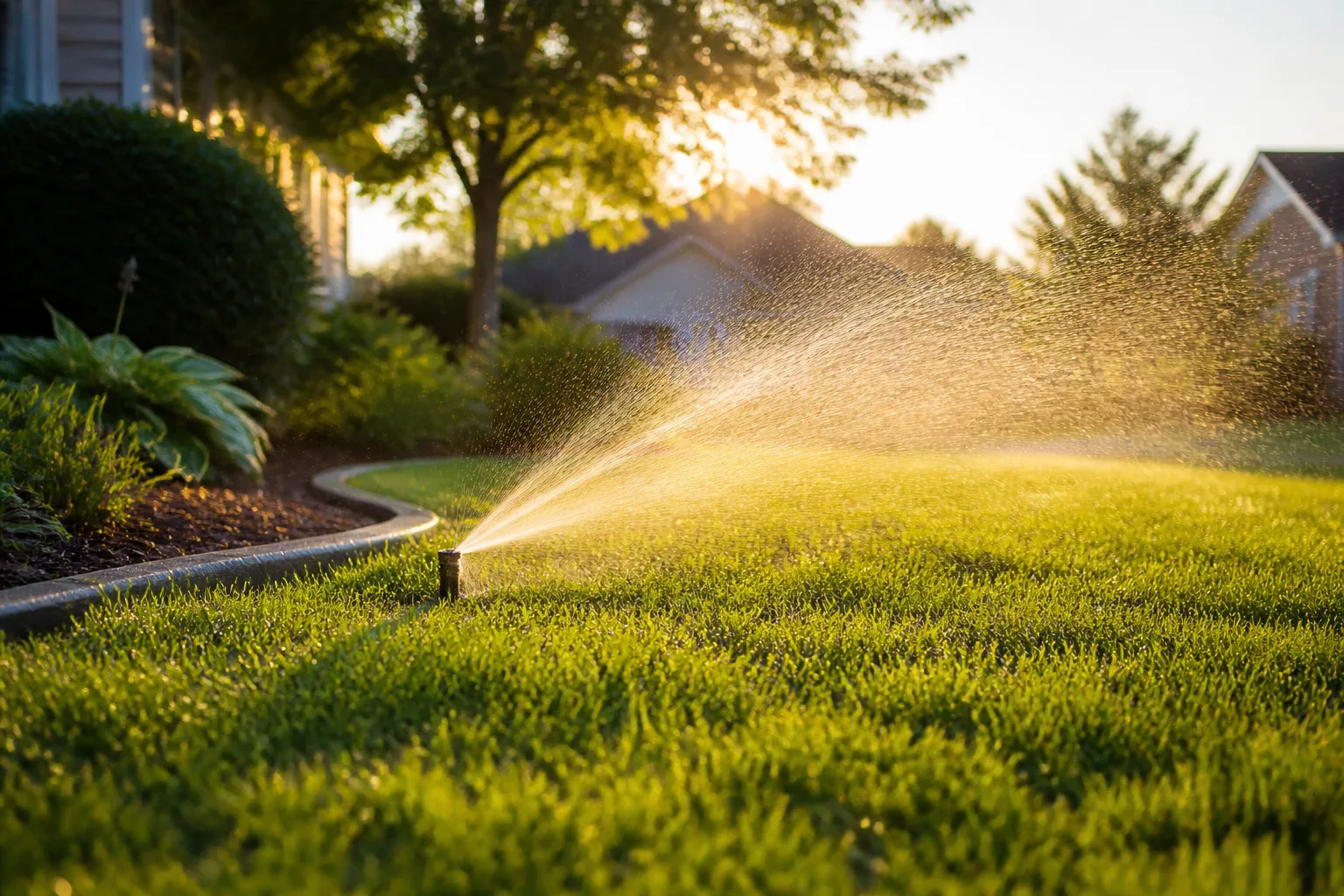
A lawn that looks tired after you have been watering faithfully is almost always telling you the habit is wrong—not that grass is impossible to grow. The five lawn watering mistakes turf managers see most often are deceptively simple: bad timing, the wrong schedule for your grass, ignoring weather, shallow spritzes, and sprinklers that water the pavement instead of the roots. Fix those and you will usually see stronger color, fewer disease patches, and a lower water bill within a few weeks.
Why the Right Watering Habits Matter More Than Fertilizer
Water makes up roughly 75 to 85 percent of healthy turfgrass tissue by weight. Without adequate moisture, grass cannot cool itself, move nutrients, or recover from mowing stress. Virginia Cooperative Extension notes that most established lawns need about one inch of water per week from rainfall and supplemental irrigation combined during active warm-season growth—but how you deliver that inch matters as much as the total (Virginia Cooperative Extension).
Poor watering trains shallow roots that panic in heat, encourages fungal disease when blades stay wet overnight, and sends fertilizer runoff toward storm drains. University of Florida IFAS Extension is blunt: improper irrigation damages more lawns than any other single cultural practice (UF IFAS Extension). Before you buy another bag of fertilizer or reseed brown patches, audit the five mistakes below.
The frustrating part is that many of these habits feel responsible. A homeowner who waters every evening after work believes they are preventing drought stress. A neighbor who runs sprinklers for exactly 30 minutes because the timer came preset that way assumes the manufacturer knew their yard. Turf managers see the same patterns on expensive irrigation systems and on $30 oscillating sprinklers alike. The fix is not buying better grass seed first—it is correcting the delivery system and the decision rules behind it.
Mistake 1: Watering at the Wrong Time of Day
Timing is the fastest fix on this list because it costs nothing. Yet it is the mistake homeowners repeat most: running sprinklers when the sun is high or when the lawn will sit wet for hours after dark.
Why Midday Sprinklers Waste Water and Stress Grass
Watering between late morning and mid-afternoon fights evaporation and often wind. Fine mist blows off-target; what lands on grass may not soak in before it evaporates. You pay for water that never reaches the root zone. Penn State Extension includes proper irrigation timing in its seasonal lawn program because heat and light intensity increase plant water loss dramatically (Penn State Extension).
Best window for most homeowners: early morning, roughly 4 a.m. to 10 a.m. Soil accepts water before the day heats up, and grass blades dry as the sun rises—reducing disease pressure compared with evening irrigation.
Why Late-Night Watering Invites Fungal Problems
Evening and overnight watering keeps leaf blades wet for many hours in cool, humid air. Virginia Cooperative Extension specifically warns that night watering should be avoided unless it is the only possible time, because prolonged leaf wetness greatly increases fungal disease risk (Virginia Cooperative Extension). Brown patch and other summer diseases spread faster when turf stays damp through the night.
If your schedule only allows one cycle, set it for just before sunrise. If you must hand-water after work, target the soil at the base rather than soaking foliage, and avoid making this a nightly habit during humid stretches. For more on summer timing trade-offs, see our guide on whether you should water your lawn in summer.
Afternoon watering sits in the middle—not as wasteful as noon, but still less efficient than morning. If a heat wave hits and you see clear wilt at 3 p.m., a short rescue soak to the root zone is better than letting cool-season turf bake to dormancy. Just do not convert that emergency pass into a daily afternoon routine. One-off stress relief and chronic bad timing are different problems.
Mistake 2: Treating Every Lawn Like the Same Grass
A timer set to “every other day, 20 minutes” might keep one neighbor’s tall fescue alive while slowly weakening another’s Kentucky bluegrass—or drowning bermudagrass that wanted less frequent, deeper drinks. Grass species, age, sun exposure, and soil all change the answer.
Cool-Season vs Warm-Season Watering Needs
Cool-season grasses—Kentucky bluegrass, perennial ryegrass, fine fescues, and tall fescue—grow most actively in spring and fall and often need the most supplemental water during hot, dry summer when roots are stressed. Tall fescue develops deep roots when managed well and can be surprisingly drought-tolerant; perennial ryegrass is far less forgiving of dry soil (Virginia Cooperative Extension).
Warm-season grasses—bermudagrass, zoysiagrass, centipedegrass, St. Augustinegrass—are generally more efficient water users in summer heat. They prefer deep, infrequent irrigation and can enter dormancy under extreme drought rather than dying immediately. Kentucky bluegrass can also go dormant and green up again when rain returns—a useful fact if you are trying to conserve water during restrictions.
Match expectations to species before you copy a neighbor’s schedule. Our summer water-saving guide walks through audit steps that work for both grass families.
How Sandy, Clay, and Loam Soils Change Your Schedule
Soil texture controls infiltration and retention:
- Sandy soil drains fast. Water moves through before roots absorb it, so you may need more frequent cycles with less volume per cycle—still aiming for deep moisture overall, not daily spritzes.
- Clay soil holds water but accepts it slowly. Long single runs cause puddling and runoff. Use cycle-and-soak: run sprinklers until runoff starts, pause 30–60 minutes, then finish the application.
- Loam balances drainage and retention and is the easiest to irrigate efficiently.
UF IFAS Extension recommends applying ½–¾ inch of water per irrigation event on established Florida lawns, reaching roughly the top 8 inches of soil where most roots live (UF IFAS Extension). Your state may differ, but the principle holds: enough depth per session, not constant surface wetting.
A quick way to test infiltration: water one zone and watch the surface. If water pools within 10 minutes on level ground, your soil is telling you to shorten the run and use cycle-and-soak rather than add minutes. Sloped yards show runoff even faster—split cycles are mandatory there, not optional. Compacted high-traffic strips along sidewalks often behave like clay even when the rest of the yard is loam; treat those zones separately instead of drowning the whole lawn to fix one dry band.
Mistake 3: Ignoring Rainfall and Local Weather
Automatic timers do not know a thunderstorm rolled through at 2 a.m. Watering on a fixed calendar—every day or every Monday and Thursday regardless of conditions—is one of the most expensive habits in residential landscaping.
When to Skip Irrigation After Rain
Place a rain gauge or straight-sided can in the yard and log weekly totals. If nature delivered an inch of rain, skip supplemental irrigation unless a probe shows the root zone dried unusually fast because of wind or heat. Virginia Cooperative Extension calls running sprinklers during rainfall one of the most wasteful—and most visible—homeowner mistakes (Virginia Cooperative Extension).
Install or test a rain sensor on automatic systems. Sensors are inexpensive compared with a season of redundant cycles. Pair them with a manual override: turn the controller to off during cool, rainy weeks and back to on when footprints appear.
Subtract rainfall from your weekly target instead of treating rain as a bonus. If the goal is 1 inch per week and a storm dropped 0.6 inches, you only need 0.4 inches from sprinklers—not a full schedule on top. Light drizzle that barely wets the gauge does not count; a soaking rain that penetrates several inches does. When forecasts show 40–60 percent chance of meaningful rain, hold irrigation and reassess the next morning. Running sprinklers “just in case” before a storm is one of the fastest ways to overwater.
Adjusting for Heat Waves and Wind
During extreme heat, evapotranspiration rises and you may need slightly more total water—still in deep applications, not midnight misting. Wind skews sprinkler patterns and dries soil faster on exposed slopes. Watch south- and west-facing sections; they often need more than shaded north sides.
Do not fight every heat wave with nightly watering. Mature cool-season turf can enter summer dormancy as a survival strategy. Straw-colored grass that greens up after rain is not always a crisis. For heat-specific mistakes, read the worst thing you can do for your lawn during a heat wave.
Mistake 4: Shallow, Frequent Watering
Daily short cycles keep the top inch of soil moist and teach roots to stay there. Shallow roots cannot reach deeper moisture reserves, so the lawn wilts faster, needs more frequent irrigation, and becomes more vulnerable to pests and compaction.
Signs Your Roots Stay Too Close to the Surface
Watch for these patterns:
- Grass greens up for a day after watering, then wilts quickly in afternoon heat.
- Soil feels wet on top but dry at 3–4 inches when you probe with a screwdriver.
- Squishy, spongy turf hours after irrigation—often overwatering on heavy soil, but sometimes daily light doses on clay that never drains properly.
- Increased weed pressure; many weeds love frequent surface moisture.
UF IFAS Extension recommends irrigating established turf on an as-needed basis when drought symptoms appear—not on autopilot (UF IFAS Extension). That is the opposite of “set it and forget it” daily watering.
Think of roots like a anchor chain. Daily surface moisture keeps the chain piled on the deck; deep weekly soaking sends links down into cooler, stable soil. When August heat arrives, shallow-rooted lawns show stress first—usually in full-sun pockets along driveways and south-facing slopes. Those spots may need an extra half-session while shaded areas skip a week entirely. Uniform timers ignore that reality; observation fixes it.
The Catch-Can Test for Proper Depth
You cannot manage what you do not measure. The catch-can test (tuna cans, coffee mugs, or wide-mouth containers) tells you how long your system takes to deliver a known depth:
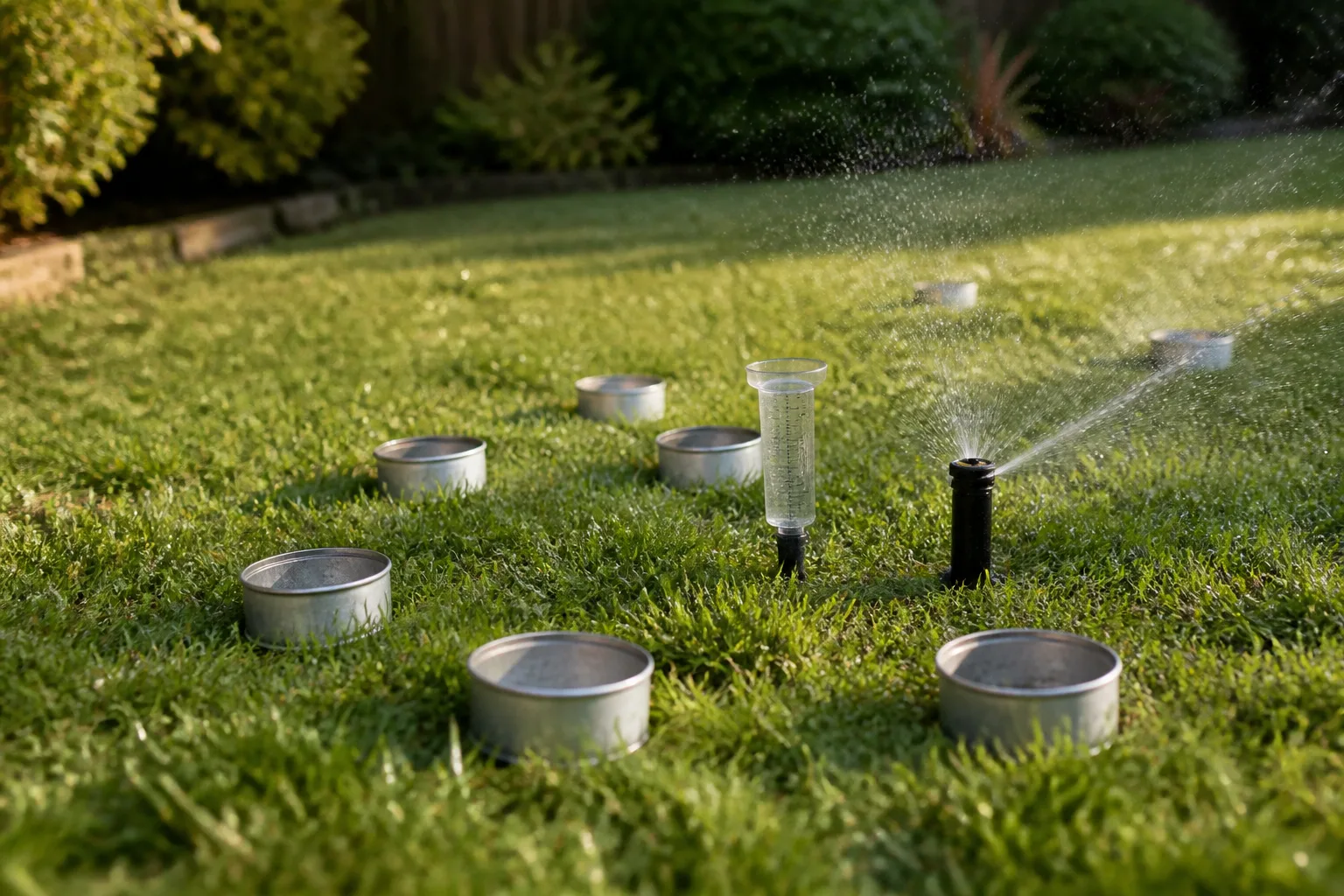
- Place five or more straight-sided containers across one sprinkler zone, including edges and corners.
- Run that zone for 15–20 minutes (or your usual run time).
- Measure water depth in each can with a ruler. Average the results.
- Scale up: if 15 minutes delivered ¼ inch, you need about 60 minutes total in that zone for 1 inch—often split across two sessions in the same week.
Virginia Cooperative Extension’s audit method uses similar containers at 20, 40, 60, 80, and 100 percent of the sprinkler’s throw to check uniform coverage (Virginia Cooperative Extension). If one can catches half what another does, you have a coverage problem—not a “water more” problem.
Aim to wet the root zone to about 4–6 inches without runoff. On many soils that means ½–¾ inch per application, one to three times per week depending on rainfall—not seven.
Wondering whether your 30-minute preset is too long? Our sprinkler runtime guide explains how to scale minutes to measured depth instead of guessing.
Example: You run a zone 20 minutes and average 0.3 inches in the cans. To deliver 0.5 inches per session, you need about 33 minutes—but if runoff starts at 25 minutes, stop there, wait an hour, and run another 8–10 minutes instead of pushing through puddles. Two measured half-inch sessions in a dry week beat seven unmeasured 15-minute spritzes that never reach the roots.
Mistake 5: Sprinkler Overspray and Uneven Coverage
Overspray—water hitting driveways, sidewalks, and street gutters—does nothing for your lawn and can violate local runoff rules. Uneven coverage leaves dry brown patches beside soggy green strips, which homeowners often “fix” by watering even more.
How to Spot Wasted Water on Hardscape
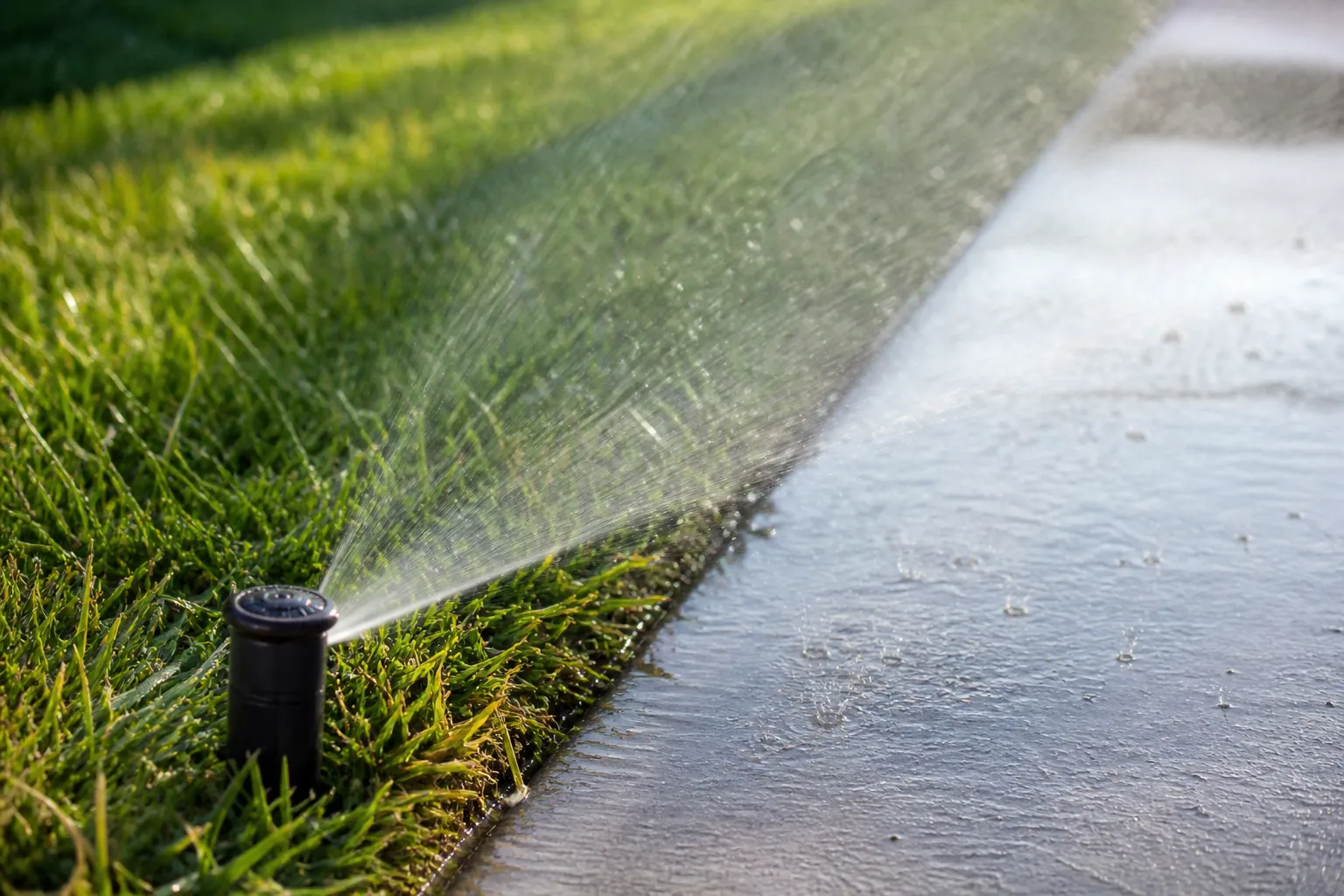
Walk your property during an irrigation cycle:
- Look for mist blowing onto pavement on windy days.
- Check for streaks and algae on concrete—signs of chronic overspray.
- Note dry wedges inside otherwise green zones; popped-up heads may be sunken, clogged, or blocked by shrubs.
Adjust heads so spray overlaps slightly with neighbors—head-to-head coverage—without shooting into the street. Low-angle nozzles and matched precipitation rate heads reduce waste compared with mismatched mixed zones.
Running a Basic Irrigation Audit at Home
Once a season, run this 20-minute audit:
- Flag problems while the system runs: leaks, sunken heads, broken risers, sprinkler caps missing.
- Measure output with catch cans per zone as described above.
- Fix distribution before extending run times—extra minutes on a misaligned head mostly feed the storm drain.
- Test rain and soil-moisture sensors if installed; Virginia Cooperative Extension notes soil-moisture sensors can cut irrigation 50–75 percent when calibrated (Virginia Cooperative Extension).
Portable oscillating sprinklers have the same rules: move them so overlap is even, and keep spray low to the ground to reduce evaporation. Virginia Cooperative Extension notes that sprinklers sending fine mist high into the air lose more to evaporation and wind than low-angle heads that keep water close to the turf (Virginia Cooperative Extension). Mark hose-sprinkler positions with stakes so you return to the same overlap pattern each week instead of accidentally watering the same stripe twice and missing another.
For system-type comparisons, see what irrigation setup lawn pros actually use.
How to Tell If Your Lawn Actually Needs Water
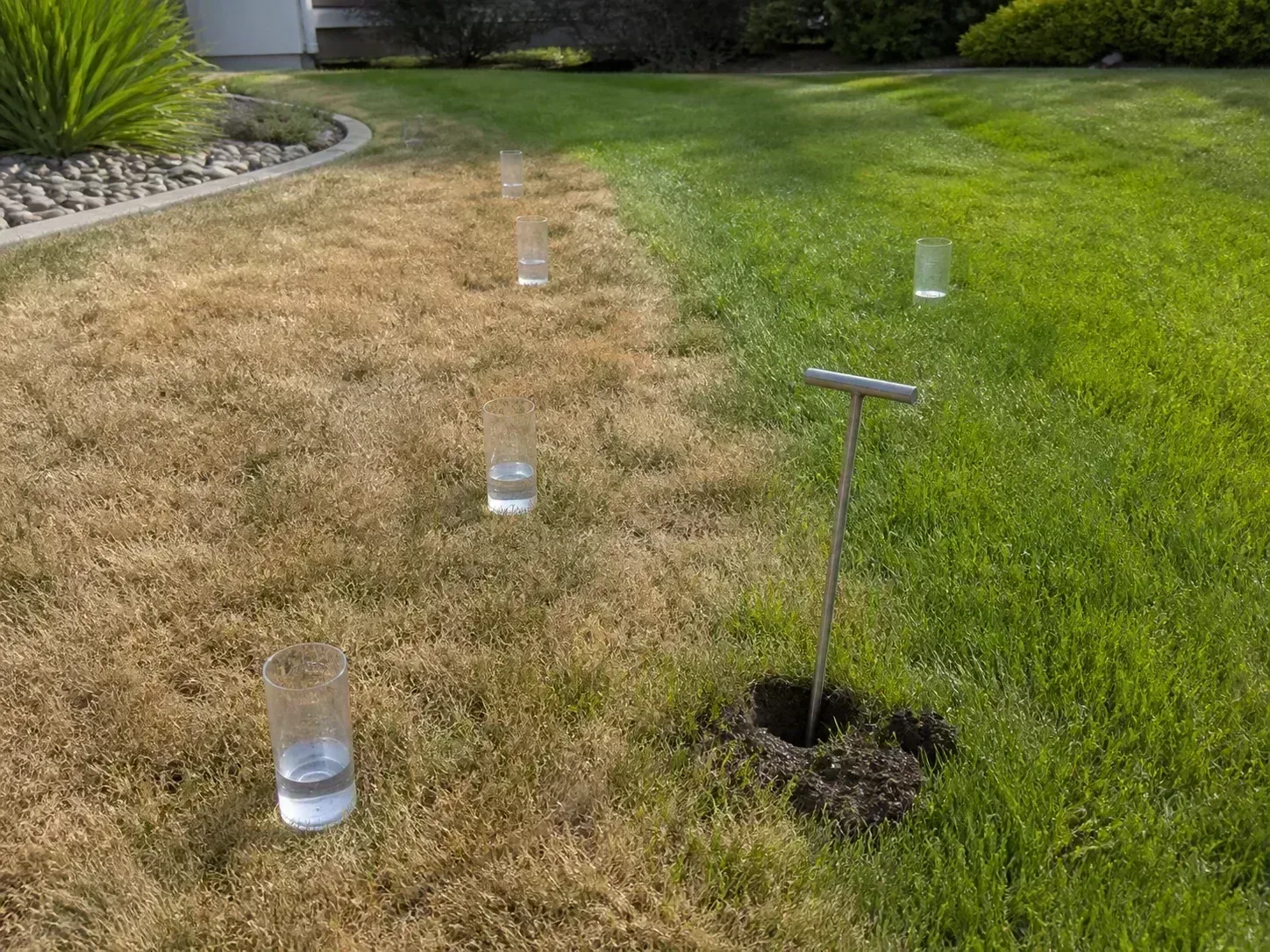
Stop guessing from calendar alerts. Established turf tells you when it is thirsty:
- Footprinting: blades do not spring back after you walk across the lawn; your footprints remain visible.
- Color shift: turf turns blue-gray before it turns brown.
- Folded blades: grass leaves fold lengthwise along the midrib.
UF IFAS Extension suggests irrigating when about half the lawn shows one of these wilt signs—unless rain is forecast within 24 hours (UF IFAS Extension). Push a screwdriver or soil probe into the ground; if it slides easily to 4–6 inches, roots still have moisture even if the surface looks dull.
Overwatering signs look different: constant squish underfoot, fungal rings, mushrooms, excessive mowing from lush top growth, and yellowing despite wet soil. If brown grass stays brown right after heavy irrigation, the problem may be compaction, disease, or misaligned heads—not thirst. Our brown lawn after watering troubleshooting guide covers those next steps.
New sod and seed are exceptions: they need shallow, frequent moisture for the first few weeks because roots are not established. Virginia Cooperative Extension notes that seedling or recently established lawns under one year old have little drought tolerance compared with mature turf (Virginia Cooperative Extension). Follow establishment instructions separately; do not copy an established-lawn schedule. Transition gradually: as roots knit into native soil over three to four weeks, lengthen run times and widen the gap between sessions.
Overwatering vs underwatering can look similar from the street—both may show yellow or brown patches—but the soil tells the truth. Underwatered turf is dry when you probe; overwatered turf smells sour, squishes underfoot, and may grow mushrooms along edges. Fungal rings and greasy-looking brown patch borders point to too much moisture, not drought. Fix the habit before you reseed.
Building a Smarter Weekly Watering Plan
Pull the pieces into a plan you can run all season:
- Measure weekly rain plus irrigation with a gauge or catch cans. Target about 1 inch total per week during active growth for many lawns, adjusting for species and soil.
- Water early, deep, and only when wilt signs or probe tests say so—not every calendar day.
- Split applications if runoff appears; two ½-inch sessions beat one flooded hour on clay.
- Raise mowing height within species limits before summer stress; taller turf shades soil and supports deeper roots (Virginia Cooperative Extension).
- Aerate compacted areas annually so water infiltrates instead of pooling.
- Respect local restrictions; many municipalities limit days and times. A compliant schedule you follow beats a perfect schedule you cannot use.
Revisit the plan monthly. June’s heat differs from September’s cool nights. Turf that stays healthy with less water almost always has deeper roots, better equipment, and timing that follows weather—not anxiety.
Sample weekly logic for an established cool-season lawn in summer: Start the week at 0 inches applied. Rain adds to the tally. When footprinting appears on sunny areas and a probe shows dry soil at 4 inches, run catch-can-tested zones to deliver ½ inch. If wilt returns before week’s end and rain was light, apply another ½ inch. If a thunderstorm delivers 0.8 inches, skip irrigation entirely. In shoulder seasons—spring and fall—many lawns need less supplemental water because growth and evaporation both slow. Warm-season lawns peak in summer and may need deeper sessions during active growth, then far less as they slow in fall.
Pair watering changes with mowing and fertility discipline. Penn State Extension ties seasonal lawn success to integrated practices—sharp blades, appropriate height, and irrigation that matches growth—not to any single product (Penn State Extension). Overfertilized, overwatered lawns grow fast, drink more, and invite disease. A measured inch of water on a moderately fed, properly mowed lawn outperforms daily spritzes on a lush, stressed carpet every time.
Conclusion
Thirsty, struggling lawns are rarely punished by lack of effort. They are punished by lawn watering mistakes that are easy to fix once you see them: watering at midday or midnight, copying a neighbor’s timer, ignoring rain, training shallow roots with daily spritzes, and feeding the driveway instead of the soil. Shift to early-morning, measured, infrequent deep watering matched to your grass and soil, audit sprinklers once a season, and let the lawn tell you when it is dry. Do that and you will spend less on water while growing grass that handles summer on its own roots—not on your sprinkler’s mercy.



