How to Keep Squirrels Out of Potted Plants
Stop squirrel damage in container gardens with seven humane methods, from wire covers and gravel to smarter placement and short-term scent deterrents.
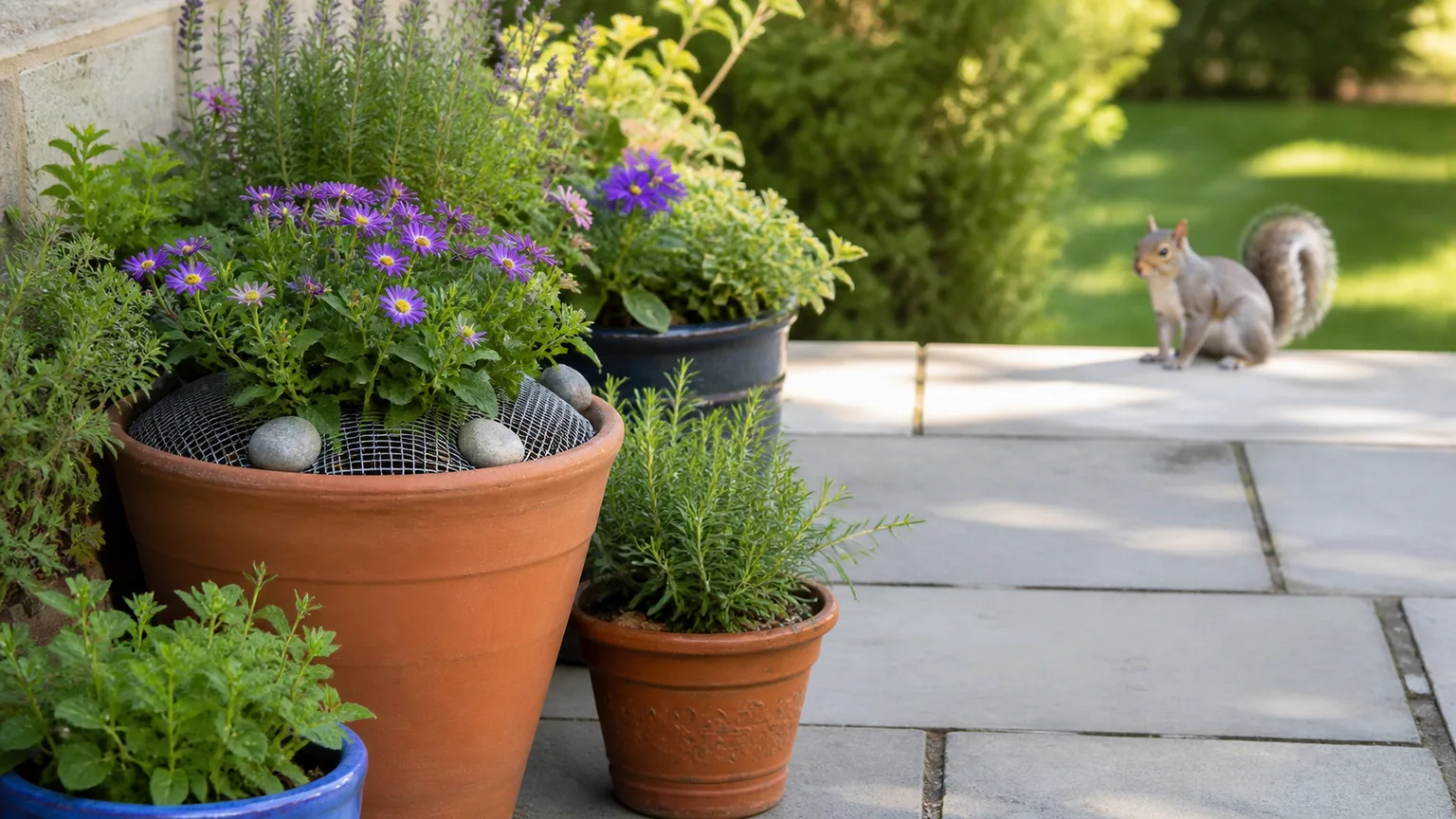
Squirrels turn a container garden into a construction site for three common reasons: they are caching food, searching for something they buried, or taking advantage of loose potting mix that is easy to excavate. The result is familiar—soil scattered across the patio, seedlings pulled out, bulbs missing, and a plant that suddenly leans because its roots have been disturbed.
The most dependable way to keep squirrels out of potted plants is to cover the soil with a fitted barrier. Then remove nearby food cues and add one temporary deterrent if the squirrel keeps returning. Odors, shiny objects, and “squirrel-resistant” plant lists can help in some yards, but they are inconsistent; a physical cover is what stops the digging itself.
Start by identifying what the squirrel is doing
Watch the pot for a few minutes before choosing a fix. Fresh cone-shaped holes and loose soil suggest caching or foraging. Nibbled stems, missing fruit, or clipped leaves point to feeding. A pot that has been tipped over may need a stability change as much as a wildlife deterrent.
This distinction matters because the best response changes with the damage. A bulb pot needs a temporary cover over the soil, a fruiting tomato needs protection around the whole plant, and a heavy decorative pot that is repeatedly knocked over needs a safer position or wider base. Spraying an odor on a seedling will not stop a squirrel that is physically reaching for the plant.
Digging, eating, or knocking over pots
Squirrels often revisit the same pots because the soil has become a remembered storage site. If you find acorns, nuts, or bits of fruit buried in the mix, empty the cache, firm the surface gently, and cover it immediately. Leaving the hole open gives the squirrel a reason to return and check its work.
If the plant itself is being eaten, look for ragged leaf edges, missing buds, or cleanly clipped stems. A mesh cage or plant cover is more appropriate than a surface mulch. If the container is being pushed over, secure it to a railing only with a safe, non-choking attachment or move it to a broad, stable surface; do not create a trip hazard with loose wire or cord.
Tree squirrels and ground squirrels need different barriers
Bushy-tailed tree squirrels approach from branches, fences, roofs, and deck rails. Ground squirrels and chipmunks work closer to the soil and may dig under a perimeter. A low pot on a patio can attract either, so use the behavior you see rather than assuming the animal from the hole alone.
Nebraska Extension describes tree squirrels as capable climbers and notes that they can damage potted plants, bury nuts in landscaped areas, and dig up seeds and bulbs. Its guidance is useful for planning around access: a barrier must cover the vulnerable surface, not merely sit nearby as decoration. (Nebraska Extension)
Method 1: Cover the soil with a fitted mesh barrier
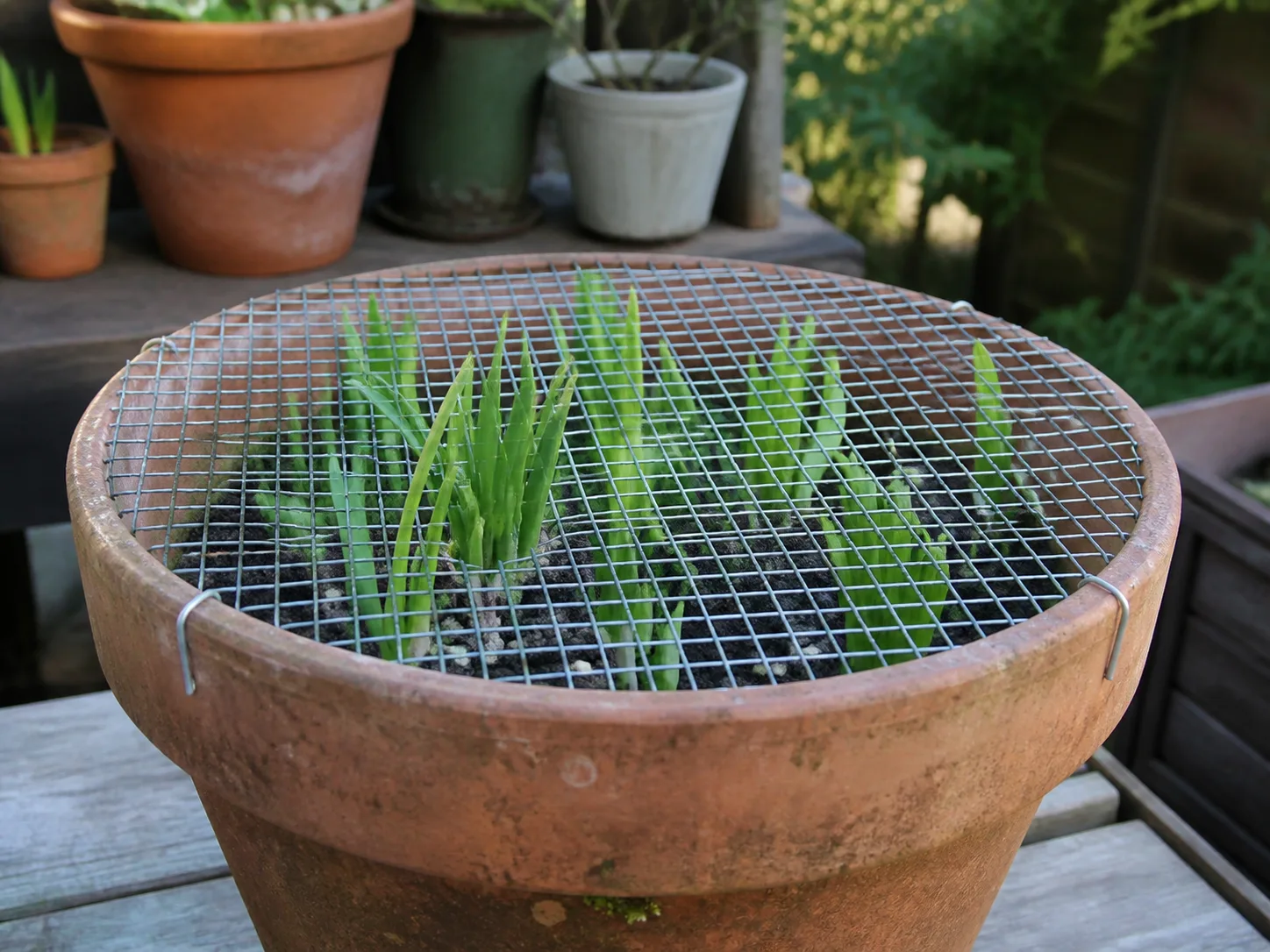
For freshly planted bulbs, seeds, and small plants, mesh is the best first move. Cut a circle or square of hardware cloth or sturdy garden mesh slightly larger than the pot opening, then make a slit or small cutout for the stem. Lay it flat on the rim or on short supports just above the soil and fasten it so a squirrel cannot lift one edge.
Use a cover that fits the job. A flat piece works for a newly planted bulb pot; a small wire cloche or cage is better when leaves are already emerging. If the plant needs pollinators or the foliage will expand quickly, treat the mesh as temporary and check it every few days.
Choose mesh that protects roots without blocking water
For a small enclosure, a mesh opening of 1/2 inch or smaller is a sensible starting point. Ask Extension cites this size for garden barriers and notes that individual plant protection can be more practical than fencing an entire garden. The same principle applies to pots: protect the few containers under attack instead of building an oversized fence that squirrels can climb around. (Ask Extension)
Keep the mesh off the plant’s growing point and make sure rain can pass through. Do not press sharp cut ends into the potting mix, where they can injure you during watering or damage roots during repotting. Fold or cap exposed ends, use garden staples only where they cannot scratch people or pets, and inspect the cover after wind.
For edible containers, use clean, garden-intended mesh rather than rusty scrap or wire that has been coated with unknown chemicals. A cover over the soil is usually easier to remove for harvest than a permanent cage around a sprawling plant.
Method 2: Make the soil harder to excavate
If a wire cover is ugly, awkward, or unnecessary for a mature plant, replace the loose top layer with a coarse surface that is difficult to push aside. Poultry grit, coarse pea gravel, or several large, stable stones can make a pot less inviting than bare potting mix. Gardening experts interviewed by Martha Stewart and Homes & Gardens both describe gravel, stones, or mesh as practical ways to discourage container digging. (Martha Stewart; Homes & Gardens)
Use a thin, even layer rather than burying the stem or filling the pot to the rim. The goal is to make the top surface unpleasant to excavate while keeping the root crown ventilated and the drainage holes clear. Large stones may work on a broad, heavy planter, but they can overload a small plastic pot or become projectiles if the squirrel pushes them out.
This method is a deterrent, not an impenetrable shield. A hungry or persistent squirrel may move the stones, especially if it has already cached food in that pot. If the animal keeps opening one spot, switch to mesh or combine the gravel with a cover for the first week while the pot stops being a reliable storage location.
Method 3: Move vulnerable pots out of the launch zone
Container placement matters more than most repellent recipes. Nebraska Extension reports that a gray squirrel can jump about eight feet sideways, four feet straight up, and fifteen feet down. Those figures are not a promise that a pot outside the radius is squirrel-proof, but they explain why a planter beside a tree, fence, railing, or roof edge is easy to reach. (Nebraska Extension)
Move the most vulnerable pots to a bright location that still meets their light needs, but remove the obvious launch route. A movable plant stand in the middle of a patio may be safer than a windowsill directly below a branch. If you grow sun-loving plants, use a stable table or bench rather than putting the pot in deep shade just to make access harder.
Do not create a new problem while moving the old one. Keep heavy pots where you can lift them safely, leave room for watering and drainage, and avoid placing plants where falling branches, hot reflected walls, or a pet could damage them. If a squirrel simply follows the pot, its attraction may be the soil or nearby food—not the original location.
Method 4: Remove nearby food cues and spilled seed
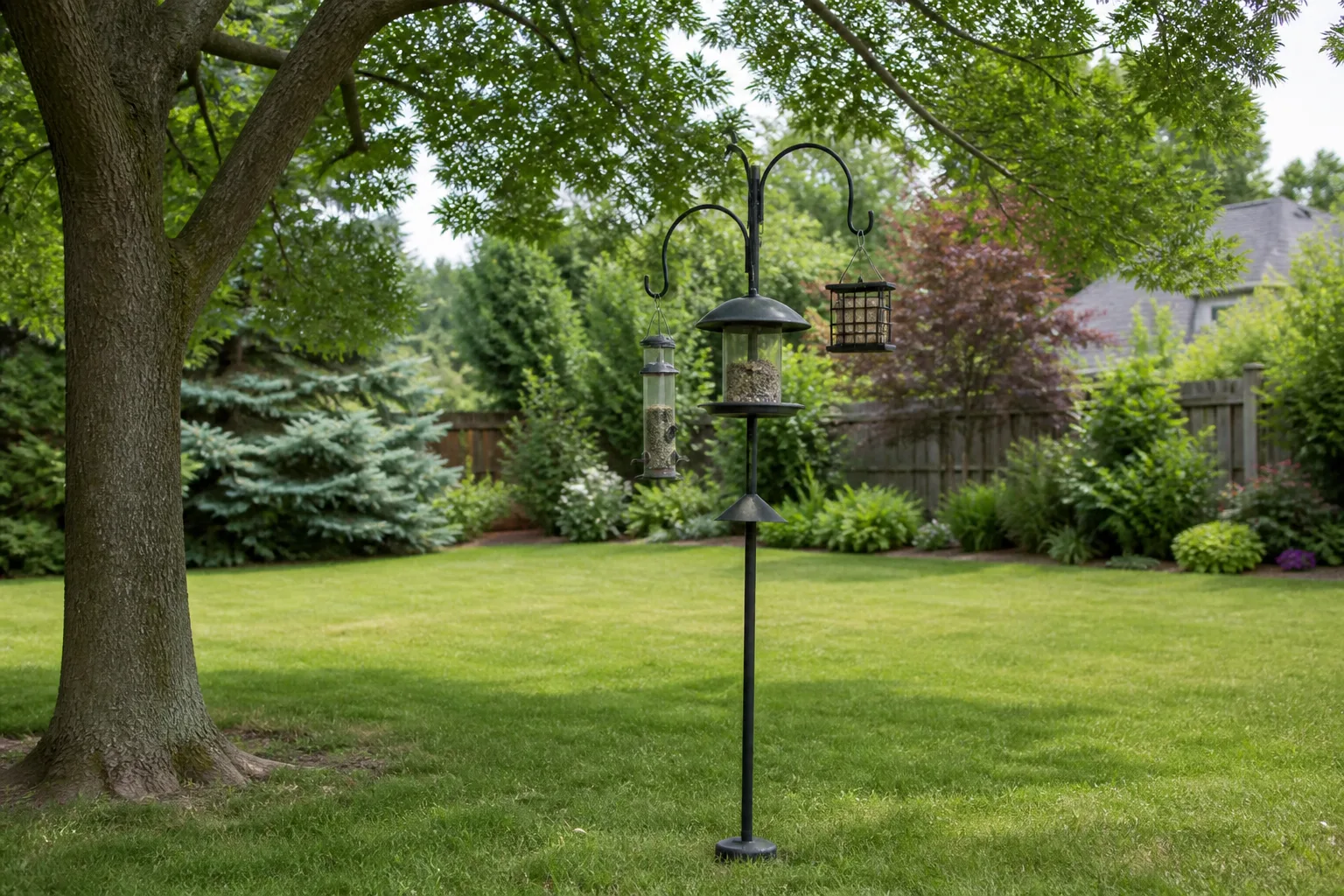
Exclusion works better when your patio is not advertising a free meal. Remove buried nuts from disturbed pots, pick up fallen fruit, cover compost, and bring outdoor pet food inside. If you feed birds, sweep spilled seed from beneath the feeder and think about whether the feeder is concentrating squirrels next to your planters.
Audit feeders, fruit, compost, and pet food
For one week, check the area around the pots each evening. Look for sunflower hulls, cracked corn, acorns, fruit drops, open trash, grill grease, and food scraps. Clean the attractant before reaching for a stronger spray; otherwise the squirrel may tolerate the smell because the reward is worth it.
Bird feeders deserve special attention. Nebraska Extension recommends placing feeders at least five feet above ground and ten feet from branches or other structures, with a properly placed baffle or a feeder that closes under squirrel weight. It also warns that greased poles and sliding two-part poles often fail. (Nebraska Extension) If you keep feeders, use the same placement logic and sweep the ground; a feeder can be well designed and still create a squirrel station beside your containers.
Pausing a feeder for several days can be a useful test if your main goal is protecting a patio garden. If the digging stops, you have identified a pressure point. You can decide whether to resume feeding with better placement, a baffle, and tighter spill control, or keep the feeder away from the containers.
Method 5: Use scent and taste repellents as a short-term layer
Repellents make sense as a second line of defense when a barrier is hard to install or while a plant recovers. Mint, garlic, cinnamon, coffee grounds, and capsaicin are often suggested because squirrels may dislike their smell or taste. The important word is may: individual animals learn, weather removes the residue, and a valuable food source can outweigh an odor.
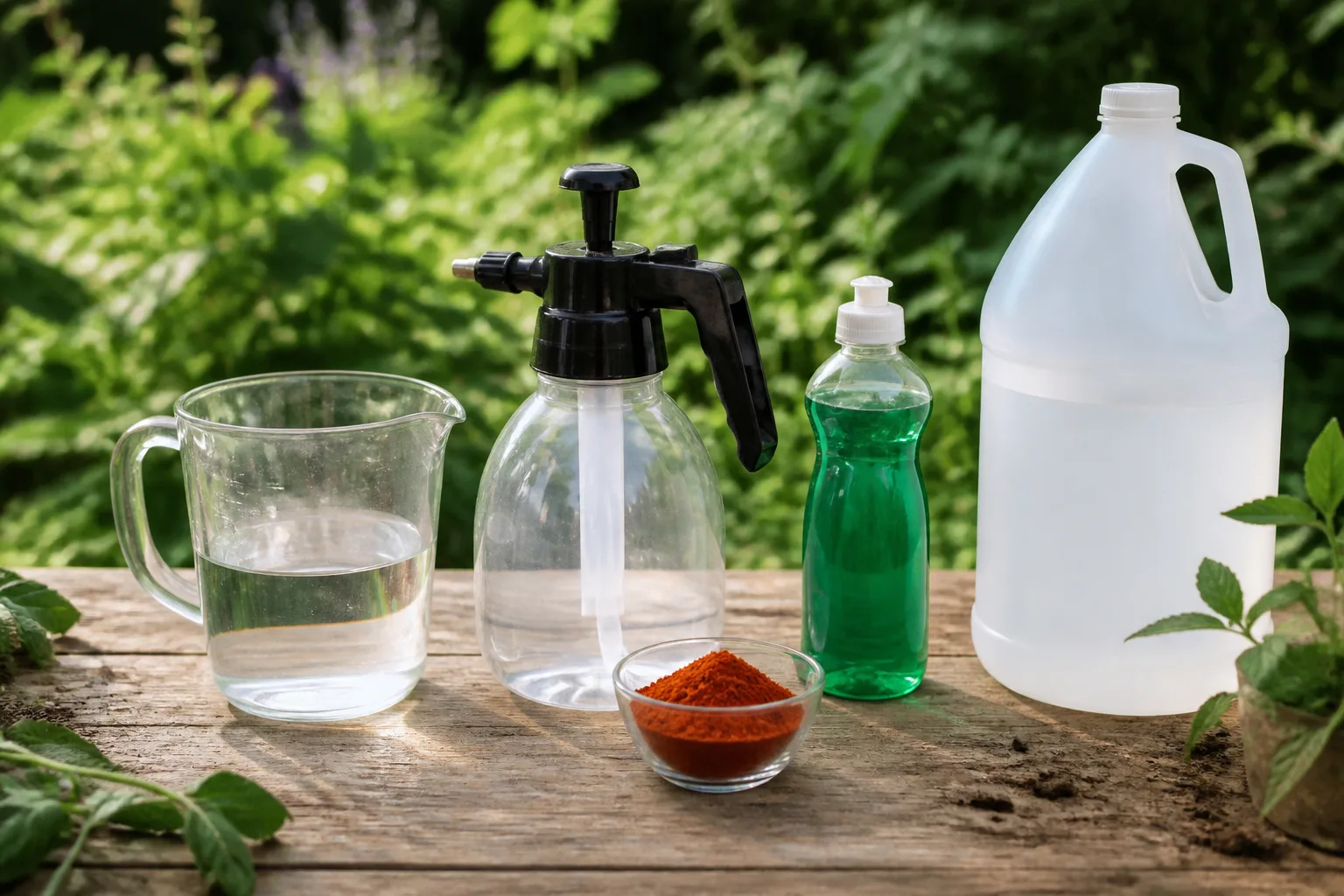
Apply any repellent only according to its label if it is a commercial product. For a homemade experiment, start on a small, non-edible part of the container, wait to see whether the foliage reacts, and never assume that “natural” means harmless to roots, pollinators, pets, or children.
Use hot pepper carefully around plants and pets
Capsaicin can discourage mammals from chewing treated plant material, and Nebraska Extension lists taste repellents such as capsaicin for seeds, bulbs, and flowers that are not intended for human consumption. Ask Extension similarly cautions that repellents lose effectiveness outdoors and should not be applied to edible portions of vegetables. (Nebraska Extension; Ask Extension)
That makes hot pepper a poor choice for a pot of lettuce, basil, tomatoes, or strawberries that you plan to harvest. Pepper dust can move in wind or splash into eyes, and residue on foliage can affect pets or people who touch the plant. If you use a labeled product on ornamentals, follow the label, keep children and pets away during application, and wash produce separately from treated plants.
Treat coffee grounds and essential oils as experiments
Coffee grounds are popular because they are easy to find, but they should not replace mesh. If you test them, use a very light surface sprinkle, keep the material away from the stem, watch drainage and moisture, and stop if the surface becomes compacted, moldy, or water-repellent. Spent grounds are not a reliable fertilizer substitute, and they will not stop a squirrel that is determined to reach a buried bulb.
Essential-oil sprays have an even larger margin for error. Concentrated oils can burn foliage, irritate skin, and be unsafe for pets; vinegar and dish soap can also damage leaves at the wrong strength. Do not spray an untested mix on a sunny, hot day, and do not use it on edible leaves or fruit unless the product is specifically labeled for that crop and use.
Method 6: Choose less-attractive plants for exposed containers
Plant choice can lower the reward, especially when you are replacing a crop that squirrels repeatedly steal. Daffodils and some other bulbs are less appealing to squirrels than tulips, while aromatic herbs such as thyme, rosemary, oregano, and mint may be bypassed more often than tender seedlings. Marigolds and nasturtiums also appear frequently in practical gardening advice, but no plant is squirrel-proof.
Use this as a design decision, not a guarantee. A squirrel that ignores rosemary in a well-fed season may sample it during a lean one, and a squirrel that avoids a daffodil bulb may still dig beside it to hide an acorn. Martha Stewart’s container advice makes the same useful qualification: results depend on the individual animal’s persistence. (Martha Stewart)
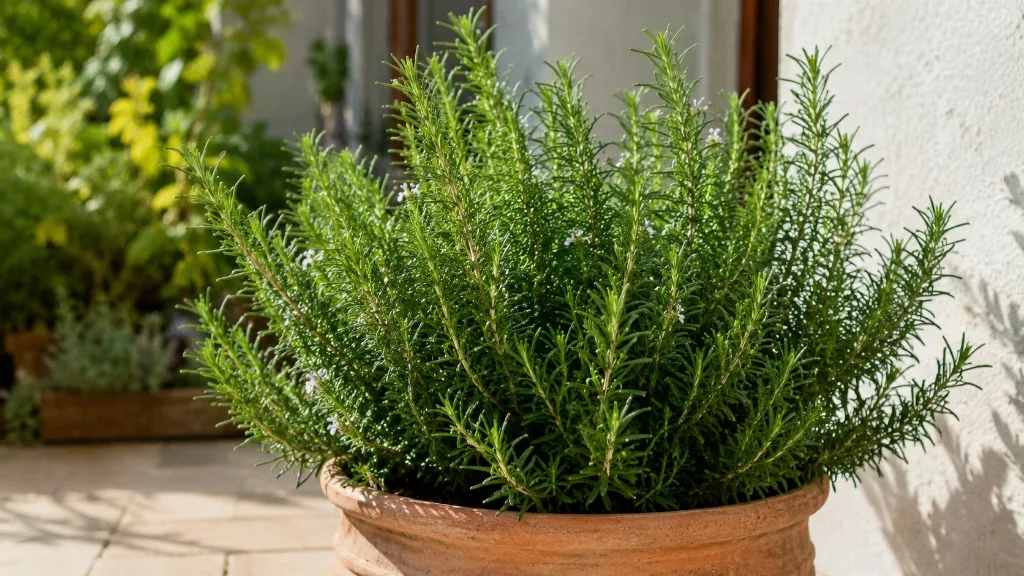
The strongest approach is to put aromatic or less-attractive plants on the exposed edge of a group, then reserve a fitted cover for the irreplaceable bulbs, seedlings, and edible crops. If you grow mint, keep it in its own pot; it spreads aggressively when planted directly in the ground, and a “deterrent plant” should not become a second garden problem.
Method 7: Add a temporary motion or visual deterrent
Motion sprinklers, pinwheels, reflective strips, and other moving objects can make a recently disturbed pot less comfortable long enough for the squirrel to change its route. Use them as a short-term disruption, not as the main defense. Squirrels can habituate to a fixed object, and a visual deterrent that works in a quiet morning may do little after wind, rain, or repeated exposure.
If you try a motion device, aim it away from walkways and windows, check that it will not soak a plant that dislikes wet foliage, and test it during the hours the squirrel visits. Ultrasonic products deserve modest expectations: Homes & Gardens includes them among possible options, but even that practical coverage presents them as one component of a combination rather than a substitute for a physical barrier. (Homes & Gardens)
Reflective objects and noise makers also have trade-offs. They can annoy neighbors, startle pets, or look untidy, and they lose novelty. If a mesh cover solves the problem, remove the visual gadget; the best deterrent is the one that protects the plant without creating a new nuisance.
How to protect bulb pots and edible containers
Bulbs and newly sown containers deserve a slightly different plan because the soil is freshly disturbed and the food is below the surface. Before planting, choose a pot with adequate drainage, position the bulbs at the recommended depth, and cover the entire soil surface immediately. Secure a flat mesh disk to the pot rim or use a cage tall enough to allow shoots to emerge.
Check the pot after rain and watering. A cover that lifts, collapses onto the soil, or collects debris has stopped being a barrier. As shoots appear, adjust the cover so it does not rub the stems; remove it when the foliage needs room, but replace it if digging starts again.
For edible containers, prioritize a cage or insect netting that is clean, food-garden appropriate, and easy to remove for harvest. Do not put cayenne, essential oils, predator urine, mothballs, or unlabeled chemical products on edible plants. If a squirrel can reach the fruit through the top, a soil cover alone is not enough—protect the crop canopy or move the pot.
What to do when the fix stops working
When squirrels return after a week, do not immediately assume the barrier failed. Look for the new reason: a loose edge, a gap around the stem, fresh seed spills, a pot moved closer to a branch, or a squirrel that has learned to push the stones aside. A quick evening inspection usually tells you whether the problem is access, reward, or habituation.
Use this escalation sequence:
- Repair the physical barrier. Close gaps, anchor the mesh, and remove sharp protrusions.
- Remove the reward. Empty caches, sweep seed, pick fruit, and secure compost or pet food.
- Change one variable. Move the pot, switch from stones to mesh, or add a motion sprinkler for several days.
- Reassess the animal. Burrows, low digging, and daytime feeding may point to a ground squirrel or chipmunk rather than a tree squirrel.
This sequence prevents a common mistake: layering five weak smells on top of a pot that still has an open, attractive hole. If you cannot tell what is visiting, use a phone camera or watch tracks and timing rather than adding stronger chemicals.
What not to use around plants, pets, and wildlife
Avoid glue traps, poison baits, mothballs, and improvised chemicals. They can injure non-target wildlife, pets, and children, contaminate the growing area, or leave an animal to suffer out of sight. A product being sold for one pest or one setting does not make it suitable for potting soil or edible crops.
Do not grease a pole, branch, or pot. Oily substances can spread onto feathers and fur, and a slippery animal can fall onto a hard patio. Do not use sharp sticks where a child, dog, or gardener could brush against them; if you need a rough surface, use stable, blunt stones or a purpose-built cover.
Finally, do not treat a cat or dog as a 24-hour deterrent. Chasing can injure both animals, and an outdoor pet may create a separate wildlife problem. If a product includes a pesticide, repellent, or animal-derived ingredient, read the current label and local rules before applying it.
When a squirrel problem is bigger than a pot
Potted-plant digging is usually a small-area access problem. The situation changes if you hear scratching in an attic or wall, find chewed electrical wiring, see repeated entry at a roofline, or discover a nest inside a structure. Nebraska Extension notes that tree squirrels can enter through openings as small as about 1.5 inches and can damage insulation and electrical wires. (Nebraska Extension)
Do not seal an active opening blindly. You could trap an animal—or dependent young—inside. Contact a licensed wildlife professional or your local wildlife agency for an exclusion plan that follows local law, identifies the entry point, and confirms that the space is empty before it is repaired.
For outdoor containers, professional help is rarely the first step. It becomes reasonable when damage is widespread, the animals are entering a building, or you cannot safely install a barrier because of height, wiring, or access. The aim is still exclusion and habitat management, not scattering squirrels into another location without checking the rules.
Conclusion
Start with the pot, not the spray bottle. Cover freshly disturbed soil with fitted mesh, use coarse stones only when they will not block drainage or overload the container, move vulnerable pots away from launch routes, and remove the food cues that keep squirrels returning.
Add scent, taste, motion, or plant-choice tactics only as temporary layers, and use extra caution around edible crops, pets, children, and beneficial wildlife. Once the container is no longer an easy food cache, most squirrel problems become manageable without trying to remove every squirrel from the yard.



