How to Winterize Hibiscus: Tropical and Hardy Types
Learn how to winterize hibiscus with the right timing, pruning, indoor light, watering, pest checks, and spring acclimation for tropical and hardy types.
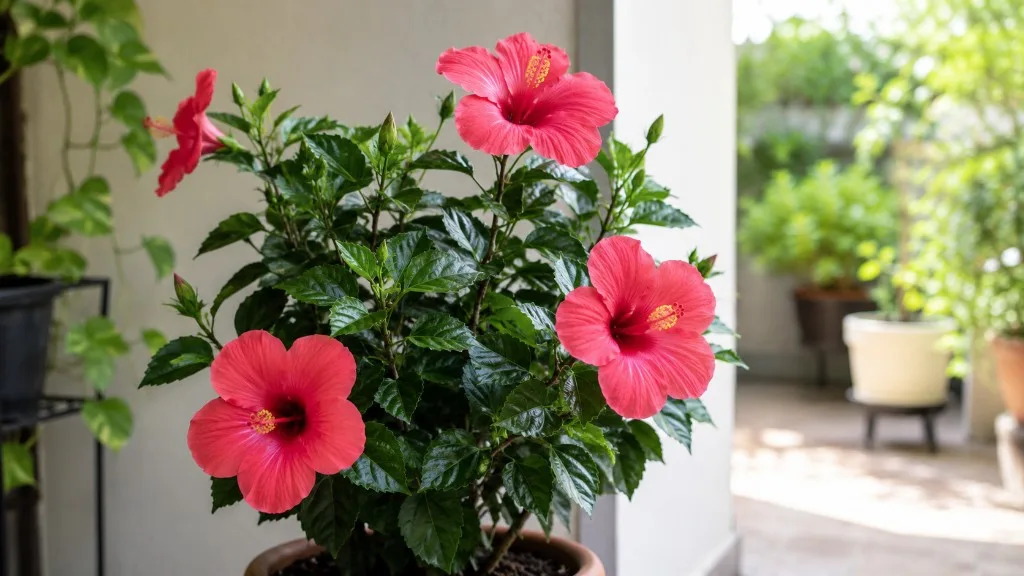
The right way to winterize hibiscus depends on one detail many gardeners skip: which hibiscus do you have? A tropical Chinese hibiscus (Hibiscus rosa-sinensis) needs frost protection and usually an indoor winter plan. A hardy rose mallow can die back to the ground and return next year, while rose of Sharon behaves as a woody shrub. Treating all three the same is how gardeners overwater a dormant plant, freeze a container root ball, or move a tender plant too late.
Start by checking the plant label, flower and leaf shape, and how it behaved last winter. Then match the plant to your lowest nighttime temperatures, the amount of indoor light you can provide, and whether it is growing in the ground or in a pot. The sequence below is designed to keep roots alive, limit avoidable stress, and make spring recovery predictable rather than hopeful.
The First Decision: Identify Your Hibiscus
“Hibiscus” is a genus, not a single winter-behavior category. A florist-style plant with glossy leaves, woody stems, and large flowers in red, orange, yellow, pink, or double forms is usually tropical hibiscus. It can live outdoors year-round only where winters are reliably frost-free. The Royal Horticultural Society lists tropical hibiscus as tender, with a minimum night temperature around 45–50°F, and recommends bringing it indoors before temperatures fall below about 59°F in its growing guidance (RHS tropical hibiscus guide).
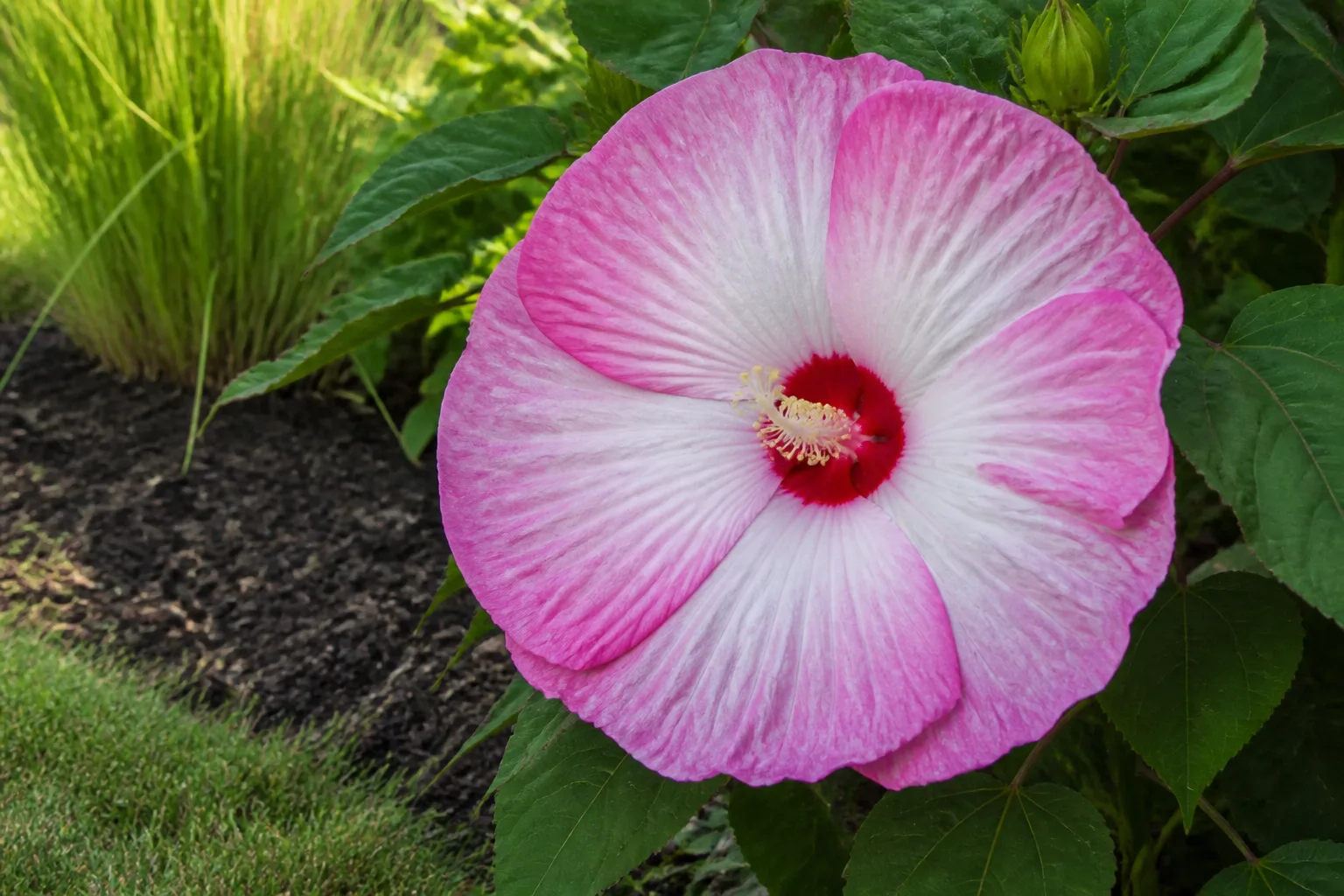
Hardy hibiscus is a different plant group. Rose mallow (Hibiscus moscheutos and its hybrids) is a herbaceous perennial: the top growth fades after frost, but the crown and roots sleep underground. Rose of Sharon (Hibiscus syriacus) is a deciduous woody shrub that keeps a permanent branch framework. Both tolerate cold far better than tropical hibiscus, but a plant’s published hardiness, local exposure, and container status still matter.
Tropical hibiscus
Tropical hibiscus has glossy, usually unlobed leaves and a woody, branching shape that stays leafy in warm conditions. It is commonly sold as a patio or container plant because moving the pot is part of its practical care in climates with freezing winters. Epic Gardening describes tropical hibiscus as a year-round outdoor plant in frost-free zones and an annual or houseplant in colder regions (Epic Gardening’s hibiscus winter guide).
If you are unsure, assume a glossy-leaved patio hibiscus is tender until its label or a reliable plant record proves otherwise. A late frost can damage leaves, stems, and roots before the weather looks dramatically cold, and a damaged plant may not show the full extent of injury for several days.
Hardy hibiscus
Rose mallow usually has large, matte, sometimes lobed leaves and enormous summer flowers. It emerges late in spring, then grows quickly once warm weather arrives. Do not dig it up just because it looks dead after the first hard frost; the brown stems are often the normal end of its seasonal top growth.
Rose of Sharon has smaller flowers, a shrub-like structure, and persistent woody stems. It is often planted in the landscape rather than treated like a tropical patio pot. The winter advice for rose mallow and rose of Sharon overlaps—protect the root zone and wait for spring growth—but their final size, pruning, and hardiness are not identical.
Choose a Winter Plan Before the Weather Turns
Use this quick decision rule:
- Tropical hibiscus in a cold-winter region: move it indoors before frost, usually when nights begin approaching 50°F. Choose active indoor care if you have strong light; choose cool, dormant storage if you do not.
- Tropical hibiscus in a frost-free region: leave it outside if the forecast and microclimate stay within the plant’s safe range, but protect it from unusual cold snaps and cold, wet wind.
- Hardy hibiscus in the ground: leave it in place. Let frost finish the top growth, cut back only when appropriate for your cleanup preference, and protect the crown with a moderate mulch layer.
- Hardy hibiscus in a pot: treat it as less hardy than the same cultivar in the ground. Move it to a sheltered, unheated place or insulate the container before severe freezes.
- Unknown cultivar or exposed site: choose the more protective option for one winter while you identify the plant and observe how it responds.
This decision prevents a common mismatch: bringing a hardy rose mallow into a warm living room where it has no useful light, or leaving a tropical hibiscus outside because its flowers were sold as “hardy.” The best winter method is the one that matches biology and your available conditions, not the one that sounds most like a professional greenhouse.
Get the Timing Right: Temperature Beats the Calendar
Calendar dates vary widely, even within one hardiness zone. A protected patio beside a south-facing wall can stay warmer than an exposed balcony, while a clear night can produce a damaging frost before the monthly average feels cold. Watch nighttime lows and the first-frost forecast instead of waiting for a particular week in autumn.
For tropical hibiscus, move the plant when nights are regularly in the 40s to low 50s°F, with the safer trigger being before frost is forecast. The plant may tolerate a brief dip below 50°F, but tolerance is not a useful winter plan; cold exposure slows growth and increases the odds of leaf drop and root stress. If the RHS minimum guidance is around 45–50°F, use that as a warning range, not as a challenge to test the lower boundary.
Hardy hibiscus can remain outside through frost when it is genuinely hardy for your location. The important exception is the container. The soil volume around roots in a pot is surrounded by cold air, so it can freeze much faster than the soil around an in-ground crown. The RHS recommends grouping containers in sheltered areas, insulating pots, or plunging them into the ground with the rim still visible (RHS winter-damage guidance).
Prepare Tropical Hibiscus for the Move
Preparation is more than cutting the plant back. Your goal is to bring in a clean, manageable plant whose roots are neither waterlogged nor bone dry, and whose leaves are not carrying a pest population into the rest of your houseplant collection.
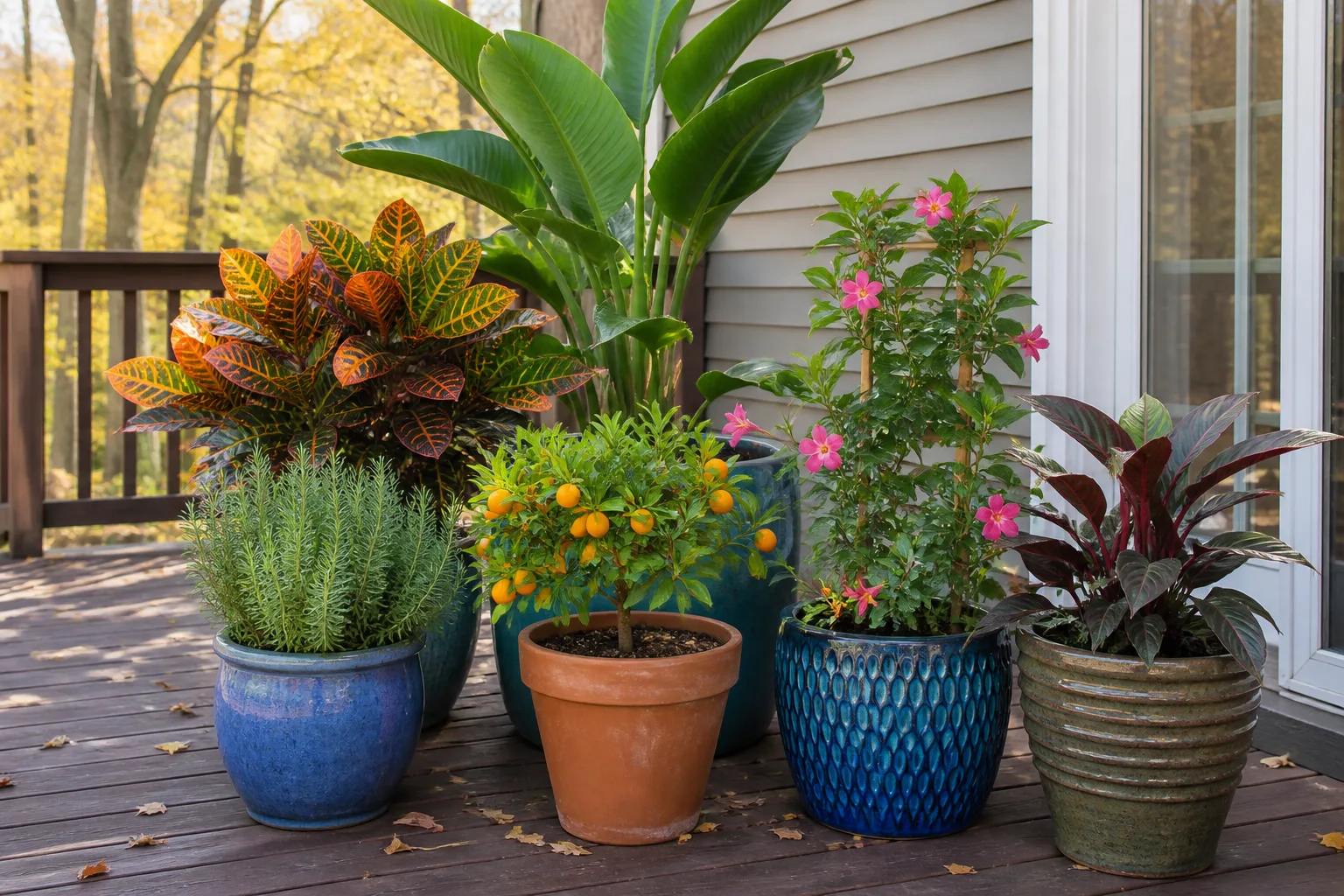
Start by removing dead flowers, yellow leaves, fallen debris, and visibly damaged tissue. Inspect both sides of leaves, the leaf joints, stem tips, and the soil surface. Aphids, spider mites, and whiteflies are common concerns in protected hibiscus culture, and Connecticut Agricultural Experiment Station guidance also documents hibiscus pests and gray mold problems (Connecticut Agricultural Experiment Station hibiscus handbook).
Rinse the canopy with a firm but non-damaging stream of water, especially on leaf undersides. Let the foliage dry in a bright, airy spot. If you find live pests, isolate the plant and use only a product whose label includes the pest, plant setting, and application directions you need. “Organic” does not mean harmless to leaves, pets, beneficial insects, or people; never improvise a concentration from a blog or bottle intended for a different use.
Check the pot before the move. A drainage hole must be open, the saucer must not hold standing water, and the root ball should not be saturated when you carry it inside. If the container is already root-bound or the mix has collapsed into a slow-draining mass, winter is usually the wrong time for a major repot unless the plant is failing; stabilize the light and temperature first and repot as active growth resumes.
Prune for logistics and health, not because a severe cut guarantees more flowers. Remove dead or crossing branches and shorten long, awkward shoots by roughly one-quarter to one-third if the plant will not fit through a doorway or under a window. Make clean cuts just above a leaf node with sanitized shears. Leaving a few nodes on each retained branch gives a tropical hibiscus places to push new growth, but avoid removing a large percentage of green wood immediately before a stressful move.
Choose Between Active Indoor Care and Dormancy
Tropical hibiscus has two workable winter strategies. Active indoor care preserves growth when you can supply strong light and warm, stable conditions. Dormant or semi-dormant storage uses less space and light, but the plant will not provide the same winter display and can look alarming while it rests.
Active indoor care for light-rich rooms
Choose this method for a plant near a bright south- or west-facing window, or beneath a grow light that can provide a consistent daily schedule. Move the plant into a bright indoor location, keep it away from heating vents and cold drafts, and expect an adjustment period. The temperature and light change can cause some leaves and buds to yellow and fall even when the plant is not dying.
Do not respond to that first leaf drop by watering every day or feeding heavily. Give the plant several days to settle, check the soil and root-zone drainage, and watch for new buds at the nodes. New growth, a stable canopy, and a pot that dries at a reasonable pace are better signs of recovery than the number of leaves it has on the first indoor morning.
Dormant storage for low-light homes
Choose dormancy when you cannot provide enough light for a leafy tropical plant and have a cool, dark, frost-free location such as a garage or basement. The storage space must not swing below freezing, and it should not trap the pot in a constantly wet environment. This is a survival strategy, not a promise of winter flowers.
Before storage, inspect and clean the plant, reduce its size if needed, and let the surface of the potting mix dry slightly. Check the pot every few weeks. Water only enough to keep the root ball from becoming completely dry, and pour off any excess. A dormant plant uses far less water than a plant still growing beside a warm window, so a calendar-based weekly watering routine is a reliable path to root rot.
Winter Light, Temperature, Water, and Humidity
Light and temperature
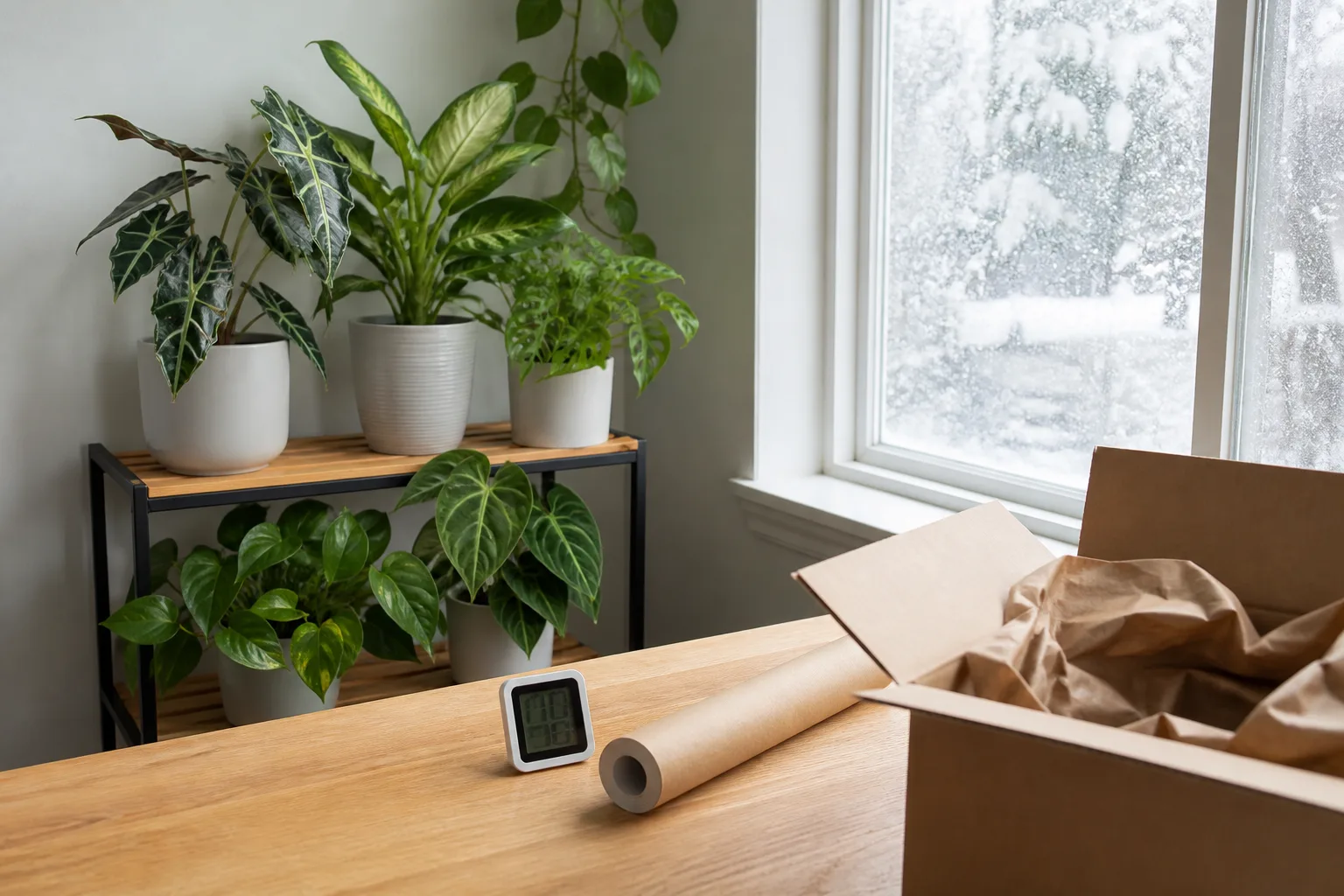
Give an actively growing tropical hibiscus the brightest practical light you have. A south- or west-facing window is often the strongest indoor choice, although direct glass exposure can become intense in a warm room. An east window can work for smaller plants if it receives several hours of bright morning light; a north window often needs supplemental lighting for a plant expected to keep growing.
The RHS describes a warm, humid glasshouse or conservatory, bright filtered light, and minimum winter nights around 45–50°F as suitable conditions for tropical hibiscus. In a home, stable temperatures around 65–75°F are more useful than placing the plant in a cold window one night and beside a heater the next. Keep the pot away from radiators, forced-air vents, open doors, and frosty glass (RHS tropical hibiscus cultivation notes).
Water and fertilizer
Water by observing the plant and potting mix, not by repeating the summer schedule. For an actively growing plant, wait until the upper layer of mix is dry, then water thoroughly until excess drains from the bottom. Empty the saucer. For a semi-dormant plant, allow more of the mix to dry and water less often, while still checking that the entire root ball has not become hard and dusty.
The pot’s weight is a useful second test: a recently watered container feels noticeably heavier than a dry one. If the surface is dry but the lower mix stays wet for many days, the problem is drainage or low root activity—not a need to add more water. Prolonged sogginess deprives roots of oxygen and can lead to root rot, especially when low light and cool temperatures slow evaporation.
Stop routine fertilizer when growth has slowed or the plant is dormant. Resume a balanced, diluted feed only when stronger light and new growth return in spring. Late-season nitrogen can encourage soft new growth that is more vulnerable to cold; the RHS specifically cautions against late nitrogen-rich fertilizer as part of winter preparation (RHS winter-damage guidance).
Humidity, airflow, and pests
Dry indoor air can increase stress, but humidity is not a substitute for light, warmth, and good drainage. Grouping plants, using a room humidifier, or placing a pot on a properly arranged pebble tray can raise local humidity. The pot must sit above the water line, never in standing water. Measure humidity at leaf height if you are making a major change; a damp saucer cannot correct a cold, dim room.
Keep enough space around the canopy for air to move. Dense, wet foliage and fading flowers create conditions where gray mold is more likely, and the Connecticut Agricultural Experiment Station recommends sanitation, dry removal of affected tissue, avoiding wet flowers, and good spacing for hibiscus gray mold management. Remove spent flowers and yellow leaves promptly, but do not mist a struggling plant so often that leaves stay wet overnight.
Inspect the plant weekly during the first month indoors and then at least every two weeks. Look for stippling or fine webbing from spider mites, clusters of soft-bodied aphids on new growth, and whiteflies lifting from the leaf undersides. Isolate an affected plant, remove what you can physically, and follow the label for any soap or horticultural oil; repeat treatments may be required because different life stages respond differently.
Hardy Hibiscus in the Ground
For an in-ground rose mallow in a suitable climate, winterizing is mostly about timing the cleanup and protecting the crown from drying and temperature swings. After a hard frost turns the stems brown, cut them back to a tidy height if you want a cleaner bed. Some gardeners leave the stems until late winter to mark the plant’s location and provide winter structure; either approach is reasonable if the crown remains undisturbed.
Apply a moderate layer of mulch over the root zone after the soil has cooled. Keep the mulch loose and spread it over the crown area rather than packing a wet mound tightly against the base. Mulch helps buffer temperature changes and reduces drying from winter wind, but it cannot make a tender tropical hibiscus hardy.
Mark the plant with a stake or label. Hardy hibiscus often emerges later than nearby perennials, and impatient spring digging can damage a crown that is still alive. Do not fertilize the brown stems in autumn to force growth. Wait for the plant to show new spring activity before you restart feeding and regular irrigation.
Rose of Sharon usually keeps woody stems above ground. Protect it according to its cultivar hardiness and local exposure, and do not cut it to the ground as though it were a rose mallow. Young shrubs and plants in windy locations may benefit more from shelter and root-zone mulch than from aggressive pruning.
Hardy Hibiscus in Containers
A potted plant needs a different winter decision than the same cultivar in the ground.
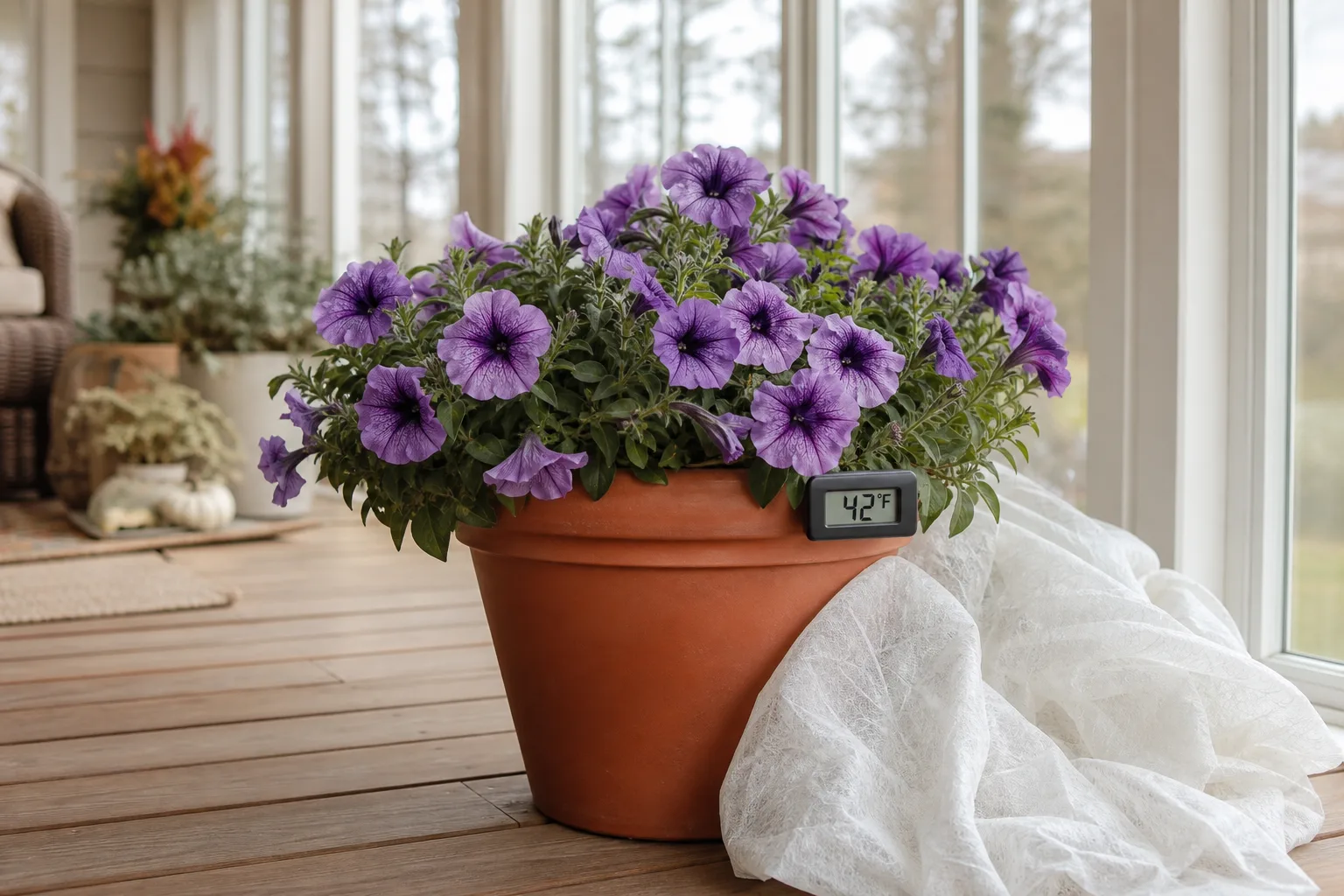
A potted hardy hibiscus has a smaller thermal buffer than an in-ground plant. Even when the plant label says the cultivar is hardy in your zone, the roots may be exposed to conditions colder than the surrounding garden soil. Container size, material, wind exposure, and how long the cold lasts all change the risk.
The safest option is a protected, unheated space where the plant can remain cold and dormant without being exposed to wind and repeated freeze-thaw cycles. A garage, shed, cold frame, or sheltered basement entry can work if temperatures stay above the plant’s dangerous range and the pot still drains. Check moisture every few weeks; dormant does not mean completely dry.
If the container must remain outside, move it against a protected wall and group it with other pots. Insulate the sides of the container with a breathable material or a method suited to your climate, and surround the pot—not the crown—with mulch or leaves. The RHS notes that containers can be wrapped or plunged into the ground to reduce root-freezing risk. Avoid sealing wet material around the pot where it holds constant moisture against the drainage holes.
Do not bring a hardy container into a heated, dim room simply because its leaves have fallen. That combination can wake the plant too early, produce weak shoots, and create a watering problem. Cold and protected is usually a better winter environment than warm and dark.
Return Hibiscus Outdoors Without a Second Shock
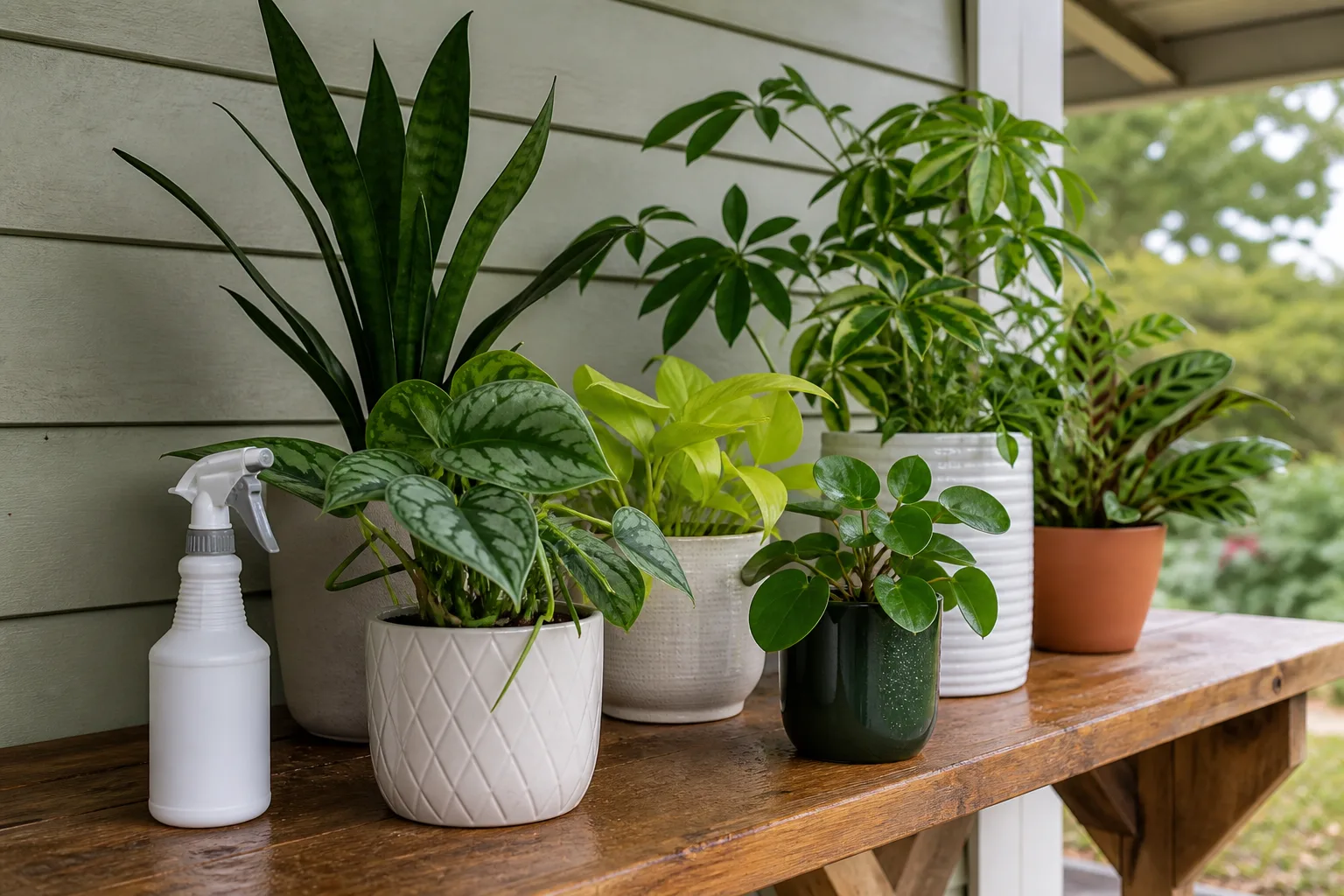
Spring is a second transition, not a single moving day. For tropical hibiscus, wait until frost danger has passed and nighttime temperatures are consistently above about 50°F. Hardy potted plants can move earlier depending on their hardiness and local conditions, but they still need protection from unusually cold nights.
Start in bright shade or a sheltered covered porch for several days. Then give the plant a little more morning sun and outdoor air every few days, extending the exposure over roughly two to three weeks. The goal is to toughen leaves to stronger light, cooler temperatures, and moving air; a plant that spent months behind glass can scorch quickly when placed directly in hot afternoon sun.
Watch the forecast during this transition. If temperatures fall back into the low 50s or a frost threatens, move a tropical container indoors for the night. Once the plant is growing actively outdoors, gradually resume deeper watering and balanced fertilizer, and prune leggy stems back to healthy nodes if its shape needs correction.
Repot only when the plant is entering active growth and the root system needs it. Choose a container only one or two inches wider than the root ball, with a drainage hole. A much larger pot holds more wet mix than the roots can use, which is an unnecessary risk after a winter of reduced water uptake.
Troubleshoot Leaf Drop, Pests, and Freeze Damage
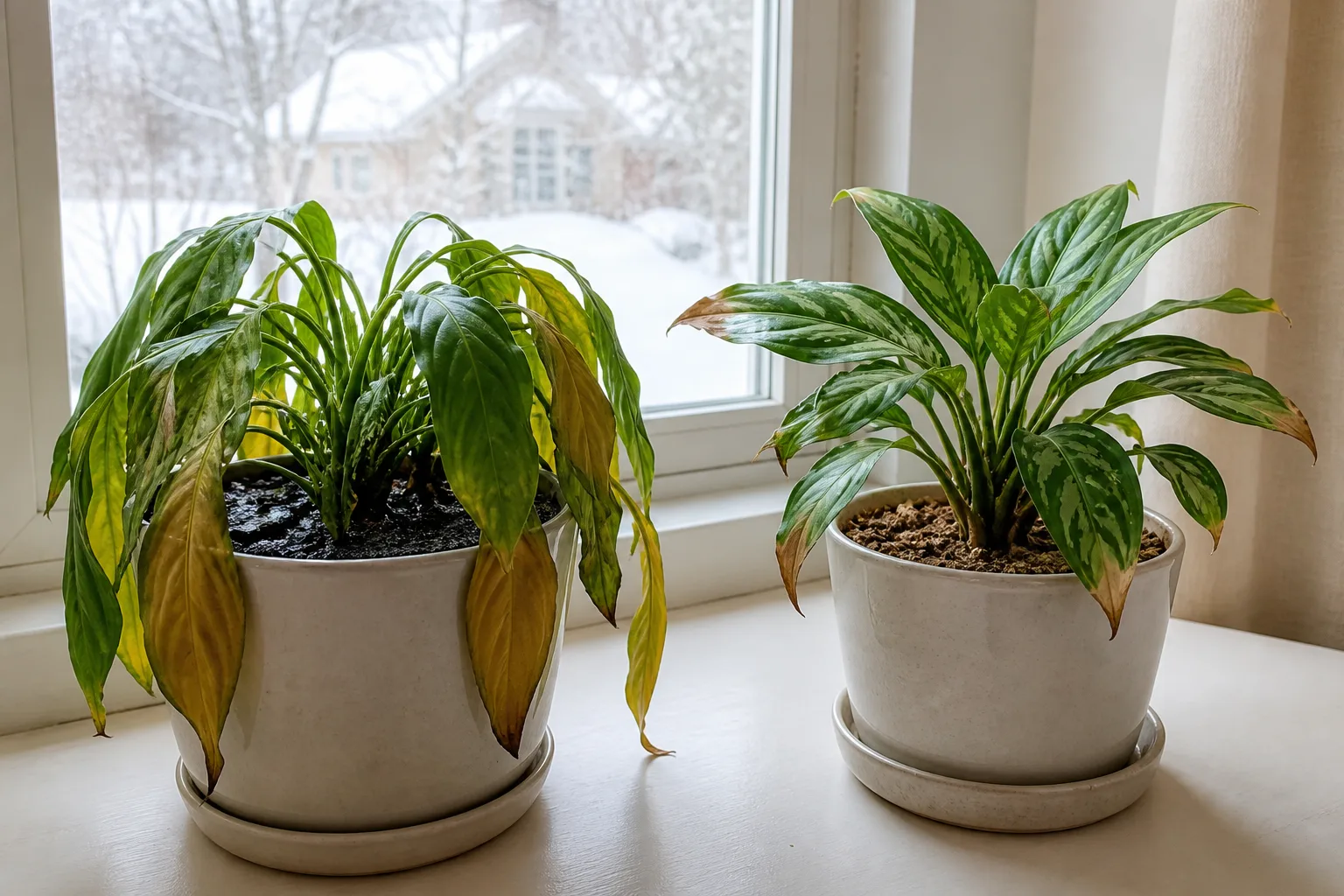
Leaf drop after coming indoors: A modest flush of yellow leaves can be a response to lower light, different humidity, temperature change, or the physical move. If the stems remain flexible and the nodes show healthy buds, stabilize conditions and wait. If leaf drop continues, check for spider mites, root rot, cold drafts, and insufficient light before increasing water.
Yellow leaves with wet soil: Inspect the drainage hole and root zone. If the mix stays saturated, move the plant into brighter light, pause watering until the upper mix dries, and correct the drainage problem. Do not fertilize a plant whose roots are stressed; fertilizer does not repair oxygen-starved roots.
Fine webbing or stippled foliage: Isolate the plant and inspect leaf undersides. Spider mites favor warm, dry conditions, so a stable environment and thorough cleaning can help, but do not use humidity as the only treatment. Follow the product label if you choose a soap or oil, and keep treated foliage out of harsh direct sun until the label permits it.
Whiteflies or aphids: Remove heavily infested leaves when practical, rinse the canopy, and use a yellow sticky card as a monitoring tool rather than assuming it will solve the infestation. Recheck new growth weekly. Connecticut’s plant-health guidance lists aphids and whiteflies among hibiscus pests, and notes that repeat applications may be needed for whiteflies because not all life stages are exposed at once (Connecticut Agricultural Experiment Station hibiscus handbook).
Gray, fuzzy patches or collapsing flowers: Remove affected material when it is dry, improve spacing and airflow, and avoid wetting flowers. Gray mold is favored by damp, crowded conditions; if symptoms spread or the plant is valuable, consult a local extension service or qualified plant professional before choosing a fungicide.
Blackened stems after frost: Do not prune immediately if a freeze has just happened. Wait until the extent of damage is clearer, then cut back to living tissue with clean shears. A tropical hibiscus may recover from light injury if the roots and lower stems remain viable, but a hard freeze can kill it; keep damaged plants above freezing, reduce watering to match the remaining foliage, and look for new growth before declaring success or failure.
Conclusion
To winterize hibiscus successfully, identify the plant first and then let temperature, light, and root exposure determine the plan. Bring tropical hibiscus indoors before frost and preferably before nights settle into the 40s, while hardy rose mallow can usually remain in the ground with crown protection and patience. Treat hardy plants in containers more cautiously because their roots are less insulated than roots in garden soil.
The winter routine should be simple: inspect and clean before moving, prune only as much as the plant and space require, keep active plants bright and dormant plants cool, water according to growth and soil dryness, and monitor for pests. When spring arrives, harden the plant back into outdoor light over two or three weeks. That steady transition does more for long-term survival than a last-minute rescue after frost.



