Summer Lawn Watering Without Waste
Should you water your lawn in summer? Learn when irrigation pays off, how much water turf needs, the best time to run sprinklers, and when brown grass is fine.
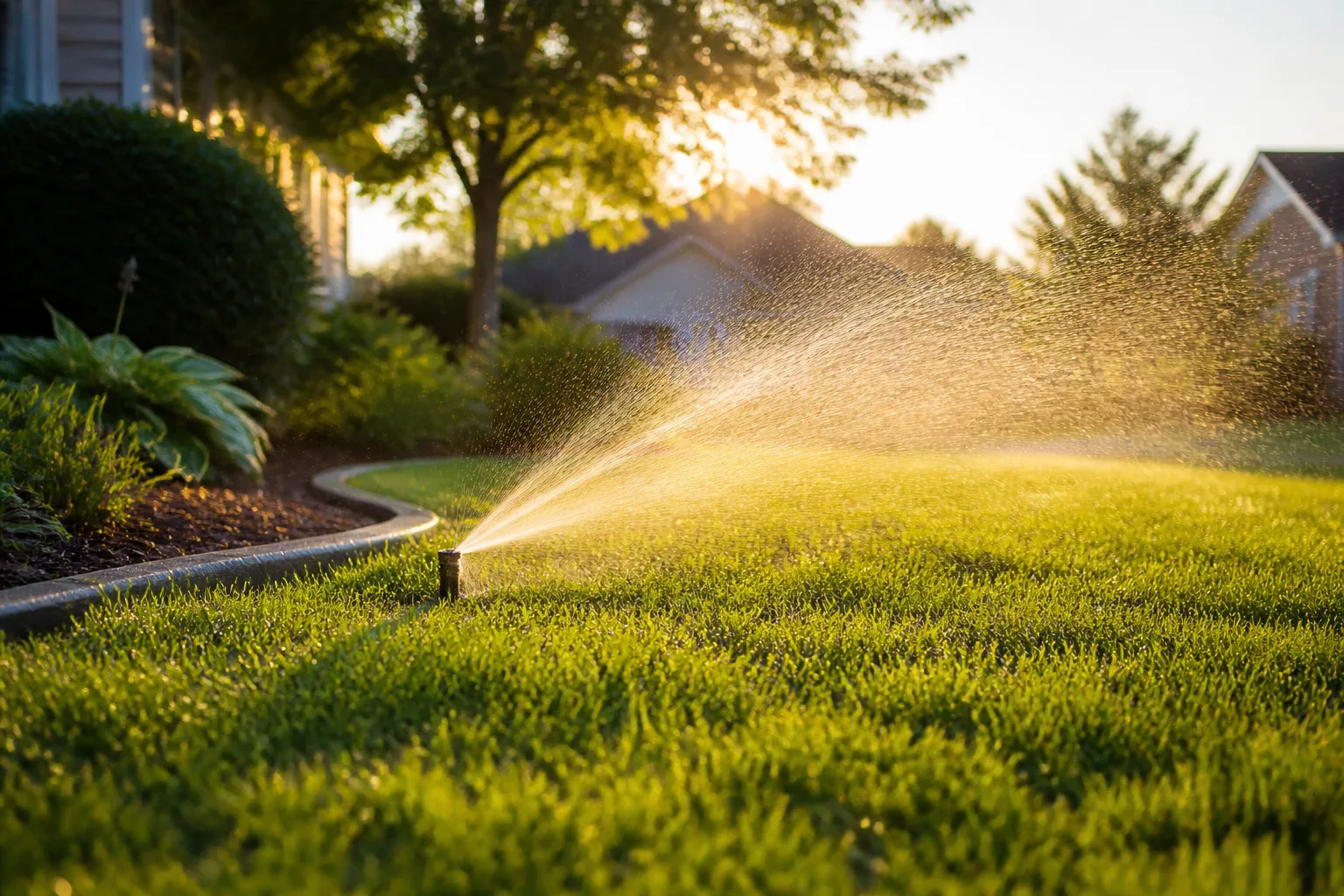
Summer turns lawn care into a money question fast. The grass looks thirsty, your water meter spins, and every neighbor seems to run sprinklers on a different schedule. The honest answer is not a simple yes or no. Watering your lawn in summer is worth it when the turf is actively growing, the root zone is dry, and you have a way to put water on the ground efficiently. It is a waste when you are fighting dormancy with a hose, rewetting soil that already has moisture, or spraying the sidewalk because nobody checked the heads.
The goal is not a magazine-green lawn at any cost. It is healthy grass without unnecessary stress, runoff, or disease—and a water bill that matches what the yard actually needs.
Should You Water Your Lawn in Summer? Start With This Decision
Before you touch a timer, decide what you are trying to protect. An established lawn in moderate drought can survive brown summer dormancy and green up when weather cools. A newly seeded patch, fresh sod, or high-traffic play lawn cannot tolerate the same dry spell. Your grass species, soil, shade, local rainfall, and any water restrictions all change the answer.
Use this quick filter: if the lawn is newly planted, heavily used, or legally required to stay irrigated, plan on summer watering. If it is mature, established, and you are mainly watering to avoid tan color during a heat wave, you have a real choice—and letting cool-season turf go dormant is often healthier than nightly spritzing.
When Summer Watering Is Worth the Water Bill
Active growth windows. Warm-season grasses such as bermudagrass, zoysiagrass, St. Augustinegrass, and centipedegrass hit peak growth in summer heat. Withholding water too long on an actively growing warm-season lawn can thin the stand and invite weeds. Cool-season lawns still need moisture during hot stretches if you want them green rather than dormant—but the volume and frequency should match root depth, not panic.
New installations. Sod, seed, and spring overseeding have shallow roots for weeks. They cannot survive multi-week drought the way a five-year-old lawn can. Keep the top few inches consistently moist until roots knit into native soil, then transition toward deeper, less frequent cycles.
Functional turf. If children, pets, or daily foot traffic depend on the lawn, a thin, crispy stand creates compaction and bare soil. Irrigation that keeps crowns alive supports recovery after use.
Correctable dry stress. When a probe shows dry soil 4 to 6 inches down, footprints linger an hour after you walk across the lawn, or blades hold a blue-gray cast in morning light, targeted deep watering restores turf without training shallow roots—provided you fix coverage problems first.
When Skipping Irrigation Is the Smarter Move
Heat dormancy on mature cool-season turf. Kentucky bluegrass, perennial ryegrass, and many fescues slow or stop growth above roughly 85°F. Utah State University Extension explains that a dormant lawn can look dead while the crown remains alive—and forcing water through dormancy does not always buy green color; it buys a higher bill.
Recent rainfall or saturated soil. Pinellas County guidance developed with University of Florida IFAS Extension warns against irrigating an already wet lawn. After storms, pause the schedule until the root zone dries. See our guide on what not to do to grass after heavy rain before you run sprinklers on reflex.
Water restrictions or drought policy. Many municipalities limit irrigation to specific days or ban overhead watering during shortages. A lightly brown but alive lawn beats fines—and deep cultural practices (mowing high, sharp blades, aeration) stretch limited water farther. Our summer water-saving lawn guide covers audit-first cuts that preserve health under caps.
Surface color lying to you. Hot afternoon sun can wilt blades while soil deeper down is still moist. Watering then wastes gallons and can encourage fungal problems when warm nights follow humid evenings.
Know Your Grass Before You Set a Schedule
Copying a neighbor’s “30 minutes three times a week” schedule fails because it ignores species, soil, sun, and sprinkler output. Your lawn is a mix of genetics and microclimate. Identify the dominant grass type—or ask your extension office if you are unsure—then build volume and timing around how that species handles heat.
Cool-Season vs Warm-Season Turf in Heat
Cool-season grasses (Kentucky bluegrass, perennial ryegrass, fine and tall fescue) prefer spring and fall growth. In summer they often enter dormancy or need deeper, less frequent irrigation to stay green. If you choose green over dormancy, aim for deep moisture at the root zone—not daily surface wetting.
Warm-season grasses (bermudagrass, zoysiagrass, St. Augustinegrass, centipedegrass) thrive in summer but still need consistent moisture to avoid drought thinning. Many established warm-season lawns tolerate brief dry spells better than stressed cool-season turf, yet prolonged drought without any irrigation can open the door to weeds and patchy recovery.
Colorado State University Extension notes that healthy turf uses water more efficiently when mowing, fertilizing, and cultivation are balanced—and that no two lawns share the same demand. Shade, slope, tree roots, and pavement heat all shift the number even within the same species.
New Sod, Seed, and Overseeding Need a Different Plan
Young grass has no deep root bank. For the first two to four weeks after seeding or sodding, keep the upper soil profile from drying out—often light, frequent irrigation that would be wrong on mature turf. Once you can no longer lift sod corners and roots resist a gentle tug, begin stretching intervals and increasing depth per session.
Do not apply the “let it go brown” dormancy strategy to a lawn still establishing. That trade-off is for mature stands you are willing to tolerate visually for a few weeks—not for seedlings fighting to survive their first heat wave.
How Much Water a Summer Lawn Actually Needs
Forget guessing by minutes. Turf needs depth, measured in inches reaching the root zone, not clock time on a controller.
The One-Inch Weekly Baseline—and How to Adjust It
A widely used starting point during active summer growth is about one inch of water per week from irrigation plus rainfall combined. Hot, windy weeks on sandy soil may need more; mild weeks with thunderstorms may need none. Warm-season lawns on deep soils sometimes operate closer to three-quarters of an inch when well established, while thirsty cool-season turf in full sun may need the full inch to 1.5 inches if you refuse dormancy.
Adjust weekly using three checks: probe moisture at 4 to 6 inches, subtract recent rain from your target, and watch stress signals rather than calendar habit. Gardening Know How’s lawn-watering guidance treats the inch rule as a baseline you modify for soil and weather—not a mandate to irrigate every seven days regardless of conditions.
Run the Catch-Can Test So Minutes Stop Lying to You
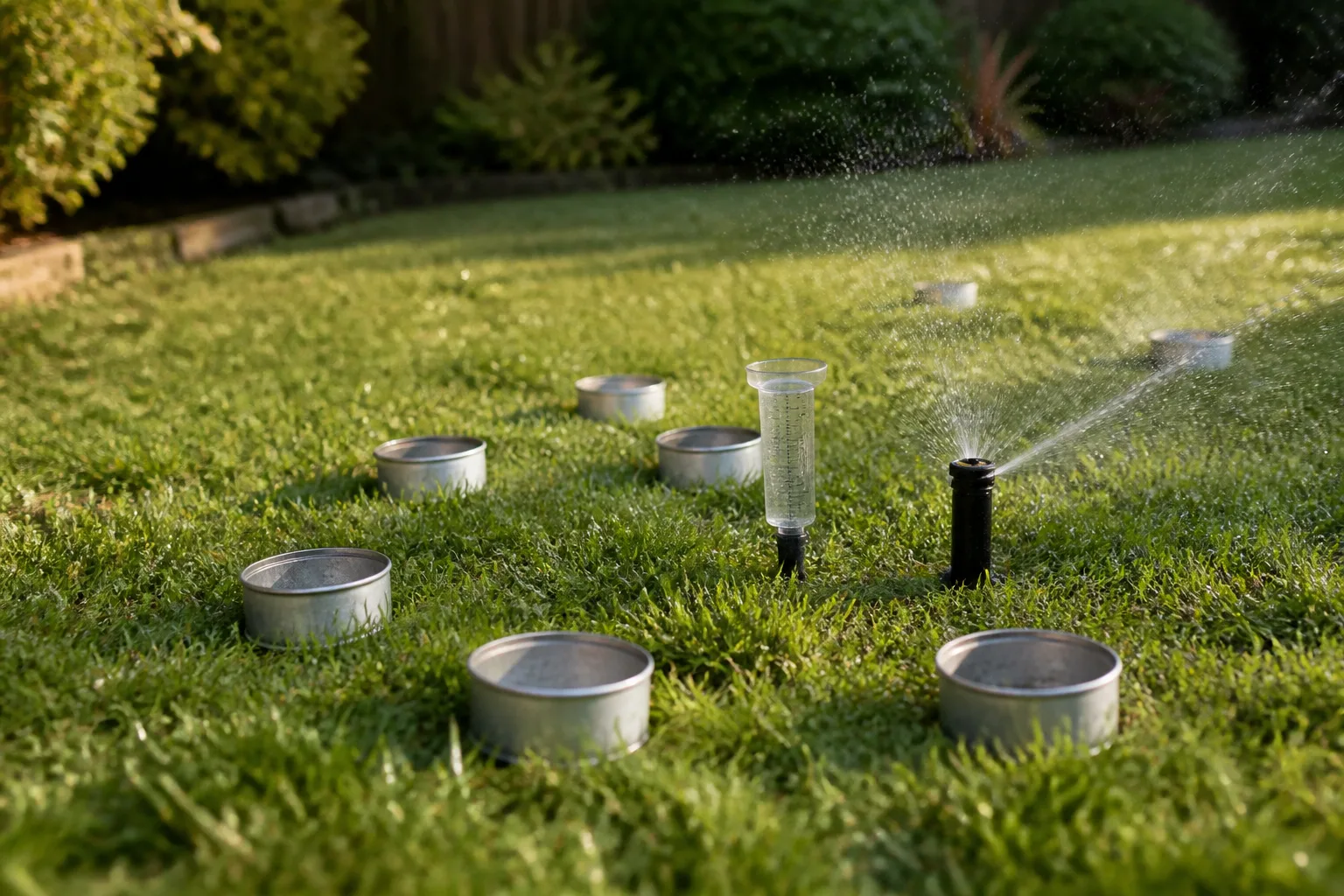
Sprinkler type, pressure, wind, and slope change output dramatically. The fix is measurement, not folklore.
Place five to ten straight-sided containers—tuna cans, rain gauges, or commercial catch cups—across one zone. Run that zone for its normal runtime, then measure depth in each can with a ruler. Compare center cups with edge cups; variation over about 25 percent means coverage needs repair before you add minutes.
Once you know output, calculate how long it takes to deliver half an inch or a full inch. EPA WaterSense recommends using this method to learn how long it takes to apply about half an inch, then adjusting frequency based on weather and how the landscape responds. Repeat on your sunniest zone and your shadiest zone—they rarely need identical schedules.
If water runs off before the soil accepts it—common on clay or slopes—use cycle-and-soak: run the zone briefly, pause 30 to 60 minutes, then run again so moisture infiltrates instead of flowing to the storm drain.
The Best Time of Day to Water in Summer
Timing controls evaporation, disease risk, and how much of each gallon reaches roots. Summer heat punishes afternoon irrigation hardest.
Why Early Morning Wins
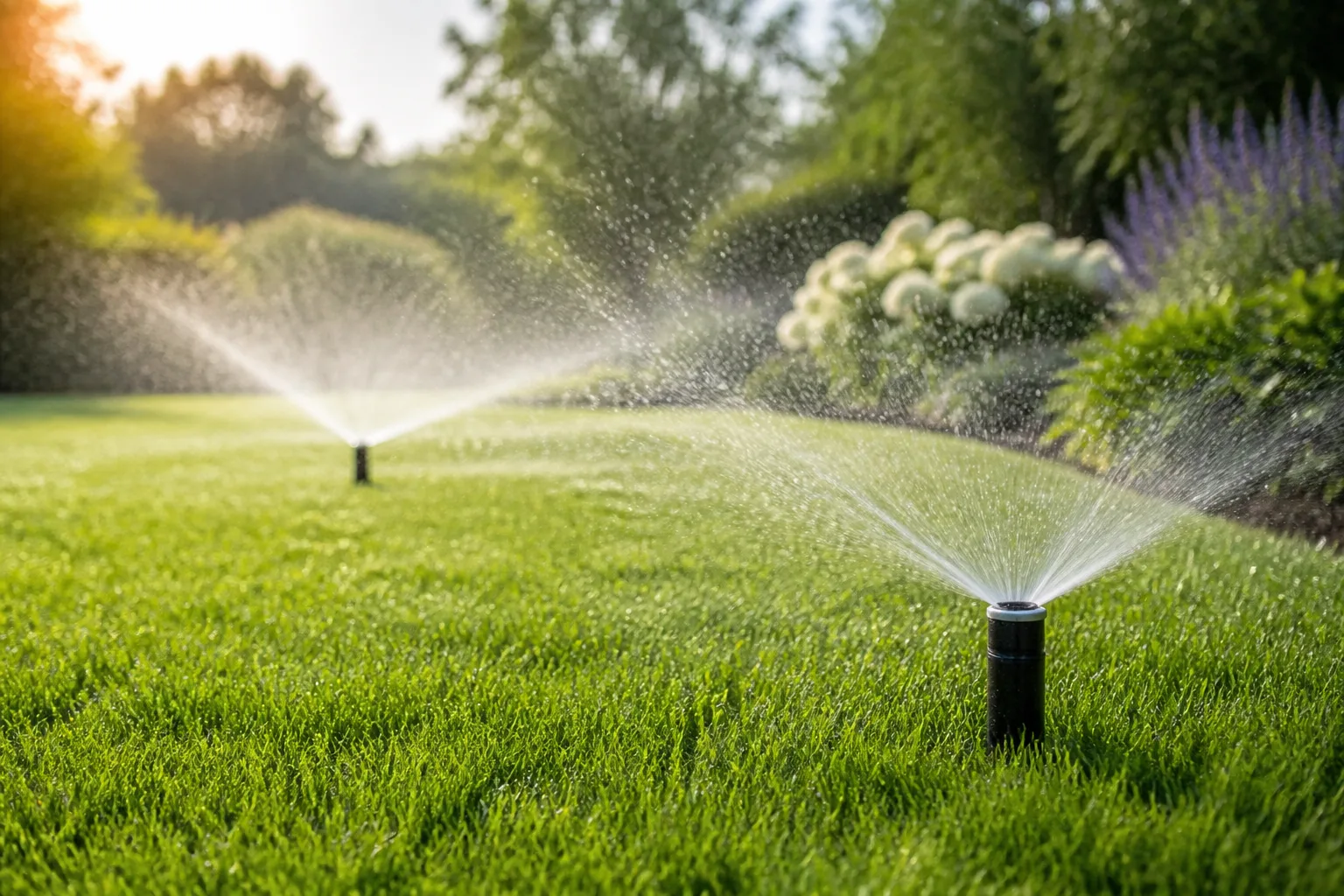
Early morning—roughly 4 a.m. to 10 a.m.—is the most efficient window for most homeowners. Temperatures and wind are lower than midday, so less spray evaporates before it hits soil. Grass blades dry as the day warms, which reduces prolonged leaf wetness that fuels fungal diseases during humid stretches.
Avoid midday watering when possible. Strong sun and hot pavement can waste a large fraction of spray to evaporation before roots benefit. Late-evening irrigation is better than noon only if morning is impossible—and even then, use it sparingly on humid nights when grass may stay wet until dawn.
What to Do If You Only Have Evenings to Hand-Water
Manual hose watering often happens after work. If mornings are off the table, target early evening with enough time for blades to dry before night—not a midnight soak. Move sprinklers frequently, water slowly enough to prevent runoff, and prioritize sections showing genuine stress rather than whole-yard habit.
Hand watering with a hose and portable sprinkler is fine for small lawns; match technique to efficiency in our guide on the best way to run your garden hose without spiking your water bill. For larger yards, an automatic system zoned by sun exposure pays for itself in consistency.
Deep, Infrequent Soaks Beat Daily Spritzes
Daily light watering keeps the surface green briefly while roots stay shallow. Shallow roots panic the moment you skip a cycle or a heat wave arrives. Two or three deep sessions per week—each delivering enough depth to moisten the active root zone—builds resilience on most soils, with sandy sites sometimes needing an extra cycle because water drains faster.
Think in weekly depth, not daily habit. If catch cans show you applied an inch across the week between rain and irrigation, you met the goal even if the calendar pattern looked uneven. Conversely, running sprinklers every evening because the lawn “looks dry” at dinner time often overwaters while leaving deeper soil thirsty—or waterlogged if drainage is poor.
Read the Lawn Before You Turn the Sprinklers On
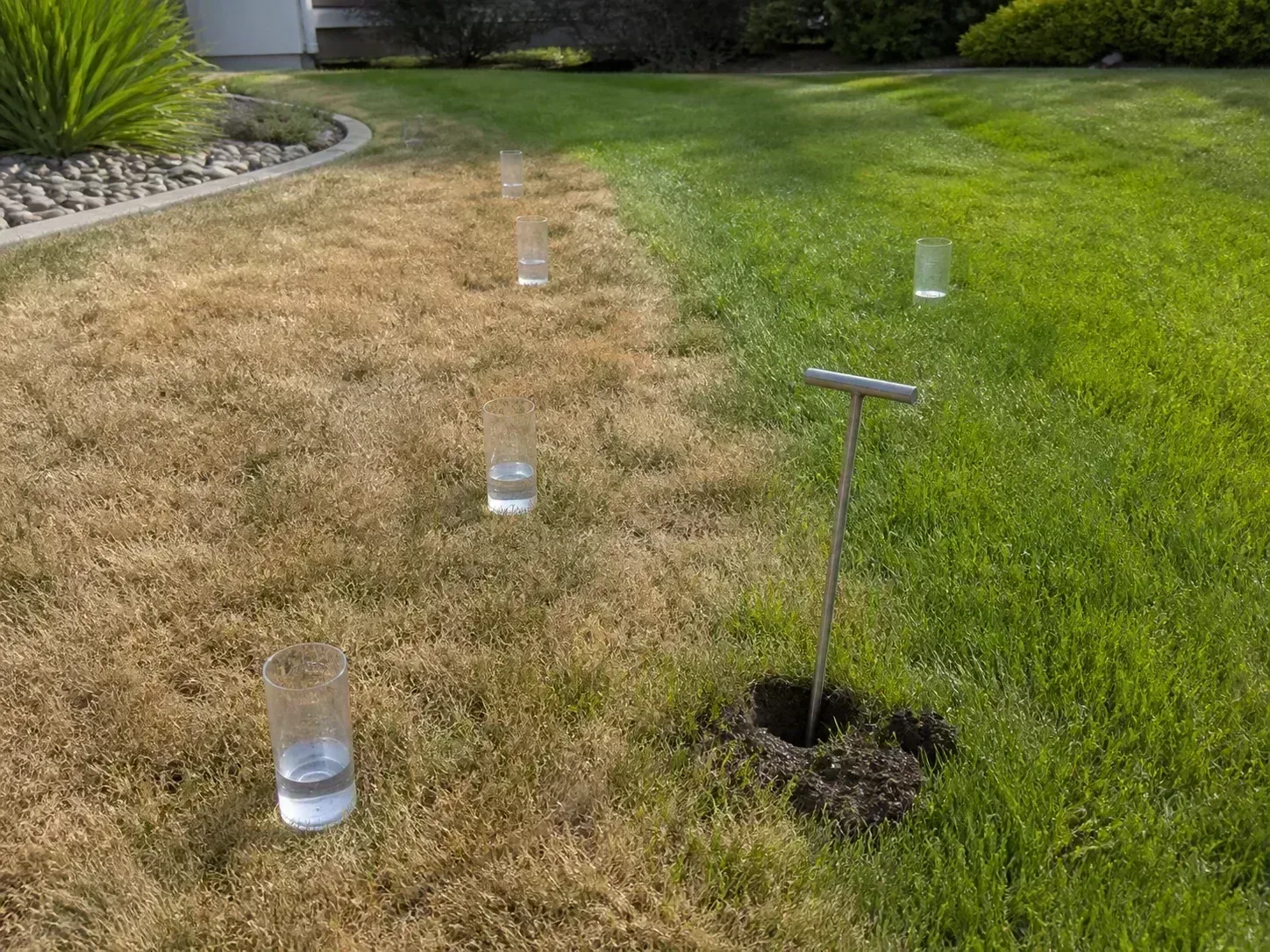
Color alone misleads in summer. Train yourself to read moisture and stress before touching the controller.
Stress Signals That Mean Water Now
Footprint test: Walk across the lawn in the morning. If impressions remain an hour later on established turf, the canopy is under moisture stress. Probe test: A screwdriver or soil probe should slide into moist soil several inches down where roots actively grow. Color shift: A slight blue-gray cast in cool morning light often precedes obvious brown—especially on cool-season grass you want to keep green.
Hot afternoon wilt can reverse overnight if roots still hold moisture. Confirm with a probe before you add a cycle.
Overwatering Red Flags Easy to Miss
Squishy turf hours after irrigation, a musty smell from constantly wet thatch, mushrooms in rings, or new yellowing despite wet soil all point away from “needs more water.” Pinellas County’s overwatering guidance highlights that irrigating wet soil wastes water and stresses roots—exactly the opposite of what panicked homeowners intend.
Chronic overwatering keeps blades wet, encourages shallow roots, and invites summer fungal diseases that brown patches mimic drought. If the lawn stays brown after heavy watering, the problem may be distribution, disease, or dormancy—not thirst. Read why your lawn is still brown after watering before you raise runtimes.
Dormant Brown Grass Is Not the Same as Dead Grass
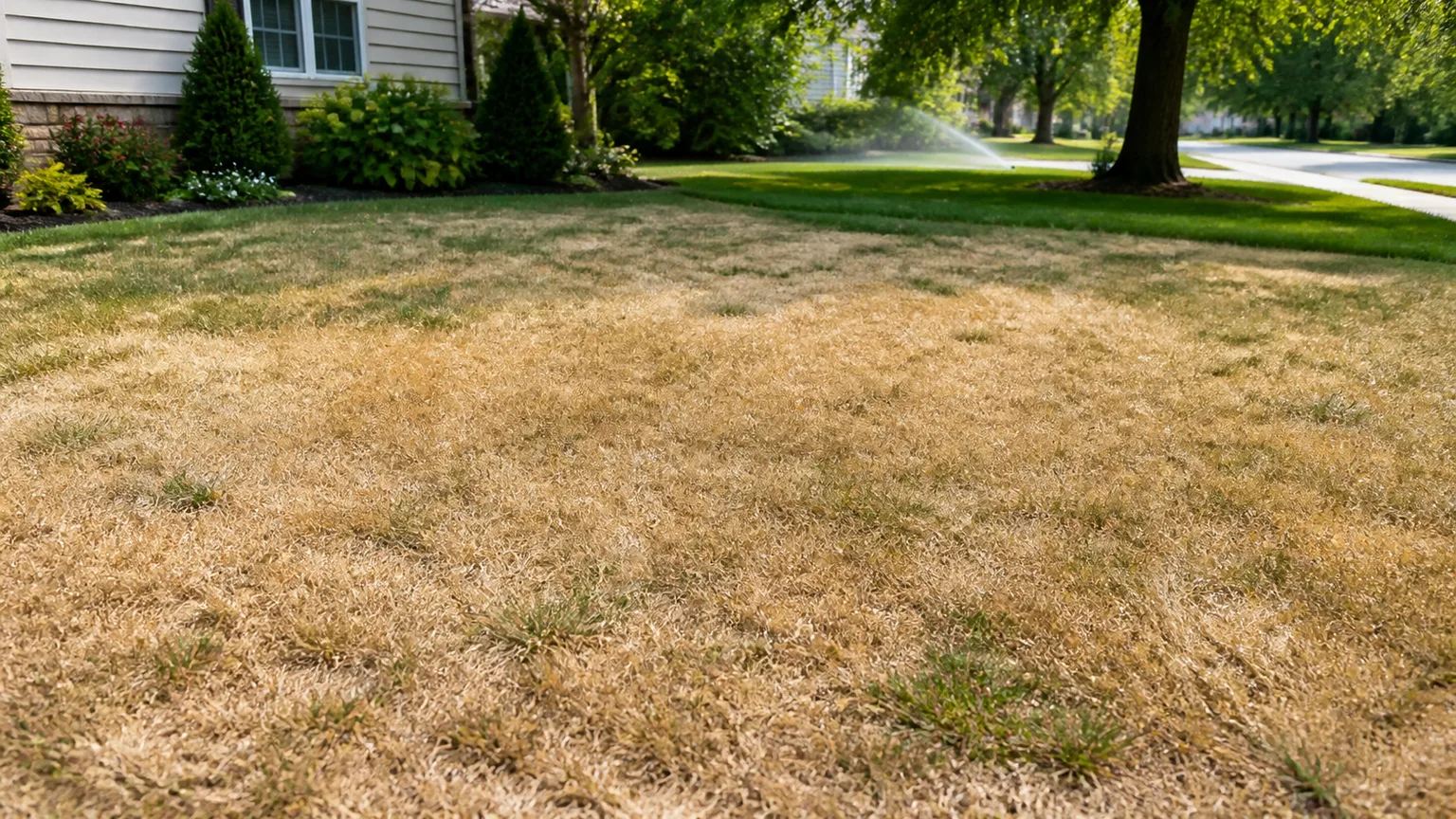
Tan summer turf triggers panic—but brown is not automatically dead. Dormancy is a survival pause: crowns at the soil line stay alive while blades stop growing. Death means crowns and roots failed—often from disease, grubs, chemical injury, or drought so severe recovery does not return after weather improves.
Utah State University Extension’s dormancy guide recommends checking crowns at the soil surface and using a gentle tug test. Dormant grass resists pulling; dead turf lifts easily or crumbles. Mixed lawns can contain both states in different patches.
Choosing dormancy on mature cool-season turf during a heat wave is a valid water-saving strategy—not neglect—provided you accept temporary color and resume sensible care when growth returns. Choosing green at any cost requires deeper, well-timed irrigation plus cultural support: taller mowing within species limits, sharp blades, and aeration where compaction blocks infiltration.
Fix Distribution Before You Add Run Time
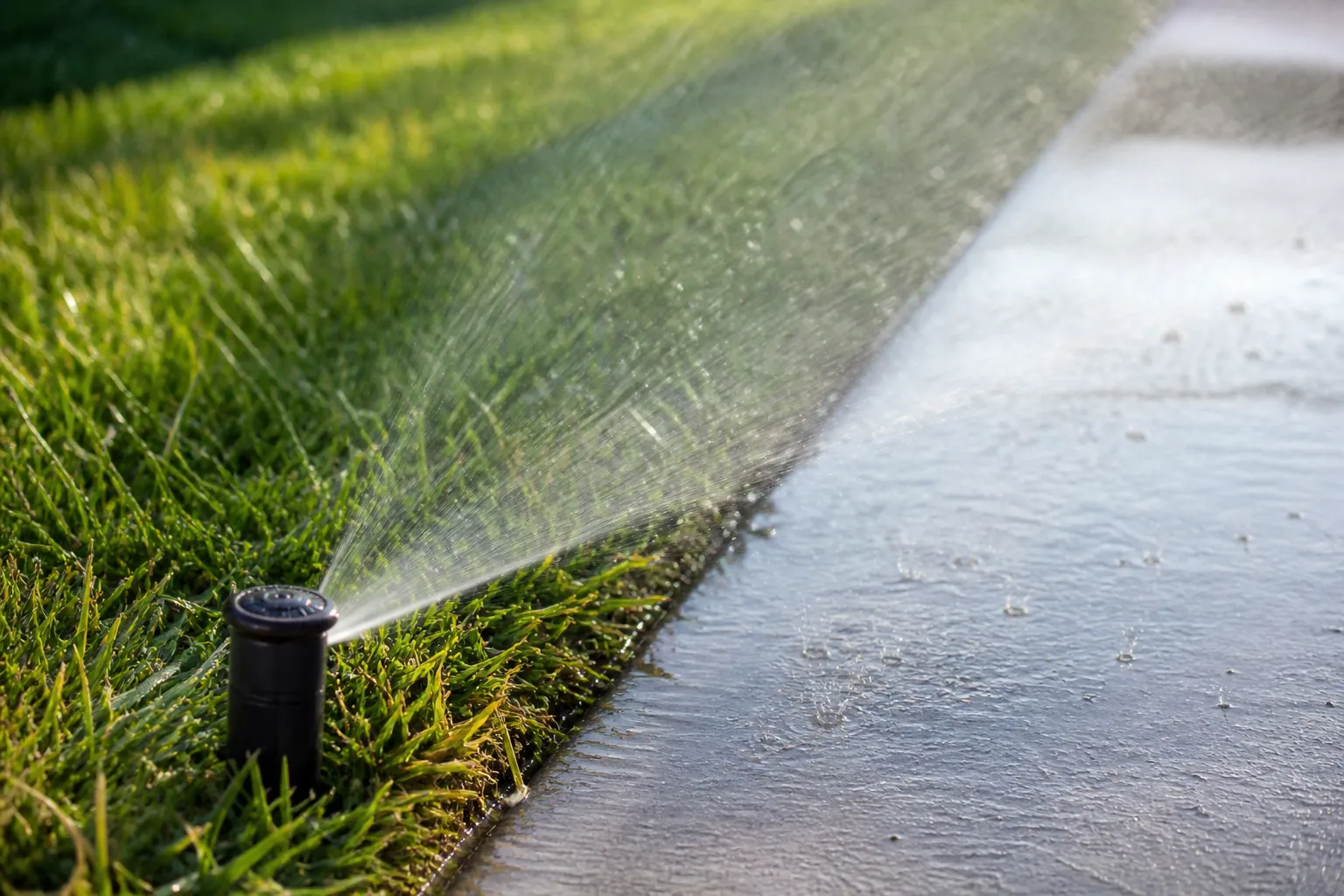
Most summer waste is invisible from the kitchen window. A tilted head spraying the driveway, a clogged nozzle, or a zone that runs eight minutes too long on clay sends hundreds of gallons to the storm drain monthly. Walk the system during a test run. Unclog nozzles, straighten arcs, and replace mismatched heads that create dry corners and flooded strips.
Rain sensors, soil moisture sensors, and smart controllers help only after basic coverage is sound—otherwise they automate the same waste on a prettier screen. For layout and zone thinking, see what lawn pros actually run at home for irrigation.
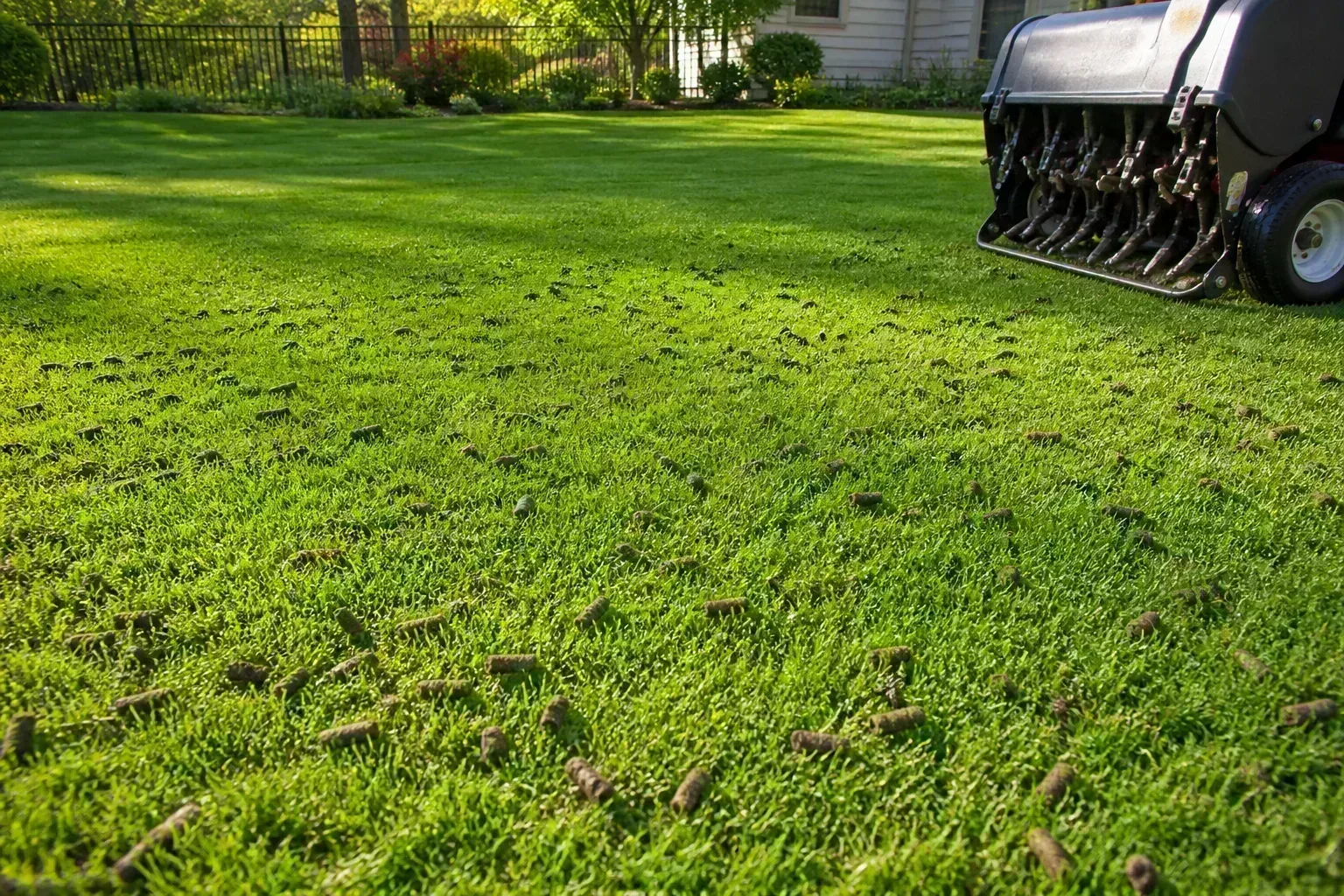
Core aeration in spring or early fall—when your grass type allows—opens compacted soil so summer water reaches roots instead of pooling on the surface. Spike aerators that only punch holes without removing cores can compact further; core aeration that pulls plugs is the better long-term tool on heavy use lawns.
Pair mechanical fixes with cultural habits: mow high within your species range to shade soil, keep blades sharp so torn tips lose less moisture, and skip nitrogen pushes during heat or drought stress unless a soil test and local extension guidance support them.
Conclusion
Watering your lawn in summer is worthwhile when you are protecting active growth, new turf, or functional play space—and when the root zone is actually dry. It becomes expensive noise when you irrigate dormant mature grass for color alone, run sprinklers through rain, or add minutes before fixing misaligned heads.
Build your plan in this order: decide whether green or dormant is acceptable, identify your grass type, measure sprinkler output with catch cans, target about one inch per week adjusted for weather, water deeply in early morning, and read stress signals before every cycle. Skip irrigation when soil probes show moisture, storms soaked the yard, or restrictions demand it.
Get those decisions right and summer watering stops feeling like a guessing game—and starts matching the grass you actually have, not the schedule your neighbor copied five years ago.