15 Shower Plants That Will Thrive in Your Bathroom
Discover 15 shower plants that handle bathroom humidity, from air plants and ferns to pothos and orchids—plus setup rules, pet safety, and plants to skip.
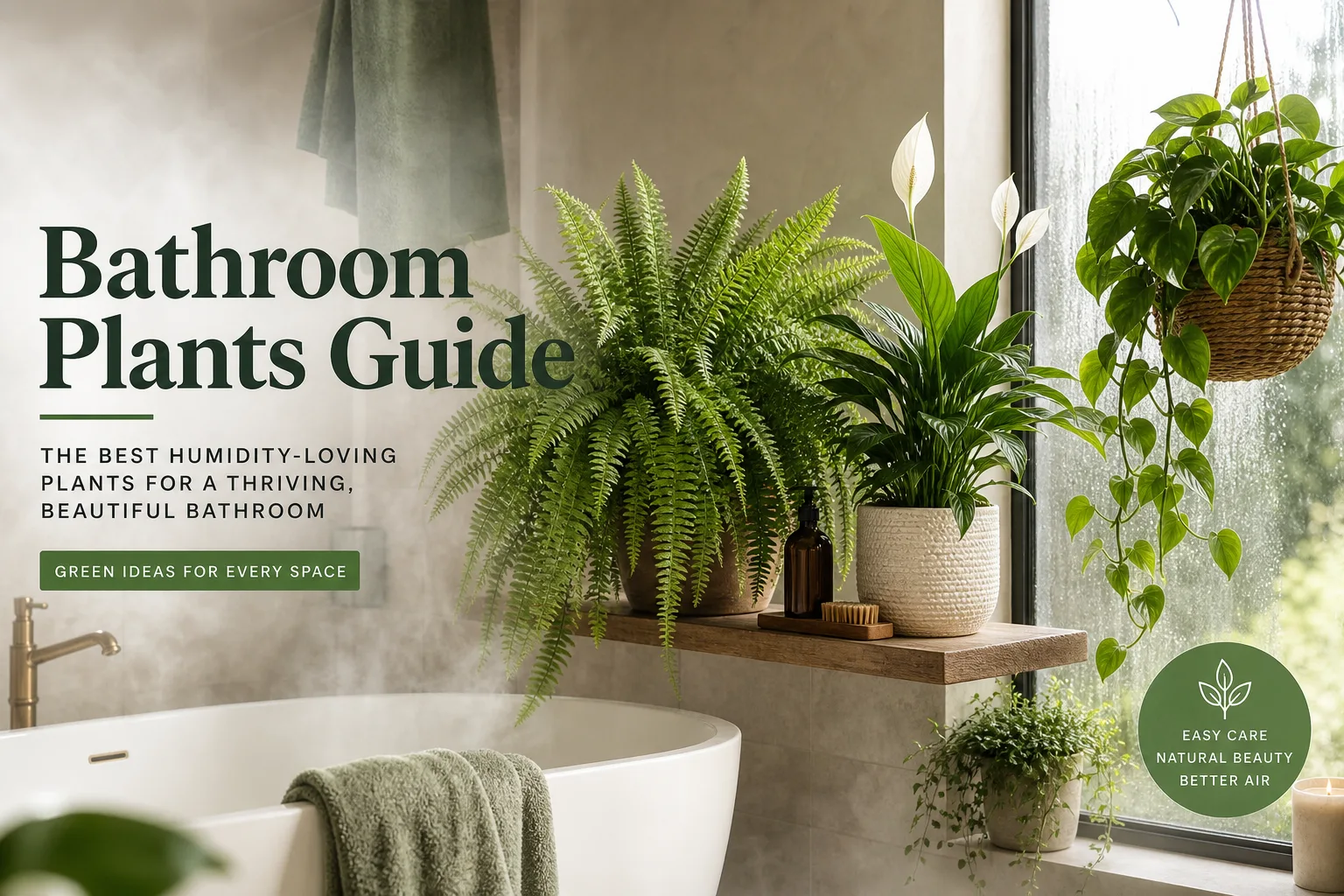
A steamy shower turns dry winter air into a short burst of tropical humidity—and that is exactly why shower plants show up on so many design boards. The warm vapor that fogs your mirror also softens crispy leaf tips on ferns and aroids that struggle in the rest of the house. The catch is that bathrooms are not greenhouses. They swing from hot and wet to cool and stagnant, often lack usable light, and keep potting mix wet longer than a living room shelf does. Pick the wrong plant or the wrong spot inside the stall, and you get rot, mold, and a soggy mess—not a spa.
This guide covers 15 plants that handle real bathroom conditions when you match species to placement, drainage, and light. You will get a comparison table, honest trade-offs (including a few popular list picks that fail in steam), and setup rules that keep roots healthy even when the air feels like a rainforest.
Why Bathroom Humidity Helps Some Plants and Hurts Others
Most tropical houseplants evolved under tree canopies where humidity runs higher and light is filtered. Post-shower steam mimics that leaf-level moisture and reduces the brown tips you see when forced-air heat drops indoor relative humidity below 30% in winter. Penn State Extension notes that ASHRAE recommends keeping indoor relative humidity between 30% and 60%, and that many houseplants benefit from levels above what heated homes provide—though cacti and succulents are the obvious exceptions. (Penn State Extension)
Humidity at the leaf surface is not the same as wet soil. A bathroom can feel steamy while a pot in a dim corner stays waterlogged for days, especially if the room has no window and weak ventilation. That combination favors root rot, fungus gnats, and gray mold—not lush growth. For a deeper look at when humidity tips from help to harm, see the high-humidity houseplants guide.
Steam, Light, and Ventilation
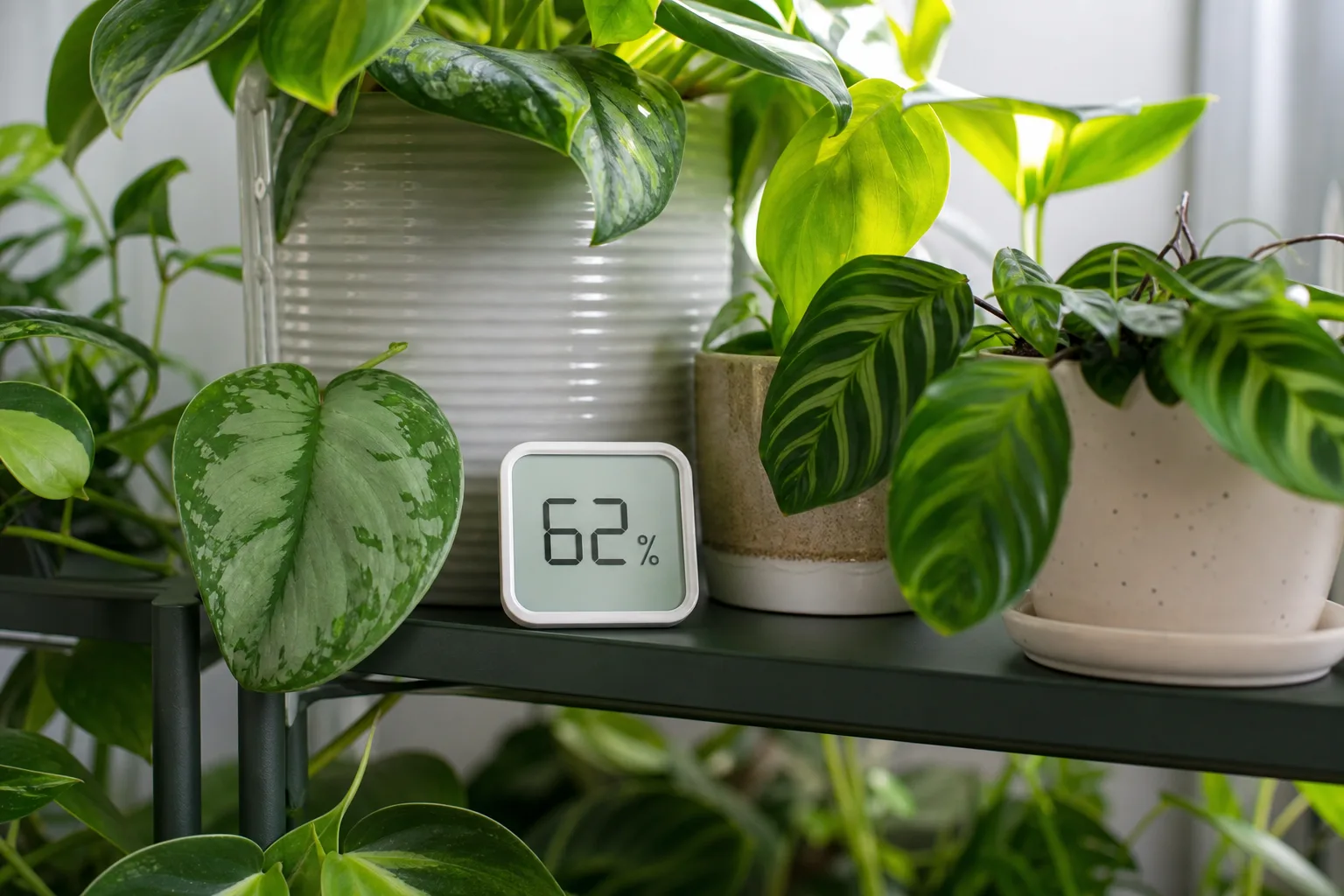
Steam helps plants that lose moisture through thin leaves—ferns, peace lilies, and many philodendrons—more than it helps thick-leaved succulents. Penn State Extension is cautious about assuming a bathroom solves humidity year-round; effectiveness depends on shower frequency, room size, and whether steam dissipates or lingers. Measuring with a hygrometer before you commit a rare plant is smarter than guessing. (Penn State Extension)
Light is usually the limiting factor. Frosted windows and small north-facing glass qualify as bright indirect light for some species, but a windowless bathroom needs a grow light or a rotation plan—no plant survives indefinitely with zero photons. Ventilation matters as much as steam: an exhaust fan that clears moisture from walls also moves air around leaves, which reduces fungal spots. Stagnant, always-damp air is where problems start even for humidity lovers.
Where to Place Plants: Inside the Shower vs Nearby
Think in three zones. Inside the shower stall suits epiphytes and mounted ferns that never sit in standing water—air plants, staghorn ferns on cork, or a hanging tillandsia that gets rinsed when you shower but dries within a few hours. Avoid potted soil directly on the floor of a walk-in shower where water pools; roots suffocate fast.
On a shower-adjacent shelf or hook—outside the direct spray but still in the steam path—is the sweet spot for most potted plants: pothos, philodendron, peace lily, and Boston fern. Across the room on a vanity or windowsill works when you have better light but less steam; snake plant and orchids often do better here than under the showerhead.
Use rust-resistant hooks, suction cups rated for weight, or a freestanding plant stand on a bath mat with drainage. Never block grab bars or create a slip hazard with trailing vines at ankle height.
Setup Rules Before You Add Greenery
Drainage comes first. Every potted plant needs a hole and a fast-draining mix—never a decorative pot with no exit for water. In humid rooms, check soil with your finger before watering; steam does not replace a drink when the mix is already wet. Empty saucers within 30 minutes so roots are not sitting in runoff.
Keep foliage out of direct hot spray unless you are deliberately rinsing dust off tough leaves. Constant chlorinated spray stresses sensitive species like lucky bamboo and can spot orchid blooms. If your tap water is hard, use filtered or aged water for those plants and for any carnivorous species.
Wipe condensation off walls and lift pots off permanently wet surfaces. Grouping two or three humidity lovers can raise local moisture slightly, but overcrowding in a small bathroom traps stale air—leave space for air to move.
15 Shower Plants Compared at a Glance
Use this table to shortlist before you read the sections below. “Humidity need” reflects how much the plant benefits from bathroom steam, not whether it tolerates average home air.
| Plant | Humidity need | Light | Best zone | Pet note |
|---|---|---|---|---|
| Air plant (Tillandsia) | High benefit | Bright indirect | In stall or hook | Generally safer; still supervise chewers |
| Bird’s nest fern | High | Medium indirect | Shelf near shower | Non-toxic to cats/dogs per ASPCA lists |
| Spider plant | Moderate | Low to medium | Shelf or hanging | Mild if eaten; generally considered safer |
| Snake plant | Low | Low to bright | Vanity / away from spray | Toxic if ingested |
| Lucky bamboo | Moderate | Low to medium | Counter away from spray | Non-toxic |
| Pothos | Moderate | Low to medium | Hanging hook / shelf | Toxic if ingested |
| Peace lily | High | Medium | Shelf with some light | Toxic if ingested |
| Pitcher plant (Nepenthes) | High | Bright indirect | Bright bathroom only | Research species; not a beginner pick |
| String of pearls | Low (dislikes steam) | Bright indirect | Avoid steamy stall | Toxic if ingested |
| Philodendron | Moderate–high | Low to medium | Shelf / hanging | Toxic if ingested |
| Moth orchid (Phalaenopsis) | Moderate | Bright indirect | Windowsill / bright shelf | Generally safer |
| Boston fern | High | Medium indirect | Hanging near shower | Non-toxic |
| Staghorn fern | High | Medium indirect | Mounted on wall | Non-toxic |
| Aloe vera | Low | Bright | Bright sill; not in stall | Toxic to cats/dogs |
| Eucalyptus (cut stems) | N/A (decorative) | N/A | Hook in stall | Oils can irritate pets |
For broader bathroom picks beyond this shower-focused list, the bathroom plants guide covers placement and care for humid rooms in general.
Epiphytes and Mountable Ferns
Epiphytes absorb moisture from the air and do not want soggy potting mix—making them the closest thing to purpose-built shower plants when you mount them correctly.
Air Plants and Staghorn Fern
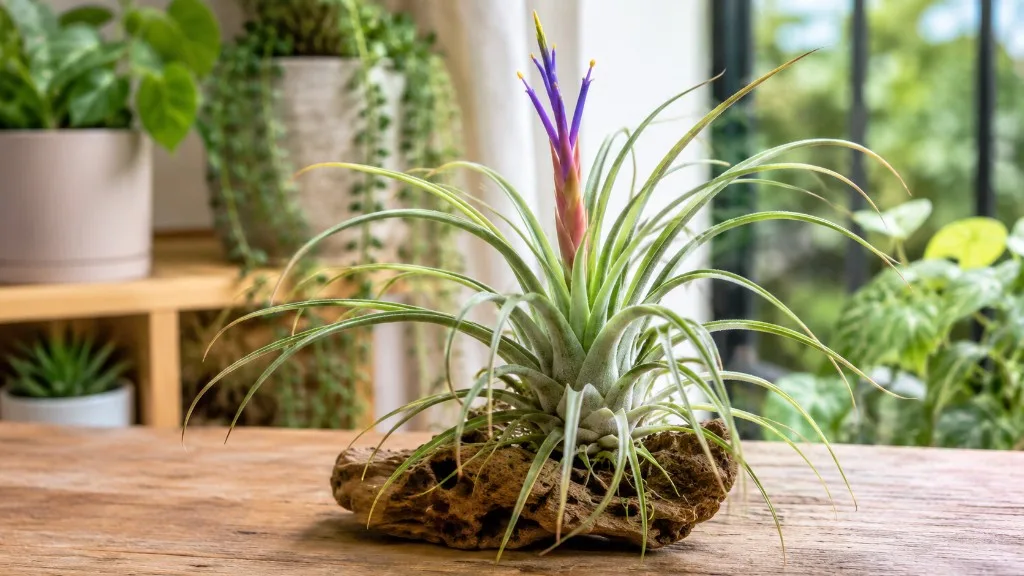
Air plants (Tillandsia spp.) are epiphytes that use trichomes on their leaves to capture water and nutrients; roots are for anchoring only. Penn State Extension explains that mesic tillandsias from rainforest canopies prefer filtered light and benefit from rinsing or soaking, then drying completely before going back into an enclosed space—good air circulation is essential. (Penn State Extension) A hook just outside the shower spray lets steam reach the leaves while a weekly sink soak handles hydration. See the full air plant care guide and Tillandsia plant hub for species-level detail.
Staghorn fern (Platycerium spp.) also grows mounted on bark or cork. Bathroom humidity keeps antler fronds plump, but mount it where water does not pool at the base and where light stays medium—not dark. Large specimens need room; plan for a mature staghorn fern spread of several feet over time.
Classic Bathroom Ferns
Ferns are the archetypal steam lovers—if you give them indirect light and avoid drowning their roots.
Bird’s Nest and Boston Fern
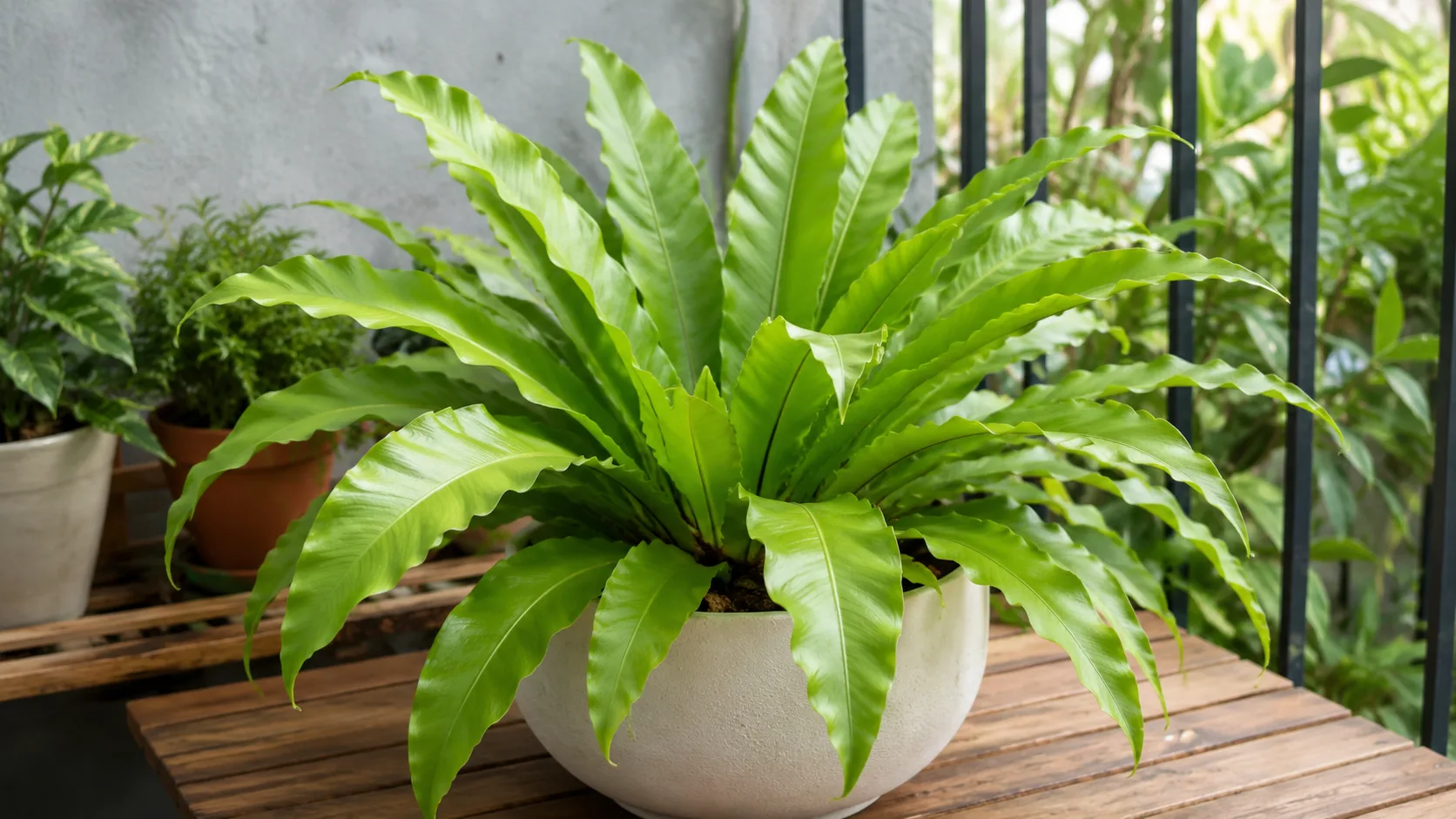
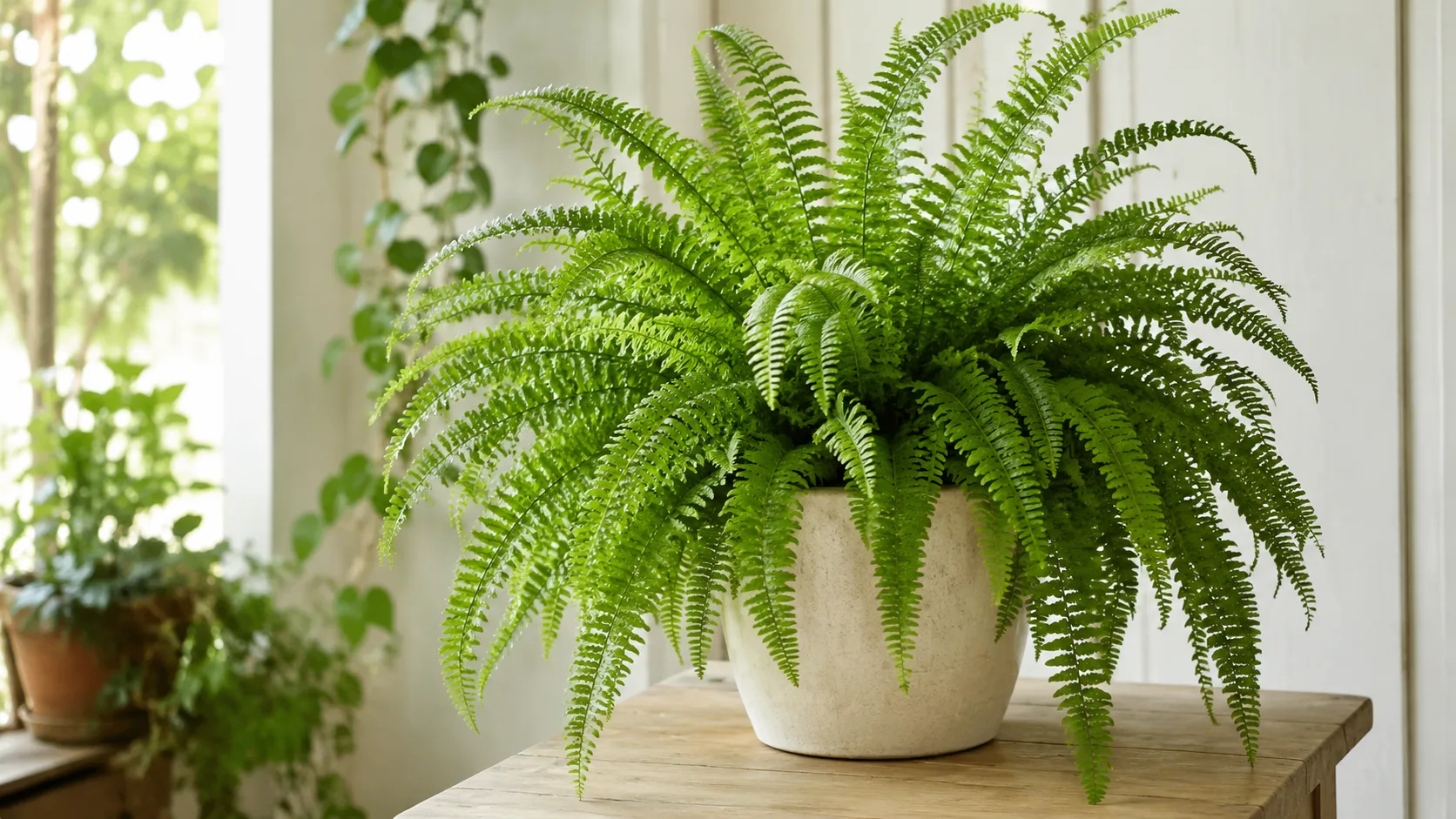
Bird’s nest fern (Asplenium nidus) has broad, wavy fronds that look sculptural on a shelf. NC State Extension notes it does best in rich, moist, porous mix with bright or light shade—such as a north-facing window—and tags it humidity tolerant indoors. (NC State Extension) Keep soil evenly moist but not sodden; yellowing often means too much direct sun or waterlogging, not too little humidity.
Boston fern (Nephrolepis exaltata) is the classic shower-hanging plant with soft, arching fronds. It wants consistent moisture and medium light; a hanging basket just outside the stall catches steam without sitting in a puddle. Mist only if airflow is good—wet, still fronds invite spots. Pair with the indoor fern care guide if fronds brown or shed.
Easy Trailing Vines
Trailing plants sell the “jungle shower” look. They tolerate typical bathroom light better than finicky bloomers.
Pothos and Philodendron
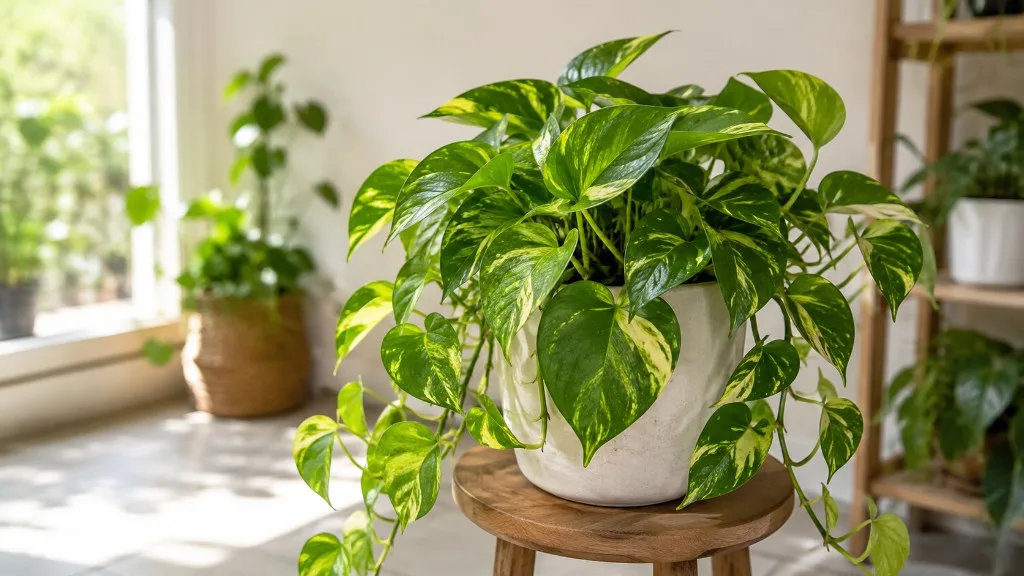
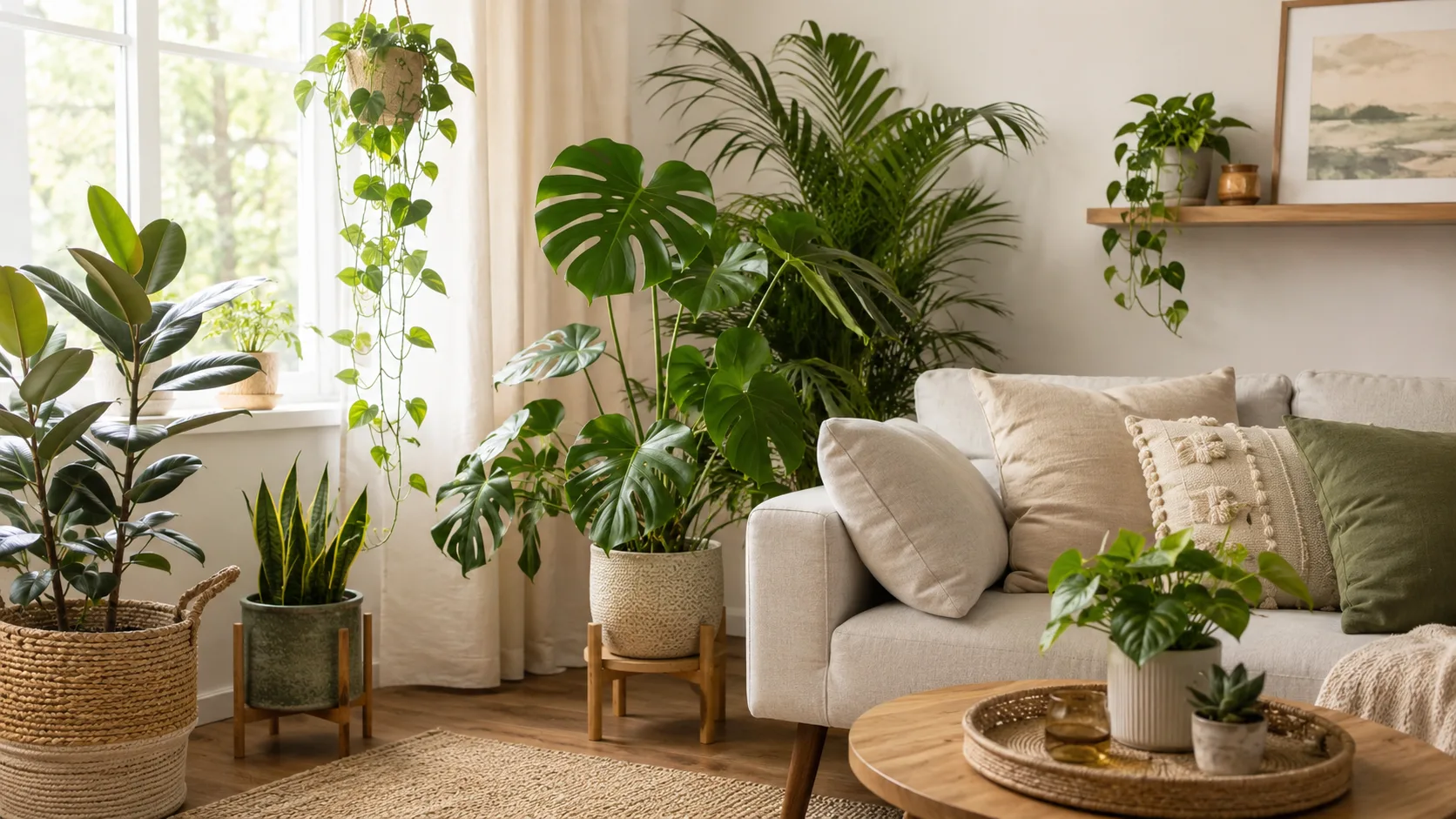
Pothos (Epipremnum aureum) is the forgiving default: low to medium light, irregular watering, and tolerance for humidity without requiring it. Hang a pot from a ceiling hook or high shelf and let stems cascade away from the spray. It grows quickly in warm, humid air—trim to keep vines off the floor. Read the pothos care guide and pothos hub; note pet toxicity from calcium oxalates.
Philodendron species share similar habits—heart-leaf and Brasil types love steam but need drainage. Vining types need a moss pole or hook if you do not want them wrapping shower fixtures. Explore the philodendron hub for species-specific light needs; most handle bathroom conditions when not overwatered.
Low-Light Foliage That Tolerates Steam
These plants survive dim bathrooms better than ferns—but they do not all need high humidity.
Snake Plant, Spider Plant, and Lucky Bamboo
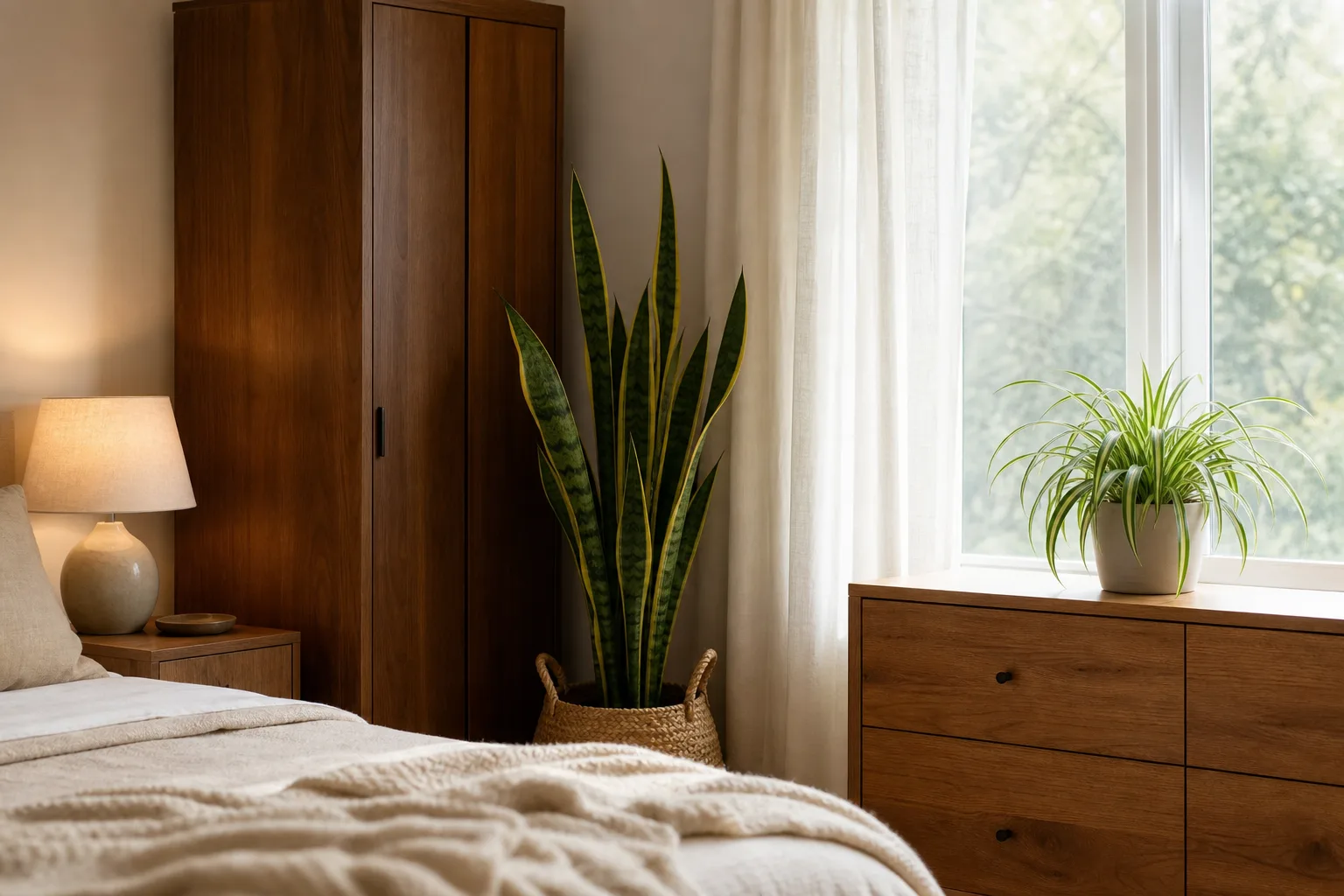
Snake plant (Sansevieria spp.) tolerates low light and irregular water, making it a smart choice for windowless bathrooms if you let the mix dry between waterings. Humidity does not harm it, but slow dry-down in a steamy room increases rot risk—use an airy mix and a smaller pot. See the snake plant hub.
Spider plant (Chlorophytum comosum) handles humidity and low light while producing plantlets you can propagate to other rooms. It is among the safer options for pet households, though chewing can cause mild upset. The spider plant hub covers watering and propagation.
Lucky bamboo (Dracaena sanderiana) is often sold in water or pebbles and likes consistent moisture with filtered water—chlorine and fluoride in tap water brown leaf tips. Keep it on a counter away from direct hot spray. Details live in the lucky bamboo guide and plant hub.
Flowering Picks for Bright Bathrooms
Blooms need more photons than foliage-only picks. If your bathroom has a decent window, these earn their space.
Peace Lily and Moth Orchid
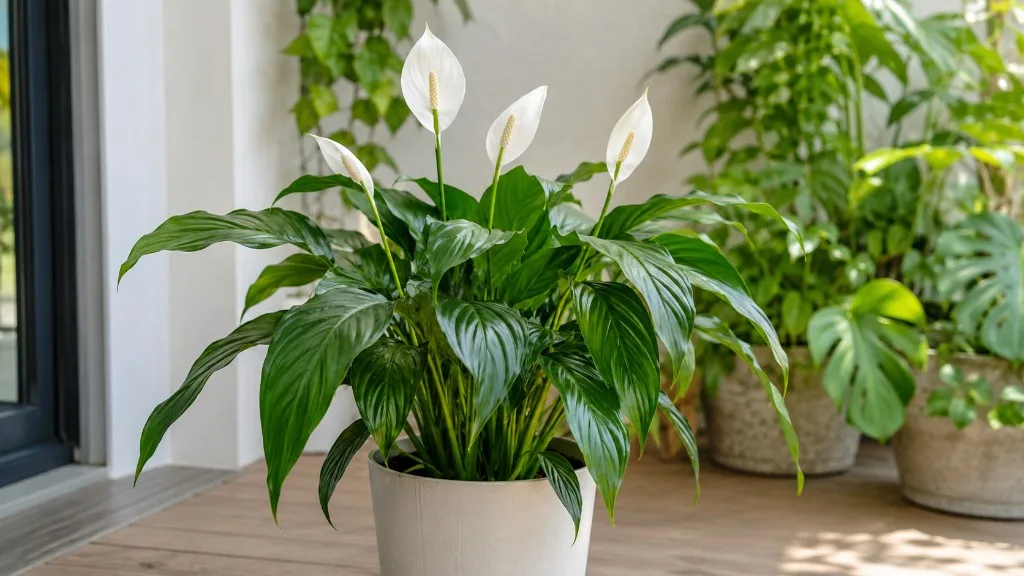
Peace lily (Spathiphyllum spp.) uses humidity to keep glossy leaves and white spathes looking clean in medium light. It wilts dramatically when dry—then perks up after a soak—so check soil before assuming steam watered it. ASPCA lists peace lily as toxic to cats and dogs due to insoluble calcium oxalates; keep pots off ledges pets climb. (ASPCA) More care detail: peace lily guide and peace lily hub.
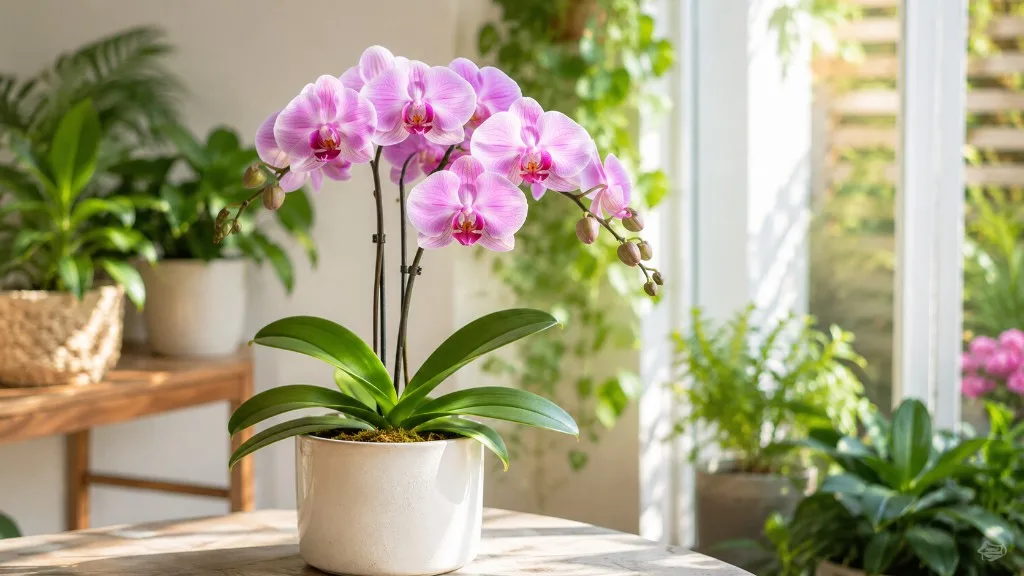
Moth orchid (Phalaenopsis spp.) fits a bright bathroom shelf where steam adds humidity but water does not hit blooms. Use orchid bark mix, bright indirect light, and water when roots turn silvery—usually weekly or less in humid air. Avoid cold drafts from an exterior wall in winter. See the Phalaenopsis orchid care guide and orchid hub.
Specialty Picks With Real Trade-Offs
These five appear on many shower-plant lists. Some deserve the hype; others need caveats.
Pitcher Plant, String of Pearls, Aloe, and Eucalyptus
Pitcher plant (Nepenthes spp.) loves humidity but is not a casual bathroom add-on. Carnivorous species need acidic, mineral-free water, bright indirect light, and specific media—often better on a bright windowsill than a dark shower. See carnivorous plant varieties before buying.
String of pearls (Senecio rowleyanus) is a desert succulent, not a steam lover. High humidity plus slow-drying soil invites rot and mushy beads—despite what generic listicles claim. If you love the look, keep it in bright, airy light outside the steamiest zone. String of pearls hub.
Aloe vera (Aloe vera) tolerates bathroom brightness if you have a sunny sill, but it prefers drier roots and sharp drainage. Steam alone does not justify frequent watering; treat it like a succulent. Medicinal gel is handy, but ASPCA lists aloe as toxic to cats and dogs. Aloe vera care guide and aloe hub.
Eucalyptus (Eucalyptus cinerea) in shower photos is usually fresh cut branches tied to the showerhead—not a potted tree living in the stall. The heat releases fragrance for a week or two; then replace the bundle. Growing eucalyptus indoors long-term needs cool, bright conditions and excellent airflow—quite different from a spa prop. Use bundles for aroma; choose ferns or pothos for living greenery.
Pet Safety and Troubleshooting in Humid Bathrooms
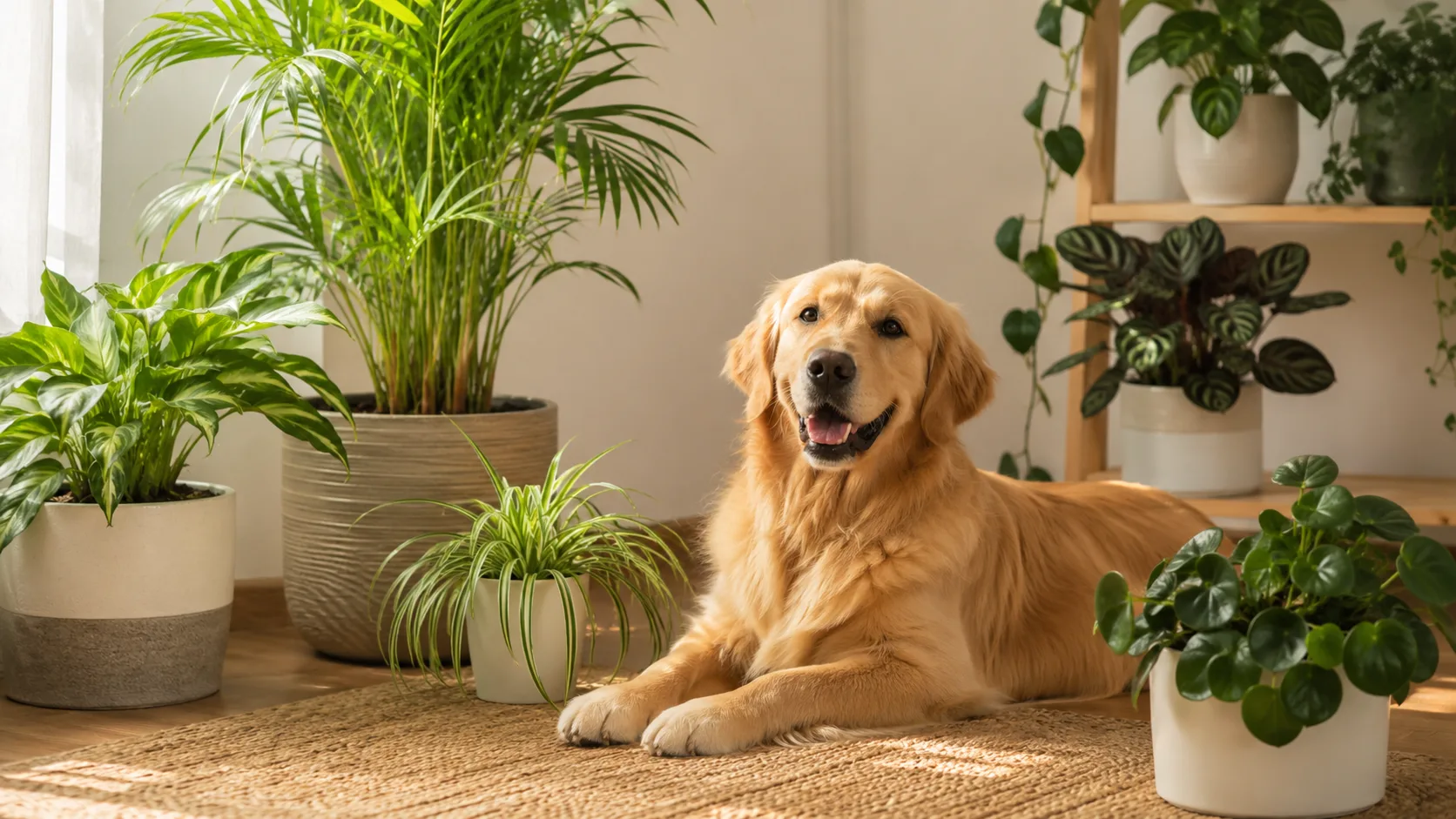
Pets and plants share tight spaces in many homes. Prioritize spider plant, Boston fern, staghorn fern, and Phalaenopsis if cats chew foliage; avoid peace lily, pothos, philodendron, snake plant, and aloe within reach. Full lists: pet-safe houseplants and toxic plants for cats.
Yellow, mushy stems at the base usually mean overwatering in a slow-drying room—repot into airy mix, reduce water, and improve airflow before fungus spreads. Brown crispy tips with dry soil point to underwatering despite humidity; soak until runoff and empty the saucer. White fuzz on soil often signals surface mold when ventilation is poor—scrape the top layer, let the surface dry, and run the fan after showers. Gnats mean wet media; let pots dry farther down between drinks and avoid decorative outer pots with no drainage.
If a plant fails after you fix water and light, move it to a brighter room for recovery rather than doubling down on misting—wet leaves in stagnant air rarely help.
Conclusion
The best shower plants are not the trendiest Instagram picks—they are the ones that match your bathroom’s light, drainage, and pet reality. Air plants, ferns, pothos, and peace lilies earn their place when steam reaches the leaves while roots stay in fast-draining mix outside standing water. Snake plant and spider plant cover dim rooms; orchids and peace lilies reward actual windows; cut eucalyptus delivers spa scent without pretending to be a living shower tree.
Start with one plant in the safest zone—a shelf just outside the spray—check soil weekly, and measure humidity if you are unsure. Add more only after the first thrives. With the right match, your bathroom becomes the humid corner your tropicals have been waiting for—without the mold, rot, and replacement cycle that sink most shower-plant experiments.