Lucky Bamboo Care: How to Grow It Indoors
Learn lucky bamboo care for water or soil, including light, watering, fertilizer, pruning, propagation, pet safety, and fixes for yellow leaves and brown tips.
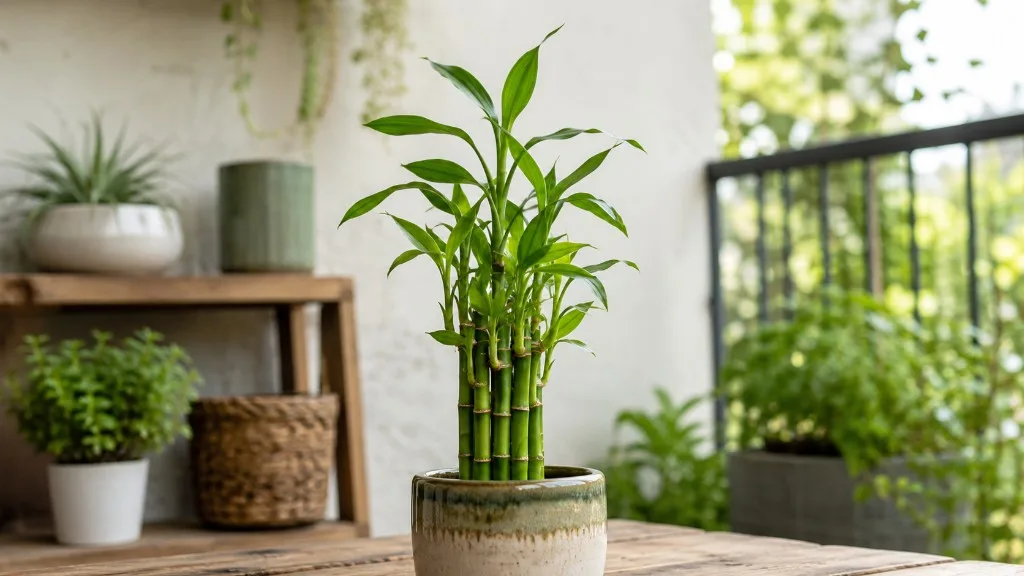
Lucky bamboo is forgiving, but it is not indestructible. Most failures come from a short list of mismatches: harsh sun, poor-quality water, a water line that stays too high, fertilizer that is too strong, or a heavy plant sitting in a pot with no drainage.
The plant sold as lucky bamboo is Dracaena sanderiana, a tropical foliage plant that can live in water with pebbles or in a well-drained pot of soil. Use the guide below to choose the medium first, then match the light, water, feeding, and pruning routine to that choice.
What lucky bamboo really is
Lucky bamboo is not a true bamboo grass. It is a slow-growing Dracaena from tropical western Africa, with jointed green canes and narrow leaves that give it a bamboo-like appearance. The Missouri Botanical Garden plant profile lists it as Dracaena sanderiana and notes that it can grow in evenly moist soil or in water when the roots have a supporting substrate such as pebbles.
That identity explains two features that confuse new owners. First, it tolerates a water vase better than most ordinary houseplants. Second, it still behaves like a dracaena: it can scorch in strong sun, react badly to mineral-heavy water, and develop brown tips when roots or leaves are stressed.
The “lucky” part comes from cultural traditions, including meanings assigned to different numbers of stalks. Those meanings can make an arrangement a thoughtful gift, but they do not change the plant’s biological needs. Choose a healthy, firm arrangement for its condition and shape; do not buy a weak plant because you hope it will eventually form a particular spiral.
Choose water or soil before you set it up
Neither medium is automatically right for every home. Water with pebbles is attractive, lets you inspect the roots, and avoids guessing when to water, but it makes water quality and container hygiene non-negotiable. Soil can support more substantial long-term growth, but only when the pot drains freely and you check moisture below the surface.
| Growing method | Best fit | Main advantage | Main risk |
|---|---|---|---|
| Water and pebbles | Desk or shelf arrangements, visible roots, simple display | Easy to see the water level and root condition | Stagnant water, algae, mineral buildup, and overfeeding |
| Well-drained soil | Larger plants or growers who want stronger long-term growth | Better anchorage and a more conventional root environment | Oversized pots, soggy mix, and watering by calendar |
Start with the method your plant already has if it is healthy. A sudden switch is possible, but it adds transplant stress and removes the advantage of an established root system. If you want to change mediums, do it while the plant is actively growing, rinse or replace contaminated materials, and give it stable light while it adjusts.
Water-grown setup: roots covered, stalks dry
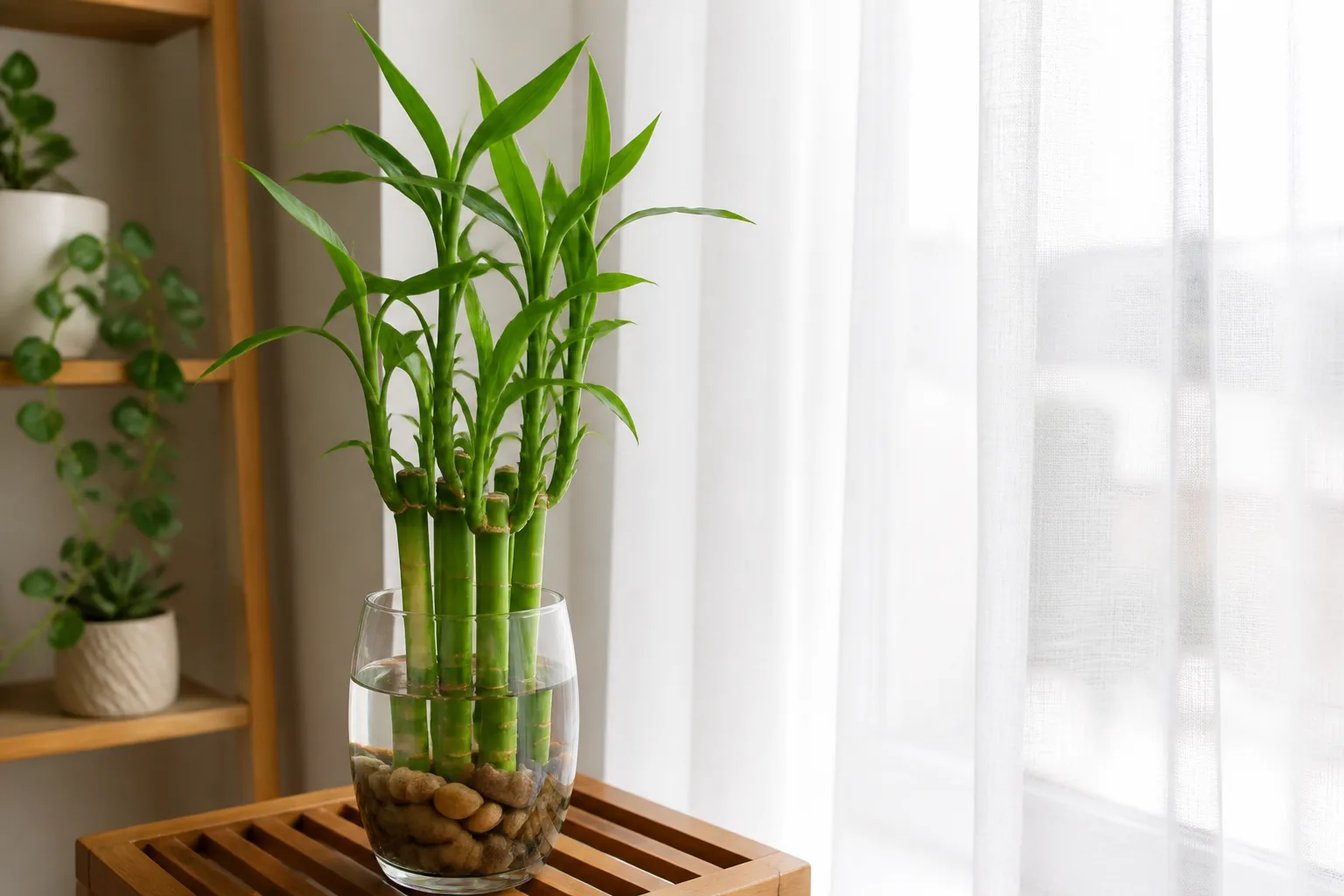
Use a clean vase or bowl that is heavy enough to support the canes. Add washed pebbles around the roots so the arrangement cannot wobble, then add enough low-mineral water to cover the roots. Keep the water line below the canes and leaves; the stem should not sit submerged.
The water is a growing environment, not just a decorative accent. In a clear vase, light reaches the water and encourages algae, especially when the plant is close to a sunny window. An opaque or lightly shaded container reduces that problem, but the plant still needs bright indirect light above the rim.
A good initial setup has firm canes, clean roots, washed stones, and no sour smell. If the vase is cloudy, slimy, or foul-smelling, do not simply top it off. Empty it, rinse the roots and stones, wash the container, and refill with fresh water at roughly room temperature.
Soil-grown setup: drainage beats a wet schedule
Use a pot with a drainage hole and an airy indoor potting mix. A standard foliage mix amended with extra perlite or fine bark is usually more forgiving than dense garden soil. The goal is a mix that holds some moisture but still lets oxygen reach the roots after watering.
Choose a pot only slightly larger than the root ball. A much larger pot holds a large volume of wet mix around a small root system, so the surface may look dry while the center remains saturated. Keep the pot in a saucer that can be emptied, and never let the drainage water sit around the roots.
If the plant came in water and you are moving it to soil, seat the roots at the same general depth rather than burying the lower cane. Keep the mix evenly, lightly moist during the adjustment period, but wait until the upper layer begins to dry before watering again.
Put lucky bamboo in the right light
Bright, indirect light is the safest baseline. Place lucky bamboo near an east- or west-facing window, a few feet back from the glass, or behind a sheer curtain. A north-facing room may keep it alive but can produce slower growth, paler leaves, and long gaps between leaves; a strong south or west window can scorch the foliage if sun falls directly on it for hours.
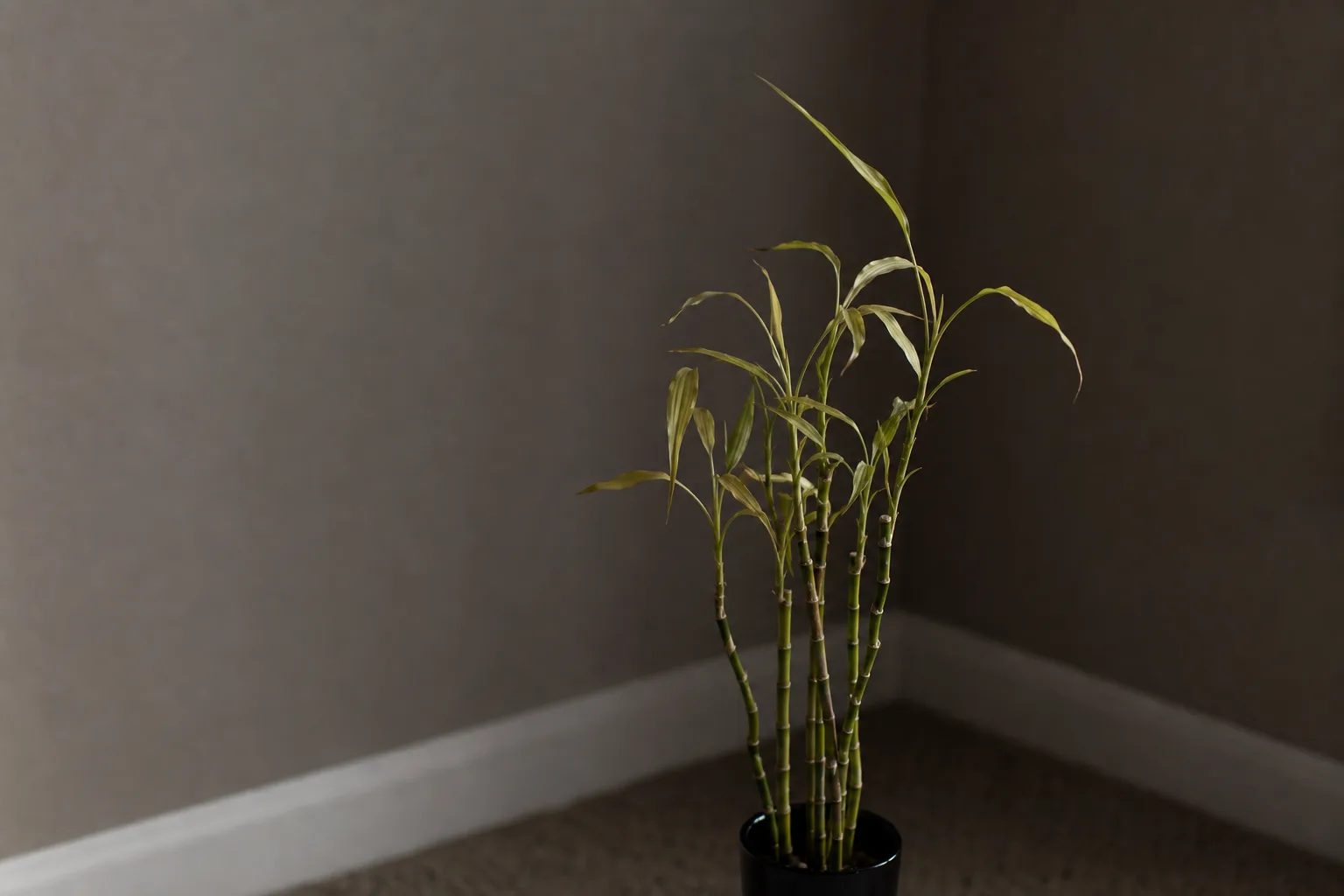
Use the plant as the light meter. Stretching toward one side, thin new growth, and unusually long spaces between leaves mean it needs more usable light. Bleached patches, crisp brown areas on the window-facing side, or sudden fading after a move mean the light is too intense or changed too quickly.
Rotate the container a quarter turn every week or two if the plant leans. Rotation can keep growth more even, but it will not create a commercial spiral by itself. Braids, loops, and coils are generally produced by training young stalks and controlling the direction of growth over time; pruning only changes the foliage, not the cane’s existing shape.
If the room is genuinely dim, add a small grow light rather than moving the plant into direct sun. Keep the light on a consistent daily schedule and place it far enough away that the leaves stay cool. A slow-growing plant under supplemental light still needs time; increasing brightness will not instantly repair leaves that are already damaged.
Use a watering routine that prevents yellowing
Watering frequency depends on the medium, pot size, light, temperature, and season. The University of Georgia’s indoor-plant guidance emphasizes checking the plant’s conditions rather than applying one schedule to every container, and it warns that both excess water and insufficient water can disrupt growth.
Water quality deserves equal attention. Dracaenas are among the indoor plants that can be sensitive to chlorine and fluoride, and mineral-heavy water can contribute to scorched tips. Filtered, distilled, or rainwater is the most predictable choice for a water-grown arrangement. Letting tap water stand may reduce some free chlorine, but it does not make hard water low-mineral or remove every additive.
Water-grown schedule
Refresh water about once a week while the plant is actively maintained in a vase. Between changes, top up only when the level falls below the roots. When you refresh it, take the opportunity to rinse the vase and inspect roots instead of waiting for an odor or yellow stem.
Do not confuse “roots covered” with “canes submerged.” The roots can sit in water; the cane bases should remain above the water line except for the small portion that is naturally rooted. Deep water around the stems and stagnant water around decaying leaves create a much harder recovery problem than a missed top-up.
If the roots are brown, soft, or foul-smelling, cut away only tissue that is clearly dead with clean scissors. Firm reddish or tan roots can be normal in water-grown dracaena, so do not remove healthy roots just because they are not white. Clean the container before returning the plant to fresh water.
Soil-grown schedule
Check the mix with a finger or a wooden skewer rather than watering every two or seven days. When the upper inch or two feels dry and the pot has become lighter, water slowly until some drains from the bottom. Empty the saucer after the pot has finished draining.
In lower light or winter conditions, the mix may dry slowly, so the interval between waterings will lengthen. In brighter light, a warm room, or a small pot full of roots, it may dry faster. The reliable rule is to read the mix and the plant together, not to force the plant onto a calendar.
If soil stays wet for many days, move the plant to brighter indirect light, confirm that the drainage hole is open, and pause watering until the surface and upper root zone begin to dry. A wet pot that smells sour or produces a soft stem needs an immediate root and stem inspection.
Manage temperature and humidity without overcomplicating it
Keep lucky bamboo in a stable room, ideally around 65–80°F (18–27°C). Protect it from cold drafts, open windows during cold weather, air-conditioning discharge, and hot air from a radiator or heating vent. Temperatures below about 60°F (16°C), especially combined with wet roots, can slow growth and trigger leaf drop.
Average household humidity is usually adequate if the plant is not directly beside forced air. If the room is very dry, group plants or use a humidifier that you clean regularly. Misting can make leaves look fresh for a few minutes, but it is not a dependable way to raise room humidity; UGA Extension’s indoor-plant guidance notes that meaningful humidity changes from misting would require extremely frequent repetition.
Keep the arrangement away from a bathroom window that receives harsh sun, even if the humidity is high. A bright, stable shelf is usually better than a humid but fluctuating location beside a shower, open window, or heating appliance.
Fertilizer: less is safer
Lucky bamboo does not need frequent feeding to remain attractive. A water-grown arrangement can stay healthy for a long time without fertilizer, particularly when it has recently come from a nursery or gift shop. If the plant is not producing new growth, extra fertilizer will not substitute for better light.
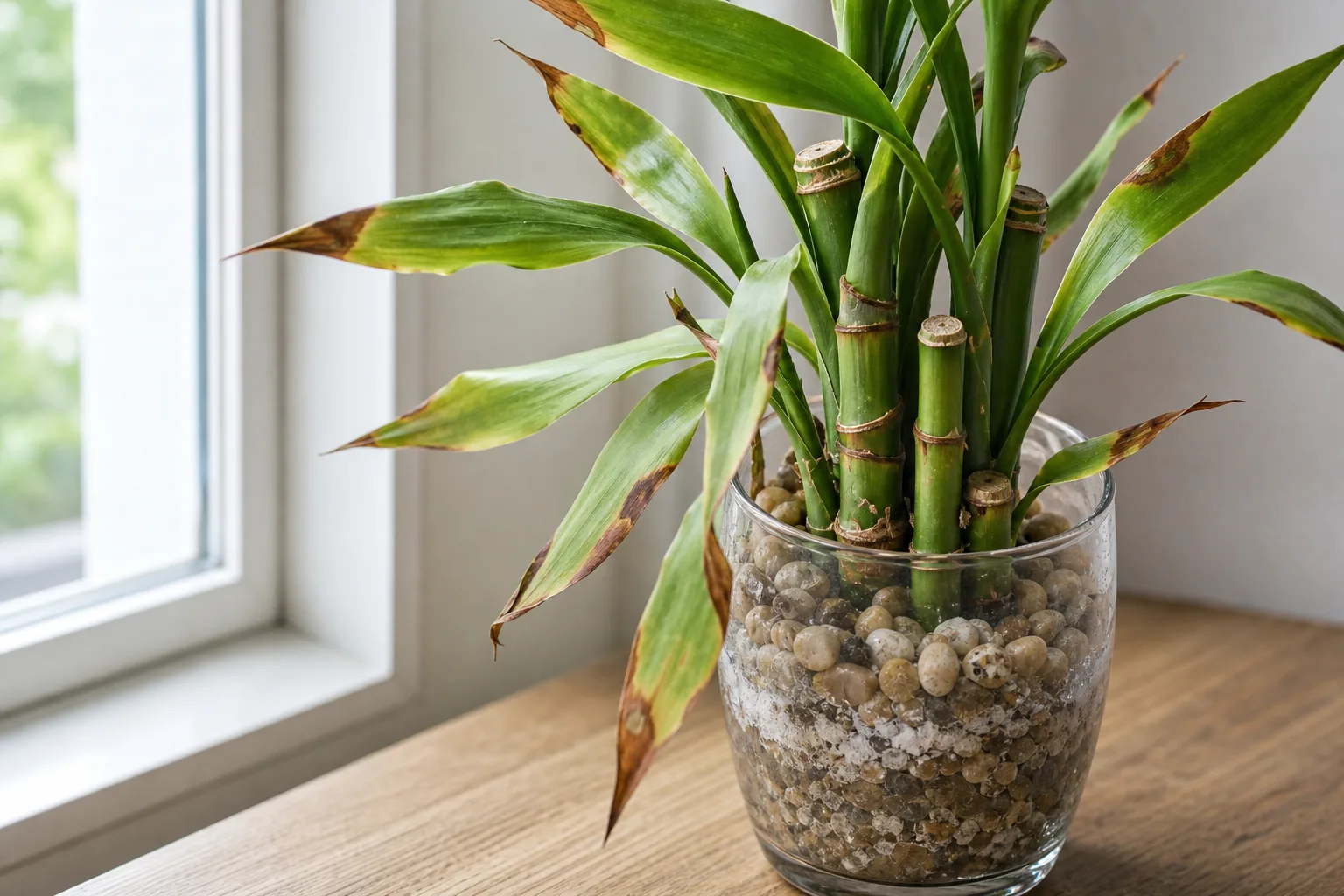
For soil-grown plants, use a balanced liquid houseplant fertilizer at no more than one-quarter of the label strength during active growth, and space applications roughly six to eight weeks apart. For water-grown plants, skip fertilizer unless growth is active; if you choose to feed, use a product labeled for water culture at a much weaker dilution, such as one-tenth of the label strength, and do not combine it with stagnant water.
Never fertilize dry soil, freshly repotted roots, or a plant with a mushy stem. The UGA guide to growing indoor plants explains that excess fertilizer forms soluble salts that draw water from roots and can cause tip and margin burn. A white crust on the soil, vase, or stones is a reason to stop feeding and clean or flush the setup, not a signal to add more nutrients.
Prune, shape, and propagate without ruining the canes
Pruning is mainly for managing leafy offshoots and keeping a top-heavy arrangement balanced. It is not a way to make an old cane grow taller. Use sharp, clean scissors or snips, and wipe them with alcohol before moving between plants.
Prune for fuller growth
When an offshoot is too long, cut it about an inch or two from the main cane, just above a node if one is visible. New shoots can emerge below the cut, so trim conservatively the first time. Removing a little at a time is safer than taking half the foliage from a stressed plant.
Do not cut the structural canes simply because the leaves are sparse at the top. If you deliberately cut a cane to reduce height, treat the piece as a propagation cutting and understand that the original cane will not resume its former height. Remove yellow or fully brown leaves at their base, but do not expect a brown section to turn green again.
Root a cutting step by step
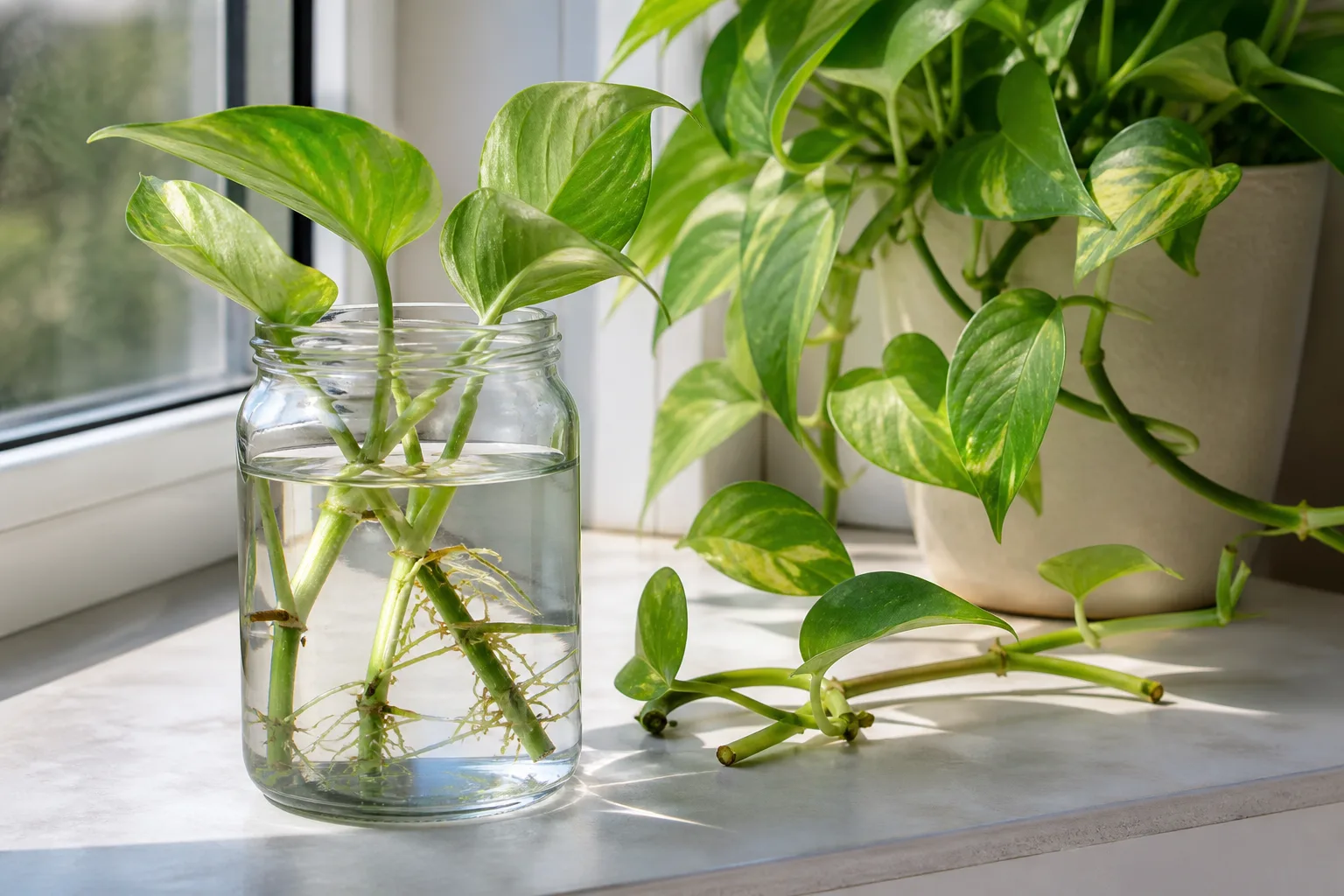
Choose a firm, healthy offshoot with several leaves and at least one clear node. Then:
- Cut below a node with sterilized shears, making a clean cut rather than crushing the stem.
- Remove the lowest leaves so no foliage sits in the water.
- Place the lower node in a small container of filtered or distilled water; keep leaves above the surface.
- Put the cutting in bright indirect light and change the water whenever it becomes cloudy, with a full refresh at least weekly.
- Once roots are established and the cutting is growing, keep it in water or move it into a small, well-drained pot of soil.
Roots may take several weeks, and the new plant will grow upright rather than automatically reproducing a braided or spiral form. The BBC Gardeners’ World propagation guidance also cautions that twisted shapes are specialist-grown, so a healthy straight cutting is a successful propagation even if it does not match the parent’s display shape.
Refresh the container or repot when the setup stops working
Refresh a water arrangement when the vase smells, the water clouds quickly, algae returns after cleaning, roots fill the container, or the arrangement becomes unstable. Remove the plant, rinse the roots gently, scrub the vase, wash the pebbles, and return the canes to clean water at the correct depth. If one cane is soft or black, isolate it from firm canes before it contaminates the shared setup.
Repot a soil-grown plant when roots circle densely, emerge from the drainage hole, or dry the mix unusually fast. Move up only one pot size and keep the plant at the same depth. Do not bury the cane to make a tall arrangement look more secure; use a heavier outer cachepot or a clean support instead.
A plant that has been growing in water for years may have a dense, container-shaped root mass. That is not automatically a crisis. If the foliage is firm and the water stays clean, you can refresh the container without aggressively teasing every root apart. Disturb only what you need to clean or reposition the plant.
Diagnose brown tips, yellow leaves, and black roots
Symptoms overlap, so start with the newest change and inspect the medium before making several corrections at once. A simple sequence works: check light, smell the water or soil, inspect roots and canes, review fertilizer, then make one change and watch new growth.
Brown tips or edges. Start with water quality, especially if the damage appeared after a tap-water change. Direct sun, very dry moving air, and fertilizer salts can produce similar edges. Switch to a more suitable water source, move the plant out of harsh sun, stop fertilizer temporarily, and trim only the dead tissue; the existing brown area will not heal, but healthy new leaves should show whether the correction worked.
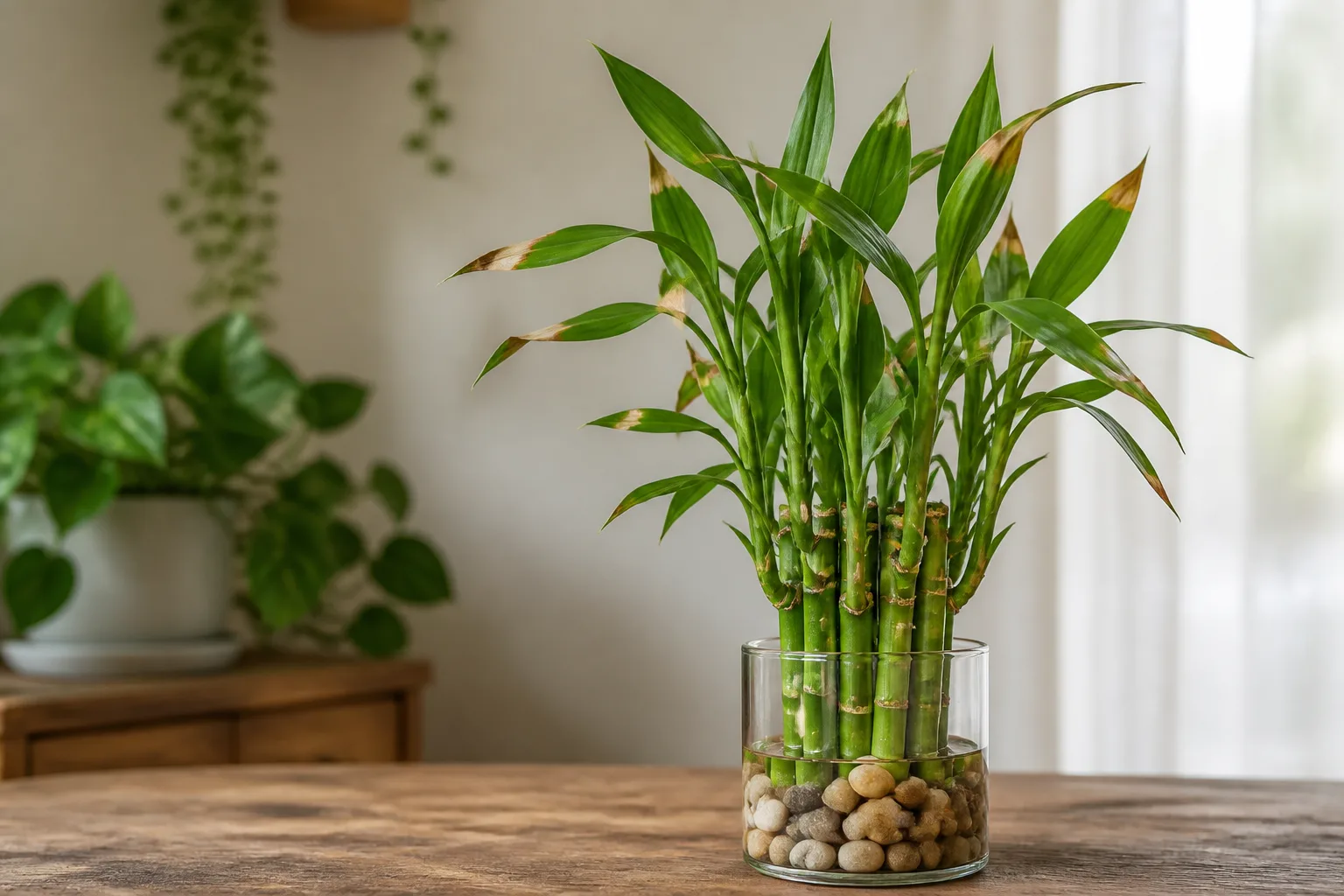
Yellow leaves. One old lower leaf turning yellow can be normal aging. Several leaves yellowing at once is more concerning: look for direct sun, stagnant water, overfertilized roots, cold shock, or a soil mix that stays wet. Remove the obvious stressor first; do not respond to yellowing by adding fertilizer.
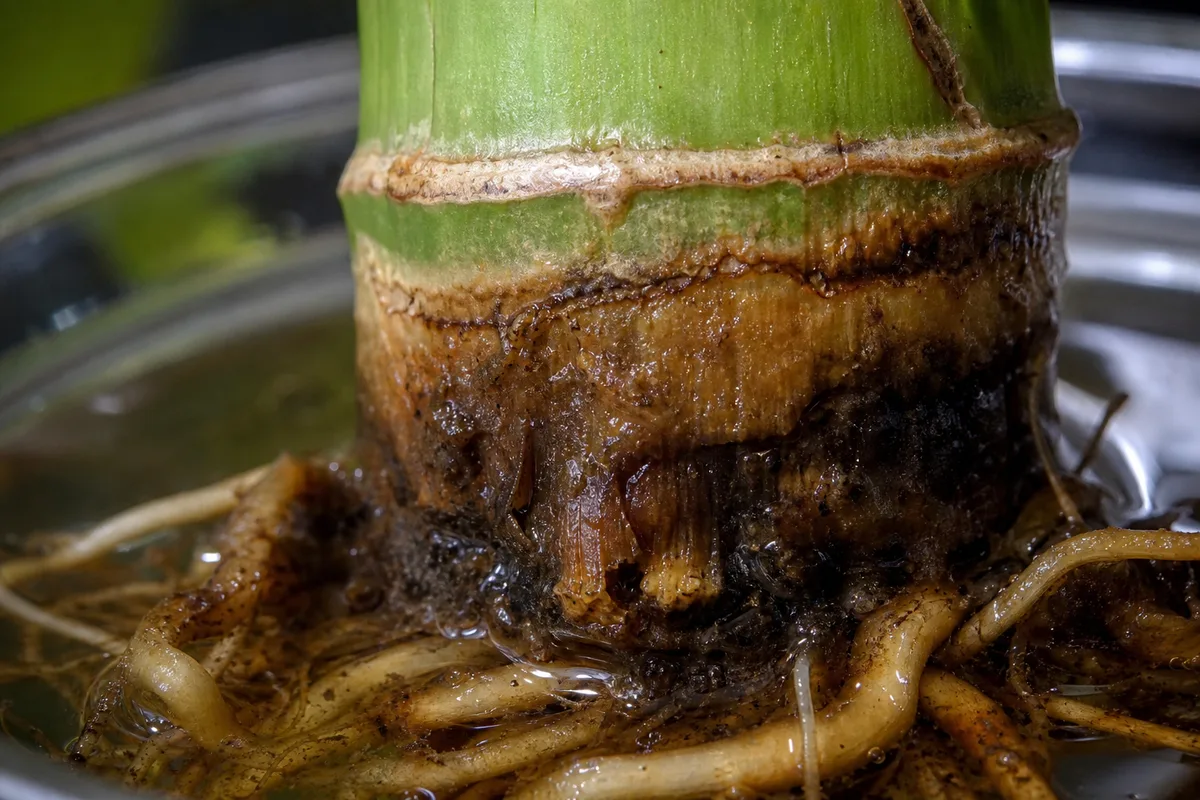
Black or soft roots. A few dark roots are not enough to diagnose a problem because water-grown dracaena can have reddish or darker healthy roots. Roots that are soft, slimy, foul-smelling, or collapsing are different. Cut away only dead sections, clean the container, replace the water, and inspect the cane base. If the cane itself is soft, yellow, or hollow, recovery is unlikely.
Brown patches on leaves. A dry, bleached patch on the window-facing side points more toward sun scorch than a water problem. Move the plant farther from the glass and wait for new growth before judging the result. Do not keep rotating a scorched plant into the same beam of sun.
Algae, pests, and mushy stalks
Algae is common in clear containers that receive strong light, especially when fertilizer is present. Clean the vase and stones, switch to an opaque container or lower-light position, and keep fertilizer out until the plant is actively growing. If algae returns quickly, inspect for direct sun and excess nutrients before reaching for a chemical treatment.
Spider mites show up as fine webbing and stippled leaves, while mealybugs look like small cottony clusters around nodes. Isolate the plant, rinse or wipe pests away, and use an insecticidal soap or other product only as its label directs. Do not pour pesticide, soap, or oily treatments into the water vase; remove the plant from the water setup and rinse it according to the product’s instructions.
A mushy or blackening stalk should be removed from the arrangement promptly. Keep surviving firm stalks separate in a sanitized container with fresh water, because a shared vase can spread the conditions that caused the decline. If every cane is soft and the roots smell rotten, replacing the arrangement is more realistic than trying to revive dead tissue.
Keep lucky bamboo safe around pets and place it thoughtfully
Lucky bamboo is a Dracaena, and Pet Poison Helpline’s Dracaena guidance states that Dracaena species contain saponins that can cause drooling and vomiting in companion animals; cats may also show dilated pupils or an unsteady gait. Treat the plant as toxic to cats and dogs, even if it is displayed in water rather than soil.
Put the vase where a pet cannot chew the leaves, knock over the container, or drink the water. If a pet may have eaten part of the plant, contact a veterinarian or animal poison service promptly and follow their instructions rather than trying a home remedy. A secure placement also protects the plant: a toppled vase can expose roots, soak furniture, and leave canes sitting in dirty water.
Build a five-minute weekly care routine
Once a week, use the same short inspection instead of waiting for a dramatic symptom:
- Light: Is growth leaning or stretching, or are leaves bleaching on the window side?
- Water-grown plants: Is the water clean and below the canes? Do the roots smell firm rather than sour?
- Soil-grown plants: Is the upper layer dry enough to water, and does excess water drain freely?
- Foliage: Are there new brown tips, yellow leaves, webbing, cottony pests, or dead leaves touching the water?
- Structure: Is the container stable, and are crowded canes rubbing or becoming top-heavy?
- Feeding: Is the plant actively growing, or would fertilizer only add salts to a stressed setup?
Make one correction at a time and evaluate the next leaves, not the damaged ones. If the plant has firm new growth, the care change is working even when older leaves remain scarred.
Conclusion
Good lucky bamboo care is mostly about keeping a few variables stable. Give it bright indirect light, clean low-mineral water or a well-drained soil mix, a warm location without drafts, and very restrained fertilizer. In water, keep the roots covered but the canes above the water line; in soil, let the upper layer dry slightly and empty the saucer.
When the plant struggles, inspect before guessing. Brown tips usually call for a water-quality and light review, yellowing calls for a check of sun, fertilizer, temperature, and root conditions, and a mushy stalk calls for immediate isolation. With that simple routine, lucky bamboo can remain a healthy, long-lived indoor accent rather than a vase that slowly declines out of sight.