How to Grow and Care for Moss Rose
Moss rose (Portulaca grandiflora) thrives in full sun and sharp drainage. Learn watering, soil, varieties, seed starting, and why flowers stay closed on cloudy days.
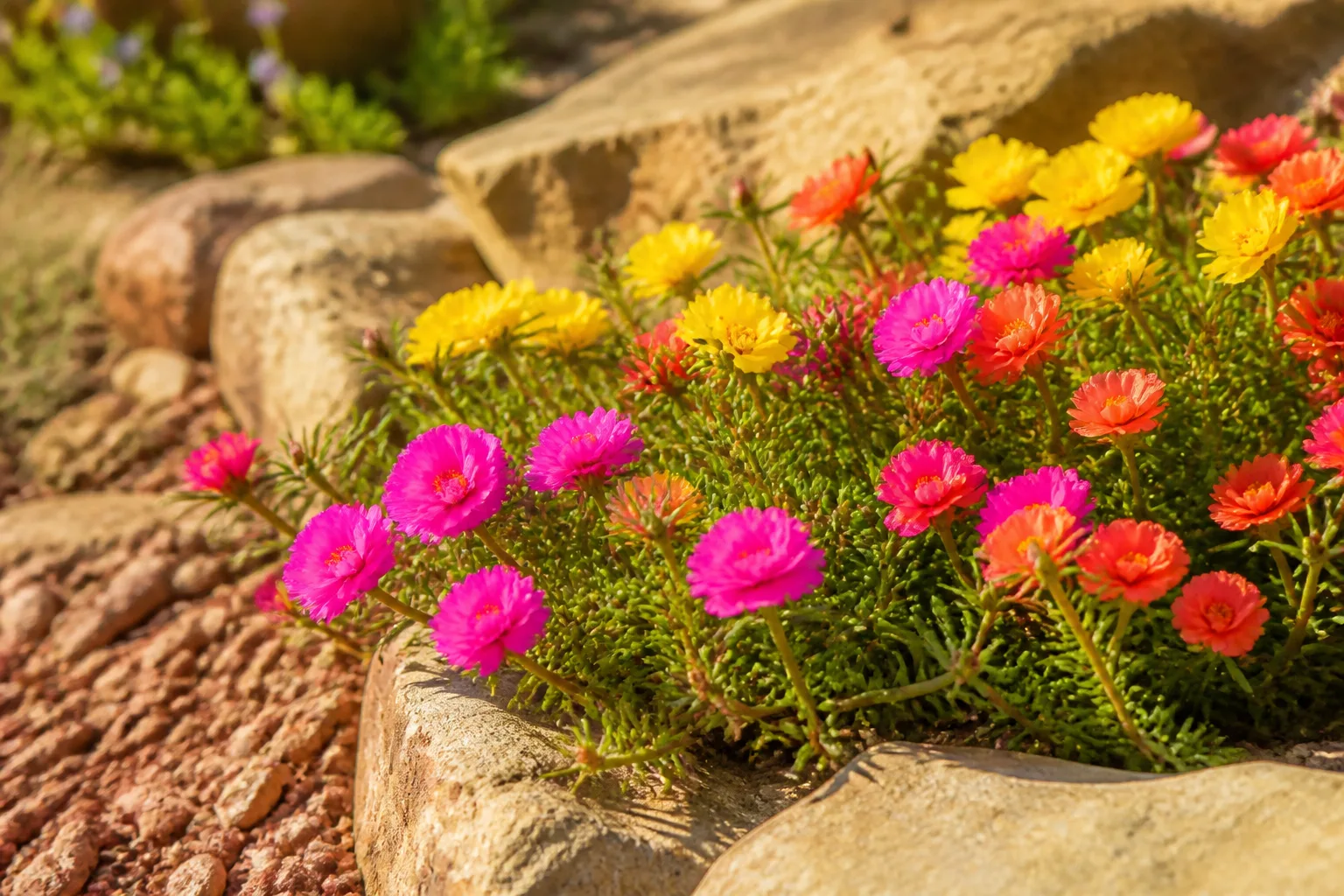
Moss rose (Portulaca grandiflora) is the annual succulent your hottest, driest garden bed has been waiting for. Native to South America and grown across USDA zones 2 through 11 as a frost-tender annual, it forms a low, spreading mat of fleshy leaves topped with papery, rose-like flowers in red, orange, yellow, pink, and white. The Missouri Botanical Garden describes typical plants at 6–8 inches tall spreading 12 inches wide or more—a ground-hugging succulent that laughs at poor soil and summer heat as long as two non-negotiables are met: full sun and fast drainage. Give it those, and moss rose will bloom from early summer until frost with almost no deadheading. Give it shade or soggy clay, and you get closed buds, rotting stems, and a plant that vanishes before the Fourth of July.
What Moss Rose Actually Is (and What It Is Not)
Moss rose belongs to the Portulacaceae family. Despite the common name, it is not a true rose (Rosa spp.) and it is not a moss—it is a succulent annual with cylindrical, fleshy leaves clustered along reddish stems. Flowers can be single, semi-double, or double, often with ruffled petals that earn the “rose” comparison. Blooms are showy but short-lived individually; the plant compensates by producing waves of new flowers all season.
The RHS lists additional common names including rose moss, Mexican rose, eleven o’clock, Kentucky moss, and wax pink—all referring to the same species. Nursery tags often shorten the name to portulaca, which adds confusion because other Portulaca species share that shorthand.
Moss Rose vs Common Purslane
The single biggest ID mistake gardeners make is mixing up Portulaca grandiflora (ornamental moss rose) with Portulaca oleracea (common purslane). Both are succulents in the same genus, but they are different plants with different habits and risks.
| Trait | Moss rose (P. grandiflora) | Common purslane (P. oleracea) |
|---|---|---|
| Primary use | Ornamental bedding, containers | Edible weed / leafy green in some cuisines |
| Flowers | Large, showy, rose-like, many colors | Small yellow flowers, less ornamental |
| Habit | Low mat, nursery-bred cultivars | Prostrate weed, self-sows aggressively |
| Pet toxicity | Treat with caution; genus linked to oxalates | ASPCA lists as toxic to dogs, cats, horses |
NC State Extension notes that moss rose is “often confused with” P. oleracea. If you see “purslane” on a moss rose tag, read the botanical name. You want grandiflora for bedding color—not the edible/weedy cousin.
Quick Plant Profile
| Feature | Detail |
|---|---|
| Botanical name | Portulaca grandiflora |
| Common names | Moss rose, rose moss, portulaca, sun plant |
| Type | Frost-tender annual succulent |
| Size | 3–9 in. tall, 6–12+ in. wide |
| Sun | Full sun |
| Soil | Sandy, rocky, sharply drained |
| Bloom | Summer to frost; closes on cloudy days |
| Hardiness | Grown as annual; zones 2–11 |
| Native range | Brazil, Uruguay, Argentina |
Where Moss Rose Works Best in the Garden
Moss rose earns its keep where conventional annuals fry or flop: sun-baked strips, rock gardens, gravel paths, stone wall crowns, and the front edge of borders where soil dries fast. NC State Extension recommends crevice gardens, border fronts, pots, hanging planters, and walls where stems can cascade. The plant’s prostrate to slightly ascending habit creates a moss-like foliage mat—the Missouri Botanical Garden’s literal description—that reads as intentional ground cover rather than a weed.
Avoid low, airless pockets where water pools after rain. Moss rose is not a shade ground cover and not a lawn substitute. It is a seasonal color carpet for sites that already drain like a colander.
Rock Gardens, Edges, and Walls
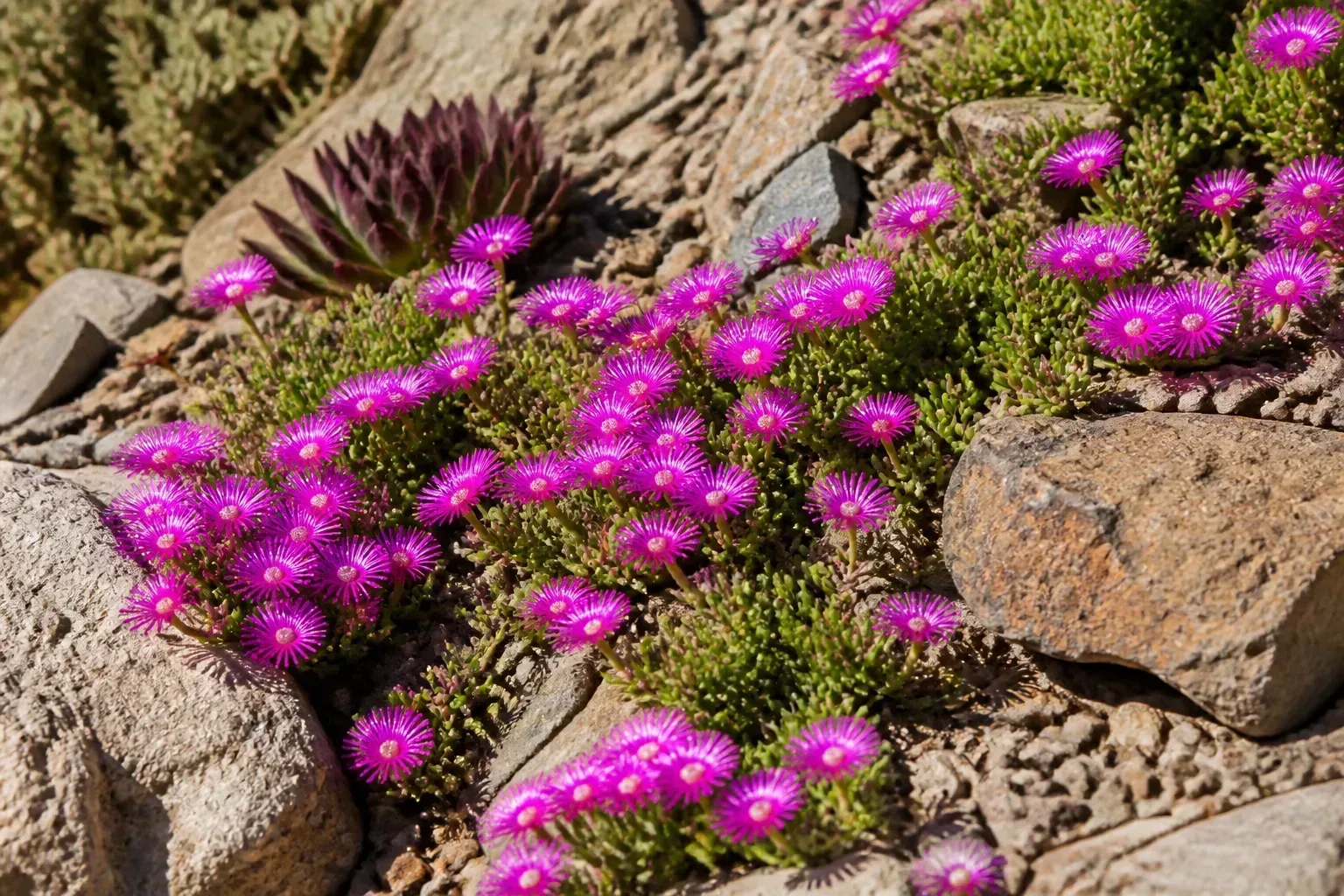
In rock and crevice gardens, tuck seedlings or small pots between stones where roots stay above the water table. Moss rose pairs naturally with other sharp-drainage lovers—see our purple ice plant guide for a perennial succulent ground-cover contrast that handles different winter hardiness. At bed edges and along walks, space plants 8–12 inches apart so mats merge without overcrowding stems in humid weather.
Containers and Hanging Baskets
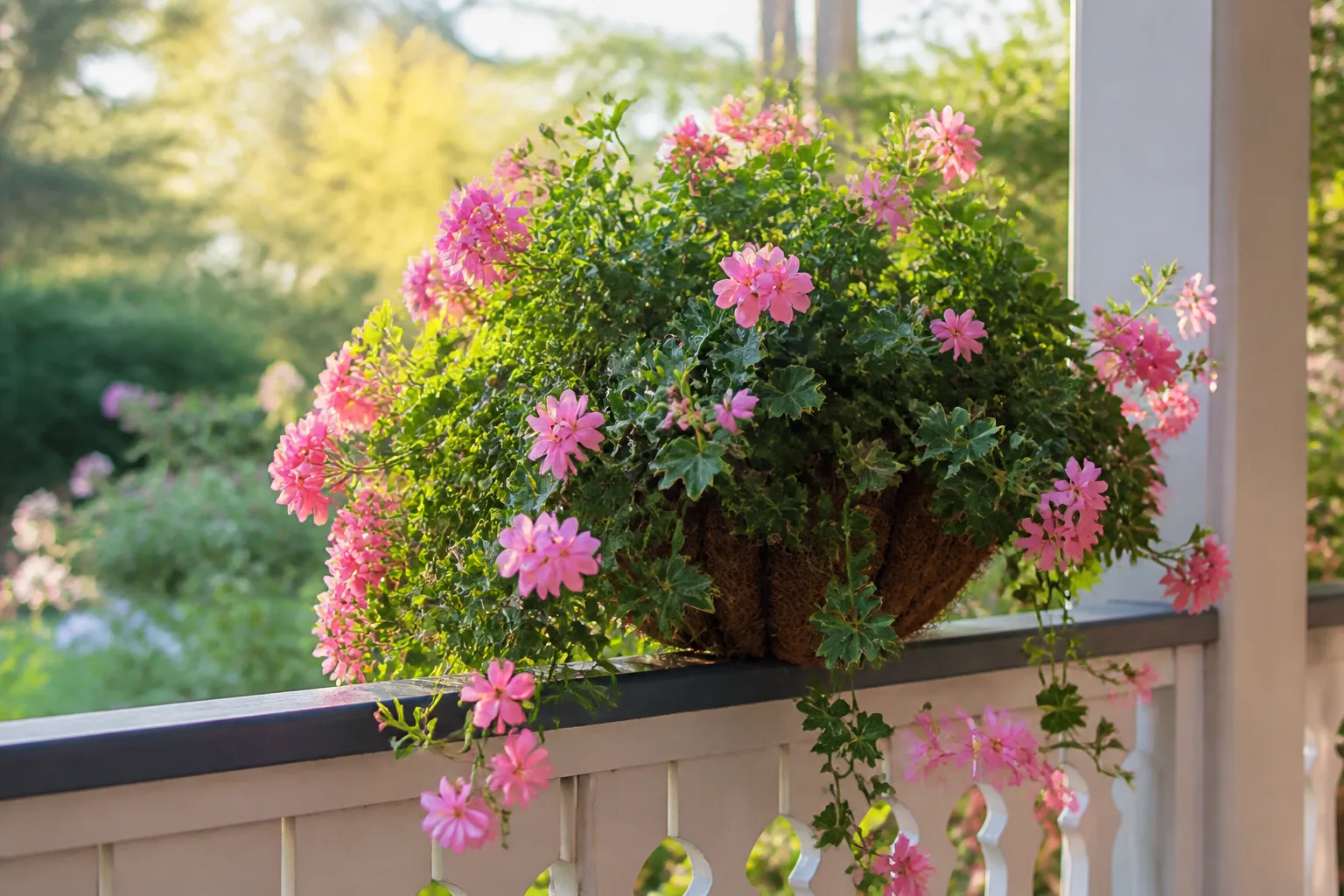
Containers are often the best way to grow moss rose—not a compromise. Elevated pots drain faster than in-ground clay, and hanging baskets show off trailing cultivars like the ‘Yubi Summer Joy’ series. Use a commercial potting mix for containers, not garden soil, and confirm drainage holes are open. For mixed baskets, treat moss rose as a spiller in full sun with companions that share its dry-down rhythm—portulaca and constantly wet petunias in the same pot is a recipe for crown rot. Our container garden tips for beginners cover drainage and sun mapping if you are building your first summer pot.
Light Requirements
Moss rose needs full sun—at least six to eight hours of direct light daily, and more is better in cool coastal summers. Partial shade might keep the plant alive, but flower count drops sharply and buds may never fully open. If your portulaca looks green and flat with few blooms, move it before you fertilize it.
Why Flowers Close on Cloudy Days
This behavior surprises new growers but is completely normal. Moss rose flowers open in bright sun and close from sundown to sunup. They also stay shut on cloudy and rainy days, as NC State Extension and the Missouri Botanical Garden both note. A plant that looks “broken” during a week of overcast weather may burst back into color the moment skies clear—no intervention required.
If cloudy-day closure bothers you aesthetically, choose cultivars bred for longer open hours. The ‘Sundial’ series and ‘Afternoon Delight’ stay open later into the afternoon or tolerate cooler, cloudier weather better than older strains. For persistently overcast regions, those genetics matter more than extra fertilizer.
Soil and Drainage
Moss rose thrives in poor to average, sandy or rocky soil where nutrients are lean but water moves through quickly. The RHS specifies well-drained chalk, loam, or sand in full sun and says the plant “thrives in poor, sandy soils.” That is not encouragement to plant in builder’s fill and hope—it means do not over-enrich or over-water a site that already drains.
Ideal pH is neutral to slightly acidic, but drainage matters far more than perfect pH. A gravel mulch at the crown can help heavy-rain regions shed water away from succulent stems.
When Clay Soil Means Containers
If your garden bed is heavy clay that holds water for days after rain, do not amend the entire bed and expect moss rose to survive. Clay that stays wet causes crown rot—the fastest kill for this plant. The practical rule: grow moss rose in containers or raised mounds on clay sites, or choose a different plant for that bed. Our plants that love full sun and heat roundup includes alternatives when drainage cannot be fixed.
Watering Moss Rose Without Killing It
Moss rose is drought tolerant, not cactus-indifferent to water forever. The Missouri Botanical Garden lists water needs as dry to medium. In practice, that means letting the top inch of soil dry between waterings, then soaking until water exits drainage holes in pots. During hot, rainless weeks, a deep weekly watering for in-ground plants is a reasonable starting point—adjust for sand (more often) vs. loam (less often).
The fatal mistake is sympathy watering when flowers close on a cloudy day or when leaves look slightly less plump. Wet soil shuts down blooming and invites rot. If you are unsure, wait another day—moss rose recovers from brief dryness better than from soggy roots. In hanging baskets that dry in an afternoon, check weight daily; a light basket needs water, a heavy one does not.
Temperature, Heat, and Frost
Moss rose is a child of South American heat. It tolerates cool, moist spring weather as long as it is frost-free, but the real growth and bloom surge waits for summer warmth. Unlike some annuals that peak in May, portulaca often looks underwhelming until nights stay warm—then it explodes.
Plants are frost tender and die at the first hard freeze, sometimes earlier after a cold, wet fall. Plan on buying or starting fresh plants each year unless you garden in frost-free climates where self-sown seedlings may appear. Do not expect meaningful overwintering indoors; moss rose is a outdoor sun annual, not a houseplant candidate.
Fertilizer: Less Is Usually More
Moss rose tolerates lean soil and rarely needs heavy feeding. A balanced slow-release fertilizer mixed into container soil at planting is enough for many pots. In-ground plants in poor sand may benefit from one or two applications of a phosphorus-forward bloom fertilizer midseason—half-strength, not full label rate.
Overfeeding produces soft, succulent growth that aphids prefer and does not fix shade-related bloom failure. If flowers are sparse, check sun and soil moisture first before reaching for the feed bottle.
Best Moss Rose Varieties to Grow
Modern breeding has expanded flower form, open hours, and weather tolerance. Worth asking for by name:
- ‘Afternoon Delight’ — 2-inch blooms stay open longer into the evening than legacy types.
- ‘Sundial’ series (‘Sundial White’, ‘Sundial Yellow’, ‘Sundial Peppermint’) — opens in cooler and cloudier weather; best for less-than-perfect sun regions.
- ‘Happy Hour’ series — compact, early, large double blooms (‘Banana’, ‘Coconut’, and others).
- ‘Mojave’ series — larger flowers in tangerine, pink, yellow, and white.
- ‘Yubi Summer Joy’ series — trailing habit; single flowers up to 3 inches that stay open late.
- ‘Fairy Tale’ series — pom-pom centers with flat outer petals (‘Snow White’, ‘Sleeping Beauty’).
- ‘Duet’ series — bicolor singles in yellow-red and yellow-pink combos.
- ‘Calypso Mix’ — double blooms in orange, yellow, and red.
- ‘Sundance’ — semi-double flowers with extended open hours.
- ‘Tequila’ series — early blooms; tolerates cooler, moist spring better than some.
For seed budgets, mixes are fine. For predictable performance in partly cloudy summers, prioritize ‘Sundial’ or ‘Afternoon Delight’ over generic seed blends.
Planting and Transplanting
Set plants outdoors after the last frost when soil has warmed. Spacing at 8–12 inches lets mats fill without stem overlap that traps humidity. Moss rose does not tolerate root disturbance well—NC State Extension warns to handle seedlings carefully and minimize transplant shock. Disturb roots as little as possible; water once after planting, then let soil approach dryness before the next soak.
Purchased packs of young plants often outperform leggy, root-bound specimens started too early indoors. If seedlings are tangled, plant the whole plug rather than teasing roots apart aggressively.
Growing Moss Rose From Seed
Moss rose is easy from seed if you respect its light and timing needs. The Missouri Botanical Garden recommends sowing directly after the last frost or starting indoors 6–8 weeks earlier.
- Use barely moist seed-starting mix. Press seeds onto the surface—they need light to germinate; do not bury deeply.
- Maintain gentle moisture until sprouts appear, usually within about two weeks at warm temperatures (the RHS suggests 13–18°C / 55–64°F for seed).
- Provide bright light immediately after germination—a sunny window or grow lights. Leggy seedlings transplant poorly.
- Harden off outdoors, then plant with minimal root handling after frost danger passes.
For more seed-starting fundamentals, see easiest flowers to grow from seed—moss rose is listed there as a direct-sow candidate for hot, dry sites after frost.
Pruning and Grooming
Moss rose is low maintenance by design. Deadheading is not required for continued bloom in most cultivars—the plant keeps producing new flowers without removing spent ones. Light grooming is optional: snip scraggly stems in midsummer to refresh shape, or thin dense mats in humid climates to improve air movement.
In frost-free zones where plants persist as short-lived perennials, prune dead or diseased growth in early spring before new shoots emerge. Most North American gardeners simply replace plants yearly.
Propagating Moss Rose From Cuttings
Stem cuttings are reliable when you want clones of a favorite color without buying more packs. Take 4-inch cuttings from healthy stems in summer, each with at least one node. Strip leaves and flowers from the lower half. Root in a sandy, peat-light mix kept barely moist—not wet—in bright indirect light at 65–75°F (18–24°C). Roots typically form within two weeks; then transition to normal moss rose care.
Cuttings sidestep transplant-sensitive seedling stages for difficult sites. They also preserve hybrid colors that may not breed true from saved seed.
Pests, Diseases, and Common Problems
Serious problems are uncommon on healthy, dry plants. Watch for:
- Aphids — especially on soft spring growth; rinse with water or use insecticidal soap if populations persist (Missouri Botanical Garden).
- Crown rot — stems collapse at soil line in poorly drained beds; usually fatal. Prevention is drainage, not fungicide.
- Slugs — occasional damage in cool, wet springs; improve airflow and reduce surface moisture.
Troubleshooting Bloom Failure
When moss rose will not bloom—or buds stay closed most days—work through this sequence:
- Sun — fewer than six hours of direct light? Relocate the pot or trim shading plants.
- Soil moisture — constant wetness is the top bloom killer. Let soil dry; repot into faster mix if needed.
- Weather — cloudy weeks mean closed flowers; wait for sun or swap to ‘Sundial’ genetics next year.
- Age — very early spring plantings may simply be waiting for heat.
Fertilizer is step five, not step one. Shade and soggy soil cannot be out-fed.
Pet Safety and Moss Rose
Ornamental moss rose is grown for beauty, not forage—but the Portulaca genus has pet-safety baggage. The ASPCA lists moss rose as toxic to dogs, cats, and horses, citing soluble calcium oxalates and potential kidney failure (rare in dogs and cats), tremors, and salivation. The ASPCA entry references Portulaca oleracea; because common names overlap and both species share a genus, treat all ornamental portulaca as off-limits to curious chewers.
Hang baskets above dog reach, fence bed edges if pets dig, and call your veterinarian or ASPCA Animal Poison Control at (888) 426-4435 if ingestion is suspected. Do not assume moss rose is safe because purslane is eaten as a vegetable in some cultures—that is a different species and a different risk calculus.
Conclusion
Moss rose is one of the few annuals that genuinely prefers the spots where other flowers give up: baking sun, thin soil, and summer drought—as long as drainage stays sharp and you accept that flowers nap on cloudy days. Match cultivar to your sky (‘Sundial’ for gray summers), keep clay-site plants in pots, water deeply but infrequently, and handle seedlings gently when transplanting. Get those decisions right and Portulaca grandiflora delivers a carpet of jewel-tone blooms from summer to frost with less fuss than almost any bedding plant in the garden. Miss on sun or drainage, and no amount of fertilizer will bring it back—choose the site honestly, and moss rose will do the rest.