Homemade Fruit Fly Spray and a 48-Hour Kitchen Reset
Make a homemade fruit fly spray, use it safely, and follow a practical 48-hour cleanup and trapping plan that stops the next generation.
A cloud of fruit flies can appear as if it arrived overnight, but the real problem began earlier. Adult flies have already found a moist, fermenting food source, and spraying the insects you can see does nothing to the eggs and larvae hidden in that source.
This two-ingredient homemade fruit fly spray gives you a quick, fresh-smelling way to wet and knock down visible adults. The lasting fix is a second kind of two-step action: remove the breeding source, then trap the adults that remain. Treat the spray as a cleanup aid, not a magic barrier, and the whole plan becomes far more reliable.
The Quick Answer: Spray Adults, Then Stop the Source
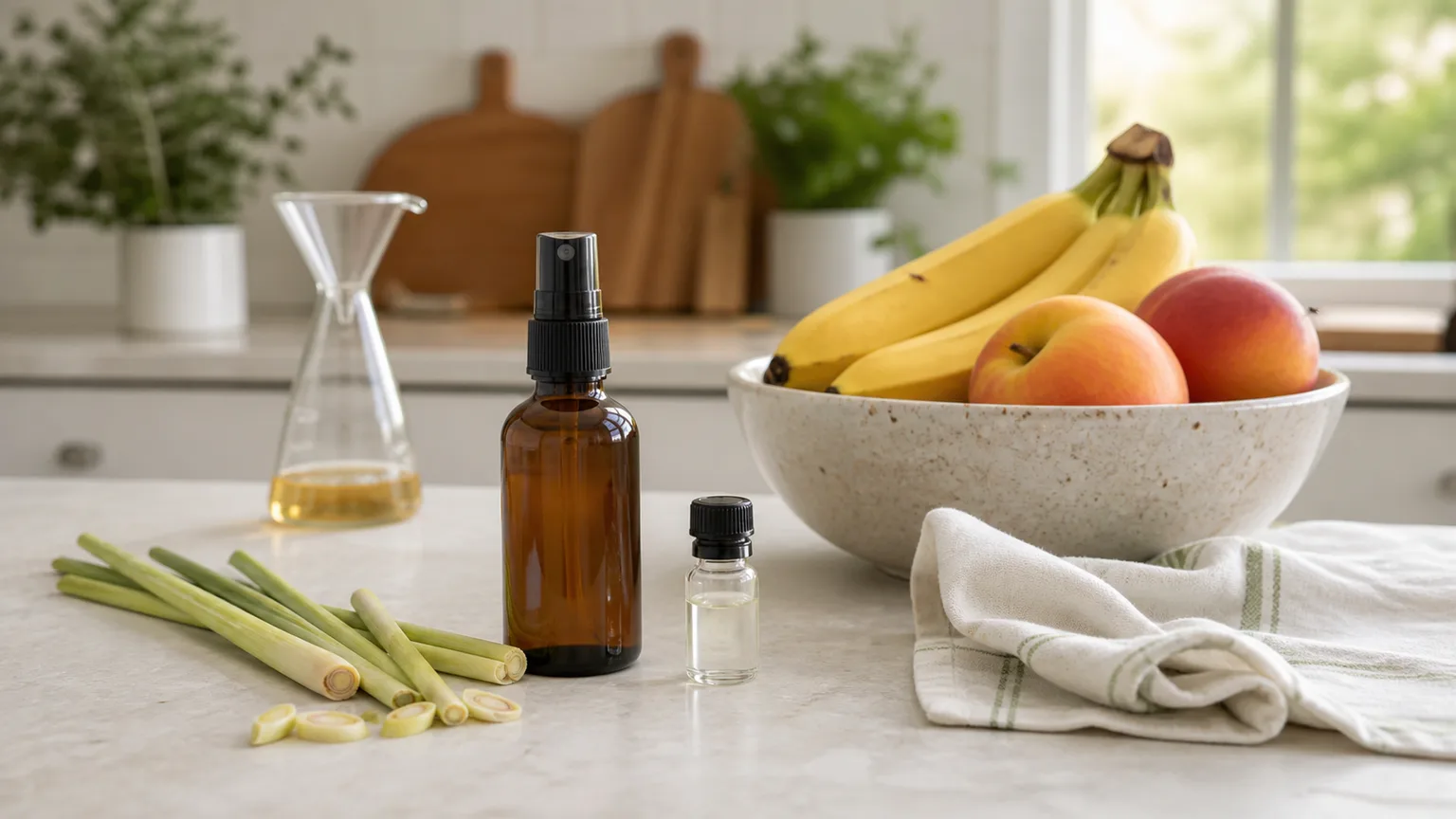
Mix 10 drops of lemongrass essential oil with 2 fluid ounces (60 milliliters) of water in a small spray bottle. Shake vigorously before every use, mist visible fruit flies directly, and wipe the wet area afterward. Because essential oil and water separate, make only a small batch and never assume a surface mist keeps working after it dries.
Then find and remove the fermenting material that is feeding the larvae. Colorado State University Extension identifies source removal as the most important indoor-fly control step and recommends combining sanitation with trapping. If you spray but leave one sticky bottle, bruised onion, or wet trash-can seam behind, new adults can keep emerging.
Make Sure They Are Fruit Flies First
Common kitchen fruit flies are also called vinegar flies and belong to the genus Drosophila. They are tiny—about 1/16 to 1/8 inch long—with tan bodies, darker abdomens, and often red eyes. The University of Minnesota Extension notes that they gather where fruits, vegetables, beer, wine, soft-drink containers, and trash are fermenting.
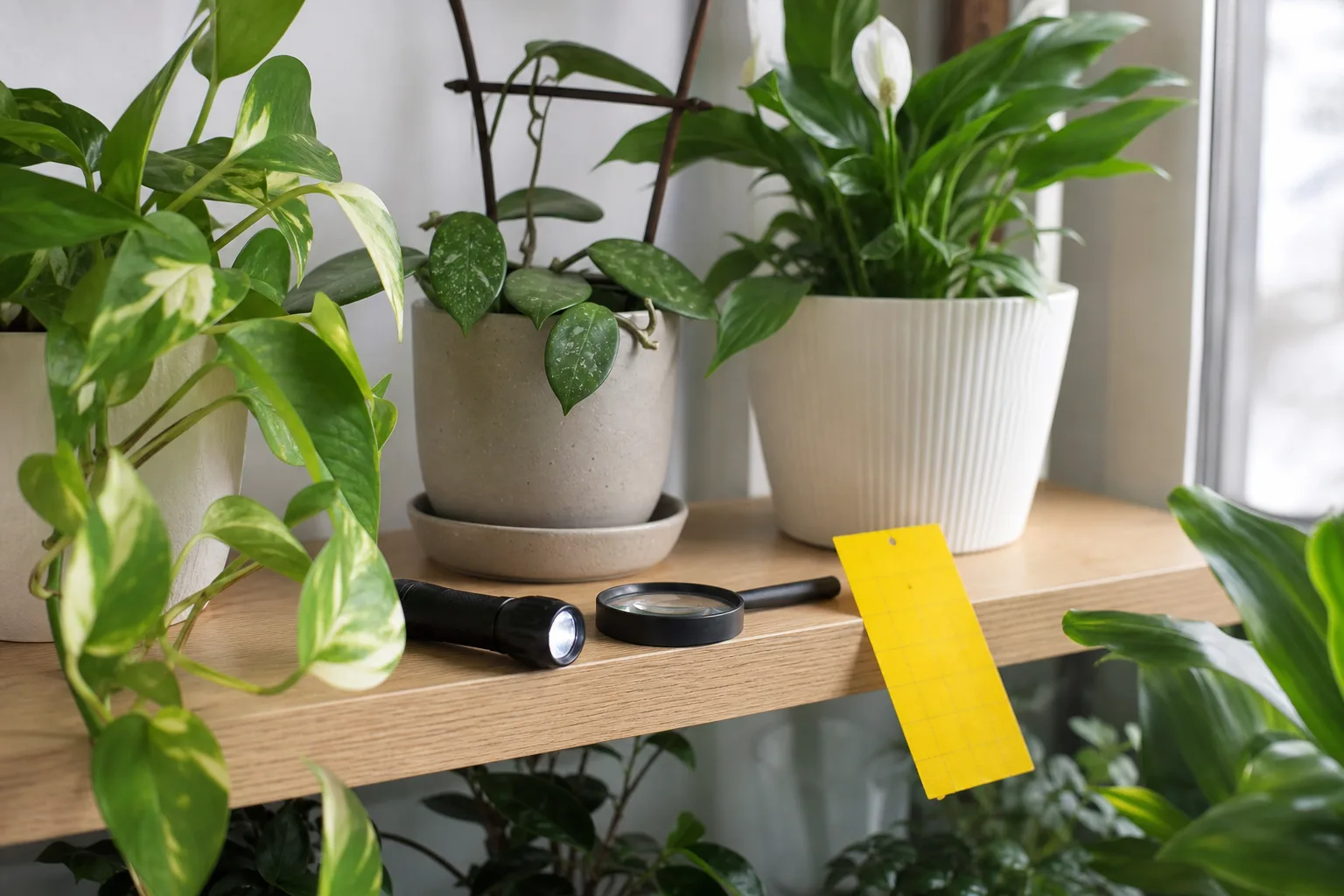
Watch where the insects repeatedly land rather than judging by size alone. Fruit flies make short hovering flights around produce, recycling, wine glasses, and food waste. If they rise from potting mix or rest like tiny fuzzy moths near a drain, you are probably dealing with a different pest and need a different fix.
Fruit Flies vs. Drain Flies vs. Fungus Gnats
| Clue | Fruit fly | Drain fly | Fungus gnat |
|---|---|---|---|
| Typical look | Tan, compact body; often red eyes | Gray or brown, fuzzy, moth-like wings | Dark, slender body with long legs |
| Where it gathers | Produce, drinks, trash, recycling | Sink, shower, floor drain | Houseplant soil and windows |
| Breeding material | Yeast-rich fermenting residue | Bacterial film inside wet plumbing | Damp organic potting mix |
| First control move | Remove fermenting foods and rinse containers | Mechanically scrub slime from the pipe | Let the soil surface dry and correct overwatering |
Do not pour boiling water or random chemicals into a drain just because small flies are nearby. Colorado State explains that hot water and pour-down lye products do a poor job of removing the film that supports true drain flies; brushing the pipe and correcting leaks matter more. For fungus gnats, focus on damp potting mix rather than kitchen counters.
The Two-Ingredient Lemongrass Fruit Fly Spray
The recipe is intentionally small. A water-and-oil spray has no emulsifier or preservative, so it separates quickly and is not meant for long storage. Its practical job is to wet flies at close range while giving the room a citrus-herbal scent—not to sterilize a kitchen or leave a proven residual pesticide coating.
The ratio below also matches established editorial guidance from Better Homes & Gardens. That source describes lemongrass as a deterrent, but the strongest household-management evidence still supports sanitation and trapping. Keeping those claims separate prevents a pleasant scent from being mistaken for complete control.
What You Need
- A clean 2- to 4-ounce spray bottle with a fine mist nozzle
- 2 fluid ounces (60 milliliters) of water
- 10 drops of lemongrass essential oil
- A waterproof label and a clean cloth or paper towel
Use a bottle that has never held bleach, ammonia, pesticides, or other cleaners. Mixing residues can create unsafe chemistry, and an unmarked kitchen bottle is easy to mistake for something else. Label it “lemongrass surface spray—do not ingest,” and keep it out of reach of children and pets.
Step 1: Mix a Small Fresh Batch
Add the water to the bottle, then add 10 drops of lemongrass essential oil. Close the cap and shake for 15 to 20 seconds. Warm water can make the oil seem easier to disperse, but it does not permanently combine oil and water, so there is no benefit to handling near-boiling liquid or pouring it into a bottle that may soften.
Date the bottle and prepare only what you expect to use during the outbreak. If the odor changes, the bottle becomes cloudy in an unusual way, or debris appears, discard the contents and wash the bottle. This is a simple temporary mixture, not a shelf-stable cleaner.
Step 2: Shake, Target, and Wipe
Shake immediately before each use, because the oil rises back to the surface. Aim at one or two resting or slow-flying adults from close range and use the smallest mist that wets them. Wipe up the flies and the spray rather than leaving oily droplets on the counter.
Direct wetting may immobilize or kill a tiny fly, while the strong aroma may discourage landing for a short time. It will not reach larvae inside fermenting food, pupae in crevices, or adults elsewhere in the room. If a fly is over uncovered food, dishes, a flame, or a sensitive surface, skip the spray and use a vacuum, swatter, or trap instead.
For the cleanest direct hit, wait until the fly lands rather than spraying repeatedly into open air. A light-colored sink or bare counter makes both the target and the oily droplets easy to see, but remove dishes and food first. Afterward, wash the contacted area with the cleaner recommended for that surface; wiping alone may spread a thin oil film.
What This Spray Can—and Cannot—Do
The spray is useful for immediate knockdown when several adults are hovering around a cleaned area. It is inexpensive, quick to mix, and easier to direct than an indoor insecticide aerosol. It can also make the cleanup feel less unpleasant if you enjoy lemongrass fragrance.
It cannot eliminate an infestation by itself. Fruit flies develop through egg, larva, pupa, and adult stages, and indoor flies can complete development in roughly a week or two under favorable conditions. Killing five airborne adults while dozens of larvae feed under a trash-can rim is only a temporary visual improvement.
The oil is not a disinfectant substitute, a food-safe produce wash, or a proven all-day repellent at this homemade concentration. The U.S. Environmental Protection Agency’s integrated pest management principles prioritize monitoring, prevention, and the least risky effective control. In a kitchen, that means correcting the breeding condition before escalating to pesticides.
This distinction also explains why a fragrant counter may look clear while the outbreak continues elsewhere. Repelling adults from one landing spot can redirect them to another patch of residue; it does not remove their need to feed and lay eggs. Use the spray after the source audit, not as a way to postpone it.
The 48-Hour Kitchen Reset That Ends the Cycle
Give yourself one focused cleanup pass today and one verification pass tomorrow. The goal is not to make the kitchen look tidy; it is to remove every damp, sugary, yeasty film where larvae can feed. Start near the densest cluster of adults and work outward in a slow circle.
Keep a temporary note of each source you find. If fly numbers drop sharply after one item is removed, you have useful evidence about the origin. If numbers stay flat, keep searching rather than spraying more fragrance into the room.
Remove Every Fermenting Food Source
Refrigerate ripe produce for at least a week, cook or eat it immediately, or discard spoiled pieces in a sealed bag outdoors. Inspect potatoes and onions individually; one liquefying item at the bottom of a basket can support a surprisingly large population. Look under bananas, tomatoes, melons, and countertop compost crocks for leaked juice.
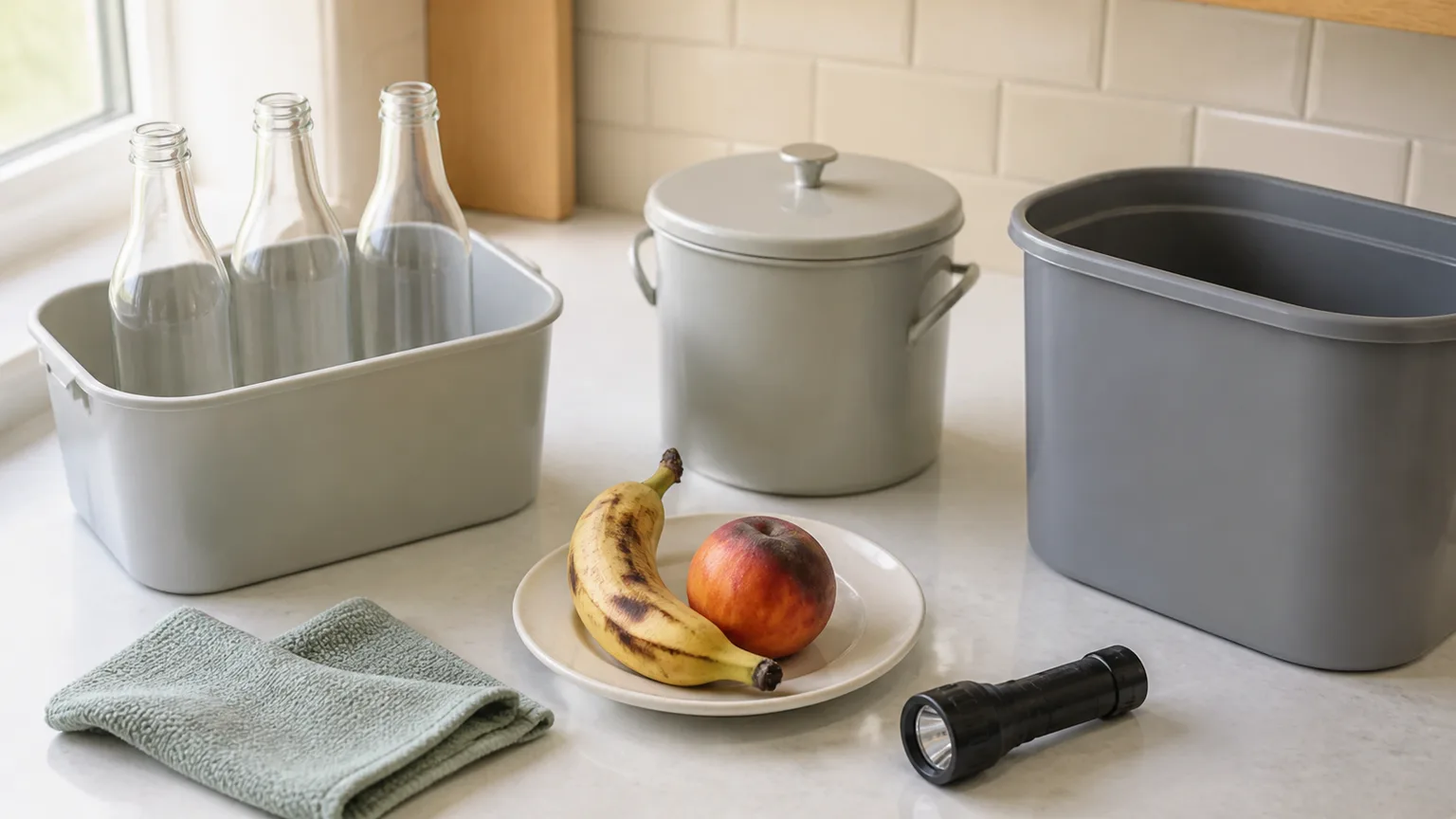
Empty food scraps, rinse the compost container, and move it outside or refrigerate it during the outbreak. Seal wine, beer, kombucha, vinegar, syrups, and juice. Colorado State recommends washing used beverage containers and, during an outbreak, storing recycling outdoors when practical.
Do not forget non-obvious fermenting materials: a wet mop head, smoothie residue under a blender gasket, a lunch bag with a forgotten fruit, spilled soda beneath an appliance, or a damp rag behind the faucet. Fruit flies need only a moist film of suitable organic matter. The source may be much smaller than the swarm suggests.
When no obvious item appears, use the flies themselves as pointers. Turn off fans, stand still for a few minutes, and watch where several adults repeatedly descend. Inspect the nearest seam from low and side angles with a flashlight; dried residue often hides under a lip that looks clean from above. Move one object at a time so you can identify the source rather than scattering it.
Clean the Overlooked Residue Zones
Wash the inside, underside, rim, hinge, and wheel wells of trash and recycling bins with ordinary detergent and water. Pull removable drawer liners and appliance drip trays. Clean beneath the toaster, coffee station, fruit bowl, and can-crushing area, then dry each surface so it does not remain a moist feeding site.
For a garbage disposal, switch off power at the breaker before cleaning accessible rubber splash-guard surfaces. Never put your hand into the grinding chamber. A long-handled brush and the product manufacturer’s cleaning directions are safer than reaching into hidden parts.
Fruit flies may feed on residue near a drain, but a drain is not automatically the source. Cover a dry drain overnight with clear tape placed sticky-side down while leaving a small air gap; flies caught beneath it suggest plumbing-related activity. If fuzzy moth-like flies appear, mechanically scrub the drain walls and inspect for a leak rather than relying on a scented surface spray.
Set a Vinegar Trap for the Remaining Adults
Pour about an inch of apple cider vinegar or red wine into a small jar. Add a paper funnel whose narrow opening sits above the liquid, or cover the jar with plastic wrap and make a few tiny holes. Place the trap beside the former breeding area, not beside fresh produce, and empty it outdoors daily.
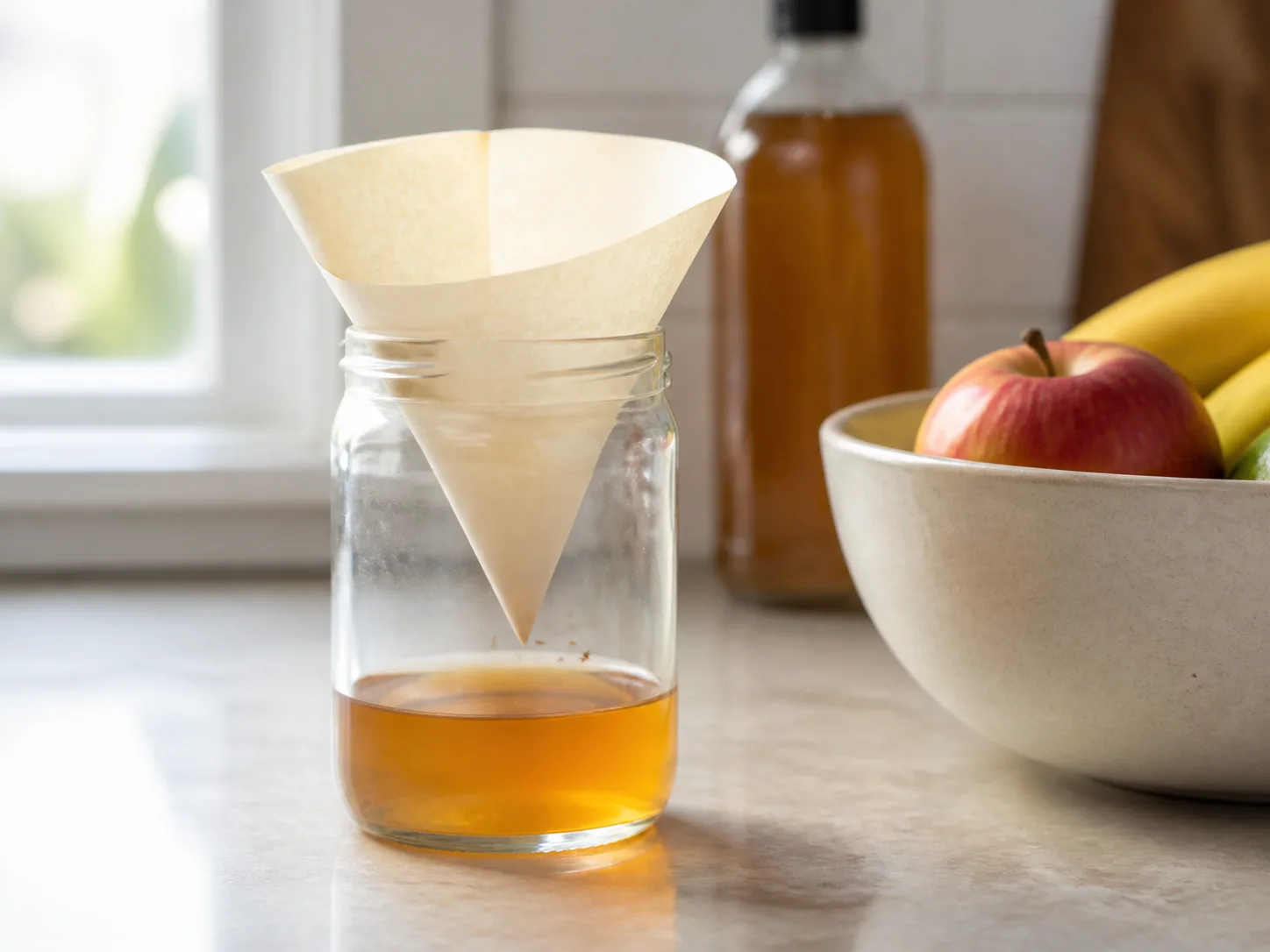
A drop of dishwashing liquid can reduce surface tension and make an open-dish trap more likely to drown flies, but a funnel jar limits spills and exposure. CSU Extension notes that cider vinegar, red wine, and banana-and-beer mixtures can attract adults, while also warning that traps alone do not provide satisfactory control. The trap is a cleanup tool and monitoring device: a falling catch confirms that the source-removal work is succeeding.
Use the same bait volume, jar, and location when comparing catches from one day to the next. Changing from vinegar to wine or moving the trap beside a sunny window makes the count harder to interpret. Record the catch at roughly the same time daily, rinse the jar, and refresh the bait when it becomes diluted, dusty, or full of insects.
Gardener’s Path likewise emphasizes sanitation and refrigeration as indoor control measures. Do not keep “feeding” a trap for weeks while leaving ripe fruit beside it. If the trap catches flies but the daily total never declines, the active breeding source is still present.
Where to Use the Spray and Where to Avoid It
Use the spray only for direct targeting over a washable, nonporous, food-free surface. Patch-test an inconspicuous spot first, then wipe and wash the area according to the surface manufacturer’s instructions. Natural stone, finished wood, painted surfaces, acrylic, and some sealants may discolor or hold oil.
Do not spray it:
- on fruit, vegetables, cutting boards, dishes, utensils, or uncovered food;
- into drains, garbage disposals, electrical outlets, appliances, or ventilation systems;
- near candles, gas burners, pilot lights, or other ignition sources;
- on skin, clothing, bedding, or pet fur;
- where children or animals can lick the wet surface; or
- into the air as a room fragrance.
“Natural” does not mean harmless. The ASPCA advises that concentrated essential oils can be dangerous to pets and recommends keeping them where animals cannot access them. If you have birds, cats, dogs with respiratory disease, very young children, or someone sensitive to fragrance in the home, skip the essential-oil spray and use a vacuum or trap.
Stop using the mixture if it causes coughing, headache, eye irritation, or skin symptoms. Move to fresh air, rinse exposed skin or eyes with water, and contact an appropriate medical or poison-control service if symptoms persist or ingestion occurs. Do not induce vomiting after ingestion unless a professional specifically directs you to do so.
Ventilation matters even when no one has a known sensitivity. Open a window or run an externally vented kitchen fan, keep the nozzle close to the target, and avoid creating a broad airborne mist. Wash your hands after handling the bottle, and clean the nozzle before storage so concentrated droplets do not collect where a child or pet could touch them.
Troubleshooting a Fruit Fly Problem That Will Not Quit
A successful reset should produce a noticeable downward trend, not necessarily instant zero. Adults already present can survive after their breeding food is removed, and pupae may still emerge. Judge progress by fewer flies and a smaller daily trap catch over several days.
If numbers do not fall, pause the spray and diagnose. More product rarely solves a missed source or a mistaken insect identification. The location, flight pattern, and time of day often reveal more than another round of misting.
If Flies Return the Next Morning
Start with the items that were moved but not cleaned: the underside of the fruit bowl, a recycling tote, returnable bottles, the bin cabinet, and the floor beneath appliances. Check the pantry for cracked potatoes or onions and inspect reusable grocery bags. Wipe the bottle necks and caps of vinegar, wine, and sweet sauces.
Then expand beyond the kitchen. Look at bathroom trash, bar carts, pet-food mats, home-brewing equipment, lunch boxes, and indoor compost. A trap can help map the source: place two identical traps in different rooms for one night, then focus your inspection where the catch is higher.
Avoid moving traps repeatedly during the same test because that muddies the result. Once you find the source, remove it, clean the surrounding seams, and reset a single monitoring trap. A steady reduction over the next few days is more meaningful than one fly-free hour after spraying.
If the Flies Cluster Around a Drain or Plant
Tiny dark flies that run across potting mix and rise when a pot is disturbed are usually fungus gnats. Let the upper potting mix dry as the plant tolerates, empty saucers, and correct chronic overwatering. Spraying kitchen surfaces will not affect larvae in soil.
Fuzzy, triangular-winged insects resting near a sink are more consistent with drain flies. Brush the inner drain surface to remove bacterial film, clean the overflow channel if accessible, and repair leaks that keep cavities wet. Never mix drain cleaners, bleach, vinegar, ammonia, or other chemicals.
If true fruit flies remain concentrated at a drain after the rest of the kitchen is clean, inspect the disposal splash guard, strainer basket, overflow, and nearby trash for food residue. Consider a plumber or licensed pest professional when flies appear from wall voids, a floor drain, or an area with sewage odor, persistent moisture, or a suspected broken pipe.
Keep Fruit Flies From Coming Back
Prevention is a short routine, not a deep clean every day. Refrigerate very ripe produce, rotate older fruits forward, and inspect bulk potatoes and onions weekly. Rinse beverage cans and bottles immediately, keep trash and compost covered, and take wet food waste outdoors before it ferments.
At the grocery store, avoid produce with split skins, leaking juice, or flies already hovering nearby. Once home, separate bruised pieces from sound fruit and use them first. Washing produce does not make a rotten item suitable for counter storage, and leaving freshly washed fruit wet in a closed bowl can create another moist environment.
Dry mops, sponges, and cloths between uses. Wash bin seams before residue becomes visible, and wipe sweet spills beneath the bottle as well as around it. During warm harvest periods, reduce the amount of ripe fruit held on the counter and use smaller bowls that turn over quickly.
Keep one clean, dry trap jar stored away rather than leaving active bait out indefinitely. If you spot two or three fruit flies, inspect produce and recycling that day; early source removal is easier than treating a multi-generation outbreak. The fastest long-term control is denying them a nursery, not finding a stronger scent.
In apartment buildings, shared recycling rooms, trash chutes, or neighboring units may contribute adults even after your kitchen is clean. Seal food, use intact window screens, and report persistent common-area sanitation or plumbing issues to building management. Your trap count should still decline when your own unit no longer offers breeding material.
Conclusion
The lemongrass spray earns a place as a small-batch contact tool: it is quick to mix, pleasant-smelling to many people, and useful for knocking down visible adults over a washable surface. Its limit is just as important as its appeal. It does not reach the immature stages or replace sanitation.
For a result that lasts, pair every spritz with source removal and a vinegar monitoring trap. Identify the fly correctly, clear fermenting residue, protect food and pets, then watch for a steady decline over the next several days. That is the difference between making the kitchen smell fresh and actually ending the fruit fly cycle.