How to Remove Turmeric Stains From Clothes & Home
Turmeric on fabric, plastic, carpet, or stone? Choose the right first move, avoid heat and damaging cleaners, and know when it is safe to repeat or stop.
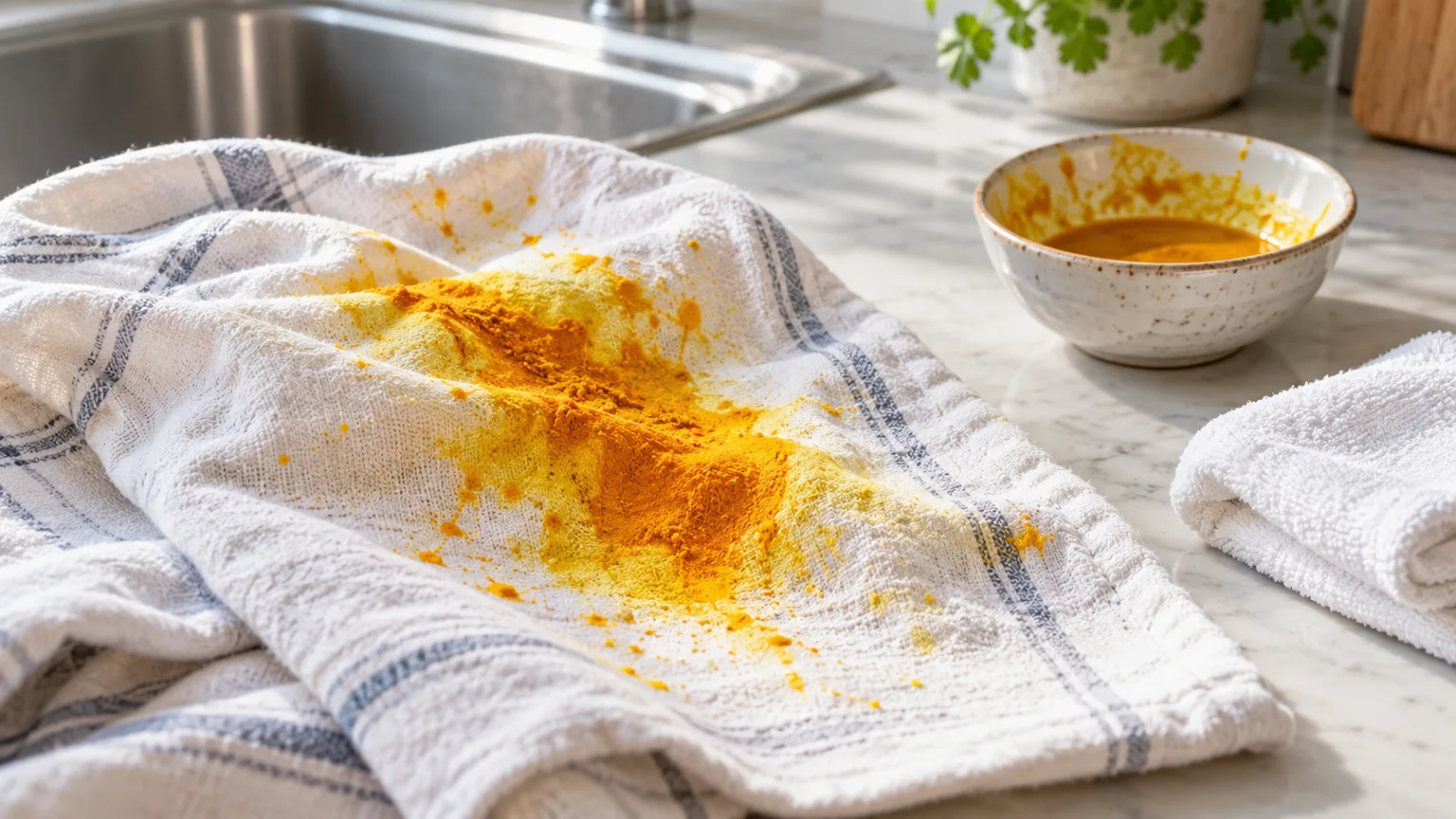
Turmeric can leave a bright yellow-orange mark on a shirt, carpet, food container, or counter, and one cleaner does not suit all of them. A washable cotton napkin can be rinsed through from the back; a marble counter can be etched by an acidic “natural” remedy; a carpet can develop a larger ring if it is soaked. The safest first move is to identify the surface, lift loose material, and use the smallest amount of a compatible cleaner.
The stain itself may also be a mix. Dry turmeric powder behaves differently from fresh turmeric root or curry sauce, which can add moisture, oil, and other food ingredients. Curcumin, turmeric’s best-known yellow pigment, has poor water solubility and can break down under light, according to peer-reviewed research; that helps explain why a quick rinse may not be enough and why sun exposure can fade both a mark and the material around it. Research on curcumin’s properties does not establish a guaranteed stain-removal method, so treat any light-based approach as a cautious last step rather than a cure.
Start with the surface, not a cleaning hack
Before reaching for vinegar, baking soda, bleach, or peroxide, ask three questions: What is the material? Is the mark dry powder, a wet splash, or oily sauce? Has anyone already applied heat or another product? Those details determine whether to brush, blot, rinse, or stop and call a cleaner.
| Stained item | Lowest-risk first move | Main risk to avoid |
|---|---|---|
| Washable garment or linen | Lift solids, then rinse the stain from the back with cool water | Dryer heat before the color is gone |
| Carpet or upholstery | Lift solids and blot with a clean white cloth | Flooding the backing, pad, or cushion |
| Plastic food container | Wash with dish soap; use a gentle, compatible soak if needed | Abrasive scrubbing or unapproved bleach |
| Counter or cabinet | Start with a damp microfiber cloth and mild dish soap | Acid on calcareous stone or abrasion on a finish |
The table is a starting point, not permission to ignore a care label. A removable cushion cover may be washable, but its insert may not be; a white shirt may still have colored trim that reacts to bleach. If the surface is valuable, unlabelled, or unfamiliar, test a hidden spot before treating the visible mark.
First response: lift powder and blot sauce
If the spill is dry turmeric powder, do not wet it immediately. Tilt a washable item over a trash bin and gently shake it, or lift powder from a counter with a dry microfiber cloth or soft brush. On carpet, use a hose attachment held just above the pile to pick up loose powder; avoid pressing a vacuum head or brush roll into the spot.
For curry sauce or wet turmeric, lift any thick solids with a spoon or the dull edge of a butter knife. Keep the utensil nearly parallel to the surface so you do not scrape fibers or push the sauce deeper. Then press a clean white cloth or paper towel straight down and lift it; use a fresh section each time, working from the outer edge toward the center.
Do not rub in circles. Rubbing can spread the colored liquid across a larger area, drive particles into a textile, or roughen a delicate finish. If the spill contains oil, use an absorbent white towel to pick up as much as possible before applying detergent; a powder-only turmeric mark does not need an oil-absorption step.
Remove turmeric from washable clothes and linens
For a washable shirt, tablecloth, napkin, or towel, the goal is to remove loose pigment and any greasy food residue before a full wash. Check the care label first, then place the stained area over a basin so the rinse water does not run across clean fabric. The garment’s permitted wash temperature and bleach instructions still govern even if a stain-removal product suggests a stronger treatment.
Pretreat, rinse, wash, and inspect
For a sauce stain that feels oily, blot away the surface grease, then apply a small drop of liquid dishwashing liquid or liquid laundry detergent directly to the dry mark. Gently work it across the stained fibers with fingertips or a soft cloth and let it sit for the product’s stated dwell time. A brief pretreatment targets the oily portion of curry; it does not replace laundering.
For a powder stain or a mostly water-based splash, first shake or lift off solids, then rinse the fabric from the back with cool running water. This pushes loosened color out through the side it entered instead of through the cleaner face of the fabric. If the spot still feels greasy after rinsing, use a little liquid detergent and repeat the rinse.
Wash the item using the cycle and temperature allowed by its care label, with the usual dose of detergent. Avoid adding several household ingredients at once: vinegar, baking soda, dish soap, bleach, and laundry detergent have different jobs, and combining them makes it harder to tell what is helping or harming the fabric. Expert cleaning guidance from Reader’s Digest also emphasizes detergent pretreatment, a cool rinse, and checking the mark before machine drying.
Before using a dryer, inspect the fabric in bright light while it is still damp. Look at both sides and check for a faint yellow halo, not just the darkest center. If any color remains, repeat the compatible pretreatment and wash rather than drying it; heat can make a remaining mark more difficult to remove.
Rework an old stain without setting it
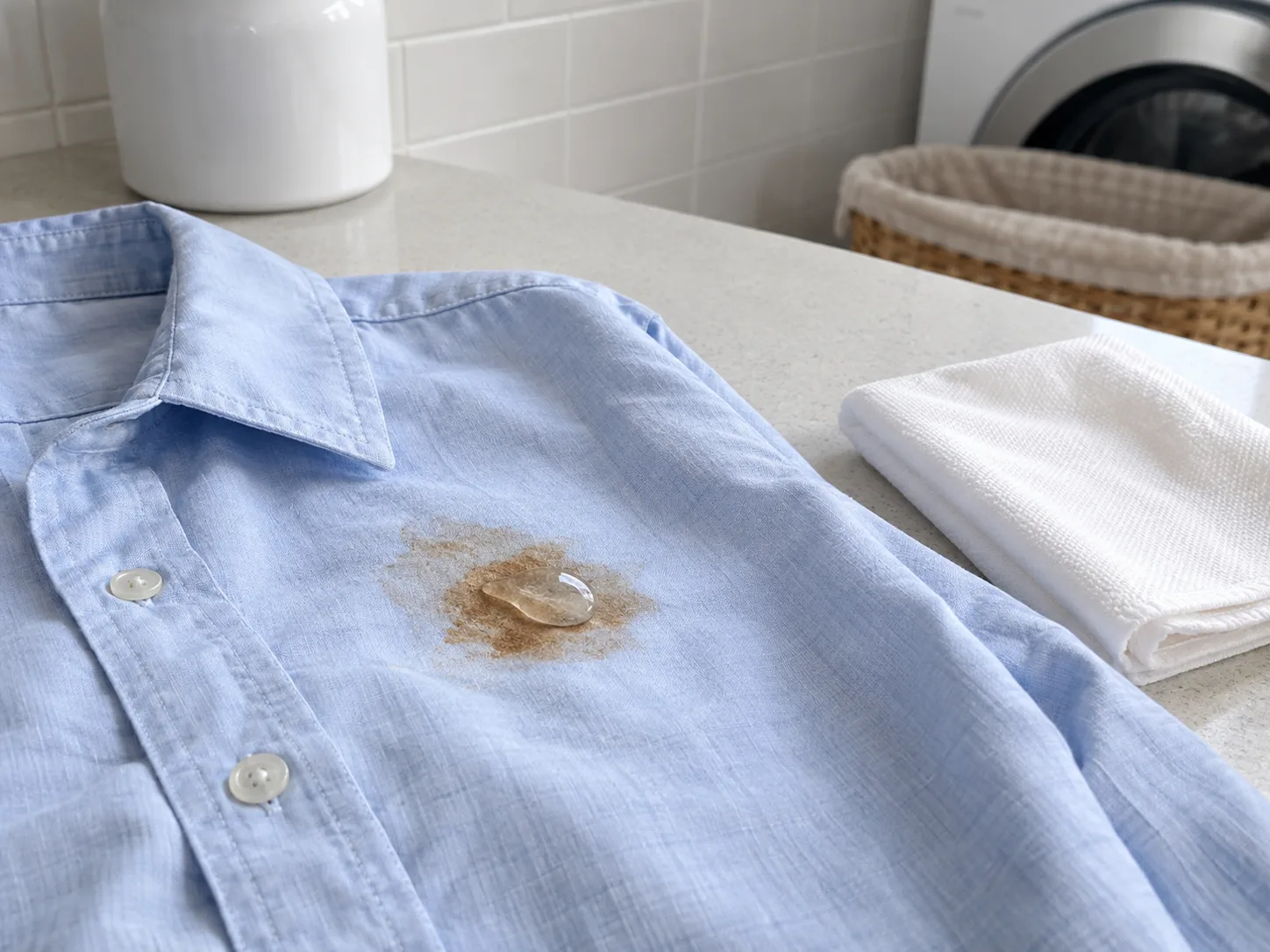
A dried turmeric spot is not automatically permanent. Rewet a washable fabric with cool water, let the fibers soften for a few minutes, then blot or rinse from the back. Apply liquid detergent or a fabric-safe stain remover according to its label, wash as directed, and air-dry while you check the result.
If the item has already been washed and dried, a second attempt may still lighten the stain, but set expectations: heat may have fixed some of the color or altered the dye. Repeat only a label-compatible treatment; do not compensate with more heat, a longer unapproved soak, or a stronger concentration. If you see dye transferring to a white cloth or the fabric’s color changing, rinse and stop.
For sturdy white cotton or colorfast fabric, an oxygen-bleach product may be an option if both the garment and product labels allow it. Follow the product’s dilution and soak limits, and test an inside seam first. Oxygen bleach is not automatically safe for silk, wool, prints, elastic, embroidery, or every “bright” color.
Protect delicate, dry-clean-only, and colored fabrics
For silk, wool, a structured jacket, vintage cloth, beaded fabric, or anything marked dry-clean only, lift solids and blot liquid without adding a home remedy. Water, dish soap, peroxide, baking soda, or rubbing alcohol can leave a ring, alter a finish, or affect dye even when the stain looks small. Take the item to a professional cleaner and describe whether the spill was dry turmeric, fresh root, or curry sauce.
On colored washable fabric, the hidden-area test matters more than the stain’s size. Dab a small amount of the intended cleaner on an inside seam, wait until it dries, and check for fading, color transfer, stiffness, or a ring. If the test changes the material, do not use that cleaner on the visible stain; use the care label’s routine wash method or seek professional help.
Sunlight sometimes fades turmeric color, but it can fade the garment too. A peer-reviewed paper reports that curcumin is light-sensitive, while the same light exposure can also alter textile dyes. If you try air-drying outdoors, use it only for a washable, colorfast, light-colored item, check it frequently, and move it out of direct sun if the fabric starts to lighten unevenly.
Treat carpet and upholstery with less moisture
Carpet and upholstery are layered materials, so the challenge is not only loosening pigment but also extracting the liquid and cleaner. A wet carpet spot can transfer color to the backing or pad; a soaked cushion may dry slowly and develop a ring. The expert methods summarized by Reader’s Digest and The Kitchn support quick action, gentle handling, and testing on an inconspicuous area.
Read the carpet or furniture maker’s care instructions before applying water or a stain remover. If you cannot find them, treat the material as delicate: remove what you can dry, blot gently, and avoid spraying an unknown cleaner directly onto the fibers. For silk rugs, antiques, wool upholstery, large spills, or a valuable piece, calling a specialist early is usually safer than testing multiple household products.
Blot the stain without spreading it
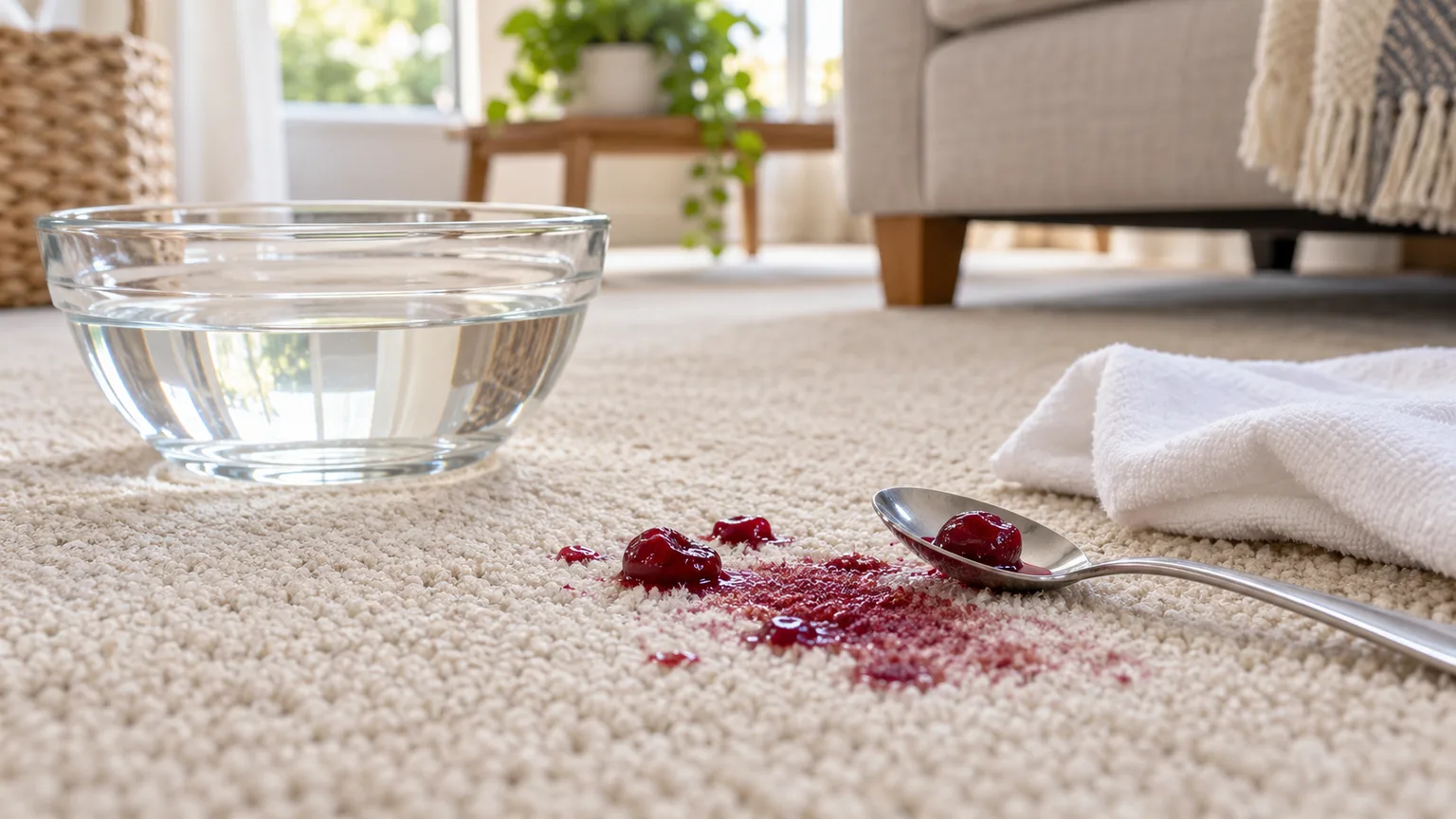
For dry turmeric powder on carpet, lift it with a spoon or vacuum hose held just above the pile. For curry sauce, pick up thick solids first, then press a white towel into the stain to absorb liquid. Work from the edges inward and change to a clean part of the towel as it picks up color.
If the care instructions permit water-based spot cleaning, mix a small amount of mild, clear dishwashing liquid with cool water. Dampen a white cloth with the solution, squeeze it so it is not dripping, and dab the stain. Use repeated light passes instead of scrubbing; stop adding solution when the towel no longer collects color.
Treat upholstery the same way, but with even less liquid. Apply the solution to the cloth rather than the cushion, and avoid pushing down hard enough to wet the foam underneath. If a cushion cover is removable, do not unzip it unless its label says it can be washed; covers can shrink or become misshapen.
Rinse away cleaner and dry thoroughly
After the color stops transferring, use a second cloth barely dampened with plain water to pick up detergent residue. Then press a dry white towel into the area to absorb moisture. Cleaner left in carpet can attract soil; excess water can leave a ring or reach the pad, so the rinse-and-blot step is not optional.
Let the spot dry with ordinary room airflow. Do not use a steam cleaner, hair dryer, iron, or heater on a turmeric stain; they add heat before you know whether the pigment is gone. Once the area is completely dry, inspect it from more than one angle. If a shadow remains, repeat one compatible cleaning pass rather than layering vinegar, peroxide, alcohol, and bleach.
If the affected area grows, a colored halo appears, or the cushion remains damp after blotting, stop. A professional can extract moisture and choose a method for the fiber and backing. Take a photo before treatment and tell the cleaner exactly which products were applied; that information can prevent an incompatible next step.
Clean stained dishes and food containers
Turmeric can leave a yellow cast on plastic, melamine, glass, ceramic, and glazed dishes, especially when it is mixed into oily curry. Start by washing off food and grease with dish soap and warm water if the item’s care instructions allow it. For dishwasher-safe plates and bowls, a normal dishwasher cycle is a sensible first pass; do not use a scouring pad just because the stain persists.
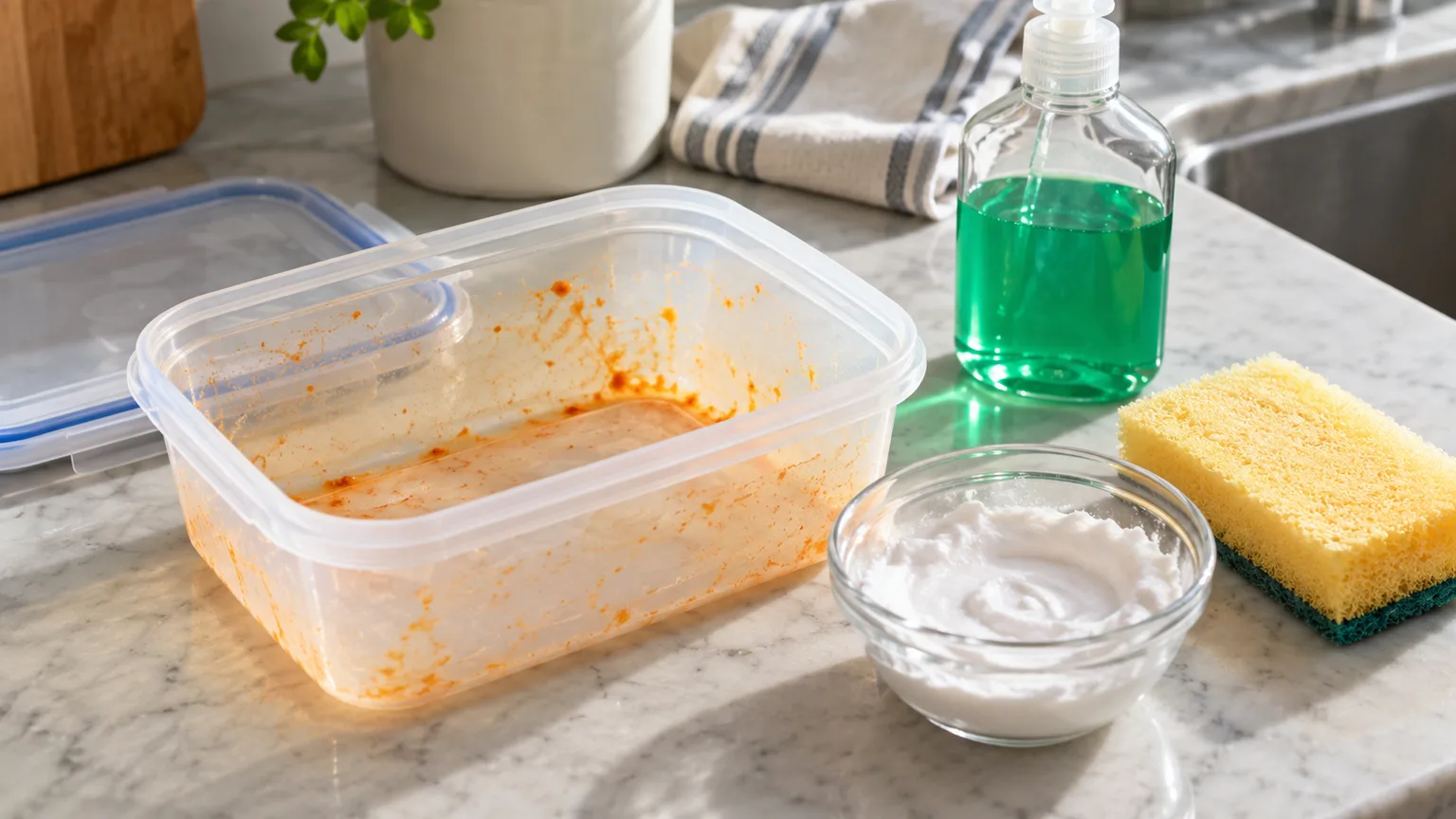
Plastic containers need a more patient approach because scratches and wear can hold color. Fill the container with warm water and dish soap, let it soak, then wash with a soft sponge. For a remaining mark, use a small baking-soda paste only if the container’s maker permits mild abrasives, rub lightly with a non-scratch cloth, and rinse thoroughly. Baking soda may dull or scratch a soft plastic or decorative surface, so patch-test the underside first.
For glass or glazed ceramic, repeat normal dishwashing or use a gentle, nonabrasive cleaner approved for the item. Do not put a bleach solution in a food container unless the product label specifically permits that use and explains the required dilution and rinse; never mix bleach with another cleaner. If plastic remains yellow but is clean, the pigment may have penetrated or discolored the material rather than leaving removable food residue. Replacing a heavily worn container is safer than scrubbing until its surface becomes rough.
Remove turmeric from counters, cabinets, and floors
On a sealed counter, tile, or other washable hard surface, first lift any dry powder with a dry cloth. For wet sauce, pick up solids, then wipe with a damp microfiber cloth and a small amount of mild dish soap. Rinse with clean water and dry the surface; do not leave a cleaner film to dry in place.
If a yellow mark remains on a compatible surface, use a gentle cleaner only after testing a hidden area. A paste of baking soda and water can be mildly abrasive, so it is not a universal countertop treatment. The Natural Stone Institute’s care guidance recommends mild dish detergent or neutral stone cleaner, thorough rinsing, and avoiding acids and scouring products that can etch or scratch some stone.
Match the cleaner to the surface
For laminate, sealed quartz, glazed tile, and many solid-surface counters, begin with the surface maker’s approved cleaner or diluted dish soap on a soft cloth. Keep the cloth damp rather than wet at seams, edges, and joints. If the counter still shows color, repeat a gentle pass and rinse before trying any other product.
For painted cabinets, finished wood, or a floor with a protective coating, avoid soaking and avoid rubbing hard. Use a barely damp cloth, wipe along the grain when applicable, and dry promptly. Alcohol, bleach, abrasive powders, and citrus-based cleaners may dull or strip some coatings even if they remove the pigment. When the manufacturer lists a specific cleaner, use that rather than improvising.
Keep acids and abrasives off vulnerable stone and finishes
Do not use vinegar, lemon juice, or another acidic cleaner on marble, limestone, travertine, or other calcium-based stone. Acid can etch the polished surface, leaving a dull spot that looks like a stain but is actually a change in the finish. The Natural Stone Institute notes that even stone types that tolerate many kitchen acids can contain acid-sensitive minerals, so a neutral stone cleaner is the conservative choice.
Avoid scouring powder, a rough sponge, or a melamine foam eraser on polished stone and delicate finishes. They can scratch or change the sheen while the yellow mark is still present. If turmeric has soaked into unsealed stone, grout, unfinished wood, or a cracked surface, surface wiping may not reach it; ask the installer or a stone or flooring professional before applying peroxide, bleach, or a poultice.
What helps—and what can make the stain worse
The most useful tools are simple: a spoon for solids, clean white cloths to reveal color transfer, cool water for washable textiles, a mild detergent, and a soft nonabrasive sponge. A white cloth avoids transferring dye from a colored towel, and a small bowl helps you mix only the solution you need. Wear gloves if your hands are sensitive to cleaners, and follow each product label.
Dishwashing liquid is useful when oily curry sauce is part of the spill because it helps lift grease. Laundry detergent or a fabric-labeled stain remover is the better fit for a washable garment. A mild neutral cleaner is the safer choice for carpet and stone; the right product depends on the material, not on whether its label promises to remove every kind of stain.
Skip aggressive “hacks” that combine ingredients. Baking soda and vinegar fizz, but mixing them neutralizes much of their cleaning action and does not make a better turmeric treatment. Never combine cleaning products; rinse a surface before changing products, and do not combine bleach with ammonia or any other cleaner. The Natural Stone Institute specifically warns that bleach and ammonia can create toxic gas.
Heat, hard scrubbing, and excess liquid cause predictable setbacks. Dryer heat can make a remaining fabric mark tougher; scrubbing can spread pigment and damage pile or a finish; excess water can move a spot into padding. More product is not automatically more effective—especially on carpet, upholstery, plastic, and stone.
If a yellow shadow remains, escalate carefully
First let the item dry naturally enough to see what remains. A stain can look larger while wet, and a damp fabric can hide a pale halo. Check the reverse side of a garment and the edges of a carpet spot before deciding whether you need another treatment.
For washable, sturdy fabric, repeat the same detergent pretreatment once, then wash according to the label. If the care label permits oxygen bleach, use a product specifically designed for laundry and follow its instructions; do not guess a concentration or substitute chlorine bleach on a colored item. A white, bleach-safe cotton may have additional options, but the garment tag and product label must both allow them.
For carpet, upholstery, stone, or wood, repeat only if the first test showed no color or finish change and you can fully remove the cleaner. If an oil halo remains after the yellow color fades, treat it as a separate grease residue only with a product labeled for that material. One measured re-treatment is more controlled than switching repeatedly among vinegar, peroxide, alcohol, and bleach.
If color transfer stops but a light mark remains, the turmeric may have changed the dye, finish, or material rather than sitting on top of it. Cleaning cannot reverse every discoloration. When a second careful attempt produces no improvement—or the material begins to look rough, faded, or ringed—stop and get material-specific advice.
When to stop and call a professional
Use a professional cleaner for a dry-clean-only garment, silk or wool textile, antique rug, upholstery with unclear care instructions, or any item whose replacement would be costly. Also stop if the stain covers a large area, has reached carpet padding or cushion foam, or persists after a couple of label-safe attempts. A professional can identify the fiber and choose a controlled treatment instead of relying on a household guess.
For natural stone, unfinished wood, or a painted surface with a dull or etched patch, contact the installer, manufacturer, or restoration specialist. A mark that remains after the pigment is gone may be finish damage, not dirt. Describe every cleaner used and whether the area was exposed to heat; do not try to conceal the change with polish or another chemical first.
Conclusion
To remove turmeric stains, begin by lifting dry powder or blotting wet sauce, then match the treatment to the item. Pretreat oily food residue on washable fabric, rinse from the back, wash by the care label, and check the stain before drying. On carpet and upholstery, use a small amount of compatible solution and blot away both color and cleaner.
For dishes and counters, start with mild soap and a soft cloth, then be especially cautious with plastic, natural stone, and finished surfaces. Repeat a safe method once if it is helping; stop if color, texture, or finish changes. Turmeric can be stubborn, but a careful first response gives you the best chance of lifting the mark without creating a second problem.