Turmeric Care Guide: Light, Water & Rhizomes
Curcuma longa
Turmeric needs warm humid growth, rich moist soil, and frequent watering in containers. Grow Curcuma longa for Haldi rhizomes; rest dry after foliage dies back.
Turmeric Care Guide: Light, Water & Rhizomes
Start with wateringThe most common care mistake for TurmericWatering guide →Turmeric care essentials
Light
Water
Keep the mix consistently moist during active growth—water every 2–4 days in hot weather when the top 2–3 cm begins to dry. Containers need frequent soaking. Reduce sharply once foliage yellows and the plant enters dormancy; do not keep rhizomes sodden through cool rest.
Soil
Rich, high-organic potting mix that stays moist but drains—roughly 50 % quality potting soil, 30 % compost, and 20 % perlite or coarse sand. Prefers slightly acidic to neutral soil; pH about 5.5–7.0.
Humidity
High (60–80%); monsoon-style moisture suits Indian summers
Temperature
about 18°C to 29°C (65–85°F) while growing; protect below about 10°C and store rhizomes if frost is expected
Fertilizer
Feed lightly every 3–4 weeks with balanced liquid fertilizer or compost tea during active leaf growth, and stop once foliage begins to senesce toward harvest.
About Turmeric
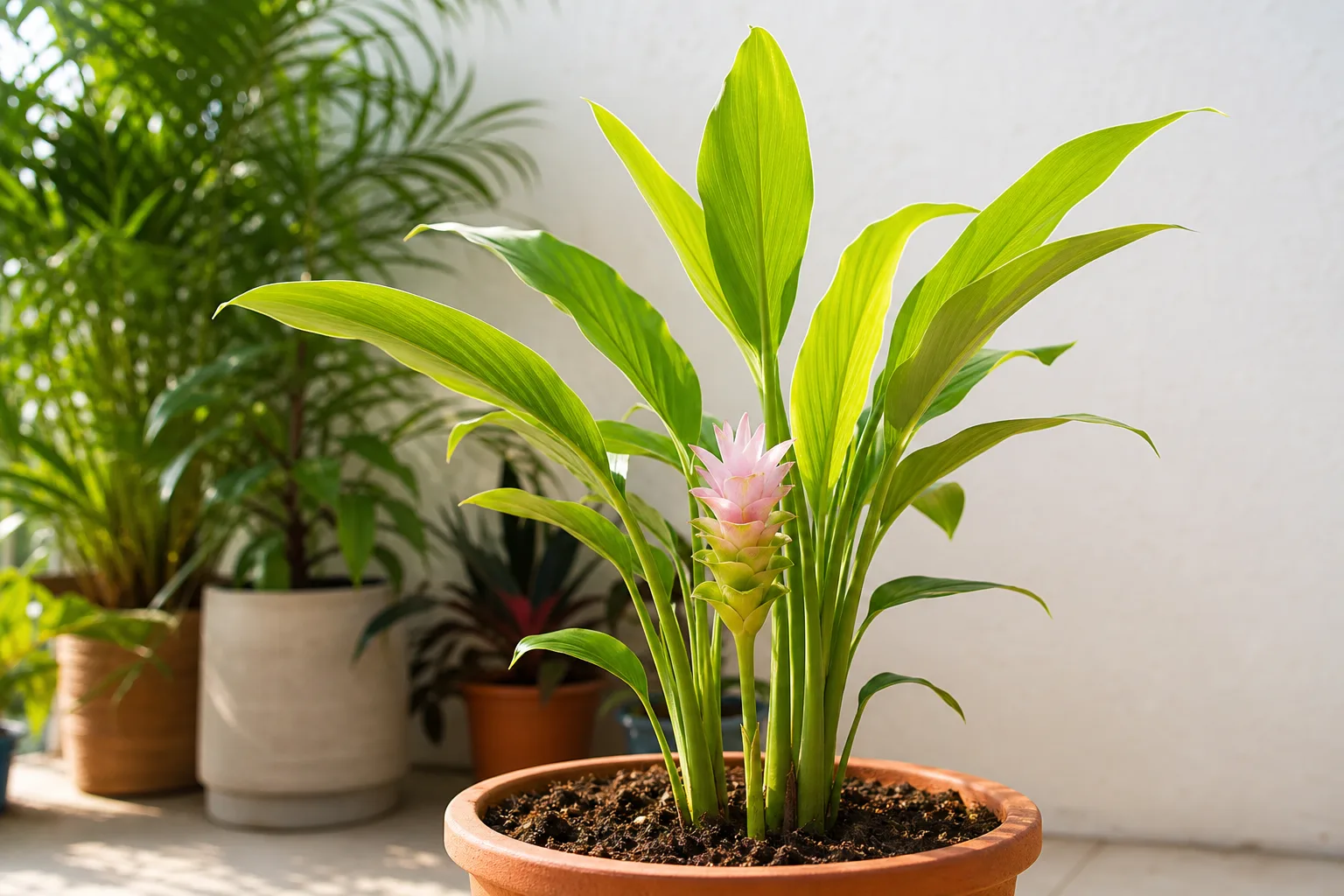
Turmeric is native to Tropical southwestern India (widely cultivated across South and Southeast Asia), typically reaches 90–120 cm (3–4 ft) tall and wide; leaves up to about 100 cm long indoors, with moderate to fast in hot, humid monsoon-style conditions growth. Turmeric has a upright growth habit and part of the Zingiberaceae family. It is also known as Haldi, Common Turmeric, Indian Saffron, and Curcuma domestica.
| Detail | Information |
|---|---|
| Also known as | Haldi, Common Turmeric, Indian Saffron, Curcuma domestica |
| Native region | Tropical southwestern India (widely cultivated across South and Southeast Asia) |
| Mature size | 90–120 cm (3–4 ft) tall and wide; leaves up to about 100 cm long |
| Growth rate | Moderate to fast in hot, humid monsoon-style conditions |
| Growth habit | Upright |
| Scientific name | Curcuma longa |
| Family | Zingiberaceae |
Turmeric Care Guide: Light, Water & Rhizomes
Turmeric care starts with one honest framing: Curcuma longa is a monsoon-loving ginger-family rhizome grown for orange underground stems—not a dry-soil windowsill foliage plant. Get placement right—warm humid growth, morning sun with afternoon shade (or bright partial shade), and a rich mix kept consistently moist while leaves expand—and the rest of the routine becomes predictable. Treat it like a cactus or a dim-room houseplant, and you will see stalled shoots, spider mites, or soft rotting rhizomes long before fertilizer helps.
This overview covers identity, mature size, light, water, soil, temperature, feeding, harvest, propagation basics, common mistakes, and pet notes. Use it as the hub, then open the sibling guides when you need depth on one topic.
What Is Turmeric?
Turmeric—also sold as Haldi, Common Turmeric, and Indian Saffron—is an upright rhizomatous perennial in the family Zingiberaceae, the same family as ginger and cardamom. Kew’s Plants of the World Online treats Curcuma longa as a cultigen from southwestern India—a rhizomatous geophyte of seasonally dry tropical climates that humans have selected and carried widely. NC State Extension notes that India remains the largest producer, consumer, and exporter, which matches how most Indian home growers think of Haldi: a kitchen spice and a garden crop first.
If you are deciding whether the Turmeric plant hub fits your home, match the plant to a warm terrace, balcony, or bright patio first. It is a poor fit for cold rooms, chronic drought, and tiny pots that thick rhizomes will split.
Botanical Identity and Common Names
The accepted botanical name is Curcuma longa L. Older labels sometimes still say Curcuma domestica; for care purposes those usually mean the same crop plant. Missouri Botanical Garden describes it as a tropical rhizomatous herbaceous perennial with canna-like, pleated leaves and short dense spikes of pale yellow flowers in summer. Penn State Extension adds that the flowers are sterile and do not produce viable seed—so home growers multiply turmeric only by dividing rhizomes.
The thick, branched underground stems are the edible and dye-bearing part. After boiling, drying, and grinding they become the bright yellow-orange spice. Fresh rhizome juice stains hands, counters, and fabric—wear gloves when cutting. Named Indian cultivars (for example Co 1, BSR types, and IISR selections listed by TNAU Agritech) differ mainly in yield and processing quality rather than in basic warmth and moisture needs.
Mature Size in Ground vs Containers
In open ground or a large bed, turmeric commonly reaches about 90–120 cm (3–4 ft) tall and wide. NC State lists height and width in that range, with leaves up to about 40 inches long and roughly 8–12 leaves per shoot. UF/IFAS Gardening Solutions similarly describes plants that grow to about three feet with broad oblong leaves.
In containers, expect a similar foliage height if the pot is wide and deep enough, but rhizomes thicken fast. Penn State warns that rhizomes get thick and may need frequent repotting, and Missouri Botanical Garden notes thick rhizomes can split open a pot. Plan on Turmeric repotting every one to two years, or sooner when rhizomes press the walls or the mix disappears between crowded pieces.
Best Growing Conditions for Turmeric
Four variables decide almost every outcome: light, warmth and humidity, soil that stays moist but drains, and a watering rhythm that follows growth then dormancy. Align those four and feeding, harvest, and division become routine. Misalign any one—especially cool wet soil or bone-dry pots in heat—and the plant stalls or rots no matter how much compost tea you pour on.
Light and Placement
Turmeric prefers full sun to part shade, with the best home pattern being morning sun and afternoon shade—or bright partial shade on a hot terrace. NC State and Missouri Botanical Garden both favor hot, humid summers with morning sun and afternoon shade. Harsh midday scorch on thin new leaves can bleach edges; deep shade produces weaker clumps and slower rhizome swell.
Indoors, only a very bright sunroom or greenhouse-level exposure works long term. A dim living-room corner will not deliver culinary-quality growth. For window choice, seasonal intensity, and warning signs of too little or too much sun, use the dedicated Turmeric light guide.
Temperature, Humidity, and Dormancy
Turmeric is a hot-climate crop. Missouri Botanical Garden places native southwestern India temperatures around 65–85°F (about 18–29°C) in moist humid conditions, and lists USDA hardiness roughly zones 8–11. That maps well to most Indian plains monsoons; young container plants still need protection from dry wind extremes and sudden cold snaps.
The growth cycle follows monsoon logic: shoots expand in warm wet weather, then foliage yellows and the plant becomes dormant when soils dry after the wet season. UF/IFAS notes that turmeric dies back during winter freezes but returns in late spring where winters are mild. Protect pots before frost; in cooler Indian winters or temperate climates, dig and store rhizomes in barely moist sawdust, peat, or vermiculite in a cool dry place, or overwinter the whole container indoors with reduced water.
Soil, Drainage, and pH
Turmeric wants rich, high-organic soil that stays moist but not sour. NC State prefers rich, slightly acidic soils with medium to wet moisture and good drainage. TNAU describes ideal field conditions as friable, well-drained red loamy soil under tropical rainfall—useful context even if you grow in a pot rather than a ridge-and-furrow bed.
A practical pot mix is about 50% quality potting soil, 30% compost, and 20% perlite or coarse sand, aiming for roughly pH 5.5–7.0. Sharp stagnation in cool weather is the main soil risk—if the pot stays heavy for days and smells sour, fix the mix before changing fertilizer. Full recipes and drainage troubleshooting live in the Turmeric soil guide.
How to Water Turmeric Through Growth and Rest
During active leaf growth, keep the mix consistently moist. Water when the top 2–3 cm begins to dry but the pot still feels slightly heavy—often every 2–4 days in hot weather for containers. Penn State notes that turmeric needs frequent watering and that containers need extra water; Missouri Botanical Garden likewise says potted specimens require lots of water during the growing season.
As foliage yellows and dries toward harvest, reduce watering sharply. Resting rhizomes should not sit sodden in cool weather—that is the fastest path to soft rot. Underwatering an active plant (powder-dry mix in heat) invites crispy leaf edges and spider mites; overwatering a dormant plant invites collapse at the base.
Overwatering signs include soft or rotten rhizomes, sour-smelling mix, and yellowing leaves in cool weather. Underwatering shows as leaf-edge crisping on dry soil, stalled shoots in heat, and mite webbing on dusty foliage. When unsure, check depth and pot weight rather than adding a “little sip.” Step-by-step checks and seasonal cadence are in the Turmeric watering guide.
Feeding, Harvest Timing, and Container Management
Feed lightly only after warmth and moisture are right. Use a balanced liquid fertilizer or compost tea every few weeks during active leaf growth, then stop once foliage begins to senesce toward harvest. Soft, shaded plants do not need heavy nitrogen; fertilizer cannot compensate for cold soil or chronic drought. Dilution and timing details belong in the Turmeric fertilizer guide.
Harvest when leaves wilt and dry in fall or early winter—UF/IFAS says rhizomes are ready when the plant goes dormant, and Penn State says to dig when leaves begin to dry out and wilt. Save firm pieces with eyes for replanting; use or cure the rest. Choose a wide, sturdy pot from the start—thin plastic often cracks under expanding rhizomes—and refresh soil when you divide.
Propagation Snapshot: Rhizome Division Only
Turmeric does not grow true from seed in home gardens because flowers are sterile. Multiply by division: cut firm rhizomes into roughly 2.5–4 cm (1–1½ inch) pieces with at least one eye, let cut faces dry a day or two, then plant buds up about 5–10 cm (2–4 inches) deep in spring. UF/IFAS recommends that cut-and-callus step to reduce rotting; NC State and Penn State both time division for spring or summer.
Grocery rhizomes can work if pieces are firm and show eyes. After planting, keep the mix moist and warm until shoots emerge; delay heavy fertilizer until growth is steady. Full methods and failure modes are covered in the Turmeric propagation guide.
Common Mistakes That Stress Turmeric
The most expensive mistakes are placement and moisture timing, not missing a fertilizer week.
Keeping turmeric in a cold, dim room slows drying incorrectly and invites wet-root decline. Move to the warmest bright outdoor or sunroom spot available before diagnosing “nutrient deficiency.”
Watering on a summer schedule through dormancy while foliage has yellowed keeps cool rhizomes sodden. Ease off when leaves dry; do not obey a reminder app.
Letting active pots bake bone-dry in peak heat. Spider mites show up when soils become overly dry—both NC State and Missouri Botanical Garden flag mites in dry conditions.
Using tiny, thin pots that rhizomes crack open. Upgrade width early rather than forcing a crowded clump.
Confusing normal end-of-season yellowing with a crisis when the pot is already wet. Confirm soil moisture and season first; a single yellow leaf at dormancy is expected.
Pet Safety and Staining Caution
ASPCA does not list Curcuma longa on its toxic and non-toxic plants database, but chewing any plant material can still upset pets. Keep pots and harvested Haldi pieces off floors dogs and cats explore. Fresh rhizome juice stains strongly, and NC State notes some people may develop skin irritation from the dye—wear gloves when cutting. Do not treat curcumin supplements as casual pet food; use only under veterinary guidance. This is placement and handling guidance, not veterinary advice.
When to Use This Page vs Other Turmeric Guides
Use this overview to confirm you bought the right plant, choose a warm bright placement, set a monsoon-style watering rhythm with a dry rest, and decide whether a wide container or bed planting fits your goals.
Open sibling guides when you need depth:
- Turmeric light — terrace/window choice, sun vs shade limits, scorch signs
- Turmeric watering — dryness checks, growth vs dormancy cadence, over- and underwatering
- Turmeric soil — mix recipes, drainage failures, pH notes
- Turmeric fertilizer — when to feed, dilution, when to stop before harvest
- Turmeric repotting — timing, pot width, post-repot care
- Turmeric propagation — rhizome division, planting depth, aftercare
- Turmeric pruning — spent leaf cleanup and harvest-related cuts
Related Turmeric Guides
Build out the full cluster as you grow:
- Hub: Turmeric
- Care: light, watering, soil, fertilizer, repotting, propagation, pruning
Start with light and watering if the plant is new; add soil and repotting when the pot stays wet, smells sour, or rhizomes press the container walls.
Conclusion
Turmeric rewards growers who respect its monsoon origins: warm humid growth, morning sun with afternoon shade, rich moist mix, and a drier rest once foliage dies back. Keep containers above frost risk, plant plump rhizome pieces with eyes in spring, harvest when leaves wilt and dry, and never leave resting rhizomes sitting cold and soggy. Master those basics on this page, then use the sibling guides when one variable—light, water, soil, feed, pot size, or division—needs a deeper fix.
How to care for Turmeric?
When should you water Turmeric?
Keep the mix consistently moist during active growth—water every 2–4 days in hot weather when the top 2–3 cm begins to dry. Containers need frequent soaking. Reduce sharply once foliage yellows and the plant enters dormancy; do not keep rhizomes sodden through cool rest.
- Water when the top 2–3 cm feels barely dry but the pot is still slightly heavy - Keep the mix consistently moist during active growth—water every 2–4 days in hot weather when the top 2–3 cm begins to dry.
- never let active plants bake bone-dry - Keep the mix consistently moist during active growth—water every 2–4 days in hot weather when the top 2–3 cm begins to dry.
- Drain excess water - Keep the mix consistently moist during active growth—water every 2–4 days in hot weather when the top 2–3 cm begins to dry.
What soil works best for Turmeric?
Rich, high-organic potting mix that stays moist but drains—roughly 50 % quality potting soil, 30 % compost, and 20 % perlite or coarse sand. Prefers slightly acidic to neutral soil; pH about 5.5–7.0.
- 50% potting mix - Rich, high-organic potting mix that stays moist but drains—roughly 50 % quality potting soil, 30 % compost, and 20 % perlite or coarse sand.
- 30% compost or well-rotted manure - Rich, high-organic potting mix that stays moist but drains—roughly 50 % quality potting soil, 30 % compost, and 20 % perlite or coarse sand.
- 20% perlite or coarse sand - Rich, high-organic potting mix that stays moist but drains—roughly 50 % quality potting soil, 30 % compost, and 20 % perlite or coarse sand.
Grower notes for Turmeric
What matters most with Turmeric
Turmeric is a ginger-family rhizome crop grown for orange underground stems, not for long-lived woody stems. Success means warm humid growth, consistently moist rich soil, then a drier dormant pause. Prefer morning sun with afternoon shade (or bright partial shade), pair with a moisture-retentive but draining organic mix at about pH 5.5–7.0, and avoid changing water, pot size, and placement all at once.
Best placement in a real home
Turmeric belongs on a warm terrace, balcony, or bright patio where it gets morning sun and protection from harsh afternoon scorch—not a dim interior corner. NC State and Missouri Botanical Garden both favor hot, humid summers with full sun to part shade and consistently moist soil. Water every 2–4 days in peak growth when the top 2–3 cm begins to dry. Containers need extra water. Humidity target: High (60–80%); monsoon-style moisture suits Indian summers. Temperature comfort zone: about 18°C to 29°C (65–85°F) while growing; protect below about 10°C and store rhizomes if frost is expected.
Before you buy this plant
Choose firm, plump rhizomes with at least one visible eye, or a potted plant with clean canna-like leaves and soil that does not smell sour. Be cautious of soft, moldy, or shriveled rhizomes and pots that stay wet in poor light. Fresh grocery turmeric can work if pieces are firm—cut into 2.5–4 cm sections with an eye and let cut faces dry a day or two before planting.
First month after bringing it home
Do not harvest or heavily disturb turmeric on day one unless the mix is failing. Plant rhizomes 5–10 cm deep (about 2–4 inches), buds up, in rich moist mix, then learn how fast the pot dries in your light. Watch for rhizome rot from cold wet soil and spider mites if the mix goes bone-dry. Correct moisture and warmth before stacking fertilizer, repotting, and dividing together.
Pet-aware note for Turmeric
ASPCA does not list Curcuma longa (turmeric plant) on its toxic and non-toxic plant database. Any plant chewing can still upset pets, and the orange rhizome juice stains skin, floors, and fabric. Keep pots and harvested pieces out of reach; do not dose pets with curcumin supplements without veterinary guidance.
How to tell Turmeric is settling in
Also sold as Haldi, Common Turmeric, and Indian Saffron (synonym Curcuma domestica), this plant should be judged by steady new leaf shoots rather than label names alone. Flowers are sterile—multiply only by rhizome division in spring or summer. Harvest when foliage yellows and dries in fall; repot when rhizomes press the pot walls or crack the container.
Is turmeric safe for pets?
ASPCA does not list Curcuma longa on its toxic plant database, but chewing any plant can still cause stomach upset. Keep pots and staining rhizome juice away from pets; ask a vet before using curcumin supplements.
ASPCA Animal Poison Control does not list turmeric (Curcuma longa) on its toxic and non-toxic plants database as of research in July 2026. Consumption of any plant material may still cause vomiting or gastrointestinal upset in dogs and cats. Fresh rhizome juice stains strongly. Concentrated curcumin supplements are not the same as ornamental foliage—use only under veterinary guidance.
Watering Turmeric
For Turmeric, water when the top 2–3 cm feels barely dry but the pot is still slightly heavy; never let active plants bake bone-dry and water every 2–4 days in peak growth; every 7–14 days or less once foliage dies back for dormancy. Heavy monsoon-style watering while leaves are expanding; ease off as leaves yellow in late season, then keep nearly dry-cool for winter rest outdoors in frost-free zones or indoors in stored rhizomes.
| Detail | Information |
|---|---|
| How often | Every 2–4 days in peak growth; every 7–14 days or less once foliage dies back for dormancy |
| How to check | Water when the top 2–3 cm feels barely dry but the pot is still slightly heavy; never let active plants bake bone-dry |
| Seasonal changes | Heavy monsoon-style watering while leaves are expanding; ease off as leaves yellow in late season, then keep nearly dry-cool for winter rest outdoors in frost-free zones or indoors in stored rhizomes. |
Signs of overwatering
- soft or rotten rhizomes
- sour-smelling mix and yellowing leaves in cool weather
- mushy bases collapsing after prolonged wet rest
Signs of underwatering
- leaf edges crisping while soil is powder-dry
- spider mites on dry foliage
- stalled shoot growth in heat
Soil & potting for Turmeric
Use a mix of 50% potting mix, 30% compost or well-rotted manure, 20% perlite or coarse sand for Turmeric. Moist to occasionally wet with good drainage; intolerant of stale, sour waterlogging in cool weather. Target soil pH around 5.5–7.0. Repot every 1–2 years; thick rhizomes can crack small pots, ideally in spring (as new shoots emerge) or after fall harvest when dividing rhizomes.
| Detail | Information |
|---|---|
| Recommended mix | 50% potting mix, 30% compost or well-rotted manure, 20% perlite or coarse sand |
| Drainage | Moist to occasionally wet with good drainage; intolerant of stale, sour waterlogging in cool weather |
| Soil pH | 5.5–7.0 |
| Repotting frequency | Every 1–2 years; thick rhizomes can crack small pots |
| Best season to repot | Spring (as new shoots emerge) or after fall harvest when dividing rhizomes |
Signs it needs repotting
- rhizomes pressing against or splitting the pot
- mix drying within a day of watering in peak heat
- crowded clumps with little soil left between rhizomes
Humidity & temperature for Turmeric
Turmeric prefers high (60–80%); monsoon-style moisture suits Indian summers, though normal home humidity is usually fine. Keep temperatures around about 18°C to 29°C (65–85°F) while growing; protect below about 10°C and store rhizomes if frost is expected.
| Detail | Information |
|---|---|
| Humidity | High (60–80%); monsoon-style moisture suits Indian summers - normal home humidity is fine. |
| Ideal temperature | about 18°C to 29°C (65–85°F) while growing; protect below about 10°C and store rhizomes if frost is expected |
Fertilizer & pruning for Turmeric
Use feed lightly every 3–4 weeks with balanced liquid fertilizer or compost tea during active leaf growth, and stop once foliage begins to senesce toward harvest. for Turmeric.
| Detail | Information |
|---|---|
| Fertilizer type | Feed lightly every 3–4 weeks with balanced liquid fertilizer or compost tea during active leaf growth, and stop once foliage begins to senesce toward harvest. |
Common problems on Turmeric
Yellow Leaves
MediumLikely cause: Common on this plant type; confirm with recent watering, light, and root checks.
Quick fix: Inspect the plant and correct the most likely care stressor before stacking treatments.
Full fix guide →Brown Tips
MediumLikely cause: Common on this plant type; confirm with recent watering, light, and root checks.
Quick fix: Inspect the plant and correct the most likely care stressor before stacking treatments.
Full fix guide →Root Rot
MediumLikely cause: Common on this plant type; confirm with recent watering, light, and root checks.
Quick fix: Inspect the plant and correct the most likely care stressor before stacking treatments.
Full fix guide →Overwatering
MediumLikely cause: Common on this plant type; confirm with recent watering, light, and root checks.
Quick fix: Inspect the plant and correct the most likely care stressor before stacking treatments.
Full fix guide →Underwatering
MediumLikely cause: Common on this plant type; confirm with recent watering, light, and root checks.
Quick fix: Inspect the plant and correct the most likely care stressor before stacking treatments.
Full fix guide →Spider Mites
MediumLikely cause: Common on this plant type; confirm with recent watering, light, and root checks.
Quick fix: Inspect the plant and correct the most likely care stressor before stacking treatments.
Full fix guide →Mealybugs
MediumLikely cause: Common on this plant type; confirm with recent watering, light, and root checks.
Quick fix: Inspect the plant and correct the most likely care stressor before stacking treatments.
Full fix guide →Aphids
MediumLikely cause: Common on this plant type; confirm with recent watering, light, and root checks.
Quick fix: Inspect the plant and correct the most likely care stressor before stacking treatments.
Full fix guide →Leggy Growth
MediumLikely cause: Common on this plant type; confirm with recent watering, light, and root checks.
Quick fix: Inspect the plant and correct the most likely care stressor before stacking treatments.
Full fix guide →Slow Growth
MediumLikely cause: Common on this plant type; confirm with recent watering, light, and root checks.
Quick fix: Inspect the plant and correct the most likely care stressor before stacking treatments.
Full fix guide →Wilting
MediumLikely cause: Common on this plant type; confirm with recent watering, light, and root checks.
Quick fix: Inspect the plant and correct the most likely care stressor before stacking treatments.
Full fix guide →Drooping Leaves
MediumLikely cause: Common on this plant type; confirm with recent watering, light, and root checks.
Quick fix: Inspect the plant and correct the most likely care stressor before stacking treatments.
Full fix guide →Low Humidity
MediumLikely cause: Common on this plant type; confirm with recent watering, light, and root checks.
Quick fix: Inspect the plant and correct the most likely care stressor before stacking treatments.
Full fix guide →Not Enough Light
MediumLikely cause: Common on this plant type; confirm with recent watering, light, and root checks.
Quick fix: Inspect the plant and correct the most likely care stressor before stacking treatments.
Full fix guide →Fungus Gnats
MediumLikely cause: Common on this plant type; confirm with recent watering, light, and root checks.
Quick fix: Inspect the plant and correct the most likely care stressor before stacking treatments.
Full fix guide →Mold on Soil
MediumLikely cause: Common on this plant type; confirm with recent watering, light, and root checks.
Quick fix: Inspect the plant and correct the most likely care stressor before stacking treatments.
Full fix guide →