Brown Tips on Turmeric: Causes, Checks & Fixes
Quick answer
On turmeric, dry brown tips most often point to a recent mismatch in moisture or growing conditions; widespread yellowing and dieback can instead be normal seasonal dormancy. Check the potting mix and leaf pattern first, then correct the clearest cause without disturbing the rhizome.
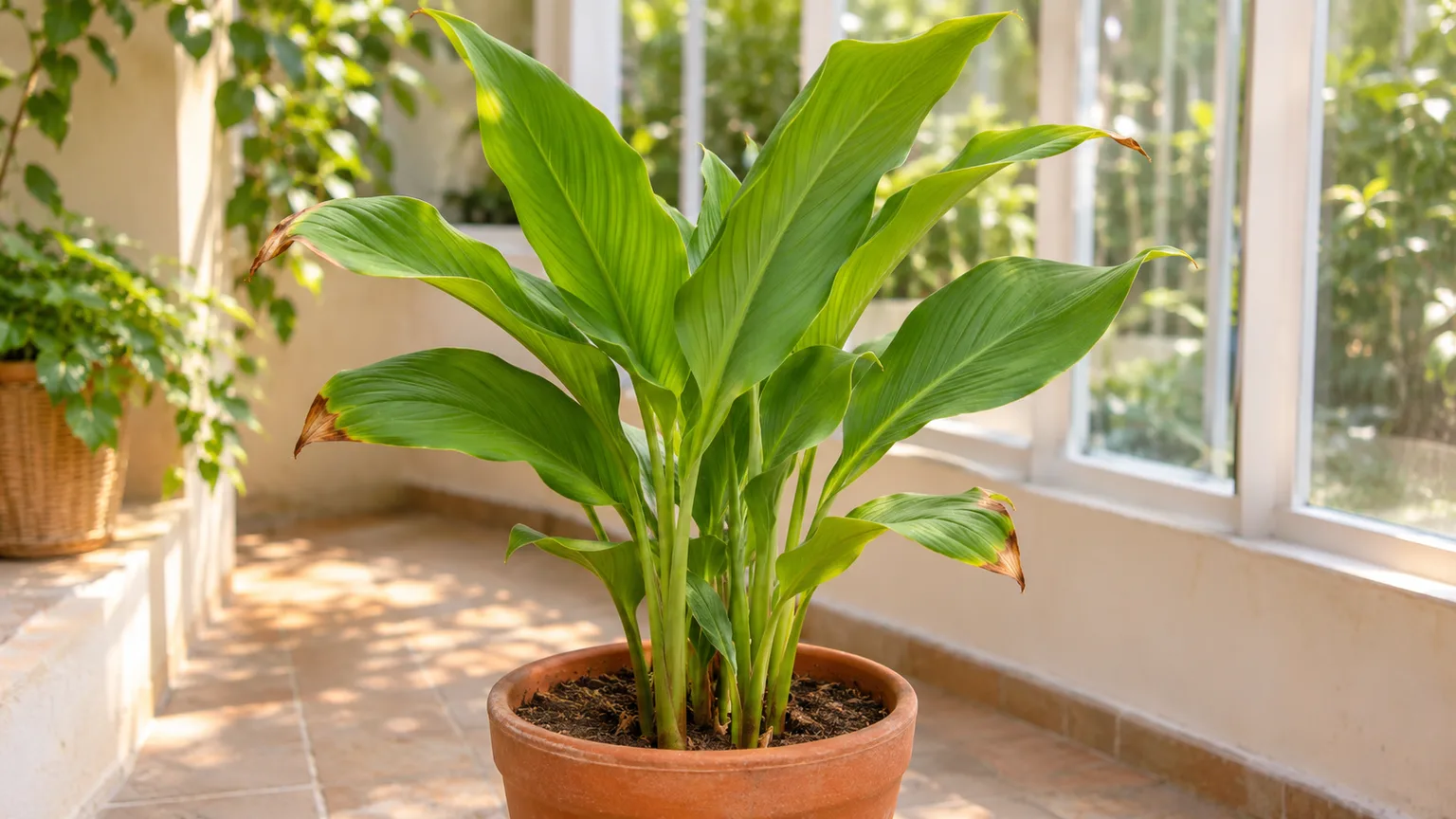
Brown Tips on Turmeric: Causes, Checks & Fixes
This guide covers brown tips on Turmeric. See also the general Brown Tips guide, watering, and light pages for this plant.
Brown Tips on Turmeric: Causes, Checks & Fixes
Quick answer
On turmeric, dry brown tips most often point to a recent mismatch in moisture or growing conditions; widespread yellowing and dieback can instead be normal seasonal dormancy. Check the potting mix and leaf pattern first, then correct the clearest cause without disturbing the rhizome. Turmeric is a tropical, rhizome-forming plant that grows in bright shade outdoors, so a hot, exposed window or cold, waterlogged pot can both create stress. UF/IFAS describes its shade-growing habit and seasonal dormancy.
Begin by deciding whether only the leaf tips are crisp or the whole plant is declining. If the soil is dry well below the surface and the pot feels unusually light, water thoroughly once and let it drain. If it is wet and heavy, hold off watering and check drainage before adding anything else.
What brown tips look like on turmeric
Brown tips are dry, tan-to-brown areas at the ends or edges of otherwise green turmeric leaves. The brown patch may stay sharply limited to the leaf margin, or slowly extend inward when the underlying stress continues. A single old leaf with a small dry edge is less concerning than several leaves developing fresh damage at once.
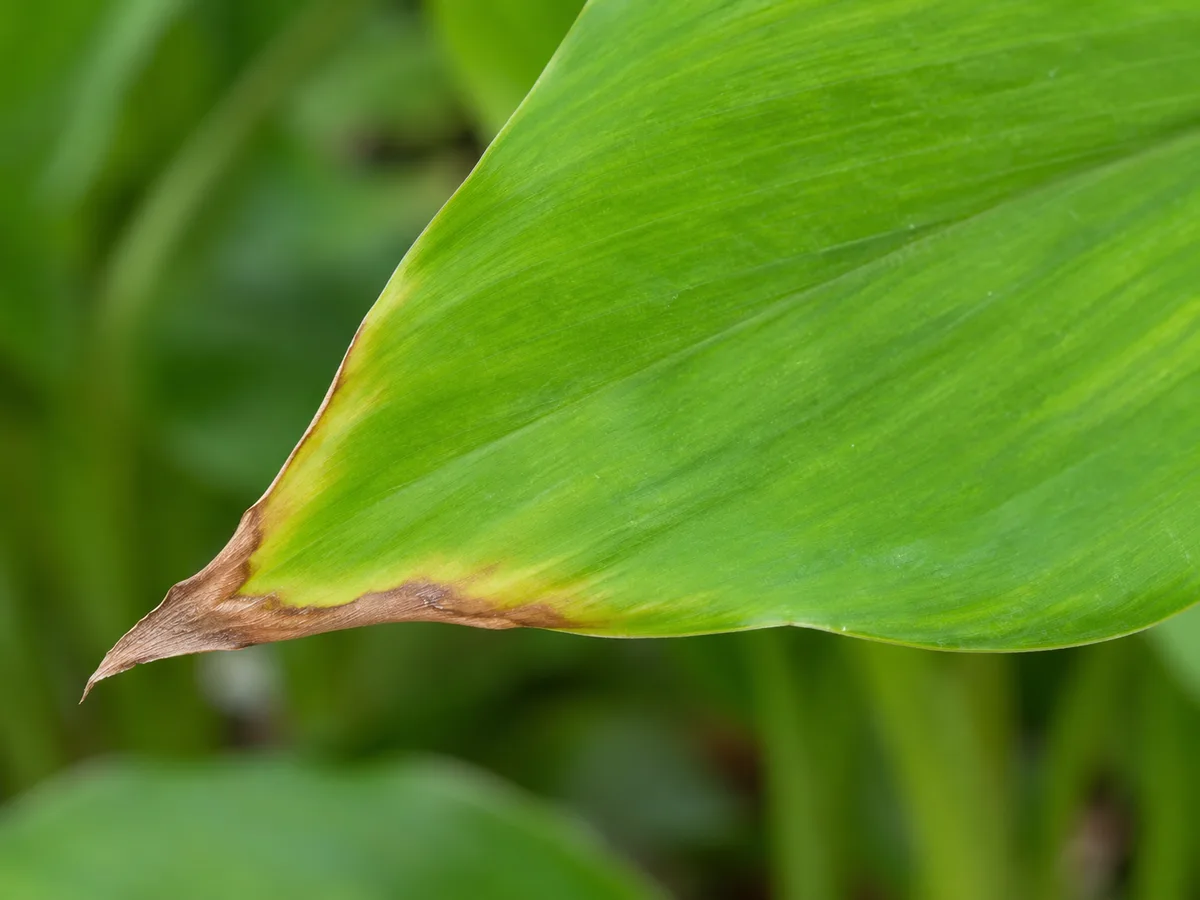
A dry brown margin beside green tissue is different from whole-plant seasonal dieback.
Turmeric naturally sheds its foliage when it enters dormancy. When most leaves yellow and die back together near the end of the growing season, treat that as a whole-plant seasonal change rather than a brown-tip problem. UF/IFAS notes that turmeric goes dormant before its rhizomes are harvested.
Why turmeric leaf tips turn brown
Brown tips are a symptom, not a diagnosis. In a container, the most useful clues are how quickly the mix dries, whether water drains freely, how much direct sun reaches the leaves, and whether your room has become much drier or cooler.
Moisture swings or poor drainage
Turmeric grows actively in warm weather and needs steady moisture during that period, but prolonged saturation can injure roots and rhizomes. If the mix is bone dry, the pot is very light, and several leaves have crisp edges, a missed watering or a root-bound pot that dries too quickly becomes plausible. If the mix stays wet for days, the pot has no drainage hole, or the base of the stems softens, suspect poor drainage rather than thirst. Martha Stewart’s indoor turmeric guidance cautions against prolonged soaking, especially in cool conditions.
Strong sun, dry air, or a temperature change
Turmeric prefers bright shade; abrupt exposure to intense midday sun can scorch exposed leaf surfaces. Brown patches that face a hot window or appear after moving the pot outside fit light stress better than a watering problem. Heated winter rooms and air-conditioning can also dry the air quickly; low humidity may contribute when tips crisp while the mix remains evenly moist. Extension guidance for turmeric emphasizes warm, humid conditions and bright shade rather than harsh direct sun. NC State Extension summarizes these tropical growing preferences.
Salt or fertilizer buildup
If a crust forms on the soil surface or pot rim, or brown margins appeared after repeated feeding, accumulated fertilizer salts may be contributing. Do not add fertilizer to a plant with damaged tips unless active growth and a clear nutritional need are established. A brown margin by itself does not prove a nutrient deficiency.
How to confirm the cause
Check in this order before changing care:
- Feel the root zone. Push a finger a few centimeters into the mix. Dryness throughout plus a light pot suggests the plant needs water; persistently wet, cool mix points toward drainage or watering frequency.
- Look at the pattern. Damage limited to the window-facing side suggests sun exposure. Uniform crisping across several leaves can fit a dry spell or dry room; gradual yellowing of the entire plant may be seasonal dormancy.
- Check stems and the pot. The lower stems should remain firm. Sour smell, mushy bases, or a pot that remains heavy for many days are warning signs to inspect the rhizome and roots for rot.
- Review recent changes. Note a move into direct sun, a heater or AC turning on, missed watering, or recent fertilizer use. The timing often helps distinguish the likely trigger.
For broader cross-checks, compare your routine with turmeric’s watering guidance and light needs. If several kinds of foliage damage are appearing, use the Turmeric problems hub to choose the right diagnosis instead of treating every symptom as brown tips.
The first fix to try
First, correct the root-zone moisture based on what you found: water once if the mix is dry throughout, or pause watering if it is still wet. For dry soil, water slowly until excess runs from the drainage holes, then empty the saucer. For wet soil, do not add more water; move the pot somewhere warm with bright indirect light and make sure the drainage holes are open.
Avoid repotting immediately if the plant is otherwise firm and only the leaf edges are affected. If the potting mix smells sour, stays saturated, or the stems are soft, remove the plant carefully and inspect the rhizome. Healthy rhizome tissue is firm; discard any portion that is soft and decaying, and repot firm pieces in a clean, free-draining mix.
Lookalike symptoms and when to use another guide
| What you see | More likely direction | Next step |
|---|---|---|
| Whole leaves and stems droop while the mix is dry | Water shortage | Check drooping leaves on Turmeric |
| Soil stays wet and lower stems soften | Possible root or rhizome rot | Follow Turmeric root rot checks |
| Fine webbing, stippling, or moving insects under leaves | Possible mites or other pests | Inspect the Turmeric spider-mite guide and isolate if insects are present |
| Most foliage gradually yellows and dries at season’s end | Possible dormancy | Check seasonal turmeric care and reduce watering gradually |
Use this page when dry brown edges are the main symptom. When the whole plant is drooping, collapsing, or showing pests, the linked sibling guide is a better fit. Turmeric’s soil and drainage needs matter most when a pot stays wet or the mix has compacted.
Recovery and prevention
Brown tissue will not turn green again, so judge recovery by whether new damage stops and the next turmeric leaf opens with healthy edges. Keep the plant warm, in bright shade, and water consistently during active growth without leaving the pot standing in runoff. UGA Extension recommends bright shade, warmth, and humidity for turmeric and notes that its leaves die down in fall.
If foliage dies back gradually at the end of the growing season while the rhizome remains firm, reduce watering as growth slows; this is part of turmeric’s seasonal cycle. UF/IFAS advises that turmeric dies back as it becomes dormant. If the stems collapse suddenly, the soil smells sour, or the rhizome is mushy, inspect promptly because rot can destroy the underground storage tissue. Remove only fully dead leaf material with clean scissors; leave any green leaf area to support the rhizome.
For a recurring issue, keep the plant away from hot direct afternoon sun, confirm the container drains, and check moisture before each watering rather than following a fixed calendar. NC State’s turmeric growing guidance also recommends bright shade and backing off watering as fall approaches. A simple weekly look at the leaf edges, pot weight, and new growth will show whether the adjustment is working.
Related Turmeric guides
- Use the Turmeric overview for its full care profile and the problems hub to compare symptoms.
- Check watering or soil when the mix dries too fast or remains saturated.
- Use drooping leaves for whole-plant wilt, or root rot for soft stems and a foul-smelling, persistently wet pot.
Related tool
Use the Plant Problem Diagnosis Tool to compare brown tips with other symptoms before changing more than one care factor.