Turmeric Light Needs: Morning Sun & Shade
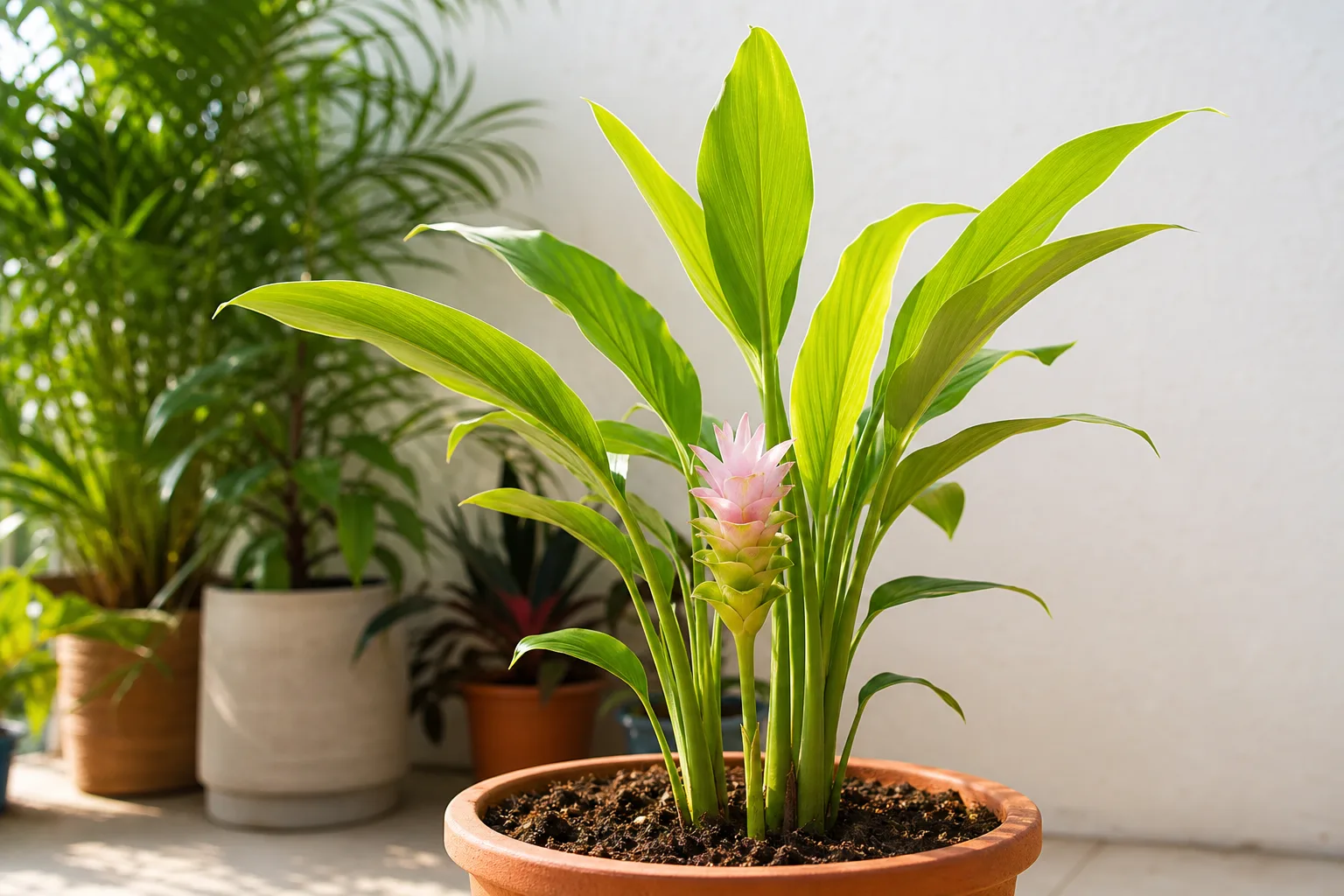
Turmeric Light Needs: Morning Sun & Shade
Turmeric Light Needs: Morning Sun & Shade
Turmeric (Curcuma longa), also sold as Haldi or Indian saffron, is a ginger-family rhizome grown for thick orange underground stems—not for surviving in a dim hallway. Light decides how fast leaves expand, how quickly the pot dries, and whether rhizomes swell or stall. NC State Extension says Common Turmeric grows best in hot, humid conditions with full sun in the morning and afternoon shade, while listing cultural light as both full sun and partial shade. Missouri Botanical Garden matches that placement: full sun to part shade, best with morning sun and some afternoon shade.
This guide covers how much light turmeric needs, where to put pots on Indian terraces and balconies, how much direct sun is safe, honest indoor limits, grow-light backups, and the warning signs that mean move the plant before you rewrite watering or fertilizer. Pair it with the Turmeric plant hub for size, soil, and dormancy context.
How Much Light Turmeric Actually Needs
Aim for bright, warm light with real morning sun during active growth, then protect large thin leaves from the harshest afternoon blast when heat spikes. Penn State Extension describes the same sweet spot in plain language: turmeric prefers full sun in the morning and shade in the afternoon. That is not the same as “any bright room” or “deep shade under a tree all day.”
In extension terms, usable outdoor placements usually fall in full sun to part shade—roughly several hours of direct sun plus strong sky brightness, not a perpetual interior corner. NC State’s toolbox codes list both Full sun (6 or more hours of direct sunlight a day) and Partial Shade (Direct sunlight only part of the day, 2–6 hours). Use those ranges as a decision band: more morning light for stocky growth and faster dry-down; more afternoon filter when leaf edges crisp in peak summer.
Judge success by new shoots and leaf stance, not by whether old leaves stay green. A turmeric plant can look “alive” in weak light for weeks while rhizomes barely thicken and the mix stays wet far too long. Light and Turmeric watering move together: shade slows drying and invites soft rhizomes that look like an overwatering mystery.
Morning Sun Plus Afternoon Shade
Morning sun is turmeric’s safest direct exposure. East-facing balconies, terrace edges that catch sunrise, and open garden beds with afternoon building shade recreate the pattern extension writers recommend. Leaves get hours of useful photosynthesis while temperatures and leaf-surface heat stay manageable.
Afternoon shade matters most in hot inland summers, west-facing glass, and black pots on concrete roofs. The goal is filtered high light, not darkness. A distant tree canopy, a shade cloth that still leaves bright ambient light, or a wall that blocks only the late western beam can be enough. If the plant sits under a deep overhang all day, you have left the productive band.
Full Sun vs Part Shade vs Deep Shade
Full sun can work where mornings are bright and humidity stays high—especially in humid coastal or monsoon climates—if leaves show no bleaching and pots do not cook. MOBOT notes plants like hot summers and high humidity with organically rich, moist soil. In those conditions, longer daily light supports vigorous foliage clumps that reach about 3–4 feet tall.
Part shade is the default compromise for many home growers: morning sun, bright open sky, afternoon filter. It is also the RHS outdoor cue—Partial shade—for cooler temperate gardens where “full tropical sun all afternoon” is less common than bright open light.
Deep shade fails turmeric as a crop plant. UF/IFAS Gardening Solutions notes Florida plantings can succeed in partial to full shade with organic soil—useful where subtropical sun is extreme—but that Florida shade still assumes outdoor brightness, not a dim north room. Treat UF’s shade note as a heat-management nuance, not permission to grow Haldi like a fern under a staircase.
Why Turmeric Is Not a Low-Light Houseplant
Marketing sometimes files turmeric with “easy tropical foliage,” which pushes people toward indoor corners that starve rhizomes. Botany points elsewhere. Curcuma longa is a monsoon-loving rhizomatous perennial in the ginger family, grown for underground stems that need warmth, moisture, and enough light to fuel leaf expansion. Kew’s Plants of the World Online treats it as a cultigen from SW. India in the seasonally dry tropical biome. MOBOT places its native range in tropical southwestern India with typical growing temperatures around 65–85°F (about 18–29°C) in moist humid conditions.
Large canna-like leaves are light-harvesting surfaces. In weak light they become softer, more spaced, and less able to support the carbohydrate demand of thickening rhizomes. The plant may keep a few green leaves while underground growth stalls—exactly the failure mode people misdiagnose as “needs more fertilizer.”
Monsoon Origins and Seasonal Dormancy
Turmeric’s light story is seasonal. MOBOT explains that turmeric begins growth with the monsoon and thrives in monsoon conditions, then becomes dormant when the monsoon ends and soils dry. NC State notes the same monsoon growth pattern in India, with dormancy after the season ends. That means late-season yellowing and dieback can be normal rest, not proof the plant needs a brighter lamp overnight.
During active growth, chase bright warm light. During dormancy, chase cool dry rest for stored rhizomes—not a south windowsill that keeps foliage trying to grow in cold wet soil. Confusing those phases is how growers either force soft winter leaves or roast resting rhizomes in a hot glass box.
Best Placement for Indian Balconies and Terraces
For most Indian homes, turmeric belongs on a warm terrace, balcony, or patio—not a decorative shelf inside. Prefer spots with clear morning sun and some afternoon protection from scorch. Keep pots near the outer rail where sky brightness is high; avoid deep covered courtyards that stay gray all day.
Humidity helps, but humidity without light only keeps leaves soft. Pair placement with a moisture-retentive yet draining mix from the Turmeric soil guide so strong light does not equal baked roots. Wide sturdy containers matter once rhizomes thicken; light placement still comes first because crowded pots in shade stay sour longer.
East, South, West, and Covered Spots
East exposures are the safest default for containers: cooler morning sun, then bright ambient light. Place pots close to the rail so leaves actually see the sky.
South exposures (northern hemisphere) deliver high daily totals. Use them when you can filter midday heat with a sheer curtain, shade net, or setback from reflective walls. South is excellent for growth if leaves stay green and firm; pull back only when sun-facing tissue bleaches.
West exposures add late heat. They can work in humid monsoon weather and become risky on concrete west balconies in peak summer. Watch leaf temperature and move pots a foot or two inward during heat waves rather than permanently banishing the plant to shade.
Covered or north-facing spots usually underdeliver. They may keep a plant alive briefly, but expect slower shoots, wetter soil, and thinner rhizomes. If that is your only outdoor space, supplement with a strong grow light during active months or choose a true shade crop instead of expecting a heavy Haldi harvest.
Direct Sun Tolerance and Heat Scorch
Turmeric can take direct sun, especially morning beams, when plants are warm, well watered, and acclimated. Problems appear when soft, shade-grown leaves meet sudden west or south intensity through glass or on a black rooftop. Scorch shows as bleached or crisp patches on the sun-facing side within days of a move—not as uniform seasonal yellowing from the base.
Heat at the pot wall can stress roots even when leaves handle light. Elevate dark plastic pots, use light-colored containers, or shade the pot (not the whole canopy) during extreme heat. That is heat management, not a reason to hide turmeric in permanent deep shade.
Acclimating Nursery and Grocery Rhizomes
Grocery rhizomes and nursery starts often leave dim storage or retail lighting. Give them a 10–14 day ramp: start with bright open shade or gentle morning sun, then add longer direct hours. Water when the top few centimeters begin to dry so heat stress does not stack with drought. NC State warns that red spider mites appear when soil is too dry—another reason not to “harden” plants by baking them bone-dry in full sun.
Once new leaves emerge firm and upright in stronger light, lock the placement and stop moving the pot weekly. Constant relocation creates false scorch and watering confusion.
Indoor Windows and Grow Lights
Indoors, RHS guidance for Curcuma longa is clear: grow in a warm conservatory, greenhouse, or window with indirect, bright light and temperatures no lower than 18°C (65°F). That means a bright east or filtered south window during active growth—not a north hallway. Ordinary living-room brightness that suits a snake plant is usually too weak for productive turmeric.
Use indoor culture as a seasonal bridge in cool climates: overwinter resting rhizomes cool and barely moist, then return containers outdoors when nights stay warm. MOBOT lists containers that are overwintered indoors as one option when plants are not winter hardy. Do not expect heavy rhizome harvests from a dim apartment year-round.
Grow lights help when terrace access is limited. Use a full-spectrum LED close enough to light the whole leaf canopy for roughly 12–14 hours daily during active growth, keep leaf temperatures comfortable, and still prefer outdoor humidity and morning sun when available. Ceiling room lights do not count. After supplemental light, retune watering—pots dry faster under lamps—and avoid stacking fertilizer until growth is clearly active (see Turmeric fertilizer).
Seasonal Light Changes and Leaf Yellowing
Monsoon cloud cover reduces daily light totals even when placement is correct. You cannot control the sky, but you can avoid adding dense shade cloth “for safety” on a plant that needs every bright hour during active expansion. After rains clear, return pots to morning sun promptly.
Late-season yellowing and drying of foliage often signals harvest-time dormancy, not a sudden need for a grow light. Penn State notes harvest when leaves begin to dry out and wilt. UF/IFAS likewise ties harvest readiness to dormancy after the growing season. Reduce watering as leaves senesce, then store or rest rhizomes as described in the Turmeric overview rather than forcing soft winter leaves under hot glass.
Cool-season short days at higher latitudes compound weak sun. If you grow turmeric outside the tropics, treat summer outdoor light as the productive season and winter as rest or bright indoor holding—not as a year-round indoor foliage display.
Warning Signs of Too Little or Too Much Light
Too little light usually shows as sparse, elongated shoots; pale or thin new leaves; stalled rhizome swell; little or no flowering spike energy; and soil that stays wet for many days after a normal soak. Spider-mite risk can rise later if you respond by underwatering a shaded plant. Correct by moving toward morning sun and brighter sky exposure before changing fertilizer or pot size.
Too much sudden intensity or heat shows as bleached or crisp patches on sun-facing leaves, leaf edges browning within days of relocation, and wilting while the mix is still moist. Ease afternoon exposure, cool the pot wall, then rebuild to the morning-sun target over one to two weeks.
Seasonal yellowing from the oldest leaves downward at the end of the growing season, with firm rhizomes, is often normal dormancy. Mid-season soft collapse with sour soil points more to wet cool roots than to a need for harsher sun—though chronic shade often caused the wetness. Stabilize drainage with Turmeric soil guidance, then lock bright warm placement.
First Moves Before Fertilizer or Repotting
First action when unsure: move the plant to morning sun with afternoon filter, stop watering until the top 2–3 cm feel barely dry, and wait about two weeks before stacking fertilizer, Turmeric repotting, and heavy division together. Light and moisture fixes are cheap; disturbing thick rhizomes while they are stressed is not. Once new shoots look firmer in better light, then consider mix refresh or a light feed.
When to use this page vs other Turmeric guides
Use this page when the question is where the plant lives relative to the sun, how much direct light Haldi can take, whether indoor brightness is enough, or how to read pale leaves versus afternoon scorch.
Use Turmeric watering when pots stay wet or dry too fast after light is already correct. Use Turmeric soil when drainage fails even in good light. Use Turmeric fertilizer only after growth is active in strong warm light. Use Turmeric repotting when rhizomes press or split the pot. Use Turmeric propagation when dividing eyes for new plants. Use Turmeric pruning for spent foliage cleanup—not as a cure for weak light. Start from the Turmeric overview if you need the full care map first.
Related Turmeric guides
- Turmeric overview — identity, monsoon habit, and full-care baseline
- Turmeric watering — moist growth vs dry dormancy timed to light
- Turmeric soil — rich draining mixes for bright warm pots
- Turmeric fertilizer — light feeding after placement is right
- Turmeric repotting — upsizing when rhizomes crowd the pot
- Turmeric propagation — dividing eyes for new plants
- Turmeric pruning — cleaning spent leaves after dormancy
- Turmeric plant hub — profile, grower notes, and cluster entry
Conclusion
Turmeric light care is a placement problem with a clear answer: give Curcuma longa warm morning sun and bright conditions, filter harsh afternoon heat when leaves crisp, and refuse dim indoor corners as a long-term home. Extension and botanic-garden sources converge on full sun to part shade with a morning-sun preference; Florida shade guidance is a heat caveat, not a low-light lifestyle. Match light to monsoon-style active growth, then let foliage yellow into dormancy without forcing winter leaves. When growth stalls, move toward better morning light first—then tune water, soil, and feed. That order is how home growers get upright Haldi leaves and thickening rhizomes instead of a polite but stalled pot.