Overwatered Turmeric: Signs, Diagnosis & First Steps
Quick answer
If turmeric's mix is still wet several days after watering and lower leaves are yellowing or soft, pause watering and empty the saucer first. Check moisture below the surface and the rhizome's firmness before deciding whether it needs repotting.
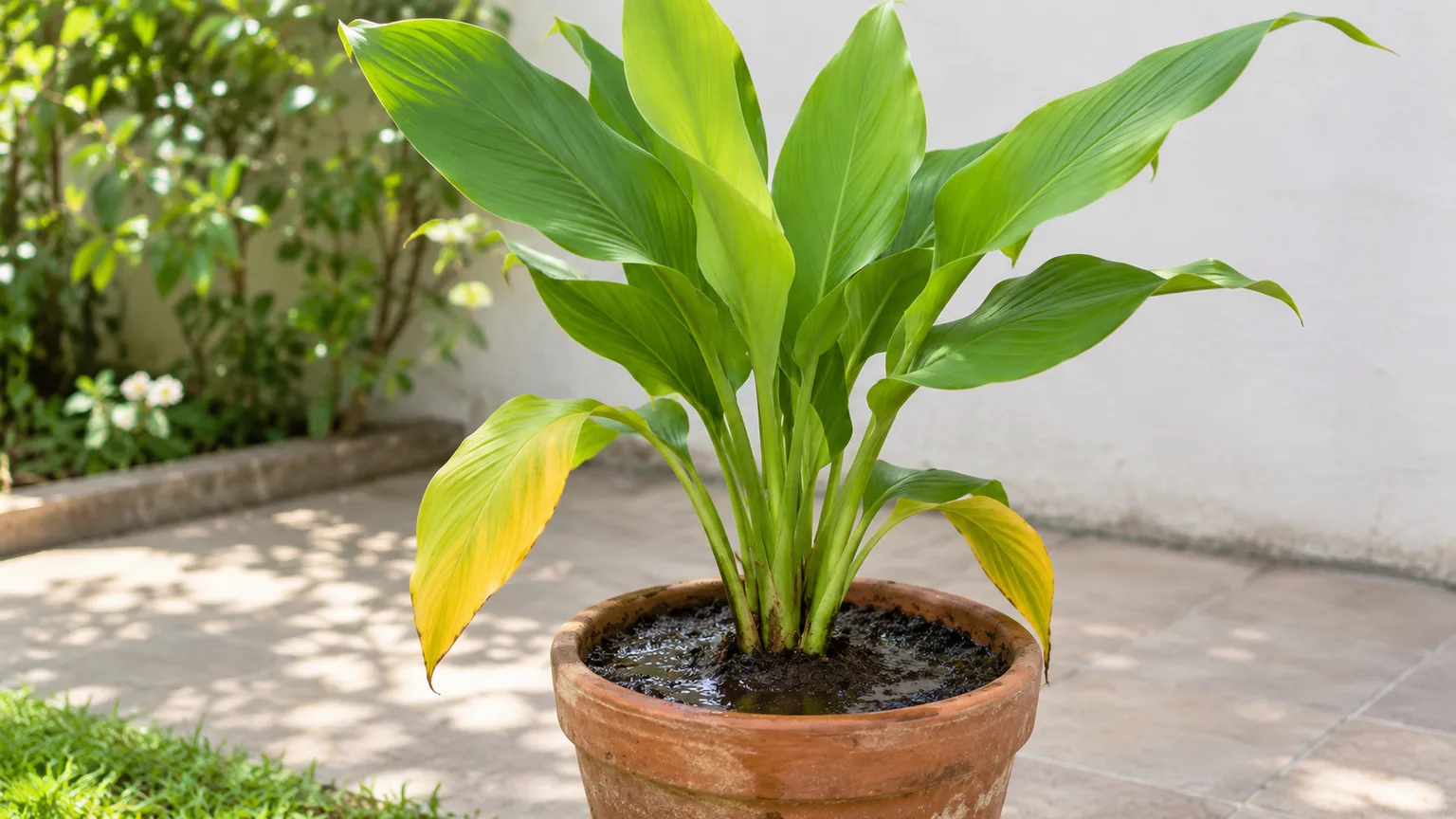
Overwatering Turmeric: How to Diagnose and Fix Wet Soil
This guide covers overwatering on Turmeric. See also the general Overwatering guide, watering, and light pages for this plant.
Overwatering Turmeric: How to Diagnose and Fix Wet Soil
Quick answer
When turmeric is losing lower leaves, resist the urge to water again until you have checked the mix below its surface. If the root zone is still wet, stop watering and empty any saucer or cachepot so the container can drain. That is the first correction; do not unpot a firm, stable rhizome just because one leaf has yellowed.
For the general signs and mechanics of overwatering, see the symptom guide. Turmeric-specific links and other symptom routes are collected on the turmeric problems hub. On turmeric, the important wrinkle is seasonal: Curcuma longa needs steady moisture while it is actively producing foliage, but it naturally slows and can die back as its rhizome enters dormancy. A fixed weekly watering schedule can therefore become excessive as light, heat, and growth decline.
What overwatering looks like on turmeric
Look for a pattern rather than one yellow leaf. Several older or lower leaves may yellow, droop, or lose firmness while the potting mix remains wet for days. The whole plant may stop pushing new leaves. A sour or stagnant smell from the soil, soft tissue near the base, or a rhizome that has turned mushy or dark is more concerning than leaf color by itself.
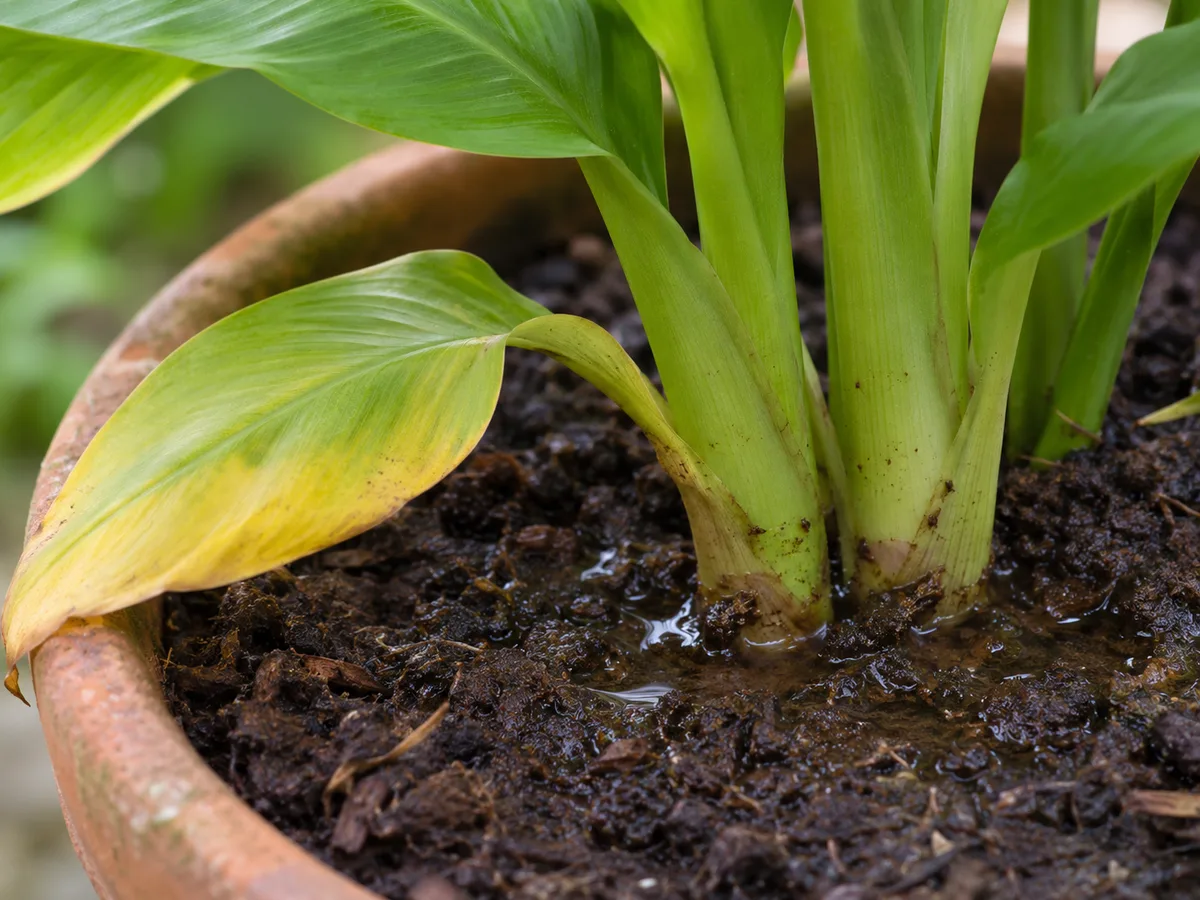
Yellowing lower foliage is a clue; confirm it against moisture and rhizome firmness before changing care.
Missouri Botanical Garden explains that prolonged waterlogging deprives roots of oxygen and can lead to root death, yellowing, reduced vigor, and decay. Its advice to check moisture below the surface is especially useful here: a dry-looking top can conceal a saturated pocket around turmeric’s rhizomes. The NC State Plant Toolbox entry for turmeric also describes the balance that matters for this crop: it prefers moist to occasionally wet conditions, but still needs good drainage.
First fix: stop repeat watering and restore drainage
If the mix is wet below the top inch or two, pause watering. Remove standing water from the saucer, make sure the pot’s drainage holes are open, and let the root zone lose excess moisture. Keep the plant in bright, indirect light and warm conditions while it drains; do not try to force-dry the rhizome with a heater or harsh direct sun.
This is a pause, not a drought treatment. Turmeric’s broad foliage grows during warm months, and UF/IFAS notes that it thrives in partial to full shade with organic matter and enters dormancy when the season changes. Once the mix has started to dry and the plant is actively growing, resume watering thoroughly when the upper layer begins to dry, allowing excess to escape. Our turmeric watering guide covers the routine for a healthy plant; this page is for correcting a root zone that has stayed wet too long.
Check the rhizome before deciding to repot
Turmeric stores energy in an underground rhizome, so a leaf-only diagnosis can mislead. Slide the root ball out only if the pot remains waterlogged, drainage is failing, the mix smells sour, or the base is softening. Healthy rhizomes feel firm. Affected roots may be brown and soft; rotten rhizome tissue is usually mushy and may separate or smell unpleasant.
If the rhizome is firm and roots are not decaying, set the root ball back in place and continue the drainage pause. If you find a small area of decay, use a clean blade to remove only clearly soft tissue, then repot into fresh, airy mix in a container with open drainage. If most of the rhizome has softened, recovery is uncertain; keep any firm, uninfected section separate rather than planting it back into saturated soil. UF/IFAS recommends drying cut turmeric pieces before planting to reduce rot risk, another reason not to keep freshly cut tissue wet.
Do not add fertilizer, fungicide, or a home remedy as a substitute for correcting the wet root zone. Missouri Botanical Garden notes that waterlogged roots are vulnerable to decay and disease; the immediate useful step is to restore air and drainage, not to treat an unconfirmed pathogen.
Why turmeric pots stay wet
The plant is entering dormancy
Turmeric is a seasonal, rhizomatous perennial. When foliage naturally yellows and dies back toward the end of its growing season, the plant is shifting energy below ground. It uses less water as active leaf growth slows, so the same watering interval that worked in summer can leave the pot too wet later. UF/IFAS describes turmeric becoming dormant when the foliage dies back; do not interpret every seasonal leaf loss as rot.
During dormancy, keep the rhizome from sitting in wet mix. Reduce watering substantially and avoid keeping the pot continuously moist. Resume more regular watering only as warmth returns and new shoots begin to grow. If the rhizome is firm and dry-season dieback is gradual, follow the plant’s seasonal care guidance rather than repeatedly digging it up.
The container holds water around the rhizome
Turmeric grows from thick, branching underground stems. In a crowded pot, a dense root-and-rhizome mass can displace much of the mix and slow drainage; a pot without clear drainage holes can keep that mass wet even when watering amounts seem modest. NC State describes turmeric as suitable for containers but emphasizes good drainage. Use a pot with unobstructed holes and a loose, moisture-retentive but free-draining mix, rather than a heavy soil that compacts.
After watering, let the pot drain completely. Do not leave it standing in runoff. If water runs through immediately while the center stays dry, the mix may have become hydrophobic rather than overwatered; check the middle of the root ball before adding more.
Light and temperature changed but the watering schedule did not
Turmeric grows in warmth and slows when conditions cool or days shorten. A plant near a cool window, in a dim room, or entering seasonal rest will use water more slowly than one in warm bright conditions. The turmeric light guide explains the plant’s preference for bright filtered light or partial shade. Keep the pot’s moisture check tied to actual growth and conditions, not to a calendar reminder.
Tell overwatering apart from lookalikes
| What you notice | More likely explanation | What to check next |
|---|---|---|
| Yellowing lower leaves while the mix is still wet and the pot feels heavy | Overwatering or poor drainage | Check below the surface and smell the mix; inspect the rhizome only if it is soft or the wetness persists. |
| Limp leaves, a light pot, and dry mix through the root zone | Underwatering | Rehydrate slowly and review the underwatering guide. |
| Foliage gradually yellows and dries as the season cools, but the rhizome stays firm | Normal dormancy | Reduce watering and protect the rhizome from prolonged wet soil. |
| A soft, dark rhizome or collapsing base with persistently wet soil | Possible rhizome or root rot | Separate clearly decayed tissue and see the turmeric root rot guide. |
| One older leaf yellows while new leaves remain firm and the mix drains normally | Normal leaf aging or another stress | Monitor new growth before changing several care variables. |
Yellow leaves are not specific to excess water. Gardening Know How lists yellowing, wilting, slow growth, and soft roots among common overwatering signs, while also noting that under- and overwatering can look alike. Bob Vila likewise cautions that yellow foliage alone may have other causes. For turmeric, use the wetness pattern and rhizome condition as stronger evidence than a single leaf.
Recovery and what to expect
If the rhizome stays firm, a brief wet spell may resolve after the pot drains and the next watering is delayed. Existing yellow or collapsed leaves are unlikely to turn green again. Trim only fully dead leaves with clean scissors, and judge recovery by whether the base remains firm and new shoots appear during the next warm growth period.
When decay has reached most of the rhizome, salvage may not be possible. If a section remains firm, keep it away from the affected mix and plant it in fresh, well-draining medium once any cut surface has dried. Avoid repeated unpotting to check progress; each disturbance can damage the remaining roots.
Prevent another wet-soil cycle
- Check moisture below the surface before watering, especially after a cool or cloudy stretch.
- Water actively growing turmeric thoroughly, then let the pot drain; never leave it in runoff.
- Use a container with drainage holes and a loose mix that can hold moisture without becoming dense and airless.
- Reduce watering as growth slows and foliage enters dormancy; do not keep dormant rhizomes as wet as actively growing plants.
- When dividing turmeric, let cut rhizome surfaces dry before planting, following UF/IFAS guidance.
If foliage declines while the soil is not wet, compare the pattern with turmeric yellow leaves and the plant’s care overview. For general diagnosis across symptoms, use the plant problem diagnosis tool.
Related Turmeric guides
- Use turmeric root rot when the rhizome or roots are soft, dark, or decaying.
- Use turmeric underwatering when the pot is dry through the root zone and the leaves are limp.
- Use turmeric yellow leaves when foliage yellows despite normal drainage.
- Use the turmeric care overview for baseline light, soil, and seasonal care.
Related tool
Use the Plant Problem Diagnosis tool to compare overwatering with other symptoms before making another care change.