Mealybugs on Turmeric: How to Find and Treat Them
Quick answer
On turmeric, mealybugs are most likely to hide where a leaf sheath overlaps the pseudostem, around the crown, and beneath broad leaves. Isolate the pot first, then inspect those folds for live, wax-covered insects and sticky honeydew before treating.
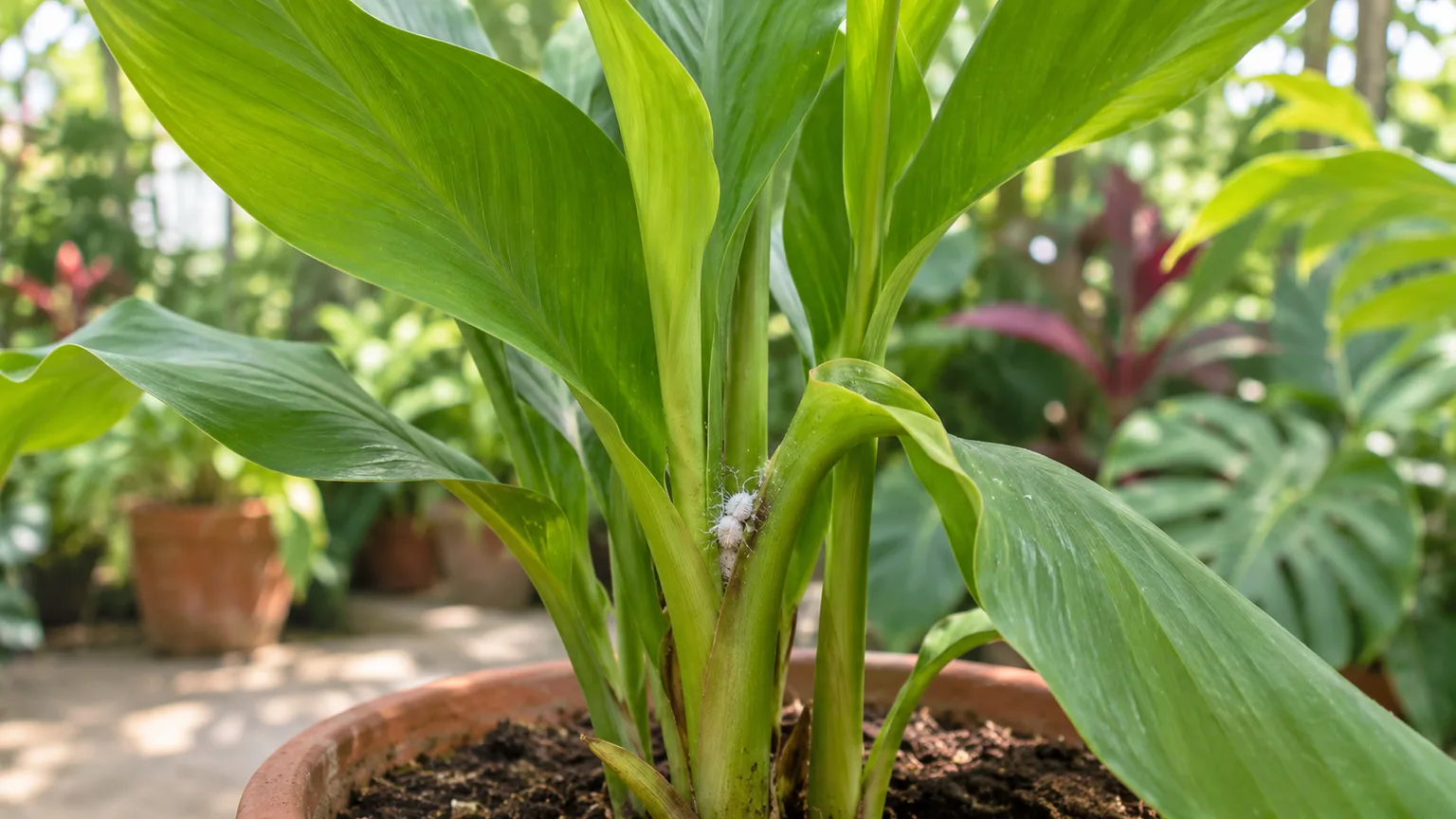
Mealybugs on Turmeric: Where to Look and What to Do
This guide covers mealybugs on Turmeric. See also the general Mealybugs guide, watering, and light pages for this plant.
Mealybugs on Turmeric: Where to Look and What to Do
Quick answer
Mealybugs on turmeric are easy to miss until the plant’s broad leaves begin to yellow or growth slows. Start by isolating the pot from nearby plants. Then inspect where the leaf sheaths overlap around the upright pseudostem, the crown where new leaves emerge, and the undersides of older leaves. Turmeric is a rhizome-forming plant with leaves that rise in a tight clump, so its sheltered folds matter more than the long open blade. NC State Extension notes that turmeric usually has few serious insect problems; a visible colony deserves attention, but don’t assume every yellow leaf means mealybugs.
For general identification and treatment methods, see our mealybugs guide. This page focuses on finding the pest in turmeric’s leaf bases and protecting its seasonal growth and edible rhizomes.
What mealybugs look like on turmeric
Look for slow-moving, oval insects covered in white wax, cottony egg sacs, or small clusters where a leaf sheath clasps the pseudostem. Mealybugs feed by sucking sap. Their sticky honeydew can collect on lower leaves and support black sooty mold; ants may visit the honeydew. These clues together are more useful than white fluff alone, which can also be lint, mineral residue, or fungal growth. UC IPM describes mealybugs as wax-covered sap feeders that often hide in protected plant crowns and near the soil line. Its houseplant diagnostic guide also recommends inspecting leaf bases and sheaths, where waxy insects can be easy to miss.
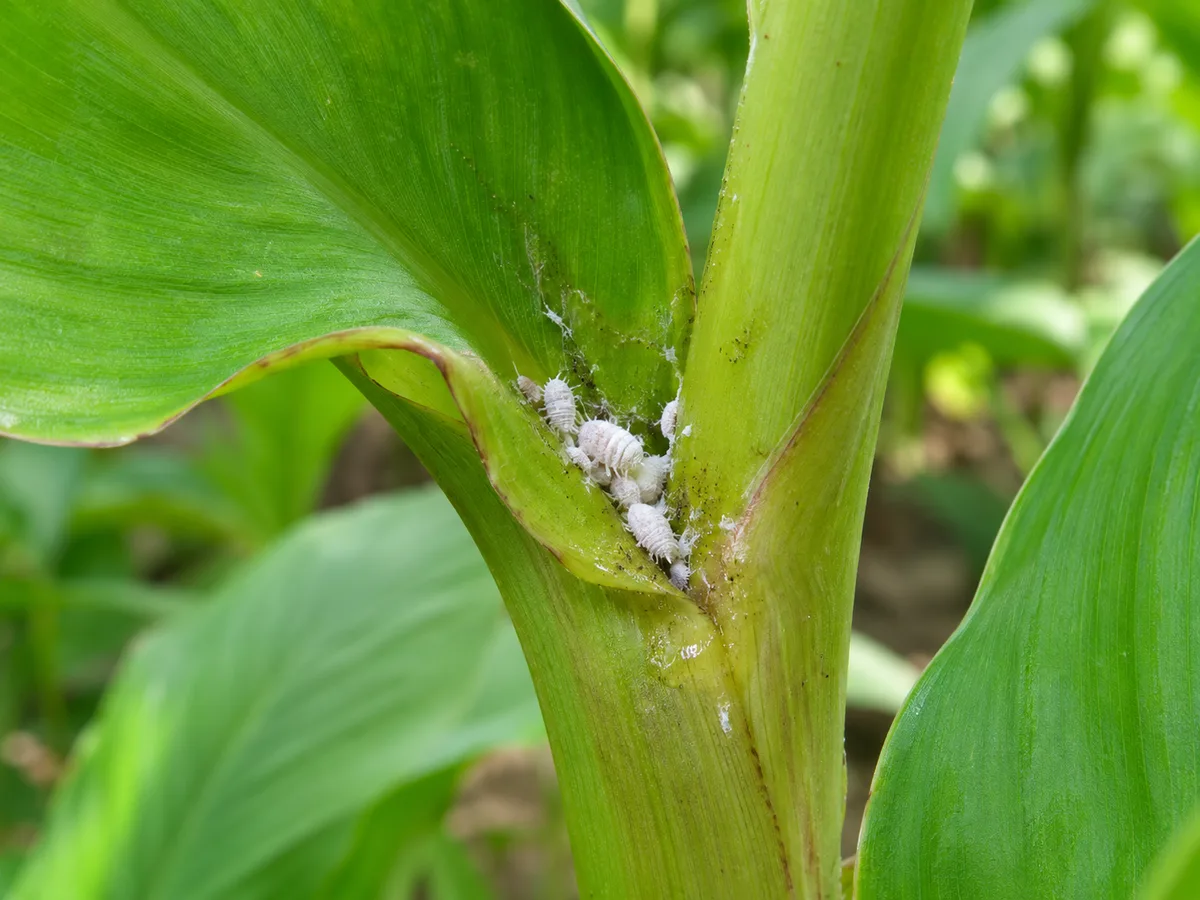
Inspect the folded sheath and the stem beneath it; a colony may be hidden from view when looking down at the leaf blade.
Use a bright light and gently separate overlapping sheaths without tearing them. Check the newest spear, leaf joints, lower leaf undersides, the stem base, pot rim, and any neighboring plant whose leaves touch the turmeric. Wisconsin Extension notes that mealybugs can move between plants where foliage overlaps, so keep the pot apart during inspection and treatment.
Why turmeric can get mealybugs
Turmeric is not commonly described as a pest-prone plant, but mealybugs can establish on indoor or container-grown plants. Plant Delights notes them as a possible problem in dry containers, while turmeric naturally grows through warm, moist active seasons and rests as foliage dies back. A pot allowed to dry hard during active growth can stress the plant; tightly folded leaf bases also provide cover that makes early colonies easy to overlook. Dryness is a risk context, not proof of the pest.
New nursery plants and foliage touching an infested neighbor are common ways pests can move into a collection; Wisconsin Extension notes that mealybugs can crawl between plants where leaves overlap. Don’t respond by keeping turmeric waterlogged: it needs moist, draining mix while growing, and excessive wetness during cool dormancy can damage the rhizome. Review the Turmeric watering guide and soil guide to match moisture to the plant’s season.
Confirm the pest before treating
- Separate the pot. Keep its leaves from touching other plants and avoid moving it through the collection while brushing foliage.
- Open the folds gently. Look for live, segmented insects beneath the wax, cottony egg masses, or tiny mobile crawlers. Check the pseudostem and leaf sheaths as well as the blade.
- Look for supporting signs. Sticky honeydew, ants, or sooty mold make sap-feeding insects more likely. A dry white deposit that wipes away without insects or stickiness may be residue instead.
- Compare other symptoms. Fine stippling and webbing point more toward spider mites on turmeric. Clusters of pear-shaped insects around tender growth fit aphids. Even yellowing as the plant enters seasonal dormancy can be normal; compare the Turmeric overview before treating a naturally dying leaf.
- Check the base only if needed. If the plant wilts despite suitable moisture, inspect the soil line and rhizome for softness or sour odor. Firm rhizomes and no insects below the soil make root mealybugs or rot less likely; use the root rot guide if the underground tissue is soft or foul-smelling.
First fix: isolate the turmeric
Keep the plant separated while you confirm the infestation. This single first step reduces the chance that crawlers spread to neighboring pots and gives you room to examine the sheaths carefully. If you find only a few aboveground insects, remove them with a damp cotton swab or rinse the affected area with a controlled stream of water, shielding the potting mix so the turmeric isn’t left saturated.
After physical removal, recheck the same sheath folds every few days. Mealybugs hide under wax and in tight creases, so one wipe may miss eggs or crawlers. Repeat removal as needed and keep contaminated prunings or swabs out of the growing area. UC IPM recommends repeated monitoring and physical removal.
If physical removal is not enough, UC IPM describes insecticidal soap and horticultural oil as contact options for exposed young mealybugs. Test any product on a small leaf area first, keep the plant out of harsh sun until dry, and follow its directions. Wax and folded sheaths can shield insects, so even a spray may not reach the whole colony.
Turmeric’s leaf sheaths need a second inspection
Turmeric grows new leaves from a central clump; their overlapping sheaths can hide insects from a quick surface spray or rinse. Once the visible colony is removed, inspect under the next sheath above and below the original site. Avoid forcefully peeling tight, healthy sheaths, which can tear young tissue. If the plant is actively growing, you can gently part them and wipe only where you see insects.
Do not cut away every yellow or sticky leaf. Remove a leaf only when it is mostly dead or heavily infested and can be cut without injuring the crown. Healthy green blades support the rhizome during the active growing season. The Turmeric light guide can help you keep the plant in bright, suitable conditions while it recovers; avoid suddenly moving it into harsh afternoon sun after treatment.
If insects seem to come from the soil line
Aboveground mealybugs and root mealybugs require different investigation. If white insects are visible on the lower pseudostem or pot rim, inspect there first. If no insects are found above the soil but turmeric continues to weaken, slide the root ball out carefully only when the plant is actively growing and check for insects or waxy patches on roots and rhizomes. Don’t unpot a healthy dormant clump just because an old leaf has yellowed.
When you do inspect, distinguish pests from turmeric’s firm rhizome scales and ordinary soil particles. A soft, darkened rhizome with a sour smell suggests rot rather than mealybugs. If the root ball is heavily infested, isolate it from the collection and seek locally appropriate advice before discarding or treating it, especially if you plan to eat any harvested rhizomes.
Recovery and prevention
Yellowed leaves and sooty mold stains may remain even after the insects are gone. Judge recovery by the next clean leaf, reduced honeydew, and no live insects during repeated checks. Turmeric may naturally yellow and die back as it enters dormancy, so don’t keep spraying or watering a plant that has finished its season. If new colonies continue to appear after several careful inspections, or the rhizome becomes soft, reconsider the diagnosis and inspect the plant’s base.
To reduce a repeat infestation:
- Inspect new turmeric plants before placing them beside an established clump.
- Keep pots from touching and check leaf-sheath folds during routine watering.
- Maintain the plant’s active-season moisture without leaving the pot sodden during cool rest.
- Avoid excess nitrogen; lush, tender growth can be attractive to sap-feeding pests.
- Clean tools after removing infested tissue and monitor nearby pots for crawlers.
When to use this page vs other Turmeric guides
- Use this guide when you see waxy white insects, cottony egg masses, or sticky honeydew in turmeric leaf folds.
- Use spider mites on turmeric for fine stippling with webbing or moving specks instead of cottony clusters.
- Use root rot on turmeric when the rhizome is soft or smells sour.
- Use the Turmeric problems hub if the leaf decline does not match these pest signs.
Related Turmeric guides
- Turmeric overview — Understand its active growth and seasonal dormancy.
- Turmeric watering — Adjust moisture to growth and rest periods.
- Turmeric light — Choose a bright position without harsh afternoon exposure.
- Turmeric soil — Keep the rhizome in moist but draining mix.
- Turmeric problems — Compare other symptoms and plant-specific guides.
Related tool
Use the Pest Identifier Tool to compare the insects you find before applying a treatment.