Turmeric Root Rot: How to Check Rhizomes and Save Healthy
Quick answer
On turmeric, root rot is most likely when a plant wilts or yellows while its mix stays wet and the pseudostem base or rhizome is soft, brown, or foul-smelling. First check whether the plant is entering its normal seasonal dieback; if the base is soft in wet mix, unpot it to inspect the rhizome before watering or treating again.
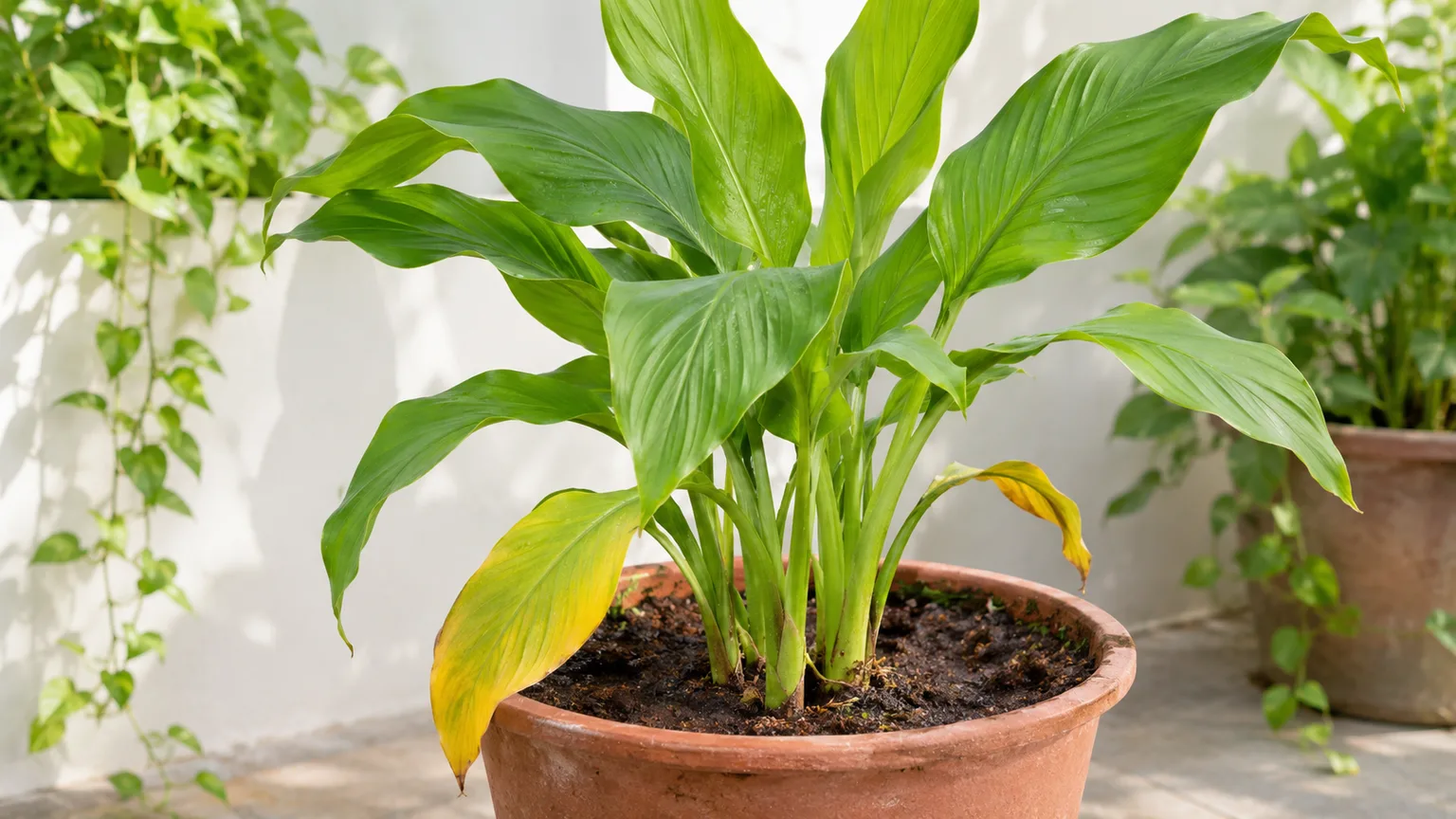
Root Rot on Turmeric: Causes, Checks & Fixes
This guide covers root rot on Turmeric. See also the general Root Rot guide, watering, and light pages for this plant.
Root Rot on Turmeric: Causes, Checks & Fixes
Quick answer
Turmeric can wilt or yellow from root and rhizome rot when its growing medium stays saturated, especially in a cool or dormant period. The strongest home clues are a soft, water-soaked pseudostem base, sour-smelling mix, and brown or mushy underground rhizome tissue. First check that the plant is not simply entering its normal seasonal dieback; if the base is soft while the pot remains wet, unpot it and inspect the rhizome before watering again.
For the general causes and signs of root rot, see the symptom guide; the turmeric-specific question is whether the underground storage rhizome is still firm and viable.
What root rot looks like on turmeric
Turmeric is grown for its branching underground rhizome, while its leafy shoots rise from that storage stem. Rot can therefore be present below the mix before the large leaves make the cause obvious. During active growth, watch for a shoot that droops even though the pot is wet, yellowing that spreads from older leaves, or a pseudostem that darkens and softens where it meets the soil.
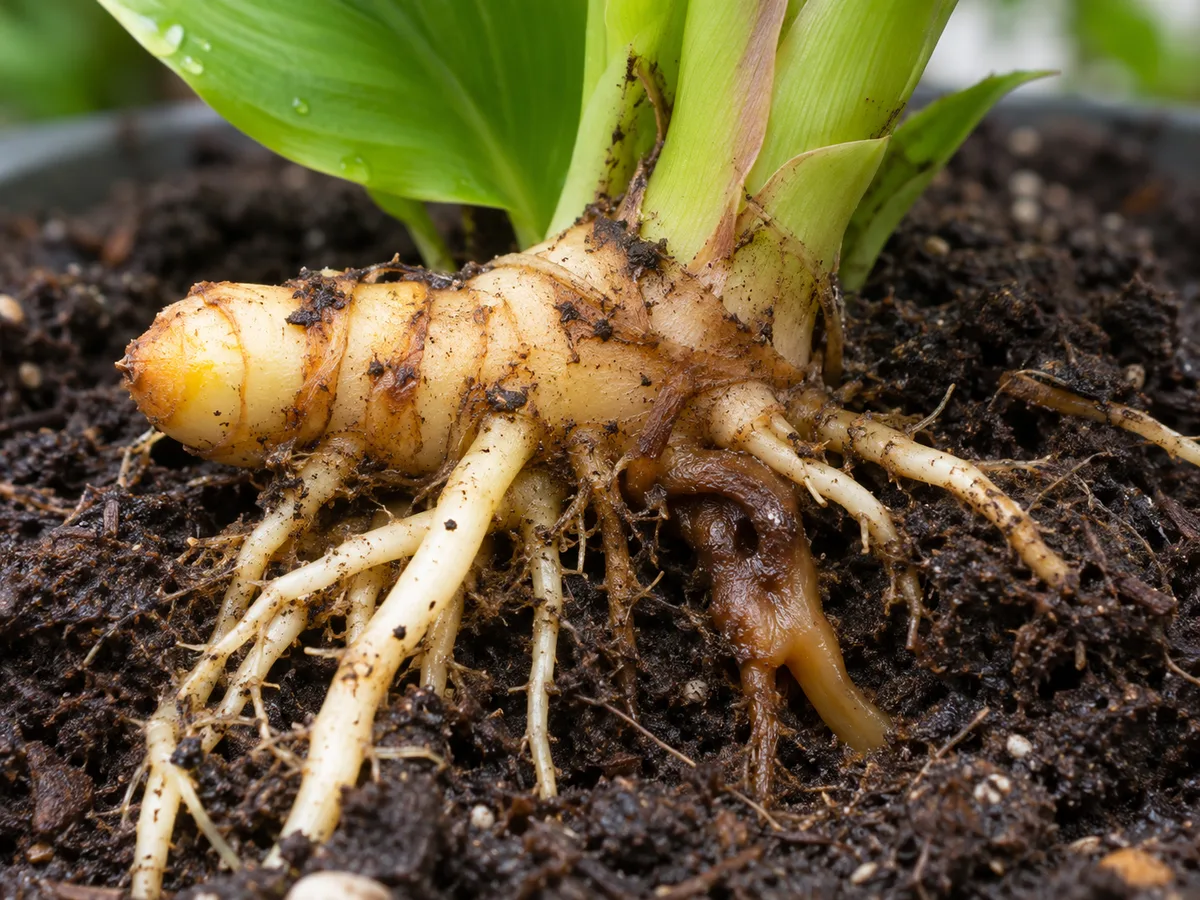
A healthy turmeric rhizome should feel firm; soft brown areas and a sour smell suggest decay.
If you unpot it, healthy rhizome tissue should feel solid rather than waterlogged or hollow. Affected areas may be brown, translucent, soft, or foul-smelling; fine roots may also be sparse and decayed. These signs point to tissue breakdown, but not to a specific pathogen; RHS notes root-rot symptoms are nonspecific and can overlap with waterlogging injury.
Check the turmeric rhizome before changing care
Turmeric naturally yellows and dies back when its growing season ends. In that seasonal transition, leaves can look unhealthy even when the rhizome is sound. A firm rhizome with no sour smell, alongside gradual whole-plant dieback near the end of the season, fits dormancy better than active rot. NC State Extension explains that turmeric grows in hot, humid monsoon conditions, while Missouri Botanical Garden covers its dormancy.
Use this quick check:
- Check timing. Is this gradual dieback as days cool or the growing season ends, or is a thriving shoot suddenly collapsing?
- Feel the mix. A pot that remains heavy and wet for days, especially during cool weather, raises concern. Turmeric needs regular moisture while actively growing, but it still needs oxygen around its rhizomes.
- Inspect the pseudostem base. Look for water-soaked discoloration or softness where each shoot enters the soil.
- Smell and inspect the rhizome if needed. Unpot when wet-mix wilting, a soft base, or a sour odor points to decay. Pythium-associated turmeric rot is documented in crop research, but a home inspection cannot confirm that organism.
If the rhizome is firm and the main issue is a wet pot, compare it with overwatering on turmeric. If the leaves yellow as the plant rests, use the turmeric yellow-leaves guide to rule out normal seasonal dieback and other causes.
The first fix: inspect a soft, wet turmeric plant
When a turmeric shoot is collapsing over persistently wet mix or its base feels soft, unpot the plant and inspect the rhizome. This is the fastest way to separate damaged tissue from a viable storage rhizome; watering, fertilizer, or a surface fungicide cannot show what is happening underground.
Ease the root-and-rhizome clump out of the container and brush away enough wet mix to see the tissue. Keep firm, clean sections with a viable bud; remove soft, brown, foul-smelling tissue with a clean blade. If the entire rhizome is mushy or the decay reaches every bud, discard it rather than replanting diseased material. Do not consume rhizomes from a rotting plant.
Replant only sound pieces in fresh, loose mix and a pot with open drainage. UF/IFAS recommends drying cut rhizomes for a few days before planting to reduce rotting risk; the same principle supports allowing a freshly trimmed surface to dry briefly before replanting, without leaving the whole rhizome to desiccate. Avoid applying fungicides or biological treatments unless a local extension specialist identifies the problem and the product label permits that use.
Why turmeric is vulnerable when seasons change
The rhizome needs moisture, not stagnant water
Turmeric is not a dry-soil succulent. In hot active growth it uses substantial water, and the pot may dry quickly as its broad leaves expand. But roots need air as well as moisture: RHS explains waterlogging displaces air from soil spaces and can damage roots. A dense mix, blocked drainage holes, a pot sitting in runoff, or repeated watering while the plant is cool can leave the rhizome wet for too long.
Check that water exits the pot freely, then empty any catch tray. For the plant’s normal moisture rhythm and pot checks, follow the turmeric watering guide and turmeric soil guide; do not switch active turmeric to a prolonged dry cycle.
Dormant turmeric should not be kept on a monsoon watering schedule
As the leaves naturally yellow and dry at season’s end, turmeric shifts from leafy growth toward a dormant rhizome. That change means water use falls sharply. Missouri Botanical Garden and NC State both describe this dormant period, and Gardeners’ Path recommends good drainage to limit rot during winter rest. If you keep a pot indoors, maintain it cool and dry enough for rest without leaving it cold and soggy; follow local conditions and the storage method you use.
Salvage firm turmeric buds and prevent another episode
Turmeric recovery depends on what remains underground, not whether old leaves turn green again. A firm section with a sound bud may produce a new shoot when warm growth conditions return. Affected leaves and pseudostems may not recover; remove only tissue that is fully collapsed or dead, and judge progress by firm rhizome tissue and healthy new shoots.
To lower risk in the next growth cycle:
- Start with firm planting rhizomes and a clean pot with unobstructed drainage.
- Use rich, moisture-retentive but well-drained mix. Avoid heavy garden soil in a container.
- During active growth, keep the mix evenly moist and adjust to heat and pot size instead of following a fixed calendar.
- When foliage naturally dies back, reduce watering rather than maintaining summer moisture through dormancy.
- Check that the pot drains after each watering and never leave its base standing in runoff.
When to use this page vs other Turmeric guides
Use this guide when wet soil, a soft pseudostem base, or decayed rhizome tissue suggests underground rot. If the rhizome is firm and leaves simply yellow during late-season dieback, start with yellow leaves or wilting instead. For ongoing care, begin with the Turmeric overview or the Turmeric problems hub.
Related Turmeric guides
The overwatering guide is for wet-mix stress before clear rhizome decay; the yellow-leaves guide covers gradual seasonal change and other leaf causes. Use the problems hub to compare symptoms when the diagnosis is still uncertain.
Related tool
Use the Root Rot Risk Checker to organize your observations before changing the pot or watering routine.