Wilting on Turmeric: Rhizome & Dormancy Checks
Quick answer
Wilting on turmeric means the broad pleated leaves and leafy shoots lose turgor and flop instead of standing upright in a stiff clump. First step: lift the pot and decide whether the top 2–3 cm of mix is dry (give one deep soak) or wet and heavy (stop watering and check rhizome firmness). In fall, uniform yellowing with wilt is usually dormancy, not an emergency.
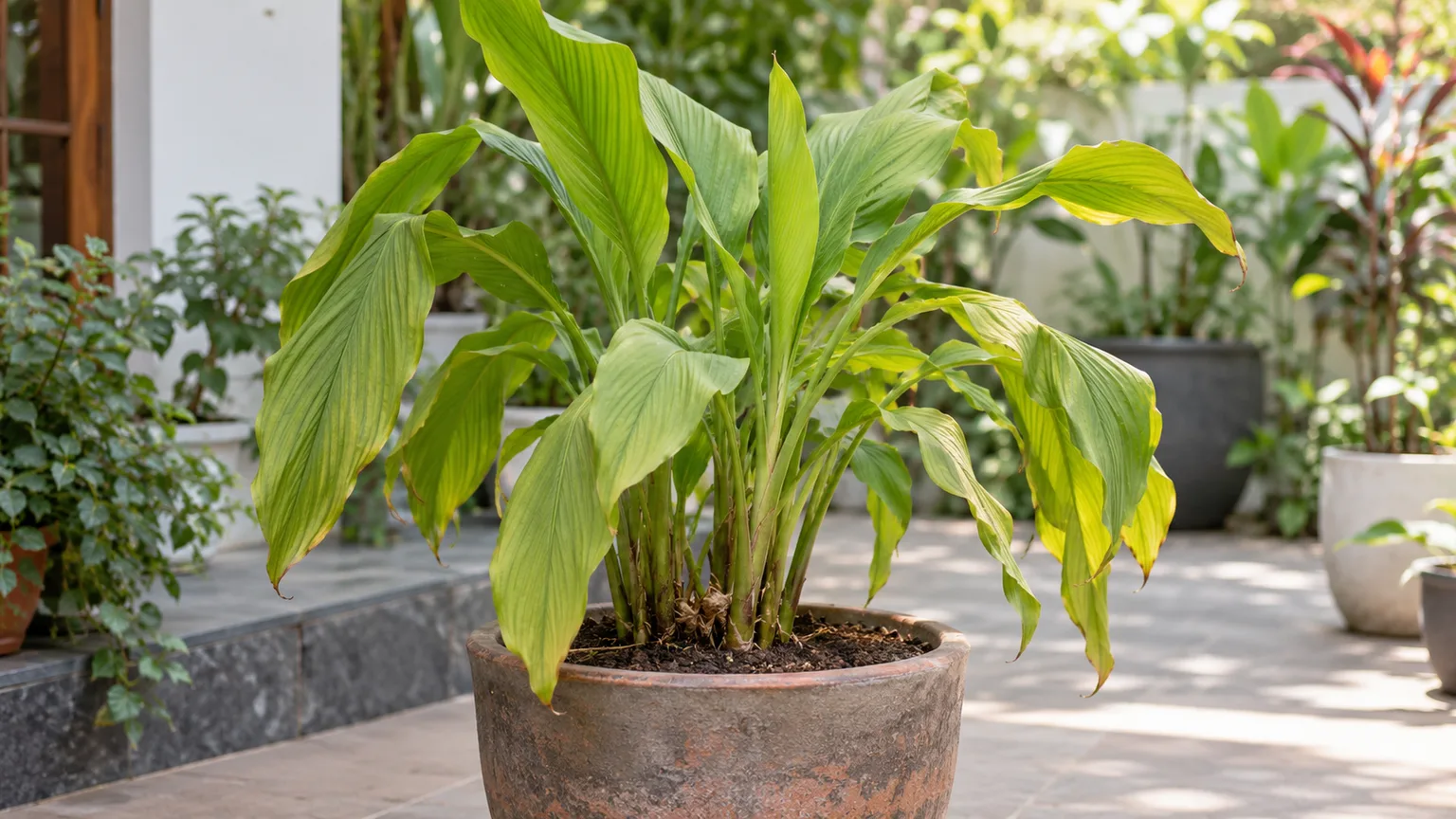
Wilting on Turmeric: Causes, Checks & Fixes
This guide covers wilting on Turmeric. See also the general Wilting guide, watering, and light pages for this plant.
Wilting on Turmeric: Causes, Checks & Fixes
Quick answer
Wilting on turmeric (Curcuma longa) is whole-clump turgor loss: the broad pleated leaves and clustered leafy shoots go limp together instead of standing stiff and upright. For how wilt works when roots, heat, or rot block water uptake in general, see our wilting guide. On turmeric, the first move is always pot weight plus a finger probe 2–3 cm into the mix—not another drink because leaves look sad.
First step: lift the pot and check whether the upper 2–3 cm of mix is dry or wet. A light, dry pot with limp blades in hot weather calls for one measured soak through the turmeric watering rhythm. A heavy, wet pot with all-day collapse means uptake failure—pause watering and test rhizome firmness at the soil line before you add more water.
When to use this page vs other Turmeric guides
This page is for limp shoots and collapsed blades across the clump—when the plant looks like it cannot hold water pressure, not just one leaf hanging.
- Drooping leaves — posture-first: arch vs limp fold on individual blades
- Underwatering — when the top 2–3 cm is dry and the pot feels light
- Overwatering — when mix stays dark and damp for days after watering
- Root rot — when rhizomes soften, soil smells sour, or shoot bases mush on wet mix
- Yellow leaves — when lower blades yellow while the clump still wilts on wet soil
- Overview and problems hub — baseline care and sibling symptom pages
What wilting looks like on Turmeric
Turmeric grows as an upright perennial herb with large, clumped, lanceolate leaves up to 40 inches long, about 8–12 leaves per shoot, reaching roughly 90–120 cm tall in active growth. Healthy foliage stands stiff with a canna-like pleat along the midrib. Wilting is not the gentle outward lean of a heavy leaf—it is limp tissue that does not stiffen back by evening on the shoots that matter.
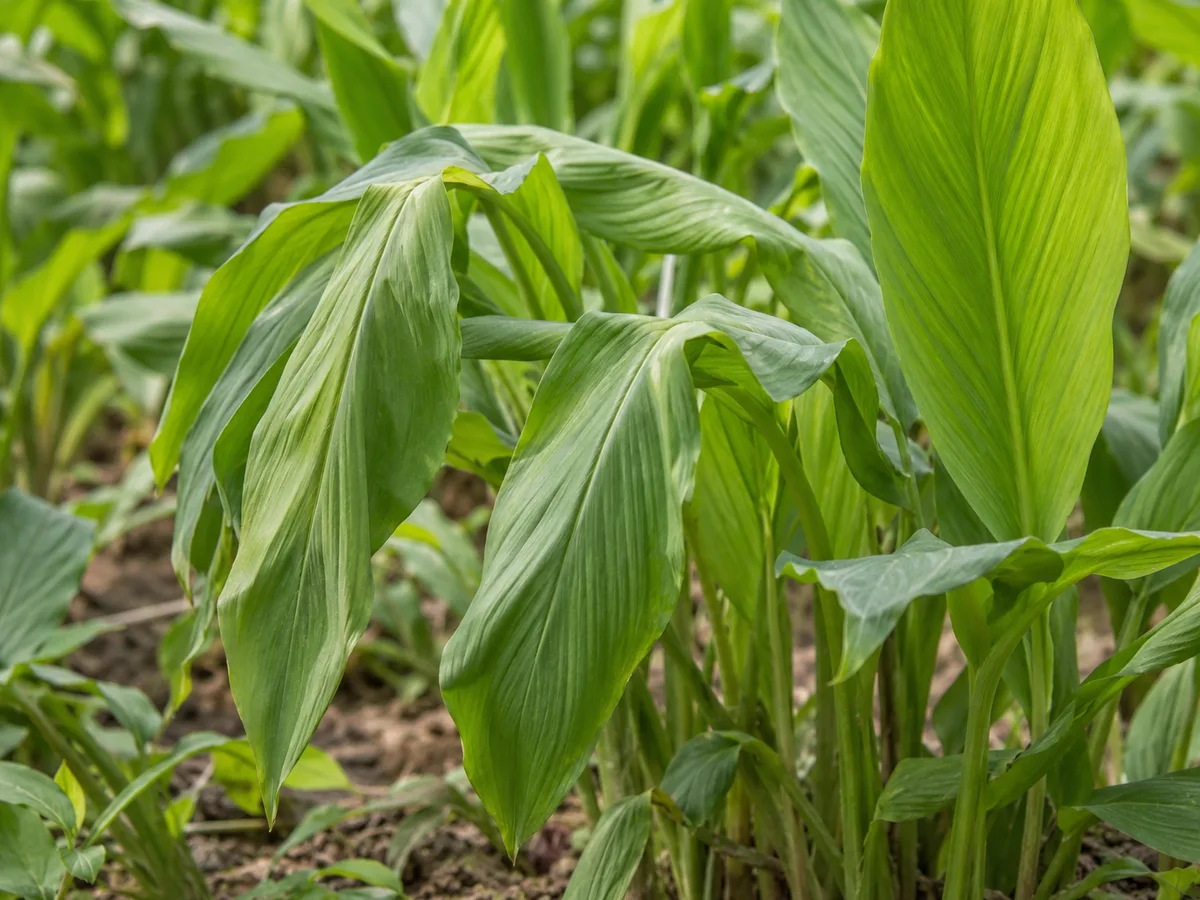
Soft turmeric blades collapsing along the midrib—confirm wet vs dry soil and rhizome firmness before you treat wilt as thirst.
Heat-flash wilt hits outer blades and exposed shoots in afternoon sun on a light pot. Mix 2–3 cm down may be dry; inner shoots can still look upright. Blades often recover overnight if rhizomes stay firm—this is transpiration outpacing shallow roots, not necessarily rot.
Dry-soil wilt spreads across multiple shoots: blades thin, curl, then hang limp; the container feels noticeably light. Hot terrace heat on a small balcony pot can flash-wilt turmeric within a day because rhizomes and roots sit shallow while large blades lose water fast. Potted specimens need lots of water when active, especially once root-bound.
Wet-soil wilt is the dangerous misread. The clump collapses while mix stays cool and heavy. Lower leaves may yellow. Wilting on moist soil often means roots cannot absorb water—adding water deepens oxygen loss around turmeric’s shallow rhizome zone. Pair this pattern with root rot when you smell sourness or feel soft tissue.
Dormancy wilt is uniquely normal on turmeric. In fall, foliage yellows, wilts, and dries uniformly as the plant shuts down—rhizomes are harvested in the fall when the foliage begins to wilt and dry out. This expected fade needs nearly dry rest, not rescue watering.
Midday sag vs all-day wilt on leafy shoots
Turmeric’s broad blades transpire heavily in humid heat while shallow rhizomes meter supply. That geometry creates a turmeric-specific timing clue many houseplant wilt guides skip.
| Pattern | What you see | Pot / mix | Evening check |
|---|---|---|---|
| Midday heat sag | Outer blades limp; inner shoots firm | May be dry or evenly moist | Blades re-stiffen; rhizomes firm |
| Drought wilt | Multiple shoots soft; edges may crisp | Light; dry 2–3 cm down | Still limp until soaked |
| Wet-root wilt | Whole clump limp all day | Heavy; damp 2–3 cm down | Stays limp; may yellow |
| Dormant dieback | Tops fade uniformly in fall | Trending dry as foliage drops | Expected—do not force water |
If wilt clears overnight on firm rhizomes, you likely saw heat sag—shift to morning sun with afternoon shade and tighten the dry-down check, not emergency repotting. If limpness persists on wet mix, you are in the wet-root branch regardless of afternoon temperature.
Why shallow rhizomes make turmeric wilt fast
Turmeric is grown for thick branched rhizomes just below the surface, not deep taproots. In containers, that means small soil volume dries or saturates quickly, and the storage organ you care about is the first to suffer when uptake fails—rhizomes can even split a container open as they thicken.
Common turmeric-specific wilt triggers:
- Calendar watering into cool weather — Mix stays wet while growth slows; roots rot while blades wilt paradoxically. See overwatering on turmeric when saucers stay full.
- Heavy soak before shoots emerge — Cold saturated mix around unsprouted spring rhizomes invites decay that shows up as sudden collapse when shoots finally push. Water lightly until growth starts, then shift to even moisture.
- Harvest or division shock — Freshly cut rhizome pieces need callus time; wilt right after repotting often reflects root wounds, not thirst.
- Harsh midday sun on a terrace — More than a couple hours of direct afternoon sun scorches thin new blades; stressed clumps wilt before edges crisp. Turmeric grows best with full sun in the morning and afternoon shade.
- Cachepots and saucers — Standing water keeps shallow roots anaerobic even when the surface looks dry.
- Rhizome rot pathogens — Waterlogging invites Pythium, Phytophthora, and Fusarium on ginger-family crops, and Fusarium proliferatum has been confirmed causing turmeric rhizome rot in Indian field surveys. Home pots rarely see field-scale disease, but discard severely rotted rhizomes rather than replanting them if collapse spreads rapidly on otherwise correct care.
Rhizome firmness at the soil line
Generic wilt advice stops at “check moisture.” On turmeric, probe the rhizome because shallow storage tissue tells you faster than waiting for drain-hole roots.
- Surface scrape — Gently move aside mulch or the top centimeter near a shoot. Firm orange-yellow flesh with a clean earthy scent suggests healthy tissue. Soft, dark, hollow, or waterlogged pieces mean stop watering and open root rot before any soak. Wear gloves—the yellow dye stains hands and clothing.
- Shoot base tug — Healthy leafy shoots resist a gentle upward tug. Mushy bases that release with little resistance signal advanced decay.
- New shoot watch — Recovery shows as green spear tips from rhizome eyes. Shoots stalled for weeks on wet soil while the clump wilts point to roots, not fertilizer gaps.
This check separates thirst from rot when blades look equally limp—critical on a crop where both mistakes kill rhizomes.
How to confirm the cause
Work in order; stop when one branch fits.
- Pot weight — Light vs heavy relative to your usual cycle after watering.
- Probe 2–3 cm down — Dry crumb vs cool damp clump (matches soil guide expectations for rich mix that stays moist but drains).
- Time of day — Afternoon-only limp on firm rhizomes vs all-day collapse.
- Smell and drain — Sour odor or stagnant saucer water flags the wet branch.
- Season — Leafless or yellowing fall pots should not get summer watering volume; turmeric becomes dormant once the monsoon season ends.
- Recent disturbance — Planting, harvest, or division within two weeks raises shock before rot.
The first fix to try
Lift the pot, probe the top 2–3 cm of mix, then take exactly one branch—do not water and repot the same day.
Dry branch (light pot, dry probe): Water slowly until a little drains, then empty the saucer. Recheck shoot stiffness in 24 hours before changing light or feed.
Wet branch (heavy pot, damp probe): Do not water. Improve airflow and confirm drain holes are open while staying within partial shade limits. If rhizomes feel soft or soil smells sour, skip soaking and follow the root-rot salvage path.
Dormant branch (yellowing tops, no new shoots, cool season): Let foliage finish dying back; keep mix nearly dry until spring sprouting—do not interpret fading leaves as a call for heavy irrigation.
Heat-sag branch (overnight recovery, firm rhizomes): Shade midday sun and align watering to top-layer dry-down—not more water by default.
Once shoots are active, turmeric wants consistently moist but well-drained soil through warm months—medium to wet moisture with good drainage—never bone-dry for days in heat, never waterlogged in cool weather.
Recovery timeline and what improves
| Scenario | What you may see | Realistic timeline |
|---|---|---|
| Mild drought wilt on firm rhizomes | Shoots re-stiffen after one proper watering | Hours to 1–2 days |
| Heat afternoon wilt | Outer blades fold; perk overnight | Same day to overnight |
| Overwatering without advanced rot | Wilt stops spreading; no new yellow | 1–2 weeks with dry-down |
| Soft rhizome / sour soil | Old blades may stay limp | Weeks; some tissue lost permanently |
| Post-division shock | Gradual upright new shoots | 1–3 weeks if rot avoided |
Limp blade tissue rarely returns to perfect green. Success means upright new shoots, stable pot weight between waterings, and firm rhizomes when you probe—not cosmetic repair of every collapsed leaf.
Lookalike symptoms on Turmeric
| What you see | Often actually | Page to open |
|---|---|---|
| Blades arch but stay stiff | Normal foliage posture | Drooping leaves — limp fold, not arch |
| Edges brown, wilt in afternoon only | Sun scorch or dry air | Light guide, brown tips |
| Whole clump limp, wet mix, sour smell | Root rot / chronic overwatering | Root rot, overwatering |
| Crisp edges, very light pot | Underwatering in heat | Underwatering |
| Lower yellow, upper wilt on wet mix | Rot progression | Yellow leaves |
| Fine webbing, stippling on dry foliage | Spider mites on stressed turmeric | Pest page before extra fertilizer; mites favor dry soil |
| Chewed young leaves, slime trails | Slugs and snails | Hand-pick at night; young leaves may be troubled by slugs |
| Uniform top fade in autumn | Normal dormancy | Overview — reduce water |
Mistakes that keep turmeric wilting
- Watering a heavy pot because shoots collapsed — Deepens root oxygen loss; confirm dryness first.
- Assuming wilt always means drought — Wet-root paradox is common on container turmeric in monsoon-cool transitions.
- Soaking dormant, leafless pots — Invites rot when no leaves transpire moisture away.
- Full hot sun to “perk up” a limp clump — Afternoon scorch worsens blade stress; move to morning sun with afternoon shade instead.
- Fertilizing a collapsed clump — Does not restore uptake; stabilize moisture and rhizome health first via the fertilizer guide only after new growth looks stable.
- Repotting, dividing, and soaking the same week — Combines root wounds with saturated mix; change one variable at a time.
How to prevent wilting next time
- Water when the top 2–3 cm of mix dries during active growth—not on a fixed calendar from summer into winter.
- Keep morning sun with afternoon shade; use the soil guide mix that stays moist but free-draining.
- Empty saucers after every watering; never let cachepots hold standing water over shallow rhizomes.
- Choose a wide, sturdy pot early—thickening rhizomes crack thin plastic and crowd out moisture-buffering mix.
- Water lightly until shoots emerge after planting, then increase to even moisture as extension guides recommend.
- Scan the problems hub during hot season—all-day limp on a heavy pot is an early rot warning, not a cue to pour more.
Related Turmeric guides
Use this page when the whole clump lost turgor and you need the wet-vs-dry branch fast. Use drooping leaves when blade posture is the main clue, underwatering and overwatering when you already know the soil story, and root rot when rhizomes fail the firmness test. Long-term rhythm lives in watering, light, and soil once wilt stabilizes.