How to Prune Turmeric: Leaves, Timing & Dormancy Cutback
How to Prune Turmeric: Leaves, Timing & Dormancy Cutback
How to Prune Turmeric: Leaves, Timing & Dormancy Cutback
First, remove only fully yellow, brown, collapsed, or clearly diseased turmeric leaves. Cut each leaf stalk near the soil line or crown with clean, sharp scissors or bypass shears—do not slice into firm rhizomes and do not strip a flush of healthy green leaves “for shape.” After that cleanup, decide whether the plant is still in active growth or already entering dormancy.
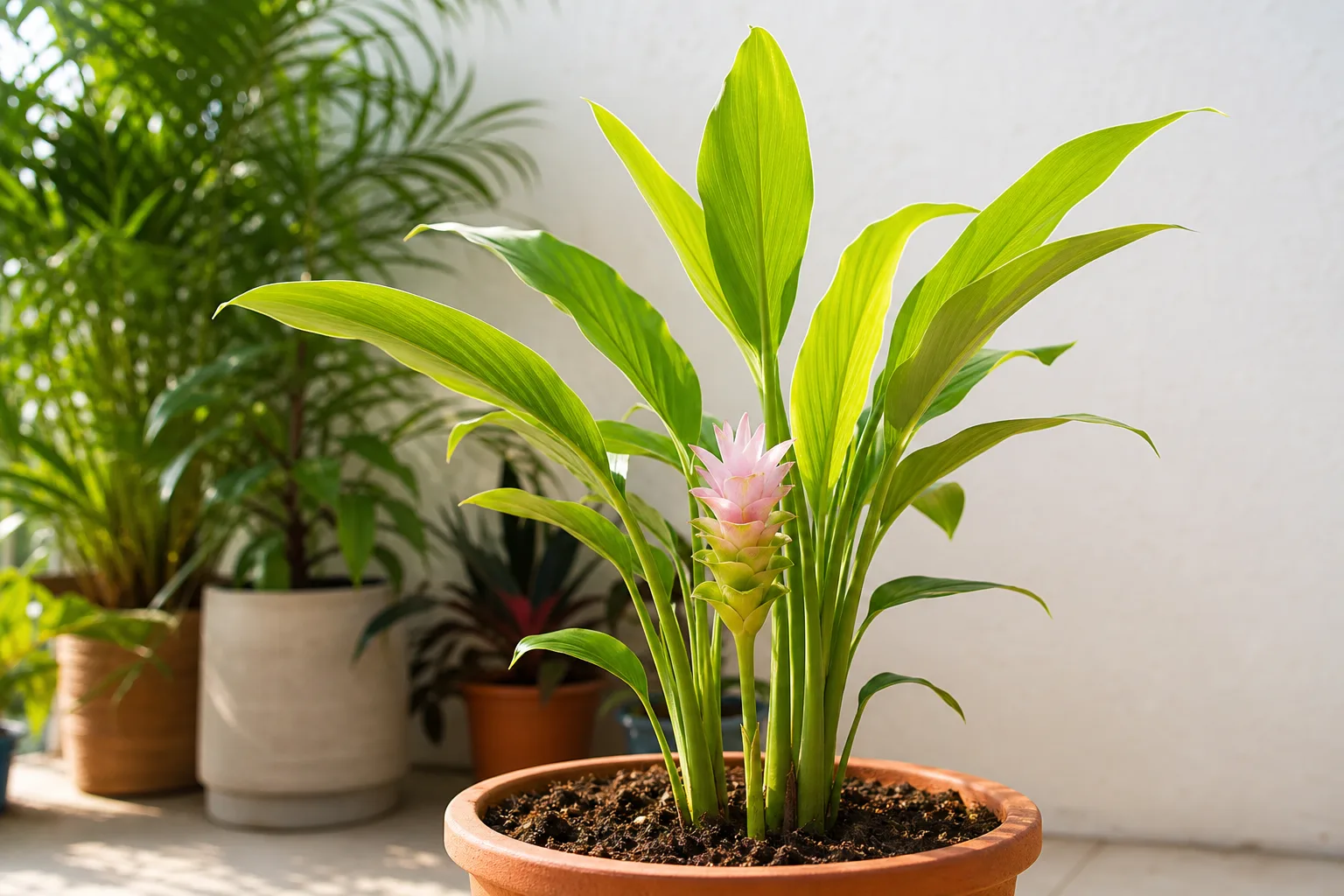
Turmeric (Curcuma longa) is a tropical rhizomatous herbaceous perennial in the ginger family, not a woody shrub. New shoots rise from underground rhizomes; the tall canna-like leaves feed those rhizomes through the warm, humid season. That is why turmeric pruning is mostly sanitation and seasonal cutback, not tip-pinching for a bushier silhouette. For whole-plant context—moisture, heat, and monsoon-style growth—start with the Turmeric overview.
Quick answer
During active growth, keep useful green leaves and remove only failed foliage. When leaves naturally yellow, wilt, and dry toward harvest or winter rest, cut spent top growth back and either leave rhizomes in place for the next season or dig them for kitchen use and storage (Missouri Botanical Garden; NC State Extension; Penn State Extension).
Pruning can improve airflow and make harvest cleaner. It cannot fix cold wet roots, chronic drought, or weak light. Stabilize watering and light before expecting a cut-back clump to push strong new shoots.
What “pruning” means on Turmeric
A turmeric plant is a foliage clump fed by thick, branched rhizomes. NC State Extension describes upright shoots with large lanceolate leaves (often eight to twelve per shoot) and short pale-yellow flower spikes; flowers are sterile, so the plant is multiplied by rhizome division, not seed.
Three jobs show up in home pots and beds:
| Situation | Action | Timing | Outcome |
|---|---|---|---|
| Fully yellow, brown, torn, or diseased leaf | Leaf cleanup at the stalk base | Anytime | Clearer clump; less debris |
| Spent or unwanted flower spike | Spike removal at the base | After bloom fades | Tidier look; no seed crop to lose |
| Whole clump yellowing and drying for dormancy or harvest | Top-growth cutback / remove spent foliage | Late season | Ready rhizomes for rest, storage, or kitchen use |
There is no useful “top the main stem for branching” step. Cutting green leaf area mid-season reduces the plant’s ability to bulk rhizomes. Size control is handled by pot size, planting density, and later division or harvest—not by shearing a leafy topiary.
When to prune Turmeric
Mid-season leaf cleanup
Remove a fully spent or clearly damaged leaf as soon as you identify it. Torn green tissue from wind or handling can stay if most of the blade is still firm and green; that tissue still photosynthesizes. In hot, dry indoor air, also check the undersides of leaves for spider mites—Missouri Botanical Garden notes mites when soils become overly dry (Missouri Botanical Garden). Cleanup helps you see pests early, but watering and humidity still matter more than scissors.
End-of-season dormancy and harvest cutback
Turmeric thrives in monsoon-style moisture, then becomes dormant as conditions dry (Missouri Botanical Garden; NC State Extension). Home growers use the same cue commercially described for harvest: dig when foliage begins to dry, wilt, or yellow (Penn State Extension; UF/IFAS Gardening Solutions; TNAU Agritech).
In frost-free Indian balconies and warm zones, that often means late monsoon into cool dry months. In colder climates, Missouri Botanical Garden advises digging rhizomes in fall, removing top growth, and storing them cool and barely moist, or overwintering containers indoors (Missouri Botanical Garden).
What to check before cutting
Before any cut beyond one failed leaf, check:
- Growth stage: Are new green leaves still expanding, or is the whole clump yellowing together? Whole-clump yellowing points to dormancy or harvest, not a random pest leaf.
- Soil moisture and pot weight: Soft, sour mix with collapsing bases is a root/rhizome problem—fix watering and soil drainage before mass leaf removal.
- Light and heat: Pale, sparse foliage in a dim corner is a placement issue. Improve light rather than cutting healthy leaves shorter.
- Harvest intent: If you plan to cook or store rhizomes, wait for natural dieback cues instead of forcing an early cutback on a still-vigorous plant.
Wear gloves and protect surfaces if you will dig or nick rhizomes later—fresh turmeric juice stains hands and fabric (NC State Extension; Penn State Extension).
The first cut to make
Choose one fully yellow, brown, or collapsed leaf. Follow its stalk to the crown and cut it cleanly near the base without gouging neighboring healthy shoots or exposed rhizome knobs. Bag the leaf and step back.
That single cleanup is the whole first session for most container plants. Only after you can see the remaining green canopy clearly should you decide on flower-spike removal or end-of-season cutback.
How to prune Turmeric step by step
- Sanitize tools. Wipe blades with 70% isopropyl alcohol or another recommended disinfectant before you start, especially if you recently cut a diseased plant (Iowa State University Extension).
- Remove failed leaves one at a time. Cut stalks near the crown. Prefer clean cuts over tearing, which leaves ragged stubs that hold moisture against the clump.
- Optional: remove spent flower spikes. Snip the spike at its base after bloom fades if you want a tidier pot. You are not sacrificing seed—flowers are sterile (NC State Extension; Penn State Extension).
- At dormancy or harvest, cut spent top growth. When foliage has yellowed and dried, remove the dead canopy. If harvesting, dig rhizomes carefully; MoBot notes removing top growth when rhizomes are lifted for winter storage (Missouri Botanical Garden).
- Separate propagation from pruning. Cutting rhizomes into eye-bearing pieces is propagation and division, usually in spring or summer—not a mid-season foliage prune (NC State Extension; Penn State Extension).
How much you can safely remove
There is no useful one-third woody-plant rule for turmeric. During active growth, remove only foliage that has already failed. Leaving a strong green leaf area supports rhizome fill for culinary harvest.
At true dormancy, you can remove essentially all spent top growth because the plant is resting in the rhizomes. That is seasonal senescence, not an emergency hard prune on a growing plant.
If more than a few green leaves are yellowing while new shoots are still emerging, pause cutting and diagnose moisture, pot crowding, or heat stress before stripping the canopy.
What not to cut
- Healthy green leaves “to make it shorter.” Height comes from rhizome vigor and season length; shearing green blades mainly reduces food for the underground crop.
- Firm rhizomes and buds (eyes) during routine cleanup. Dig and divide only when harvesting, storing, or propagating.
- A still-growing plant down to bare soil “for winter” weeks early. Wait for natural yellowing and drying cues used for harvest timing (UF/IFAS Gardening Solutions; Penn State Extension).
- Neighboring shoots while chasing one damaged leaf. Work leaf by leaf so you do not open unnecessary wounds in a humid pot.
Aftercare and recovery
After mid-season cleanup, keep the mix consistently moist but not stagnant while leaves are expanding, and maintain warm placement with morning sun or bright partial shade (Missouri Botanical Garden; NC State Extension). Do not fertilize as a reaction to pruning; feed only on your normal active-growth schedule from the fertilizer guide.
After dormancy cutback or harvest, reduce watering sharply. Stored or resting rhizomes need cool, barely moist conditions—not a soaked pot (Missouri Botanical Garden). New shoots in spring are the recovery signal, not immediate leafy regrowth from cut stalks.
Expect cleanup wounds to dry within days. Expect dormancy-to-sprout recovery over weeks to months depending on warmth. Soft, foul rhizomes after cutback mean excess moisture or cold wet soil, not “slow pruning recovery.”
Mistakes to avoid
- Shearing a full green canopy mid-monsoon for a neater silhouette
- Cutting into rhizomes while only intending leaf cleanup
- Digging and dividing on the same day as a heavy foliage cut and a stressful move or repot
- Leaving sodden soil on a cut-back dormant pot
- Ignoring mite webbing on dry foliage and blaming “needs more pruning”
- Handling cut rhizomes without protecting clothes and counters from orange stain
When not to prune
Skip non-urgent cuts when the plant was just repotted, newly moved indoors, or sitting in cold wet mix with soft bases. Remove only tissue that is already dead if sanitation requires it. Delay dormancy cutback if only one outer leaf is yellow while the rest of the clump is still deep green and expanding.
Also wait if you cannot tell dormancy from drought: bone-dry pots with crisped edges need water and shade correction first, not a full cutback.
Related Turmeric guides
- Turmeric overview — growth habit, monsoon rhythm, and what healthy plants look like before you cut
- Turmeric light — morning sun and partial shade that keep leaves sturdy
- Turmeric watering — moist active growth vs dry-cool rest after cutback
- Turmeric soil — rich, draining mix that protects rhizomes
- Turmeric fertilizer — feeding during leaf expansion, not as a prune reaction
- Turmeric propagation — rhizome division with eyes, separate from leaf cleanup
- Turmeric repotting — when crowded rhizomes need a larger pot instead of more cutting