How to Grow Plants in a Wine Barrel Planter
Learn how to prepare a wine barrel planter, add drainage, choose compatible soil and plants, and care for herbs, flowers, fruit, and vegetables.
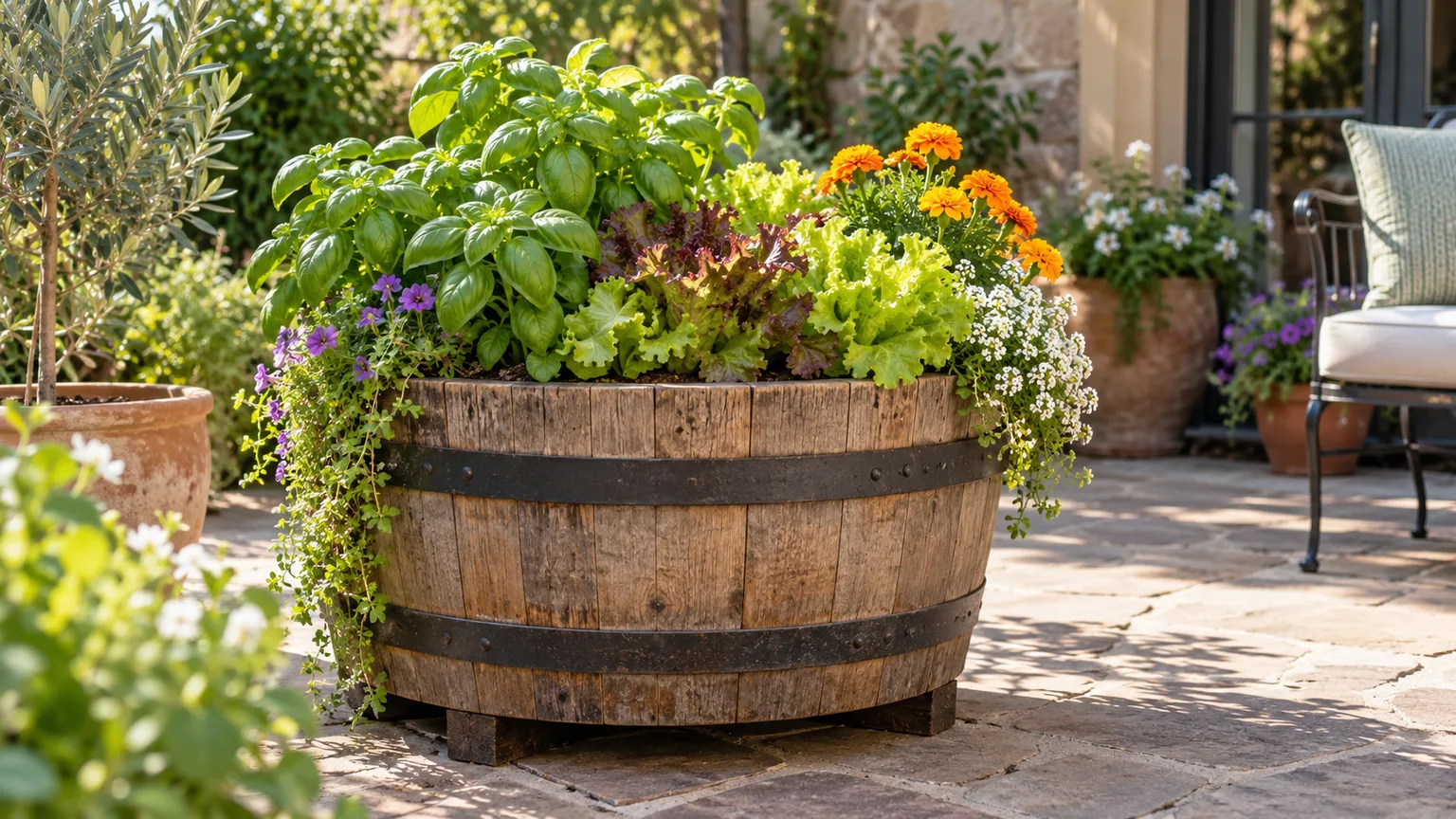
A wine barrel can become a productive planter, but its size alone does not make it a good growing container. Before adding soil, confirm that the wood is sound, the base can drain freely, the filled barrel can stay safely where you put it, and the plants you choose share similar light and water needs. A half-barrel is a strong fit for seasonal flowers, herbs, leafy crops, and some compact fruiting plants; it is a poor fit when you need a lightweight pot you can move every week.
The most reliable approach is to treat the barrel as a large outdoor container, not as a miniature garden bed. That means choosing a suitable potting mix, keeping the drainage path open, planning for the roots and mature canopy, and adjusting care to the season.
Decide whether a wine barrel suits the planting job
A barrel planter gives you more root volume than a typical patio pot, a broad surface for arranging plants, and enough height to make a patio corner or entrance feel planted. It can also separate mint or a small crop from a bed where it might spread. These are useful advantages when you have hardscape instead of garden soil or want a display at a particular height.
Its disadvantages are easy to underestimate. A large barrel filled with moist growing mix, a mature plant, and rainwater is heavy; the empty barrel’s apparent portability disappears once it is planted. A wooden container also needs open drainage and some air beneath its base, and it may need more water than the deep soil in a garden bed because roots are confined and exposed to sun and wind.
Choose the barrel if you can place it near its final location before filling it, direct runoff away from doorways and wooden decking, and reach the root zone for watering. If the container needs to move indoors for winter, decide how that move will happen while it is still empty. A wheeled base can help only if it is stable, rated for the full wet load, and suitable for the surface; wheels do not make an overloaded or top-heavy planter safe.
Think about the plant’s mature size, too. A barrel may start roomy yet still be too shallow, narrow, or exposed for a tree that wants a large permanent root system. On a balcony, rooftop, or raised deck, confirm that the structure can support the combined container, saturated mix, plant, and people before adding a heavy planter.
Inspect the barrel before adding soil
Ask where the barrel came from and what it held. A former wine or spirits barrel has a history of beverage use, but a decorative barrel or salvage item may have been repurposed, treated, painted, or stored with unknown chemicals. If that history cannot be confirmed, use it for ornamentals rather than edible crops, or choose a new food-growing container with a known material history.
Inspect the staves, bottom, and metal hoops while the barrel is empty. The wood should not crumble when pressed, the base should not be visibly sagging, and the hoops should be snug enough to keep the staves together. A few dry surface checks are different from loose boards, deep rot, a shifting base, or a hoop that slides; repair or replace a structurally weak barrel before you load it.
For a clean, sound barrel, remove loose debris with a stiff brush and rinse away dust. You do not need to scour the interior with salt or leave detergent, bleach, or wood cleaner where roots will grow. If the vessel has a strong chemical odor, a coating you cannot identify, or residue that remains after rinsing, do not use it for food plants. Never apply an interior wood preservative or waterproofer unless its label explicitly permits use in a planter for the intended crop.
A liner is not a substitute for a sound barrel or working drainage. An impermeable liner can trap water against the wood or cover the holes; if you choose one to protect a delicate surface, it must be compatible with growing plants, fitted without blocking the outlets, and understood as a replacement part that may need inspection. In many cases, the simpler and easier-to-check setup is an unlined barrel with drainage and clearance underneath.
Set the barrel in its permanent location
Move the empty barrel to the spot you measured for sun, access, and water runoff. Measure direct light at the barrel rather than assuming that a bright patio receives full sun; walls, fences, tree canopies, and eaves can create shade for much of the day. Fruiting crops and many flowering plants need more direct light than lettuce or shade-tolerant foliage.
Use a firm, level base that will not sink or wobble as the soil becomes wet. Set the barrel on stable pot feet, pavers, or rot-resistant supports so the bottom can drain and air can circulate; keep the supports under strong points, not under a weak or rotting plank. If the barrel has no solid bottom, check that the surrounding surface and the plant’s roots make sense for that open-bottom design, and protect the base from pests where appropriate.
Keep the planter close enough to water, but give drained water somewhere to go. Do not let a saucer or waterproof tray hold the barrel’s runoff for long periods. A permanently wet wooden base can decay, and standing water at the root zone removes the air that most garden plants need.
Do not count on rolling the planter after it is planted. Even a modest half-barrel can become difficult to lift once its mix is wet. If mobility matters, install a heavy-duty plant dolly before filling, lock it while the planter is in use, and check the manufacturer’s weight rating against the barrel’s fully loaded weight rather than the empty-container weight.
Make drainage holes that stay open
Most wine barrels were built to retain liquid, so a solid-bottom barrel must be converted before it can hold plants. Use a drill and a wood bit to make several evenly spaced holes through the lowest part of the base. For a common half-barrel, six to eight holes around 1/2 inch wide are a reasonable starting point, but the exact number depends on the base size, thickness, and how freely the water exits.
Before drilling, set the barrel on its supports and identify the areas that will remain above open air. Avoid a support directly under every drainage point. Wear eye protection, hold the barrel steady, drill from the inside if you can do so safely, and clear the holes of loose splinters afterward. If the bottom is already split, rotting, or built from gaps, add only the drainage needed; do not turn a weakened base into a collection of loose boards.
A layer of gravel, broken pottery, or rocks at the bottom does not repair blocked drainage. It takes up root space and leaves the important question unanswered: can excess water leave the container? Keep the holes open and use a loose, container-appropriate mix instead. For more on this distinction, see our guide to whether rocks belong at the bottom of a planter.
Test the barrel before adding expensive potting mix. Pour in several gallons of water and confirm that it exits through multiple parts of the base rather than pooling in one corner. If the flow is slow, inspect for a blocked hole, a support pressed against the base, or an already compacted floor. Fix the problem while the barrel is empty; drainage is hard to correct after roots fill the planter.
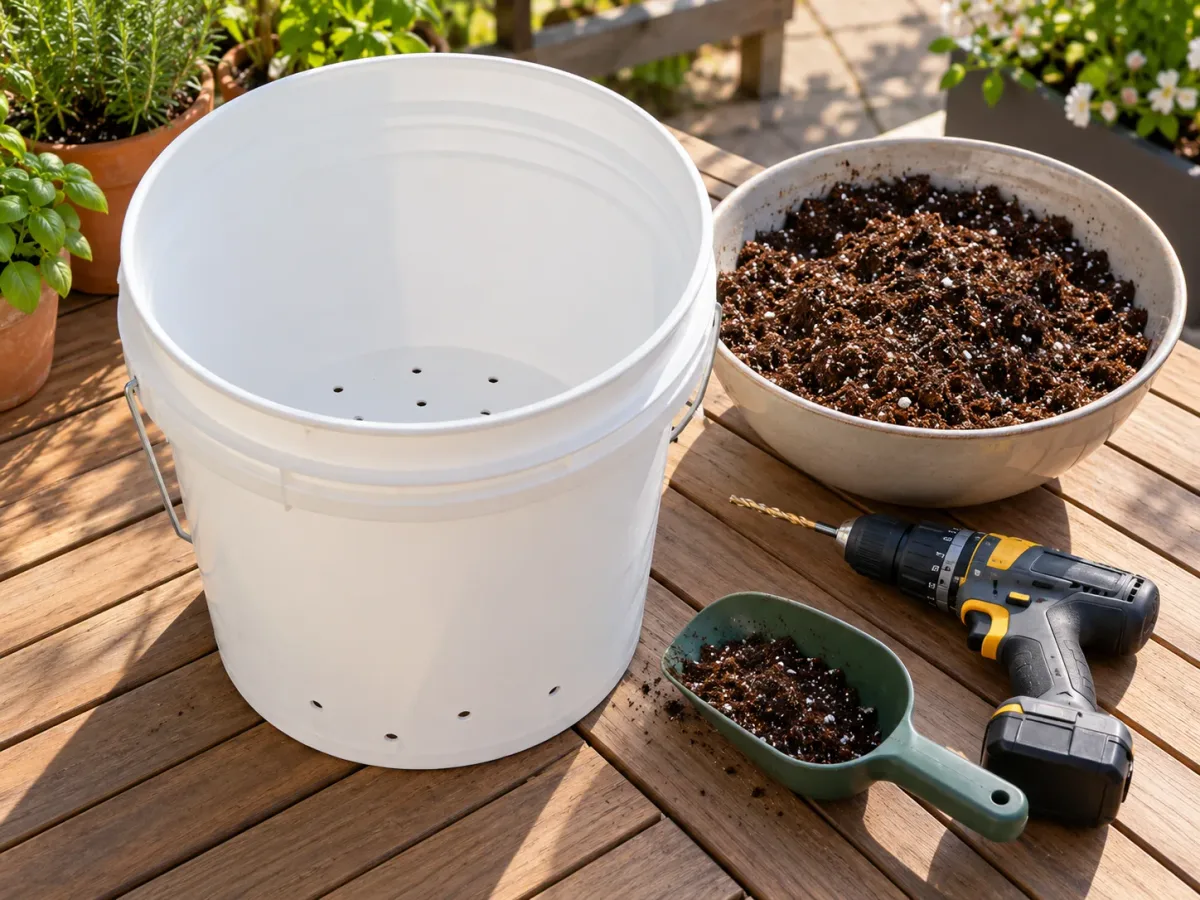 Inspect and test a container’s drainage while it is empty, before adding mix or roots.
Fill with airy container mix
Use potting mix made for outdoor containers, not dense garden soil or topsoil dug from a bed. Garden soil compacts differently in a container and can leave too little air around the roots. University of Georgia Cooperative Extension’s container guidance explains that container roots rely on a porous growing mixture because containers drain differently from ground beds; it also describes commercial soilless mixes with components such as bark or perlite that help with aeration and drainage.
Buy the mix by volume rather than guessing from the barrel’s outside dimensions. Barrel staves curve, many planters taper, and the soil surface should finish below the rim, so the nominal capacity can overstate what you need. Check the volume printed on each bag. For a rough estimate, measure the barrel’s inside diameter at the top and bottom, average the two, then measure the usable depth to the fill line. Treating that tapered shape as a cylinder gives about 0.000455 × average diameter² × usable depth cubic feet when all measurements are in inches. Divide by the volume printed on each bag; the real need may be a little lower because the barrel narrows toward the base.
Fill with enough continuous mix for the roots of the plant you actually plan to grow. A deep-rooted potato crop or a compact tree uses a different profile from lettuce or a shallow seasonal display. Do not fill the lower half with random bulky material just to save mix; roots cannot use the space you replace, and organic fillers can settle as they decompose. If the plant is shallow-rooted and the barrel is unusually deep, compare the cost and root needs before using any filler. Our guide to filling a large planter without compromising roots explains those trade-offs.
Leave roughly 1 1/2 to 2 inches between the soil surface and rim. This small watering lip lets you soak the mix without spilling it over the edge. Lightly settle the mix with water rather than packing it down by hand. Add a thin mulch layer after planting if it suits the crop, leaving a clear ring around stems and crowns.
Match plants by sun, moisture, and season
A barrel is a shared root environment. Plants grouped in it should be compatible in direct sun, soil moisture, temperature, and expected size, not merely similar in color. Epic Gardening’s container-display guide uses height and spread to balance a display; that design shorthand works only after you match the plants’ growing conditions. The rule matters even more in one big barrel because you cannot move a single plant without disturbing its neighbors.
Start with a simple recipe: full-sun and relatively dry; full-sun and evenly moist; or part-shade and consistently moist. Agave belongs in the first group, while basil and potatoes fit the second. Ferns and hydrangeas may suit a cooler, part-shade location with consistent moisture, but those conditions are wrong for agave. Lettuce is usually a cool-season crop and can be placed where it avoids punishing afternoon heat.
A large surface may tempt you to combine one tall centerpiece with several fillers and spillers. That can work for a seasonal display if every plant accepts the same light and watering routine. The thriller, filler, and spiller roles described in Epic Gardening’s container-design guidance help balance height, fullness, and trailing growth, but they do not override plant compatibility.
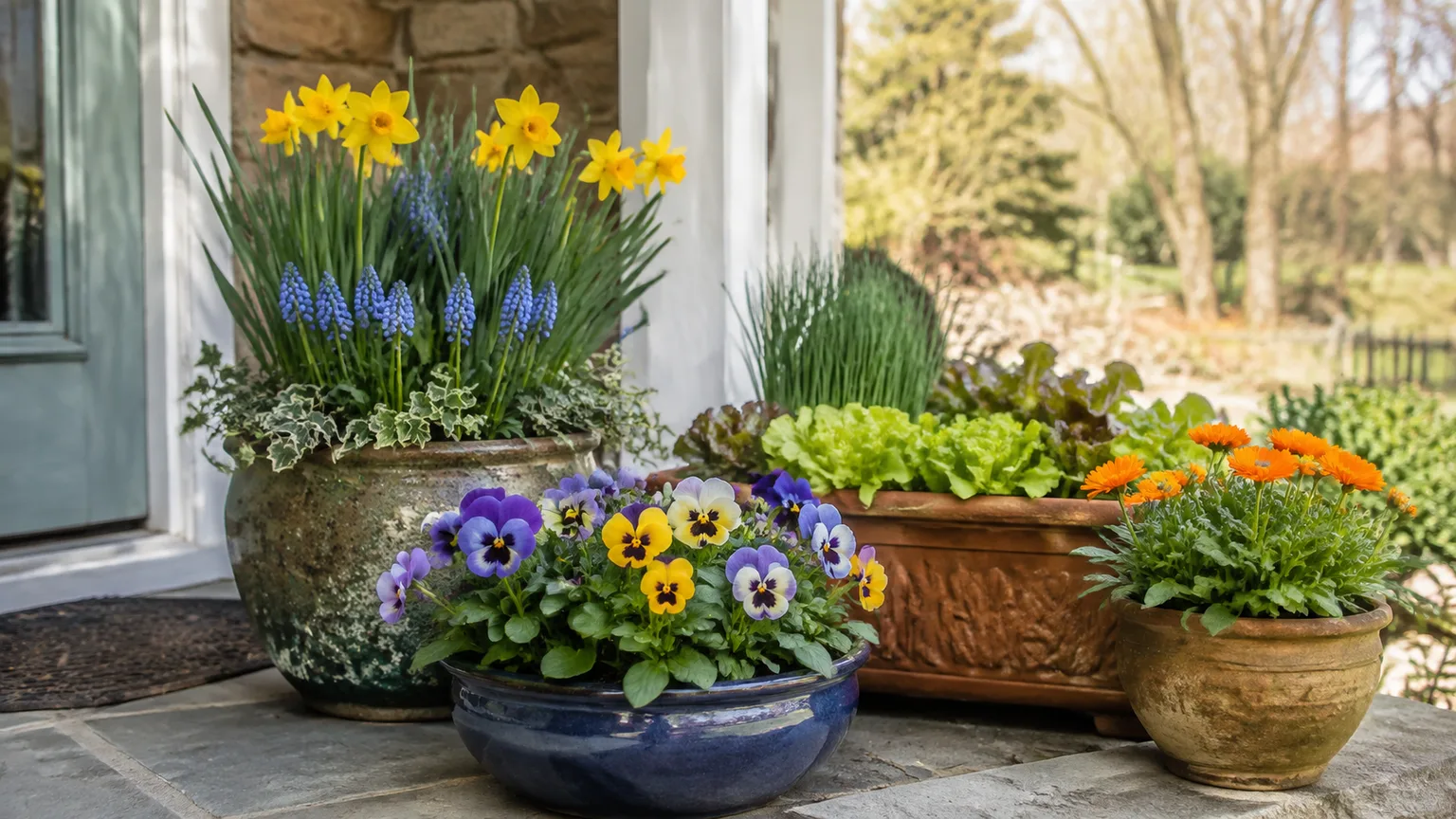 Use height and trailing growth to shape a display only after matching the plants’ light and watering needs.
Ten plants to grow in a wine barrel planter
These are ten candidates, not ten plants to cram into one barrel. The right number depends on plant size and container volume: a single dwarf tree or hydrangea may use the whole barrel, while several lettuce starts or seasonal annuals can share it. Treat the growing conditions in the middle column as the first filter, then check the variety label and local hardiness guidance.
Sun-loving, drier options
| Plant | Best barrel conditions | What to know before planting |
|---|---|---|
| Agave | Strong sun and a fast-draining mix, with watering allowed to taper between drinks. | Choose a species hardy for your climate and barrel location. Keep it in its own dry setup; do not combine it with hydrangea, lettuce, or other plants that need consistently moist mix. |
| Basil | Warm weather, several hours of direct sun, and evenly moist—not waterlogged—mix. | Plant after cold nights have passed. Pinch growing tips and harvest regularly to encourage branching; do not let a large, flowering basil plant crowd out every companion. |
| Potatoes | A bright site and a deep, loose root zone that stays evenly supplied with water. | Use disease-free seed potatoes and a container-appropriate variety. Add mix around stems as they grow, leaving foliage exposed; drainage and consistent watering matter more than simply having a deep-looking barrel. |
Edible plants for warm, bright barrels
| Plant | Best barrel conditions | What to know before planting |
|---|---|---|
| Turmeric | Warm temperatures, a long growing season, and a mix that stays lightly moist but drains freely. | Start with a healthy rhizome when conditions are warm. In regions with cold winters, grow it as a seasonal crop and harvest before frost or protect the whole barrel; a short cool season may not allow much rhizome growth. |
| Dwarf fruit tree | A sunny, sheltered spot and a barrel with adequate usable root volume. | Buy a named dwarf cultivar or grafted tree, then check mature size, pollination needs, chill hours, and local hardiness. “Dwarf” does not mean miniature or maintenance-free; pruning, feeding, and winter root protection remain part of the job. |
| Lettuce | Cool weather, bright light, and evenly moist mix; some afternoon shade helps in hot climates. | Sow or plant in succession so leaves are ready at different times. Lettuce may bolt or turn bitter in heat, and the open barrel top can dry quickly in wind even when the container is large. |
Shade, cool-season, and long-term choices
| Plant | Best barrel conditions | What to know before planting |
|---|---|---|
| Fern | Part shade, protection from hot afternoon sun, and regular moisture with good drainage. | Identify the fern and its cold tolerance. A barrel can show off arching fronds, but its open surface loses water; keep the mix moist without letting the base sit in runoff. |
| Hydrangea | Morning sun or bright partial shade, with steady moisture and room for mature growth. | Choose a compact cultivar and verify its mature width and winter hardiness. A large hydrangea may eventually outgrow a half-barrel; do not rely on the barrel’s mobility to rescue an oversized shrub. |
| Garden mum | Full sun and a fresh, seasonal display in fall. | Many florist mums are sold for short-term color rather than reliable winter return. If you want a perennial, select a garden mum rated hardy for your area and protect its container roots as carefully as its top growth. |
| Mint | Sun or partial shade depending on the type, with regular moisture. | Keep mint in a separate nursery pot set inside the barrel, with its rim above the surrounding mix. That contains its runners and lets you lift it for harvest without letting it colonize the entire planter. |
The most useful combination is often simpler than a “thriller, filler, spiller” recipe. Choose one tall flowering plant with compatible low annuals, a few basil plants for an edible display, or a shade-loving mix of fern and compatible foliage. Avoid mixing a low-water succulent with thirsty edible crops just to fill the same space.
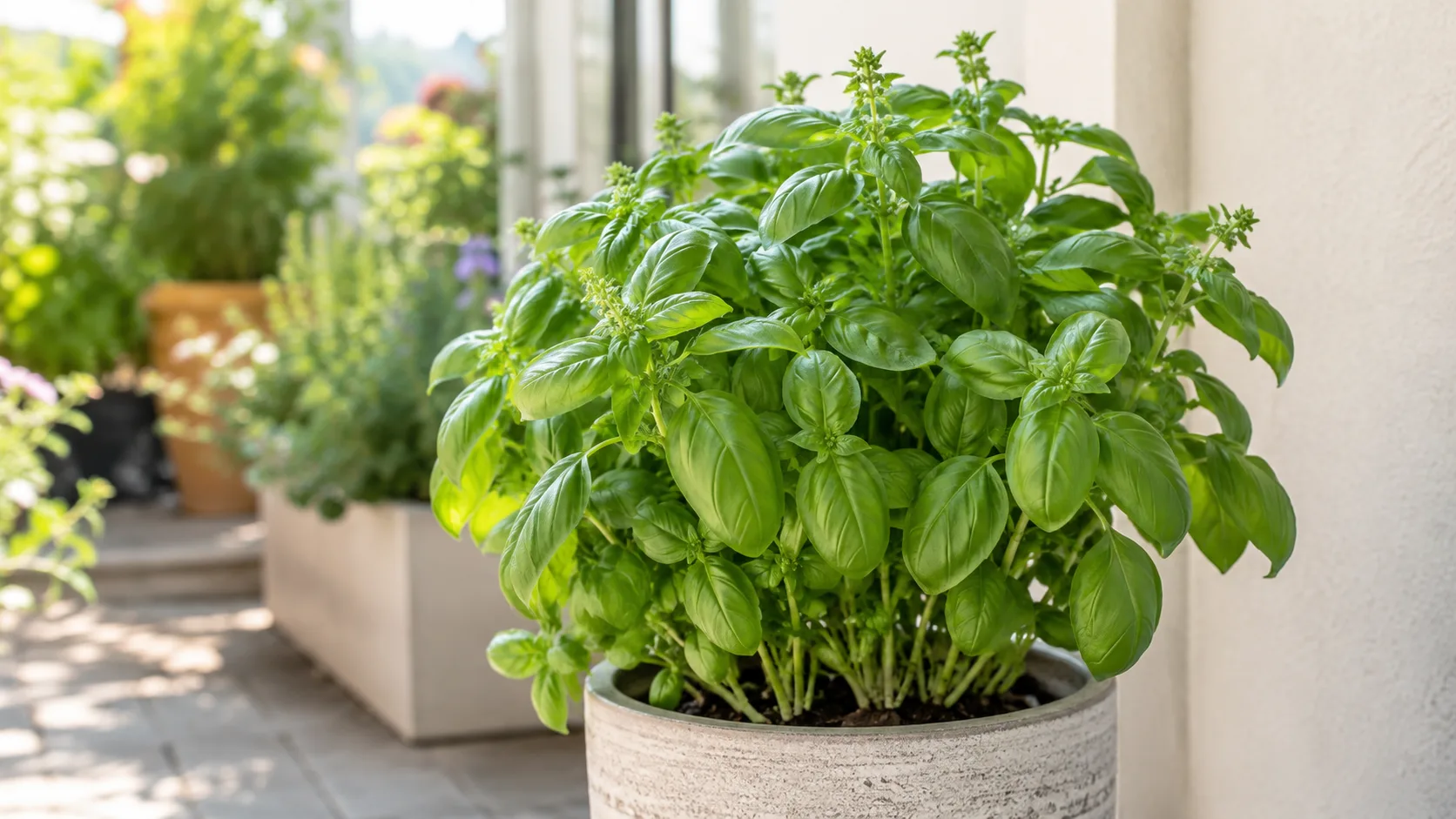 Basil is an edible option for a warm, sunny container; its companions need to share its moisture routine.
Plant a barrel in six practical steps
- Choose the site and the plant first. Check direct sun, wind exposure, runoff, and the crop’s mature size. Decide whether you are planting a short seasonal display or a long-term shrub, tree, or perennial.
- Inspect and position the empty barrel. Confirm that the wood, bottom, and hoops are sound. Place it on a stable base where the drainage holes will stay clear; do not plan to move it after it is full.
- Create and test drainage. Drill several holes if needed, brush away splinters, then pour water through the empty barrel. Correct a slow outlet or unstable support before planting.
- Add the mix for the selected root zone. Use container mix, keep it loose, and fill to a level that leaves room at the top for watering. Do not add fertilizer unless the product and plant guidance call for it; some mixes already include starter nutrients.
- Set the plants at their original depth. Water nursery plants before planting, loosen only tightly circling roots, and keep crowns or stems at the depth they were growing. Leave the spacing needed for mature foliage rather than filling every inch on day one.
- Water slowly and check the whole barrel. Apply water across the surface until it begins to leave the bottom, then look for both dry pockets and pooling. Top up mix that settles, add a suitable mulch, and note the date and weather so later checks are based on real drying rather than habit.
For seasonal combinations, place the tallest plant where it will not shade the others, use lower growers around it, and reserve trailing plants for the rim. That arrangement is a design choice, not a rule. If all plants share the same water and sun needs, a simpler grouping of several plants of one kind may be healthier and easier to maintain.
Water by checking the root zone
A barrel’s large size can slow moisture loss compared with a small pot, but it does not create a reliable watering schedule. Full sun, dry wind, rainfall that misses the soil, a crowded canopy, and thirsty roots can change how quickly the mix dries. Check the root zone with a finger or a narrow wooden stick rather than watering because a certain number of days has passed.
When the mix is dry at the depth appropriate for the plant, water slowly over the full surface. A fast pour down one side can run through a gap without wetting the center. Pause, then water again so the dry mix can absorb moisture; confirm that some water exits the drainage holes and that no tray is holding a standing reservoir against the barrel.
The target is neither permanent saturation nor repeated severe wilt. Ferns, hydrangeas, and leafy crops generally call for closer moisture checks than agave, but the base still needs to drain for all of them. If a rainstorm saturates the barrel and it stays heavy and wet, stop watering and inspect the holes and mix before changing the plants.
During hot or windy periods, check at least once a day until you learn the barrel’s drying pattern. The RHS container guide notes that containers can need watering up to twice a day in hot weather, especially small pots in full sun. Treat that as a warning about how quickly conditions can change, not as a universal schedule for a larger barrel. Watering deeply when the root zone needs it is usually more useful than frequent shallow splashes that wet only the surface.
Feed, mulch, and refresh the mix
Follow the potting-mix label and the plant’s growing instructions before adding fertilizer. Some commercial mixes include starter fertilizer; others do not. Once active growth is underway, nutrients can wash out through drainage holes, so edible crops, flowering annuals, and actively growing container plants may need regular feeding according to the product label. Do not apply a concentrated feed more often than directed: salts can accumulate in containers and stress roots.
Use a modest mulch layer to slow evaporation and reduce soil splash. Keep mulch off plant crowns and stems, and use a material appropriate to the crop. A thick wet layer pressed against the barrel’s inner wall can keep wood continuously damp, so leave a small gap around the perimeter and keep the drainage route visible.
Over time, potting mix settles and its structure changes. Top up a seasonal planting with fresh container mix if roots remain healthy and the soil level has dropped, but do not bury stems or crowns. For a shrub or tree that remains in the barrel for years, plan to refresh the growing medium or root-prune and replant when roots crowd the available volume; RHS container guidance notes that established container trees and shrubs need periodic attention as roots fill the pot and compost structure declines.
Protect roots and wood through winter
A plant’s hardiness rating often describes its chances in the ground, where surrounding soil buffers temperature changes. In a barrel, cold reaches the root zone from the sides and bottom, so a plant that survives outdoors in a bed may need added protection in a container. The RHS container guide notes that container roots are more exposed to cold than roots in the ground. Check guidance for the exact species and cultivar, and decide before planting whether the barrel can be insulated, sheltered, or moved while still manageable.
For a tender plant such as turmeric, plan for frost before the growing season ends: harvest the rhizomes or move the plant to a suitable protected space before freezing weather. For a hardy perennial or shrub, move the barrel next to a sheltered wall if you can do so safely, group it with other containers, and insulate the outside of the pot without blocking drainage. Do not wrap foliage in a way that traps moisture or leaves a plant overheated on a sunny winter day.
Wood lasts longer when the barrel is not left in constant contact with damp ground or standing water. Keep the base elevated, make sure the drainage outlets remain clear, and inspect the staves and hoops at the start and end of each growing season. If the bottom softens or the hoops loosen, remove the plant and mix before the structure fails rather than trying to move a full, unstable barrel.
Troubleshoot a struggling barrel planter
Water sits on top or the barrel stays wet for days: stop watering and inspect the bottom. Clear blocked holes, raise a base that seals against the patio, and replace compacted or broken-down mix. If water still cannot escape, move the plant temporarily while repairing the barrel.
Plants wilt even though the mix is wet: wilting is not always a sign of thirst. Saturated roots can fail to take up water effectively; verify moisture below the surface and check drainage before watering again. If the root zone smells sour or remains soaked, remove the plant and look for damaged roots rather than adding fertilizer.
The surface dries much faster than expected: check whether strong wind or afternoon sun hits the barrel, whether roots have filled the top layer, or whether the mix has pulled away from the sides. Water slowly in two passes, add a thin mulch layer, and consider moving seasonal crops to a less exposed location. Do not solve every dry-mix problem by packing in more plants.
Growth is weak or plants compete: compare each plant’s sun, moisture, and root-space needs with its neighbors. Remove the incompatible companion or move it to another container; changing a thirsty hydrangea’s watering to suit agave will leave one of them stressed. A barrel looks full quickly, but overcrowding raises water demand and reduces airflow.
The barrel leans, leaks, or shows soft wood: treat that as a structural issue, not a plant-care issue. Empty it before repair, replace a failing base or loose support, and do not trust a cracked barrel to carry a mature tree. If you cannot repair it safely, transfer the plants to a sound container.
Conclusion
A wine barrel planter succeeds when its practical details are settled before the plants go in: known material history, solid support, open drainage, enough container mix, and a location that suits the selected plants. Use the barrel’s volume for one substantial specimen or a compatible grouping, not as a reason to combine crops with opposite watering needs.
Start with the site and the plant, then choose a barrel that fits the root system and the weight you can support. Keep water moving through the base, check the mix as weather changes, and protect both roots and wood through winter. With those basics in place, a barrel can be a dependable home for flowers, herbs, leafy crops, and selected small fruiting plants.



