How to Grow and Care for Oriental Poppies
Learn how to plant Oriental poppies, manage their summer dormancy, water without causing root rot, and keep their spring flowers returning.
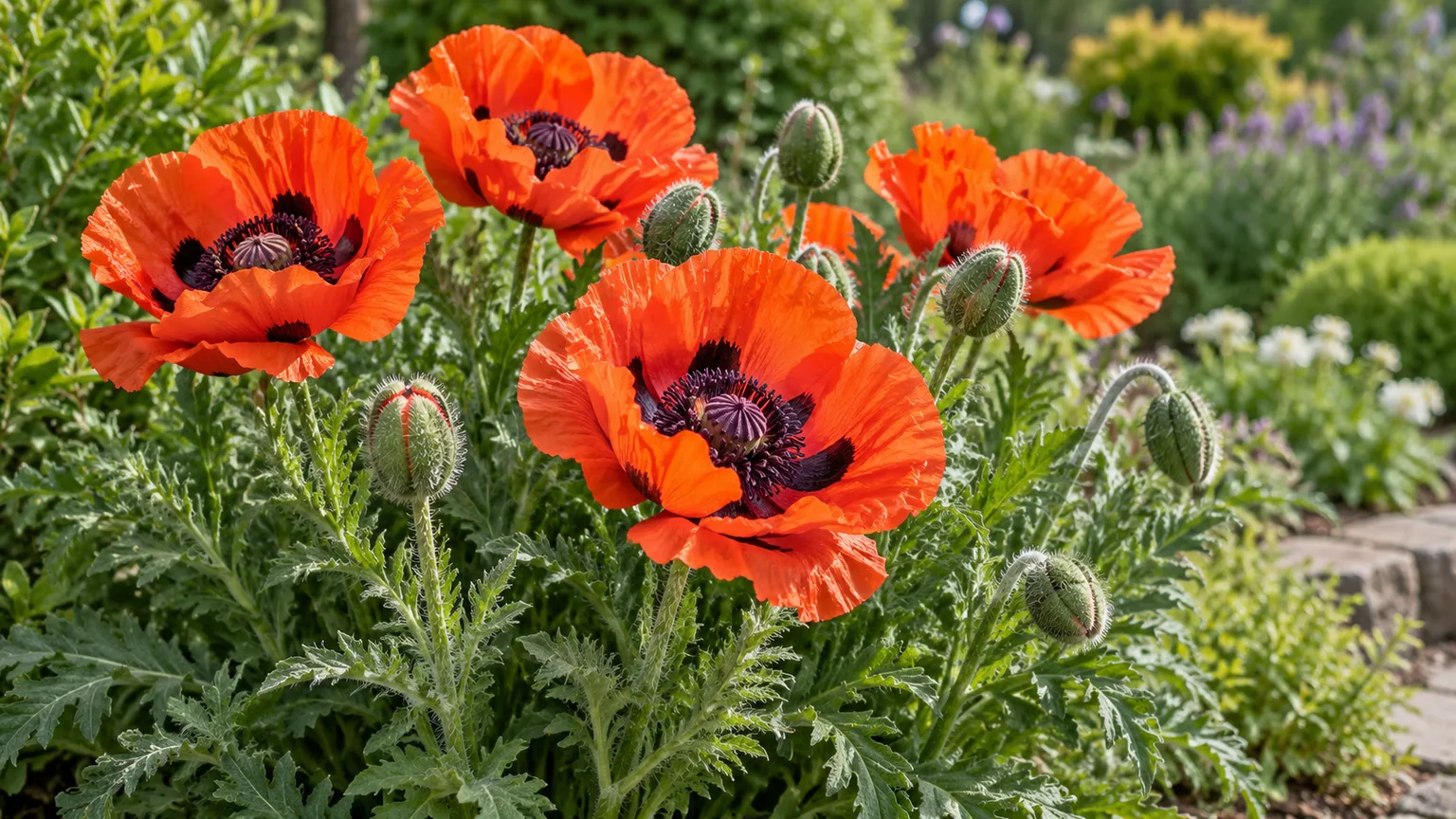
Oriental poppies are easiest to grow when you plan for the moment they vanish. Their bold flowers open in late spring or early summer, then the foliage yellows and dies back as summer heat arrives. That dieback is usually a normal rest period, not a plant asking for extra water. Give Papaver orientale a sunny, well-drained permanent home, let its crown rest when the leaves fade, and it can return with fresh foliage as cooler weather arrives.
The practical challenge is less about constant care than about choosing the right site and not disturbing a deep, fleshy root. Oriental poppies dislike winter-wet soil, resent being moved once established, and may struggle where summers stay hot and humid. The guide below explains how to plant them, read their seasonal cycle, and design around the brief but spectacular bloom.
What Makes an Oriental Poppy Different?
Papaver orientale, also called eastern poppy, is a clump-forming herbaceous perennial native to Central Asia. Its gray-green, deeply divided leaves emerge close to the ground; bristly stems then carry large, bowl-shaped flowers, often with dark marks at the base of the petals. Flower color varies by cultivar and includes orange, red, pink, salmon, burgundy, and white. The flowers may be large and theatrical, but each one is short-lived and the main display generally lasts only a few weeks.
This is not an annual poppy that finishes its life cycle after flowering. The plant survives underground through summer and winter, with foliage returning in cool weather. Established clumps expand gradually, but extension references describe the plant as clump-forming rather than an aggressive runner; self-sown seedlings can appear if seed capsules are allowed to ripen. NC State Extension describes the species’ growth habit, seasonal foliage, and Central Asian origin in its plant profile.
Learn Its Seasonal Growth Cycle Before You Plant
Oriental poppy growth follows a cool-season rhythm. In many temperate gardens, leaves begin to reappear in autumn, form a low rosette through winter, and send up flower stems in late spring or early summer. After bloom, heat prompts the foliage to yellow and disappear; when temperatures cool again, new basal leaves may emerge. The exact month shifts with latitude, elevation, cultivar, and weather, so watch the plant rather than relying on a fixed calendar date.
This schedule explains two common surprises. First, a healthy clump can look empty during the hottest part of the year. Second, an autumn rosette is new growth, not a sign that the poppy is confused or needs to be cut back. Colorado State University Extension notes that midsummer dieback is followed by foliage returning as temperatures cool, while the University of Illinois Extension also advises allowing the new leaves to remain over winter (Colorado State University Extension; Illinois Extension).
The distinction between dormancy and decline is useful: gradual yellowing of the whole plant after flowering, followed by a sound crown and autumn regrowth, fits the normal cycle. A plant that wilts while it is actively growing in spring, or whose crown sits in saturated soil, needs investigation. Do not use extra water as a universal fix for brown or fading poppy foliage.
Choose the Right Site and Soil
Choose a place with at least six hours of direct sun, room for a mature clump about 1 to 3 feet tall and wide, and soil that drains freely. Full sun supports sturdy flowering stems; in the warmest part of the plant’s suitable range, a little afternoon shade may reduce heat stress, but heavy shade can weaken bloom and keep foliage damp. Leave roughly 18 to 24 inches between plants unless the cultivar label gives a more precise mature width.
Climate needs a little more thought than the hardiness-zone number on a plant tag. Oriental poppies can tolerate cold winters—NC State lists them for zones 3a through 7b—but NC State also cautions that they generally perform poorly in heat and humidity or south of zone 7. Winter survival therefore does not guarantee success in a hot-summer climate. If your garden has long, humid summers, choose a cool, open site with excellent drainage and ask a local extension office or nursery whether Oriental poppies perform reliably in your area.
Drainage Matters More Than a Precise pH
The safest soil is moderately fertile and well drained, from sandy loam to loam. The Royal Horticultural Society lists Oriental poppies for several soil textures and pH ranges so long as drainage is good; NC State likewise emphasizes avoiding overwatering around the deep taproot. Do not reject a garden simply because you have not tested its pH. Prioritize drainage and avoid a low pocket where rainwater stands or winter soil remains saturated.
If the site is heavy clay, improve the bed broadly before planting by working in organic matter and, where needed, raising the planting area so excess water can leave. A small pocket of loose soil surrounded by dense clay can act like a bathtub, so do not just amend the planting hole. In a naturally wet garden, choose another plant or build a raised bed instead of trying to correct poor drainage with more frequent feeding or a gravel layer at the bottom of a hole (RHS growing guidance).
Plant Nursery Starts Without Burying the Crown
Plant nursery-grown Oriental poppies in spring when the soil is workable and severe frost is less likely to heave a new plant. Before you buy, look for firm, healthy foliage and a pot that is not a dense mass of circling roots. Check the cultivar label for mature height, bloom color, and hardiness; seedlings from named hybrids may not resemble the parent.
Water the nursery pot so the root ball releases intact, then dig a hole deep enough for the root system to point down naturally. Oriental poppies have a long carrot-like taproot, and shallow planting or a bent root can impede establishment. Set the crown at the same level it sat in its pot, backfill gently, and water once to settle the soil. The plant should not sit in a deep depression that collects water. Keep the root zone evenly moist while the plant establishes, but let excess water drain away. Better Homes & Gardens likewise emphasizes planting depth and preserving the taproot when setting out nursery plants (BHG planting guidance).
Treat the first season as establishment rather than a test of instant bloom. A newly planted poppy may put energy into roots and foliage instead of producing a showy display, especially if it was moved or divided. Resist the urge to dig it up to check progress; consistent placement and careful watering give its root system the best chance to settle.
Direct-Sow Seeds for the Least Root Disturbance
Direct sowing is often the simplest route because seedlings can grow in their final position without a later taproot transplant. Sow outdoors in autumn after hot weather has passed, or in very early spring if the seed has received the cold period it needs or its supplier says pretreatment is unnecessary. Fall sowing lets seeds experience natural cold; sources differ on the best season by region, so follow the seed supplier’s advice for your climate. Seed-grown plants may vary in flower color, especially if the parent was a named cultivar.
Prepare a fine, weed-free surface in a permanent sunny bed. Scatter seeds thinly over the soil and press them gently into contact; leave them uncovered or use only the thinnest dusting of soil, since light helps Oriental poppy seeds germinate. Keep the surface evenly moist—not waterlogged—until seedlings appear, then thin them while small to the spacing recommended on the seed packet. Mark the area so you do not mistake the fine seedlings or dormant patch for bare soil. Gardening Know How recommends surface sowing and thinning young seedlings, while NC State notes that cold exposure supports good germination (Gardening Know How; NC State Extension).
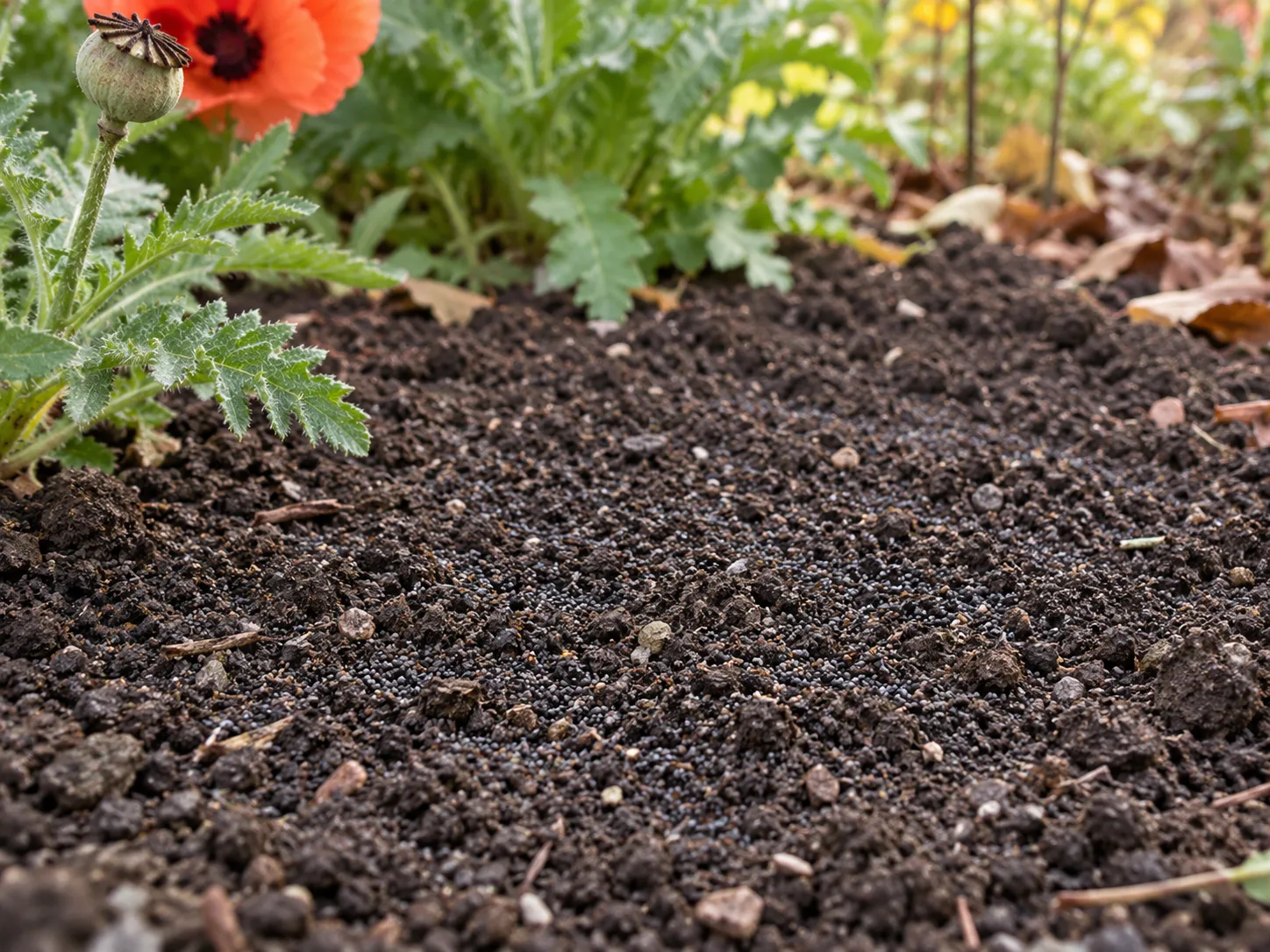
Starting seeds in pots is possible, but it adds a transplant step for a plant that dislikes root disturbance. If you choose that route, use deep, biodegradable pots, transplant seedlings while they are small, and set the pot in the bed without breaking the root ball. For most gardeners, direct sowing in the final bed is more forgiving.
Water by Growth Stage, Not by Habit
While the plant is actively growing and flowering, water deeply when the soil begins to dry rather than giving frequent shallow sprinkles. A newly planted poppy needs closer attention than an established clump, especially during a dry spring. Check the soil several inches below the surface; if it is still cool and damp, wait. Rainfall, soil texture, wind, and temperature change how quickly a bed dries, so a fixed weekly amount is only a rough starting point.
After flowering, taper supplemental irrigation as the foliage naturally fades and the plant enters summer dormancy. Established Oriental poppies can tolerate dry spells, but that does not mean they should be left bone-dry during active spring growth. The key is to distinguish seasonal dormancy from a growing plant under drought stress, while never keeping the crown and taproot in saturated soil. Poor drainage plus overwatering is a more serious risk than an orderly summer dieback.
Fertilize Sparingly and Only When Needed
Oriental poppies are not heavy feeders. Prepare the bed with mature compost if the soil is poor, then observe the plant through an active season before adding fertilizer. If a soil test or clear weak growth indicates a nutrient deficiency, use a balanced garden fertilizer according to its label in spring; do not assume that fewer flowers automatically mean the plant needs extra phosphorus.
Too much nitrogen can favor soft leafy growth over sturdy flowering stems, and fertilizer cannot compensate for shade, a waterlogged root zone, heat stress, or a recently disturbed taproot. If a mature plant flowers poorly, check sunlight, drainage, age, and establishment first. The University of Illinois Extension and RHS profiles focus on siting, soil, and drainage rather than a frequent feeding schedule (Illinois Extension; RHS).
What to Do After Flowering and During Summer Dormancy
Once the petals fall, decide whether you want seed or a tidier bed. Remove spent flower stems near the base if you do not want seed capsules to ripen and scatter; leave a few attractive pods if you want them for garden texture or to collect seed. Cutting a spent stem does not guarantee a second bloom. In a reliably cool summer, a cultivar may rebloom, but do not plan on it in a hot climate.
Let the leaves finish their cycle. When foliage has yellowed and collapsed, cut or gently remove the dead material to tidy the bed; avoid cutting healthy green leaves early because they are still supporting the root. Mark the spot before it disappears so you do not plant over the crown or dig through the root zone. Keep mulch light and pulled away from the crown rather than trapping moisture against it.
The most common summer mistake is trying to rescue an ordinary dormant poppy by watering it every day. If the plant faded soon after flowering and the soil is not unusually dry, let it rest. If a still-green spring plant is wilting, inspect the soil and drainage before deciding whether it needs water; if the crown is soft and the soil remains wet, more water is likely to worsen root rot.
Design Around the Summer Gap
An Oriental poppy is best treated as a seasonal feature in a mixed border, not as a plant that fills space continuously. Its flowers rise above early-season foliage, then the entire clump can disappear. Place it behind or among later-developing perennials that will cover the opening without crowding its spring rosette.
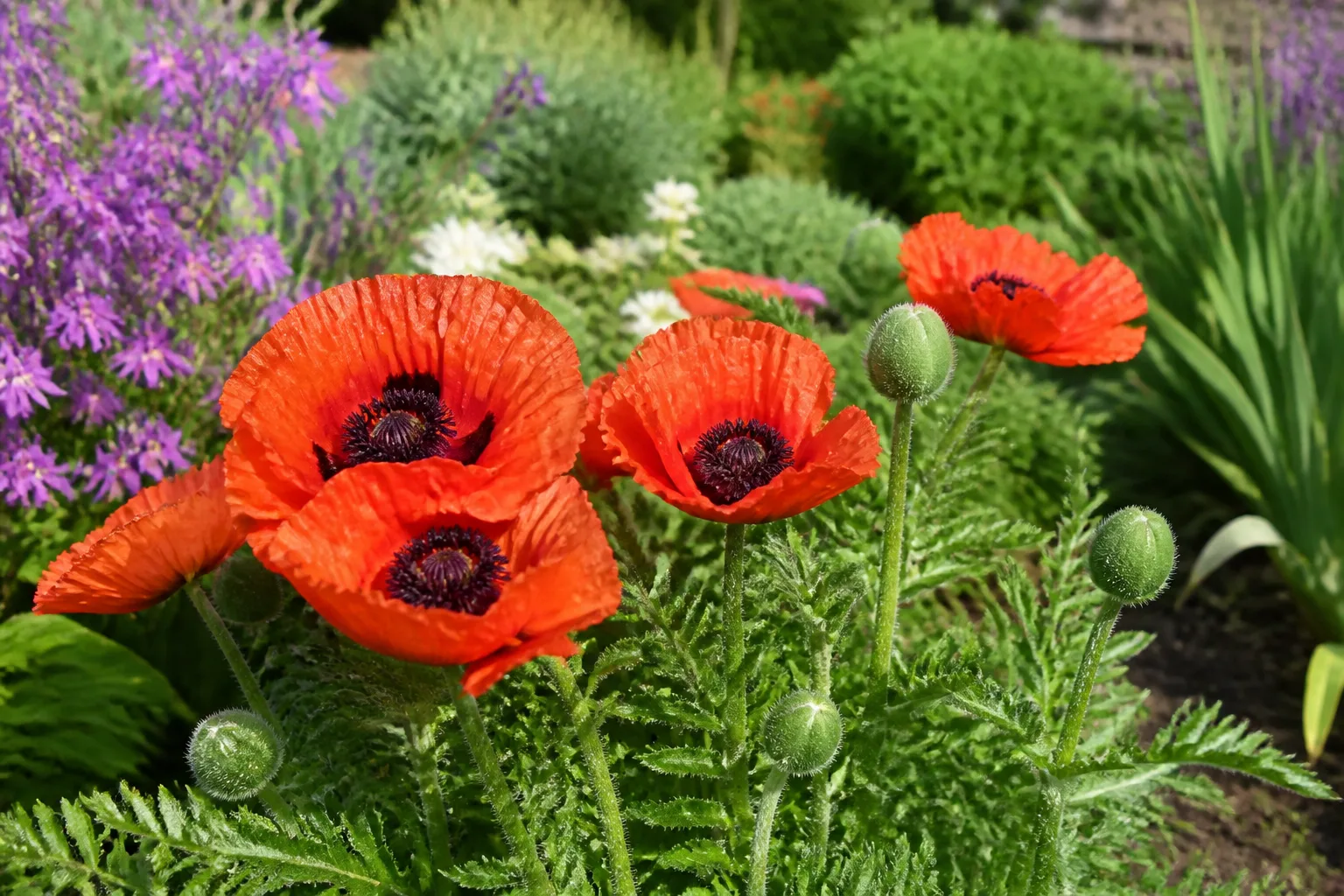
Useful companions include daylilies, catmint, phlox, black-eyed Susans, baby’s breath, and airy late-summer plants such as gaura. Choose companions for your own climate and soil; they should not force you to keep the poppy’s dormant crown wet. Leave enough room to see and reach the poppy clump before its neighbors expand, and avoid a dense mat of shallow-rooted plants directly over the taproot. A sunny border with orange-red Oriental poppies shows how the flowers can sit within a larger planting rather than needing to carry the whole bed alone (poppy border image and variety guide).
Propagate Carefully—and Move Established Plants Only If Necessary
If you want more poppies, collect seed when a capsule has dried and begun to open, then sow it in the season suited to your climate. Expect variation if the parent is a hybrid or sits near other cultivars. For a faithful named variety, buying a labeled plant or using a vegetative method is more predictable than saving seed.
Division and root cuttings are possible, but neither is a casual annual chore. Oriental poppies have a deep, fleshy taproot that can be damaged when a clump is lifted; a moved plant may sulk or skip flowering while it re-establishes. Extension guidance and horticultural references vary on timing: RHS lists spring division and late-autumn-to-early-winter root cuttings, while Fine Gardening recommends division after flowering in late summer or early fall. The practical rule is to work only when the plant is not flowering, the soil is workable, and there is time for roots to settle before severe cold or heat returns.
If you must relocate one, water the bed the day before, dig a wide circle well outside the crown, and lift as much of the long root as possible rather than cutting close to the plant. Replant promptly at the previous crown depth, water once to settle, and keep the soil lightly moist while it recovers. Avoid dividing merely because the clump is several years old; if it flowers well and has space, leaving it undisturbed is usually the lower-risk choice (RHS propagation guidance; Fine Gardening cultivar notes).
Diagnose Weak Flowering, Mildew, and Root Trouble
Sparse flowers usually point first to poor conditions or establishment, not a need for aggressive feeding. Check whether the plant gets enough sun, whether competing roots or shade have increased, whether winter water stands around the crown, and whether the plant was recently transplanted. A seedling or recently divided clump may need another season to mature.
Powdery or downy mildew is more likely in crowded, shaded, poorly ventilated growth than in an open sunny position. Remove badly affected dead foliage after the season, keep nearby plants from smothering the crown, and water the soil rather than repeatedly wetting leaves. Aphids and slugs may occasionally feed on the plant; inspect the damage before taking action, since isolated chewing or a small aphid cluster does not automatically require treatment. The RHS lists aphids and several mildew or wilt diseases as possible issues, while NC State describes serious problems as uncommon and identifies poorly drained soil as a root-rot risk (RHS; NC State Extension).
Use the symptom pattern to decide what to do. Uniform post-bloom yellowing followed by autumn regrowth is consistent with dormancy; a green plant wilting in dry soil may need a thorough drink; a collapsing crown in persistently wet soil is a drainage problem. If a plant fails to return, check the crown gently at the surface and consider winter wet, taproot disturbance, or a particularly hot summer before replanting the same spot.
Can Oriental Poppies Grow in Containers?
They can, but a container is a compromise rather than the easiest way to grow this perennial. A long taproot needs a deep, stable pot—about 12 inches or more, with a drainage hole and a free-draining mix—and the pot must stay outdoors through the seasons so the plant receives its normal cool-weather cycle. Small pots dry quickly in spring and freeze more readily in winter than garden soil.
If you use a container, avoid repotting once the roots fill it unless the plant is dormant and you can preserve the root ball. Keep water flowing out freely, and insulate or sink the pot for winter in climates where container roots are exposed to severe freezes. For a permanent display or reliable return, a well-drained garden bed is generally the better choice (BHG container and care notes).
Choose a Cultivar for Color, Height, and Climate
Named cultivars vary in flower shade, height, and spread, and nursery labels are more useful than a generic species description when you are planning a tight border. Catalogs may use different common names or report slightly different mature sizes, so treat measurements as a guide and give plants room for their full clump. Confirm local hardiness and summer performance before buying, especially near the warm edge of the species’ range.
| Cultivar | Typical flower character | Planning note |
|---|---|---|
| ’Prince of Orange’ | Bright orange to orange-scarlet | A traditional tall, vivid border choice |
| ’Brilliant’ | Orange-red with dark petal markings | RHS lists it as a clump-forming perennial for full sun and well-drained soil |
| ’Patty’s Plum’ | Plum, burgundy, or purple tones | Color varies by light and source description; buy in bloom or from a trusted label if exact hue matters |
| ’Peter Pan’ | Compact form | NC State notes its compact habit; useful where a shorter plant is preferred |
| ’Royal Wedding’ | White flowers | Illinois Extension lists it among white-flowered cultivars |
NC State, Illinois Extension, and RHS list different selections because cultivar availability and naming vary by region. A named cultivar’s hardiness does not erase the species’ sensitivity to hot, humid summers or wet winter soil; prioritize a locally successful plant and a well-drained site over an unusually broad zone claim (NC State cultivar list; Illinois Extension cultivar list; RHS ‘Brilliant’).
Prepare New Plants for Winter
Established Oriental poppies are cold-hardy in suitable climates and do not need to be dug up or moved indoors. In autumn, leave the new basal leaves in place; they are part of the plant’s normal cool-season growth. A light mulch can help a newly planted clump through its first winter, especially where freeze-thaw cycles heave shallow-rooted plants, but keep the crown open and avoid a wet, heavy layer.
In winter, drainage is more important than warmth. A dormant crown in soggy soil is more vulnerable than one in cold, well-drained ground, so avoid piling leaves where water collects. If your plant is in a pot, protect the root ball from extreme freezing and make sure the container can drain after rain; a garden-planted poppy generally needs less intervention.
Keep Children and Pets from Eating the Plant
Treat Oriental poppies as ornamental, not edible. NC State Extension labels the species as having low-severity poison characteristics and notes toxicity across the plant; Pet Poison Helpline explains that poppy species differ in their alkaloids and that ingestion can cause gastrointestinal and nervous-system effects in pets. Keep children and animals from chewing leaves, flowers, stems, roots, or seed capsules, and wash hands after handling plant material if you are concerned about sap exposure (NC State Extension; Pet Poison Helpline).
The risk depends on the species and amount eaten, so do not try to diagnose a person or pet from a general garden article. If a person or animal has ingested any poppy part, contact a local poison center, veterinarian, or animal poison-control service for case-specific guidance and share the plant identification and estimated amount; do not wait for symptoms to become severe (Pet Poison Helpline guidance).
Conclusion
Grow Oriental poppies where spring sun reaches them and rainwater drains away, then give their long taproots a permanent place. Direct-sow seeds when practical, plant nursery starts with the crown at soil level, and water more carefully during active growth than during the dormant summer gap.
Once the post-bloom leaves fade, let the plant rest instead of trying to keep it green with extra water. Mark the crown, let autumn foliage return, and use later-season companions to cover the space. With that seasonal rhythm—and realistic expectations about climate and transplanting—Oriental poppies can bring their short, vivid display back year after year.