26 Types of Poppy Flowers for Your Garden
Compare 26 poppy types by zone, sun, and difficulty — from easy Shirley poppies to finicky blue Meconopsis — plus toxicity, legal limits, and what to skip.
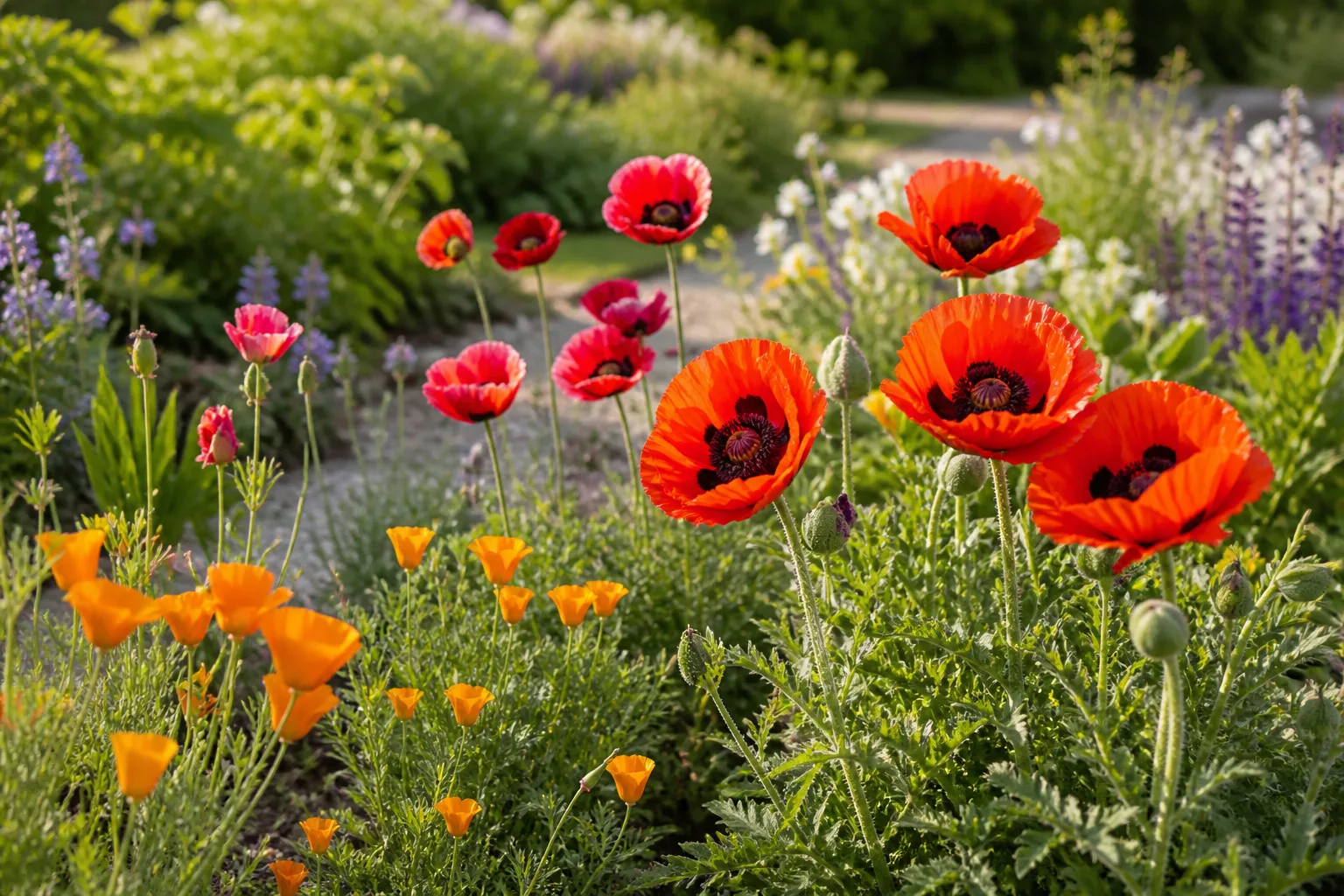
Walk into a seed catalog labeled “poppies” and you might be choosing between a six-inch alpine cup, a ten-foot desert shrub, and a finicky Himalayan blue that sulks unless the air feels like a Scottish spring. Poppy flowers share crinkled petals and a place in the poppy family (Papaveraceae), but they do not share the same climate needs, life cycles, or risk profiles. Pick the wrong one and you get either a bare summer hole in the border or a plant that seeds itself across the entire neighborhood.
This guide sorts 26 poppy types by what they actually need — sun, drainage, cold, and your tolerance for self-seeding — so you can match a variety to your garden instead of fighting it.
Not Every “Poppy” Belongs to Papaver
Gardeners use “poppy” loosely. Botanically, many favorites are not in the genus Papaver at all. Britannica describes poppies as flowering plants in Papaveraceae, with Papaver as the best-known genus — but the family also holds Eschscholzia (California poppy), Meconopsis (Himalayan blue poppy), Romneya (Matilija poppy), Glaucium (horned poppies), and woodland natives like bloodroot (Sanguinaria canadensis).
True Papaver Species vs. Poppy-Family Cousins
True Papaver garden stars include Oriental poppy (P. orientale), corn/Flanders poppy (P. rhoeas), Iceland poppy (P. nudicaule), opium poppy (P. somniferum), and smaller species like alpine (P. alpinum), Welsh (P. cambricum), and Moroccan (P. atlanticum) poppies. They typically form cup-shaped flowers with four (sometimes more) petals, a deep taproot, and milky sap when cut.
Poppy-family relatives often sold as “poppies” include California and tufted poppies (Eschscholzia), Himalayan blues (Meconopsis), Matilija and bush poppies (Romneya, Dendromecon), horned poppies (Glaucium), prickly poppies (Argemone), plume poppy (Macleaya cordata), and shade woodland species (bloodroot, celandine poppy, Japanese wood poppy). Same family badge on the plant tag — very different homework for you.
Knowing which group you are buying prevents the classic mistake: treating a taproot perennial like a throwaway annual, or planting a shade native in a baking south-facing bed.
How to Choose the Right Poppy for Your Garden
Before you memorize Latin names, decide what job the plant needs to do. Meadows want self-seeding annuals. Borders want big June color with a plan for summer gaps. Dry western yards want Eschscholzia or Romneya. Shade edges want bloodroot or celandine poppy. Trophy-chasing collectors want Meconopsis — and a backup plan when it fails.
Quick Decision Guide by Garden Job
| Your goal | Start with these types | Hardiness snapshot | Main caveat |
|---|---|---|---|
| Easiest color from seed | Flanders/Shirley (P. rhoeas), California poppy | Annual/self-seeding; zones 1–10 for corn poppy | Can spread aggressively; each bloom lasts one day |
| Big perennial border punch | Oriental poppy (P. orientale) | Perennial; zones 3–7 best | Foliage dies back in summer — plan a filler |
| Cool-summer cut flowers | Iceland poppy (P. nudicaule) | Short-lived perennial; zones 2–7 | Hates heat; do not transplant taproots casually |
| Dry, poor soil, full sun | California poppy, bush poppy, horned poppies | Varies; CA poppy zones 6–10 | Little fertilizer; overwatering kills them |
| Shade or woodland | Bloodroot, celandine poppy, Japanese wood poppy | Mostly zones 3–9 | Needs moisture; not for dry sun beds |
| Blue-flower bragging rights | Himalayan poppy, Meconopsis hybrids | Zones 3–7, cool climates | Needs acidic, moist, airy soil — expert-level |
| Baking seeds or big pods | Opium poppy cultivars | Annual; zones 3–8 | Legal for garden use only; toxic sap |
| Skip on purpose | Greater celandine, plume poppy (unless contained) | Varies | Invasive or rhizome-aggressive |
If you only plant one poppy this year and you want the highest success rate, sow Shirley or Flanders poppy (Papaver rhoeas) where you have full sun and decent drainage. NC State Extension notes corn poppy is an annual that “vigorously self seeds” and can persist for years from dropped seed — the easiest return on effort for most US gardens.
Easy Annual and Self-Seeding Meadow Poppies
These are the poppies for wildflower meadows, parking-strip experiments, and beginners who do not want to babysit taproots.
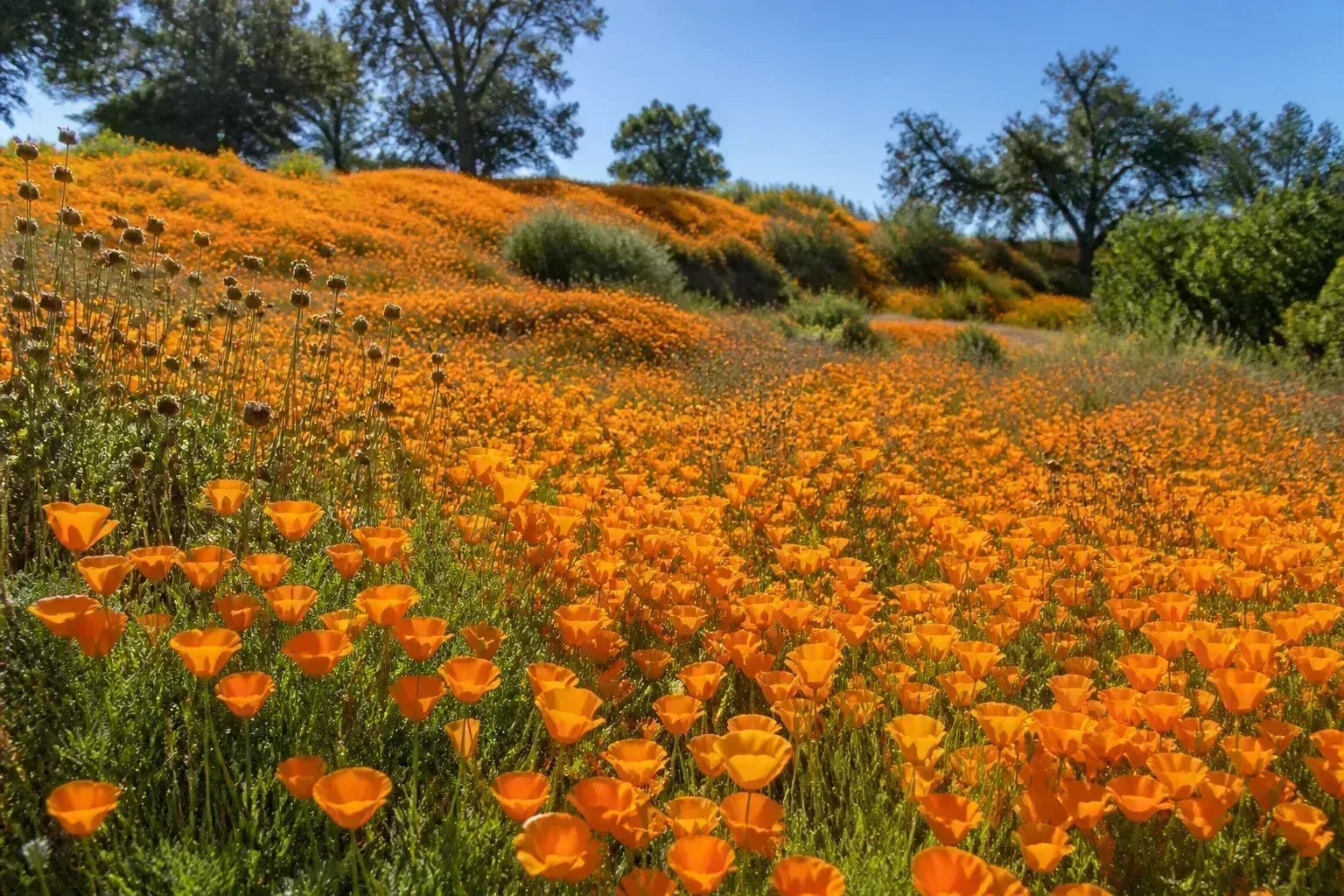
Flanders and Shirley Poppy (Papaver rhoeas)
Also called corn poppy or Flanders poppy, Papaver rhoeas is the red field poppy of European meadows and Remembrance Day symbolism. Red Flanders poppies became the emblem of wartime sacrifice after they colonized disturbed battlefields in World War I — resilient flowers on broken ground. Plants reach 9–18 inches (sometimes taller in rich soil), bloom May through July, and each flower opens for a single day before petals fall. Cultivars sold as Shirley poppies include soft pinks, whites, bicolors, and doubles like ‘Shirley Double’.
Sow seed directly on bare soil in early spring (cold climates) or fall/winter (mild South). Do not cover deeply — poppy seed needs light to germinate. NC State Extension warns corn poppy “can easily escape from cultivation” and seed may remain viable for decades. That is great for a meadow; less great if you need a tidy formal border.
Zones: 1–10 | Sun: Full to partial | Soil: Well-drained, average fertility
Tufted Poppy (Eschscholzia caespitosa)
A close cousin of California poppy, tufted poppy is a low annual (6–12 inches) with butter-yellow cups and ferny foliage. It suits rock gardens and lean soil in zones 8–10. Treat it like Eschscholzia: direct sow, full sun, almost no fertilizer.
Statement Perennials for Sunny Borders
These deliver the poster-child poppy look — wide cups, papery petals, strong color — but they come with taproots, dormancy, or short lifespans you must plan around.
Oriental Poppy (Papaver orientale)
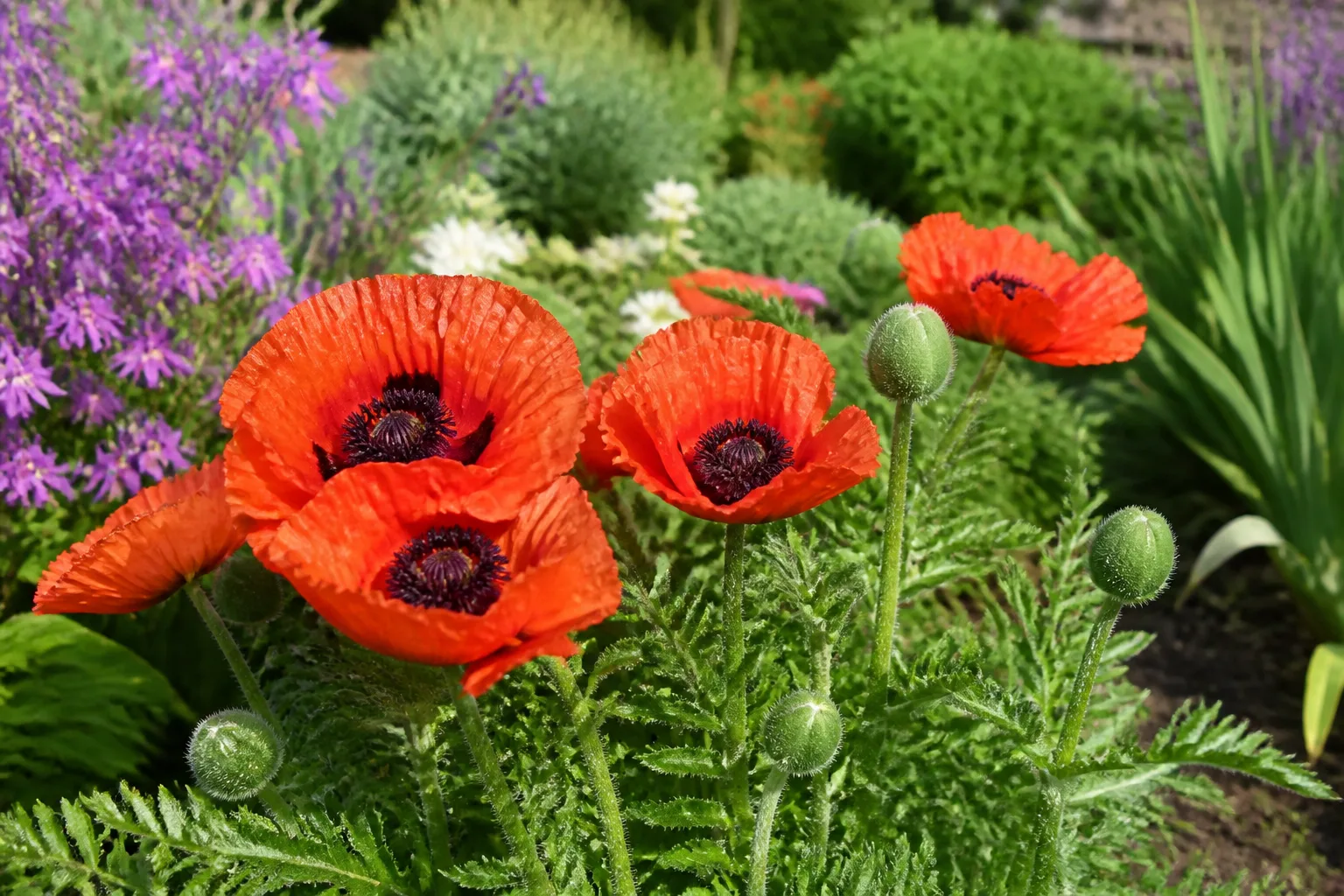
The border showstopper. NC State Extension describes Oriental poppy as a clump-forming perennial from Central Asia with orange, red, or pink cups up to 18 inches across in June and July, finely divided gray-green leaves, and a hard stop after flowering: tops die back, leaving a noticeable gap by midsummer. A basal rosette returns in fall and overwinters.
Culture: Full sun, well-drained soil, no overwatering on the deep taproot. Missouri Botanical Garden places hardiness at zones 3–7; heat and humidity south of zone 7 are a struggle. Interplant with late-summer fillers — baby’s breath, boltonia, or ornamental grasses — so the hole does not stare at you.
Standout cultivars: ‘Patty’s Plum’ (smoky purple), ‘Beauty of Livermere’ (deep red), ‘Princess Victoria Louise’ (salmon pink), ‘Royal Wedding’ (white with dark basal spots), ‘Harvest Moon’ (orange).
Zones: 3–7 (best) | Size: 20–36 in. | Propagation: Seed (color may vary) or root cuttings
Iceland Poppy (Papaver nudicaule)
Iceland poppy brings pastel and bright cups on leafless stems from late spring into summer. It is technically a short-lived perennial (often grown as a biennial) in zones 2–7, reaching 12–24 inches. Unlike Oriental poppy, it tolerates cooler summers better but still wants sharp drainage and hates wet crowns.
Water at the soil line — wet petals collapse under their own weight. Fertilize lightly; excess nitrogen produces leaves, not flowers. Popular series include ‘Champagne Bubbles’, ‘Meadow Pastels’, and dwarf ‘Garden Gnome’. In hot, humid regions, treat as a cool-season annual and sow fresh seed each year.
Zones: 2–7 | Sun: Full to partial | Soil: Rich, well-drained, not heavy clay
Great Scarlet, Alpine, Welsh, and Moroccan Poppies
Great scarlet poppy (Papaver bracteatum) — Ruby-red petals with black bases; 1–4 feet tall; zones 4–9. Grown ornamentally and historically for alkaloid research; easy in full sun and well-drained soil.
Alpine poppy (P. alpinum) — Tiny 8–10 inch perennial for rock gardens and cool summers; zones 4–6; cannot handle hot, humid summers or soggy soil.
Welsh poppy (P. cambricum) — Soft yellow to orange cups, partial shade, moist but drained soil; zones 6–8; self-seeds politely in cottage gardens.
Moroccan poppy (P. atlanticum) — Bright orange, 1–2 feet, full sun; zones 5–7; sow from seed.
Western and Dry-Climate Poppies
If your soil is sandy, your summers are dry, and your irrigation bill should stay low, start here.
California Poppy (Eschscholzia californica)
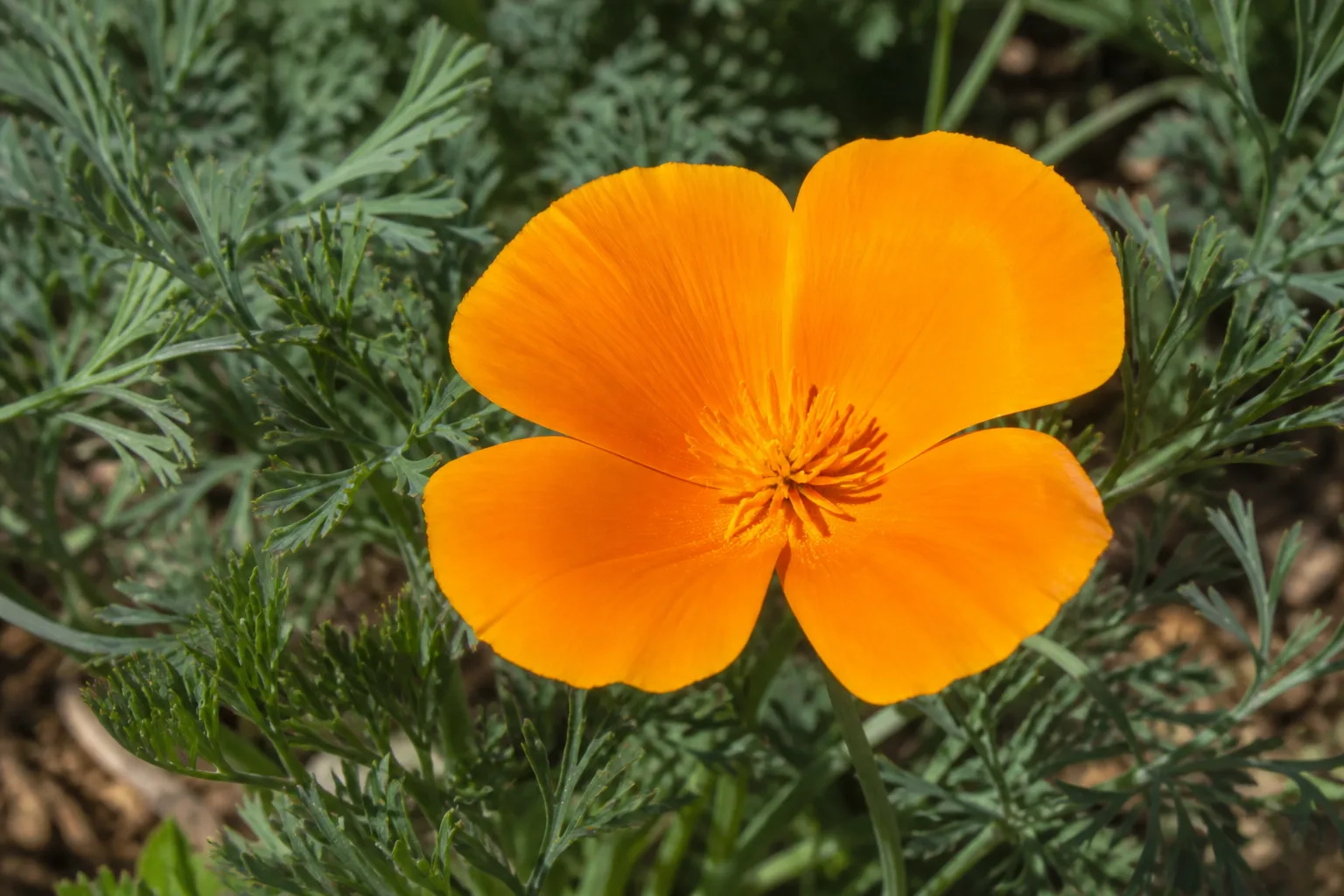
The state flower of California is not a Papaver, but it is the poppy most US gardeners should know for dry sites. Silky orange cups (plus cream, pink, and red cultivars) on blue-green foliage; 12–18 inches; zones 6–10. Drought-tolerant, self-seeding, miserable in heavy wet clay. For sowing windows, dormancy, and container limits, see our full California poppy growing guide.
Zones: 6–10 | Sun: Full | Soil: Well-drained, lean
Matilija, Bush, and Island Tree Poppies
Matilija poppy (Romneya coulteri) — “Fried egg” white flowers with yellow centers on 6–10 foot stems; spreads by rhizomes in zones 8–10; drought-resistant but aggressive — contain with root barriers or large pots.
Bush poppy (Dendromecon rigida) — Evergreen shrub, yellow flowers, 3–10 feet; zones 8–10; rocky, well-drained slopes.
Island tree poppy (D. harfordii) — Similar but larger (8–20 feet); Channel Islands native; same drainage and containment advice.
Horned Poppies (Glaucium Species)
Horned poppies get their name from long, curved seed pods. All want full sun and excellent drainage.
- Grand-flowered horned poppy (G. grandiflorum) — Scarlet-red, 2–3 feet; zones 7–10; toxic roots if ingested.
- Red horned poppy (G. corniculatum) — Orange-red; 2–3 feet; zones 7–10.
- Yellow horned poppy (G. flavum) — Beach dunes and gravel gardens; yellow blooms; 1–2 feet; zones 6–9.
Shade-Tolerant Woodland Poppies
Most poppies demand sun. These exceptions suit native shade gardens and moist woodland edges.
Bloodroot and Celandine Poppy
Bloodroot (Sanguinaria canadensis) — Early spring white flowers; 12–14 inches; zones 3–8; partial to full shade; rich, moist soil. Sap is orange-red and irritating. A true poppy-family native for eastern US woods.
Celandine poppy (Stylophorum diphyllum) — Bright yellow cups; 1–2 feet; zones 4–9; partial shade; consistently moist soil. Self-seeds in favorable sites without the invasive reputation of its lookalike below.
Japanese Wood Poppy (Glaucidium palmatum)
Not a Papaver, but a coveted woodland perennial with mauve to violet flowers in late spring. Reaches 1–2 feet; zones 6–9; partial shade and moist, well-drained soil. Slower to establish than corn poppy — buy potted plants rather than expecting instant seedling crowds.
The Blue Poppy Challenge: Meconopsis Types
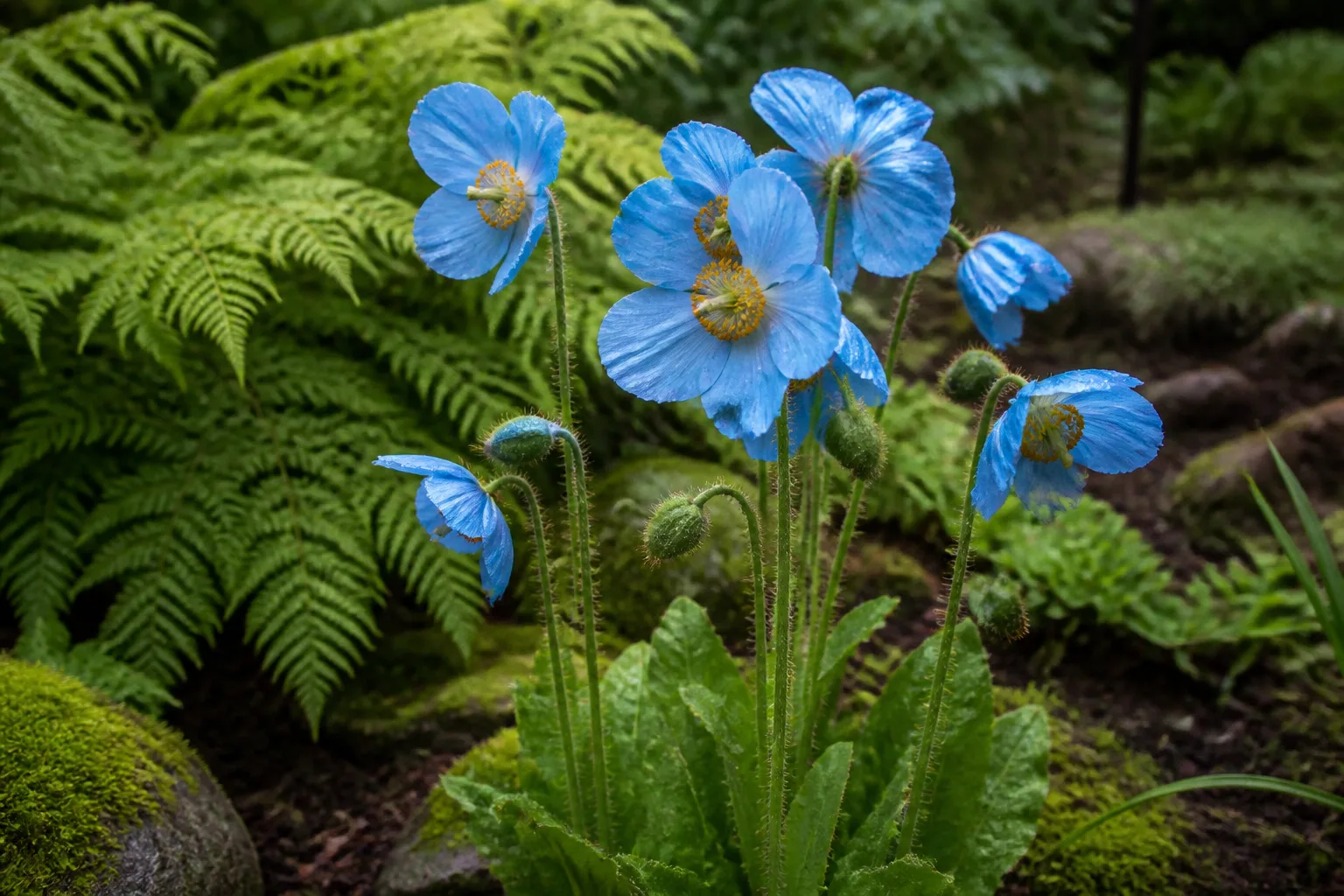
Blue is the hardest color in the poppy world. Himalayan poppy (Meconopsis grandis and hybrids) needs cool summers, mild winters, acidic moist soil rich in organic matter, and protection from wind and afternoon heat. Seed germination is finicky; seedlings damp off easily. Success is closest in the Pacific Northwest, northern England, and high-elevation gardens — not in hot, humid lowlands.
Meconopsis ‘Jimmy Bayne’ — A hybrid with pale blue cups and yellow stamens; 12–24 inches; zones 5–7; same cultural demands as other Meconopsis. If you fail, you are in good company; try celandine poppy or a purple Oriental cultivar for easier color in shade or sun.
Zones: 3–7 (cool microclimates) | Sun: Bright partial | Soil: Moist, acidic, airy
Opium Poppy: Ornamental Value, Seeds, and Legal Limits
Papaver somniferum — opium poppy — is the source of opiate alkaloids and the poppy seeds on your bagel. In the garden it is striking: gray-green foliage, pink to purple or white flowers, 3–4 feet tall, large ornamental seed pods. Cultivars like ‘Lauren’s Grape’, ‘Danish Flag’, ‘Black Peony’, and ‘Hen and Chickens’ are grown for flowers and culinary seed. ‘Danish Flag’ shows fringed red petals with white basal spots; ‘Black Peony’ produces near-double dark wine blooms; ‘Hen and Chickens’ forms a main seed capsule ringed by smaller satellite pods — a conversation piece in dried arrangements.
Legal note: In the United States, growing P. somniferum for garden ornament and seed production is generally permitted, but manufacturing opium from the plants is illegal. The DEA classifies opium as a controlled substance derived from this species. Check state and local rules before planting — some jurisdictions restrict possession or visible cultivation. Do not scrape seed pods for latex.
Zones: 3–8 | Sun: Full to partial | Soil: Moist, well-drained
Prickly Poppies and Southwestern Wildflowers
Prickly poppy (Argemone albiflora) — Spiny stems, white saucer flowers; annual or biennial; 2–3 feet; zones 7–9; full sun; sandy soil.
Mexican prickly poppy (Argemone mexicana) — Yellow flowers; spiny annual; 8 inches to 2 feet; zones 2–11; desert roadsides and dry gardens.
Both are poppy-family natives with sharp defenses — deer tend to leave them alone. Not for children’s play areas.
Purple Poppy Mallow and Other Magenta Cousins
Purple poppy mallow (Callirhoe involucrata) — Low magenta cups on trailing stems; 6–12 inches; zones 4–8; full sun; well-drained soil; attracts hummingbirds. Called winecup or buffalo rose; excellent for dry prairie-style plantings, though it is a mallow (Malvaceae), not Papaveraceae — another common-name trap.
Poppies to Plant With Caution
Some poppy-family plants are beautiful until they own your yard.
Plume Poppy and Greater Celandine
Plume poppy (Macleaya cordata) — Tall (4–9 feet) with plume-like white flower panicles and large scalloped leaves. Easy to grow — too easy. Spreads by rhizomes and seed; listed as invasive in parts of the Northeast and Mid-Atlantic. Only plant with a root barrier or in a contained bed you are willing to patrol.
Greater celandine (Chelidonium majus) — Yellow flowers on a roadside biennial; self-seeds aggressively; invasive in Midwest and Northeast per state invasive-plant lists; toxic sap. Do not confuse with the native celandine poppy (Stylophorum diphyllum), which is a better behaved woodland choice.
If a plant appeared on its own near a sidewalk and you did not sow it, it is probably greater celandine — pull it before seed set rather than “giving it a try” in a perennial border.
Universal Poppy Growing Rules That Apply to Most Types
Most garden poppies share a few non-negotiables:
Sun: Full sun (six or more hours) for Papaver, Eschscholzia, Glaucium, and Romneya. Woodland types are the exception.
Drainage: Taproot species rot in soggy clay. Raise beds or add grit on heavy soil.
Sowing: Direct sow where possible. Poppy seedlings resent root disturbance; if you must start indoors, use deep cells and transplant young.
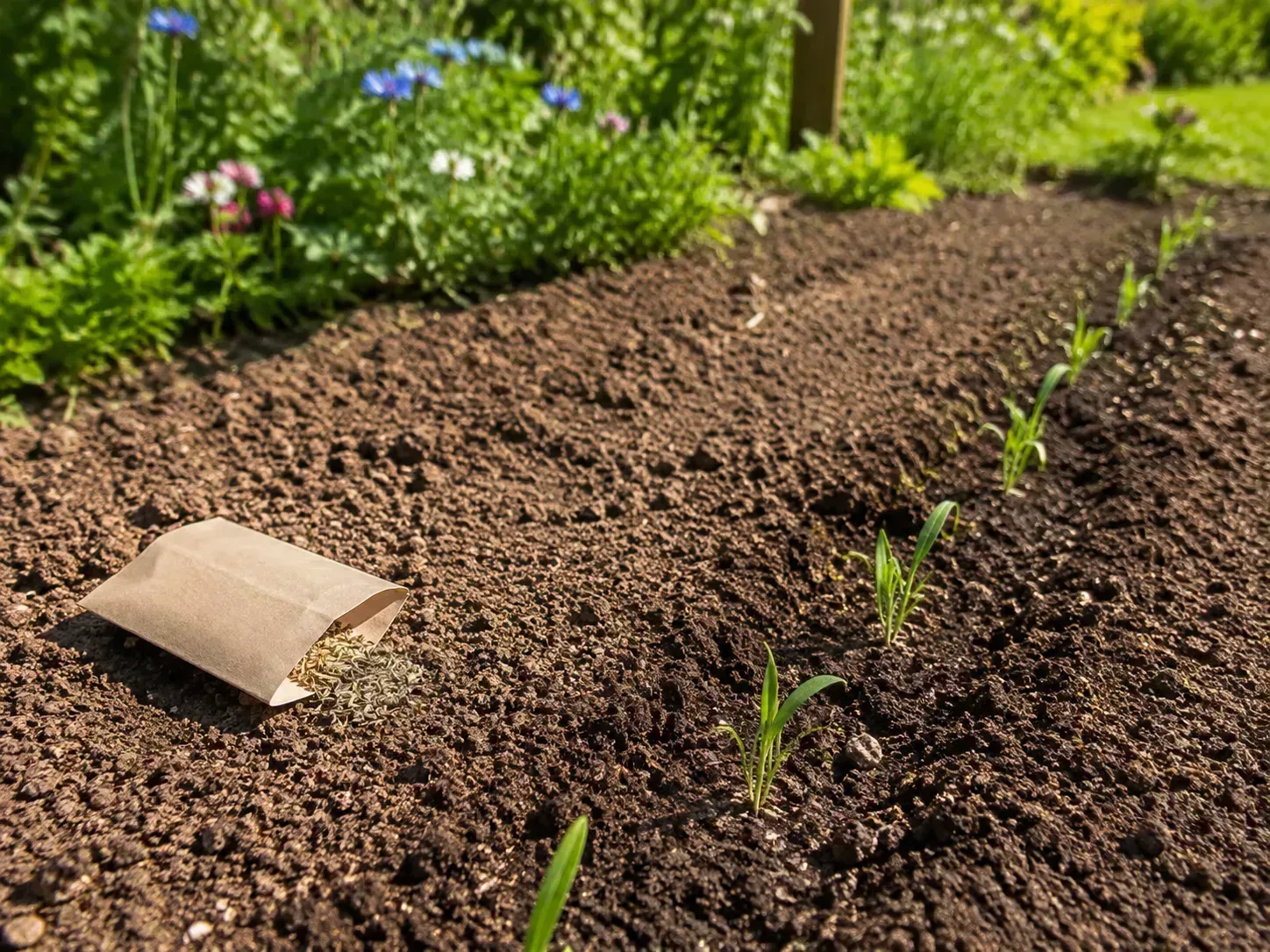
Fertility: Lean soil often outperforms heavily fertilized beds. Too much nitrogen = leaves, not flowers.
Deadheading: Snip spent blooms on annuals for more flowers; leave some pods if you want self-seeding. Oriental poppies do not rebloom — let tops die back and rely on fall foliage.
Bloom timing: Most poppies flower April through June in temperate zones; Iceland types can extend into summer in cool climates; California poppies peak spring in hot areas then go summer-dormant.
| Type | Typical bloom window | Returns next year? |
|---|---|---|
| Corn/Shirley | May–July | Via self-seed |
| Oriental | June–July | Perennial crown |
| Iceland | May–September (cool sites) | Short-lived; reseed |
| California | Spring–early summer | Self-seed or short perennial |
| Opium | May–June | Reseeds |
| Woodland natives | Early spring | Perennial clumps |
Toxicity, Pets, and Children
Poppy-family plants contain alkaloids in sap, leaves, and seeds. Severity varies by species and dose. NC State Extension rates Oriental poppy as low-severity poison; opium poppy and greater celandine are more serious concerns. Pets that chew stems may drool, vomit, or show sedation — contact your veterinarian or ASPCA Animal Poison Control if ingestion is suspected.
Teach children not to drink vase water from cut poppies, not to suck stems, and not to eat ornamental seed pods. Culinary poppy seeds come from specific washed, dried seed lots — not random garden harvest without knowing cultivar and processing.
Conclusion
The best poppy for your garden is not the one with the prettiest catalog photo — it is the one that matches your sun, drainage, and patience for self-seeding or summer dormancy. Start easy with Shirley or Flanders poppy in a sunny meadow, add Oriental poppy where you can hide its summer gap, and reach for California poppy or horned species in dry western beds. Save Meconopsis for cool, moist microclimates, and treat plume poppy and greater celandine as warnings, not welcome mats.
Get the genus right, sow where the plant will live, and you will understand why poppies have obsessed gardeners for centuries — without replanting the wrong one three seasons in a row.



