How to Get Rid of Pokeweed: 8 Safe Removal Methods
Learn how to get rid of pokeweed safely with eight methods, from pulling seedlings and digging the taproot to cutting berries, smothering, and careful herbicide use.
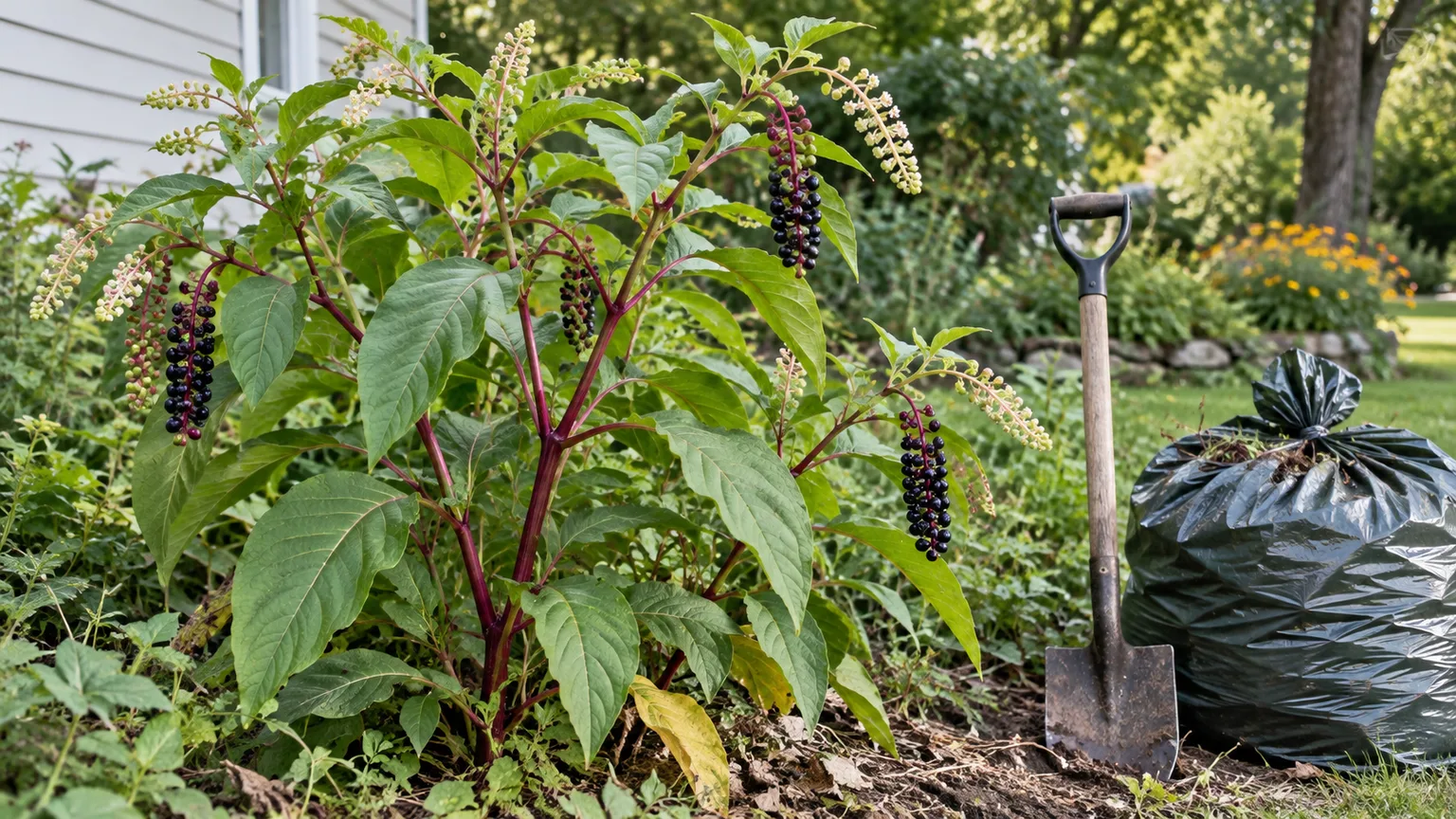
To get rid of pokeweed, match the treatment to the plant’s age and root size. Pull or cultivate small seedlings, dig established plants when the soil is workable, and use repeated cutting or a carefully labeled systemic herbicide when a large root cannot be removed in one pass. Whatever method you choose, remove berry clusters before they mature and keep every part of the plant out of home compost.
Pokeweed is not a weed that disappears just because its tall stems die in winter. The aboveground growth is only the seasonal part of an herbaceous perennial; the root can survive below ground and send up new shoots the following spring. The eight methods below include both true removal methods and containment steps, because stopping the next generation is part of getting control.
Before You Touch It: Confirm It’s Pokeweed
Common pokeweed, or American pokeweed (Phytolacca americana), is a large, nonwoody perennial that can look like a shrub by midsummer. A mature plant is commonly 4 to 10 feet tall and 3 to 5 feet wide, with smooth green leaves arranged alternately on thick stems that become red, purple, or purplish as the plant matures. Crushed leaves often have an unpleasant smell.
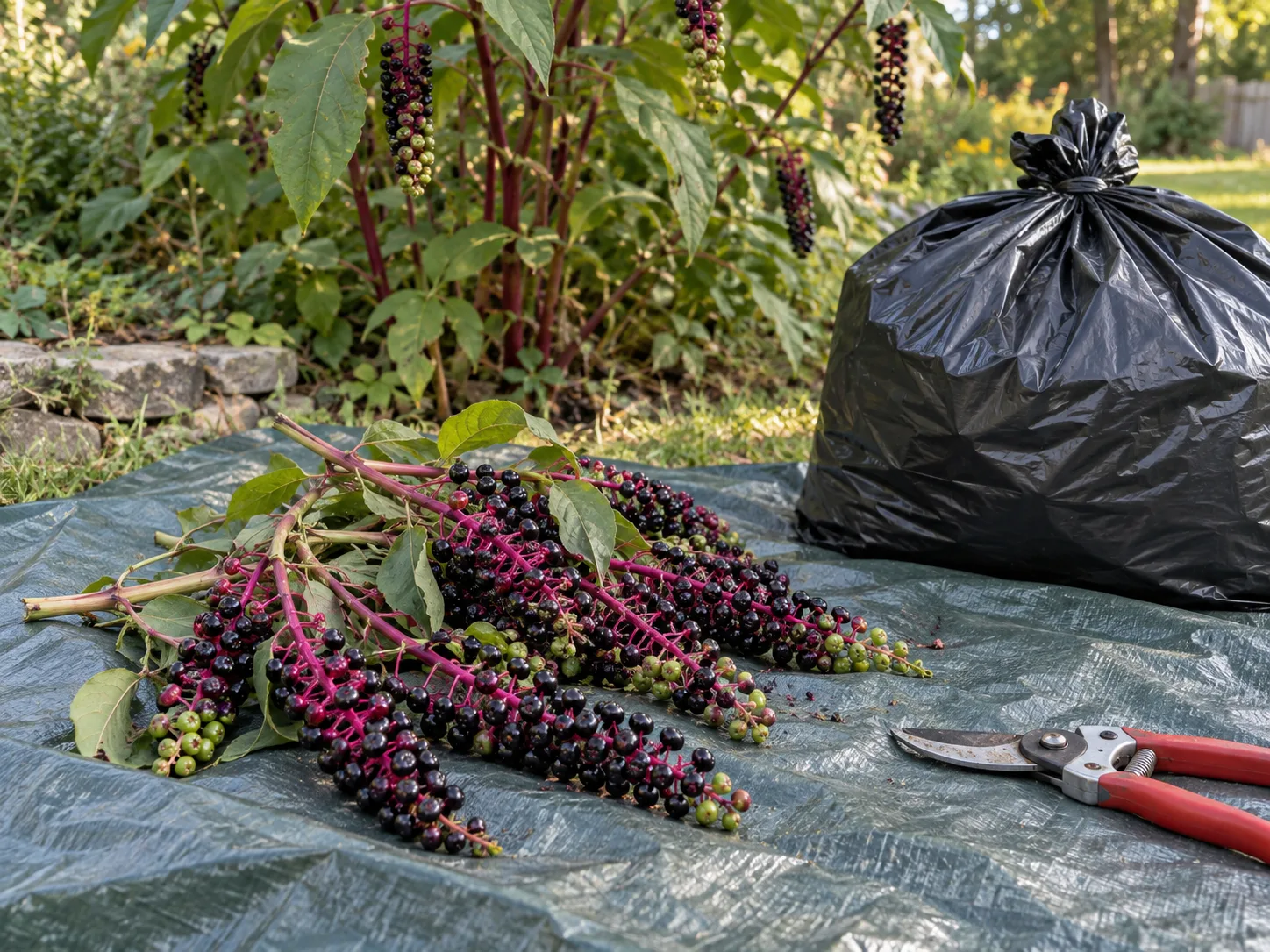
The most recognizable late-season combination is a red-purple stem, pale greenish-white flower clusters, and drooping strings of glossy purple-black berries. The clusters are called racemes. Young plants may not have berries or colored stems yet, so look for alternate, smooth, oval-to-elliptic leaves and a stout central shoot rather than relying on fruit alone. UC Statewide Integrated Pest Management and Penn State Extension both describe the plant as a fast-growing perennial with a substantial taproot.
Do not confuse pokeweed with red elderberry. Elderberry has compound leaves made of multiple serrated leaflets and tends to carry fruit in rounded clusters; pokeweed has single leaves and long, drooping berry racemes. Some knotweeds can resemble young pokeweed in a border, but they do not produce the same hanging purple-black fruit clusters. If the identification is uncertain and the plant is near a child’s play area, livestock, or a vegetable bed, ask a local extension office before disturbing it.
Safety Before Removal
Treat the plant as poisonous even if you intend to remove it rather than eat it. The roots are especially dangerous, but leaves, stems, and berries are also unsafe to ingest; UC IPM notes that all parts contain toxic compounds and that severe digestive irritation can follow ingestion. Historical recipes and folk uses do not make a backyard plant safe to sample, and correct preparation is too specialized to turn this into a foraging project.
Wear waterproof gloves, long sleeves, long pants, and closed shoes. Avoid rubbing your face while working, keep children and pets away from the area, and wash your hands and tools afterward. Skin reactions have been reported, but the most urgent risk is ingestion: Poison Control recommends using its online tool or calling 1-800-222-1222 for a suspected human plant poisoning. For a dog or cat that may have eaten pokeweed, Pet Poison Helpline reports oral irritation and gastrointestinal upset and advises contacting the helpline or a veterinarian rather than waiting for symptoms.
Why Pokeweed Keeps Returning
Pokeweed defeats many quick fixes because two different problems are happening at once: the parent plant survives below ground, and new plants arrive from seed. Cutting the leafy top may make the yard look clear for a few weeks without doing much to the root crown. Likewise, removing one plant does not erase the seeds already in the soil.
Seeds and Birds
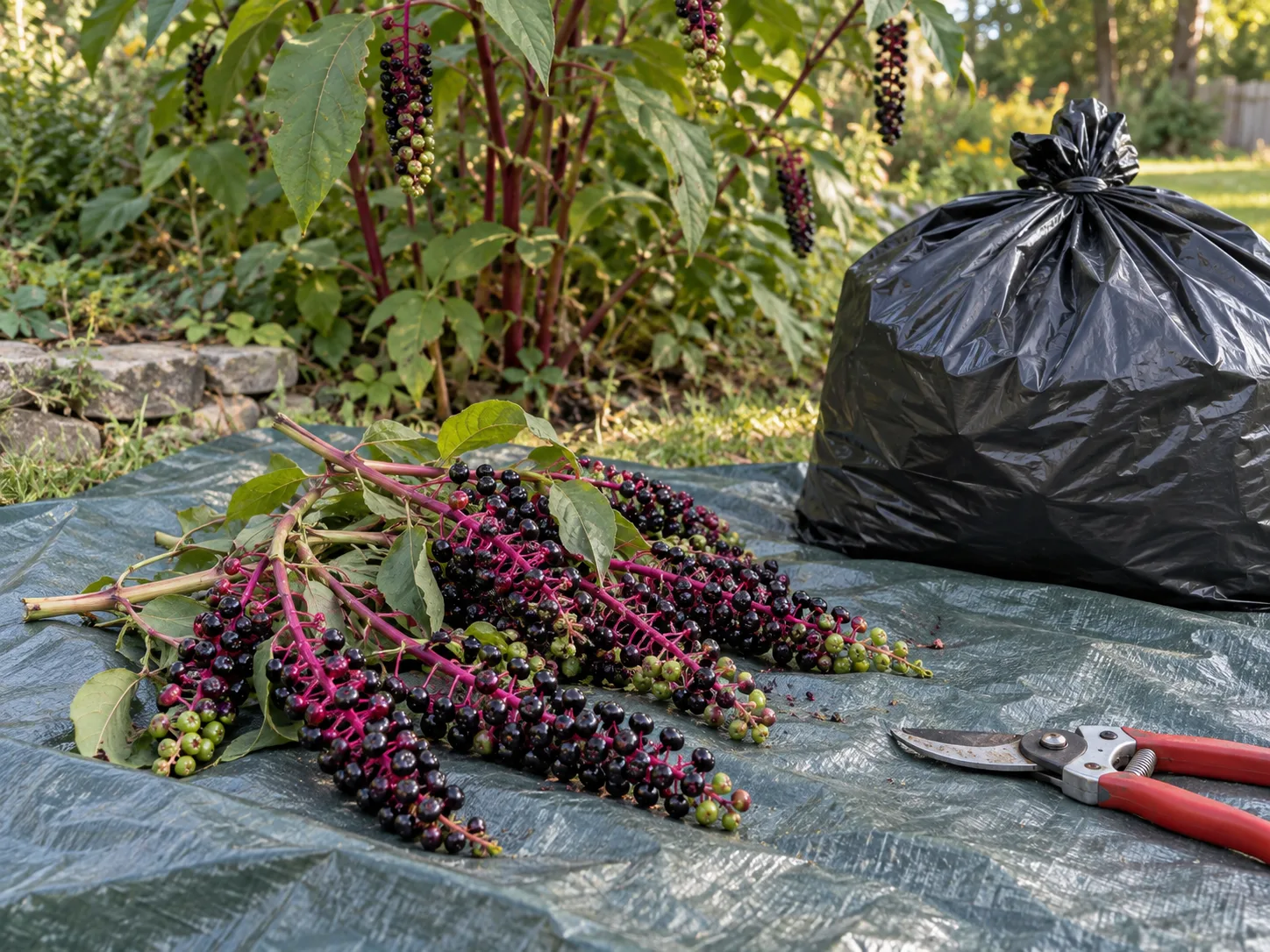
One pokeweed plant can produce roughly 1,500 to 7,000 seeds in a year, according to UC IPM. Birds eat the berries and move the seeds to fence lines, under trees, beneath utility wires, and other places where they perch. Seeds can remain viable in soil for decades; UC IPM gives an estimate of up to 50 years, so repeated seedlings do not necessarily mean your first removal failed.
That long seed life changes the goal. You are not trying to sterilize the ground, which is unrealistic in a home landscape. You are trying to prevent this year’s plant from adding seed, remove or exhaust the root, and catch the next flush while the seedlings are still easy to pull.
The Taproot and Winter Dieback
An established pokeweed develops a large, fleshy taproot. Penn State Extension describes roots that can exceed a foot in length and become several inches thick. The stems freeze back after the first hard frost, but the underground root remains alive and resprouts in spring.
The result is a useful diagnosis: if a plant returns from the same point with a vigorous cluster of shoots, assume the root crown is still alive. If seedlings appear several feet away, suspect berries or bird-dispersed seed. The first calls for deeper digging, repeated cutting, or systemic treatment; the second calls for a property-wide monitoring routine.
Choose a Method by Plant Size and Site
Use this quick decision rule before reaching for a product or tool. Soil that is slightly damp but not muddy makes manual removal easier, while a mature plant tangled through desirable perennials may justify a targeted treatment or professional help.
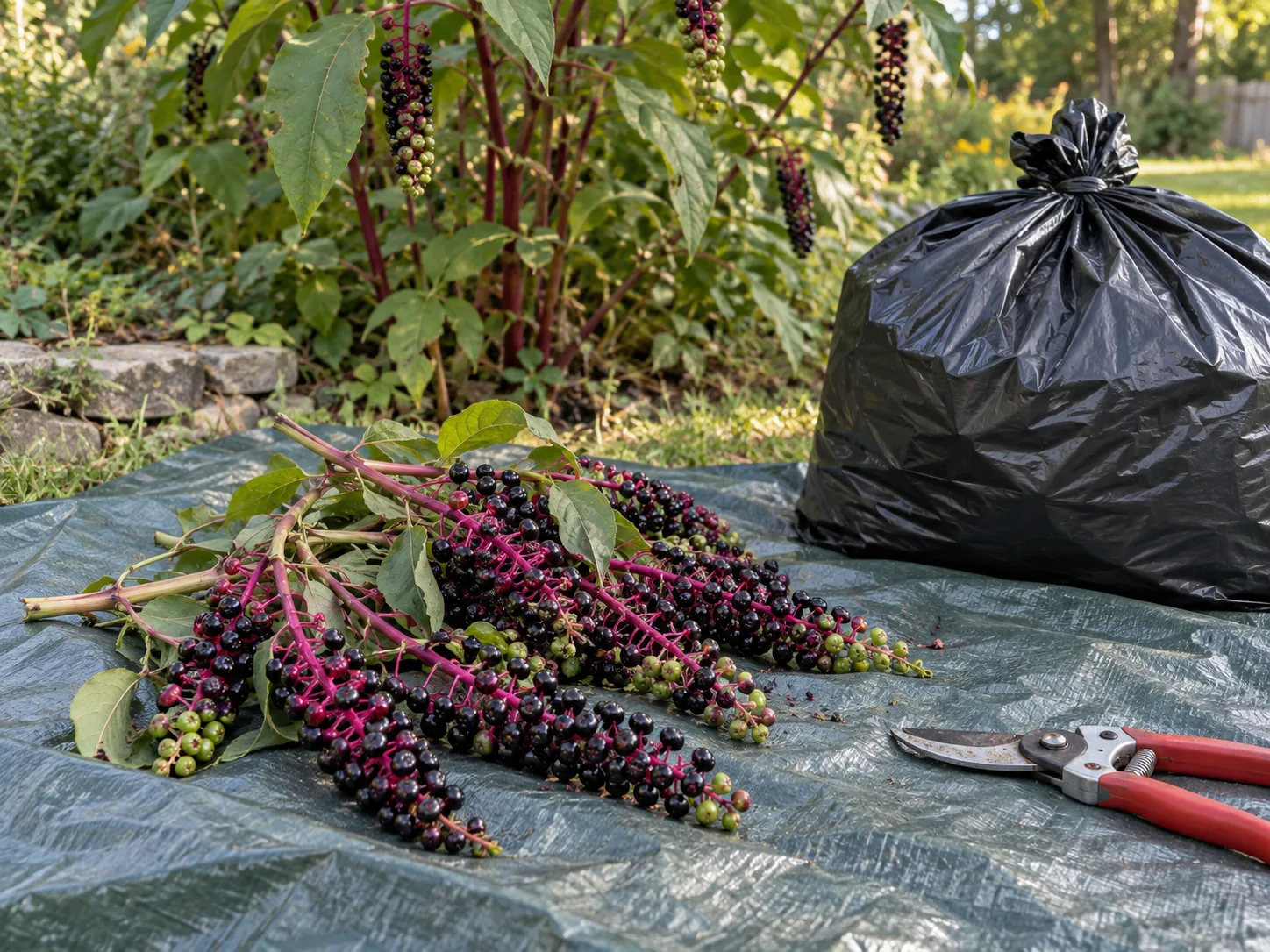
| What you see | Best first choice | What success looks like |
|---|---|---|
| A few seedlings with thin stems and no berries | Pull or cultivate | Root comes out intact; revisit in two weeks |
| A single established plant in open soil | Dig the taproot | No substantial root crown remains in the hole |
| A mature plant in tight ornamental planting | Cut, dig what you can, or use a labeled systemic | Desirable plants stay untouched; regrowth declines |
| Berry clusters already forming | Bag fruiting stems first | No ripe berries fall or enter compost |
| Many plants across a large area | Combine cutting, digging, and site-appropriate herbicide | The infestation shrinks each season |
The word eradicate needs a time qualifier here. A seedling may be gone in minutes; an established patch can require repeated visits over several growing seasons. An Oregon State University-maintained invasive-species hotline advises that full eradication of established pokeweed infestations may take three to five years, particularly where seed has accumulated. Treat that as a planning horizon, not a promise for every yard.
Method 1: Pull Young Seedlings After Rain
Hand-pulling is the cleanest option when pokeweed is young and the root is still small. Pull after rain or deep watering, when the soil releases the root instead of gripping it. Better Homes & Gardens likewise recommends tackling young plants while the soil is damp and watching for seedlings throughout the growing season.
Grip the stem low, close to the soil, and pull slowly with steady upward pressure. Do not yank from the top, because a soft stem can snap and leave the root in place. If the plant resists, loosen the soil around it with a hand fork or narrow trowel, then lift the root ball rather than increasing force.
Inspect the hole and the pulled plant. A tiny white or pale root attached to a seedling is a good sign; a broken stem with a thick root still in the ground means you have performed a top kill, not a complete removal. Bag the plant, firm the soil back into the hole, and check that spot again in 10 to 14 days.
Method 2: Dig Out the Taproot
Digging is usually the best nonchemical approach for one or a few established plants in a bed where you can disturb the soil. Start when the soil is workable, ideally after rain has softened it. A shovel is more useful than hand-pulling once the stem is thick, because the root can extend deep and widen near the crown.
Cut tall stems only if they make the root easier to reach, and keep any fruiting material contained as you work. Dig a broad ring around the crown, then work downward and inward. The objective is to lift the fleshy central root and its crown in one piece, not to chop it into a handful of fragments.
How to Dig Without Breaking the Root
Use a garden fork to tease soil away from the sides before levering with a shovel. A fork is less likely to slice the root than repeated shovel cuts, and it lets you feel where the root continues. If the soil is dry, water deeply and wait; fighting a dry taproot often leaves the exact fragment that will resprout.
Once the root is out, search the hole and the loose soil for thick pieces. Do not keep digging blindly through the entire bed if you have already removed the crown and the remaining pieces are tiny; instead, mark the spot and monitor it. Every new shoot tells you to return early, when it can be pulled, rather than assuming the original job was perfect.
If the plant is growing through a valuable shrub’s roots, stop before you damage the desirable plant. Root competition and an accidental injury can create a larger landscape problem than the weed. In that situation, cut the pokeweed low, prevent fruit production, and use a targeted control plan or professional advice.
Method 3: Cultivate Tiny Seedlings in Open Beds
Cultivation is a useful variation on hand removal for a flush of very small seedlings in a raised bed, empty annual bed, or other area where turning the top layer will not damage desirable roots. Run a hoe just below the soil surface on a dry, sunny day, or lift each seedling with a hand tool when the soil is moist. The purpose is to sever or expose tiny plants before they develop a meaningful root system.
This method is not a substitute for digging an established plant. UC IPM specifically describes cultivation as useful for new seedlings where tilling is practical, but ineffective on large plants. Do not cultivate near mature perennials, shallow-rooted shrubs, or a berrying pokeweed whose seeds you could spread with moving soil.
Rake the disturbed surface lightly and check it weekly. Cultivation can create a clean-looking bed while leaving a few seedlings at the margins, so the follow-up inspection is part of the method rather than an optional extra.
Method 4: Cut Regrowth Until the Root Runs Out of Energy
Repeated cutting is a nonchemical choice for a mature plant that cannot be dug without harming nearby plants. Cut stems as low as you can safely reach, bag the pieces, and return whenever new shoots appear. Each round removes leaves that would otherwise manufacture and store energy in the root.
This strategy works by exhaustion, not by one decisive cut. Penn State Extension recommends cutting multiple times during the growing season for nonchemical control. It is more realistic for a plant that is isolated from play areas and already contained than for a large patch beside a walkway where children or pets could reach the regrowth.
Do not let the plant flower and fruit while you are using this method. If flower stalks or berries are present, remove and bag them first. Keep a note or photo of the location so you can inspect it in spring; the plant may look gone over winter while its root is simply waiting.
Method 5: Remove Berry Clusters Before They Seed
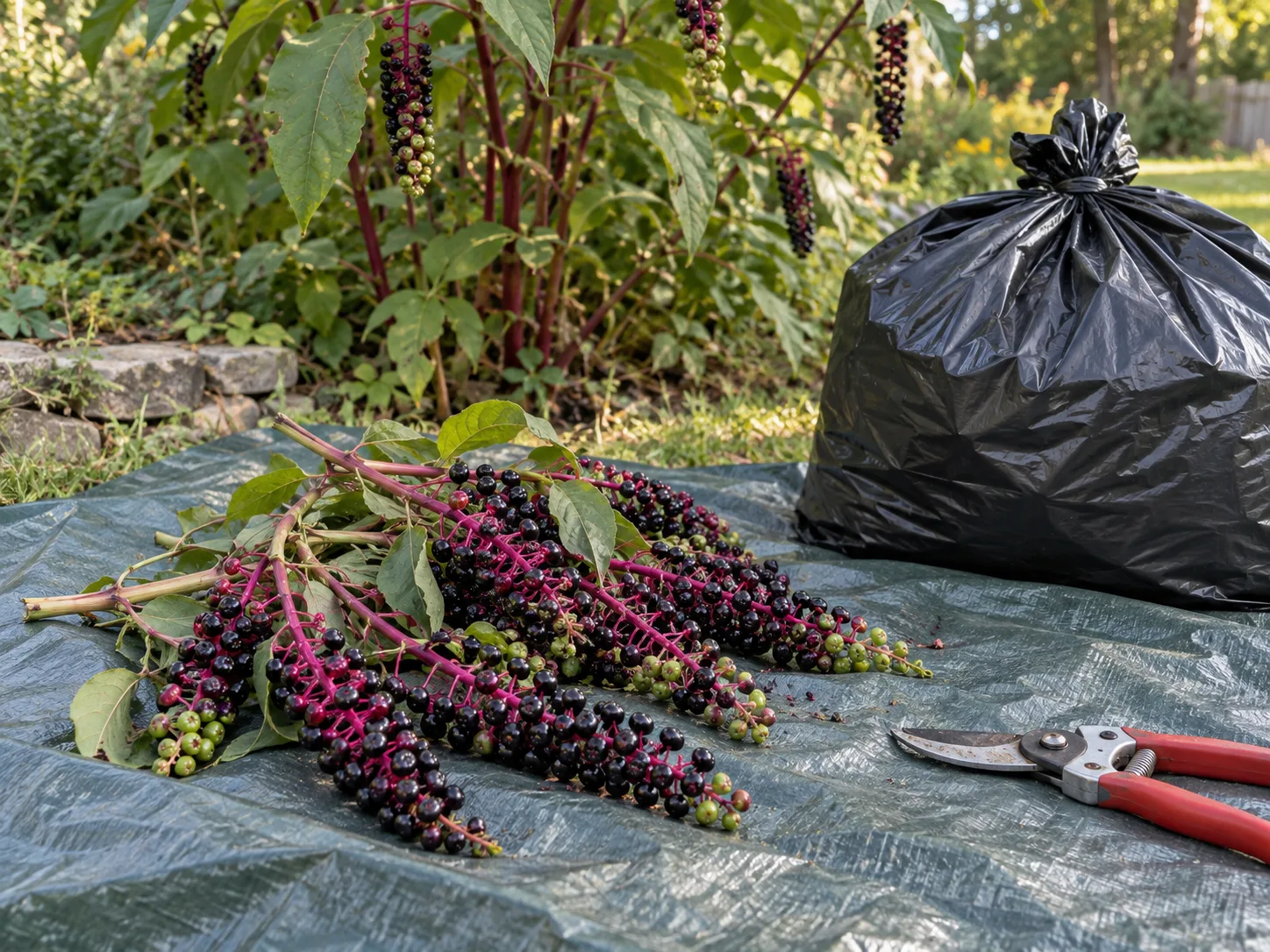
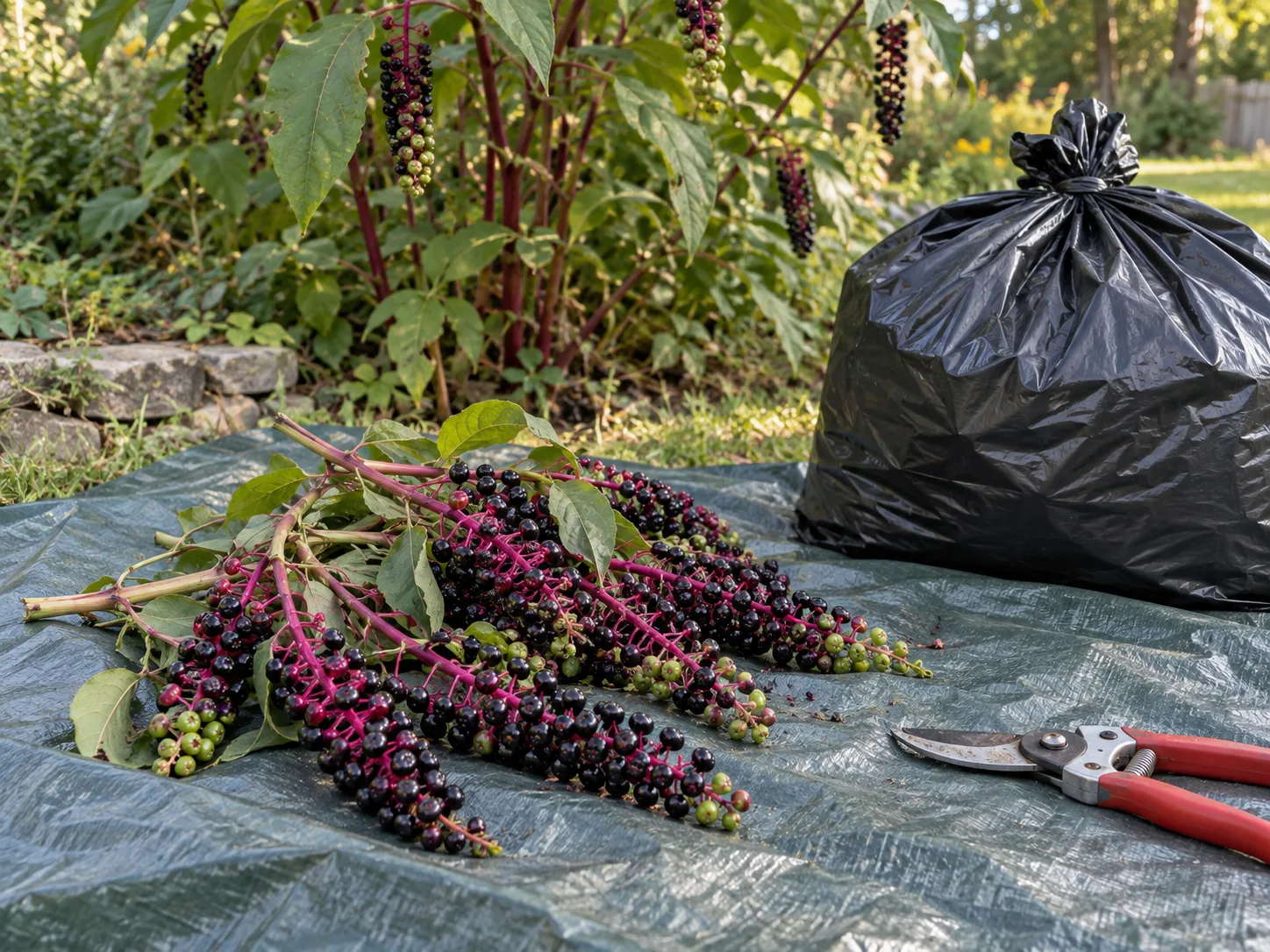
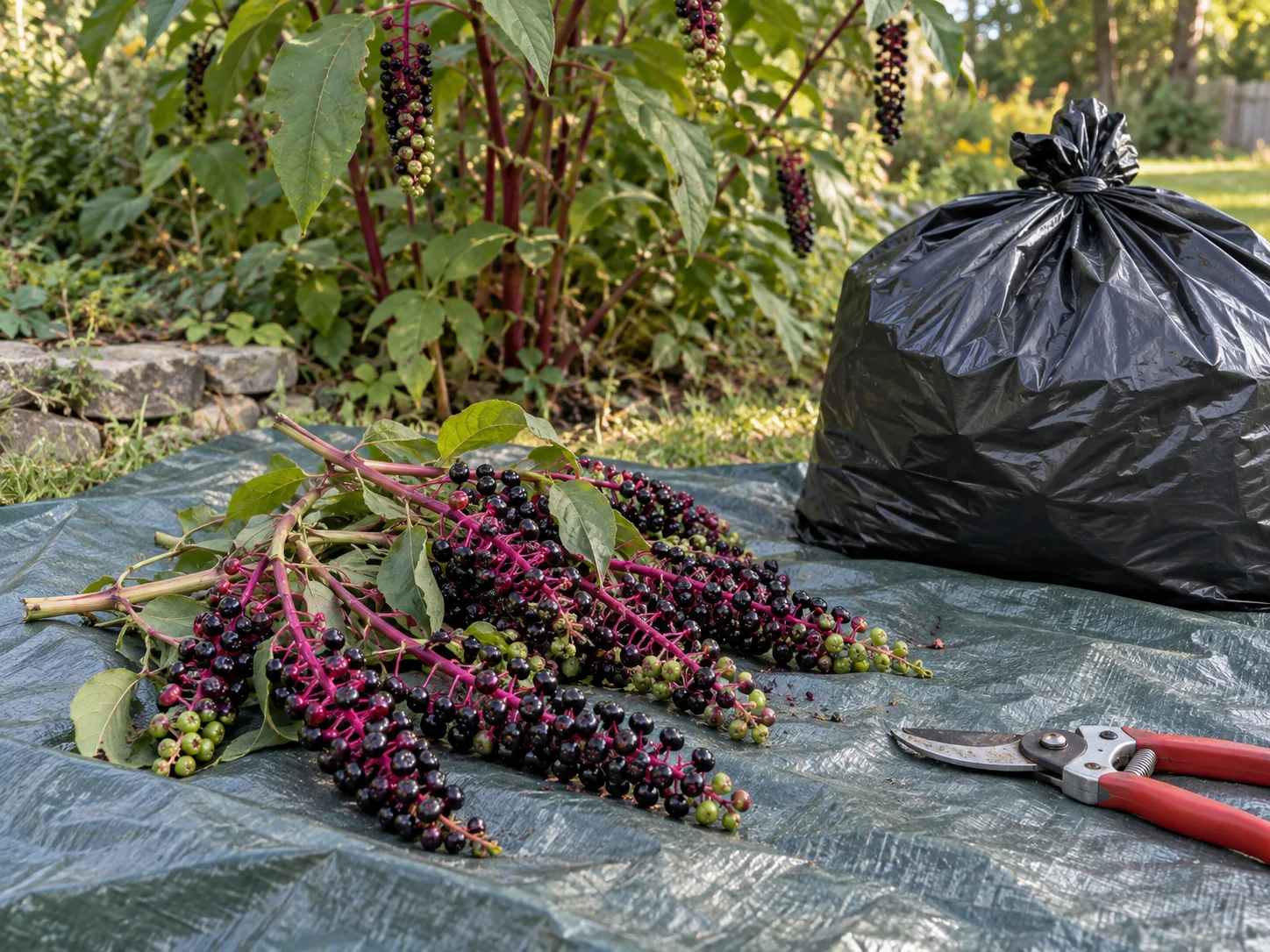
Removing berries does not kill the existing root, but it can prevent one plant from turning into dozens of future plants. This is the priority when you discover pokeweed late in the season and cannot remove the whole plant immediately. Cut fruit-bearing stems carefully, place them directly into a sturdy plastic bag, and seal it before carrying it across the yard.
Do not shake the plant over the soil, rake ripe berries into a general leaf pile, or put fruiting stems in a backyard compost bin. Birds can spread the seeds, and the Tualatin Soil and Water Conservation District warns that cut stems placed in home compost can produce new sprouts. Berry juice can stain skin and tools, so avoid handling it barehanded.
If berries have already fallen, pick up visible fruit with gloves and a tool rather than bare fingers. You cannot recover every seed from soil, but removing the obvious fruit reduces the immediate seed load and makes the next season’s monitoring more manageable.
Method 6: Smother Young Pokeweed
Smothering can suppress young pokeweed where digging would expose a bed to more disturbance. Cover small plants with overlapping cardboard or a light-excluding weed barrier, then hold the material down with mulch. Extend the cover beyond the visible foliage so new shoots cannot emerge at the edge, and keep it away from the crowns of plants you want to keep.
Smothering is best for seedlings and short-lived regrowth, not a tall established plant with a large root. A determined shoot can push through a thin layer or emerge beyond the edge. Inspect the perimeter and any holes regularly; if you see green growth, cut or pull it before it can rebuild its leaves.
Household shortcuts such as boiling water, 5% kitchen vinegar, dish soap, or salt may scorch exposed foliage, but they do not reliably move into and kill an established pokeweed root. Salt can also injure soil and nearby plants, while soap mixtures can burn leaves without solving the perennial problem. UC IPM classifies vinegar and similar products as contact herbicides that may control newly germinated plants but generally do not control established perennials.
Method 7: Use a Systemic Foliar Herbicide
When manual control is impractical, a systemic herbicide can move from treated foliage toward the root. UC IPM identifies glyphosate and triclopyr as active ingredients that can control individual pokeweed plants. Glyphosate is nonselective and can kill grasses and broadleaf plants it contacts; triclopyr is selective for broadleaf weeds in many formulations, but it can still injure desirable broadleaf flowers, shrubs, and vegetables.
Use this option only when the product label permits the site, target, application method, and timing. A label for a lawn or pasture is not automatically a label for an ornamental bed, vegetable garden, ditch, or natural area. Do not improvise a concentration from a blog, combine products because a recipe says it is stronger, or assume an organic contact product is harmless.
For foliage treatment, wait until the pokeweed has fully developed leaves and is actively growing. Late summer or early fall can be useful for established plants because the plant is moving resources downward, while young seedlings may be treated earlier in the season; Penn State Extension and UC IPM both emphasize active-growth timing. Follow the product’s instructions for rainfastness, temperature, protective equipment, reentry, and disposal.
Choose a still, dry period with no rain in the label’s restricted window. Shield nearby plants, keep spray off bark and foliage you want to retain, and never spray when wind can carry droplets into a pond, vegetable bed, neighbor’s yard, or pollinator planting. Spray-to-wet means thorough coverage without runoff when the label uses that direction; more liquid running onto the soil is not automatically better control.
Expect a systemic treatment to take time and possibly require a follow-up application allowed by the label. Do not cut the foliage immediately after spraying unless the label says to do so, because the leaves are the route into the root. If the plant is drought-stressed, freshly mowed, or already leafless, pause and reassess rather than assuming more product will compensate.
Method 8: Use a Cut-Stump Treatment
A cut-stump treatment is a targeted alternative when you can cut a mature pokeweed close to the ground but do not want to spray a broad canopy. The usual sequence is to cut the stem, collect the top, and apply a labeled systemic product to the freshly exposed stump or wound exactly as directed. Penn State Extension describes this as a targeted approach that shortens the route toward the taproot.
This method is not a license to pour undiluted herbicide onto soil or to paint a stump with whatever product is nearby. Use only a product whose label allows cut-stump use at that location, wear the required protective equipment, and keep children, pets, and desirable plants away from the treated area. If the stump has dried, been cut for days, or is hidden in a dense planting, foliar treatment or professional help may be more appropriate.
Cut-stump control still needs inspection. A root crown can send up shoots around the original stem, and seeds can produce separate seedlings. Mark the location, remove any regrowth before it fruits, and follow the label for whether and when a repeat treatment is permitted.
Disposal and Cleanup: Keep Roots and Berries Out of Compost
Place pokeweed roots, stems, leaves, flowers, and berries in a sealed bag and follow your local disposal rules. For small homeowner removals, extension and conservation guidance commonly directs readers to household trash rather than home compost or an informal yard-waste pile. Tualatin SWCD specifically recommends bagging the entire root system for the trash, and the Oregon Invasives Hotline gives the same warning for fruiting stems.
Do not burn the plant, feed it to livestock, or leave it beside a path where a child or pet can investigate it. Do not compost it unless your municipal program explicitly accepts it and uses a process designed to destroy viable plant material; a backyard bin is not a reliable kill step for fleshy roots or seeded stems.
Clean soil from shovels, forks, pruners, and boots before moving to another bed. Wash reusable gloves according to their material instructions, launder work clothing separately if it is contaminated with sap or berry juice, and wash your hands even if you wore gloves. These habits reduce the chance of carrying seed, pigment, or plant residue to the next part of the yard.
Prevent Pokeweed From Returning
Prevention is a monitoring system, not a single pre-emergent application. Walk the places where birds perch—below trees, along fence lines, near utility wires, under bird feeders, and at the edge of a brushy area—starting in spring. UC IPM notes that seedlings commonly germinate from mid-spring into early summer when soil is warm and moist, but seedlings can appear later as well.
Use a simple three-pass schedule:
- Spring: Find and pull new seedlings while the soil is damp and mark every location where an established plant grew.
- Summer: Check for regrowth, cut flower stalks before berries mature, and intervene while plants are small.
- Fall: Remove ripe fruit and fruiting stems, then record the spots to revisit next spring.
Mulch can make small seedlings easier to see and pull, but it is not a guaranteed barrier against a large root or bird-dropped seed. Keep a clear inspection zone around the former plant rather than letting tall groundcover hide new shoots. If you live outside pokeweed’s native range, check your state or county invasive-plant list; whether it is formally listed varies by location, even though it may be a serious nuisance in an individual yard.
When to Call a Professional
Get help when the infestation covers a large area, sits beside a stream or wetland, grows through valuable landscape plants, or requires pesticide use near a vegetable garden, school, playground, livestock, or public right-of-way. A licensed applicator can select a product and method that match the site label and reduce drift, while an extension office can help confirm identification and local rules.
Professional help is also sensible when repeated cutting has not reduced regrowth after a full growing season, when the root is too large to remove without destabilizing a slope, or when you cannot keep children and pets away. A local invasive-species program may want the location reported, especially in regions where pokeweed is spreading beyond its usual range.
If anyone may have eaten a root, leaf, or berry, stop the gardening task and seek poison-control or veterinary guidance. Do not wait for a dramatic symptom and do not induce vomiting unless a medical professional tells you to; identify the plant, estimate what was eaten, and keep the relevant contact information available.
Conclusion
The most reliable way to get rid of pokeweed is to act early and aim at the right target. Pull or cultivate seedlings, dig mature roots when you can do so without damaging nearby plants, and use repeated cutting or a properly labeled systemic approach when the root cannot be removed safely. Remove fruiting stems before they seed, send roots and berries to the appropriate trash stream rather than home compost, and revisit the location every season.
Pokeweed control is a process because the plant combines a persistent taproot with a long-lived seed bank. A careful first removal followed by small, timely follow-ups will do more for your yard than a harsh homemade spray that only blackens the leaves.



