How to Grow and Care for Phalaenopsis Orchids Indoors
Grow Phalaenopsis orchids indoors with bright filtered light, bark-based mix, root-guided watering, and cool autumn nights that trigger rebloom—plus fixes for yellow leaves and bud drop.
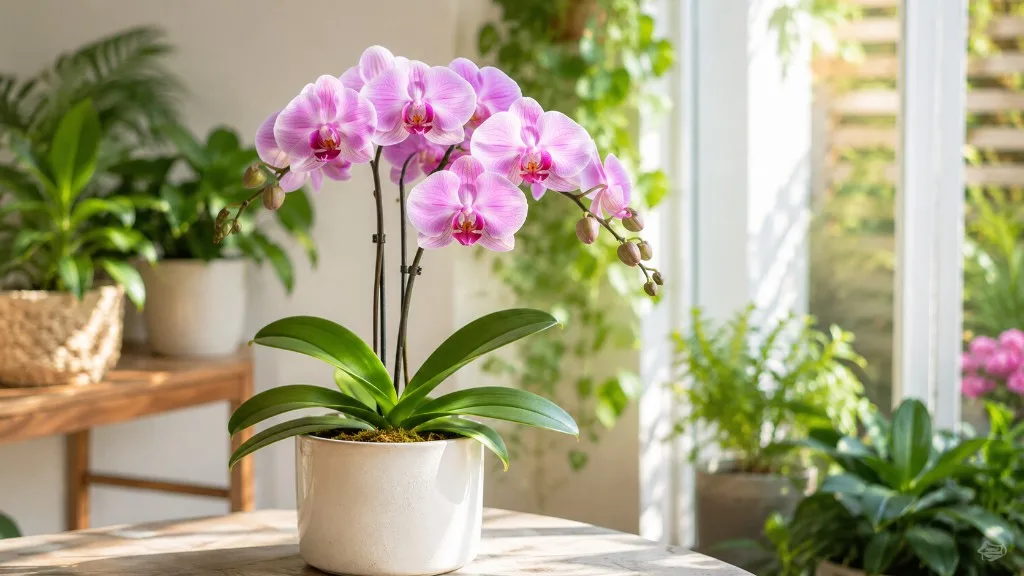
The moth orchid on your counter is not a short-lived bouquet. Phalaenopsis hybrids are bred to live for many years as houseplants, reblooming when light, roots, and temperature cues line up. Most failures happen because the plant is treated like a tropical foliage plant in dense potting soil and watered on a weekly calendar. Phalaenopsis are epiphytes: in nature they cling to branches with exposed roots that need air, quick drainage, and a wet-then-almost-dry rhythm—not constant dampness around the crown.
This guide is the indoor operating system: where to put the plant, how to read roots through a clear pot, when bark beats moss, how to water without crown rot, and how to trigger another spike without guessing. For broader orchid genera comparisons, see our basic indoor orchid care guide; for deeper Phalaenopsis troubleshooting, the Phalaenopsis orchid care hub goes further on bark dry-down and chill timing.
What Makes Phalaenopsis Different From Other Houseplants
Phalaenopsis are monopodial orchids: one vertical stem adds leaves at the top each year while older leaves at the base naturally senesce. They store little water in pseudobulbs compared with Cattleyas or Dendrobiums, so drought stress shows up fast in wrinkled leaves even when the surface looks fine. Their roots photosynthesize—healthy roots often look green when wet and silvery when dry—which is why clear nursery pots are useful, not just decorative (NC State Extension).
That biology drives every care decision. Regular potting mix suffocates roots. Ice cubes shock tropical tissue. A warm room with dim light produces lush leaves and no spikes. Once you match culture to epiphyte habits, Phalaenopsis become one of the easier orchids indoors—the American Orchid Society classifies them as low-light tolerant among orchids, widely available, and long-blooming when healthy.
Moth Orchid Quick Profile
| Trait | Indoor reality |
|---|---|
| Common names | Moth orchid, moon orchid, Phalaenopsis |
| Botanical name | Phalaenopsis spp. (modern hybrids dominate retail) |
| Native range | Tropical and subtropical Asia, northeast Australia |
| Typical size | 12–24 in. tall; arching flower spikes above foliage |
| Bloom season | Often fall through spring indoors; individual flowers last weeks |
| USDA zones | 10–12 outdoors; houseplant elsewhere |
| Pet safety | ASPCA lists Phalaenopsis as non-toxic to cats, dogs, and horses—still keep out of reach of chewers |
| Lifespan | Many years with sound culture; blooms can repeat annually or semi-annually |
Commercial production centers in Taiwan and the Netherlands, and modern hybrids may combine dozens of species and generations of breeding (NC State Extension). Dyed-blue gift orchids rebloom in their natural white or pink—dye does not carry forward.
Light and Window Placement Indoors
Phalaenopsis want bright, indirect light—enough to bloom, not enough to sunburn in an hour. An east-facing window is the default sweet spot in most homes (American Orchid Society). West or south windows work if sheer curtains soften midday sun; north windows usually need supplemental light to rebloom reliably.
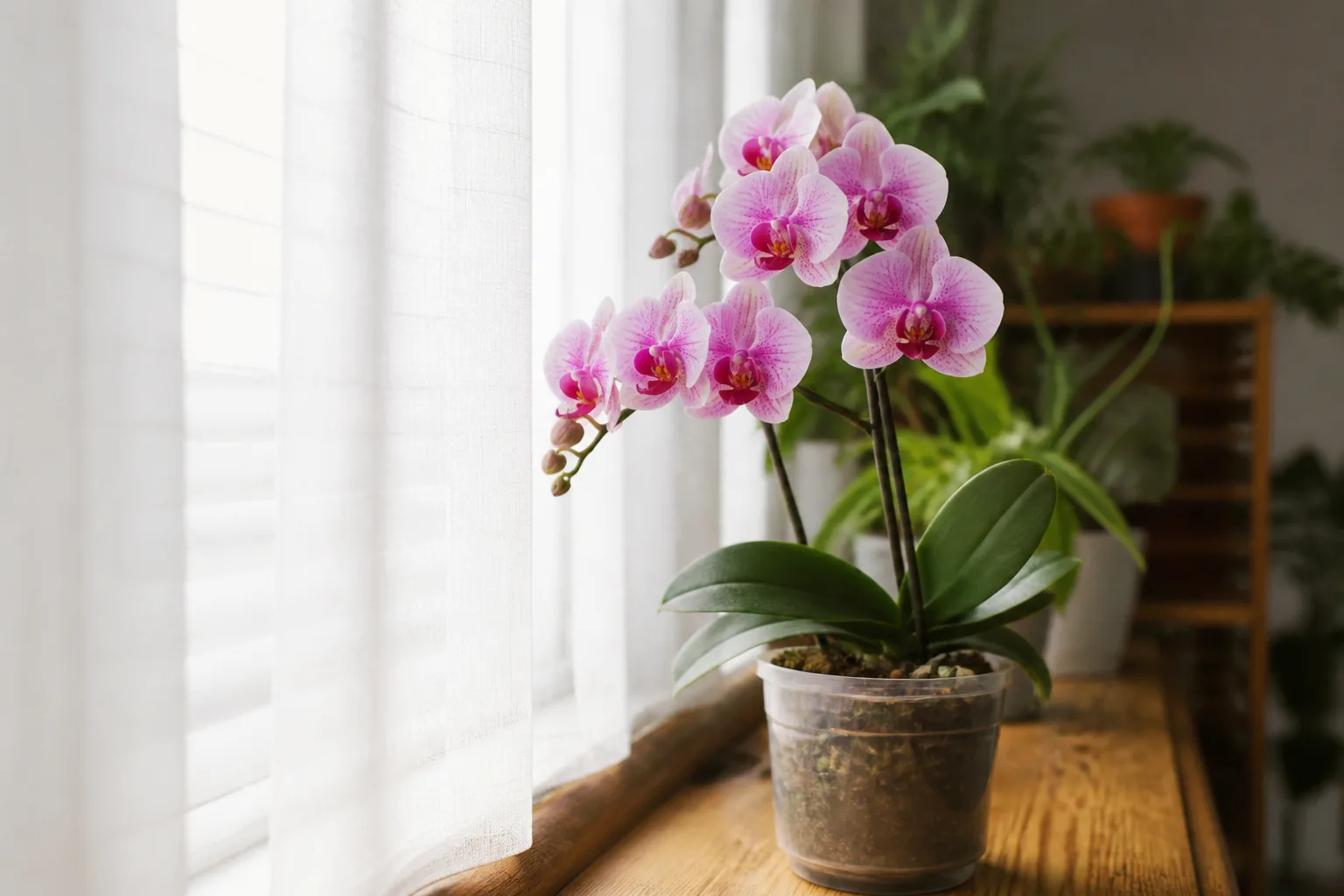
Rotate the pot a quarter turn every week or two so leaves grow evenly. Once a flower spike is elongating, stop moving the plant—spikes twist toward light and look crooked if orientation keeps changing (Missouri Botanical Garden). If natural light is weak in winter, LED or fluorescent fixtures 12–18 inches above the foliage for 12–14 hours can substitute; aim for gentle brightness, not leaf-scorching intensity.
Reading Leaf Color as a Light Meter
Use foliage like a gauge. Olive or grassy green leaves usually mean light is in range (Missouri Botanical Garden). Very dark green foliage often signals too little light—expect slow growth and skipped blooms. Red or purple flushing on leaf edges can mean too much direct sun. If the plant pushes leaves but no spike for two seasons, brighter filtered light is the first lever, not more fertilizer.
Bark, Moss, and the Right Container
Never pot Phalaenopsis in standard houseplant soil. Use a porous orchid mix: fir or sequoia bark with perlite and horticultural charcoal, labeled for Phalaenopsis or moth orchids (RHS). Bark drains fast and matches how most beginners should water. Sphagnum moss holds more water and suits very dry rooms or skilled growers—but retail plants packed in tight moss are a common overwatering trap because moss stays wet long after bark would have dried (NC State Extension).
Choose a pot only slightly larger than the root mass. Clear plastic inner pots slipped into a decorative cachepot let you inspect roots and help bark dry evenly. Drainage holes are non-negotiable; roots sitting in pooled water rot within days. Healthy aerial roots wandering above the medium are normal—do not bury them to tidy the look unless they are dead and brittle.
Watering by Roots, Not the Calendar
Water when the medium is nearly dry, not every Sunday. For bark-grown plants, that is often weekly in warm bright rooms and every 10–14 days in cooler dimmer months—but your roots trump the calendar. In a clear pot, silvery white roots mean thirsty; bright green roots mean wait (Missouri Botanical Garden).
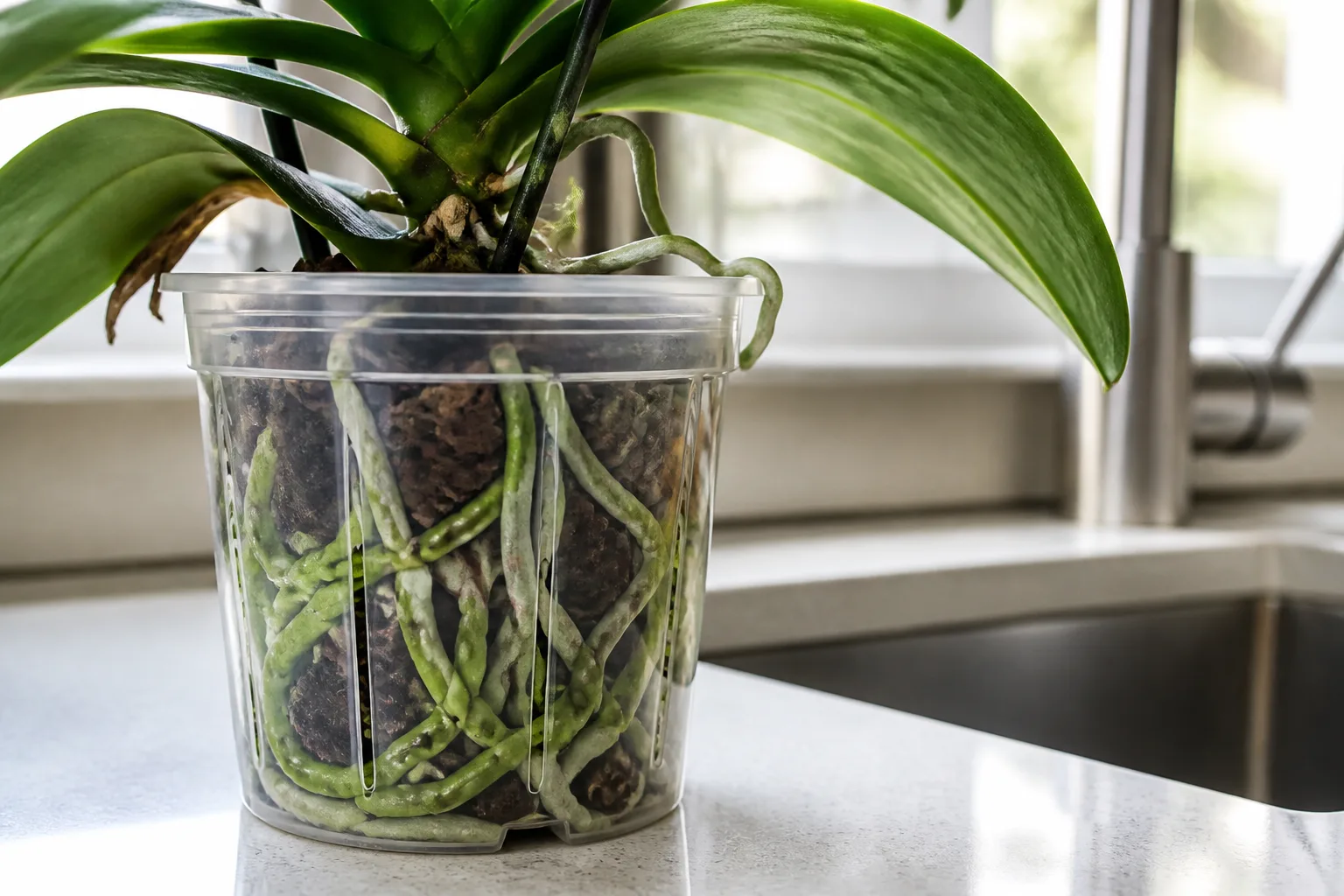
The best method is soak-and-drain at the sink: run room-temperature water through bark and over aerial roots for 30–60 seconds, let it flush through drainage holes, then drain completely before returning the plant to its spot (NC State Extension). Never leave the pot standing in a saucer of runoff. Water in the morning so the crown dries before night; if water pools where leaves meet the stem, blot it with a paper towel to reduce crown-rot risk (American Orchid Society).
Soak-and-Drain, Ice Cubes, and Crown Safety
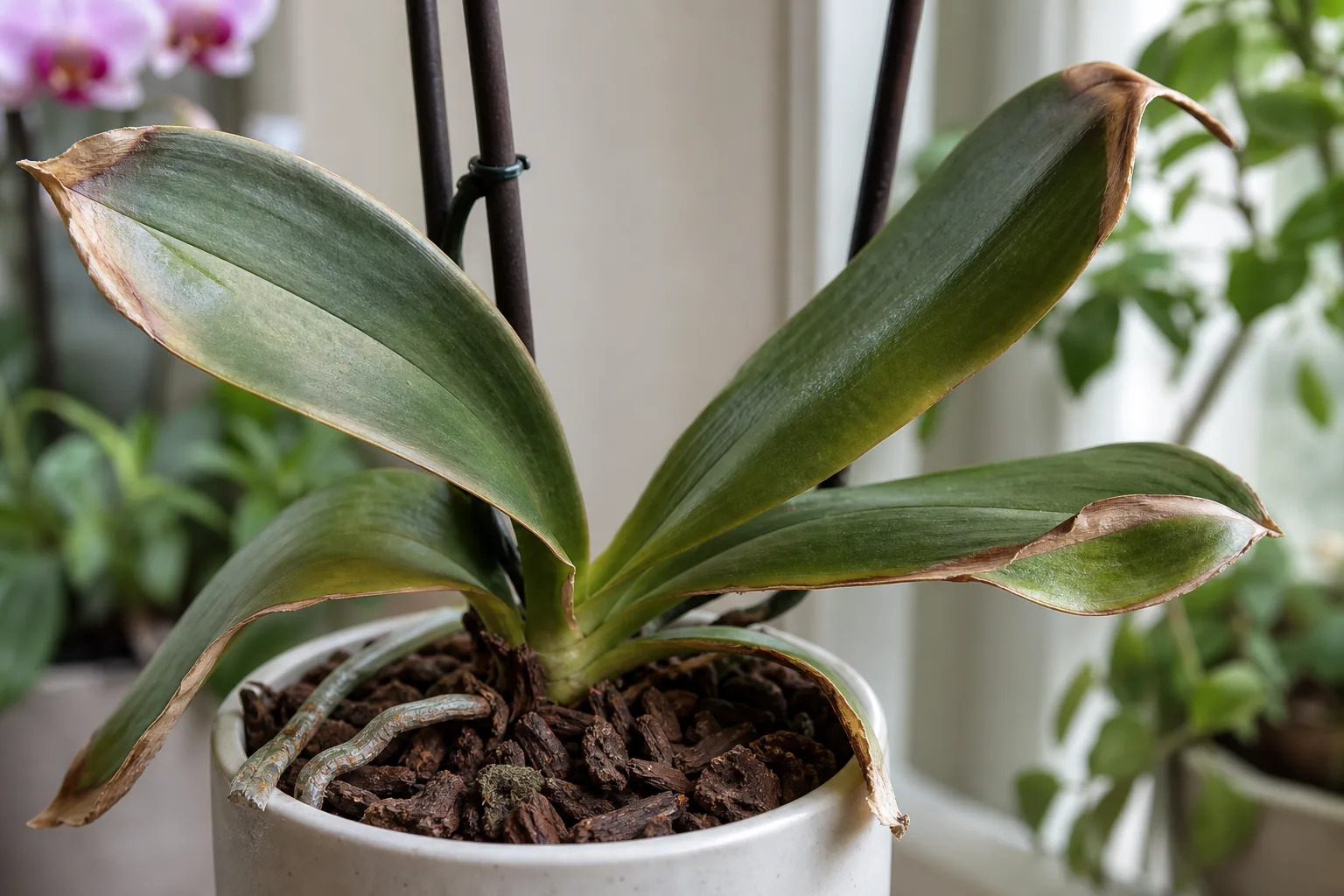
Skip ice cubes. Cold ice shocks tropical roots, and a few cubes rarely saturate bark evenly (Missouri Botanical Garden). If you already use ice, melt cubes to room temperature first—but lukewarm soak-and-drain is simpler and safer. Avoid salt-softened water; minerals and salts can damage roots over time. If leaves look burned at tips, flush the pot monthly with plain water to leach fertilizer salts (RHS).
Temperature, Humidity, and Rebloom Cues
Daytime temperatures around 70–85°F suit most homes; nights in the 60s°F are fine year-round (American Orchid Society). Phalaenopsis tolerate normal indoor swings but hate sudden drafts from heaters, AC vents, or frequently opened doors—those swings trigger bud blast, where buds abort before opening (NC State Extension).
Humidity of 50% or higher is ideal. Below that, a humidity tray (pebbles and water with the pot above the waterline) or a nearby humidifier helps. Do not mist as a substitute—wet foliage at night invites disease. Air movement matters in humid setups; a gentle fan across the room prevents stagnant pockets that favor fungi.
Rebloom is not magic—it is chemistry plus a cue. The plant needs healthy roots, bright enough light to store energy, and for many large-flowered hybrids a cool autumn night period near 55°F for several weeks to initiate a spike (Missouri Botanical Garden; NC State Extension). Modern dwarf summer-blooming hybrids often spike without that chill. Constant 72°F nights under dim light is why supermarket orchids bloom once and stall.
Fertilizer That Matches Your Growing Medium
Feed during active growth—typically spring through early fall—not on a bare dormant schedule. The classic approach is weak, frequent: quarter-strength balanced orchid fertilizer (such as 20-20-20) weekly, or half-strength twice monthly (RHS). On bark, nitrogen-heavy formulas (for example 30-10-10) compensate for nitrogen loss as bark breaks down (American Orchid Society).
Water before fertilizing; never apply concentrate to dry roots. Back off feeding while a plant is in full bloom if you prefer foliage balance, and skip heavy feeding on a stressed orchid with rotting roots. Flush with plain water monthly to prevent salt crust on bark.
After Bloom: Pruning Spikes, Repotting, and Keikis
When the last flower fades, you have three paths on the spike. If the stem is brown and dry, cut it near the base. If it is still green, you can cut just above the second node from the bottom to encourage a side branch—faster flowers but weaker long-term—or cut at the base for a stronger next cycle (Missouri Botanical Garden). Our should you cut the orchid stem guide walks through the trade-offs.
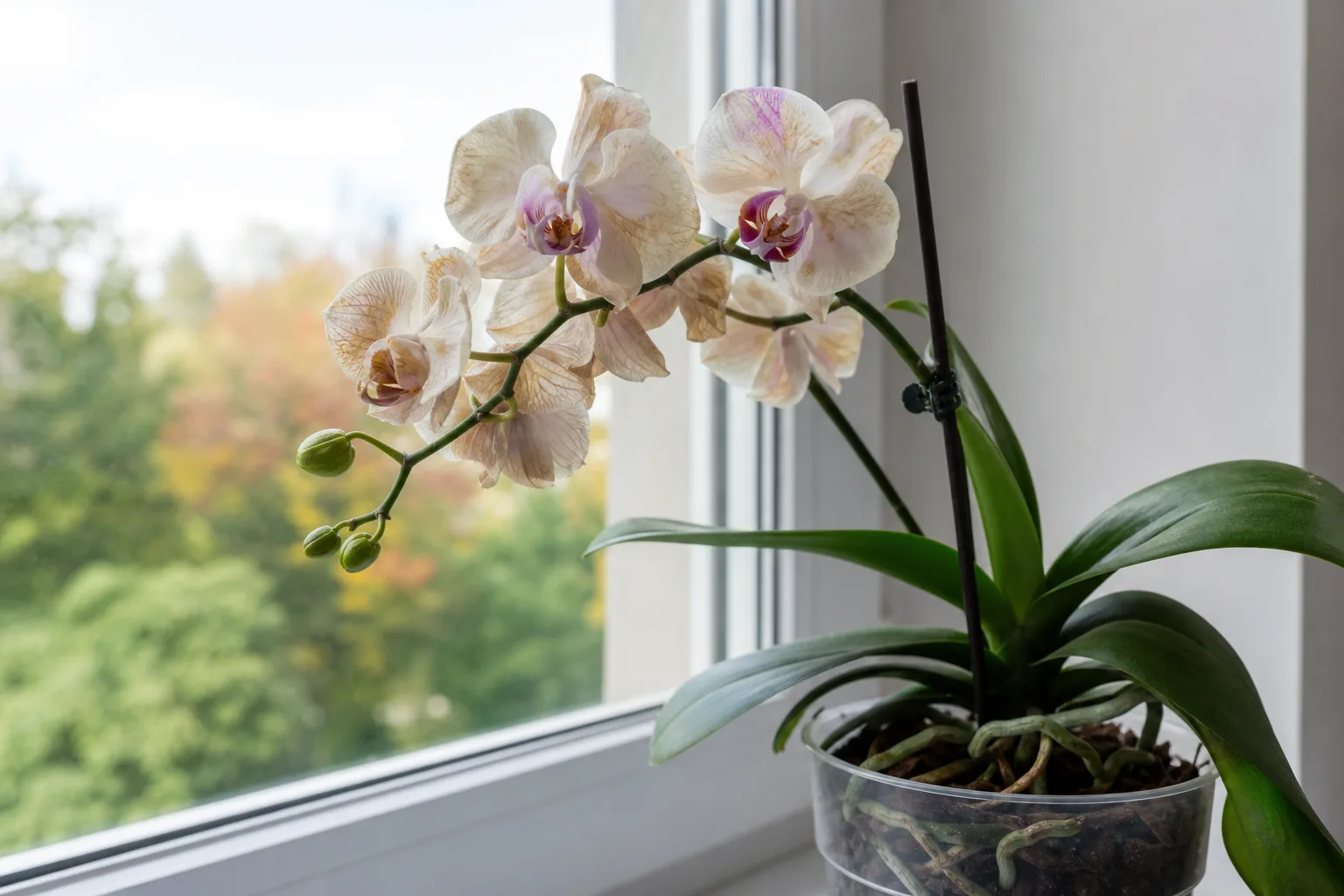
Repot about every two years, or when bark crumbles into fines and stays soggy (Missouri Botanical Garden). Best timing is just after bloom finishes and new root tips appear—avoid repotting mid-spike if you can. Shake out old medium, trim mushy brown roots with sterilized shears, and seat the plant so the stem–root junction sits at the bark surface. It is fine to end up in the same size pot or even smaller if you removed dead roots.
Occasionally a keiki—a baby plant—forms on a spike. Wait until it has two or three leaves and several roots several inches long, then sever with a sterile blade and pot in damp bark. Mist lightly for the first weeks while roots anchor. Keikis are genetic copies of the parent and a slow but reliable propagation path.
Troubleshooting Wrinkled Leaves, Yellow Foliage, and Bud Blast
Wrinkled, leathery leaves usually mean the plant cannot take up water. Check roots first: if they are silvery and firm, water thoroughly and review humidity. If roots are brown and mushy, you have rot from overwatering or broken-down moss—repot into fresh bark, remove dead roots, and dry out longer between soaks (Maryland Extension).
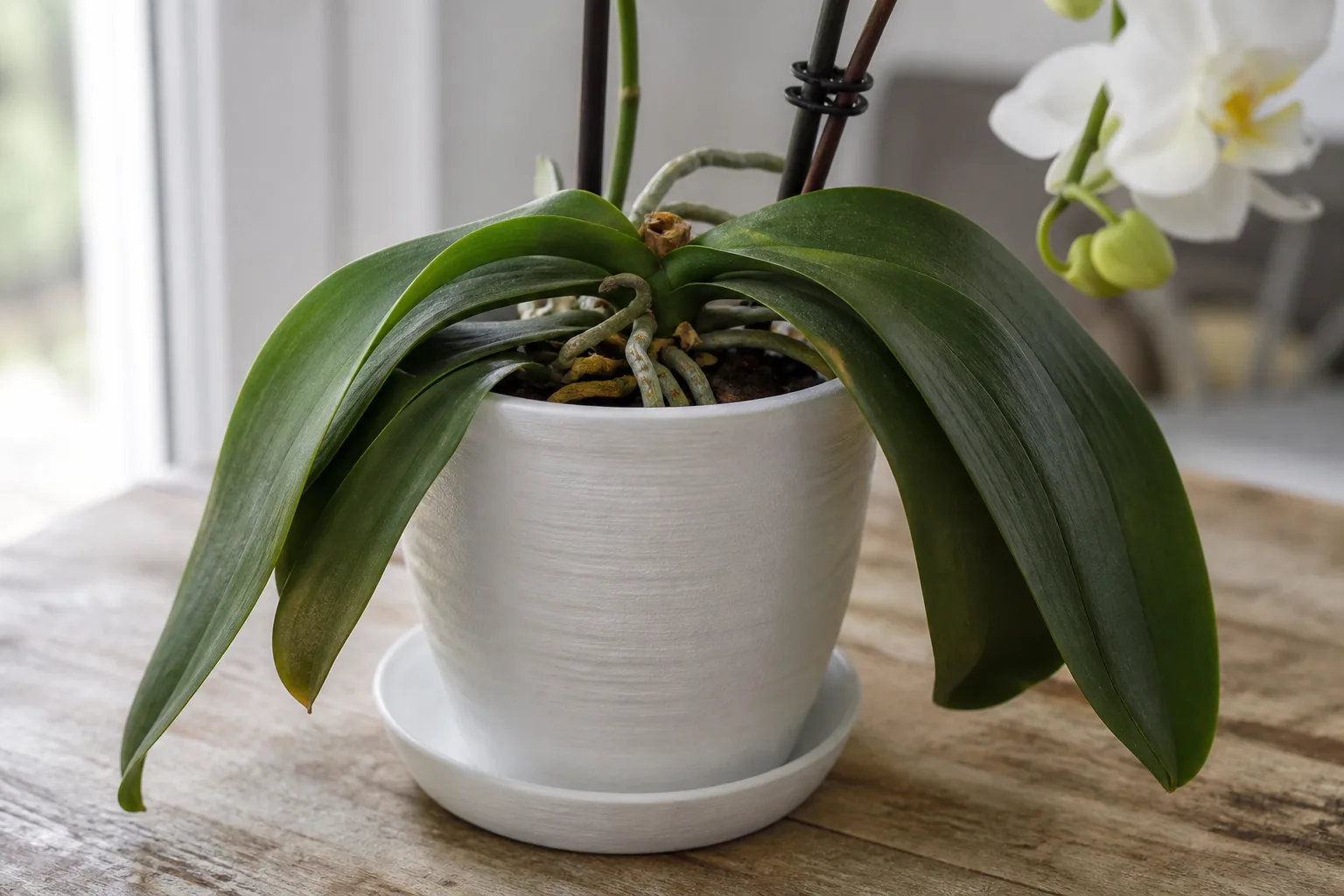
Yellow leaves demand context. One yellow leaf at the bottom while the crown stays firm is often natural aging. Yellowing from the top down or multiple leaves at once points to crown rot, severe overwatering, or too much direct sun (Maryland Extension). Fix the root environment before chasing fertilizer.
Bud blast—buds dropping unopened—follows environmental whiplash: moving the plant during spike development, ethylene from ripening fruit nearby, cold drafts, or letting the medium go bone dry while buds swell. Stabilize location, humidity, and watering for two weeks before changing anything else.
Pests, Diseases, and When to Salvage the Plant
Phalaenopsis are not pest magnets, but mealybugs, scale, spider mites, and fungus gnats appear on stressed plants. Isolate the orchid, wipe visible insects with alcohol on a cotton swab, and repeat weekly; insecticidal soap helps on foliage and crevices (American Orchid Society). Sterilize tools between plants—orchids spread bacterial infections easily through cuts.
Root rot, botrytis on flowers, and black leaf spots usually trace to wet crowns, poor airflow, or old medium. Remove affected tissue with sterile tools and improve drainage. If the crown is mushy and no firm leaves remain, the plant is unlikely to recover—compost it rather than risk spreading pathogens. A plant with no roots but firm leaves can sometimes be saved in a humid recovery box while new roots form; that is advanced rescue, not beginner care.
Phalaenopsis Types Worth Knowing Indoors
Retail hybrids dwarf the 60-odd wild species, but a few names help you shop. Phalaenopsis amabilis and classic white hybrids are the grocery-store default. Phalaenopsis schilleriana brings pink flowers and spotted leaves. Phalaenopsis equestris and mini hybrids stay compact on windowsills. Species like Phalaenopsis appendiculata stay small enough for hanging baskets. Novelty multiflora types branch heavily on one spike. Color breaks include harlequin spots, yellows, and purple-red lips—care is similar; light demand varies slightly, with some species wanting a bit more brightness (NC State Extension).
Your First 30 Days After Bringing One Home
Week one is stabilization, not optimization. Keep the plant where you will grow it long term if possible—every move risks bud drop. Remove foil or decorative wraps so water never pools at the bottom. If the pot is packed in soggy moss and the roots look green week after week without drying, plan a post-bloom conversion to bark rather than watering on a schedule built for a different medium.
Days 8–30: observe root color through the pot, water only when silvery, and keep the plant away from heating vents and fruit bowls. Do not repot while flowers are open unless roots are actively rotting. Note bloom finish date on a label—repotting and spike decisions are easier with a written timeline. For lifespan expectations beyond the first cycle, see how long orchids live.
Conclusion
Phalaenopsis orchids reward a simple indoor contract: bright filtered light, bark that dries between soaks, morning watering with full drainage, and cooler autumn nights when you want another spike. Read roots through the pot, treat moss-packed gift plants cautiously, and prune spikes with a plan—not habit. Most moth orchids fail from kindness in the form of too much water in the wrong medium, not from neglect. Nail the epiphyte basics and the same plant that looked finished after Valentine’s can still be blooming in your window years later.



