How to Grow and Care for California Poppies
Learn how to grow California poppies from seed: fall vs spring sowing by zone, drainage, deadheading vs reseeding, containers, and summer dormancy fixes.
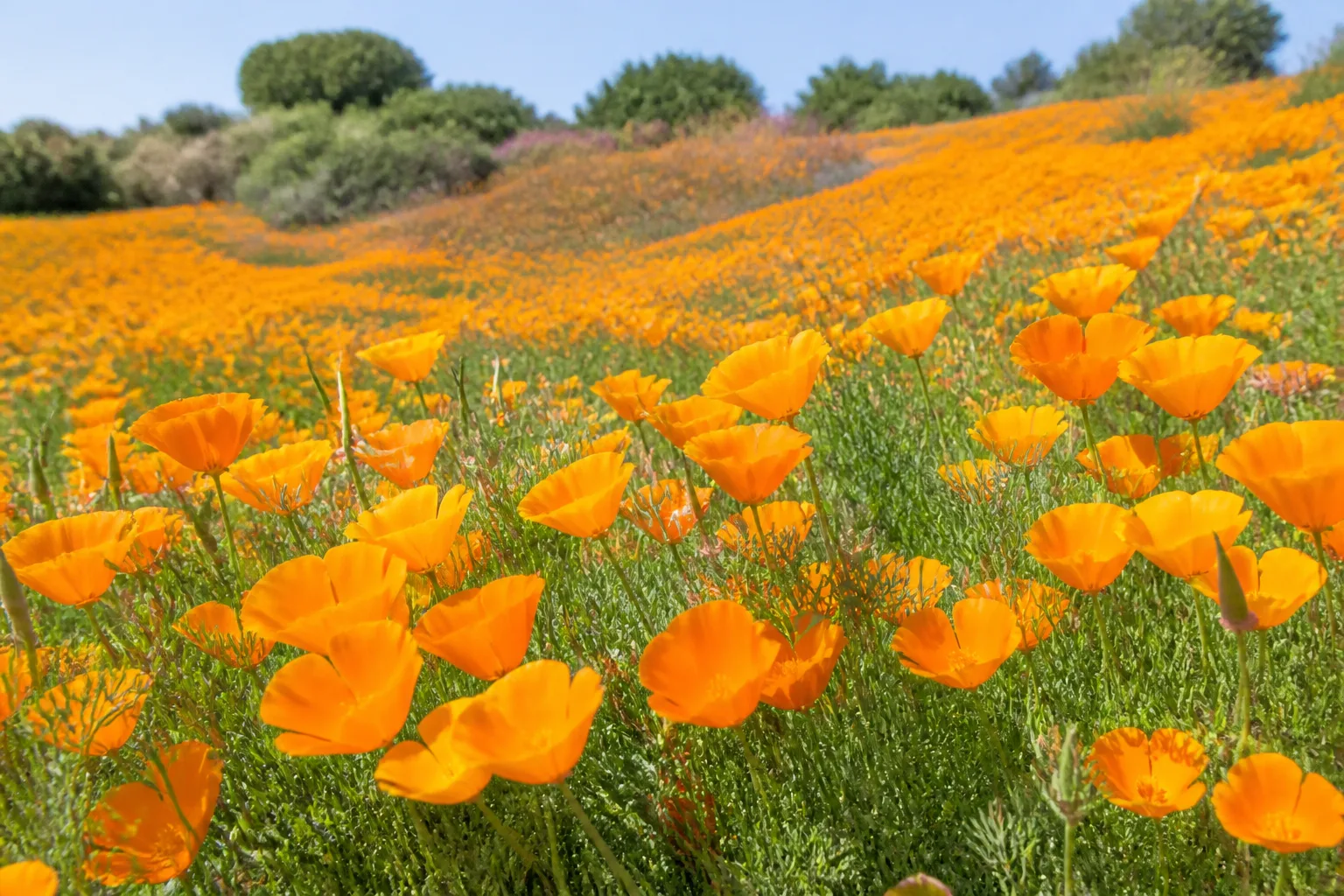
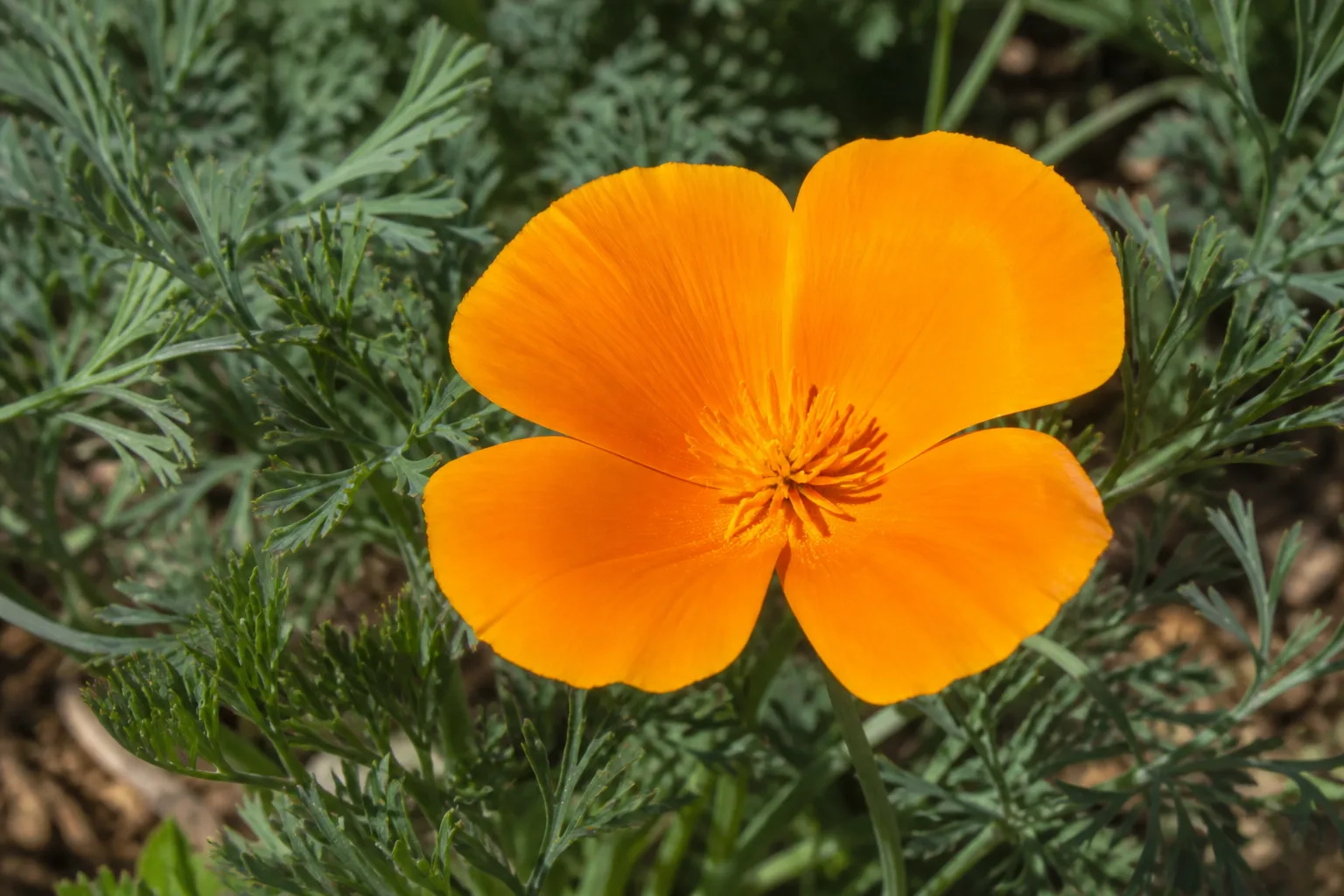
California poppies (Eschscholzia californica) are the wildflower that looks delicate and behaves like a survivor. Silky orange cups float above blue-green, fern-like foliage, bees work the open blooms all morning, and the whole plant shrugs off poor soil, summer heat, and weeks without rain once established. The catch is timing and placement: sow at the wrong season or disturb the taproot, and a plant built for open hillsides will sulk in your border.
This guide covers the decisions that actually determine success — fall versus spring sowing by climate, direct-seed technique, the deadhead-or-reseed fork, container limits, and why a brown patch in July is often normal summer dormancy rather than a dead plant.
Why California Poppies Belong in a Low-Water Garden
California poppies are native from Baja California north through the Pacific Coast into parts of the Southwest and have naturalized across much of the western U.S. North Carolina State Extension describes them as a drought-tolerant, cool-season annual and short-lived perennial in zones 8 through 10 — exactly the profile you want for a drought-resistant flower border or unirrigated parking strip.
Unlike heavy-feeding annuals that demand rich compost and weekly fertilizer, California poppies perform best in lean, sharply drained soil. They close their petals at night and on cloudy days — a charming habit that also signals how much they love open sky. Plant them where they get at least six hours of direct sun, keep the crown dry, and they will outcompete fussier flowers in hot, dry sites.
They also fill a pollinator niche early in the season. Hoverflies and native bees visit the open cups before many summer annuals like zinnias hit stride, making poppies useful in mixed meadow plantings alongside cosmos, gaillardia, and other sun-loving fillers.
California Poppy at a Glance
| Feature | Details |
|---|---|
| Common names | California poppy, golden poppy, cup of gold |
| Botanical name | Eschscholzia californica |
| Family | Papaveraceae (poppy family) |
| Plant type | Annual; short-lived perennial in mild climates |
| Mature size | 12–24 in. tall, 12–24 in. wide |
| Sun | Full sun (6+ hours) |
| Soil | Sandy or rocky, well-drained; tolerates poor soil |
| Soil pH | Neutral to alkaline |
| Bloom time | Mid-spring through early summer; longer in cool summers |
| Flower color | Orange, yellow (cultivars: pink, cream, red, bicolor) |
| Hardiness | USDA zones 6–10 (NC State Extension) |
| Native range | Southwestern North America |
| Water needs | Low once established |
| Propagation | Seed only (direct sow) |
| Vase life | Poor — blooms fade within days when cut |
One honest limitation up front: California poppies are not cut-flower workhorses. The moment you sever a stem, the silky petals collapse. Grow them for garden color, pollinators, and self-seeding carpets — not for bouquets.
Annual, Perennial, or Self-Seeding: What to Expect by Zone
Label confusion trips up a lot of gardeners. In coastal California and other mild, dry-summer climates, California poppies behave as short-lived perennials that may persist several years. In USDA zones 6–7 and anywhere with wet winters and frozen soil, treat them as cool-season annuals that finish their show when summer heat arrives.
The reliable return mechanism in most gardens is not the original plant coming back — it is self-seeding. Spent flowers form elongated seed capsules that split open when dry, scattering thousands of tiny black seeds. Those seeds often survive winter on the soil surface and germinate the following spring. Many gardeners in cold climates get “perennial” poppy displays year after year without ever replanting, as long as they leave some seed heads in late spring.
In zones 8–10, established plants may survive light frosts and resprout from the crown when cool weather returns in fall. Do not count on this in heavy clay or irrigated beds — wet winter soil rots the crown faster than cold air kills it.
Fall vs Spring: When to Sow Seeds in Your Climate
Sowing season is the single biggest fork in California poppy success. These seeds want cool, moist soil to germinate and mild days to build foliage before bloom. Match your sowing window to how your winters behave.
Mild-Winter and Western Zones
In USDA zones 8–10 and other regions with mild, wet winters and dry summers, fall sowing mimics the wild cycle and usually produces the earliest, longest display. Scatter seed from late September through November onto prepared soil, press lightly, and let winter rains handle moisture. Seedlings emerge in late winter or early spring and bloom as days lengthen.
Fall-sown plants have deeper root systems by the time summer heat hits, which helps them survive brief dormancy and sometimes rebloom lightly after an early-autumn rain. If you garden in Southern California, Arizona desert edges, or the Gulf Coast with mild winters, fall is your default.
Cold-Winter and Northern Zones
In zones 6–7 and colder, spring sowing after the last frost is safer. Soil that freezes and thaws repeatedly can heave tiny seeds out of position, and fall-germinated seedlings may be killed by hard freezes without snow cover. Sow outdoors once soil is workable and nighttime lows stay above freezing — typically late March through May depending on latitude.
Spring-sown poppies still bloom; they simply flower a few weeks later than fall-sown plants in mild climates. Johnny’s Selected Seeds notes that cool nights are required for free flowering, which is why a late-spring sowing in a hot summer region may produce a shorter bloom window.
How to Grow California Poppies from Seed
California poppies are grown almost exclusively from seed. Mature plants resent root disturbance, and stem cuttings wilt before they root. Plan on direct sowing where the plants will live for the season.
Direct-Sowing Steps That Work
1. Choose the final site. Full sun, sharp drainage, no competing mulch layer at sowing time. On clay, rake in coarse sand or plant on a slight mound rather than in a low spot that holds water.
2. Prepare lightly. Scratch the surface with a rake. California poppies do not need deep tillage or rich compost — in fact, too much nitrogen reduces flowering.
3. Scatter seed thinly. Seeds are tiny. Mixing seed with dry sand makes even distribution easier. Aim for eventual spacing of 6 to 8 inches between plants (Johnny’s Selected Seeds recommends thinning to 6 inches; NC State suggests 8 inches).
4. Press, do not bury. Cover with no more than 1/4 inch of soil or simply press seeds into the surface. Light aids germination.
5. Water gently. Mist or use a fine rose on a watering can until the top inch stays evenly moist. Heavy streams wash seed away.
6. Watch for the blue-green cue. Germination takes 10 to 30 days depending on temperature. Seedlings show narrow, bluish-green cotyledons — use that color to distinguish poppy sprouts from weeds before you pull the wrong thing.
7. Thin ruthlessly. Crowded seedlings compete for light and produce floppy stems. Snip extras at soil level rather than pulling, which disturbs neighbors.
From sowing to first open bloom typically takes 55 to 90 days. In a cool spring, expect flowers by late May from a March sowing; in a warm early spring, blooms can appear faster.
Why Transplanting Usually Fails
California poppies develop a sensitive taproot early. Moving a seedling after it has more than a few true leaves usually triggers wilt, stunting, or death within days. If you must start indoors — for example, in a short-season climate — use deep cells or soil blocks, sow 2 to 3 weeks before last frost, and transplant while seedlings are still small, disturbing roots as little as possible. Harden off outdoors for several days before setting out.
Even then, survival rates are lower than direct sowing. Most experienced growers skip indoor starts entirely and accept a slightly later bloom in exchange for stronger plants.
Light, Soil, and Water Requirements
Light: Six or more hours of direct sun is non-negotiable. Shade produces leggy, disease-prone plants with few flowers. In desert Southwest gardens, afternoon sun is fine — these are built for it.
Soil: Sandy, rocky, or gravelly soils are ideal. Loam works if drainage is fast. Heavy clay must be amended with grit and planted on raised mounds, or switched to containers. California poppies tolerate alkaline soil and nutrient poverty; NC State Extension lists neutral to alkaline pH as acceptable.
Fertilizer: Skip it in most gardens. Chemical fertilizer pushes leafy growth at the expense of flowers. If your soil is truly depleted sand, a light spring scattering of low-nitrogen organic feed is plenty.
Water — establishment phase: Keep soil lightly moist from sowing until seedlings have several sets of true leaves. Consistent moisture matters more than frequency — a deep soak twice a week beats daily sprinkles that only wet the surface.
Water — mature plants: Once established, California poppies are genuinely drought-tolerant. Spring rainfall often suffices. Supplement only during prolonged dry spells in spring, watering deeply and then letting soil dry completely. Overwatering is the more common killer — it invites mildew, stem rot, and crown collapse.
Summer dormancy: When daytime highs stay in the 90s°F for extended periods, plants naturally die back or go dormant. Stop watering unless you are trying to coax a fall rebloom in a mild climate. Brown foliage in July is expected behavior, not a call for more fertilizer.
Deadhead or Let Reseed: Choose Your Strategy Early
You cannot maximize this week’s blooms and next year’s self-seeding at the same time without a plan. Decide which goal matters more before flowers open.
Deadhead for longer bloom in the current season. Snip faded flowers just below the capsule as they finish. This redirects energy from seed production into additional flowers, keeping the patch tidy through late spring. In cool-summer regions (Pacific Northwest, high elevations), deadheading can extend color well into summer.
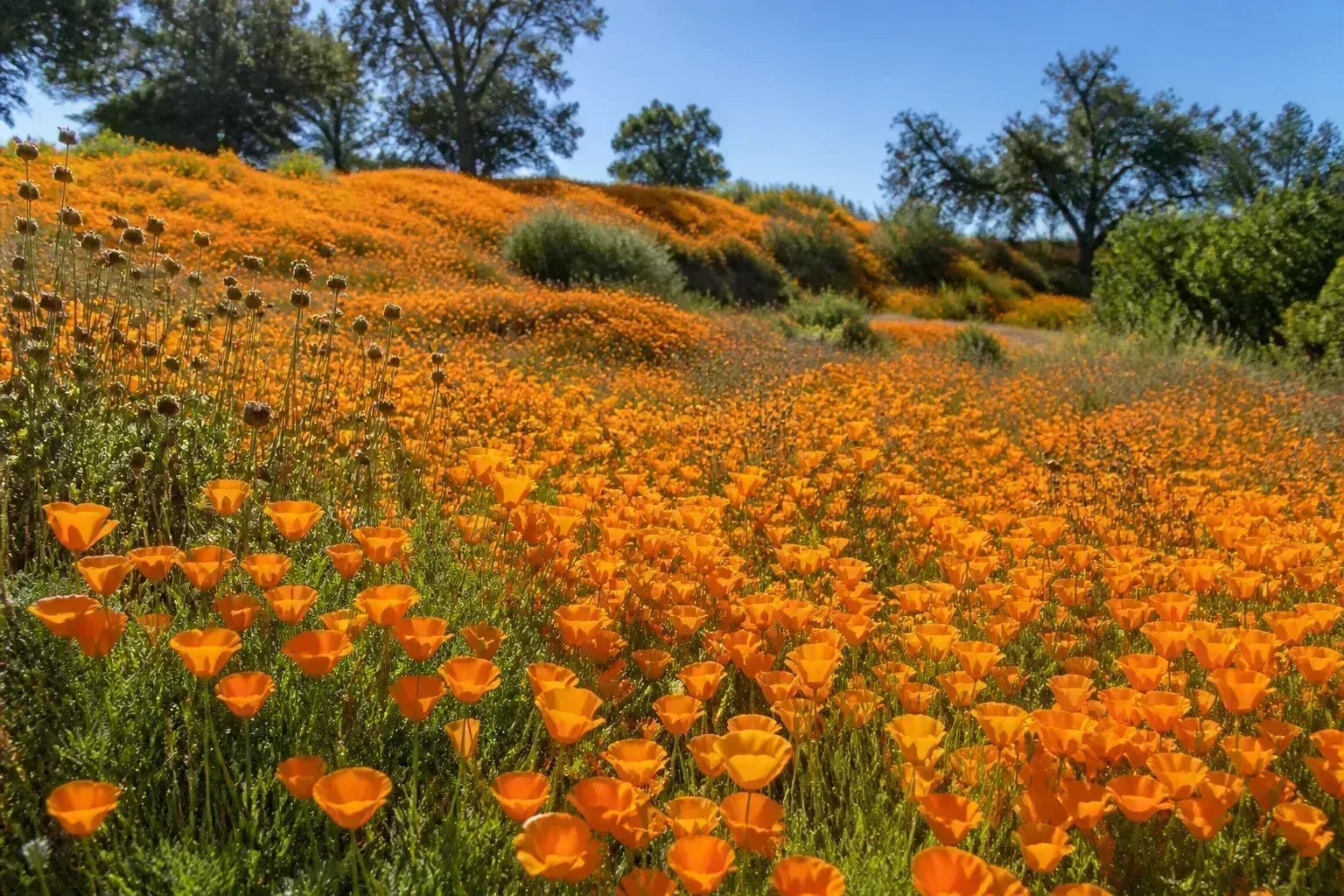
Leave seed heads for naturalized patches. Allow the last flush of flowers to form dry capsules on the plant. When capsules split, seeds fall in place and often germinate the following year without help. This is how informal meadows and gravel gardens stay orange with minimal replanting.
A practical split: deadhead the front of a border for neatness through June, but leave the back row to set seed for next spring. If poppies spread beyond where you want them, pull volunteers while small in early spring — they are easy to recognize by blue-green foliage.
Popular Cultivars Beyond Classic Orange
Wild-type California poppies are brilliant orange with a yellow or orange center. Breeders have expanded the palette for gardeners who want variety without changing care requirements.
- ‘Mission Bells’ — Mixed sherbet tones including pink, salmon, and cream; some semi-double flowers. Best for cottage gardens and informal mixes where color variation is a feature.
- ‘Golden West’ — Classic orange with a distinct darker center. A good choice when you want recognizable poppy form with slightly richer contrast.
- ‘XL Jelly Beans’ — Larger blooms in pink, lemon yellow, and red tones on blue-green foliage. Useful for containers where flower size reads from a distance.
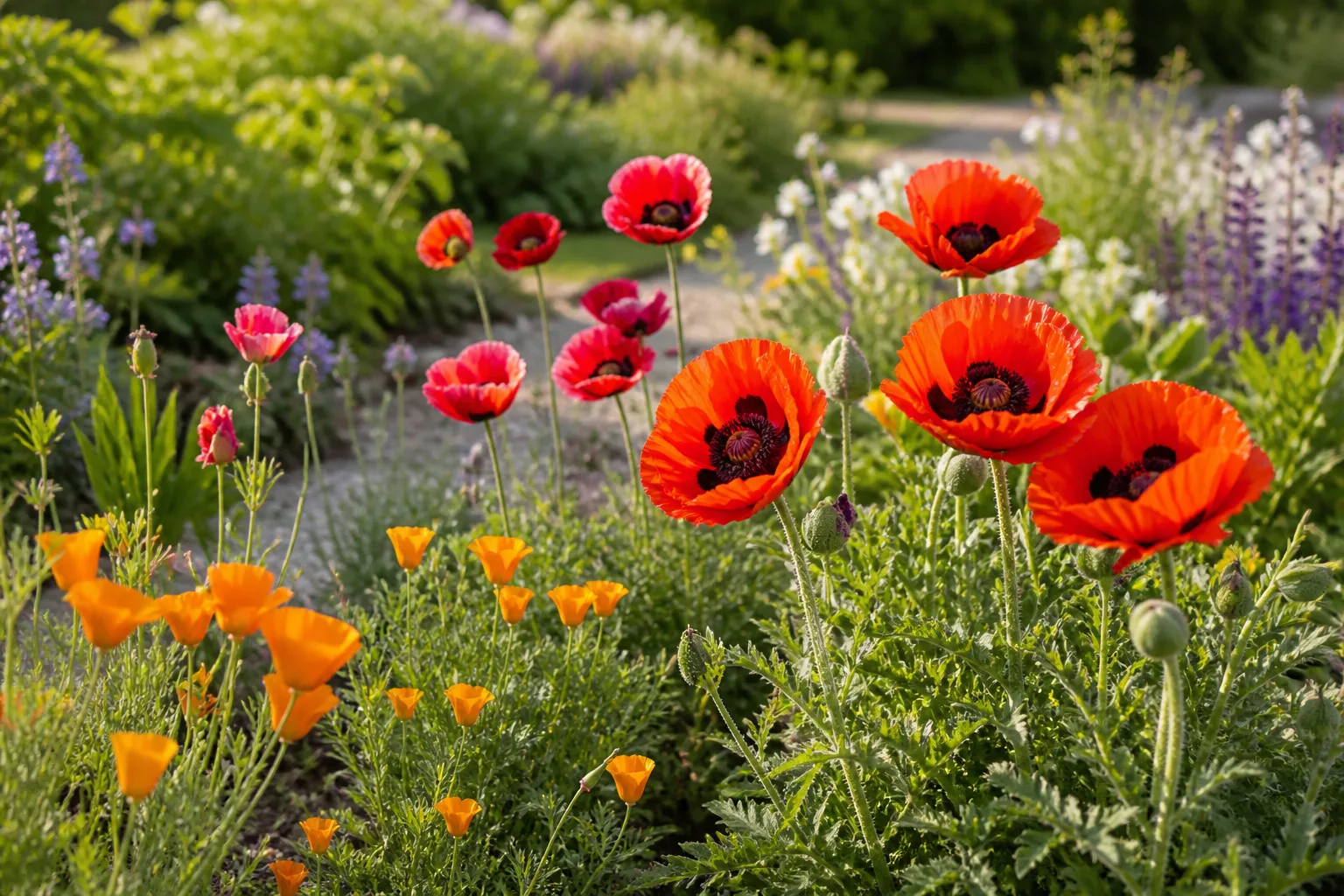
- ‘Mikado’ — Deep orange-red petals. Striking in mass plantings paired with blue flax or purple salvia.
- ‘Thai Silk’ series — Rose, cherry, and apricot shades with ruffled petals. Slightly more ornamental; still wants the same sun and drainage.
All cultivars share the same needs: full sun, dry feet, and direct seeding. Color does not change the fall-versus-spring sowing rules.
Growing California Poppies in Containers
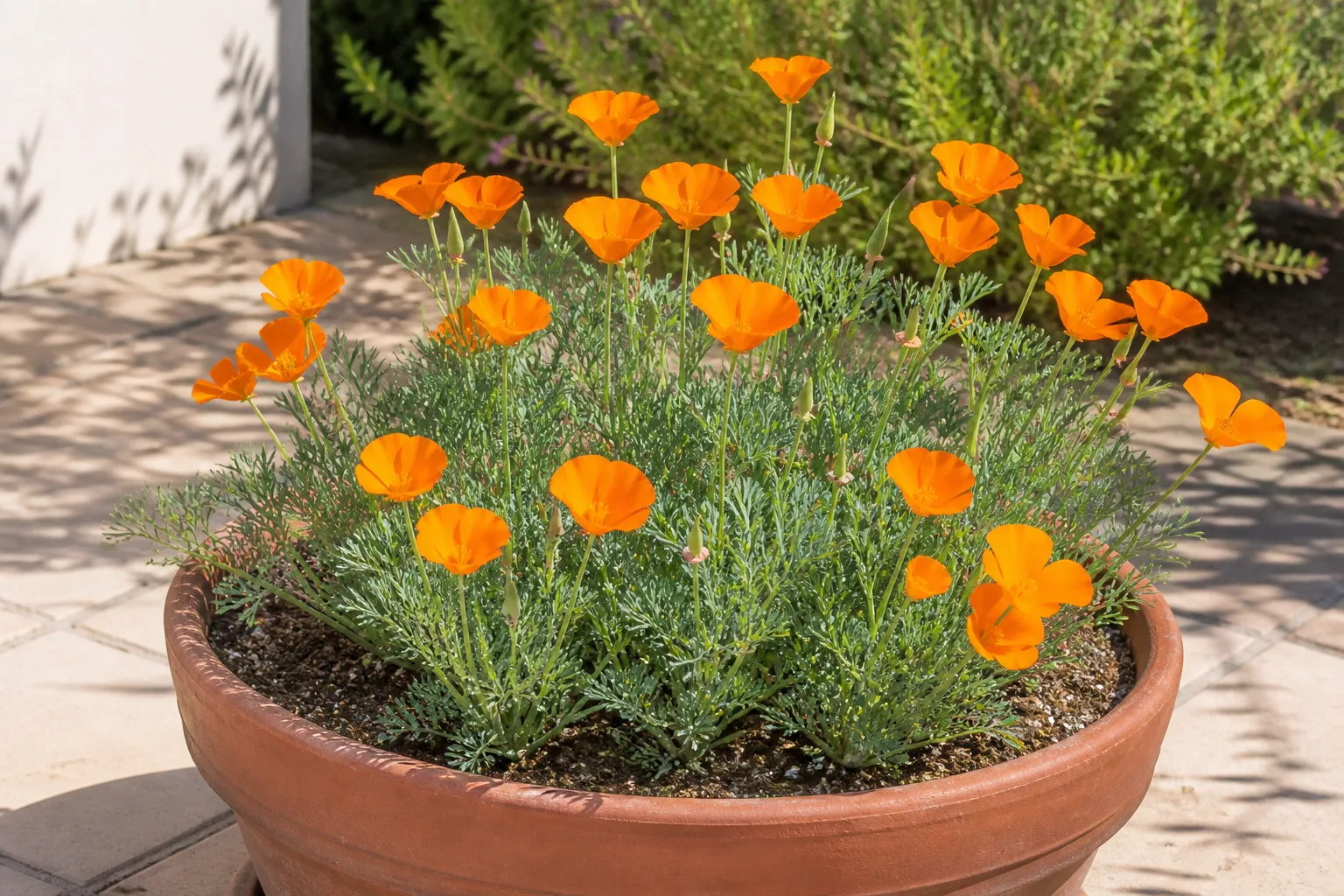
Containers work for patios and balconies if you respect how fast they dry out and how much poppies hate wet crowns. Choose a wide pot — at least 12 inches across — with multiple drainage holes. Use a gritty potting mix amended with coarse sand or fine gravel; standard peat-heavy mixes stay too wet.
Sow directly in the container rather than transplanting. Place the pot in full sun and water when the top inch of mix is dry. Expect to water more often than in-ground plants — sometimes every other day in midspring heat — but never leave the pot sitting in a saucer of water.
Container poppies are usually treated as one-season displays. After bloom, let the pot dry out through summer dormancy or replant with heat-loving annuals. Saving container-grown plants through winter is unreliable outside zones 9–10.
Troubleshooting Common California Poppy Problems
California poppies are low-maintenance when sited correctly. Most failures trace back to shade, clay soil, overwatering, or transplant shock — all fixable before the next sowing season.
Floppy Stems and Summer Die-Back
Leggy, collapsing stems usually mean too much shade, overcrowding, or excess nitrogen. Thin seedlings to proper spacing and move next year’s sowing to a sunnier strip. Floppy plants in wet soil may have stem rot at the base — improve drainage before replanting.
Complete brown die-back during a heat wave is normal summer dormancy. Cut browned stems to the ground if you prefer a clean look, or leave them — they do not harm the soil. In mild climates, fall rains sometimes trigger a second flush of foliage and scattered flowers. Do not assume the plant is dead and start watering heavily; that invites rot on a dormant crown.
Wet Soil, Mildew, and Root Rot
Powdery mildew and gray mold appear when foliage stays wet overnight in humid climates. Water at soil level in the morning, space plants for airflow, and avoid overhead sprinklers. Remove badly infected plants rather than spraying fungicides on a crop worth pennies in seed.
Yellowing lower leaves with wet soil signal overwatering. Let soil dry completely before the next soak. If the crown turns mushy, discard the plant and amend the site with grit before resowing.
Aphids and thrips occasionally appear on stressed plants. A strong jet of water or insecticidal soap on a cool morning usually clears them without chemicals.
Pet Safety and the State Flower Myth
California poppies belong to the poppy family, which includes plants with potent alkaloids. They are not opium poppies (Papaver somniferum), and they are not among the most dangerous garden plants — but caution is warranted around pets and children who graze on foliage. NC State Extension notes that leaves and stems have been eaten, and some foragers cook the petals, yet the same family contains toxic species. Treat ornamental plants as non-edible unless you have expert identification and medical guidance.
If a pet eats a large quantity of any unfamiliar plant, contact your veterinarian or the ASPCA Animal Poison Control Center at (888) 426-4435.
Is it illegal to pick California poppies? No statewide ban exists on picking the state flower on private property with the owner’s permission. The California Department of Fish and Wildlife clarifies that removing plants from state property, parks, or other public lands without permission is prohibited — the same rule that applies to any wild plant, not a special poppy-only law. Enjoy them in place; photograph them; grow your own from seed at home.
Conclusion
California poppies reward gardeners who think like ecologists: sow in cool soil, give them sun and drainage, water lightly until established, then step back. Match fall or spring sowing to your winter climate, direct-seed in place, and decide early whether you want deadheaded borders or self-seeding meadows. Expect summer dormancy in hot regions rather than fighting it with fertilizer and sprinklers.
Get those five decisions right and Eschscholzia californica will do what it has done on western hillsides for centuries — open orange cups by the hundreds, close them at dusk, and scatter seed for next year’s show without asking for much in return.



